
Ancient Greece can often seem austere and sterile as we look back on cold, white marble. It can also seem unreal as stories focus on larger-than-life legends battling giant wars, whose lives are intertwined with those of the gods. Where are the real, visceral lives of the people of ancient Greece? For this, we should skip the epics and look at the lyric poets who wrote about what it was actually like to be alive. They wrote about how your knees shake in battle, and you are overcome by fear, or how love can feel like a sickness, and how old age envies youth. Start your journey with these seven ancient Greek poems about love and war.
1. Sappho: The Erotics of the Physical
He seems to me equal to gods that man
whoever he is who opposite you
sits and listens close
to your sweet speaking
And love laughing – oh it
puts the heart in my chest on wings
for when I look at you, even a moment, no speaking
is left in me
no: tongue breaks and thin
fire is racing under skin
and in eyes no sight and drumming
fills ears
and cold sweat hold me and shaking
grips me all, greener than grass
I am and dead – or almost
I seem to me.(Sappho, Fragment 31)
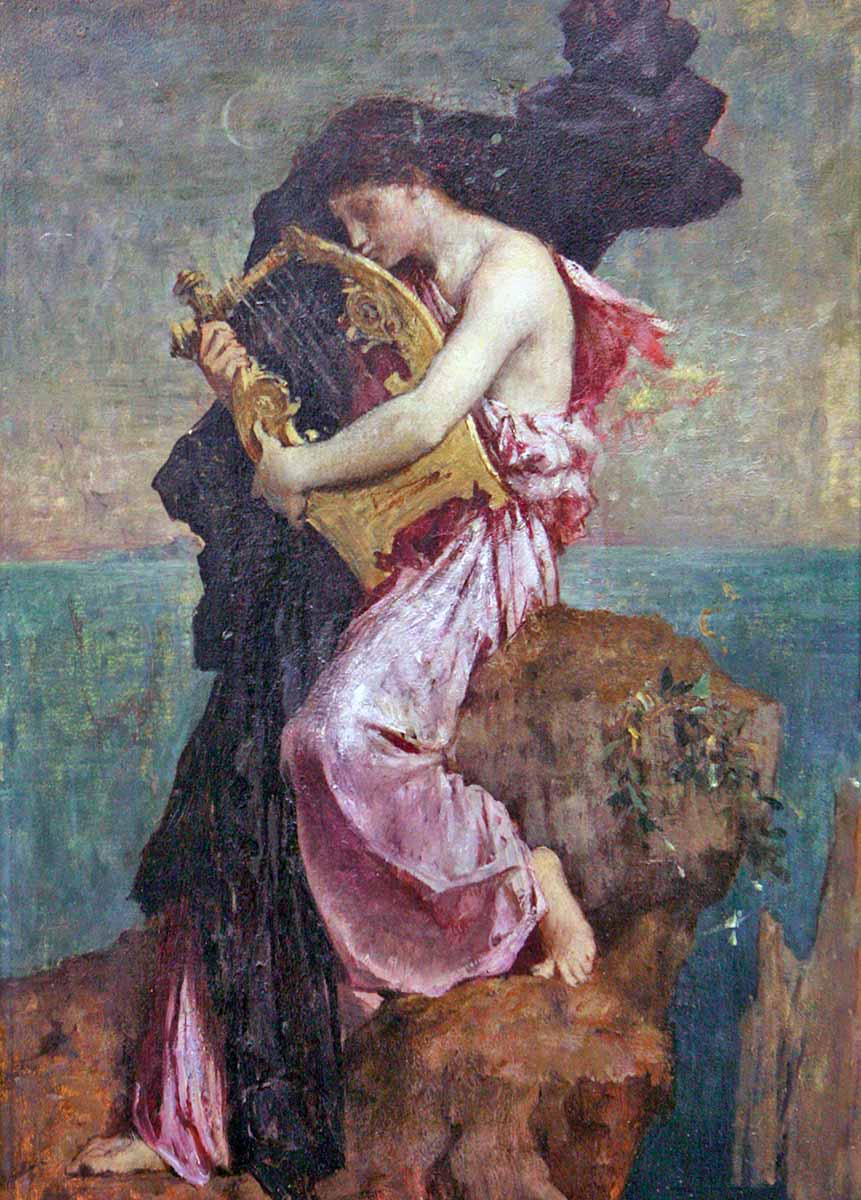
Sappho is one of the earliest female poets. She is thought to have composed around 10,000 lines of poetry, most of which has sadly been lost. From the island of Lesbos, she lived between c. 630 and 570 BC. She wrote romantic poetry addressed to women, making her work the primary foundation for modern concepts of sapphic literature and the origin of the word “lesbian.” She was so celebrated in ancient Greece that Plato called her the Tenth Muse.
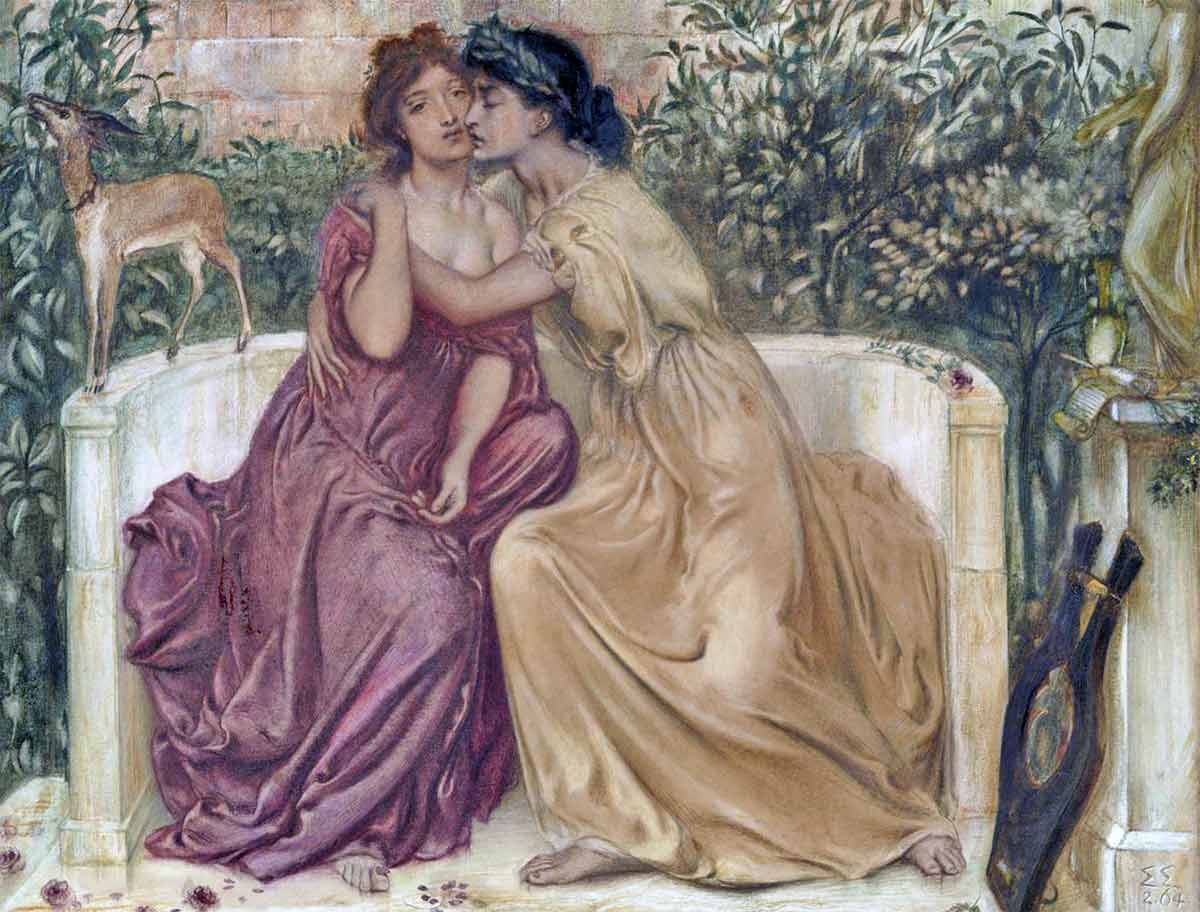
Sappho’s Fragment 31 is widely considered to be one of the earliest and most vivid descriptions of intense physical and emotional passion in Western literature. She speaks as an observer, watching a man sitting across from a young woman, listening to her sweet voice and lovely laughter. Sappho considers the man equal to a god because he can sit so close to her without being overcome by his passion.
The poet herself is physically overcome by passion even watching from a distance. Her voice fails, her skin burns, her hands shake, and she turns a sickly green. This is the earliest example of a person claiming to be “lovesick.” Unfortunately, the end of the poem does not survive.
2. Archilochus: The Shield Dropper
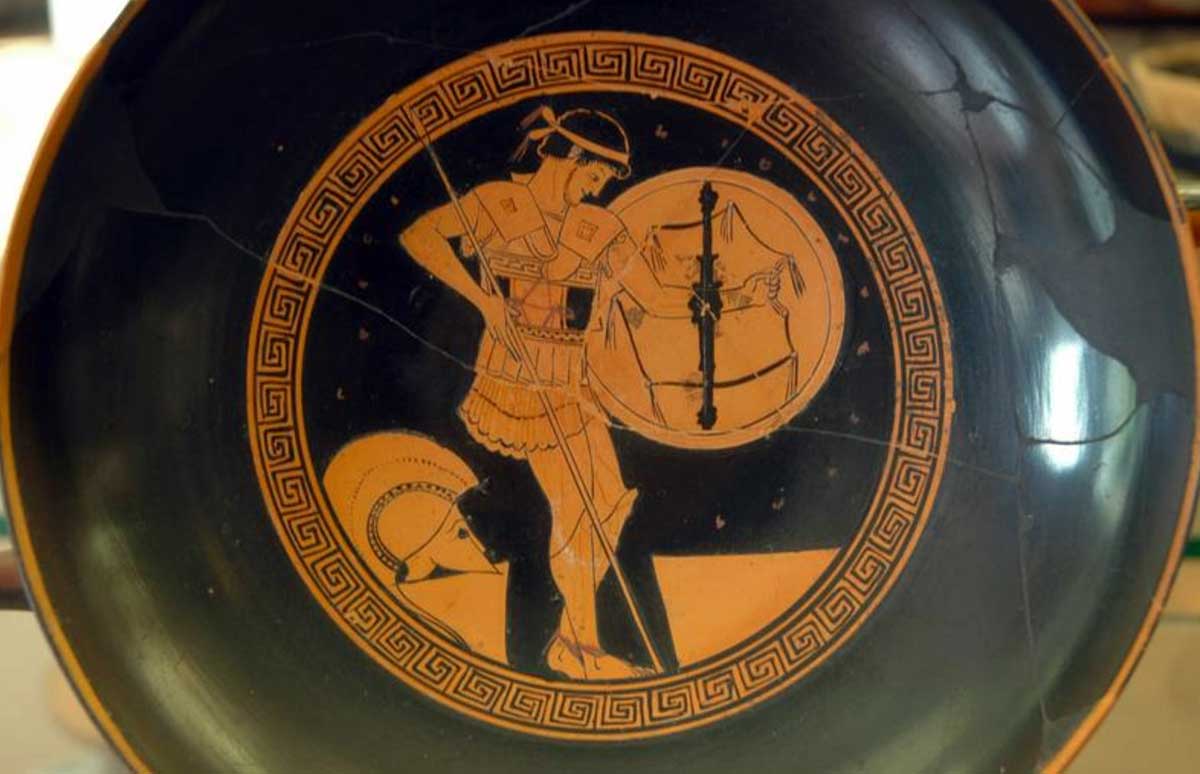
Well, what if some barbaric Thracian glories
In the perfect shield I left under a bush?
I was sorry to leave it – but I saved my skin.
Does it matter? Oh hell, I’ll buy a better one.(Archilochus, On His Shield, Fragment 5)
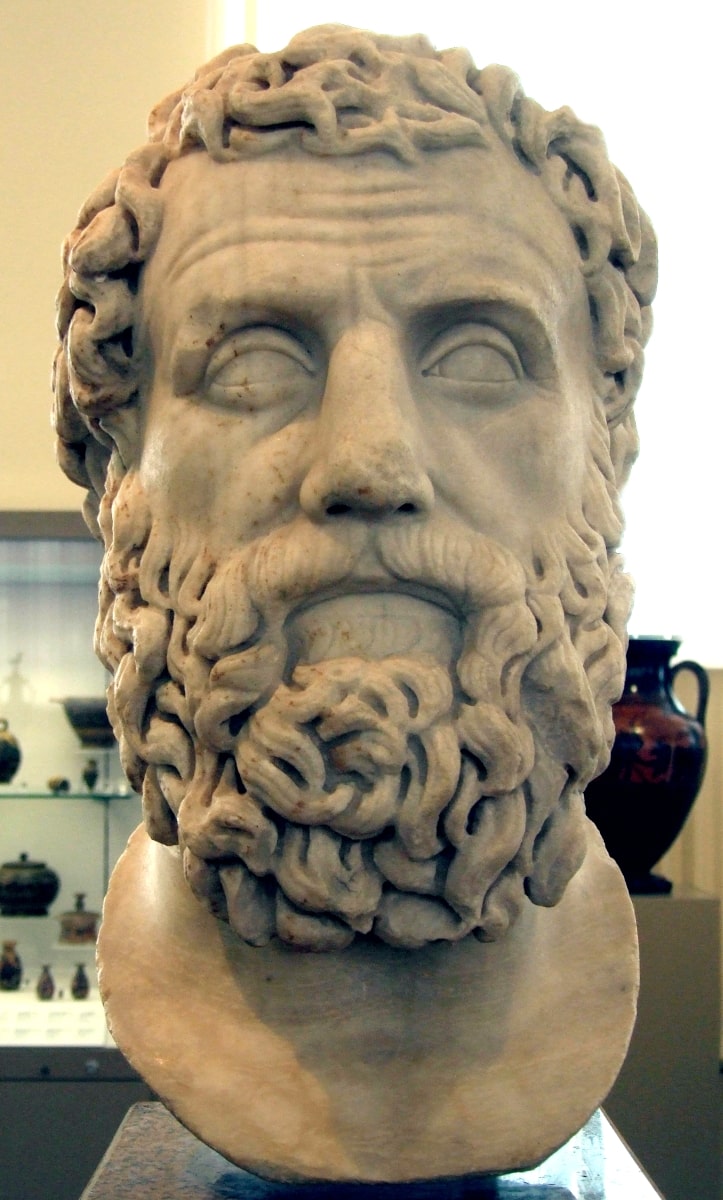
While Sappho wrote of love, Archilochus (c. 680-645 BC) from the island of Paros was known for writing personal satire in iambic verse. He positioned himself as an anti-Homer. While the epic poet glorified battle, Archilochus, a mercenary soldier, spoke about the brutality of war. This clearly appealed, as the ancient Greeks often ranked him second only to Homer among their poets.
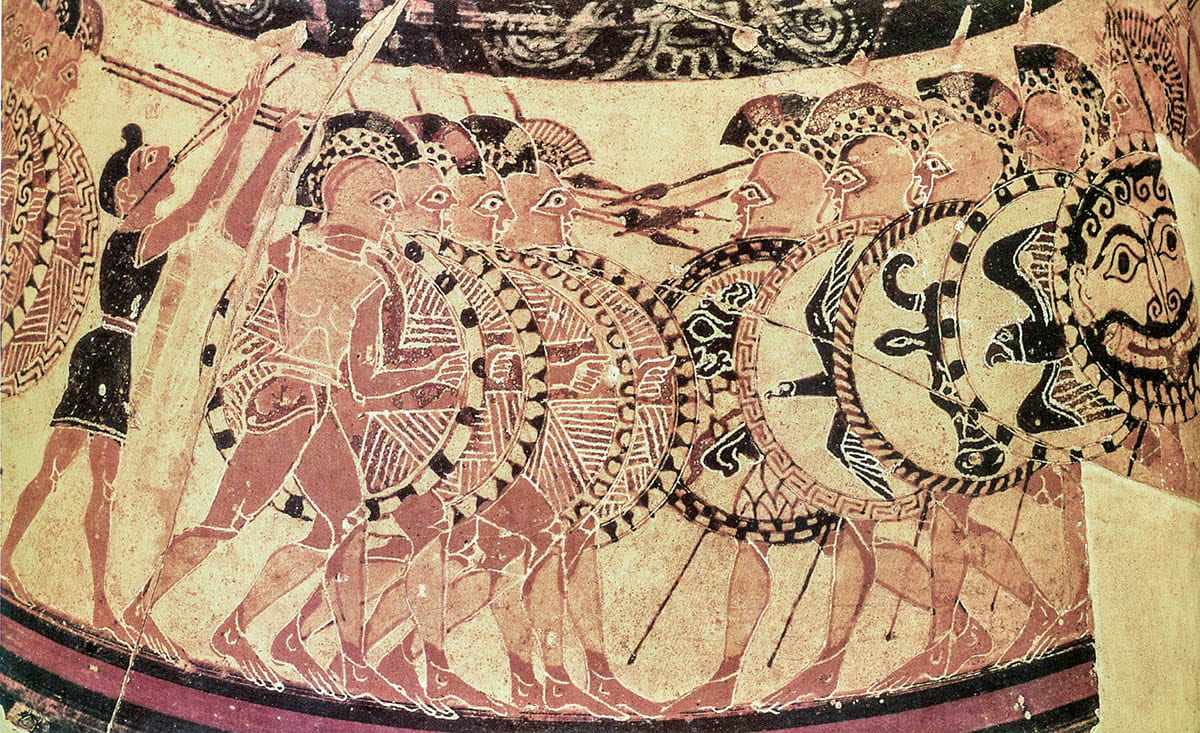
In his poem On His Shield (Fragment 5), Archilochus scandalously admits to throwing away his shield to flee the battlefield and save his own life. While the speaker might seem cowardly to modern readers, this admission would have shocked ancient Greek readers. It was considered shameful to throw down your shield, which in phalanx formation protected not just you but the man beside you. It was the worst thing a soldier could do, which is why Spartan mothers told their sons to return “with your shield or on it,” as a corpse.
Archilochus is openly mocking this ideal, and the type of grandiose courage shown by all of Homer’s heroes. Real soldiers face fear and do not always live up to the ideals of legends. The poem clearly spoke to many Greek soldiers as it spread quickly. It was banned in Sparta as a negative influence on the young.
3. Mimnermus: The Terror of Tomorrow
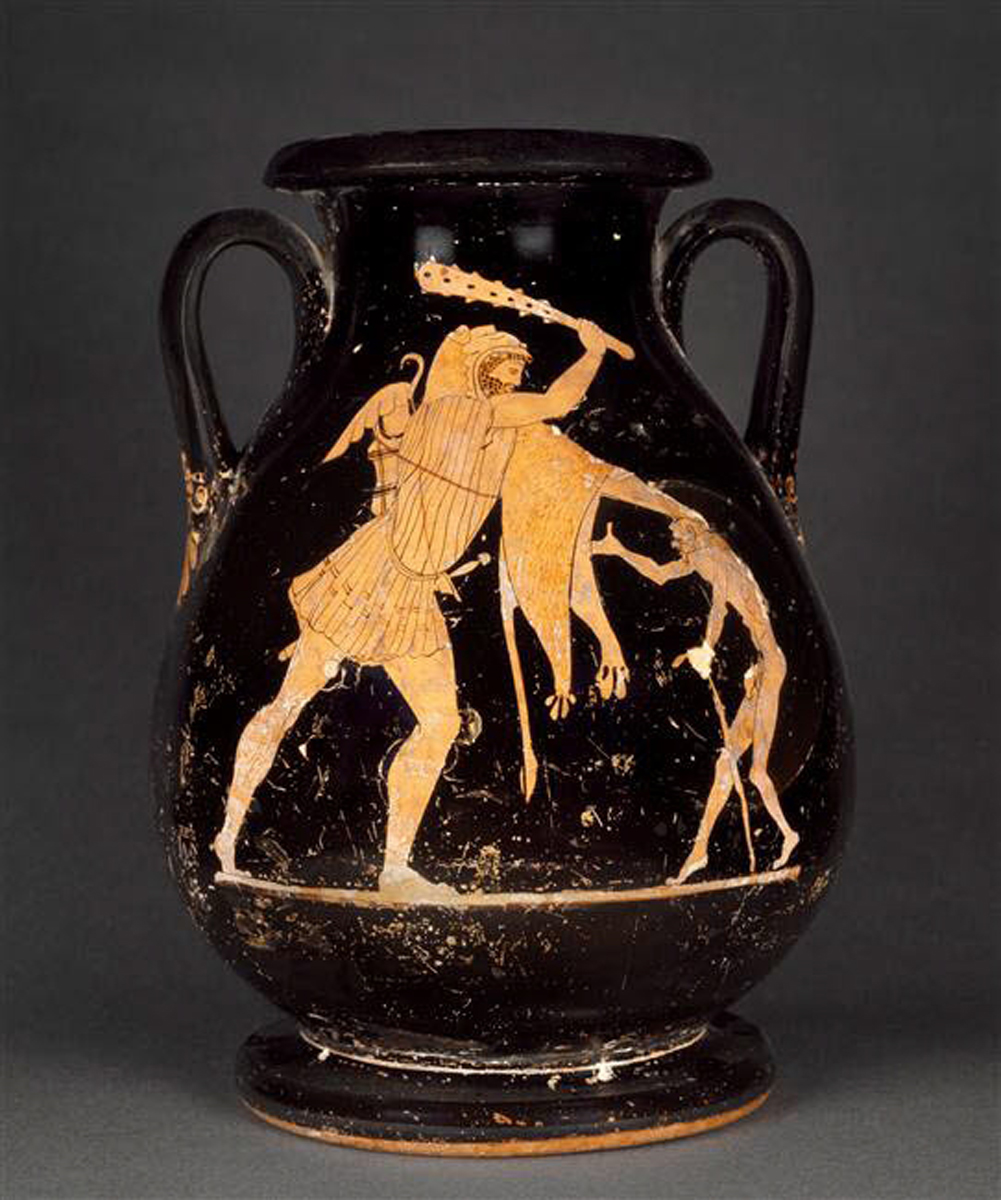
But what is life, what is pleasure, apart from golden Aphrodite? Would that I die when these things no longer interest me. The secret relationship and the wooing-gifts and the bed, which are youth’s blossoms to be grasped by men and women. But after painful age comes upon him, which makes a man entirely ugly and bad, evil cares are always vexing him in both lungs; no, he does not delight facing the rays of the sun, but he is an enemy to men and shown no honor by women. Thus, did god decree grievous old age.
(Mimnermus, Fragment 1)
Mimnermus (c. 630-600 BC) was a Greek poet from Asia Minor who wrote rather melancholy poems about fleeting youth and unrequited yearning. While Greek culture respected the wisdom that came with old age, Mimnermus reimagined it as a wretched state. But in his dark reflections, Mimnermus helped establish elegy, a poetic meter that combines hexameter and pentameter, as the best medium for lamentation.
In Fragment 1, Mimnermus asks what the point of life is without love, embodied by the goddess Aphrodite. But he considered love a young man’s game, with old men, who have become ugly and worn down by life, scorned by all. He suggests that he would rather die than outlive his capacity for romance and intimacy. The great Athenian politician Solon was so shocked by Mimnermus’ perspective that he wrote a poetic reply urging Mimnermus to wish to live to the ripe old age of 80.
4. Anacreon: The Gray-Haired Lover
Once again golden-haired Eros,
Hitting me with a purple ball,
Calls me out to play
With a fancy-sandaled maid.
But she, hailing from
Well-endowed Lesbos, finds fault
With my hair, for it’s white.
She gapes open-mouthed at another girl(Anacreon, Fragment 358)
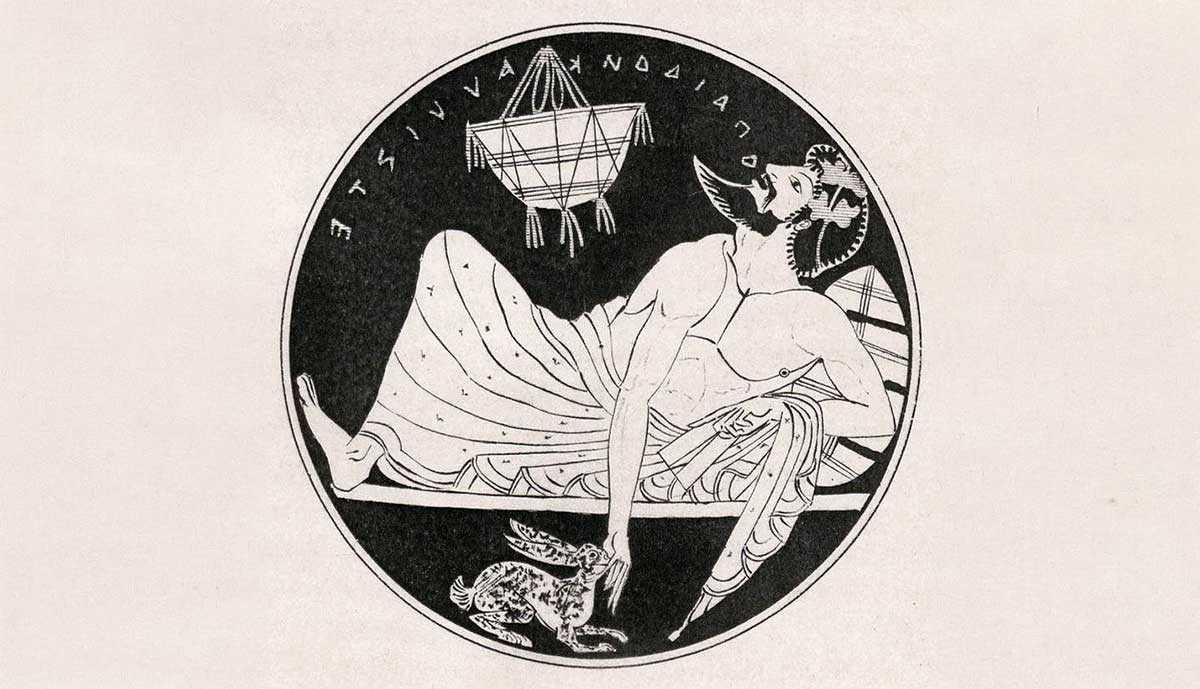
Anacreon (c. 573-495 BC) was a popular Greek poet known for writing drinking songs (or bacchanalian hymns) and erotic poems in the Ionic dialect. Nevertheless, he was greatly respected, invited to educate the future tyrant of Samos, Polycrates, who was the subject of much of his poetry. He then moved to Athens, from which he later fled. According to popular ancient legend, he died by choking on a grape seed; a fittingly ironic end for a bacchic poet, though likely apocryphal.
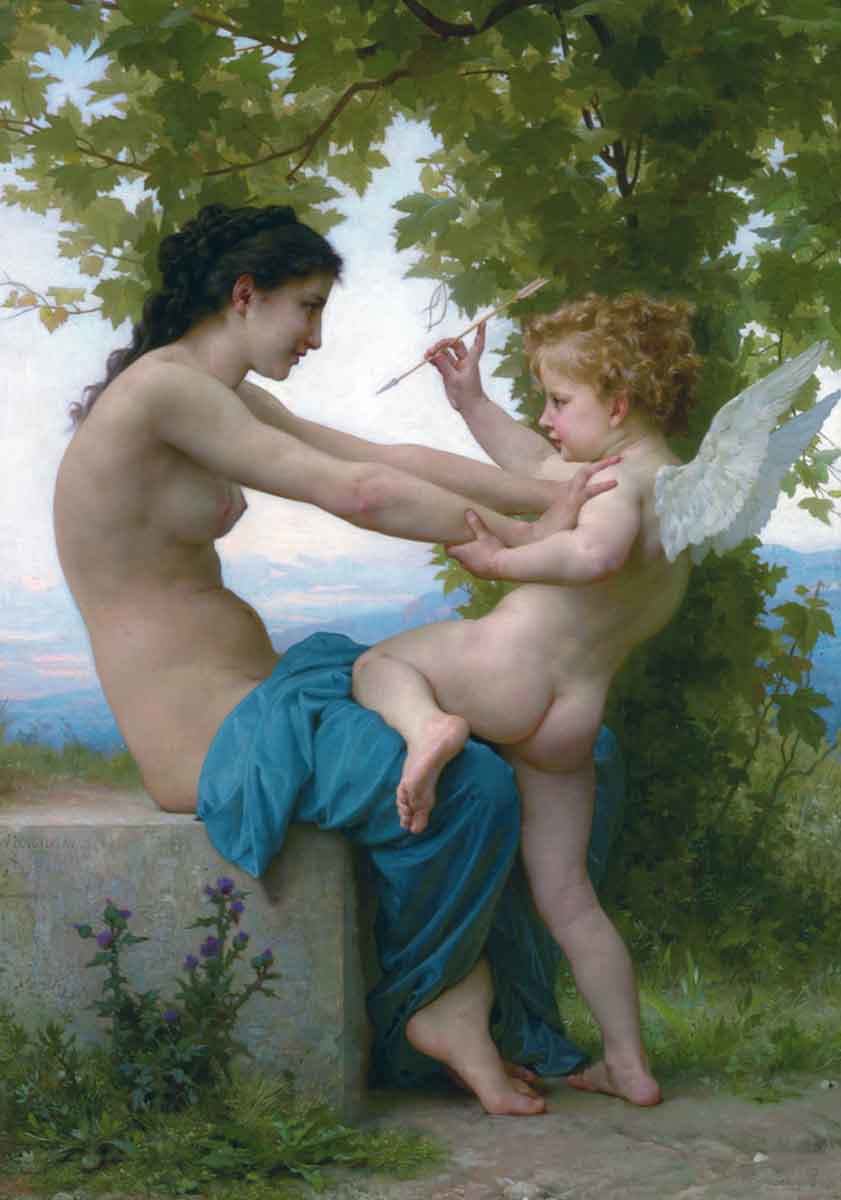
In Fragment 358, Anacreon chooses the god Eros to embody love. But while he was usually considered a powerful primal force in Greece, the poet diminished him into a playful child, foreshadowing the Roman depiction of Eros as a cupid. He contrasts that youthful god’s colorful golden hair and purple ball with his own faded white hair and graying appearance. But the woman he desires, who rejects him for his age, does not choose the younger man; like Sappho, she prefers another woman.
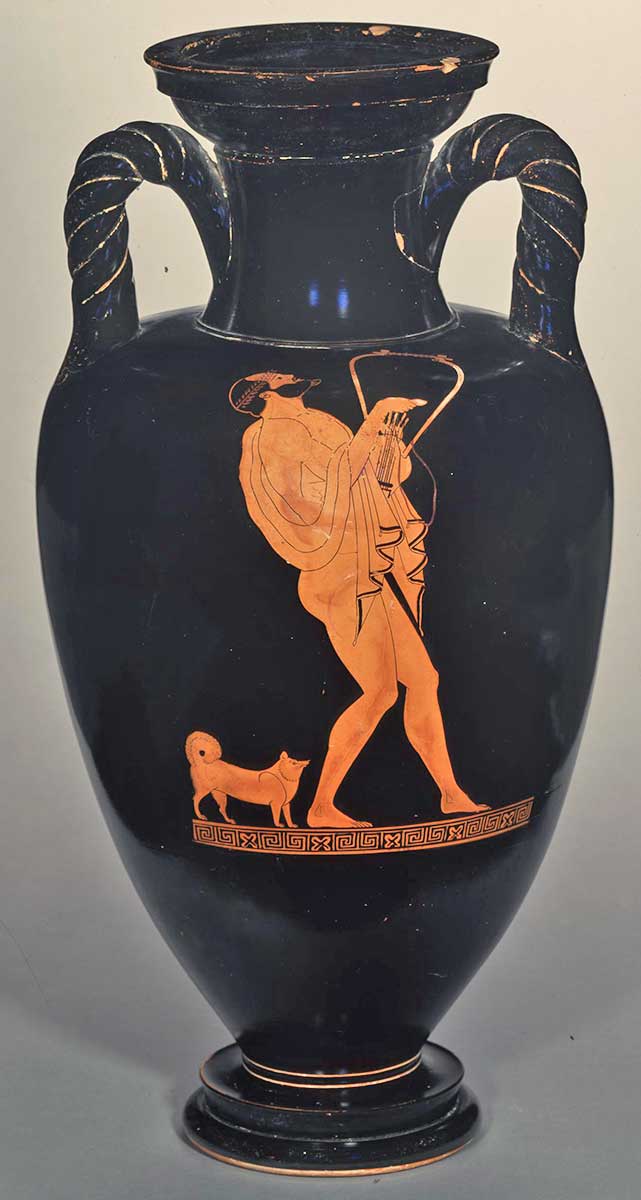
Anacreon was famous in his own day, even appearing on an Athenian red-figure vase during his lifetime. He also influenced Athenian drama of the 5th century BC, with Aristophanes including adaptations of Anacreon’s poems in his plays. Anacreon became the archetype for the suave, effeminate, luxury-loving poet.
5. Tyrtaeus: The Call to the Front
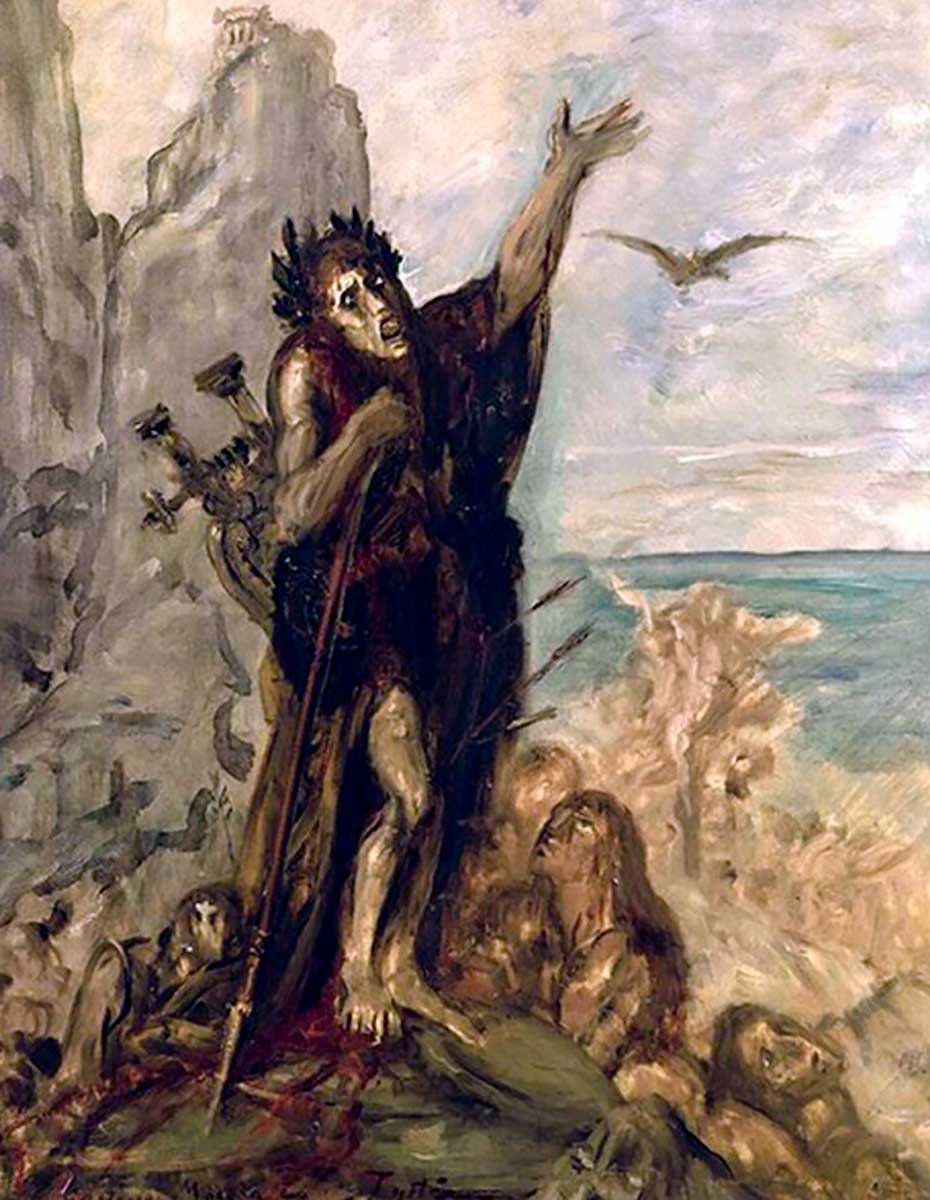
It is a fine thing for a brave man to die when he has fallen among the front ranks while fighting for his homeland, and it is the most painful thing of all to leave one’s city and rich fields for a beggar’s life, wandering about with his dear mother and aged father, with small children and wedded wife…
… Those who dare to stand fast at one another’s side and to advance towards the front ranks in hand-to-hand combat, they die in fewer numbers, and they keep safe the troops behind them; but when men run away, all esteem is lost.
(Tyrtaeus, Fragments 10 and 11)
Tyrtaeus was an archaic Greek poet writing in the 7th century BC, just a century after Homer. From Sparta, he embraced and celebrated the city’s militaristic lifestyle and commitment to martial glory. He wrote in the context of the Second Messenian War, which saw the enslaved helots, on whom Spartan society relied, revolt.
His poem, preserved in Fragments 10 and 11, was a piece of propaganda sung by Spartan soldiers to boost morale and instill discipline. It taught them not to fear a heroic death in battle, but rather to fear living with the disgrace that accompanied fleeing, which would mean exile and poverty for himself and his family. Tyrtaeus also reiterated the camaraderie of fighting in the tight phalanx formation, side by side with their Spartan brothers. He wrote a similar work in the Eunomia (Law and Order), which encouraged Spartans to venerate the gods and respect the power of the kings.
While Tyrtaeus’ poems were elegiac couplets, the Spartan army also sang paean hymns in chorus, addressed to Apollo or Ares, while marching into battle. While framed as prayers for protection and victory, they were also a way to boost morale before making the charge.
6. Theognis: The Pain of Betrayal
Seek as I will, I can find no man like myself that is a true comrade free of guile; and when I am put to the test and tried even as gold is tried beside lead, the mark of pre-eminence is upon me.
(Theognis of Megara, Fragment 415)
Theognis of Megara (c. 6th century BC) stands out on this list in that around 1,400 lines (questionably) credited to him survive. He also writes morally didactic gnomic poetry anchored in aristocratic conservatism and classism. He snobbishly divides humanity into two classes, the Agathoi, noble aristocracy, and Kakoi, the corrupt commoners. He laments the growing power of the Kakoi and advises others, often specifically a young aristocratic boy he names Cyrnus, on how to avoid their evils. This earned him a reputation as a moralist.
In Fragment 415, he laments that in such turbulent political times, it is challenging to find a true friend and ally. He suggests that many are counterfeit, just like the gold and silver coins in circulation. The poet claims that his own noble loyalty shines like pure gold in a world of counterfeit currency. He thinks so highly of himself that no one else can live up to his expectations.
7. Simonides: The Epigram for the Fallen
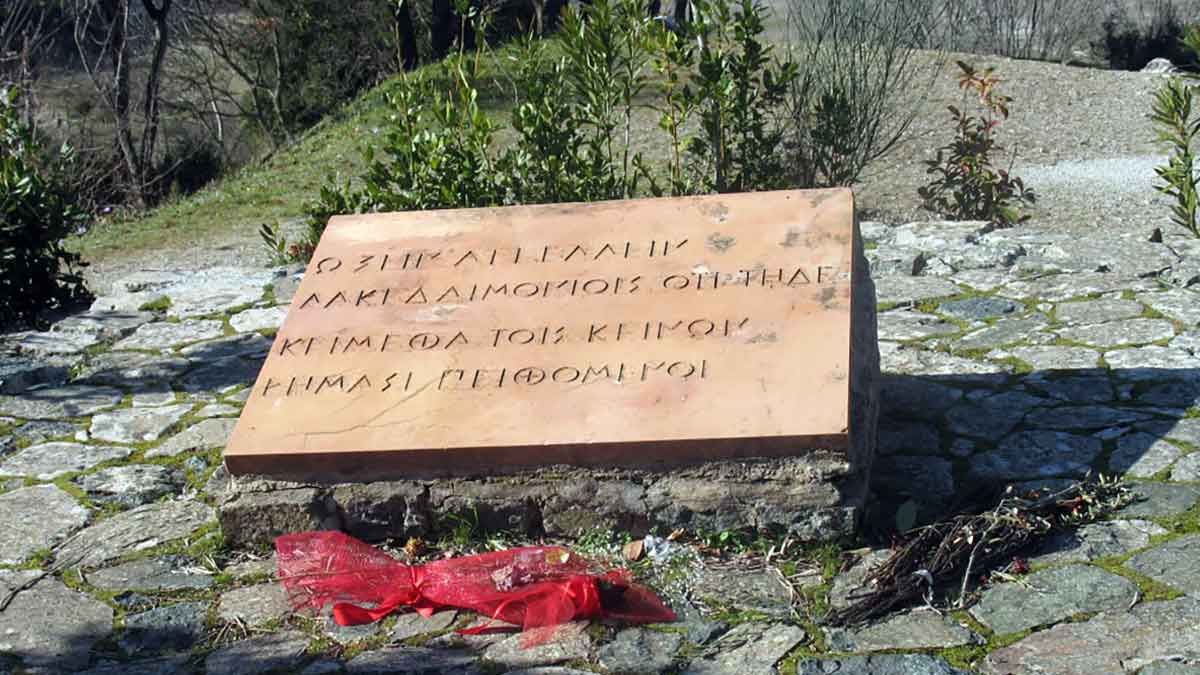
Go tell the Spartans, you who passing by,
That here, obedient to their laws, we lie.(Simonides, Go Tell the Spartans)
Simonides’ brief two-line poem, Go Tell the Spartans, may be the most famous couplet in history. A lyrical poet, Simonides (c. 556-468 BC) wrote these words for a commemorative inscription for the 300 Spartans, and other Greeks, who died at Thermopylae, delaying the Persian advance into Greece.
Simonides is also known as the first professional poet. Before him, poets were generally aristocrats who had the time to compose verses for their own prestige. He transformed poetry into a lucrative business, becoming the first known poet to explicitly demand payment for his verses. This earned him a reputation for being miserly, but people paid. He invented choral poetry to celebrate athletic victors in the Panhellenic games, which became a lucrative earner.