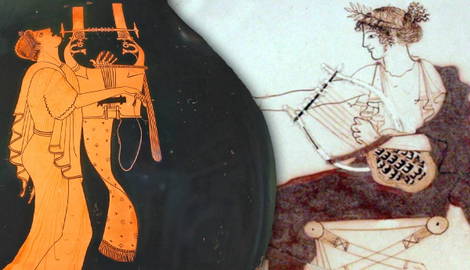

Although music played a significant role in daily life in ancient Greece, most original melodies have been lost, leaving a gap in our historical understanding.
Recent scholarly efforts to reconstruct the sound of ancient Greek music, utilizing archaeological discoveries and papyrus fragments, have provided interesting insights. Modern reconstructions of ancient Greek music not only illuminate the sounds themselves but also deepen our understanding of Greek society and its values and cultural practices, demonstrating the enduring significance of music from antiquity to the present.
Music: The Heartbeat of Ancient Greece
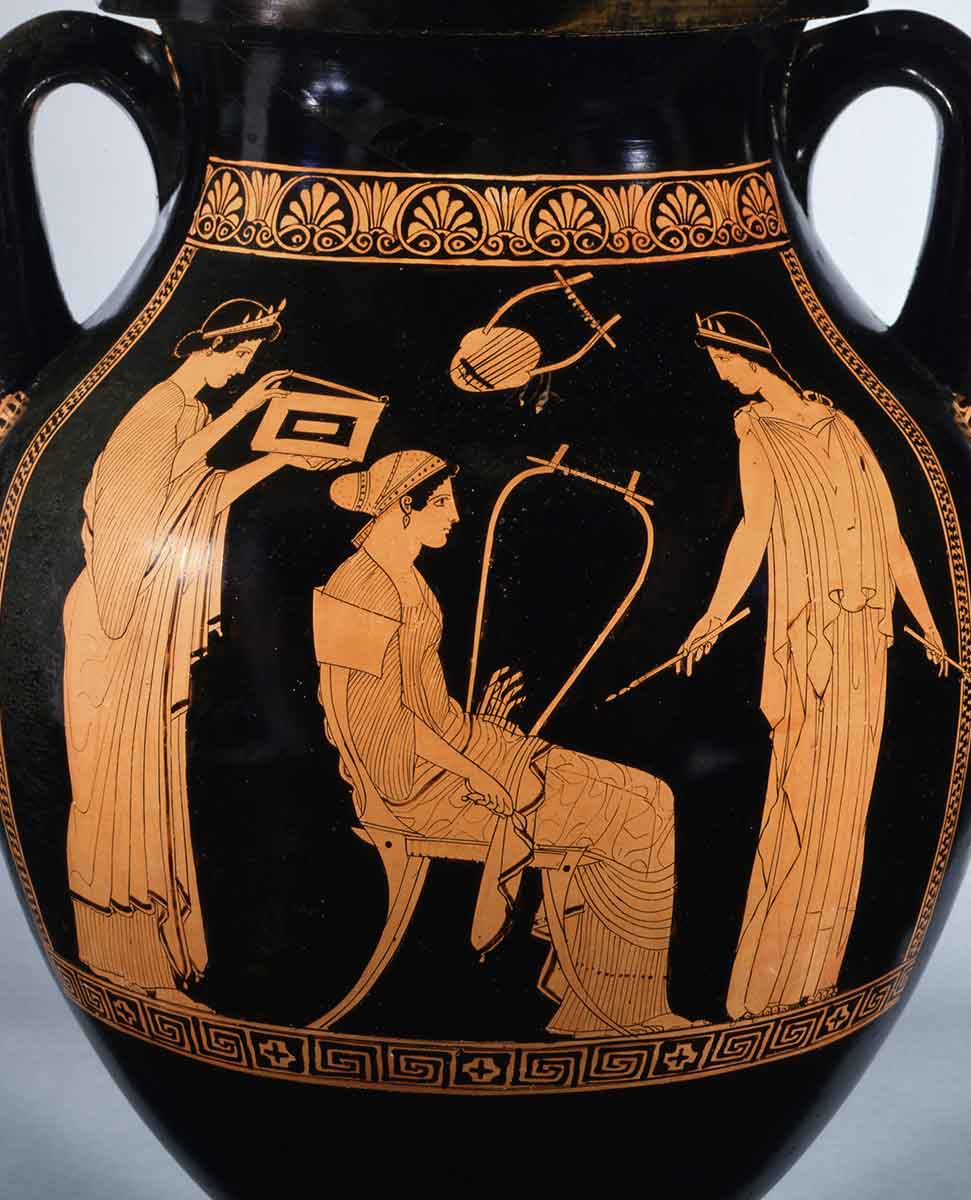
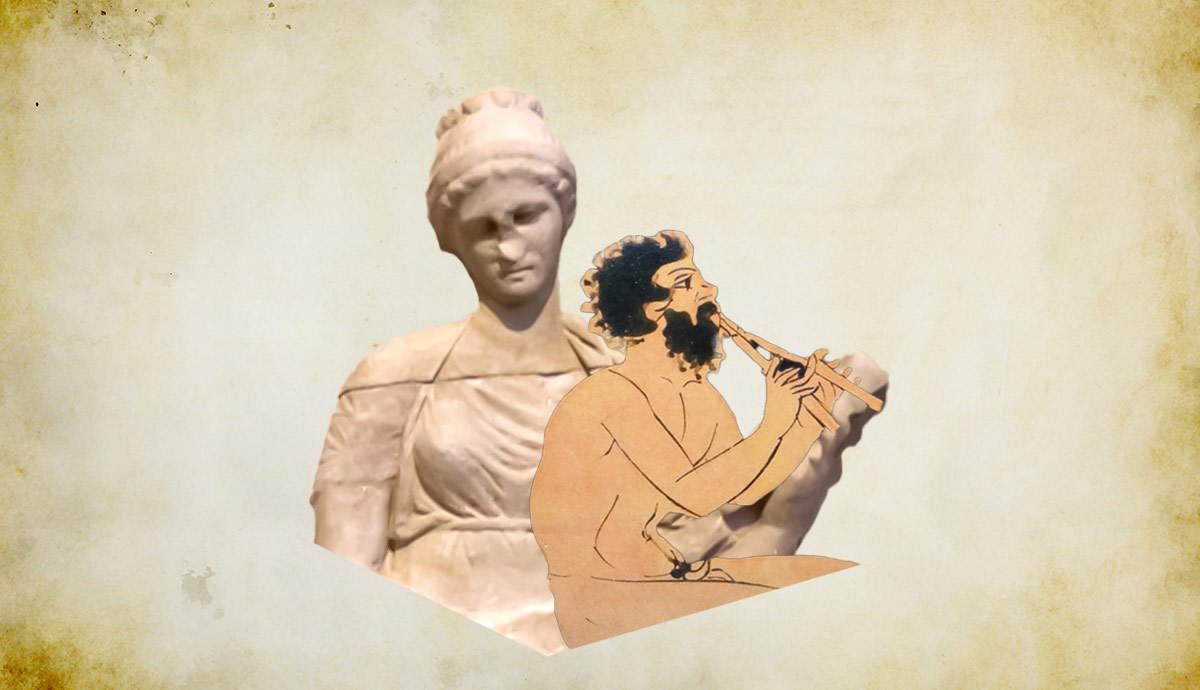
Music formed an important part of life in ancient Greek society. It affected all aspects of life, ranging from education to religion. It also played a major role in entertainment and was important even in warfare.
Music and gymnastics were central to the Greek educational system, shaping both the mind and body of young citizens. In schools, music was used as a key part of learning, with students studying instruments and singing as an essential aspect of their development.
During religious events such as rituals and sacrifices associated with the cults of Apollo and Dionysus, music served to honor the gods and created a sacred atmosphere. In these settings, processional hymns, choral pieces, and instrumental performances helped mark significant moments within rituals. On a more esoteric note, music combined with offerings and periods of fasting played an important role for prophets seeking religious ecstasy. In these mystic rites, music helped prophets achieve the altered state of consciousness necessary to deliver divinations and share prophecies with the community.
Even in wartime, music was important. However, it was not entertainment. Certain sounds on the trumpet dictated commands to soldiers on the battlefield. The aulos and percussion instruments accompanied orders given to oarsmen by the boatswain. Through music, the oarsmen could keep their rowing synchronized.
Types of Ancient Greek Music
Several types of music existed in ancient Greece for various purposes. Hymns are some of the earliest types of music and address a god(dess) in a metric composition. Further, a paean in honor of Apollo or Athena might express hope for deliverance or thanksgiving after a victorious battle. A prosodion was a type of hymn or processional praise of a god(dess) and was sung along the way to an altar or shrine. In the same vein, the hyperchema, a dance song with rhythmic movement, is often linked to paeans and is sometimes even indistinguishable.
But not all ancient Greek music was solemn. Dithyrambs were celebratory and festive, honoring Dionysus. Choirs accompanied by an aulos player were the norm.
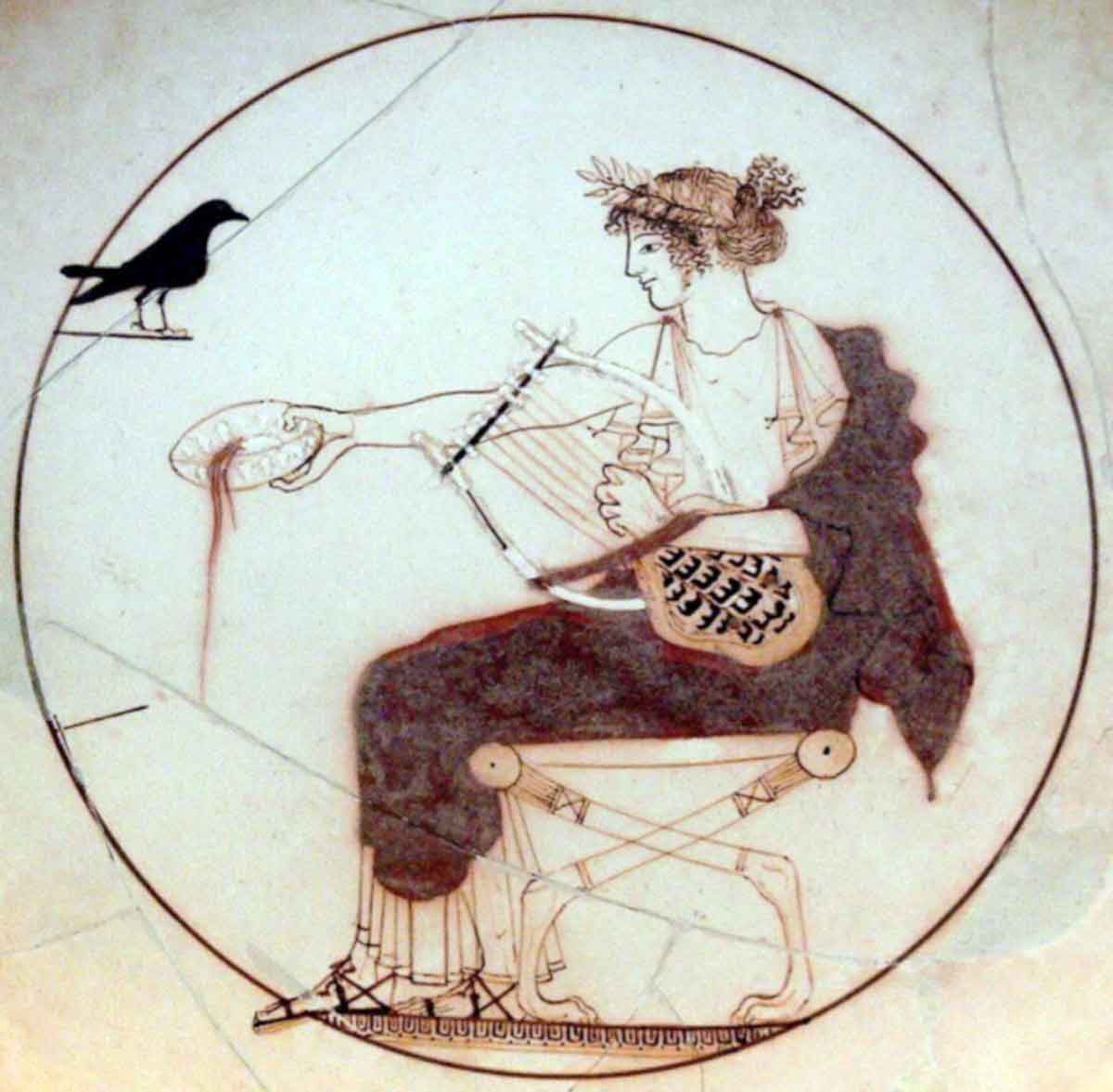
Music permeated every aspect of ancient Greek society. For instance, from the epic poems of Homer around 750 BC to the tragic choruses of Euripides in the 5th century BC, most Greek poetry was composed to be sung, often with an accompanying dance. In fact, weddings, funerals, religious ceremonies, theatrical performances, and even epic recitations all featured music.
A Note on Reconstructing Ancient Greek Music
Greek poets used long and short syllables to give rhythm to their poems. In English, we use stressed and unstressed syllables (e.g., TA-ble). While it is tempting to try to read the Greek poems according to the meter or rhythm, this author has found that, when doing this, they sound like nonsense; a view echoed by William S. Annis in his article introducing Greek meter.
Ancient Greek was guided by pitch-accent. The voice rose and fell on specific syllables. In the music, this was often mirrored.
Around 400 BC, the Greeks developed two systems of notation: one for vocal music (using letters from alpha to omega) and the other for instruments (a more intricate system of letters, inverted letters, and other symbols). The bishop Alypius tabulated this system around AD 500, and his tabulation has played a role in reconstructing ancient Greek music.
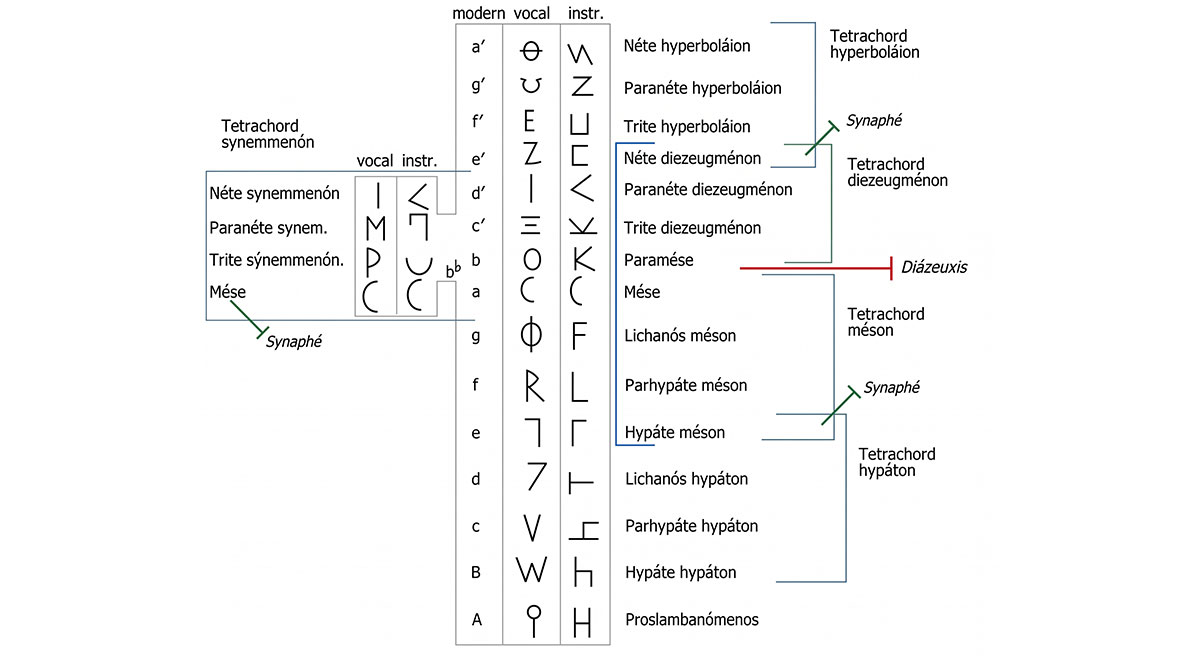
The Seikilos Epitaph and the Orestes papyrus show musical notes, written in letters from the Greek alphabet. Other proof comes from the archeological discoveries of instruments, pictures on vase paintings, and the reconstruction of these instruments, which has helped scholars understand their timbre and pitches.
Lastly, ancient writings by figures like Aristoxenus and Ptolemy have provided scholars with details about tuning systems and ratios among the notes. Philosophers like Aristotle and Plato have written discussions of the harmonic systems, or modes (the ancient Greek equivalent of our modern scales).
Four Examples of Reconstructed Ancient Greek Music
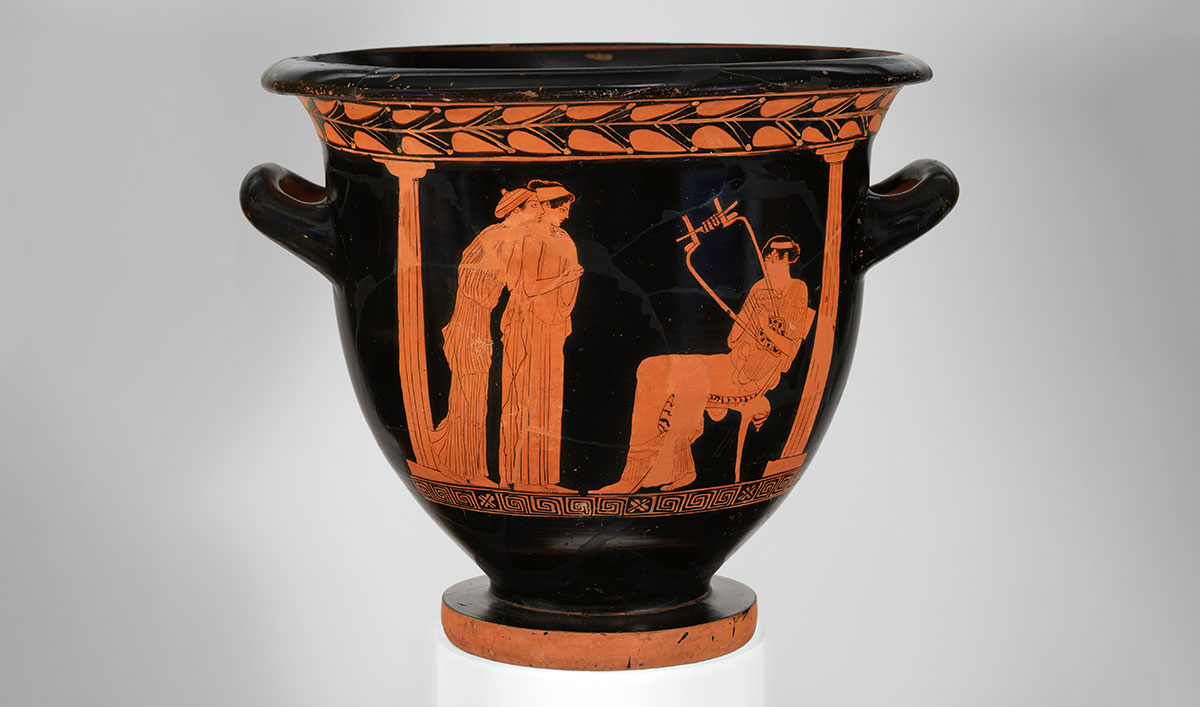
What follows are four famous examples of ancient Greek music that have shaped our understanding of this era’s musical thought and its applications in ceremonies, rituals, and daily life. These examples are presented in chronological order to illustrate the evolution of Greek music across time.
First is the Orestes papyrus fragment, followed by two Delphic hymns to Apollo, the first examples of music where the poet and composer are known by name. The Seikilos Epitaph may be the first example of a memento mori project in musical form. Last, we will see the influence of Roman music on the Greeks through the eyes of Mesomedes.
1. The Euripides Orestes Fragment (ca. 200 BC)
Imagine being pursued by the Furies (Erinyes). During the day, you are plagued by hallucinations, and at night, you have terrible nightmares. The sin? Killing your mother, Clytemnestra, and avenging Agamemnon, your father. The problem is that the Furies would have pursued Orestes either way: if he did not avenge his father, they would be there tormenting him, likewise for committing matricide. The Furies did not look kindly upon family murders. And such is the lot of Orestesin the play by Euripides.
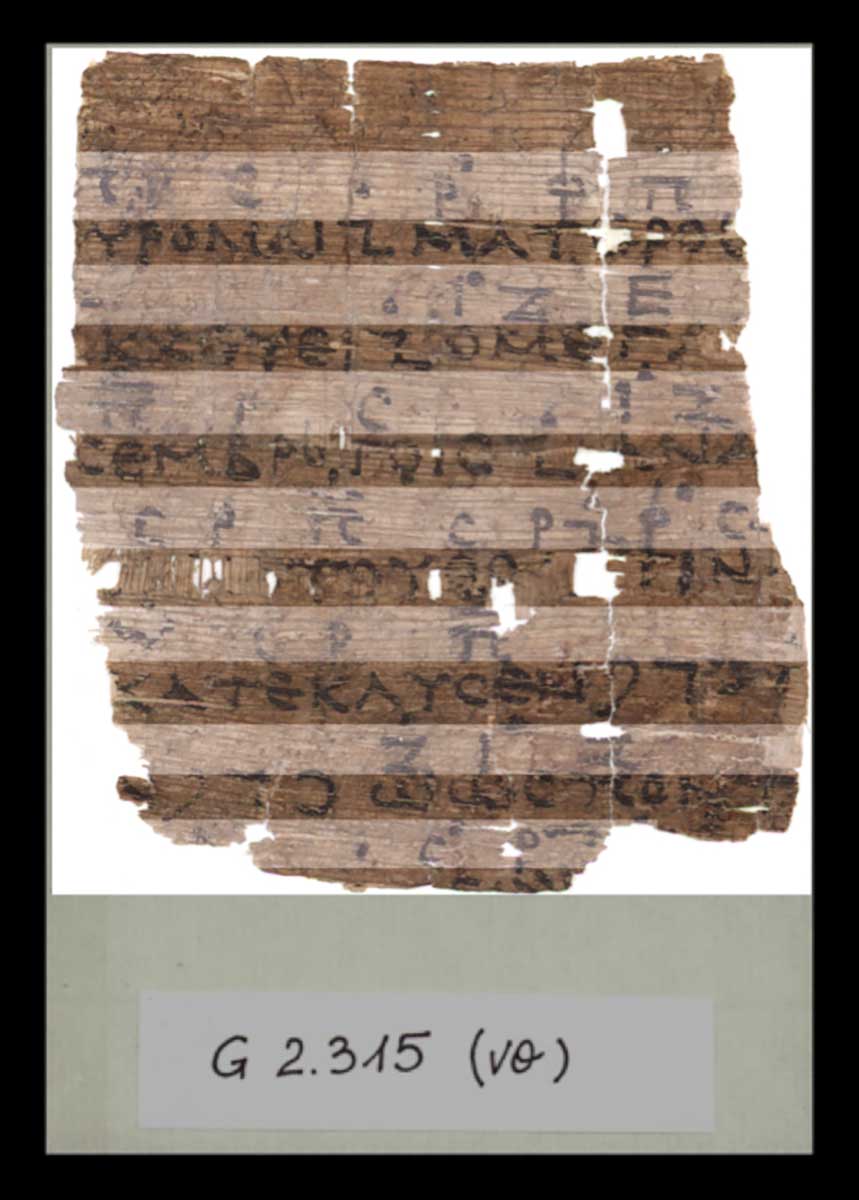
Orestes is perhaps one of the most prized fragments of ancient Greek papyri because it contains seven lines of music written above the text. The chorus is delivering commentary on the events they are witnessing and beseeching the gods to intervene.
It is speculated that Euripides himself, or his musical collaborator, composed the melody. In the melody, a dactylic rhythm is heard: six syllables following a short-short-short long-short-long pattern. This rhythm was often used in Greek tragedies where the passages dealt with intense agitation or grief.
Euripides’s contemporaries often described his music as complex and with a somewhat disjunct melodic style. His music would often depart from the natural contour and rhythm of the text. In this context, it fits the poor character’s turmoil and draws the audience into Orestes’s world.
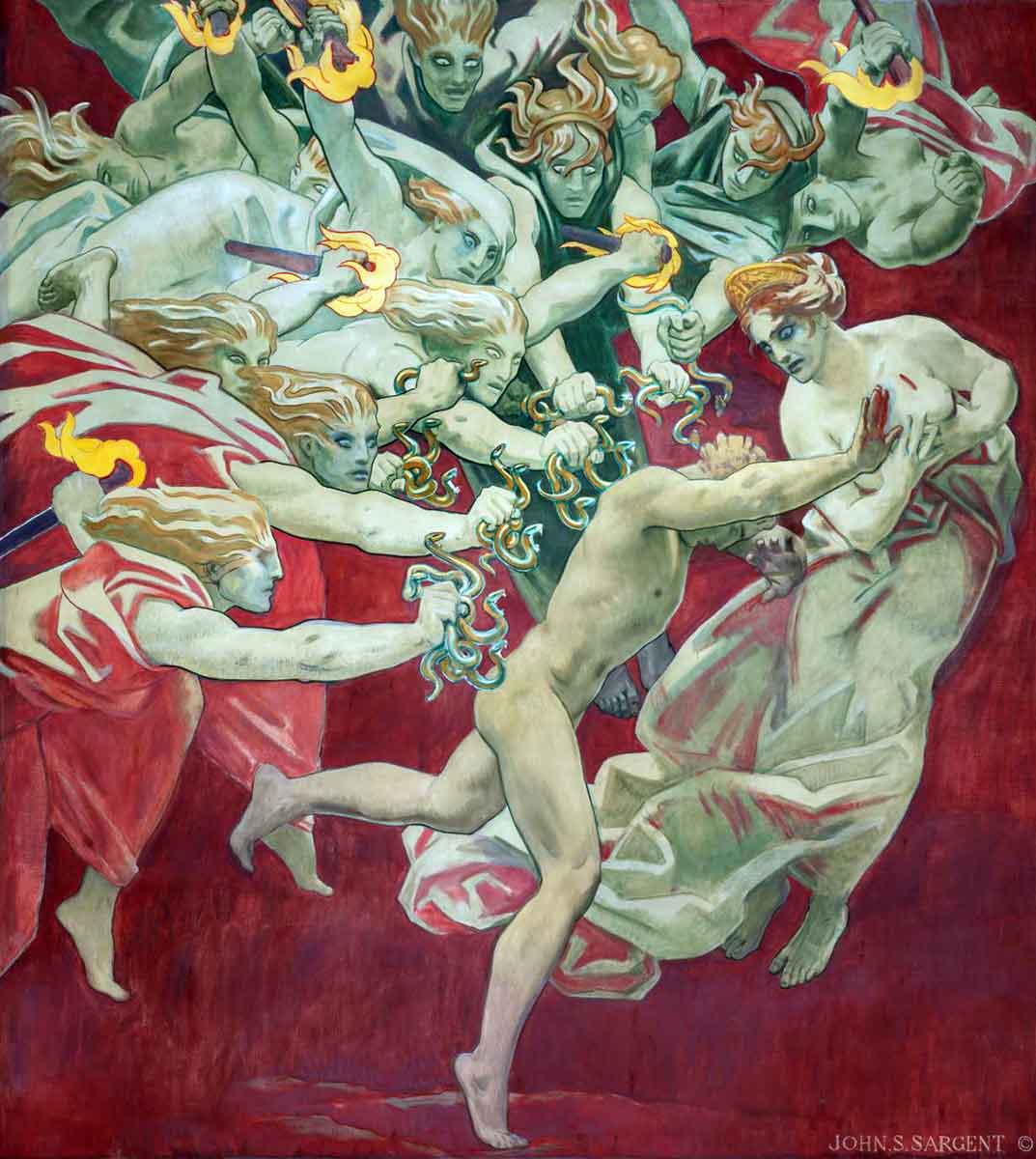
If it were not for the ancient Egyptian attitude to recycling (think of Tutankhamun’s death mask), this fragment might have been lost. Initially, it was part of a mummy cartonnage: layered papyrus and linen (like papier mâché), which were used to make mummy cases. During the late 19th century, the fragment was discovered/retrieved in Hermopolis, Egypt, from the cartonnage. Archduke Ranier of Austria purchased it along with other papyri in 1893. Today, this fragment is known as Papyrus G 2315, housed in the Austrian National Library in Vienna.
Below is a translation:
“You wild goddesses who dart across the
skies seeking vengeance for murder, we
implore you to free Agamemnon’s son
from his aging fury. We grieve for this
boy. Happiness is brief among mortals.
Sorrow and anguish sweep down on it
like a swift gust of wind on a sloop, and
it sinks under the tossing seas.”
Michael D’Angour and collaborators reconstructed the papyrus fragment into a full performance of the choral episode along with replica instruments in 2017.
2. Two Delphic Hymns to Apollo (ca. 138 BC)
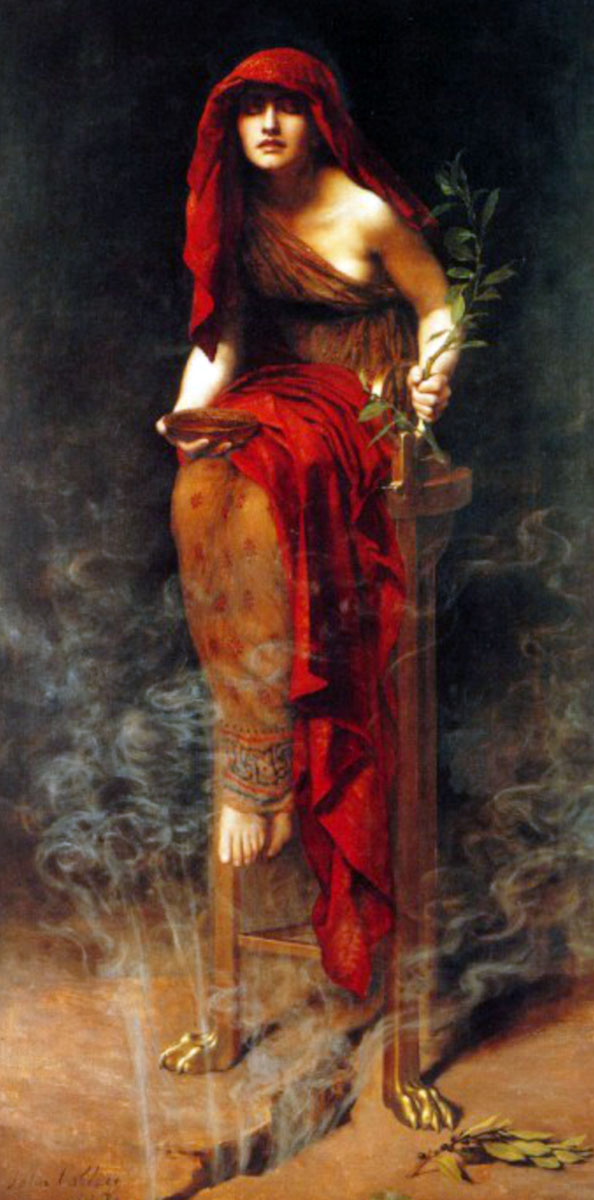
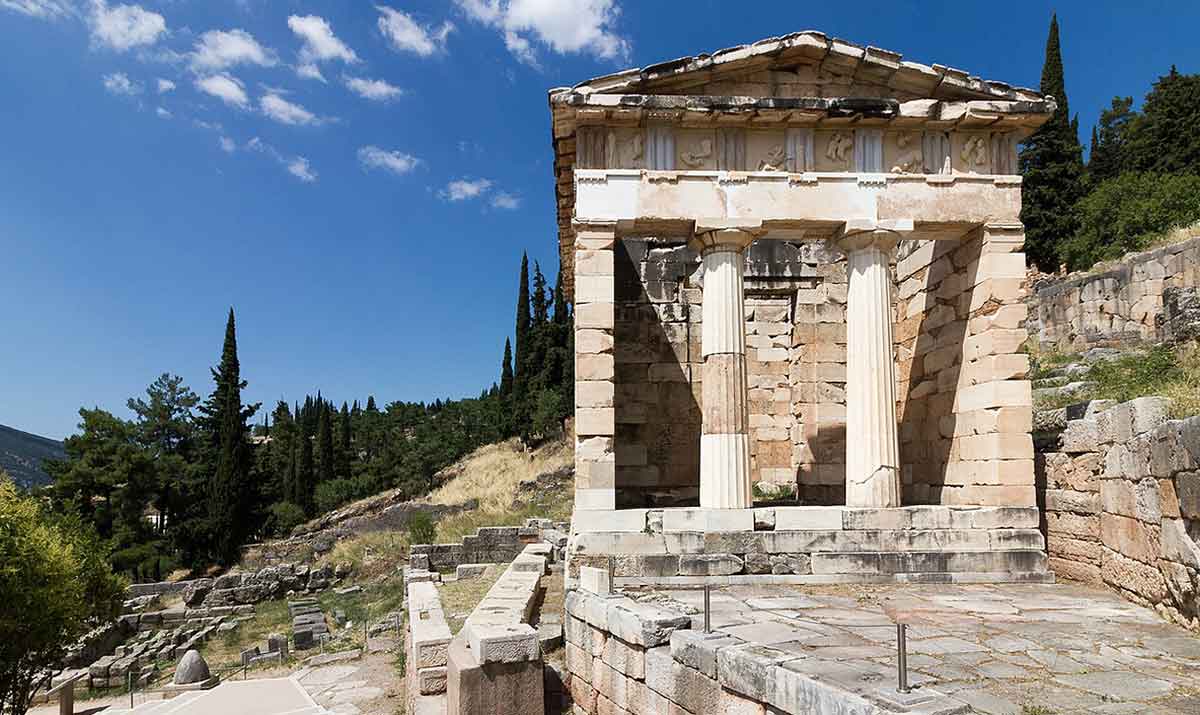
When you faced a major decision, in ancient Greece, you would turn to the Pythia, the Oracle at Delphi. She, as high priestess of the temple of Apollo, would seek guidance, interceding on your behalf with Apollo. Thus, Delphi held an important place in the lives of all Greeks. However, as time passed, it also fell victim to the ravages of time, was forgotten, and fell into ruin.
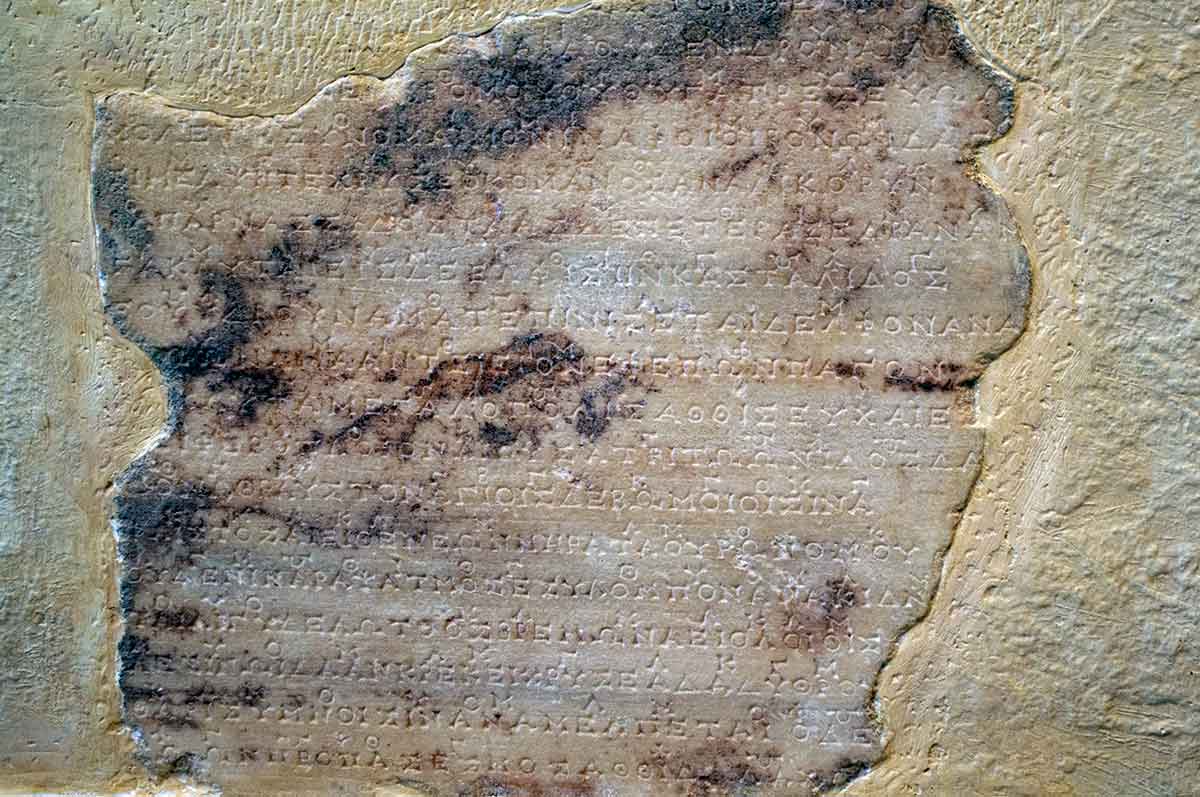
But Delphi is also home to important ancient Greek musical discoveries, too. French archaeologist Théophile Homolle discovered stone fragments with unusual inscriptions here. His investigation uncovered that they were two hymns dedicated to Apollo. Henri Weil, a philologist, worked on restoring the texts, and musicologist and archaeologist Théodore Reinach transcribed the ancient notation into our modern system.
The two hymns commemorate Apollo’s mythical journey from Delos in a procession that went from Athens to Delphi, called the Athenian Pythaides.
The first hymn (video above), a vocal composition, dates from 138 BC (some scholars argue 128 BC). Even though the heading is damaged, researchers agree that it was composed by Athenaios son of Athenaios (in ancient Greek: Ἀθήναιος Ἀθηναίου or Athēnaios Athēnaiou).
This hymn is divided into two parts: a paean in three verses and a dance song or hyporchema. Various episodes from the god’s life are celebrated, such as his birth, his journey from Athens to Delphi, and other significant events.
In the first verse, the Muses are invited to join their travelers to celebrate Apollo. His connection to the Castalian spring (where the Pythia also cleansed herself before consultations with Apollo) is mentioned, and also Mount Parnassus.
During the second verse, the delegation from Attica and the sacrifice of Arabian incense and young bulls are invoked. The sacrifice is accompanied by pipes (aulos, plural auloi) and the kithara (lyre).
Although fragmented, the final verse addresses Apollo directly, and he is praised for slaying the python (Delphi was known as Pytha during the Bronze Age). Apollo subsequently seized the tripod upon which the Pythia now sits, and the intoxicating vapors are said to rise from a crack where the python decays. Further, Apollo and Artemis are called upon and asked to protect Delphi as they have done during an unsuccessful attack by the Gauls.
Below is the first reconstruction by Reinach and accompaniment by Gabriel Faurè. When you compare the modern reconstruction, it is evident that these two versions sound worlds apart. As scholarly investigation has improved over time, we now have a better idea of what ancient Greek music sounded like.
The Second Delphic Hymn, by Limēnios of Athens, consists of ten sections: nine are in a cretic meter and form the paean, and the tenth is the prosodion using aeolic rhythms. Again, the Muses are invited to celebrate Apollo’s birth on Delos, but also his role as healer and his victories (slaying the python and driving the Gauls away). During the prosodion, Apollo is beseeched to protect Athens and Delphi, and the Roman Empire’s continuity (Greece became a Roman protectorate in 146 BC).
Like the first hymn, Limēnios also calls upon the Muses, continuing to describe Apollo’s birth when the goddess grasped an olive branch during labor, a nod to Athens. It is suggested that the Athenians invented the paean themselves because it describes Apollo’s journey from Attica to Delphi.
The musical structure is sophisticated, with frequent modulations between different modes, including the Phrygian, Lydian, Hyperphrygian, and Hypolydian.
Both hymns illustrate complex shifts between tones spanning more than an octave (eight notes). Intricate rhythmic patterns and melodies relating to the accents of the Greek language form the Greek understanding of scales and modes. All of this gives scholars a way to understand how ancient Greek music functioned and how they used their understanding of music theory.
3. The Seikilos Epitaph (ca. First Century AD)
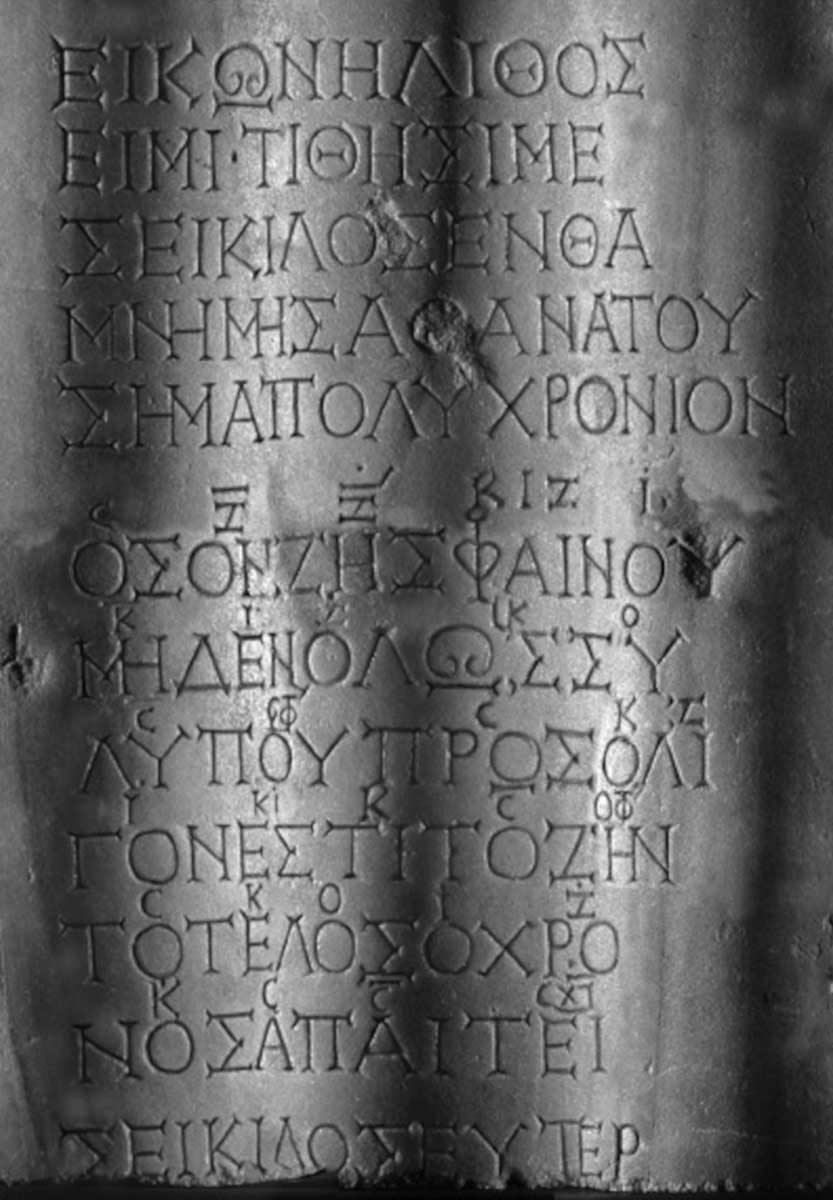
Before there were memento mori and vanitas portraits, there was the Seikilos epitaph. While the fragment from Orestes preserves theatrical grandeur, the Seikilos epitaph speaks to a more intimate and universal theme: mortality. The marble tombstone was discovered in 1883 near Aydin, Turkey, by Edward Purser.
Its survival is miraculous. It stood, exposed to the elements, for two millennia in Asia Minor and survived the destruction of Smyrna during the Greco-Turkish war between 1919 and 1922.
The last four letters on the base, ΕΥΤΕΡ (Euter-), prove to be a bit of a mystery. The base, already damaged, was sawn flat to allow Mrs. Purser (Edward Purser’s wife) to use the stele as a flowerpot stand. Unfortunately, we do not know what the last lines of text were due to the pillar’s prior damaged state. Today it stands proudly in the National Museum of Denmark, Copenhagen.
According to Armand D’Angour, the fragment “EUTER” could be interpreted in several ways. It could be a formula on grave markers that signals that the dedicator survived the dedicatee and created the memorial in their honor. Here, it could be Seikilos who set up the stone as a memorial to his wife Euterpe ΕΥΤΕΡΠΗΙ (“to Euterpe”). She carried the same name as one of the nine muses, and her name means “giver of delight.” But there could also be a bit of vanity involved: if it said ΕΥΤΕΡΠΟΥ, it means Seikilos, “son of Euterpes.”
The dedicator is believed to be Seikilos. Thus, the stone can be interpreted as a husband’s undying love for his departed wife, or a vanity card to mark his place in the world. Unlike other gravestones, the inscription uses the present tense and speaks directly to the reader.
First, the stone “speaks” to the reader and states its purpose:
“I am an image and a stone; Seikilos sets me up here.
as a long-lasting marker of undying memory.”
After the stone has “introduced” itself, it breaks out into song.

Transcription of the Seikilos epitaph, by Armand D’Angour. Source: Antigone Journal
Although the stone melody is relatively simple and written in the Phrygian or Iastian mode, its text strikes us with its poignant message.
Although the Delphic Hymns are filled with complex modulation (key changes) and the Orestes fragment with dramatic intensity, the Seikilos epitaph presents ancient Greek music in a simple form. The notation is complete and straightforward, allowing modern musicians to interpret it without too much trouble.
4. Mesomedes of Crete’s Hymns (ca. Second Century AD)
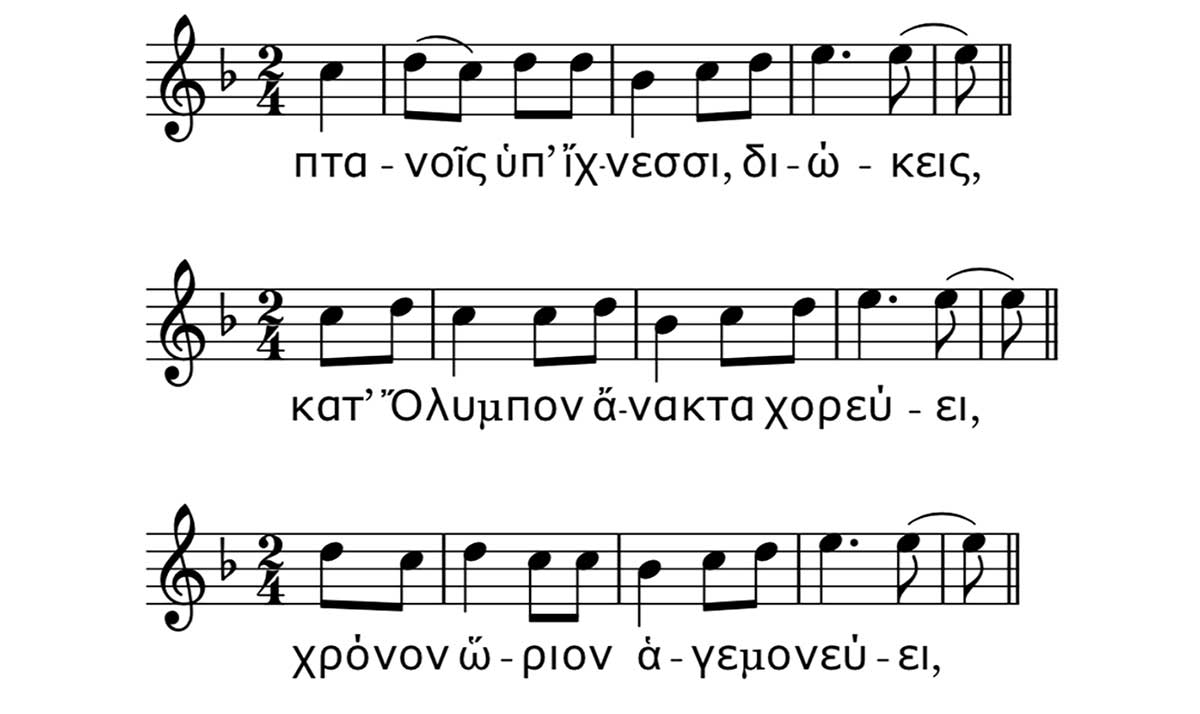
The first forms of ancient Greek music did not reach us through the ancient Greeks, but through preservation in the Byzantine manuscript tradition. Several of Mesomedes of Crete’s hymns, like Hymn to the Sun, Prayer to the Muse, and Prayer to Calliope and Apollo, were passed down through the generations. Today, they are preserved in Byzantine manuscripts such as Anthologia Palatina. For more than 1,400 years, these melodies were carefully copied and transmitted through the Eastern Roman Empire, even surviving the fall of Constantinople.
Vincenzo Galilei (father of Galileo Galilei) made an intensive study of ancient Greek music and presented his findings in his Dialogo della musica antica e della moderna in 1581, in Florence. Galilei’s three Mesomedes hymns were the only form of ancient Greek music scholars had access to for over three centuries.
Mesomedes served as a freedman and court musician to the Roman Emperor Hadrian. As a composer, he even received a state salary. He was renowned for his lyric poems and skill as a citharode (lyre player). He even enjoyed a close friendship with the emperor and took imperial Roman influences and combined them with the Greek musical traditions. His music represents a major portion of extant and performable (Greco-)Roman music, and his works survived with the notation intact.
Modern analysis has revealed that Mesomedes employed word-painting in his Hymn to the Sun, where melodic contours reflect and accentuate the meaning of the words. The song’s structure suggests it was composed for monodic performance, with a single voice accompanied by the kithara.
Final Thoughts
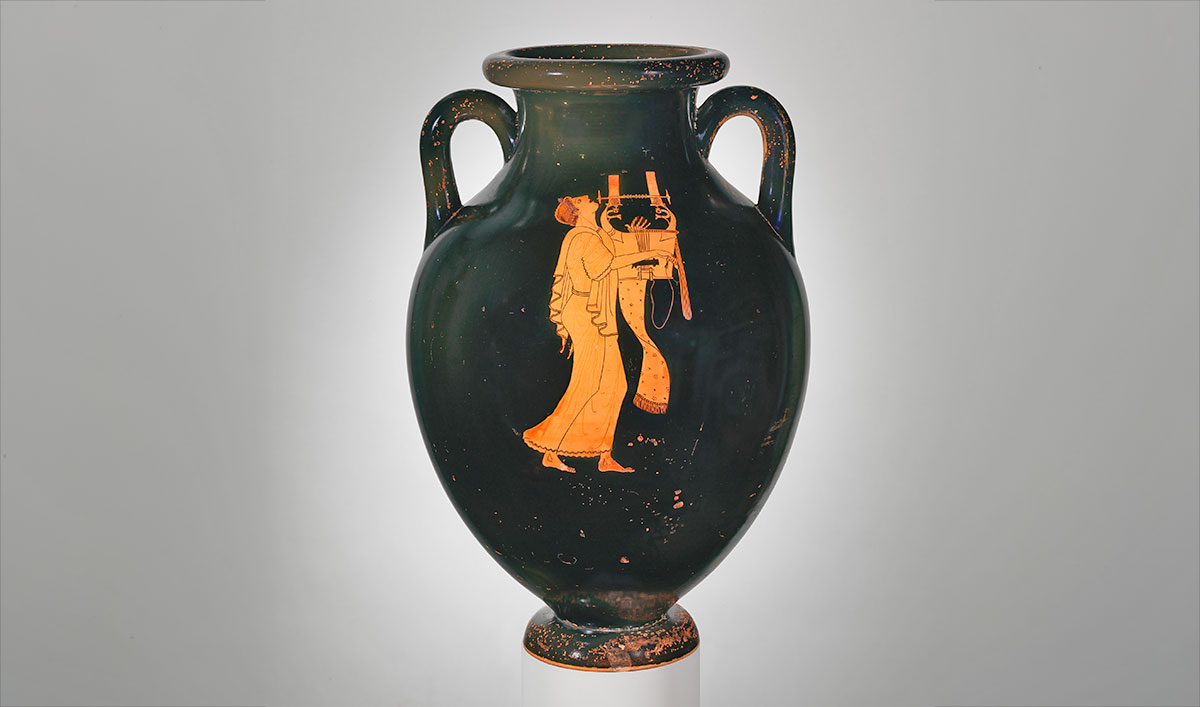
Through careful analysis and comparison, we can today enjoy the reconstructed sounds of ancient Greek music. Although no interpretation will ever be the definitive or the ultimate one, we are as close as we can get at present.
We may be divided by millennia, but the ancient Greeks laid the foundations of Western music, and today we can enjoy the fruit of archaeologists, musicologists, and other scholars at the click of a button. A simple ancient melody like the Seikilos epitaph still holds us spellbound, and its message echoes through time: “We don’t live for long, my friend, To everything Time demands an end.” But what a time to be alive when we can hear ancient melodies brought to life!