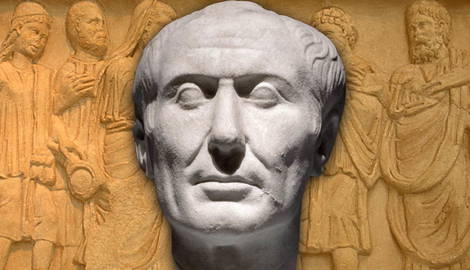

Unlike his successors, the emperors of Rome, who could only receive divinity after death, Julius Caesar was made a living god in ancient Rome. This fact is often obscured by the sources, which look back over centuries and align Caesar’s honors with the practices common in their own day. After Caesar, the Roman emperor was specifically not treated as a god, because Caesar’s mortal deification was established as an “anti-precedent,” largely by his successor, Augustus.
Julius Caesar: The Anti-Precedent
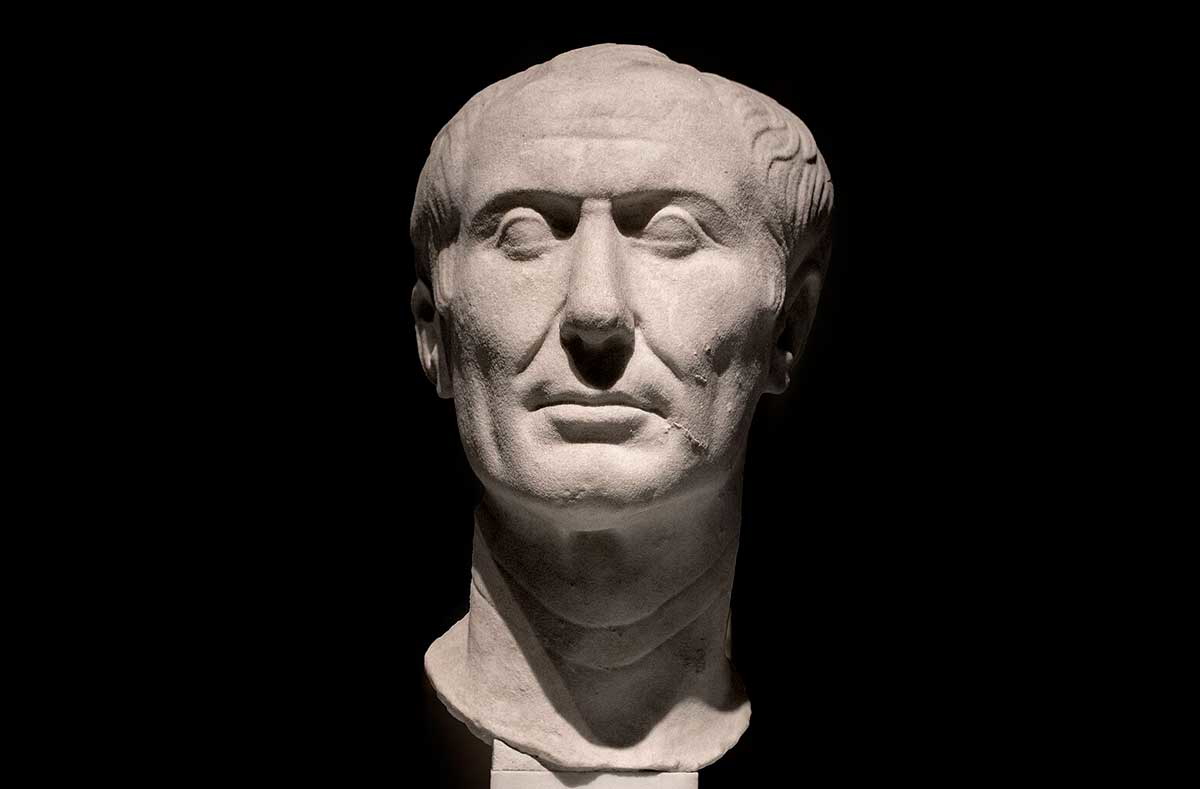
From the time of the first Roman emperor Augustus, it became common for popular Roman emperors to be posthumously deified in a process known as apotheosis. However, it was considered taboo for the emperor to receive divine honors while they were still alive, despite being widely worshiped as a living god in other parts of the Empire. While in places such as Greece, Asia, and Britain, people made cultic sacrifices directly to the emperor, in Rome, sacrifices were only ever made to the gods on behalf of the emperor, who might then join the gods as a “divus” after death.
Why did this complex division in religious practice exist? It all links back to the anti-precedent of Julius Caesar. While it was Julius Caesar’s political rise that made the transition from Republic to Empire possible, and his name “Caesar” characterized the future Principate, he was always considered to represent “what not to do.” He was seen as trying to make himself a king, a title and institution hated by the Romans since their expulsion of the kings in the 6th century BC. This made many of the things that Caesar did, such as using the title “dictator perpetuo” taboo. Augustus deliberately styled himself as “princeps,” meaning first among equals, rather than “rex.” This taboo extended to the honors that Caesar received during his life.
But the honors that Caesar received were not as extravagant and unprecedented as they might seem. They were squarely anchored in Roman society and tradition. It was the fact that they were repurposed as tools to formulate, understand, and express Caesar’s unprecedented position in the Roman state that made them taboo.
What Were Caesar’s Divine Honors?
First, how and when exactly did Caesar become a god of the Roman state? Private people could offer sacrifices and divine-style honors to whomever they wanted, but to be part of the official Roman state religion, the cultivation of a god had to be undertaken in the official calendar of worship, sacrifices paid for by the state, and conducted by state priests on behalf of all Roman citizens.
In early 44 BC, shortly before Caesar’s death, honors that met these requirements for Caesar were all passed. However, many of the honors awarded were not finalized after Caesar’s death.
Appian says that Caesar was declared honors, some of which were divine, including sacrifices, statues in all temples and public spaces, and that every five years the Vestal Virgins, the only female state priesthood, should make public prayers for his safety. Appian also specifically states that many temples were decreed to him as a god, including one dedicated to him in common with the goddess Clemencia, a divine personification of clemency, with a cult statue of the two clasping hands (Civil Wars 2.106). Cassius Dio adds that a festival was created for him with a dedicated priestly college, and that he was sometimes called Jupiter Julius, synchronizing him with Rome’s chief deity, and also mentions the temple with Clemencia (44.4.6).
In his second Philippic, in which he criticized Mark Antony following Caesar’s death, Cicero mentions that Caesar had been awarded a cult image, a temple pediment on his home, and a priest in the same manner as the gods Jupiter, Mars, and Quirinus (2.110). But Cicero also says that while Caesar had received these honors in life, now that Caesar was dead and Mark Antony was concerned with his own power and position, he was dragging his feet in inaugurating them. While Cicero criticized Antony for this, he also criticized the honors. This suggests that Caesar’s power growing to such an extent that he was considered divine-like was one of the final straws that broke the camel’s back and led to his assassination.
A Hellenistic Precedent
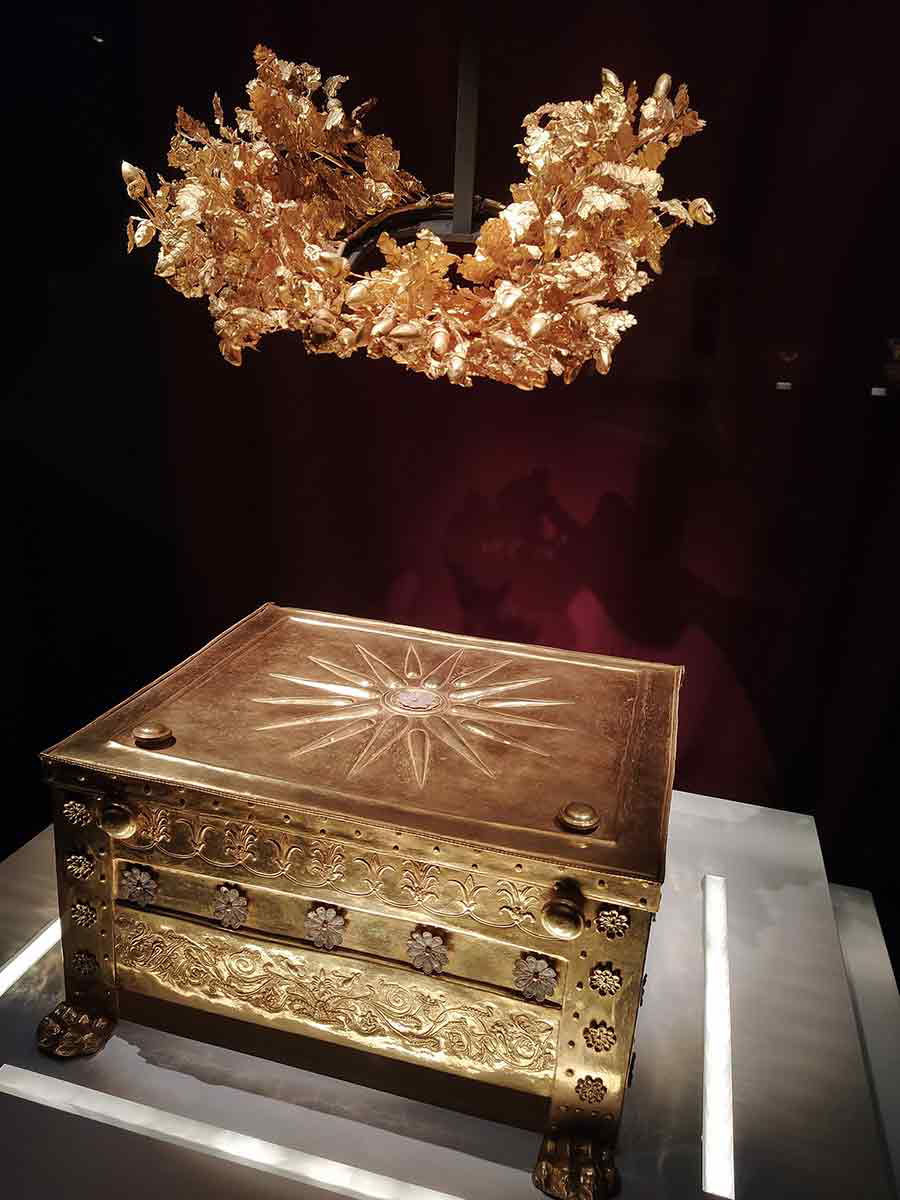
It is often argued that the precedent for Caesar’s divine honors was Hellenistic and that he was trying to style himself as a Hellenistic-style king. It was common for rulers of the great Hellenistic kingdoms to be treated in the same way as the gods.
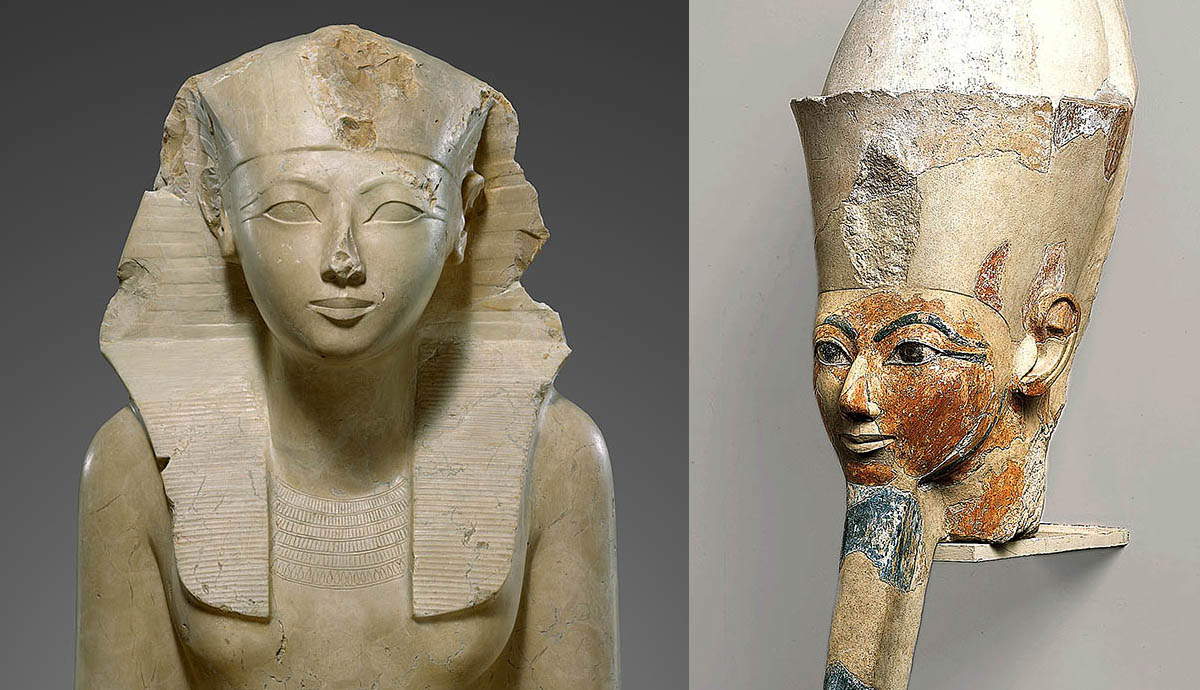
In around 404 BC, the Samians erected an altar for the Spartan general Lysandros, offered him sacrifices, sang cultic songs in his honor, and renamed the festival of Hera the Lysandreia for him. An inscription shows that in Athens, in 307 BC, the Athenians honored Antigonus I Monophthalmus and Demetrius I Poliorcetes as “soteres,” saviors, for liberating the city. An altar was erected, and an annual festival with sacrifices was conducted by dedicated priests. Other rulers had their statues placed in the temples of other gods to receive a cult alongside them. An image of Philip II of Macedon was carried alongside images of the Olympian gods in some religious processions. His son, Alexander the Great, was widely worshiped throughout his growing empire.
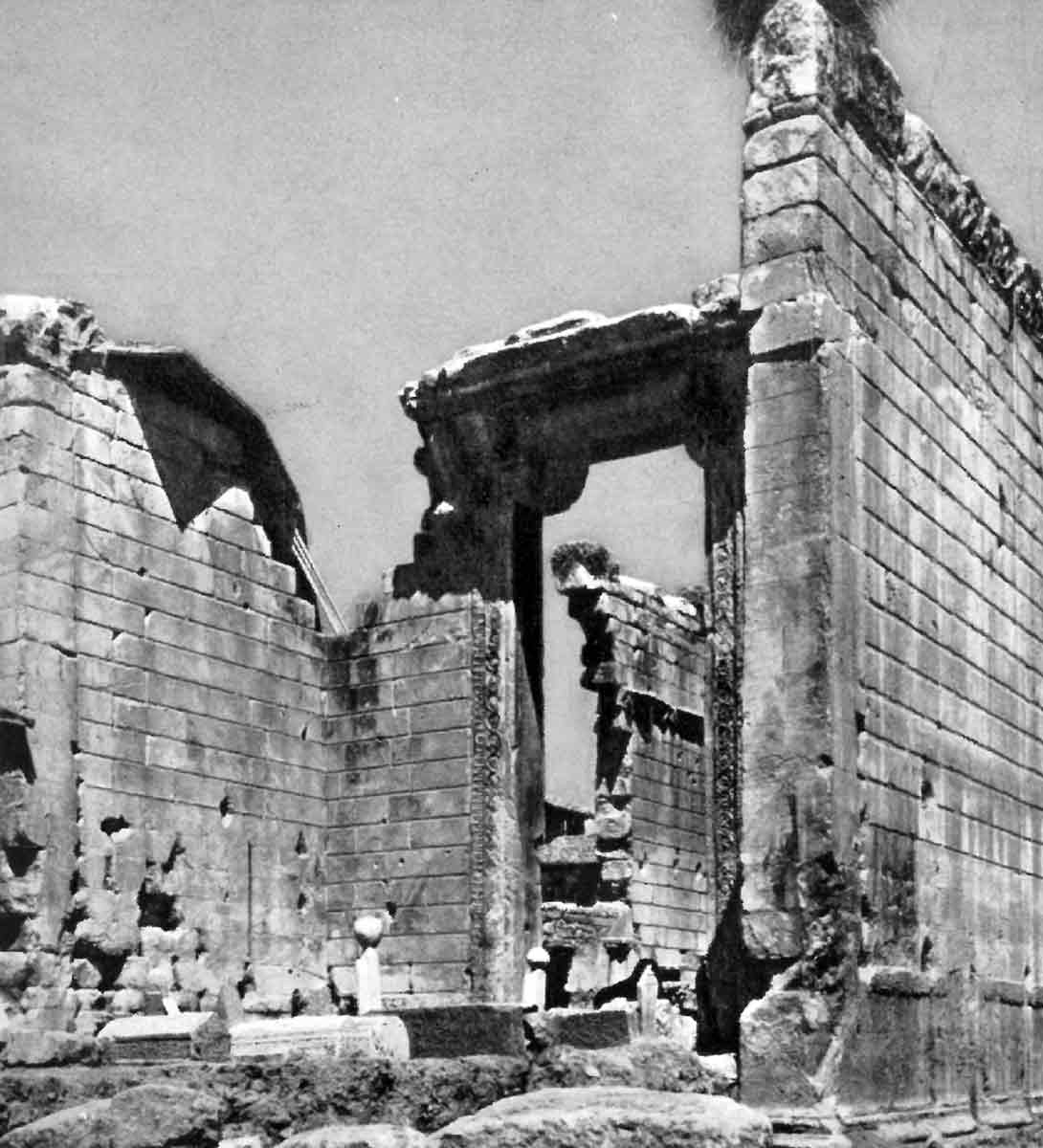
This apparently made sense to the people of the Hellenistic world, as their kings were seemingly more powerful and responsive than the gods. One hymn explains this idea:
“For the other gods are either far away, or they do not have ears, or they do not exist, or do not take any notice of us, but you we can see present here; you are not made of wood or stone, you are real.”
The Romans criticized these eastern practices as “decadent,” but still accepted these honors. Temples were established for Augustus during his lifetime in Athens and Ankara in the east; he had an altar at Lugdunum in Gaul; and several cult sites in North Africa. Similar temples were common throughout the imperial period until the rise of Christianity. Nevertheless, it seems more likely that Caesar’s honors draw more directly on Roman traditions.
The Roman Context for Caesar’s Honors
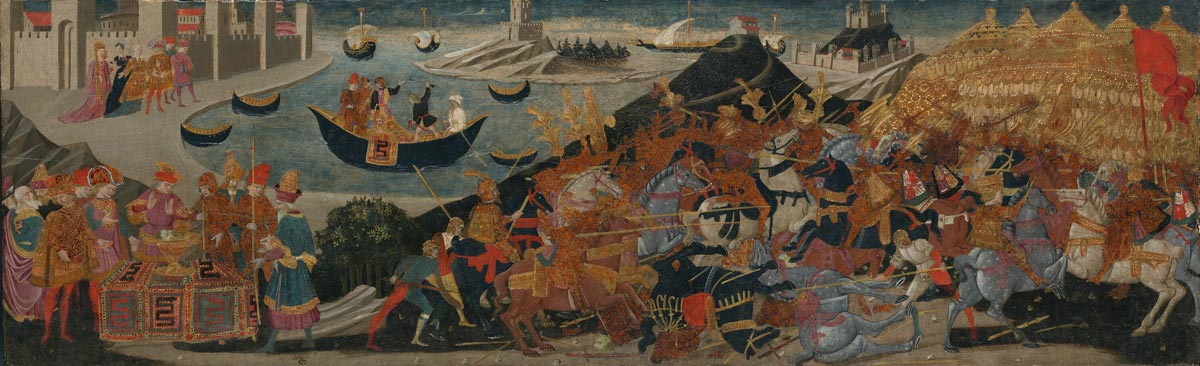
Caesar became the de facto sole ruler of Rome in 48 BC after defeating his last major opponents at the Battle of Pharsalus. According to Cassius Dio, as the Romans tried to make sense of Caesar’s unprecedented position, they offered him various honors, some of which he accepted, and others rejected (44.6.1-3). There is evidence that he accepted some honors, which were later reversed, for example, the title “hemitheos,” demigod, was inscribed on one of his statues and later removed (43.21.2). This reflects the approach of “trial and error” as both Caesar and the Senate were trying to find a way to formulate Caesar’s unprecedented position.
The Romans seem to have been quite enthusiastic with their offers, with Plutarch recording that Caesar said that his list of honors needed shortening, not lengthening (Caesar 60.3). Cicero, who supported the traditional ideals of the Republic, records that he himself proposed some of the honors offered to Caesar, but he also reflects that members of the Senate, the council of the ruling oligarchy, found it uncomfortable to honor one man in such extravagant ways.
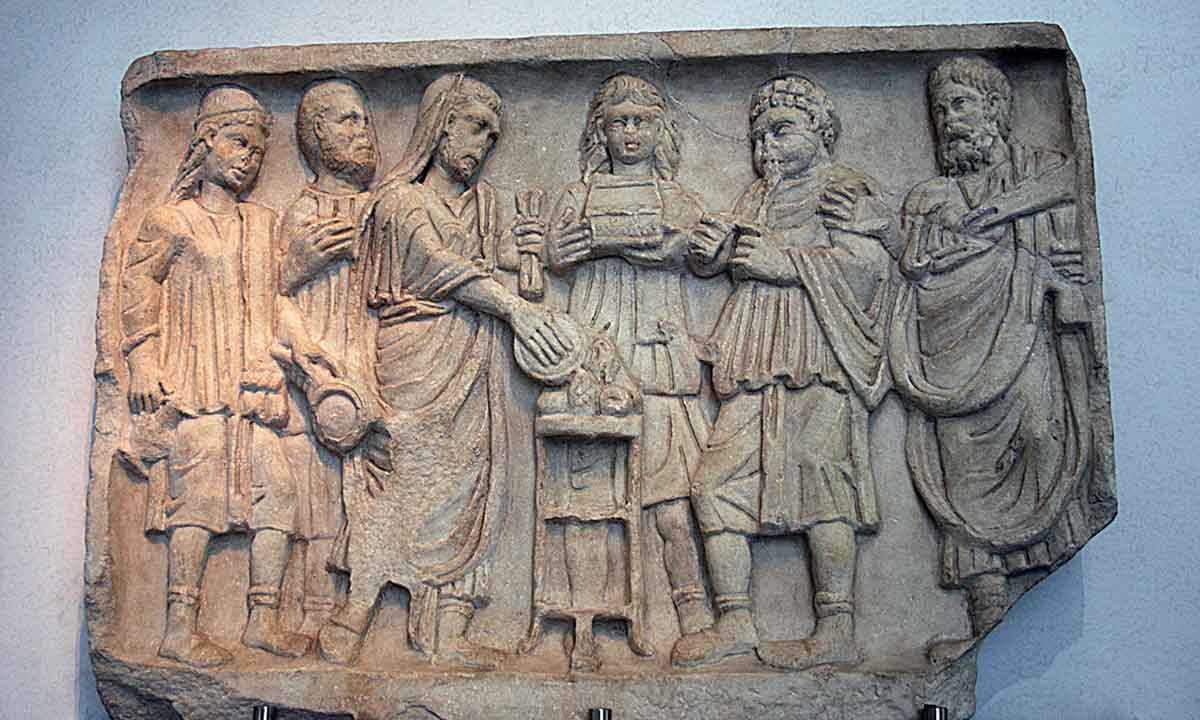
This does not necessarily mean that the Senate was acting hypocritically or disingenuously. It was Roman custom to offer great honors to those who offered great benefits. Seneca, in his discourse On Benefits, explains the custom of exchange of favors between friends in the Roman world. These were often material gifts, but when the power disparity between two people was great, the inferior had nothing to offer that the superior needed, so the inferior would offer non-material things, such as honors. Speaking specifically about great leaders, Seneca says:
“If it be disgraceful to be worsted in a contest of benefits, you ought not to receive a benefit from very powerful men whose kindness you cannot return, I mean such as princes and kings, whom fortune has placed in such a station that they can give away much, and can only receive very little and quite inadequate returns for what they give.” (On Benefits 5.4.2)
Therefore, offering Caesar great honors made sense within the Roman social context. Moreover, not only were the Roman people obliged to offer him honors, but he was obliged to accept at least some of them, in order not to seem ungrateful. It was also a way of cementing mutual obligation between the powerful and less powerful, or, in the case of Caesar, the ruler and the ruled.
Republican Precedents
In the years between 48 and 44 BC, Caesar was offered many honors by the Senate, on behalf of the Roman People and State, only some of which were divine. But, as was Roman tradition, when deciding what to offer Caesar, they looked back at precedents from the past.
The Great General
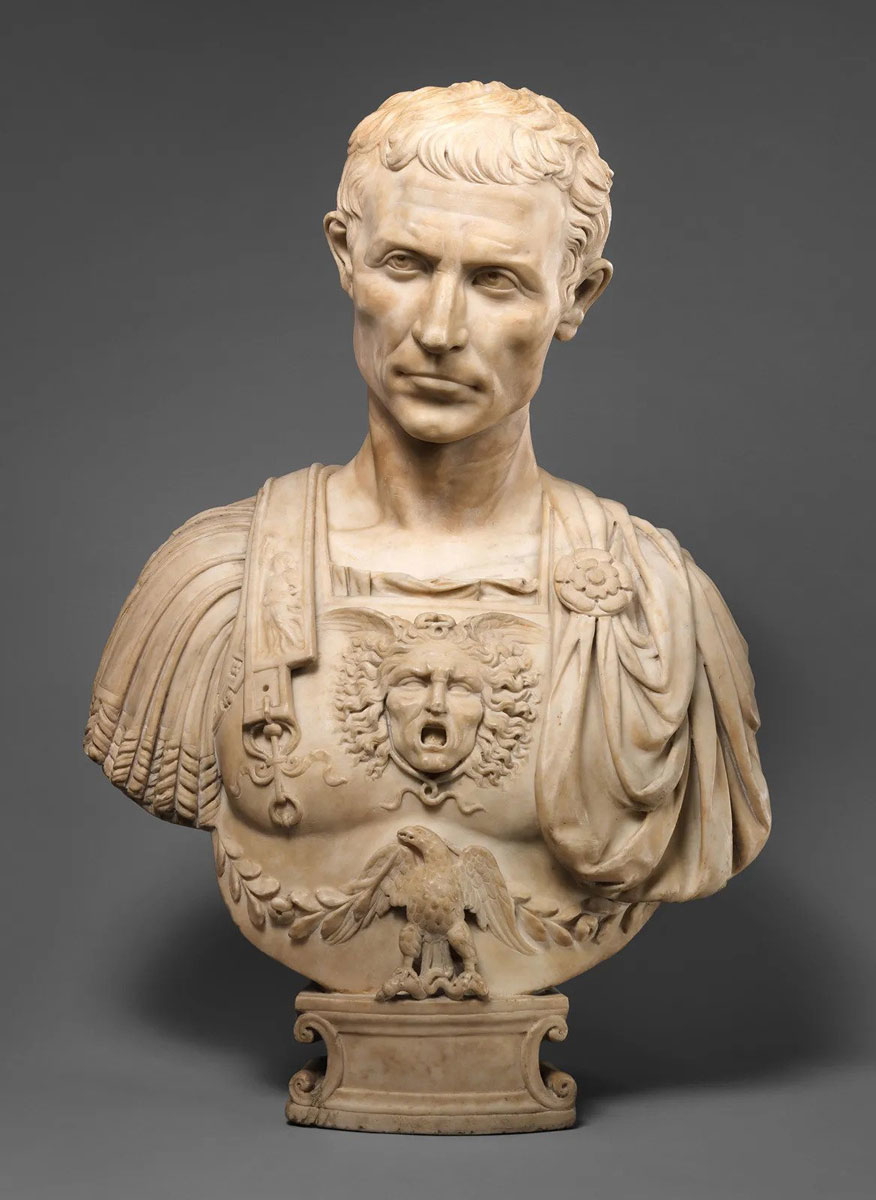
Livy records that the great general Scipio Africanus rebuked the people for offering him honors such as perpetual consul and dictator, two honors that Caesar would later accept. He also says that Scipio:
“… prevented them from raising statues to him in the Comitium, the Rostra, the senate house, and in the shrine of Jupiter on the Capitol, and how he had prevented a decree from being passed authorizing his image decked in triumphal garb to be borne in procession from the temple of Jupiter Optimus Maximus.” (38,56,12).
This list of honors is identical to what was later offered to Caesar, suggesting that while Scipio probably was offered extravagant honors, this specific list was invented by Livy retrospectively. Nevertheless, it suggests that the Romans believed the precedent existed. And while Livy suggests that Scipio rejected these honors, other sources suggest that he accepted at least some of them.
Public Statues
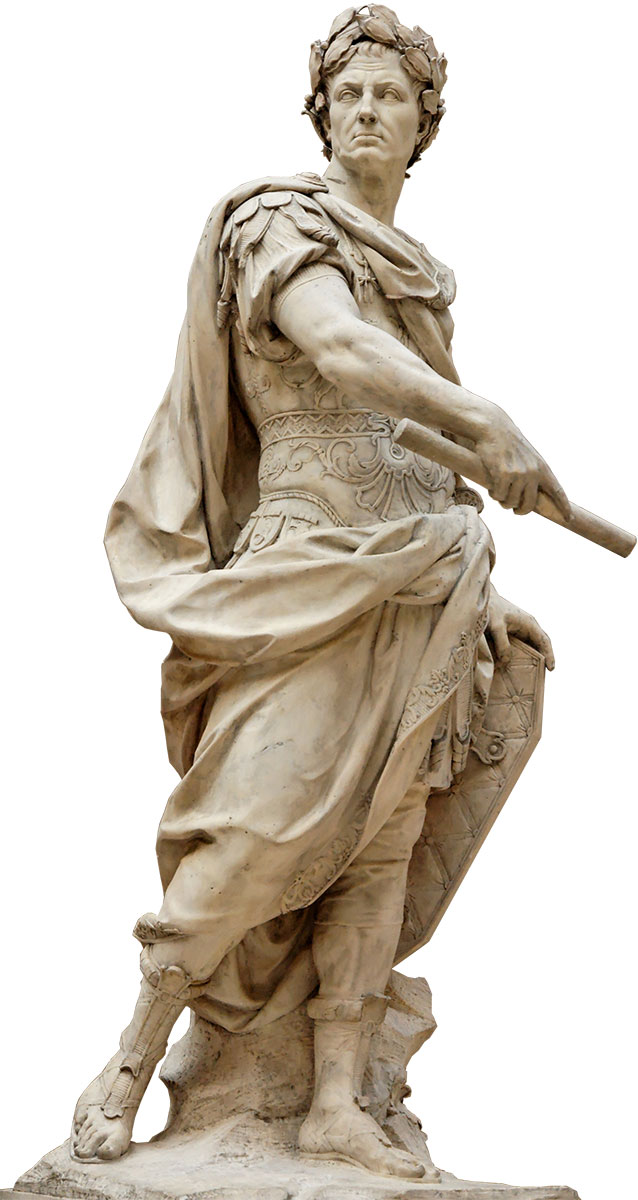
Before Caesar, Rome did not set up any “official” statues of living individuals. But in 46 and 45 BC, Caesar was awarded several public statues: one of Caesar in a chariot facing the cult image of Jupiter on the Capitol, two on the Rostra, another on the Capitol alongside those of the kings, and another in the temple of Romulus Quirinus.
Previously, triumphant generals commonly set up statues of themselves in their homes, often in a chariot. Moreover, the great generals Marius, Sulla, and Pompey all received special permission to privately fund the placement of their statues in public locations. So, the innovation with Caesar’s honor was that it was dedicated and paid for by the Roman people.
The placement of Caesar’s statues was also not unprecedented. Caesar’s statue with the kings was a copy of the honor awarded to Lucius Brutus for his role in expelling the kings. Caesar’s statue was accompanied by the title “liberator,” suggesting that the honor was in emulation of Brutus and not the kings. Having his statue placed inside the temple of a god was also not exceptional. Cato had a statue in the temple of Salus following his famous censorship.
Public Honors
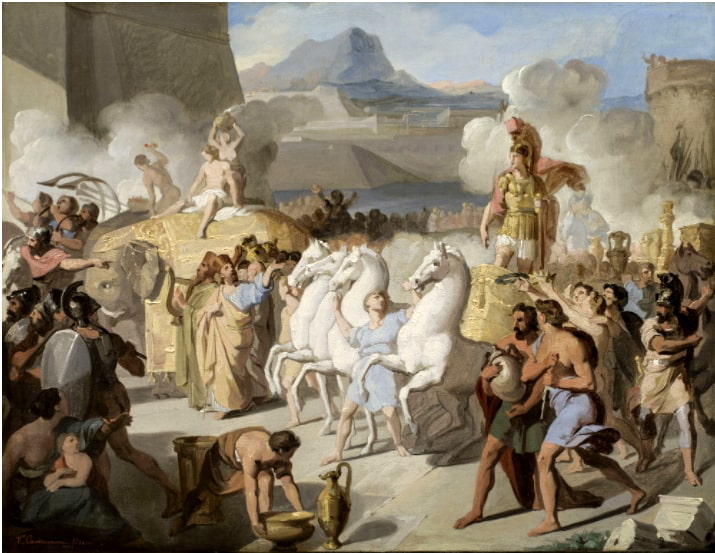
Caesar was also granted some of the honorific symbols enjoyed by successful generals during triumphs for more general use. He was granted the right to wear triumphal dress at the games and a laurel wreath everywhere. He was also granted a golden wreath at the Circus, which he could later wear more generally. Similar honors were granted to the general Lucius Aemilius Paullus in 167 BC, who could wear triumphal dress at the Circus, and to Pompey in 61 BC, who could always wear a laurel wreath, dress as a general whenever he wanted, and use triumphal dress at the races (Cassius Dio 37.21.4).
The Paterfamilias
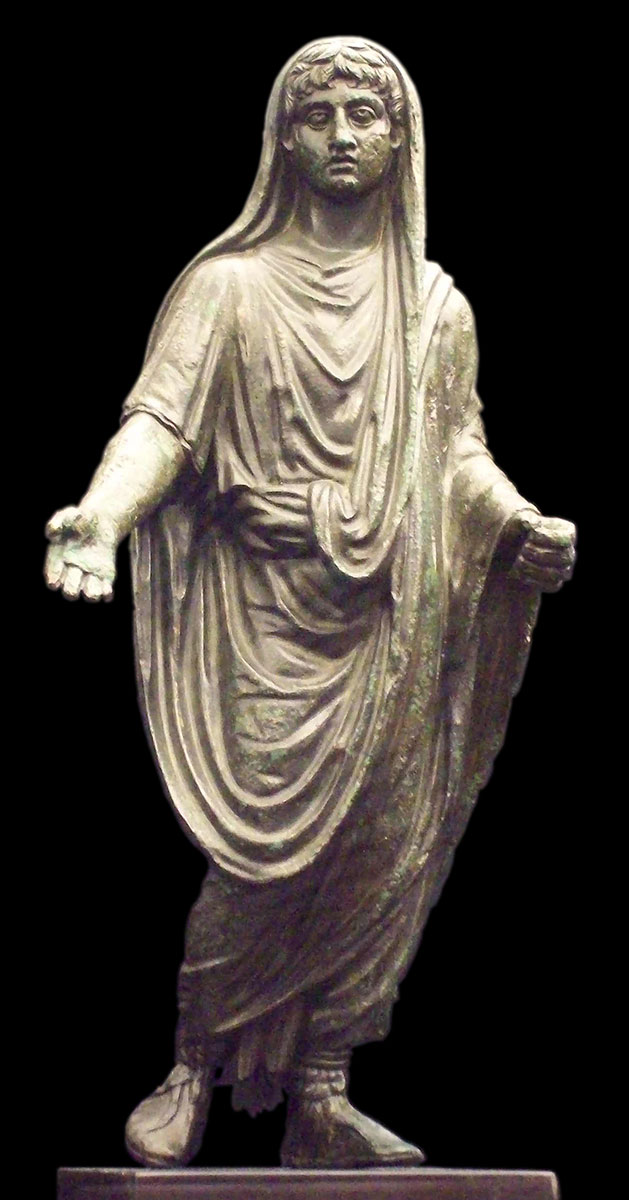
Another Roman precedent for the honors that Caesar received was the treatment of the paterfamilias in the household. The paterfamilias was the head of a Roman house, including his wife and children, younger family members, slaves and freedmen, and even free clients whom he supported in various ways. He was the mini king of his domus, but rather than being a tyrant, he was a beloved family member who cared for his family. Caesar and the Senate seem to have recognized that this paradigm offered a potential model for Caesar’s position in Rome, as he was awarded the title “parens patriae,” father of his country, in late 45 BC.
In the Roman domus, it was common for dependents to swear oaths by the Genius, the tutelary deity, of the paterfamilias. Bloodless sacrifices were also made to the Genius of the paterfamilias on his birthday. These practices seem to have found their way into the public Roman religion. Cassius Dio says that oaths were sworn by Caesar’s Genius (44.6.1), and that his birthday was marked with public sacrifices (Cassius Dio 44.4.4).
Divine Honors
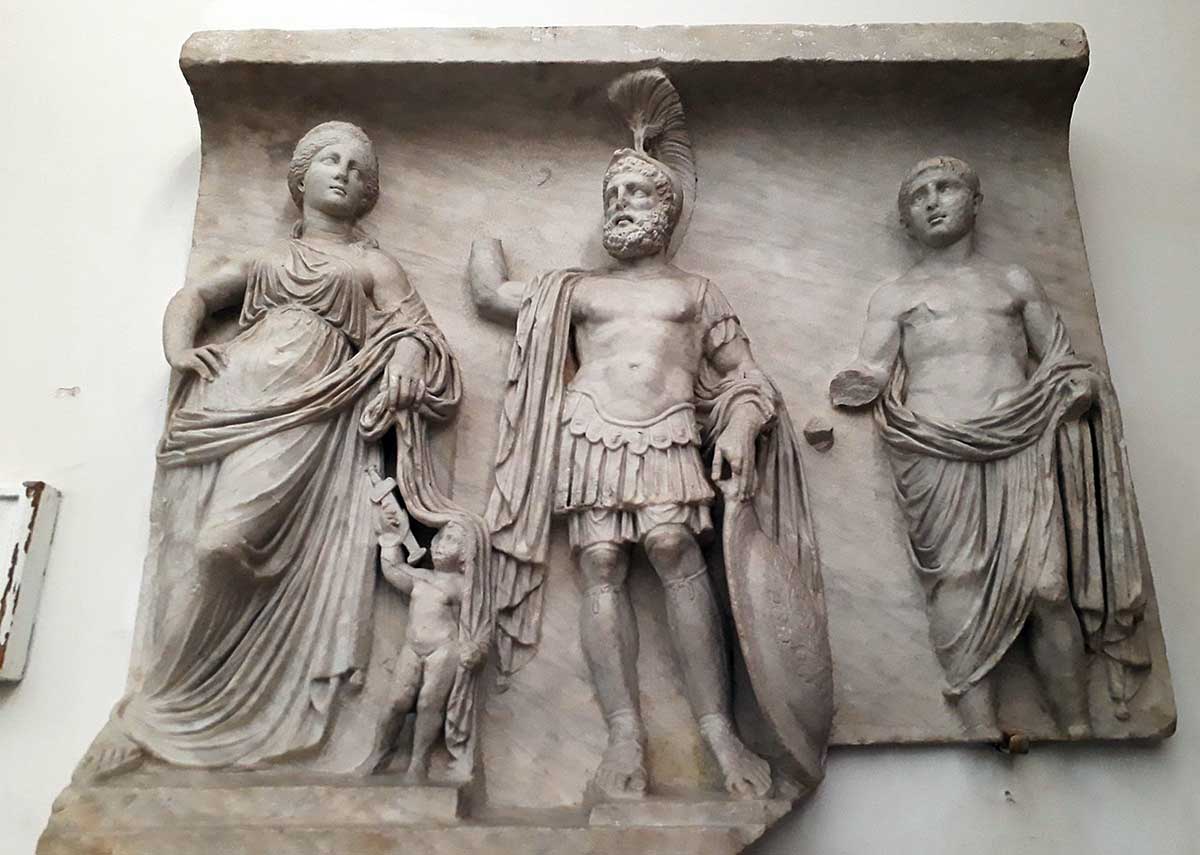
The list of Caesar’s honors goes on, but the pattern is clear. He was offered honors based on existing Roman precedents, sometimes in a more extravagant form because of Caesar’s more extravagant power and position. Eventually, they turned to the precedent of divine honors, which perhaps made logical sense. There was no feeling that the gods had the right to be worshipped because they were gods: only those that were seen as providing some assistance were cultivated. Cult was the only reasonable honor that the mortal could offer the divine. By 44 BC, Caesar’s power had grown so great that his influence in people’s lives was comparable to that of the gods.
Establishing the Anti-Precedent
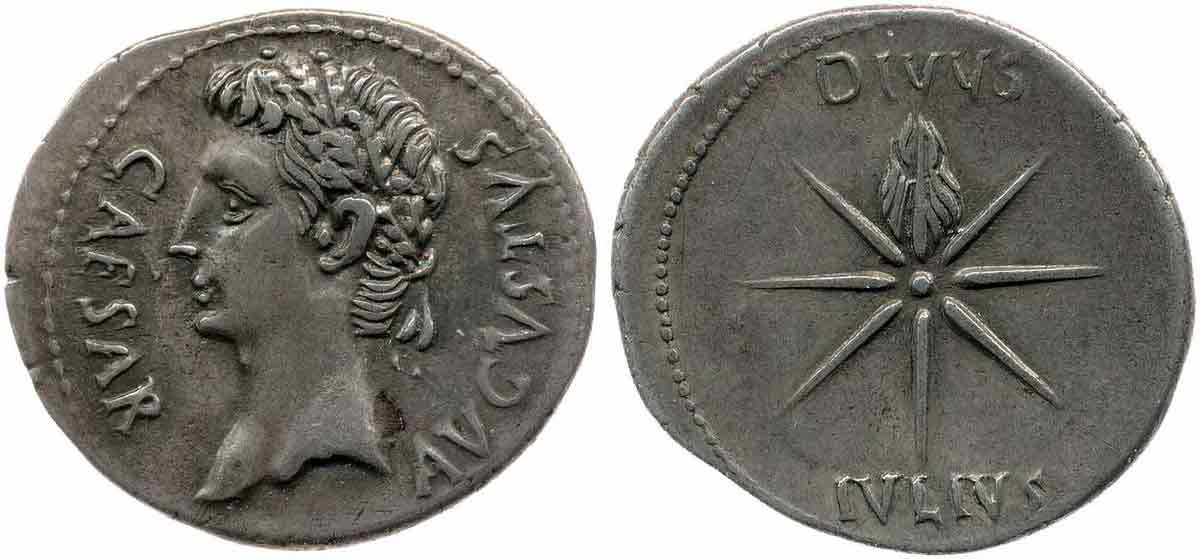
When Caesar died, both Mark Antony and Octavian, his adopted great-nephew who would become Augustus, leveraged Caesar to bolster their own claims to power. Augustus pushed for recognition that Caesar underwent a genuine apotheosis and joined the gods following his death, citing the appearance of Caesar’s Comet in the sky during Caesar’s funerary games as evidence. This allowed him to push the Senate to officially recognize Caesar as a god in 42 BC, with the new official title Divus Julius.
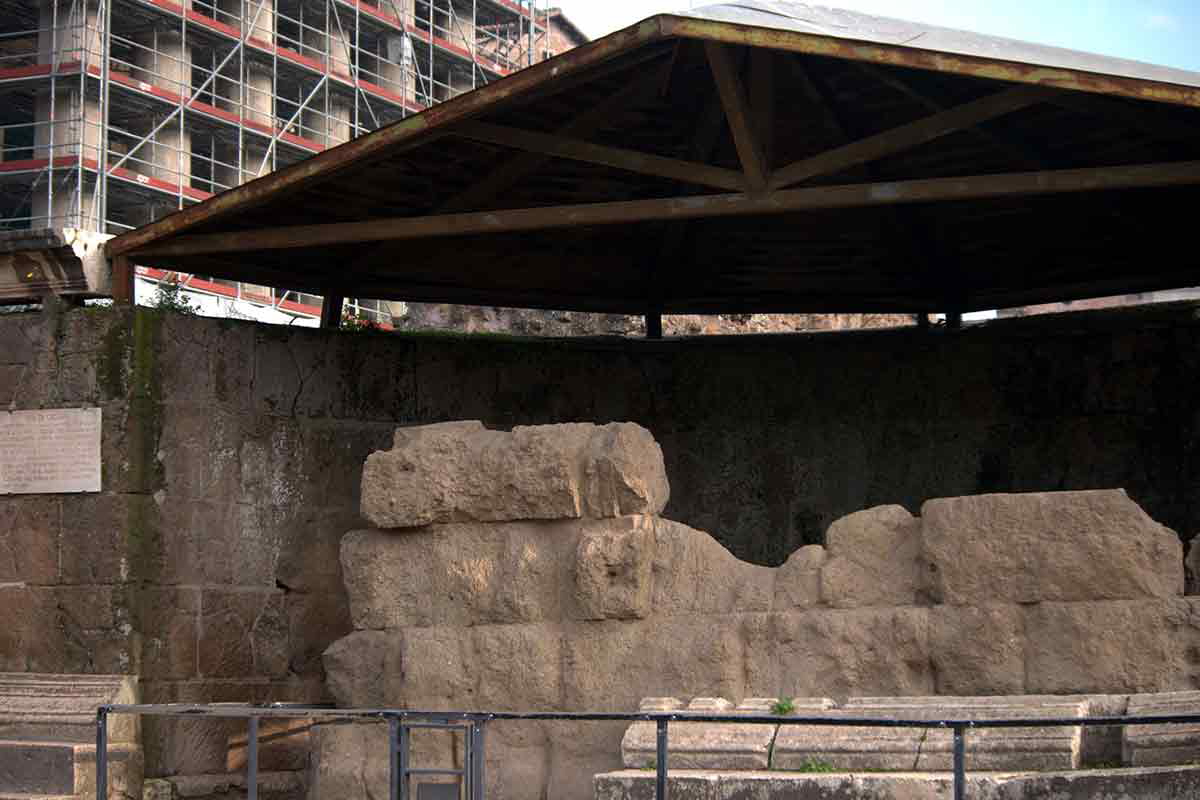
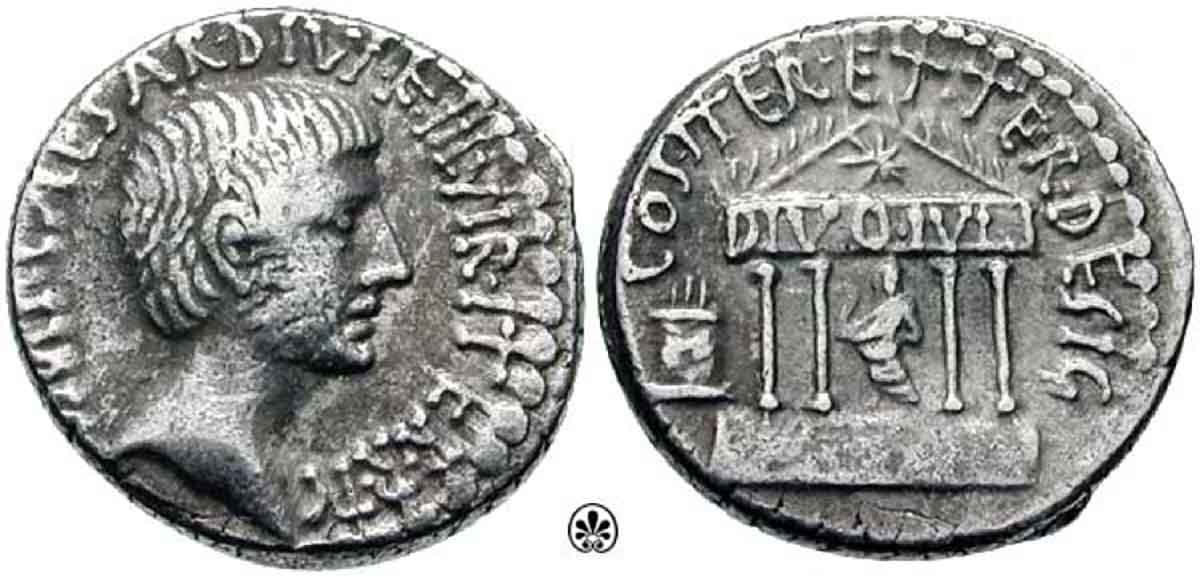
Caesar’s death and apotheosis changed the plans for Caesar’s worship, as he was no longer a living god. Rather than share a temple with Clemencia, a Temple of Divus Julius was built in the Forum, which was finally dedicated on August 18, 29 BC.
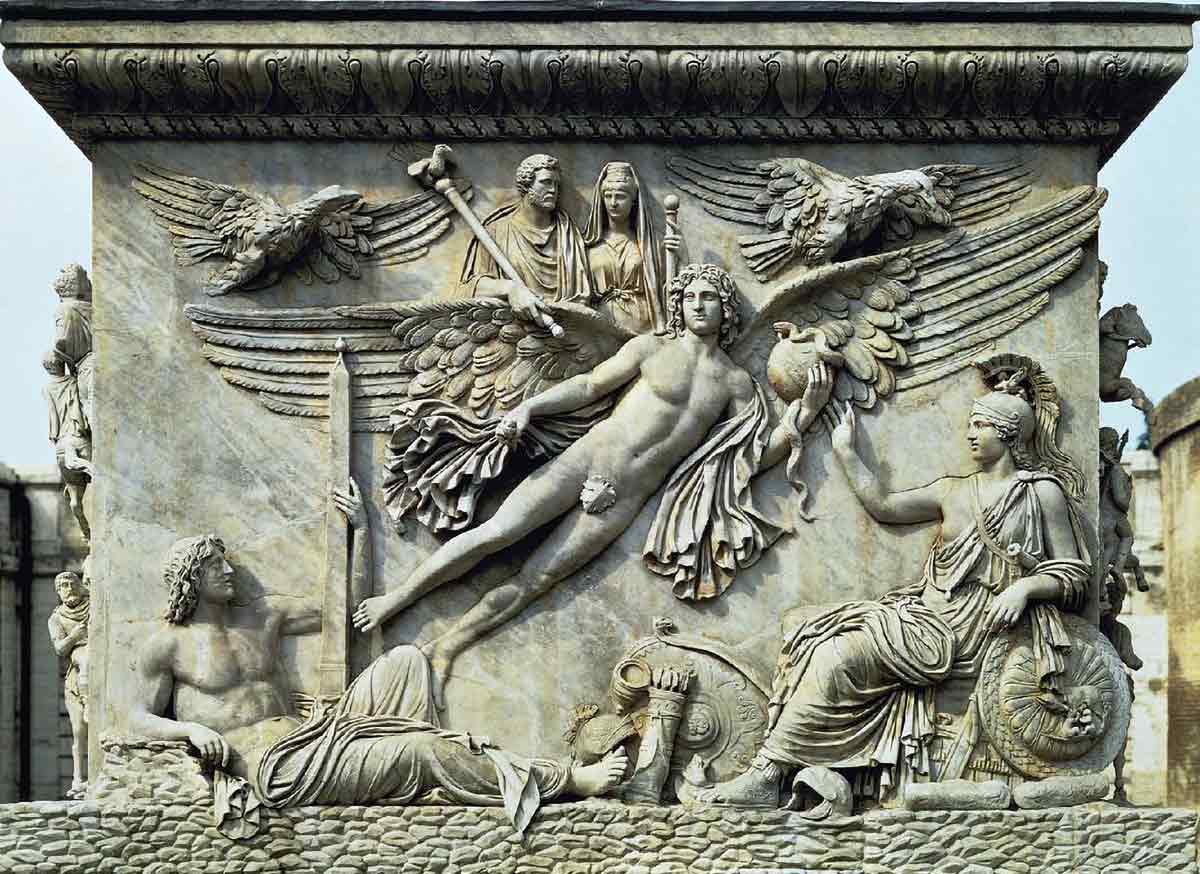
Solidifying Caesar’s position as a god allowed Augustus to call himself “divi filius,” son of a god, reinforcing his own position. Focusing on Caesar’s genuine and evident apotheosis also allowed Augustus to establish a new precedent. Divine honors were for the dead and deified, not the living emperor. Augustus staunchly refused divine honors for himself in Rome throughout his reign, while also carefully orchestrating his posthumous apotheosis, even having an eagle released over his funeral pyre in 14 AD to represent his ascent to the heavens.
Augustus’ adopted son, Tiberius, followed his example, refusing divine honors for himself and his mother, Augustus’ wife Livia, throughout his reign. This was enough to solidify the precedent. While some emperors, such as Caligula and Domitian, pushed what was considered appropriate to the limit, for the rest of imperial history, deification was only possible after death.