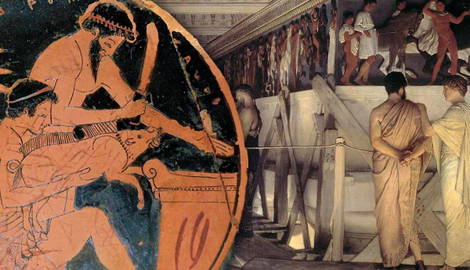

The sun slowly rises above the hills of Attica, and it is the dawn of a new day in Athens. Daily life in the Greek polis was chaotic and busy, filled with plenty of noise and activity, and the occasional moment of rest. But this was the pace of life to which the people of Athens were accustomed. From morning until nightfall, life had a certain rhythm dictated by the citizens’ obligation to the city. Discover what a day in the life looked like in Classical Athens.
Dawn and Morning in the Athenian Household
In Classical Athens, productivity was highly valued, and there was not much time for idling. Athenians did not divide time into hours the way we do today. The day began as soon as the sun rose. The first to wake were usually the slaves who prepared breakfast, lit the hearths, and fetched water for drinking. Soon after the slaves, the heads of the household (oikos) and their children would also get up.
Breakfast in Classical Athens was simple. The most common meal was akratisma, which consisted of barley bread soaked in wine, sometimes accompanied by figs and olives. The wine was diluted with water; otherwise, there would be little productivity. Sometimes there were small cakes or pancakes made from spelt flour, but this was not promised and usually depended on the availability of supplies. Since most Athenians saved their calories for the end of the day, breakfast was more a formality and part of the daily routine.
Boys prepared for school, where, after breakfast, they were taken by the loyal household slave paidagogos, responsible for their safety. At school, boys learned reading, writing, athletics, music, and other forms of physical training. Girls did not receive formal education, so after breakfast, they remained at home with their mother, where they learned household duties through helping.
Late Morning in the Civic Center
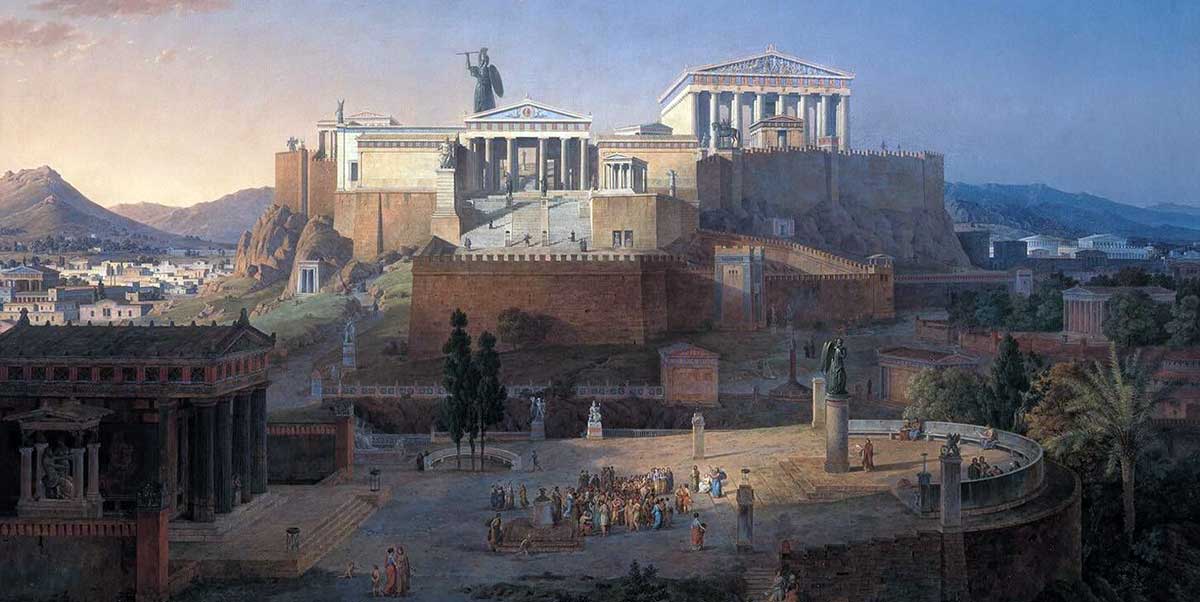
After breakfast, the day in the civic center could begin. While women remained at home and took care of the household and domestic duties, men left their homes and moved toward the Agora, the central city square. The Agora was exactly what we imagine cities of ancient Greece to be like. Never quiet and peaceful, surrounded by numerous buildings, temples, and covered walkways known as stoas. It was a place where things were sold, produced, and discussed. People specialized in everything from pottery making to philosophy, creating a dynamic and diverse society.
Not far from the main square was the hill of Pnyx, which, from the 6th to the 4th centuries BC, was the official meeting place of the Athenian democratic assembly (Ekklesia). It was here that citizens gathered to vote and listen to speeches by famous orators such as Pericles. It was the place where citizens passed laws and decided the fate of the city, making it the place where Western democracy was born.
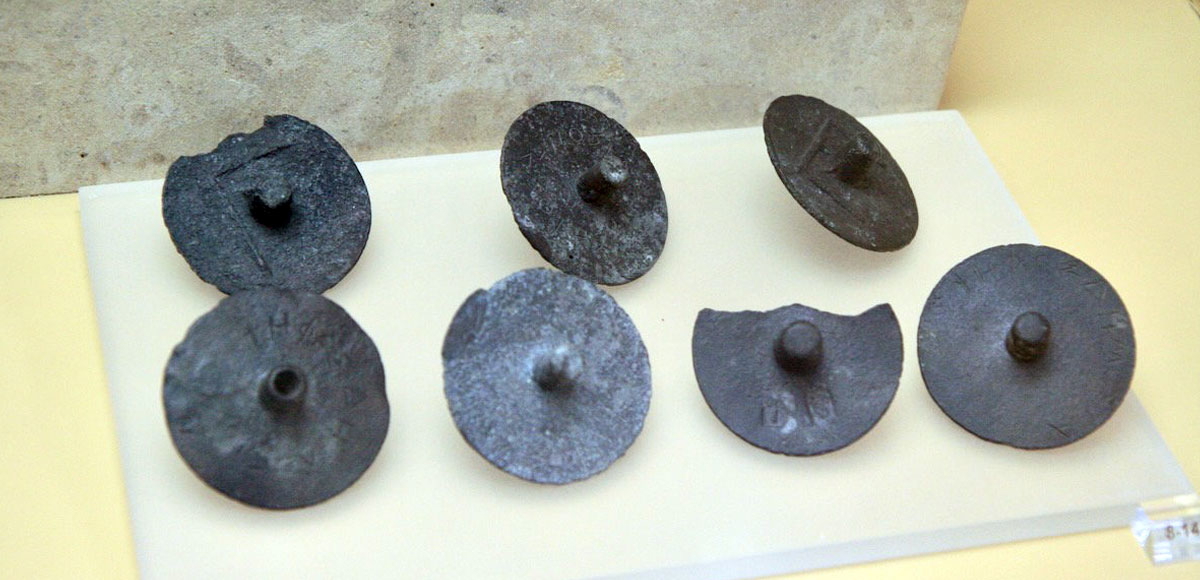
Another important civic duty was the people’s court. Athens had around 6,000 citizens chosen by lot who served as jurors, together with hundreds of judges, sometimes more than 500, depending on the seriousness of the case. Jurors received a daily payment, which allowed poorer citizens to participate. There were no professional judges or prosecutors. Instead, the parties themselves presented evidence and defended their cases, or they hired logographers to write speeches for them.
Midday Rest and Afternoon Activities
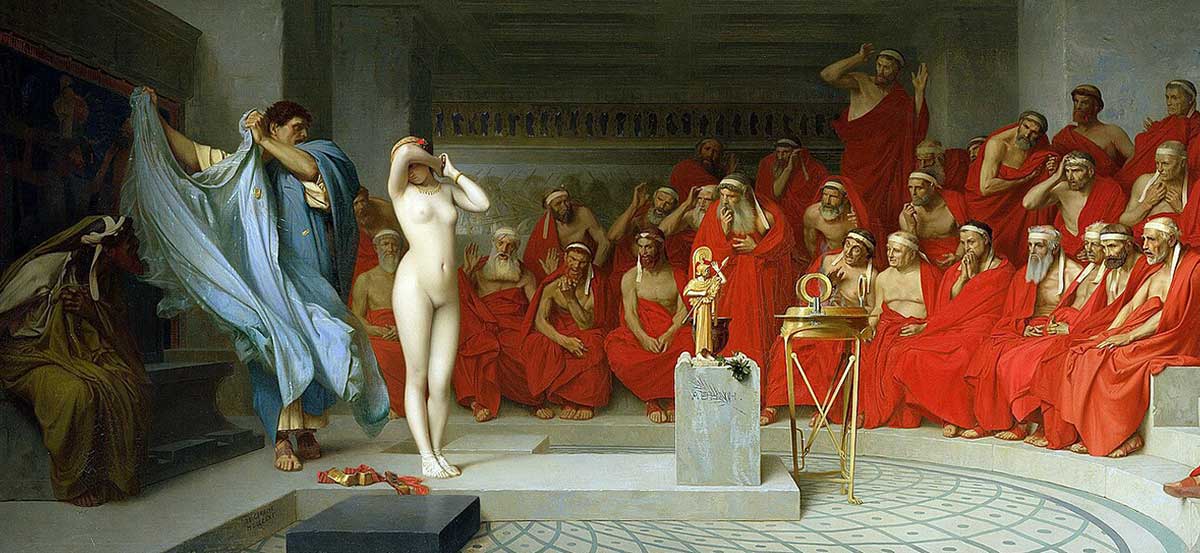
In the afternoon, life in Athens began to slow down as people tried to escape the heat of the Mediterranean climate. The sun was too strong to remain in open spaces, so many people looked for shade. The Agora, the main square, was still active, but with fewer visitors than in the morning hours. Usually, those who came were people who needed to buy something at the last moment or who simply wanted to avoid the morning crowds.
Ariston was the ancient Greek lunch that was consumed at noon or in the early afternoon hours. It was a quick, simple meal of Mediterranean cuisine, usually bread, dried fruit, olives, cheese, or fish, often with wine, that was again diluted. It served as refreshment before the main daily meal, dinner (deipnon). After eating, Athenians liked to rest in their houses, especially during the summer months. Their houses were built to provide shade during the hottest summer days.
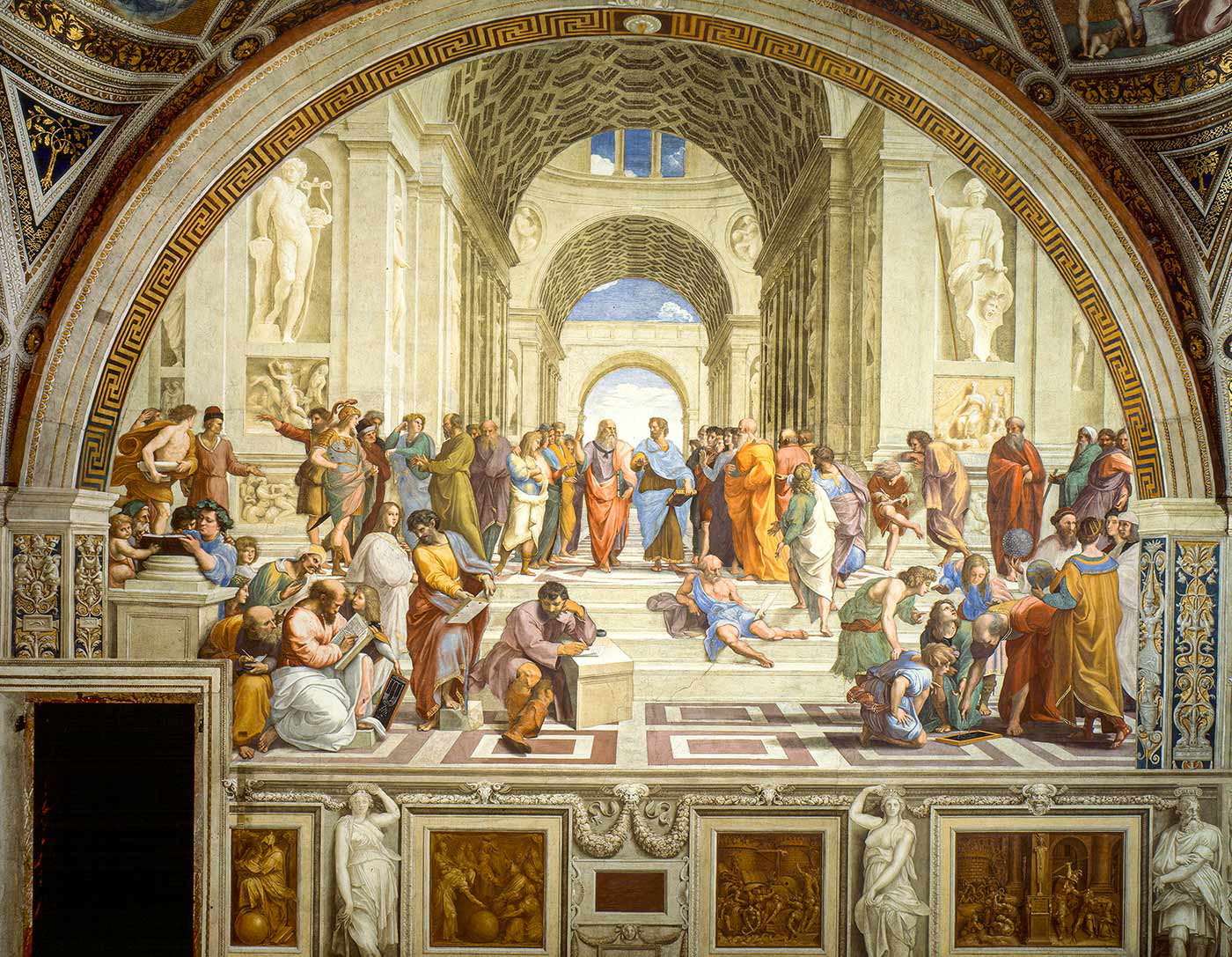
For a certain number of Athenians, the afternoon was a time for physical training and education, especially in the gymnasium and the palaestra. These were complexes with exercise grounds where people trained in running, wrestling, discus, javelin throwing, and other athletic disciplines. In Athens, the most famous were Plato’s Academy, Aristotle’s Lyceum (Lykeion), and Cynosarges. Some other Athenians spent their time in religious rituals at the city’s many temples and shrines. After the hottest hours, as the sun slowly began to set, Athenians returned to their work and brought their duties for that day to a close.
An Evening in the Athenian Home
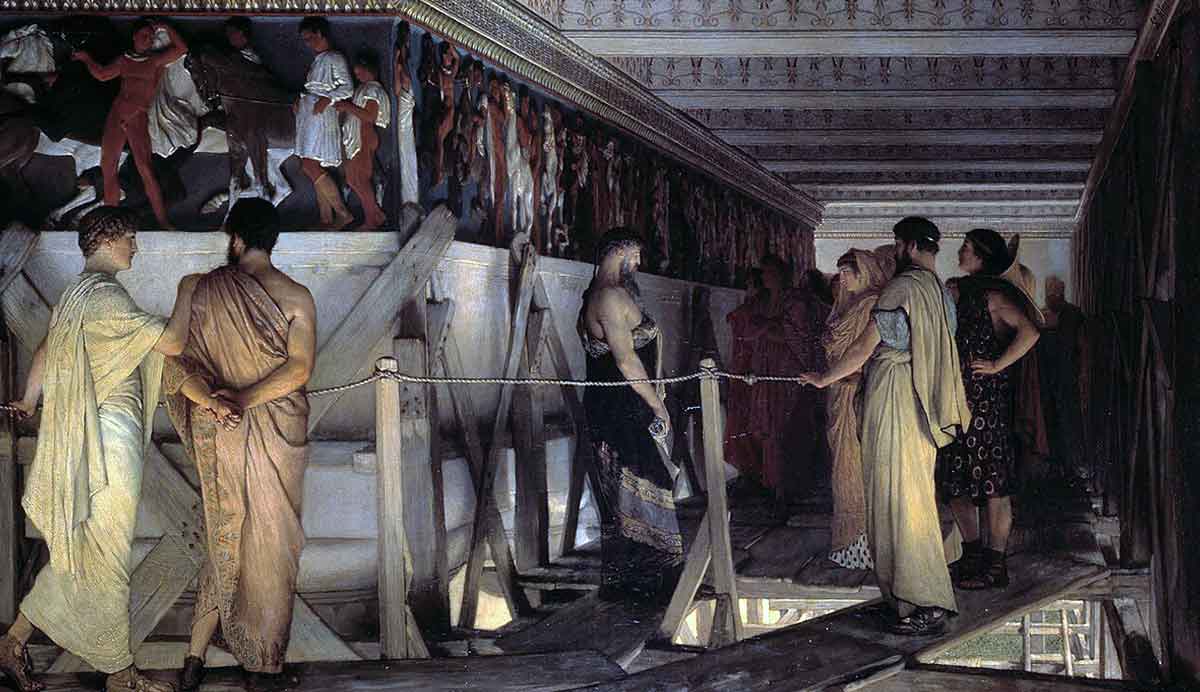
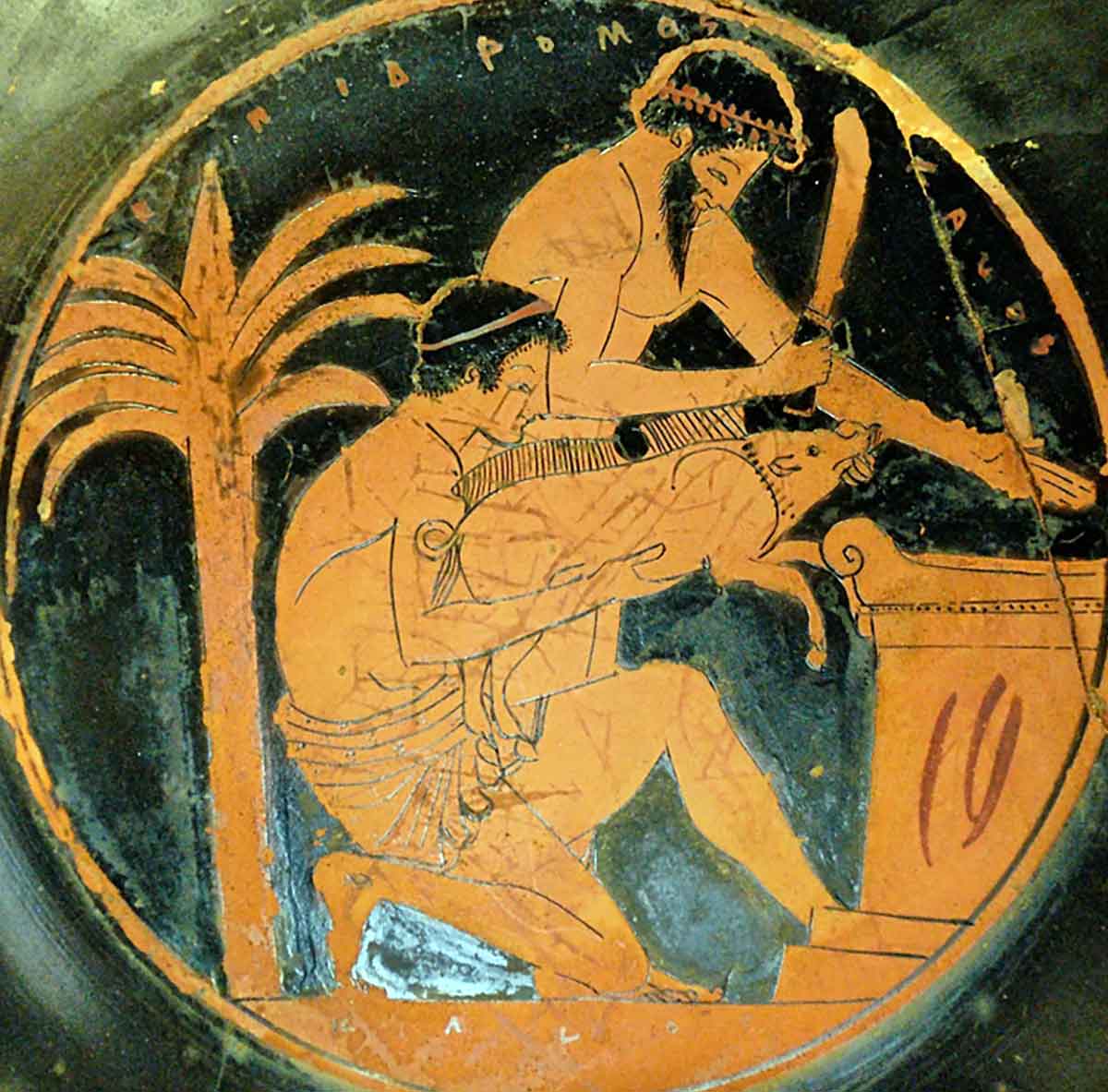
With the setting of the sun, it was time for the main meal of the day, known as deipnon. Athenians spent the entire day eating lighter meals and saving their stomachs for this large feast. Dinner usually consisted of bread, olives, large quantities of vegetables, cheese, fish, and sometimes other meat as well. The meat of other animals was most often served on special occasions such as festivals or religious holidays, when animal sacrifices were offered to the gods.
Dinner was usually eaten in the courtyard if the weather allowed it. In certain households, women and men dined separately. The andron was a room in the Greek house reserved for men, while the gynaikeion was the women’s quarters.
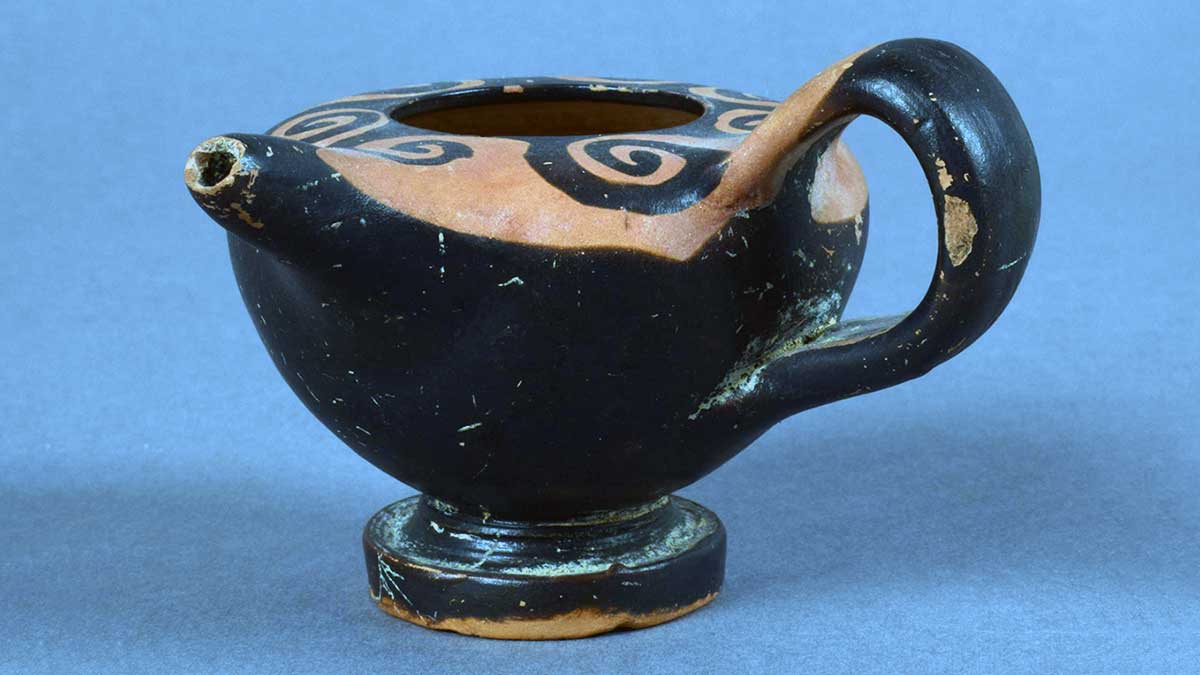
Light at night was limited and depended on small clay oil lamps fueled by olive oil. These lamps produced just enough light for daily activities to be brought to an end and for preparations for sleep. Because of this, most Athenians finished their day shortly after dinner. However, the wealthier ones, with better lighting, could enjoy the evening hours longer and in greater comfort.
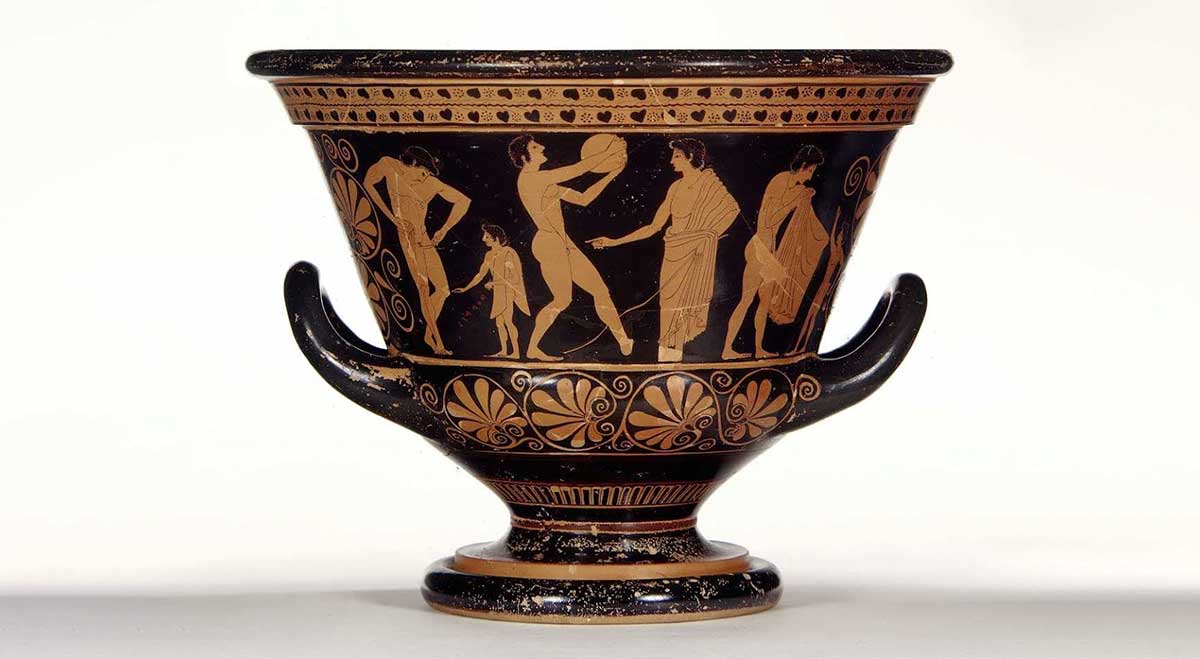
The word symposium comes from the Greek word for “to drink together,” and was a key social event for men in the evening hours. A staple custom for the Athenian elite, it included the consumption of wine, conversations, music, and entertainment. After a meal, guests would recline on couches (kline) in the andron, where they drank wine diluted with water from a large vessel known as a krater.
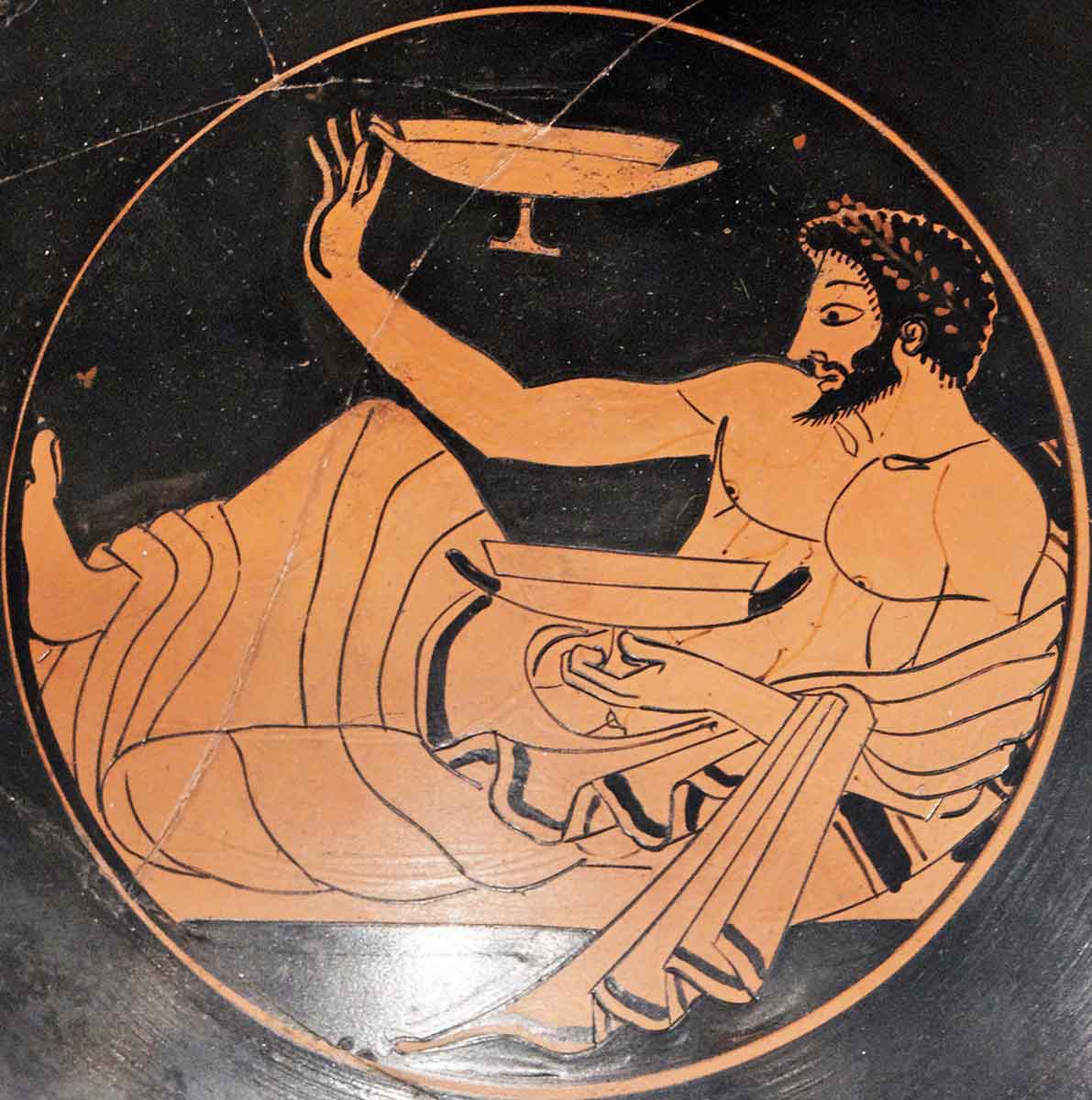
In ancient Greece, drinking wine that was not diluted with water was considered barbaric and uncivilized. For a symposium, the host would decide the proper water-to-wine ratio, which would set the tone for the evening; intellectual debate versus debauchery. Athenians also played a popular drinking game called kottabos, where players, reclining, threw the remaining drops of wine from their cups (kylix) toward a specific target.
Although wives were excluded from these gatherings, men were sometimes joined by hetairai, highly educated courtesans who enjoyed considerable freedom, owned property, and influenced politicians and artists. They played music, danced, and participated in intellectual discussions.
Nightfall in Classical Athens
After the oil lamps burned out for the day and the parties had quieted down, the streets of Athens became eerily empty and silent. If you were walking at night, you might encounter only guards, travelers arriving late, or the occasional drunken Athenian returning from a symposium and searching for the alley that led to his house. It was time for bed. Athenian beds were usually made of wooden frames with woven straps supporting a mattress stuffed with wool, feathers, or plant fibers.
Interestingly, men and women often slept in separate rooms, with men sleeping alone while women slept with the children. Before going to sleep, they would pray to the gods, especially to Hestia, who was the goddess of the hearth and the home. The fire in the hearth was often left to smolder rather than burn out completely so that it could be more easily rekindled the next morning. Crime at night did exist, but it was rare, and some households had their own slaves who would keep watch during the night.
Athenians usually got between seven and nine hours of sleep, although sometimes sleep was segmented, meaning they would wake in the middle of the night and remain awake for a short period. During this time, they might check the fire in the hearth, talk quietly, pray, or step outside for fresh air. Segmented sleep was especially common in winter when people woke more often to maintain the fire.