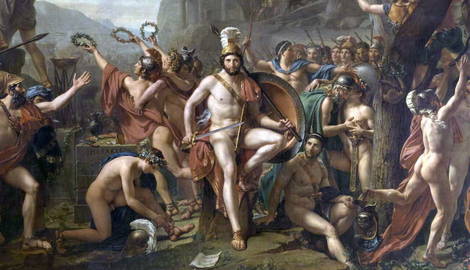

From ancient writings and modern films, we are presented with an image of the Spartans as fearless warriors, born for war and always ready for battle. We are left to imagine a brutal system in which boys, if they were not thrown off a cliff at birth, were trained from an early age to live for war. This gives the false impression that Sparta was more of a military camp than a functioning Greek polis. But much of what we think we know about Sparta comes from outsiders who admired, feared, or deliberately mythologized Spartan discipline. Although the Spartans were indeed brave warriors, their community went far beyond one built solely for combat.
Sparta Was Not a Military Camp but a Functional Polis
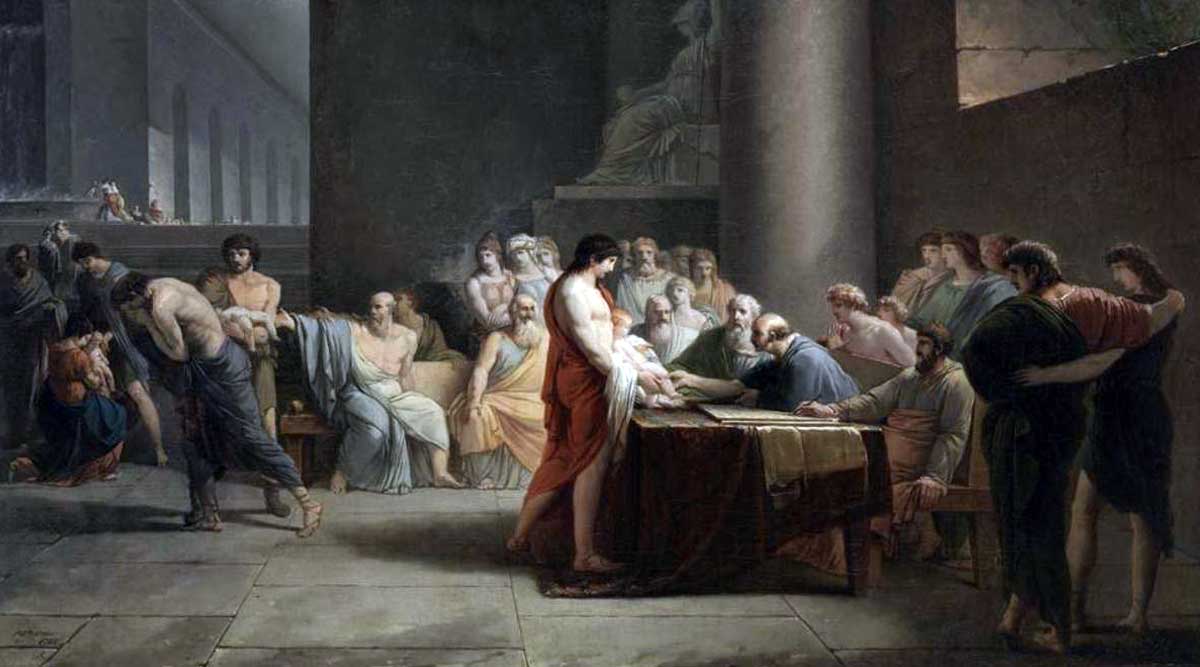
Sparta is often described as a polis organized around warfare, where almost every aspect of life was in some way connected to war. This view has been most strongly influenced by ancient writers, known for exaggeration and mythologizing, especially Xenophon and Plutarch.
“No man was allowed to live as he pleased, but in their city, as in a military encampment, they always had a prescribed regimen and employment in public service, considering that they belonged entirely to their country and not to themselves” (Plutarch, Life of Lycurgus 24).
In reality, Sparta was a functional polis like most other Greek poleis, with its own social, political, and religious institutions and clearly defined laws. Its legislation was largely defined by the lawgiver Lycurgus, who lived between the 9th and 8th centuries BC. At the center of Spartan government was an unusual dual kingship (diarchy) system. The kings were chosen from two historically important lineages for the Spartans, the Agiads and the Eurypontids. Both held equal power, acting as a check on the other (much like the Roman consuls). This system of rule lasted until the end of the 3rd century BC.
Alongside the kings stood the Gerousia, a council of 28 Spartans over the age of 60. The Gerousia was the main legislative and judicial body of Sparta. In addition to the Gerousia, there was also the Apella, the popular assembly composed of all full male citizens over the age of 30. The Apella met once a month, and voting took place on matters of war, peace, alliances, succession to the throne, and laws.
Another institution specific to Sparta was the ephors, five officials who were elected annually from among the full citizens. They oversaw both foreign and domestic policy, and even supervised the actions of the kings. They held enormous power, including control over the helots and the authority to arrest kings.
The Spartan Agōgē as a System of Education
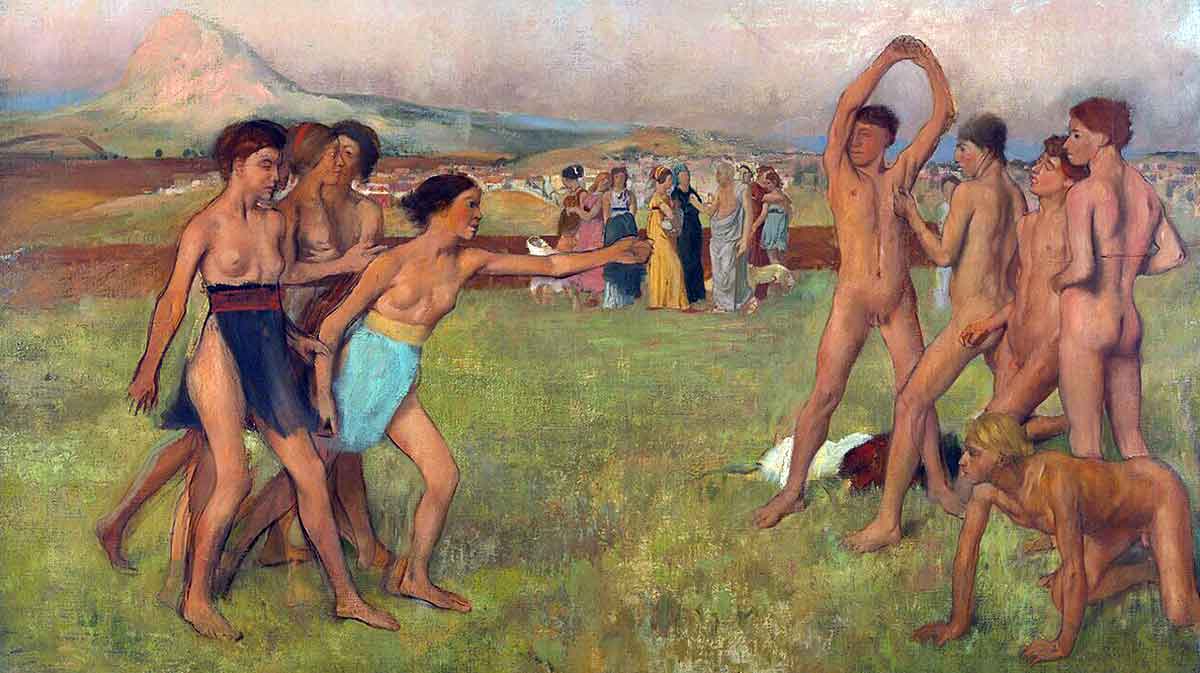
Before joining the general assembly, a young Spartan citizen had to complete their education. At the center of the Spartan educational system was the agōgē, a mandatory, state-sponsored education system. While it emphasized physical endurance, this was not its only aspect.
The primary goal of the agōgē was to transform boys into full citizens who contributed to society and respected its hierarchy and laws. At the age of seven, boys were taken from their homes to state “schools,” where their education lasted until the age of 30. To shape them into warriors ready to give their lives for their homeland, students were exposed to harsh conditions, hunger, military exercises, and tests of pain tolerance, plus they learned skills such as hunting, dancing, and singing.
Unlike, for example, in Athens, literacy and intellectual refinement were secondary in this educational system, though not entirely neglected. Spartans, who called themselves Spartiates, learned how to speak clearly and control their speech. This approach to speaking became known as Laconic speech. It meant speaking in a short, clear, and concise manner, aiming to say as much as possible with as few words as possible. After invading Greece and receiving the submission of other key city-states, Philip II of Macedon sent a message to Sparta: “If I invade Laconia, you will be destroyed, never to rise again.” The Spartan ephors replied with a single word: “If.”
This type of removal of children from their homes into military schools was not unique to Sparta, but the Spartans elevated it to a higher level.
Life in Sparta Between Campaigns
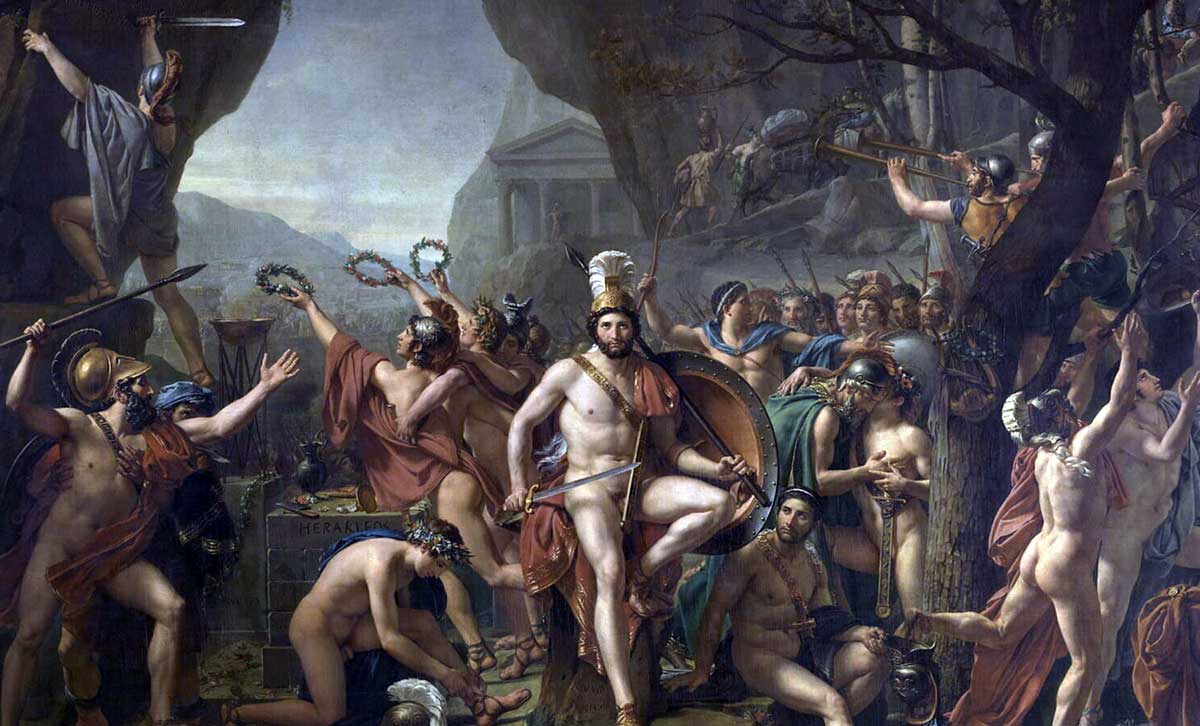
In Archaic and Classical Greece, military campaigns were seasonal; that is, wars were usually fought from late spring to early autumn, when weather conditions and agricultural cycles enabled the mobilization of the population. The same applied to the Spartans; they did not remain on battlefields year-round, nor did the polis maintain a continuously deployed standing force abroad. Between campaigns, soldiers returned to Laconia and resumed their social and civic responsibilities.
At home, the Spartans spent much of their time between campaigns overseeing the helot population, which provided agricultural labor. Helots were slaves who were tied to the land of a master for whom they worked. However, they were not the property of that master, but of the state, and masters were assigned to them by lot. The helots were mostly descendants of the indigenous Messenian population whom the Spartiates had enslaved. They lived in terrible conditions, which often led them to rebel. The Spartans often organized krypteia, expeditions in which they brutally killed suspicious helots, to keep the population under control.
Women in Ancient Sparta
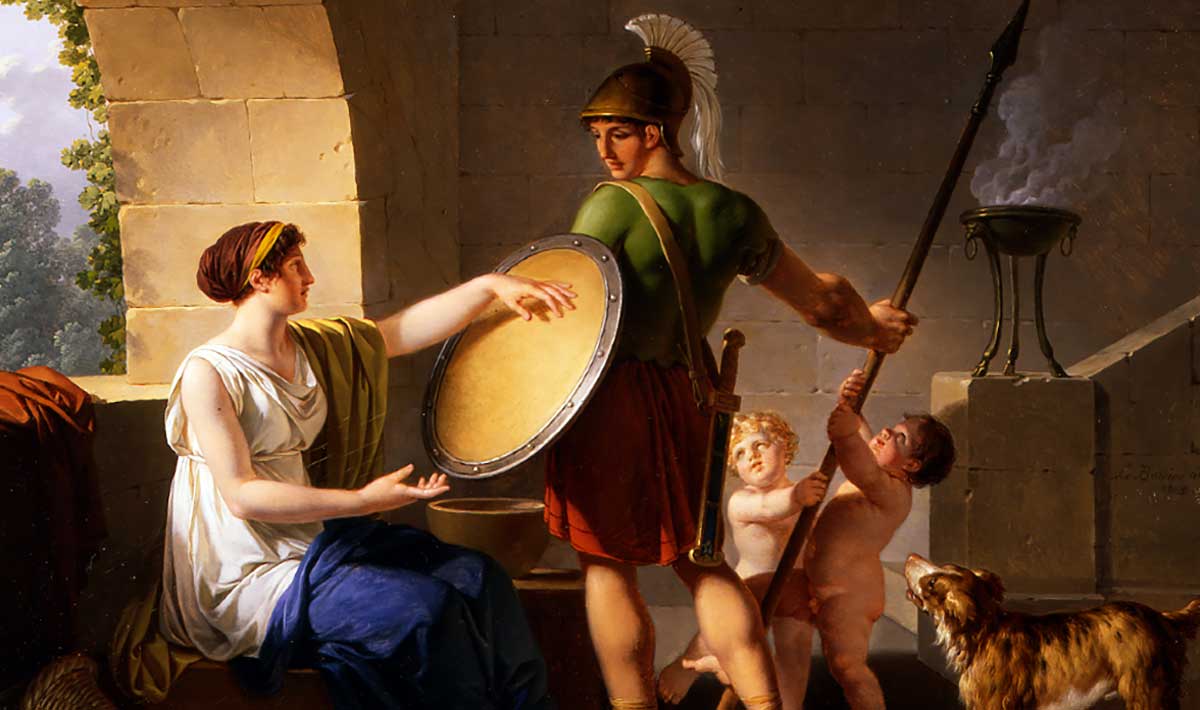
Women in Sparta held a role that was unusual in ancient Greece. Although they did not formally participate in political processes, they exerted significant influence in shaping Spartan society.
Their education was also based primarily on physical training, though not to the same extent as it was for boys. From an early age, young Spartan girls were taught certain forms of athletics, including running, wrestling, and dancing. While the men were on military campaign, they were responsible for controlling the helots and overseeing agricultural production.
Marriage was considered a social obligation, and unmarried Spartan men and women were often stigmatized. Nevertheless, women in Sparta could own and inherit property. According to Aristotle, by the 4th century BC, a large portion of Spartan land was actually in the hands of women, which created a significant social imbalance.
Being asked by a woman from Attica, “Why is it that you Spartan women are the only women that lord it over your men,” a Spartan woman is said to have responded, “Because we are the only women that are mothers of men” (Plutarch, Moralia III, 457).
Growing Old in a Society Built for Wars
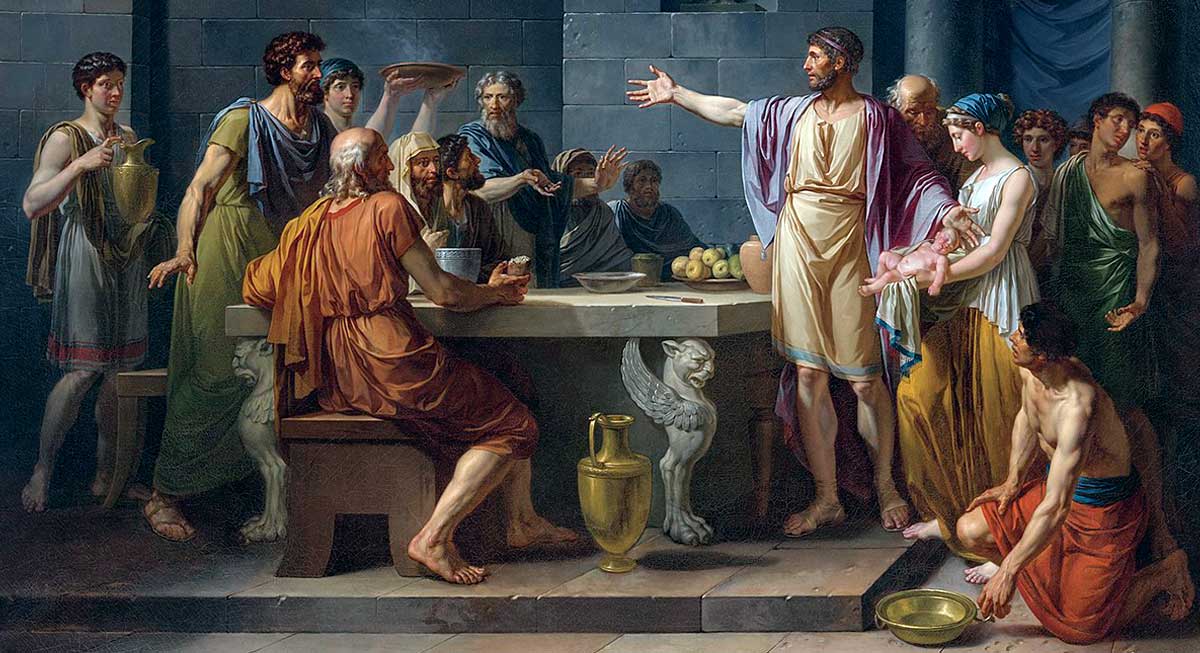
When you live in a social system that values physical ability, aging can be a challenge. However, the Spartans were taught to respect seniority, and government was organized in such a way that men over 60 held the greatest authority, through the Gerousia. The council comprised 30 elders (28 elected from the people and 2 kings) who had to be over 60 years old. Their membership in the council was lifelong and represented one of the greatest achievements in the life of a Spartan.
Modern historians estimate that the average life expectancy of a Spartan was around 28 years, so simply reaching the age of over 60 was an achievement in itself. The Gerousia functioned as the main legislative and judicial body of Sparta. They were the guardians of old laws and customs and the makers of new laws when necessary. They acted as judges for more serious crimes, which required the death penalty or exile.
“The law by which Lycurgus encouraged the practice of virtue up to old age is another excellent measure in my opinion. By requiring men to face the ordeal of election to the Council of Elders near the end of life, he prevented neglect of high principles even in old age” (Xenophon, Constitution of the Lacedaemonians 10.1).
The Life of Subordinate Classes of Sparta
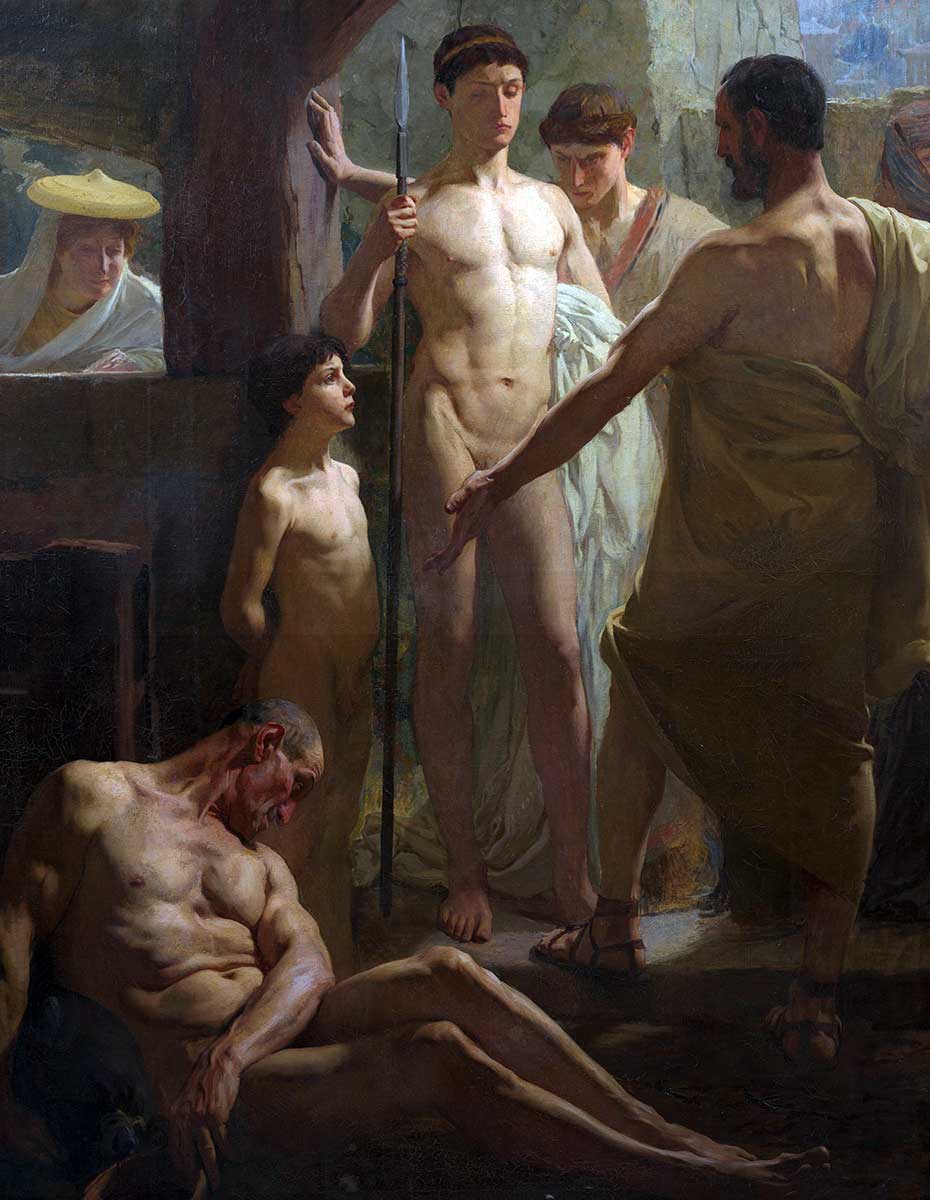
Spartiates were not the only social group in ancient Sparta. On the contrary, they were not even the most numerous. The helots outnumbered the Spartiates 7:1, and if we include the perioikoi, that ratio increases even more. The perioikoi were also descendants of the indigenous population of Laconia and Messenia, but unlike the helots, they were not enslaved, but they were also not citizens of Sparta.
The Spartans were professional warriors and did not engage in trade or crafts, which formed the economic foundation of every polis. The perioikoi filled that gap, producing weapons and keeping the economy and trade alive. Their position was subordinate but stable, and unlike the helots, they had little motive for uprisings. The helots, on the other hand, dissatisfied with their position in society, often revolted, especially in Messenia.
There was a great helot uprising after a devastating earthquake of 464 BC. The slaves took advantage of the situation and seized Mount Ithome, located just 30 miles west of Sparta. The war against helots lasted almost ten years. It was one of several famous Messenian Wars.
When Sparta Lost Its Militarized Way of Life
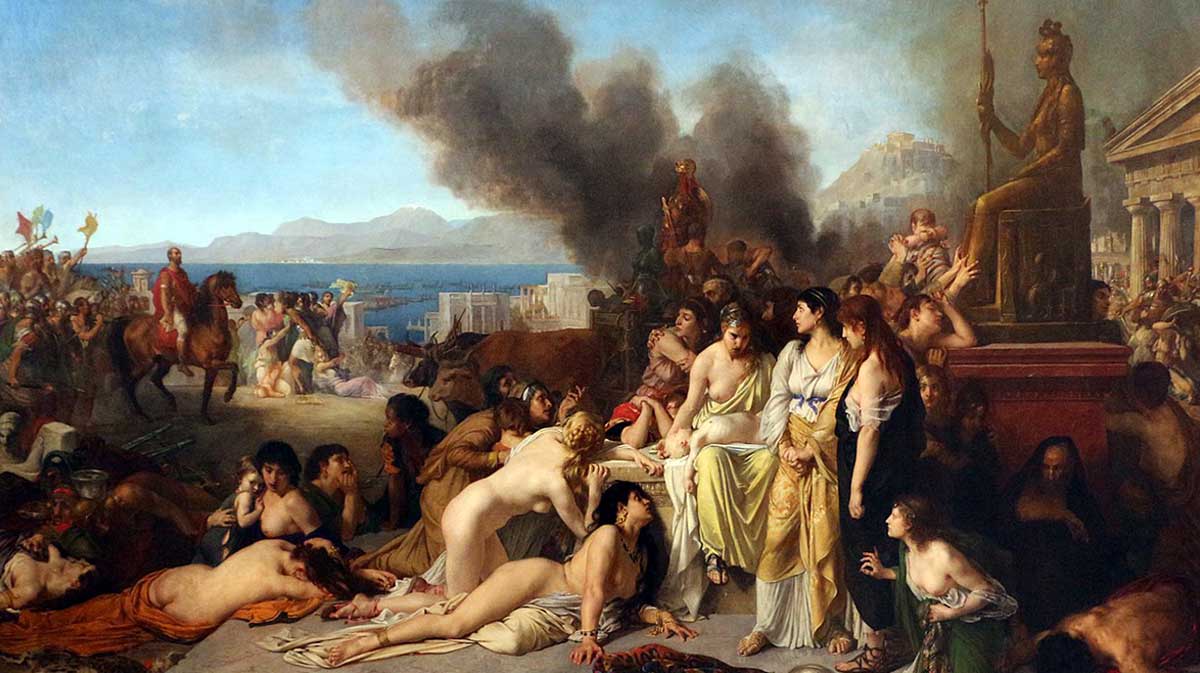
The Spartan militarized way of life did not disappear overnight, but gradually faded between the 4th and 2nd centuries BC. The main turning point was the great defeat at Leuctra in 371 BC, when Sparta was defeated by Thebes, led by Epaminondas. Sparta lost thousands of its best soldiers, and it finally lost Messenia. With the loss of the helot population, the traditional Spartan way of life could no longer exist.
A few Spartan kings, such as Agis IV and Cleomenes III, tried to restore the old order through agrarian reforms and debt cancellations, but without much success. Eventually, the myth of Spartan invincibility disappeared. Greece fell under Roman control, and when Rome defeated the Greek Achaean League in 146 BC, Sparta was gradually Romanized. This fundamentally changed the daily lives of the inhabitants of Sparta.