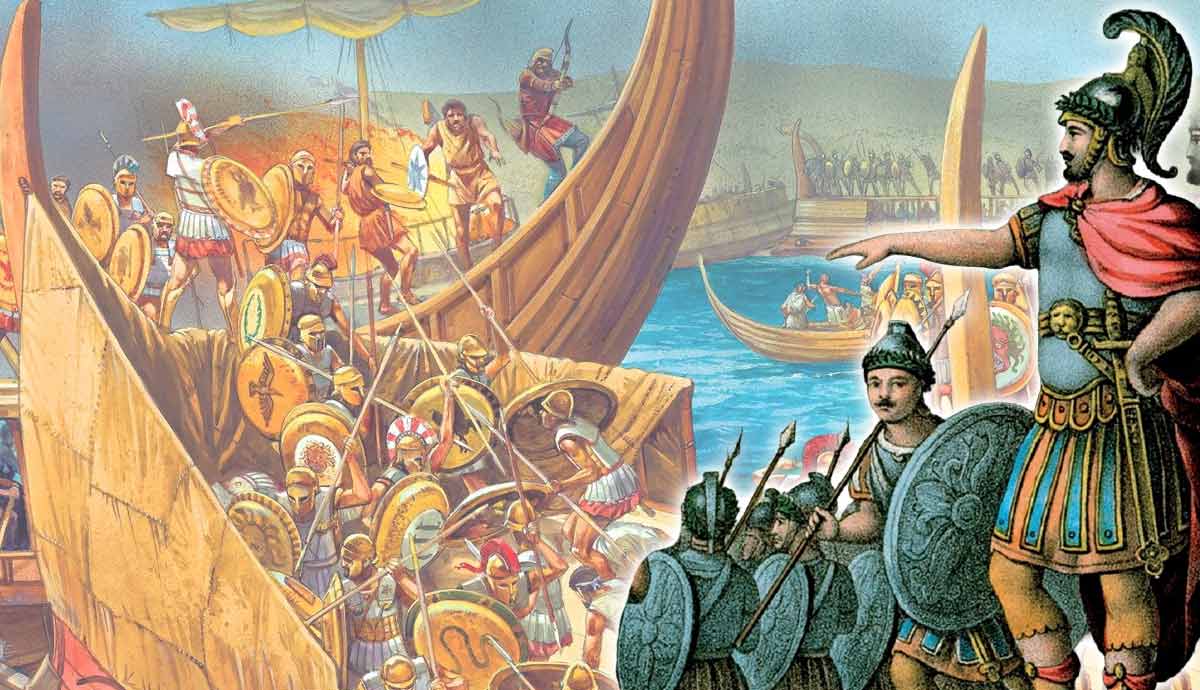

The death of Nero, the last Julio-Claudian emperor, was as turbulent a time in Rome as the fall of the Republic. Augustus established the Principate as a uniquely Julio-Claudian destiny, so that for centuries after the bloodline ended, rulers continued to use the cognomen Caesar. That meant that for Vespasian, winning the civil war of 69 AD was only part of the challenge. Vespasian had to prove that he had the right to wear the imperial laurel crown, and that what was once a Julio-Claudian destiny could now be a Flavian one, setting his sons up as his successors. One strategy he employed was using omens, signs, and prophecies to communicate that he was chosen by the gods, drawing on Roman religious traditions and Augustus’ example.
Signs of Greatness
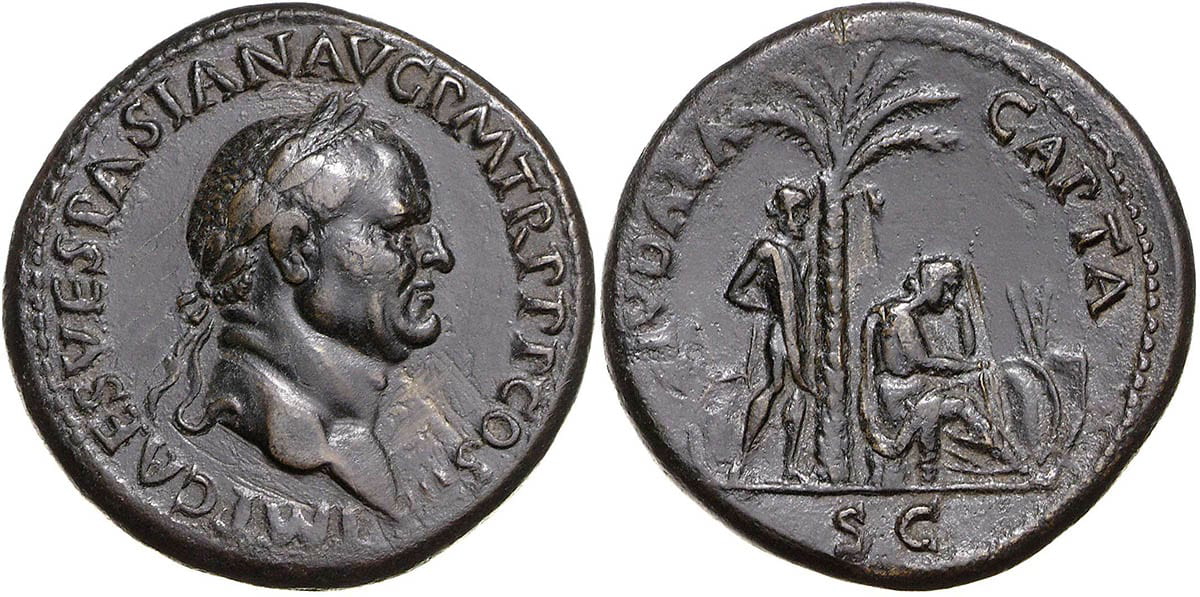
When Nero died, Vespasian was at the head of the Roman armies in the east, dealing with the Jewish Revolt. According to the contemporary historian Tacitus, when he was deciding whether he should make a play for power, the people around him reminded Vespasian of the prophecies and omens that had marked him out for greatness (Histories 2.78ff.).
As a chosen example, Tacitus recounts an omen of a cypress tree on Vespasian’s country estate, which, when he was still a young man, suddenly fell without cause but then rose the next day in the same spot, stronger than before. This was interpreted by priests as a sign that Vespasian was destined for greatness. Vespasian, who is described by Tacitus as credulous of divine signs, had believed that this destiny was being fulfilled, as he had won the consulship and earned the prestigious command in Judea. He now wondered whether the omen could have been a sign of something even greater: the imperial purple.
The biographer Suetonius gives a much longer list of omens known in his day, about 50 years after the death of Vespasian, which also marked him out for imperial power. Many of these were probably invented retrospectively (Suetonius, Vespasian 5.2-7).
Seeking Prophecies
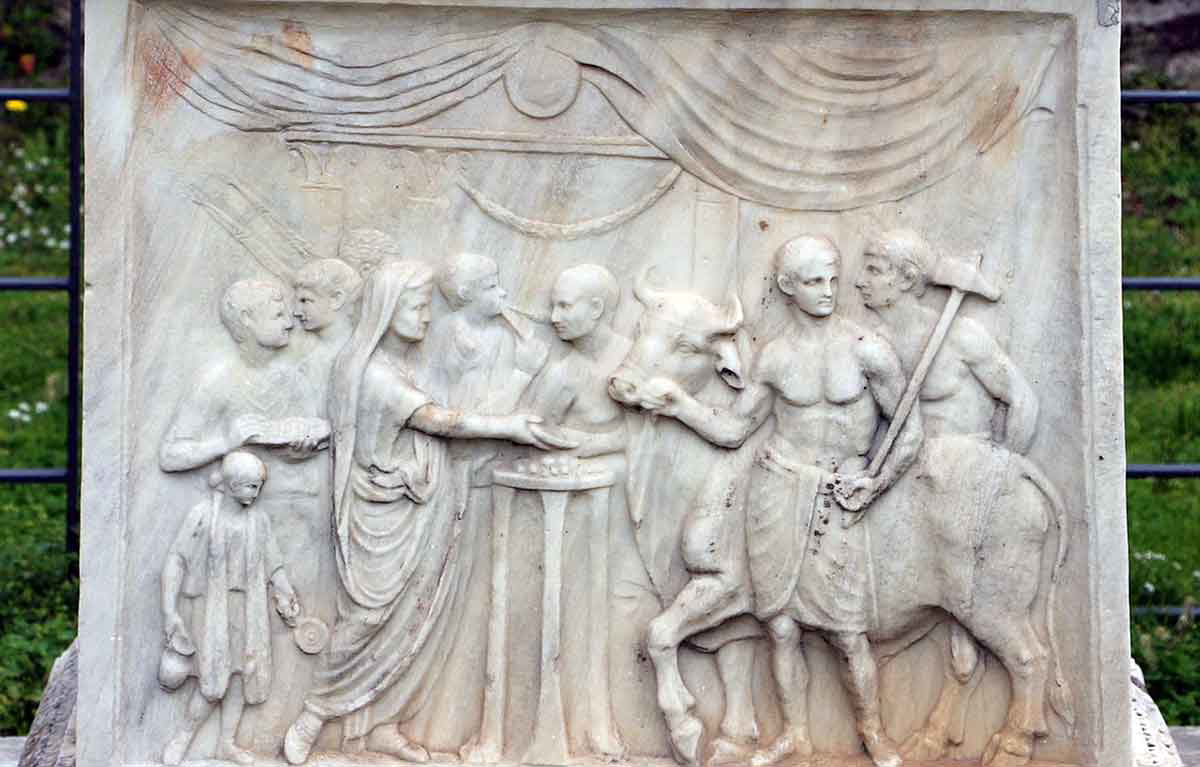
It is unclear whether Vespasian and his entourage were true believers or if this was a strategy meeting. Either way, they played into the idea of a divine destiny. While traveling from Judea to Syria, Vespasian made a detour to Mount Carmel, where he worshiped at the altar of an unknown god. There he met a priest called Basilides, which means kingly, itself a sign, who told him, based on the entrails of his victim, that whatever he was planning, the gods were ready to grant him even more.
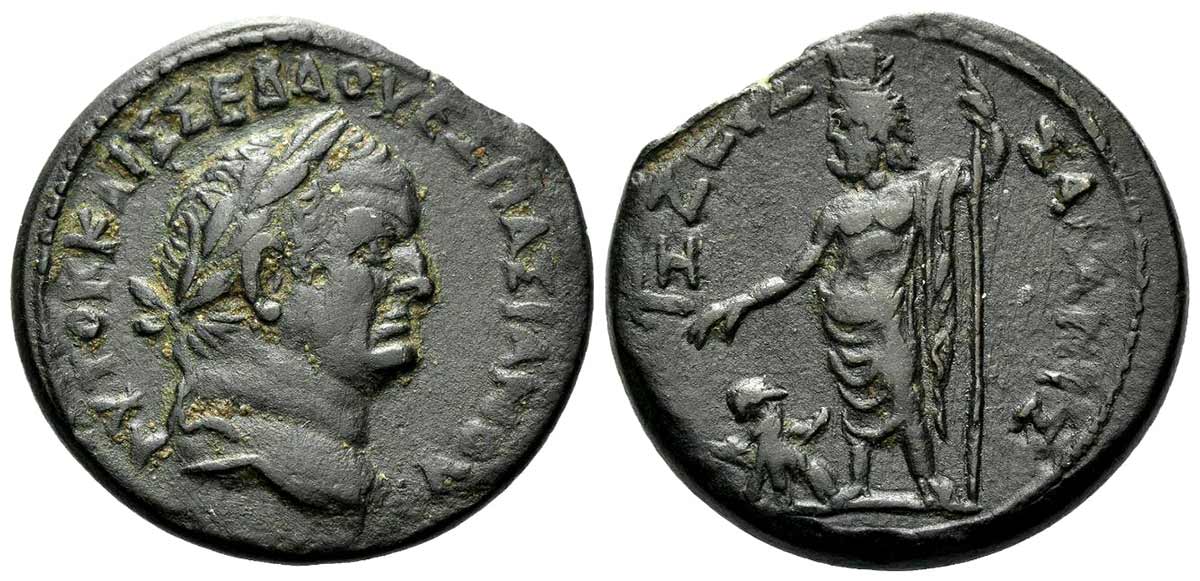
According to Tacitus and Suetonius, when Vespasian reached Alexandria in Egypt, he visited the temple of Serapis, where he also consulted the auspices about his future. After this, Vespasian found himself with miraculous healing powers. A blind man and a lame man approached Vespasian, claiming that Serapis had told them in a dream that Vespasian could heal them. Though Vespasian himself was initially incredulous, he did so successfully (Tacitus, Histories, 4.81; Suetonius, Vespasian 7.2).
One of Vespasian’s tame Jewish captives, who he would later sponsor to become a Roman citizen, Flavius Josephus, reportedly earlier reinterpreted a Jewish prophecy, previously thought to be about the messiah, to mean that Vespasian would become emperor of Rome (Jewish War 3.400-408).
Such a large collection of signs and prophecies suggests that Vespasian was gathering evidence to make his case.
Signs and Omens in the Roman World
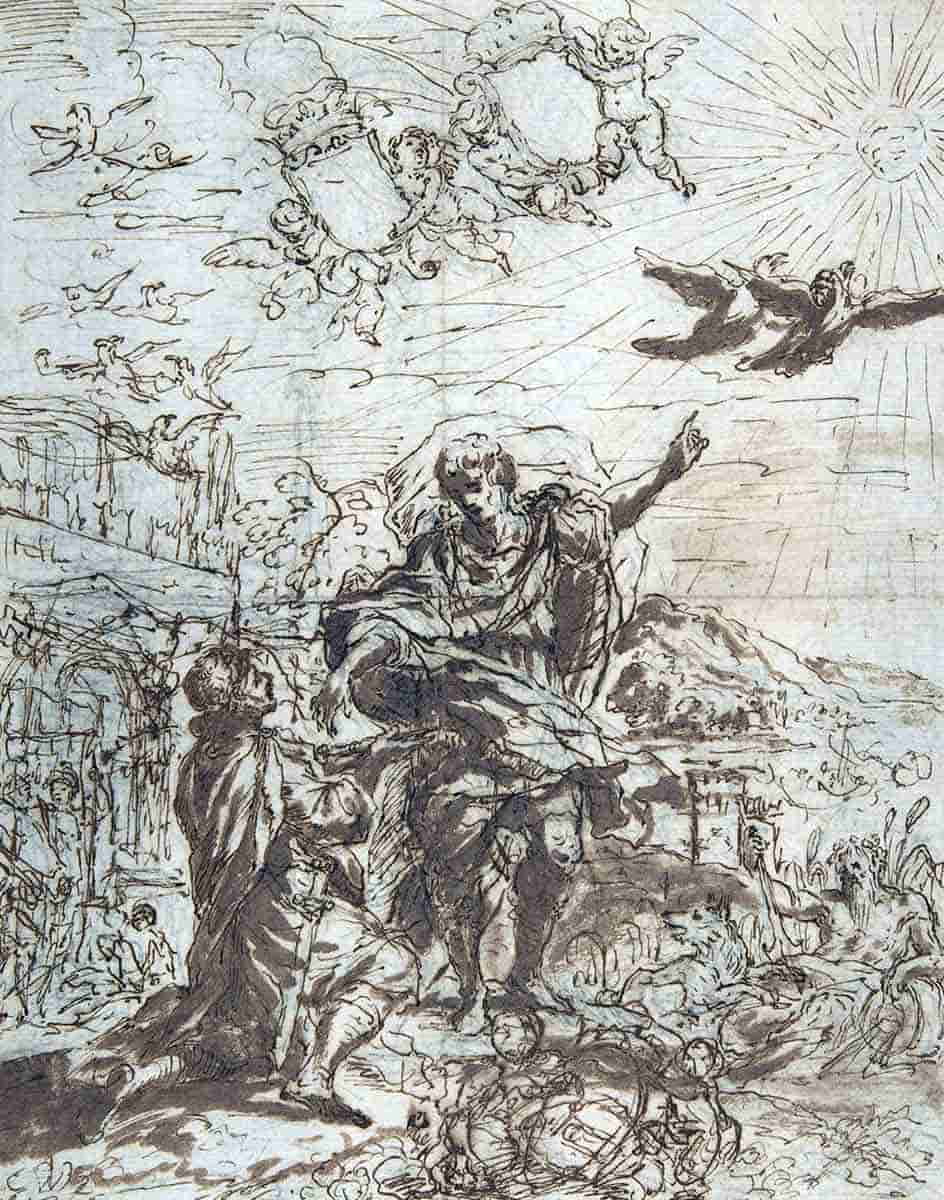
The Romans believed that their gods had opinions about what should happen in the mortal world and actively sent signs to confirm their desires and approval.
Divine guidance was sometimes actively sought. For example, the Romans had specialist haruspices to interpret the entrails of sacrificial victims to determine the will of the gods. Similarly, they consulted the Sibylline Books following their loss at the Battle of Cannae against Hannibal, which prompted them to make unusual human sacrifices.
Signs even played a role in the founding of Rome. According to the legend, Romulus and Remus could not agree on where exactly to establish their new city, so they decided to wait for a sign in the form of augury, which is the flight of birds. Sitting on the Aventine Hill, Remus saw six vultures, which he took as a sign. But while sitting on the Palatine Hill, Romulus then saw 12 vultures. Remus argued that his sign took precedence because it had come first, while Romulus argued in favor of his greater number of vultures. In the end, Romulus killed Remus, and Rome was centered around the Palatine Hill.
Signs like auguries could be sought (impetrativa) or unsought (oblativa), which were considered equally important. When the future king Lucius Tarquinius Priscus arrived in Rome, an eagle swooped down and took his hat and then returned it to him. This was interpreted as an omen of future kingship. Omens could also be negative. For example, before Hannibal invaded Italy, an ox was seen climbing stairs and jumping out a window, and it rained stones.
Roman history was typically recorded in the form of annals, with year-by-year accounts. Traditionally, these annals started each year with a list of omens and portents, highlighting their importance.
Divine Descent and Patronage
Signs and omens were used to demonstrate the favor of the gods for Rome and certain courses of action. Individual Romans also used signs to help guide their actions, and sometimes shared omens as a way of suggesting to others that they were divinely favored.
It was already common for aristocratic Roman families to claim descent from the divine. The most famous case is that of the Julian clan. They claimed to be descended from Venus through her son, Aeneas, and his son, Ascanius, whom they claimed as their ancestor. But the Aemilii also claimed descent from Jupiter and the Caecilii from Vulcan.
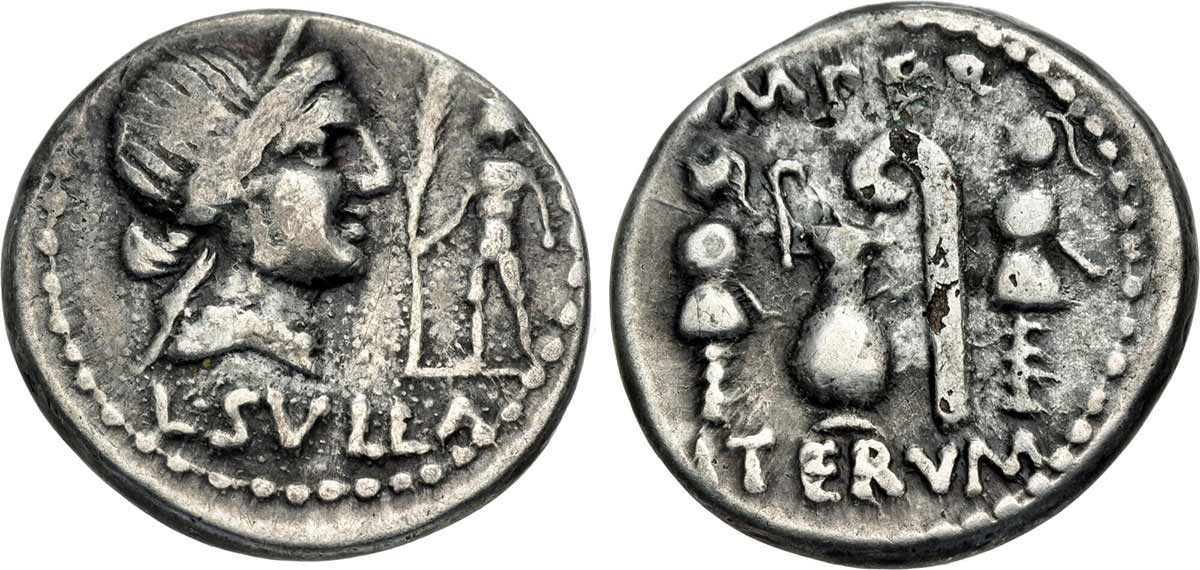
With the rise of the military strongmen at the end of the Republic, individual generals sometimes claimed personal divine patrons. Most famously, Sulla recognized Venus as his personal patron. He claimed that during his war with Mithridates, he had a dream in which the goddess appeared before him in full armor and led his army. He then visited the Oracle at Delphi, where it was confirmed that Venus was his patroness.
While campaigning in the east, he adopted the name Epaphroditus, meaning favored by Aphrodite, the Greek name for Venus. Following his success at the Battle of Chaeronea, he dedicated a trophy to Mars, the god of war, Victoria, the goddess of victory, and Venus, his personal patron. She also featured on many of the coins he minted.
Augustus and His Patron Apollo
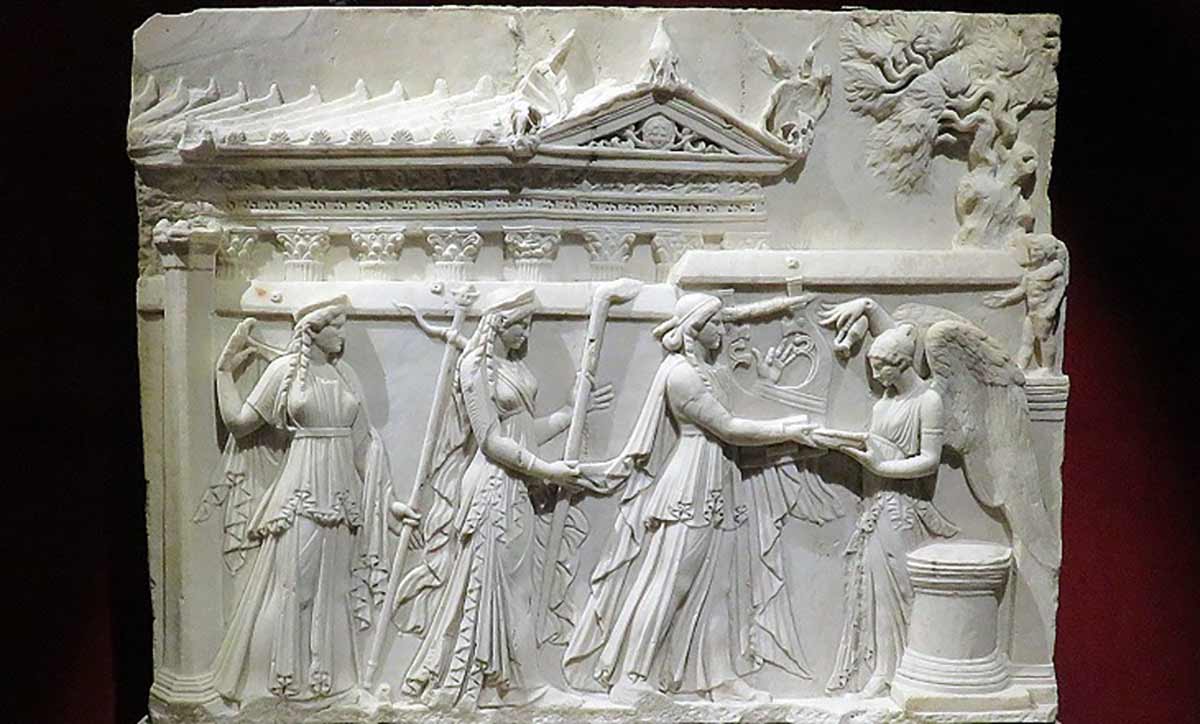
Augustus claimed Apollo as his patron. It reportedly started with a rumor that his mother, Atia, the niece of Julius Caesar and a member of Venus’ Julian gens, had spent a night in the temple of Apollo, where she was visited by a serpent that left a mark on her. Ten months later, she gave birth to Octavian, later known as Augustus, suggesting that Apollo was his father. He later claimed Apollo as his patron.
Interestingly, the Liberators who assassinated Julius Caesar also claimed the patronage of Apollo, and he featured on many of the coins they minted. They also reportedly used Apollo as their camp password during the Battle of Philippi. Some sources suggest that Augustus used the same password for his own camp. Therefore, when he won the battle in 42 BC, Apollo had chosen his champion.
He later claimed Apollo as his patron again in the fight against the pirate Sextus Pompey, who styled himself as the son of Neptune, the god of the sea. Following his success, Augustus dedicated a temple to Apollo on the Palatine Hill adjoining his own home, which he sometimes used as a kind of entrance to his home for welcoming guests. He later claimed Apollo’s assistance in his defeat of Mark Antony at the Battle of Actium in 31 BC.
Clearly divinely favored, Augustus’ rise to power was also reportedly confirmed by many omens. Augustus makes no mention of these himself in his account of his achievements, his Res Gestae, but mentions of them appear throughout the sources. The biographer Suetonius gives a long list of omens that signaled Augustus’ future. They also appear in the works of the Augustan poets who praised the new Augustan Age. This suggests that these omens and portents were widely circulated throughout the first emperor’s reign as evidence that Augustus’ destiny was supported by the gods.
Eastern Favor
Another characteristic of Augustus’ propaganda campaign to establish himself as the ruler of Rome was his vilification of Mark Antony. Augustus claimed that while he and Apollo represented traditional Roman values, Antony, commanding the eastern half of the empire and embroiled in an alliance or love affair with the Egyptian queen Cleopatra, represented eastern decadence. This included an association with Dionysus, the god of wine and festivity.
Considering this vilification of the East, it is interesting that Vespasian’s propaganda campaign took advantage of eastern deities, but did so in a uniquely Roman fashion. Josephus’ prophecy said that a man from the east would rise to rule the world. While most people thought this meant that the messiah would emerge from Judea, Josephus conveniently interpreted it as a Roman general commanding in the east becoming emperor of Rome.
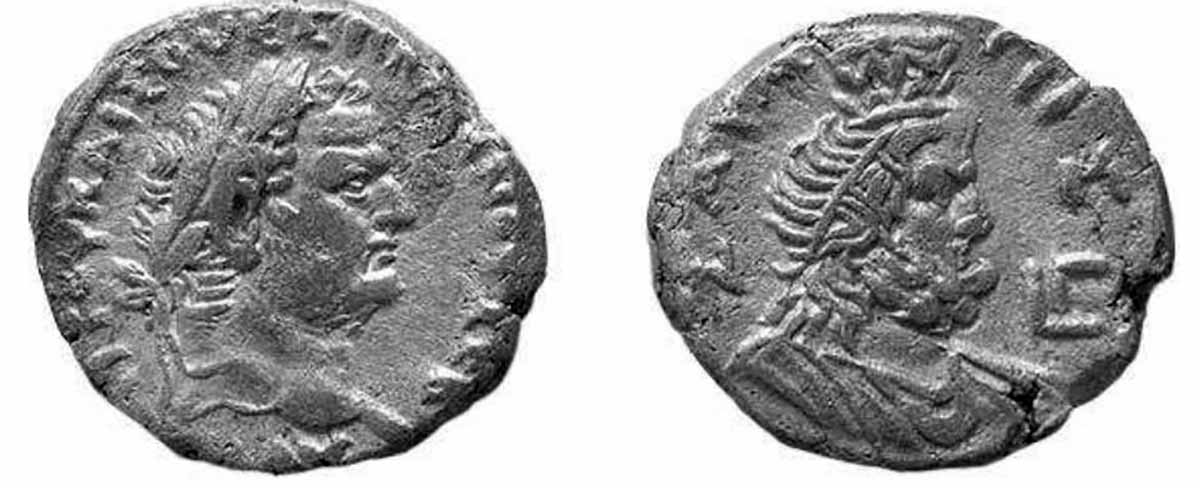
This idea also appears in a portent mentioned by Suetonius at the Battle of Bedriacum, which was between Otho and Vitellius. Suetonius said that before the battle, two eagles were seen battling in the sky. When one eagle won, another flew in from the east and attacked and killed it. This portent, almost certainly invented after Vespasian’s ultimate victory, aligns with the idea of a general from the east rising to power.
Vespasian then visited with eastern gods. This may have been a matter of convenience, since that was where he was, and none of his opponents were in the area to refute the information received or how it was interpreted. It may also have been that eastern gods, and specifically Egyptian gods, were seen as more esoteric, so they might do things that Roman gods would not, such as give Vespasian healing powers.
Belief in Vespasian’s healing powers may have been relatively widespread, as the Flavians seem to have been connected with healing even after the fall of their dynasty. Under Antoninus Pius, in the middle of the 2nd century AD, a college of Aesculapius and Hygeia, healing deities, met in the temple of Divus Titus, Vespasian’s posthumously deified son, in the Porticus Divorum dedicated to both Divus Titus and Divus Vespasianus (CIL 6.10234).
Egyptian gods, especially Serapis and Isis, were also increasingly popular in Rome, potentially explaining why they were chosen over other eastern deities.
A Family Affair
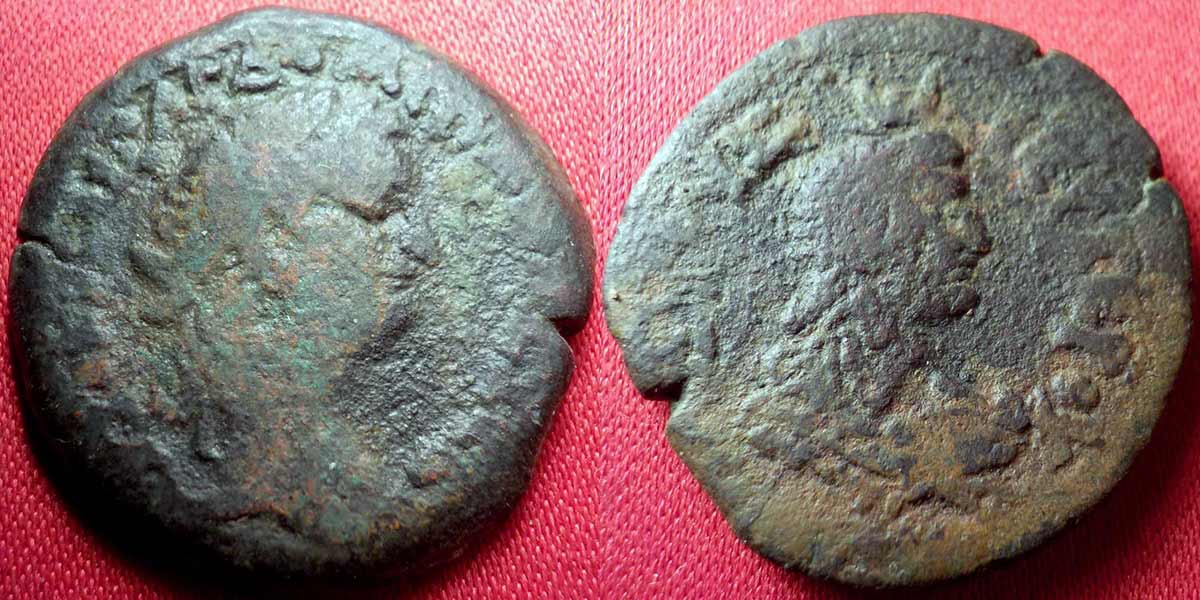
While the idea of divine favor from the east may have started with the first Flavian, it was a policy that seems to have been followed by his two sons and successors, Titus and Domitian.
Like his father, Titus took a deliberate trip to the oracle of Aphrodite at Paphos in 69 AD, which also encouraged him to hope for imperial power (Suetonius, Titus 5.1). Titus may also have been associated with miraculous activity. His troops reportedly enjoyed a miraculous abundance of water, while that of their opponent dried up (Josephus, Jewish War 5.409-411). Suetonius says that Titus used any means, human or divine, to end a plague, again perhaps indicating a divine miracle (Suetonius, Titus 8.4). It is also worth noting that no emperor before Vespasian is credited with personally engaging in miraculous activities, but five of the eight emperors who followed him were.
While Domitian was not associated with any miracles, he was associated with an Egyptian goddess, Isis. When Vitellian and Flavian forces were fighting in Rome at the end of 69 AD, Domitian reportedly disguised himself as a devotee of Isis, which enabled him to slip past Vitellius’ men with the help of the goddess. This seems like a story used to align Domitian with his father’s propaganda campaign.
Suetonius also records a portent that Vespasian reportedly received earlier in life, before he was a great general, that pointed to the future of his children. He said that on a suburban Flavian estate, there was an oak tree sacred to the god Mars. Every time one of Vespasian’s children was born, a branch suddenly sprang forth from its trunk, obviously indicating that child’s future. The first was slender and withered quickly, as did the daughter who died as an infant. The second, coinciding with the birth of Titus, was strong and long, while the third, linked with Domitian, was the image of the tree (Suetonius, Vespasian 5.2).
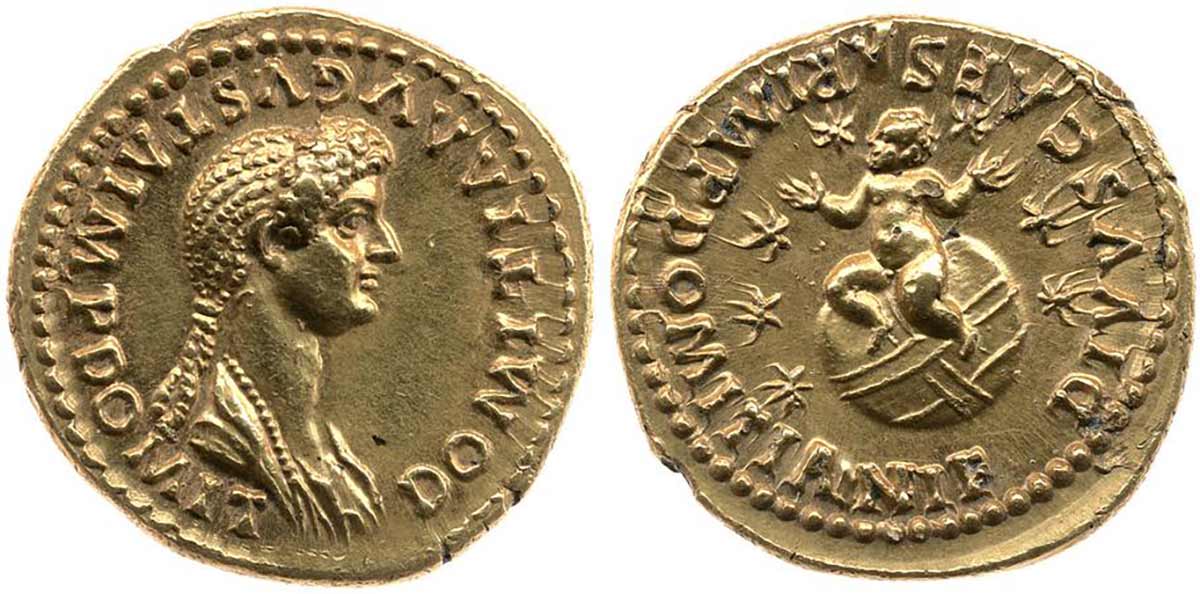
This story must have been invented during the reign of Domitian. When Vespasian was on the rise, he was accompanied by his son Titus, more than ten years older than Domitian, who was being groomed as a great general. Domitian was still a youth living in Rome. All indications throughout Vespasian’s reign were that Titus would be his strong successor. There was no indication that he would die young after just two years in power. Therefore, the story must have been invented to promote Domitian. But while the story points to a divine destiny for Domitian, its purpose seems to be more to paint Domitian as the true successor of his father, Vespasian, and brush over the importance of his older brother.
Domitian had a different tactic. He had his father, brother, son, and a female family member called Domitilla, either his mother or sister, all posthumously deified. Like Augustus became divi filius when he deified Caesar, Domitian became the son, brother, and father of gods. He then chose Minerva as his personal patron deity.
“I Think I’m Becoming a God”
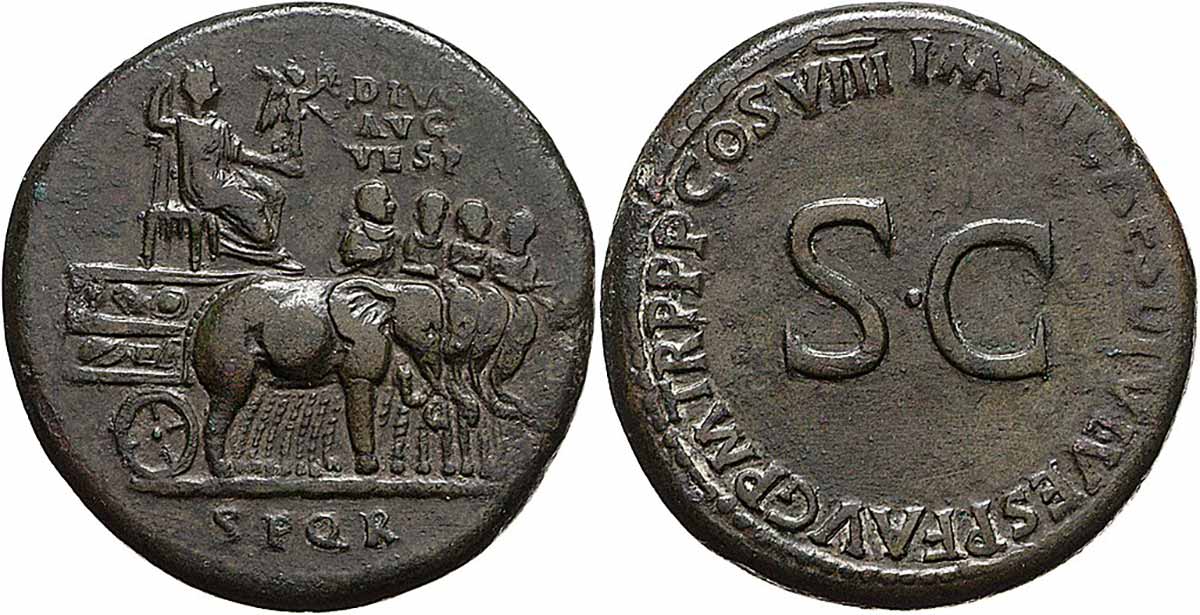
While Vespasian certainly seems to have made good use of omens and prophecies in his campaign to establish himself as Rome’s first, true, non-Julio-Claudian emperor, he may have been more cynical than the ancient authors sometimes suggest.
When Vespasian’s death was on the horizon, there was apparently a portent that the Mausoleum of Augustus opened suddenly, and a comet appeared in the heavens, like the comet that had appeared to confirm the apotheosis of Julius Caesar. He reportedly brushed them off, saying that the first was an omen for Junia Calvina, a member of Augustus’ family, and the second was the Parthian king, since the comet reflected his long hair. But Suetonius also claimed that Vespasian uttered the now-famous words: “Oh dear, I think I’m becoming a god.” What could be more ominous?