
Sumer is one of the world’s most ancient civilizations, beginning to flourish in the Fertile Crescent between the Tigris and Euphrates rivers around 4500 BC, and developing the world’s first known writing system around 2900 BC. Our understanding of Sumerian mythology is less comprehensive than that of other ancient civilizations, such as the Egyptians and Greeks, because surviving texts are mostly fragmentary, and until recently, largely untranslated. Nevertheless, from what does survive, we can see that Sumerian mythology influenced neighboring mythologies, with strong parallels to the Egyptian creation myth, the Jewish conception of celestial realms, and Greek ideas of cycles of life, death, and rebirth. Read on to discover six important Sumerian myths, their strong parallels with other mythologies, and their unique elements.
1. Sumerian Creation Myth
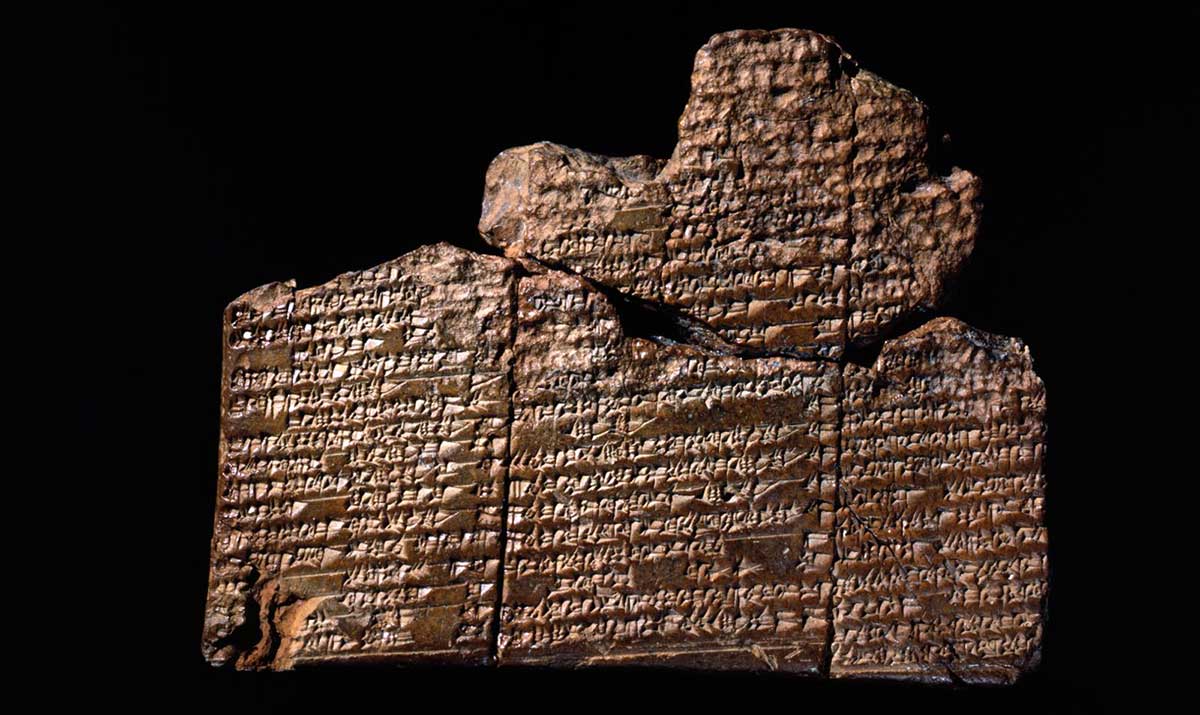
The Sumerian creation myth, principally recorded on the Eridu Genesis Tablet (c. 1600 BC), bears a striking resemblance to the Egyptian creation myth featuring the Ennead of Heliopolis. This features Atum emerging from the primordial waters of Nun and creating Shu (air) and Tefnut (moisture), who create Geb (earth) and Nut (sky), before they give birth to the more anthropomorphic gods that rule the realm between the earth and the sky.
The Sumerian myth starts with Nammu, the personification of the primordial waters that existed at the beginning of time. The sun god Utu emerged from the waters, and together they gave birth to the sky god An and the earth goddess Ki. They, in turn, mated and gave birth to Enlil, the god of wind, rain, and storms. He separated the sky and the earth and claimed this mortal world as his own.
The Sumerians envisioned this newly created earth as a dome surrounded by the primordial sea. Underneath Ki at the bottom was the underworld called Kur and a freshwater ocean called Abzu. All the dead found themselves in Kur regardless of their actions or status in life. The dome above was envisioned as several heavenly realms, usually three or seven, that were exclusively the domain of the divine. The lowest realm was the domain of the stars. The middle realm was the domain of the Igigi, who were divine creatures who found themselves replaced by man, kind of like fallen angels. The outermost realm was that of An.
This idea of multiple celestial realms occupied by different orders of divine beings is a common theme in religions from the Near East. In early Judaism, there are several celestial realms described in Talmudic texts, and the same idea shows up in early Christianity, for example, in Gnosticism.
2. Enki and the Mother Goddess
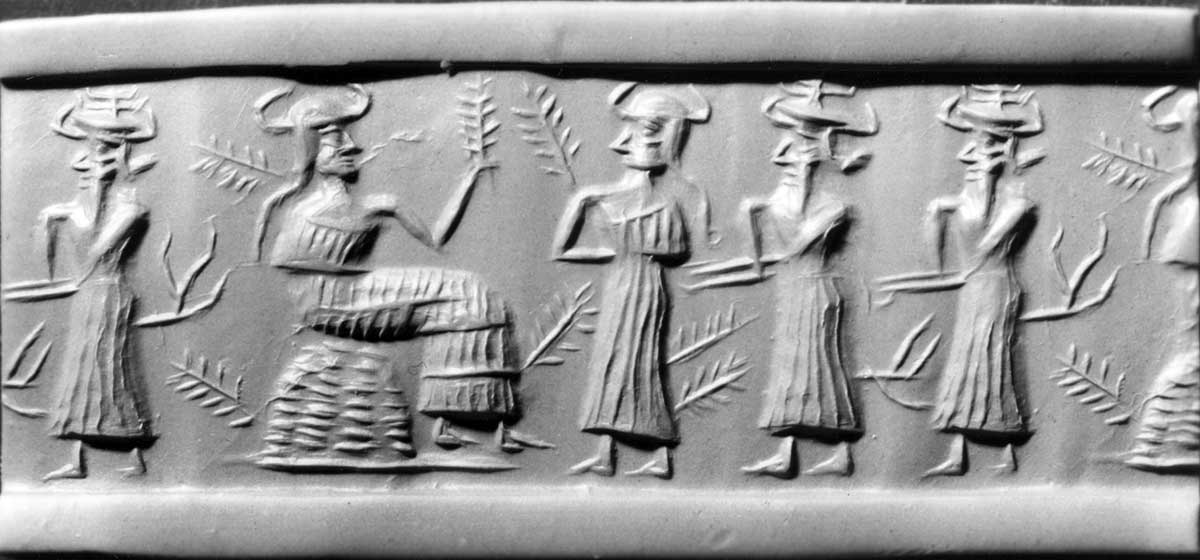
Another son of An and Ki was Enki, the god of water and wisdom, and the opposite side of the coin to his brother Enlil. While Enlil was remote and represented cosmic order, Enki was closer to mankind and was kind of a troublemaker, not unlike the Norse god Loki. Much like the Greek god Zeus, Enki was an infamous womanizer.
Within the Sumerian creation myth, we learn of an island called Dilmum, which is pure and clean and is a place where the is no sickness, death, or strife. However, there is also no freshwater, much to the lament of the patron goddess Ninhursag. Enki hears her lament and convinces Utu to bring forth a freshwater spring on the island.
Happy with a job well done, Enki tries to impregnate Ninhursag, but she refuses until he formally proposes marriage. They lie together, and nine days later, she gives birth to Ninsar, “lady of the plants.” She wanders the riverbanks of Dilmum, causing plants to flourish in her footsteps.
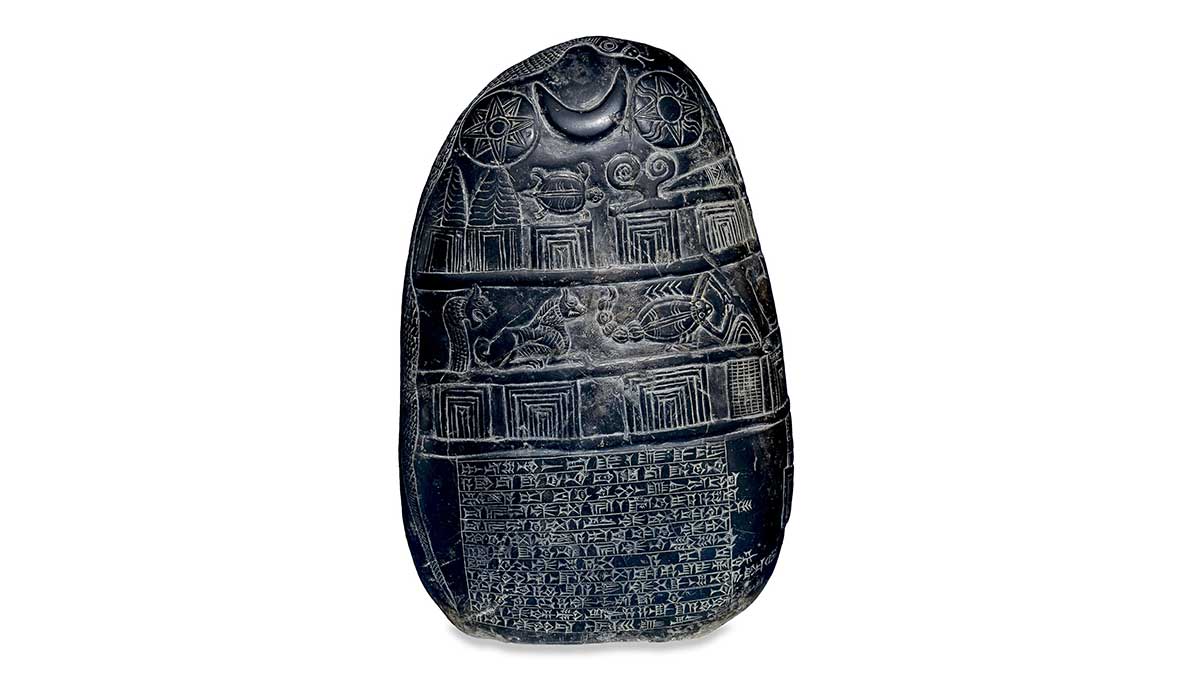
Enki catches sight of Ninsar and impregnates her as well, and nine days later she gives birth to Ninkirra, “lady of the mountains.” Enki takes her as well, and she gives birth to Uttu, a spider goddess associated with weaving, much like Arachne in Greek mythology.
Ninhursag warns Uttu to steer clear of Enki, but he manages to seduce her as well, promising her many things, and then disappearing after he impregnates her. But Ninhursag helps Uttu wash Enki’s sperm out of her body, and they plant the seeds in the land. This results in eight magnificent plants.
When Enki encounters the plants, he eats them all, and they start to grow inside his body. As his body is not suitable for giving birth, this causes him enormous pain. Initially, Ninhursag refuses to help Enki, but eventually changes her mind. She gives birth to eight healing goddesses to heal each part of his body.
Each goddess is named for a part of the body. Interestingly, one, Ninti, is named for the ribs, “ti.” Her name can be translated as “lady of the rib,” or “to make live.” Scholars have speculated whether there is a connection between Ninti being made to heal Enki’s rib and Eve being made from Adam’s rib.
3. Making Man in Mesopotamia
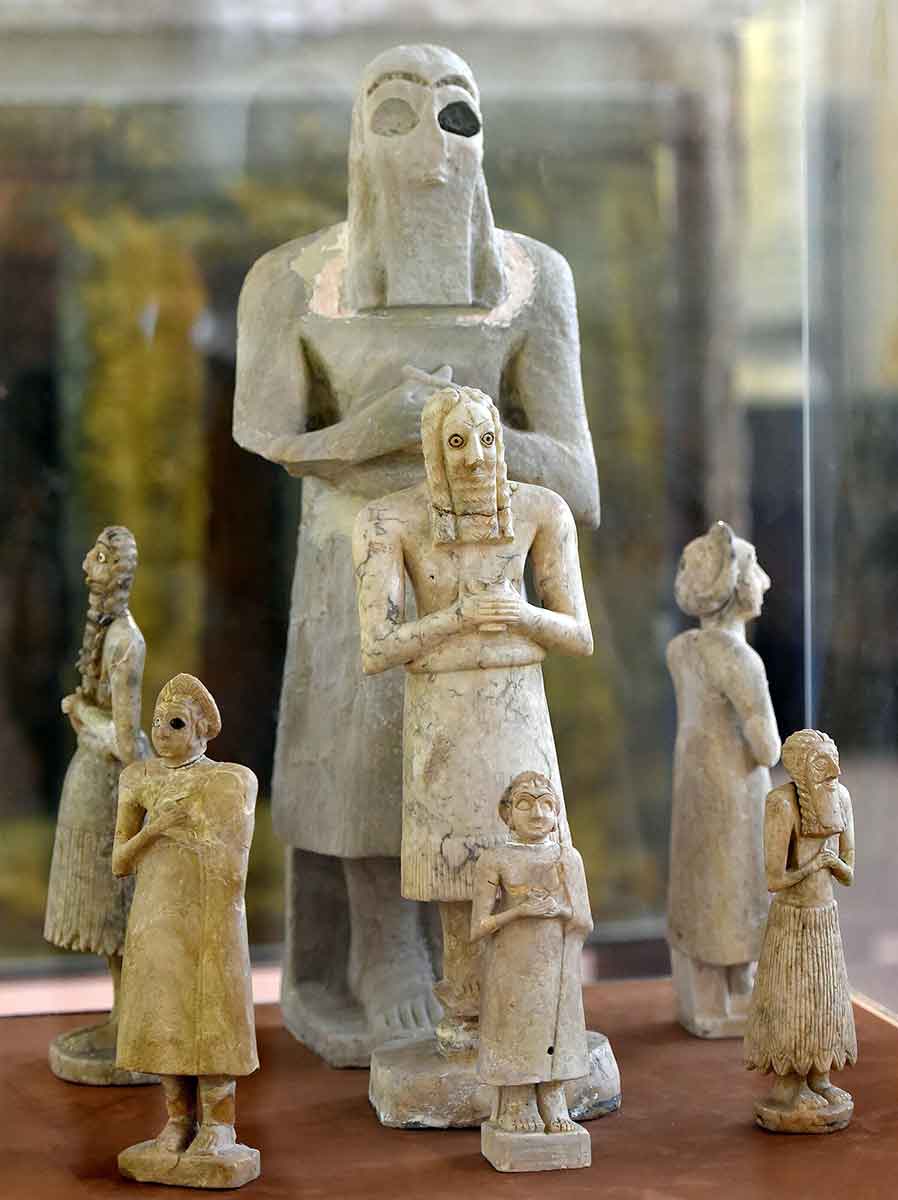
Enki was also responsible for the creation of mankind and was considered the master of civilization. According to the myth, it was initially the gods who toiled plowing the fields and dredging the rivers for silt to fertilize the land. They quickly became sick of this work and started complaining.
Enki was encouraged to create servants for the gods to save them from their labors. Aware of the germinating powers of silt, he molded mankind out of clay and silt, gestating them in the womb of Ninhursag, also called Ninmah in this context. The gods were known by multiple names as myths were adopted and adapted by different cities and civilizations. Mankind takes over both the plowing of the fields and worshiping the gods.
Celebrating their success, the gods sit down for a feast. Enki and Ninmah both get quite drunk and boast of their own role in the creation of man. Ninmah boasts that she is responsible for making good men capable of doing the job required, and that if she just made deformed men, Enki would struggle to employ them in his new human civilization. Enki responds that he is clever enough to find a role for any type of man.
A competition ensues. First, Ninmah makes a man with shaking hands. So, Enki makes him the attendant of the king. Next, she makes a blind man, and Enki makes him a singer of tales. Then she makes a man with twisted ankles, and Enki makes him a metal worker. This seems to represent a parallel with the Greek god Hephaestus, who was cast out of Olympus because he was born with a deformity and became the god of blacksmiths.
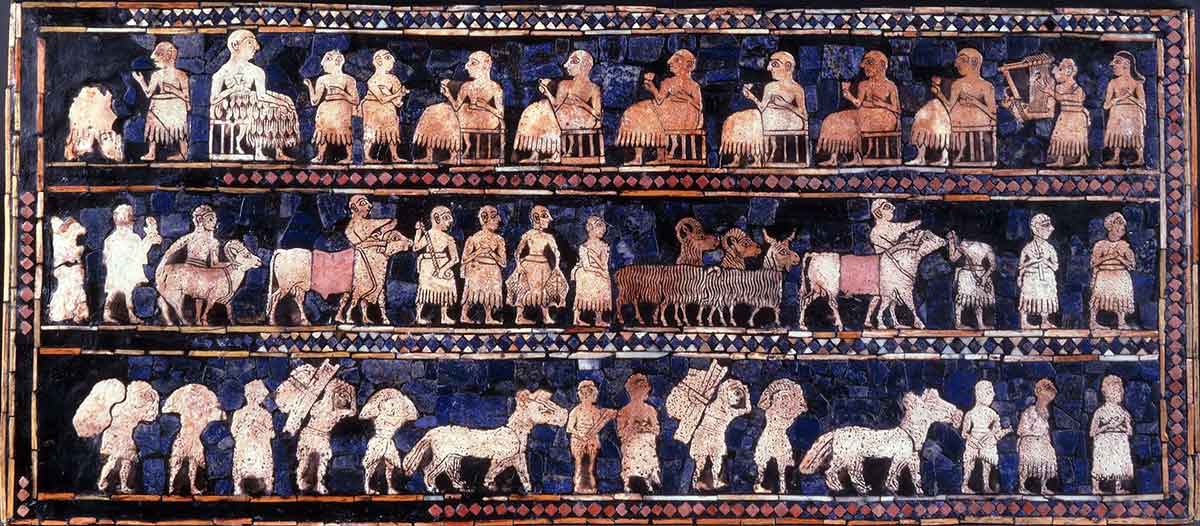
There are several more rounds of this until Enki decides to make a man on his own, without the help of Ninmah’s womb. He is called “the day was far off,” suggesting that he was born premature. This resulted in several deformities, including shaking hands, an inability to eat, a crushed spine, and deformed feet unable to walk the fields. Ninmah is horrified by the creation and realizes that if she continued to create misshapen men, then men would stop worshiping her. The pair agrees to work together to make men and give them the ability to procreate.
Some stories suggest that Enlil created the tools that men needed to plant and harvest, appointing Enten as the god of farming. Others suggest that it was Enki who created these tools and gave them to the inhabitants living between the Tigris and Euphrates rivers. He also appointed gods and goddesses to be responsible for all the important elements of agriculture, including canals and ditches, storehouses, sheepfolds, and more.
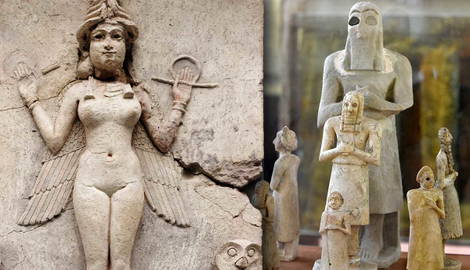
Reportedly, once this was done, the goddess Inanna, also known as Ishtar, approached Enki, irritated that he had not given her an area of responsibility. Instead, he made her a warrior goddess with an important role in protecting and empowering kings. She quickly emerged as one of the most important goddesses in the Near East.
4. Rising of the Moon
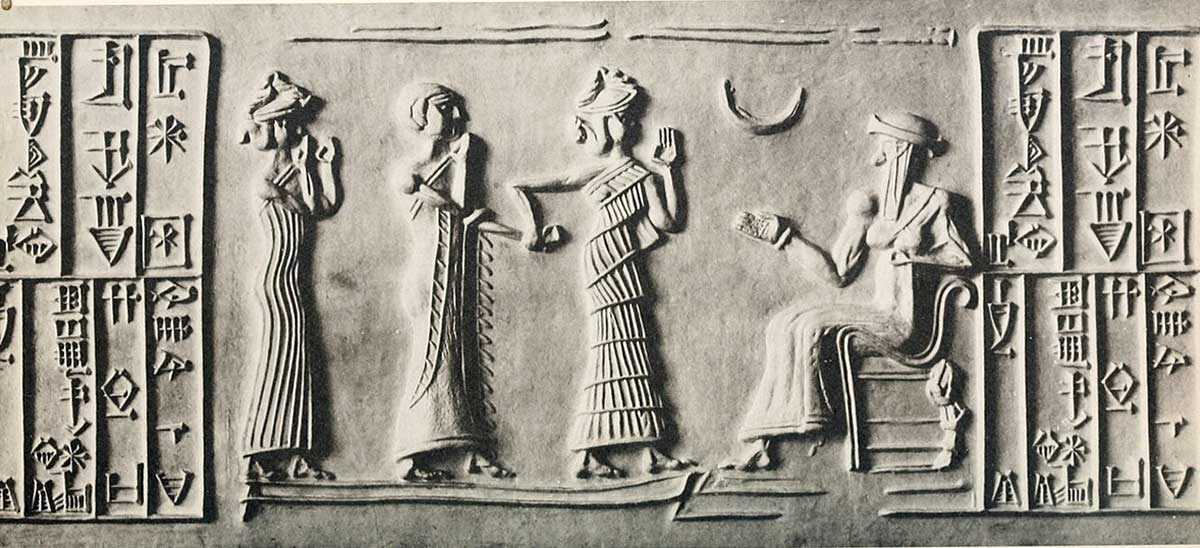
Enlil and his then future wife Ninlil, the “lady of the wind,” plus her mother Nunbarsegunu, the goddess of barley, are dwelling in their temples of Nippur. Nunbarseguni warns Ninlil not to bathe in a certain canal, because Enlil will see her and want to make love to her. Naturally, Ninlil bathed there, where she was seen by Enlil. He approached her, but she rejected him, saying that she was too young to make love. He rapes her, impregnating her with the moon god Nanna.
The other gods disapproved of Enlil’s actions and banished him from the city, sending him to the underworld. For a reason that is not fully explained, Ninlil follows him. On the road, Enlil pretends to be various underworld gods, first the gatekeeper, then the god of the underworld river, and finally the ferryman. Traveling in front of Ninlil, each time, he convinces Ninlil to sleep with him, and he impregnates her with three other gods. These gods are to descend to the underworld, taking Nanna’s place, so that he can ascend to the heavens.
5. A Flood Myth
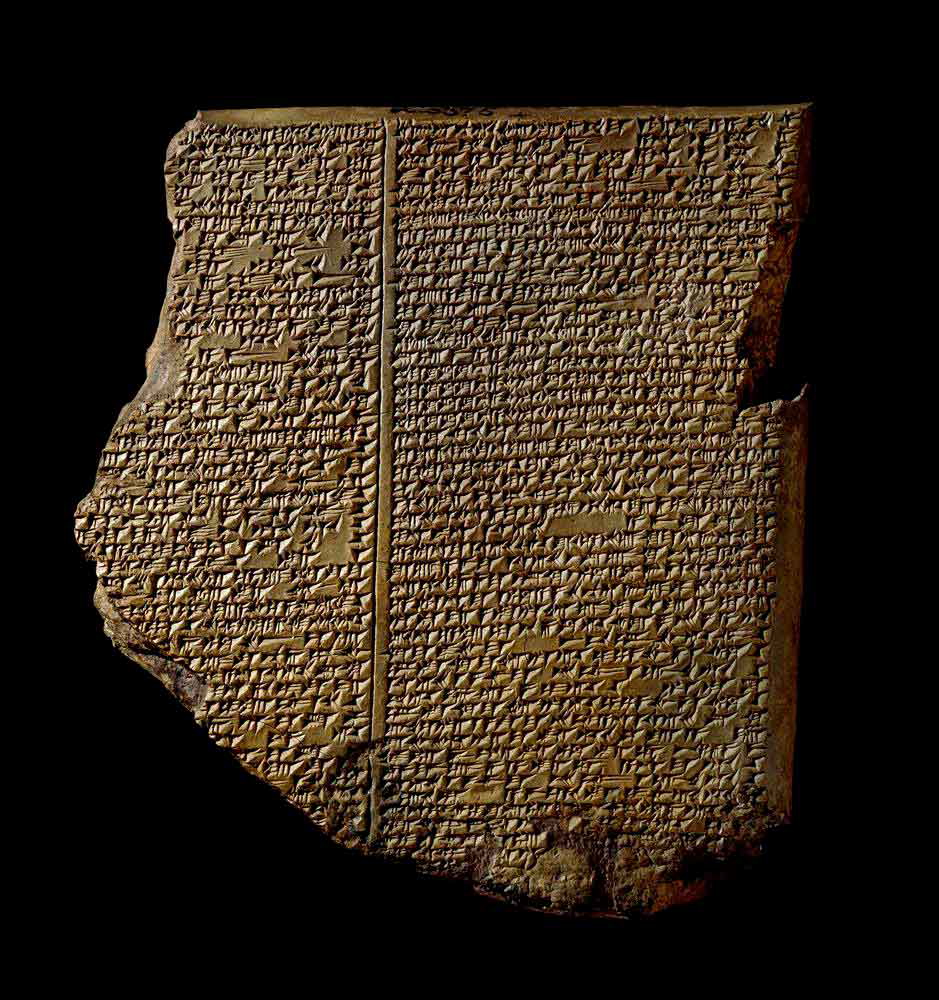
Sumerian mythology also has its own version of the flood myth, which is strikingly similar to the Biblical and Greek versions.
According to the story, the goddess Nuntur or Ninmah, the “lady of the womb,” was conscious that the people she created had no place in the world. She decided to teach them how to build cities and proper cult practices. They built five cities, including Eridu, which is sacred to Enki, Badtibira to Dumuzi and Inanna, and Sippar to Utu.
Now living together in cities, humans start making a lot of noise, irritating Enlil, who decides to send a flood to destroy mankind. Much like Prometheus, who warned mankind when Zeus decided to send a flood to kill them, Enki chooses to warn Ziusudra, the pious king of Nippur. He also instructs him how best to build a boat, and to fill it with living creatures to ensure the survival of life. In the version of this myth that is retold in the Epic of Gilgamesh, it is the god Ea who warns a man called Utnapishtim, but otherwise the stories are the same.
After 24 hours of non-stop rain, the world is inundated by a flood that lasts for seven days and nights. But eventually, Utu comes out, and the floodwater recedes. Ziusudra kisses the ground before Utu and makes sacrifices of sheep and oxen, repairing mankind’s relationship with the gods. In the version told in the Epic of Gilgamesh, Utnapishtim was granted eternal life as an apology by the gods.
6. Inanna’s Descent Into the Underworld
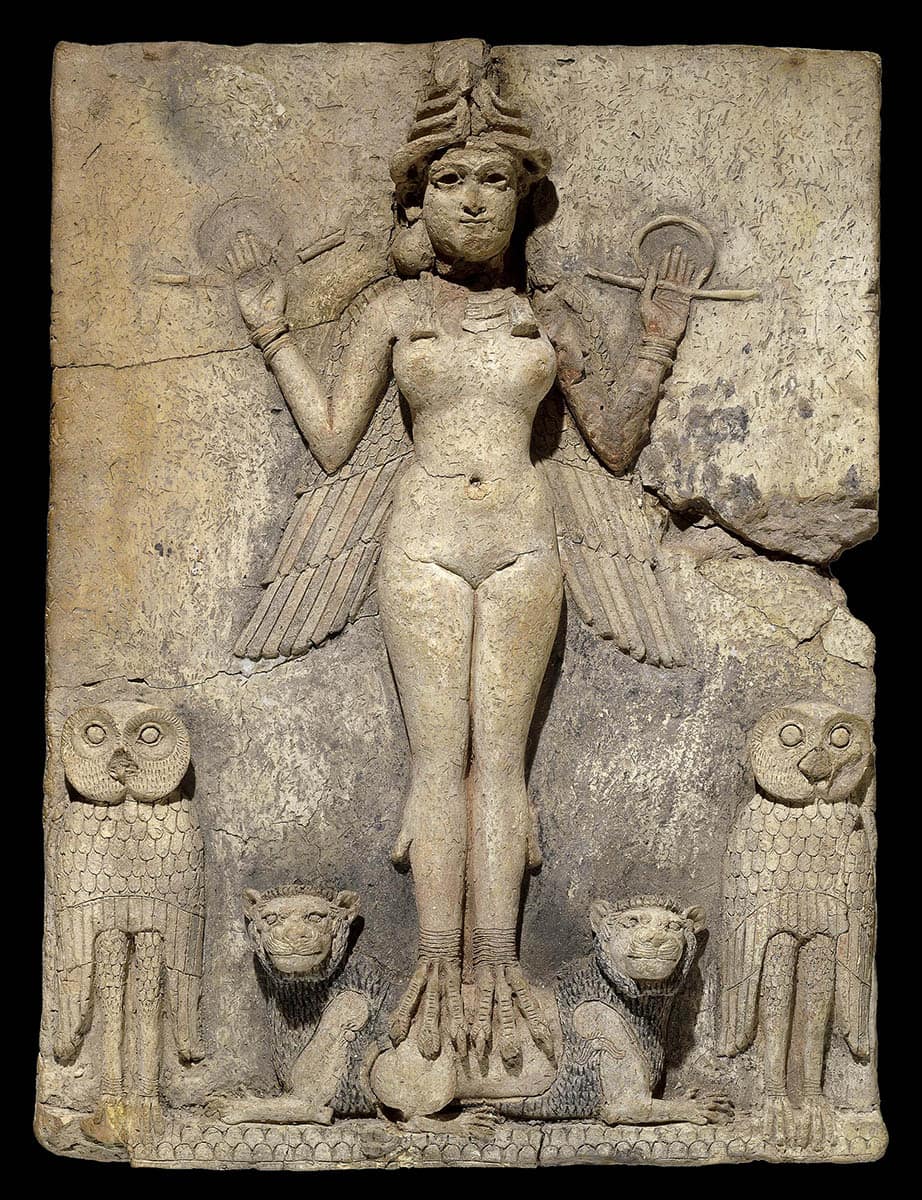
The underworld of Kur was ruled by the goddess Ereshkigal, sometimes with her husband, Nergal. Ereshkigal is sometimes described as having been “carried off” to the underworld and later becoming its queen, much like Persephone in Greek myth. As with Greek mythology, there are several stories of descents into the underworld, passing on a journey through seven gates to reach the mysterious land where the dead live on dust. Family members often poured libations at the graves of the dead to give them something to drink in this arid land.
One of the most famous Sumerian myths sees the goddess Inanna descend into the underworld. She is the sister of Ereshkigal and the queen of heaven. She wears her best royal garments and jewelry to descend to the underworld so that she can extend her dominion over the dead.
Before she leaves, Inanna wisely tells her servant Ninshubar that if she does not return in three days, she should enlist the help of Enlil, Nanna, and Enki to retrieve her. Ereshkigal is conscious of her sister’s plans and has the gatekeeper of the underworld, Neti, allow her to pass through each of the gates, but she must sacrifice something at each. At the first gate, she must give her crown, at the second, her measuring rod and line, at the third, a lapis lazuli necklace, at the fourth, her breastplate, then her gold ring, measuring stick, and finally her royal robe.
By the time Inanna reaches Ereshkigal’s throne room, she is naked and vulnerable, stripped of her symbols of power and protection. The judges of the underworld rule against her, and Inanna is transformed into a corpse and hung upon a hook on the wall.
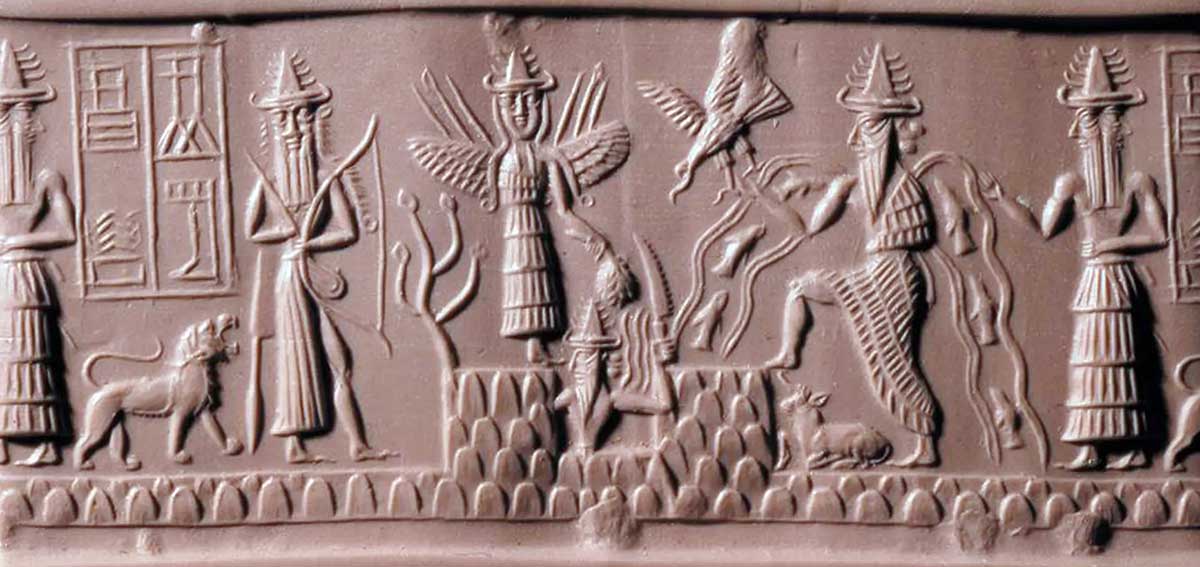
When Inanna does not return after three nights, Ninshubar goes to the other gods. While Enlil and Nanna refuse to help, Enki creates two androgynous beings from the dirt under his fingernails and sends them to the underworld, instructing them not to use force, but to empathize with Ereshkigal, who is apparently in the throes of birth pain or grieving. In gratitude for their empathy, Ereshkigal agrees to give them Inanna’s corpse. They sprinkle the “food of life” on Inanna to resurrect her. This is an interesting contrast with the story of Persephone, in which she eats the food of the underworld, which binds her to it.
Nevertheless, the laws of the underworld dictate that no one can leave without a substitute. Inanna, accompanied by fearsome Galla demons known to drag souls into the underworld, ascends to the land of the living to find someone to take her place. She finds several people but spares them because they are grieving her. But when she finds her consort Dumuzid, seated on his throne and showing no signs of mourning. She chooses him as her replacement. The Galla dragged him into the underworld.
Dumuzid also strikes a compromise to not spend the rest of his life in Kur. With the cooperation of his sister Geshtinnan, they split their time in the underworld, with their exchange reflecting the cyclical nature of the year, again mirroring the story of Persephone in Greek myth.