
The encounter with the Lotus Eaters serves as a reminder of the dangers of narcotic effects and of forgetfulness. This warning, almost 3,000 years old, remains extremely relevant today, serving as a constant reminder of human desires that are unchanged.
Homer devoted only a few lines to it in the Odyssey, yet the episode carries immense weight and has been referenced throughout history.
The Lotus Eaters in the Odyssey
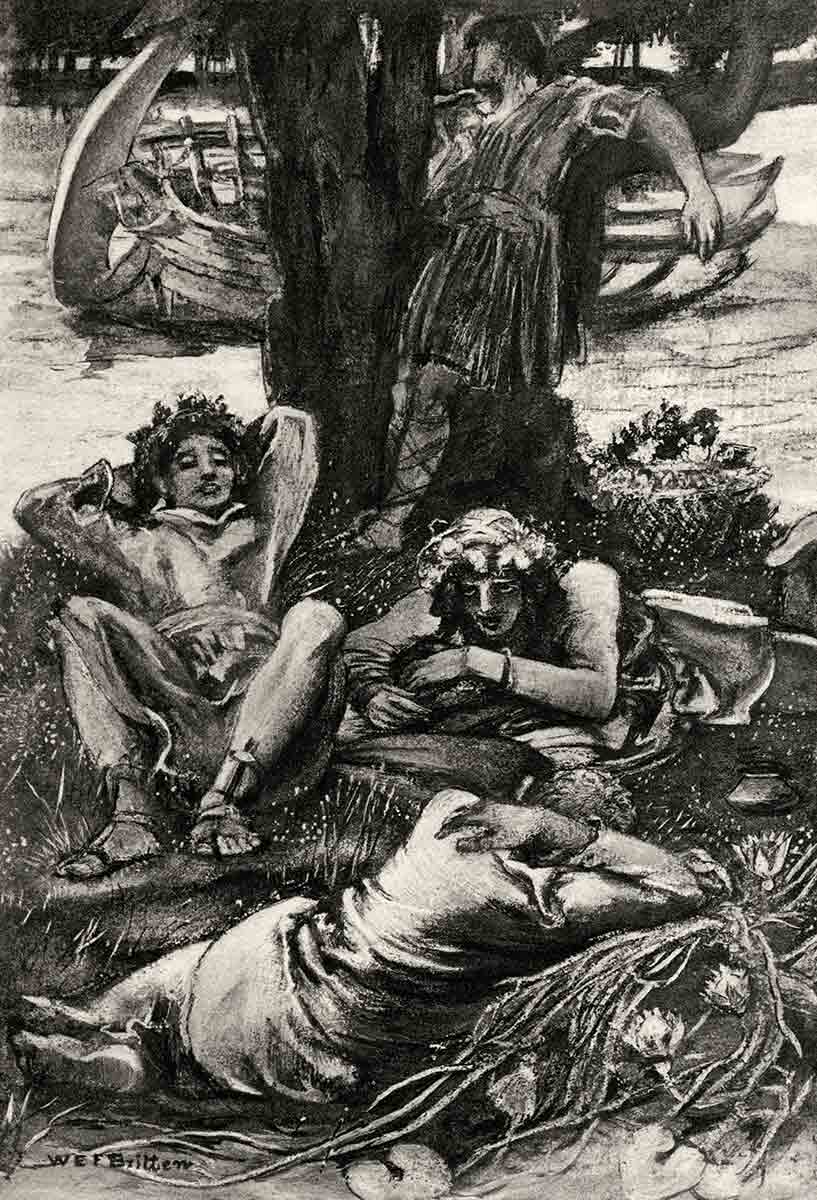
Let us swear an oath, and keep it with an equal mind,
In the hollow Lotos-land to live and lie reclined
-From The Lotos Eaters by Alfred, Lord Tennyson
This episode of the Odyssey begins with Odysseus and his crew around Kythira, an island on the southern tip of the Peloponnese, and northwest of Crete. Foul winds blow Odysseus off course for nine days, and on the tenth, he and his crew make landfall on the coast of the land of the Lotus Eaters. Here, the people live on food that comes from a flower, with a narcotic effect.
Once ashore, Odysseus’ crew refresh themselves, and three men venture inland to make contact with the locals. The inhabitants show hospitality by giving Odysseus’ men food from the lotus. Such was the effect of this food that the men gave up caring about reaching home. They were content to dwell where they found themselves, and wept bitterly when Odysseus forced them back onto the boats to continue the journey.
And with that, the land of the Lotus Eaters was behind them, and Odysseus made his way to the next dangerous part of his adventure: the land of the Cyclopes.
What Was the Lotus?
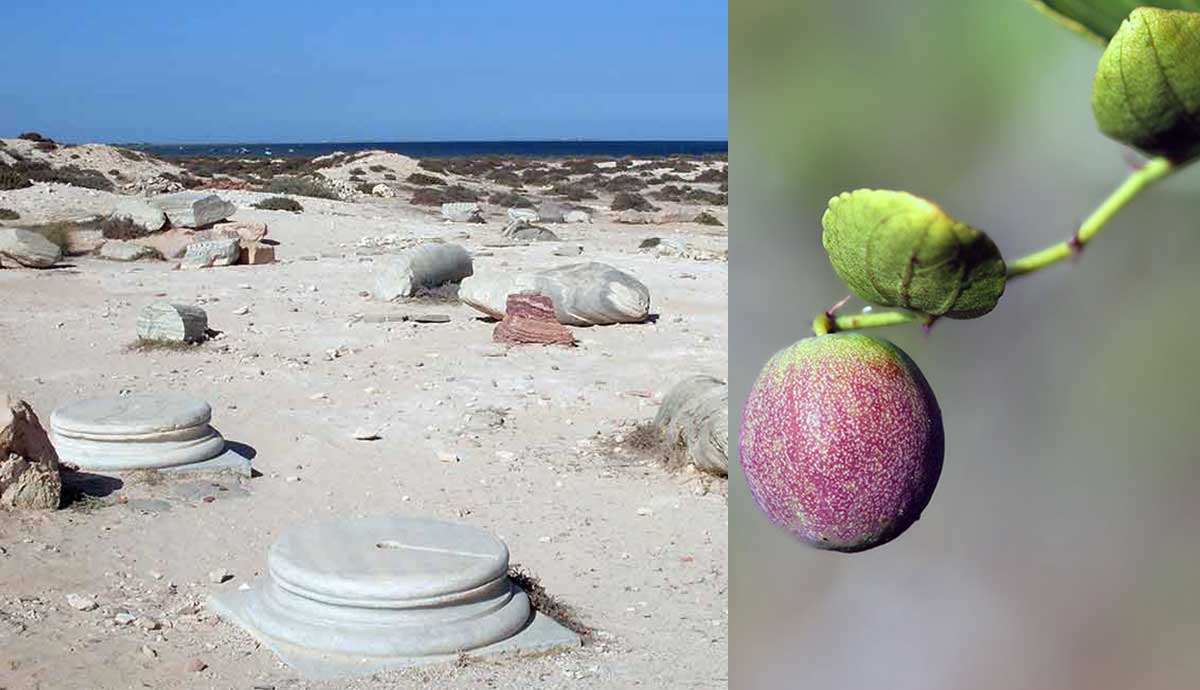
During Homer’s time, the Greek word lotòs (λωτός) was malleable, being used to identify a variety of fruits and flowers. Thus, identifying the lotus mentioned in the Odyssey has generated much debate, and several candidates have been put forth.
What is helpful in identifying the species is finding out where the Lotus Eaters lived. The island of Djerba, off the coast of Tunisia, is a widely accepted location attested to by ancient writers. Herodotus identifies their home as being off the coast of Libya, while Polybius narrowed it down to Djerba, known as Meninx in the ancient era (an idea supported by Strabo).
1st-century Greek physician and botanist Pedanius Dioscorides refers to the plant as the cyrenaic, which has been identified as the Ziziphus lotus, closely related to the jujube. The former is a wild variant with fruits that are just as edible and nutritious.
Polybius details how tribes of North Africa used jujubes to make an alcoholic drink, a possible source of the assumed psychotropic effects. It has been speculated that the variant found on the island has toxins that produce such an effect, but scientific research has found that extracts from the plant are safe and free from toxins.

Another theory suggests that the opium poppy was the source of the narcotic effect, as this would tie in with the relaxed and forgetful state of the Lotus Eaters, who cared little for maintaining civilization, and instead chose to remain in a soporific and euphoric state. After trying the food of the Lotus Eaters, Odysseus’ men were “weeping” at the prospect of not being able to partake anymore, which suggests a very quick mental dependence. Furthermore, the ripe pod of the poppy resembles the pod of the true lotus, which explains why it would be classified under the “lotus” umbrella term.
The blue water-lily of the Nile, Nymphaea caerulea, is another strong candidate. Appearing frequently in Egyptian religious iconography, the plant was also known to the Greeks as the blue lotus. It has soporific properties, and when prepared in a certain way, also has psychotropic effects.
The Danger of Forgetting Home and Identity
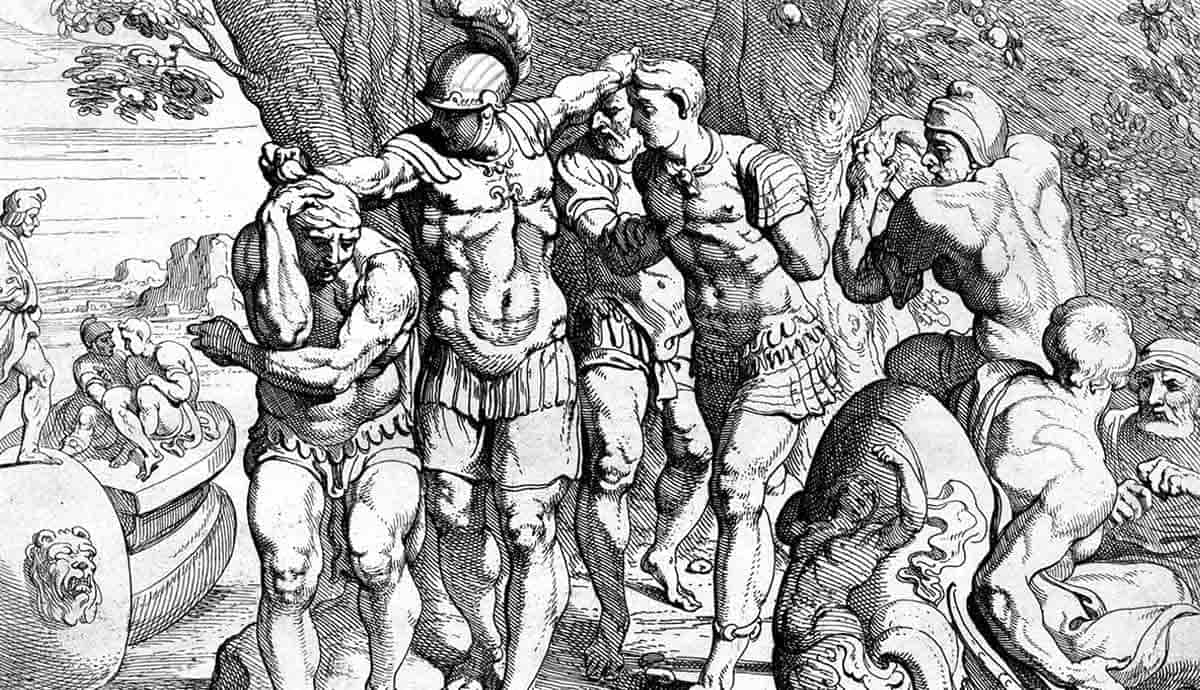
It wasn’t just returning home that was in danger of being forgotten. Loyalty, duty, selfhood, and purpose were also under threat. The speed at which such things can be abandoned is quite apparent, as Odysseus wastes no time in dragging his men back into the boats and casting off, leaving the dangerous temptations behind.
Forgetting in this sense means a loss of identity and responsibility. It is a rejection of reality and a longing for oblivion and bliss where the hardships of duty don’t reach. The temptation is real, and exists just as much today as it did then.
For Odysseus, the concern for his men was not about the harmful physical effects of narcotics, but rather that of forgetting duty. It is this which spurs him to retrieve his men and have them row their way out of danger.

The danger of forgetting is a theme that occurs several times in the Odyssey. Odysseus succumbs to it on Aeaea, Circe’s island, and this time it is his men who have to remind him of his duty to return to Ithaca and his wife, Penelope. Here, an entire year passes by with Odysseus enjoying the abundance of food and sexual intimacy offered to him by the enchantress.
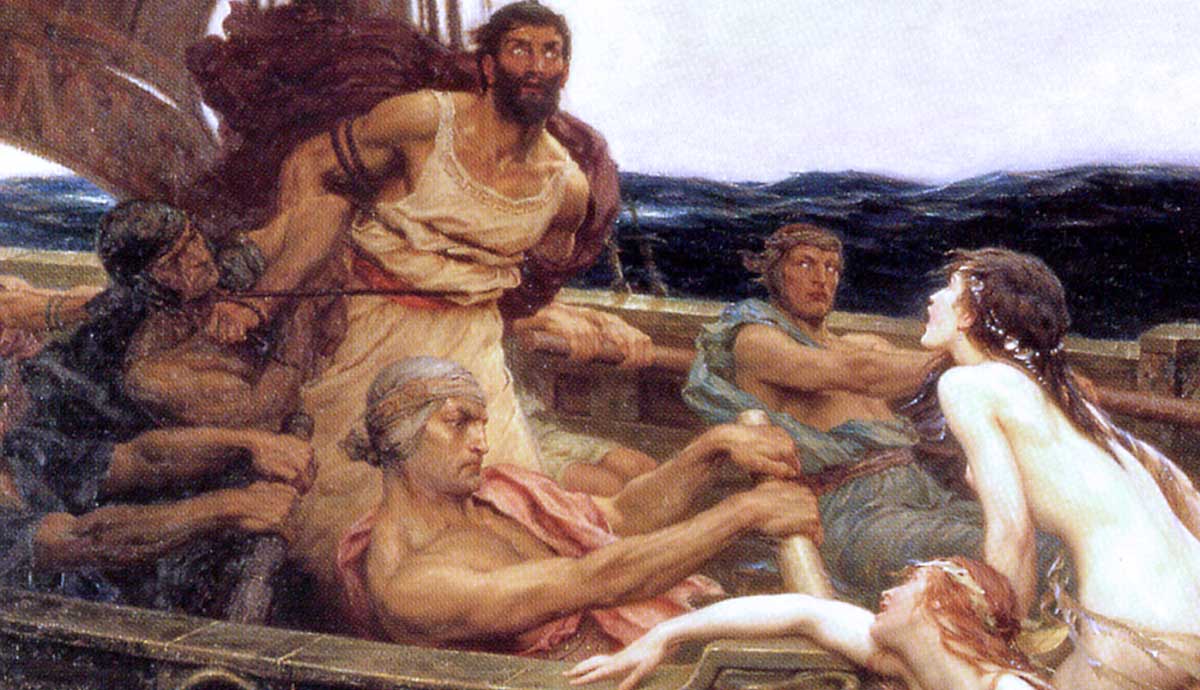
After leaving the island, Odysseus and his crew must then deal with the Sirens, who offer another form of forgetfulness. While his crew has their ears stopped up with wax to avoid hearing the Sirens’ calls, Odysseus wishes to hearing them but takes precautions by having himself tied to the mast of the ship so he cannot act. The Siren-song lures him with sweet desires of knowledge, while around the Sirens lie their victims, desiccated bodies of those enraptured by the deadly spell.
Duty and Comrades
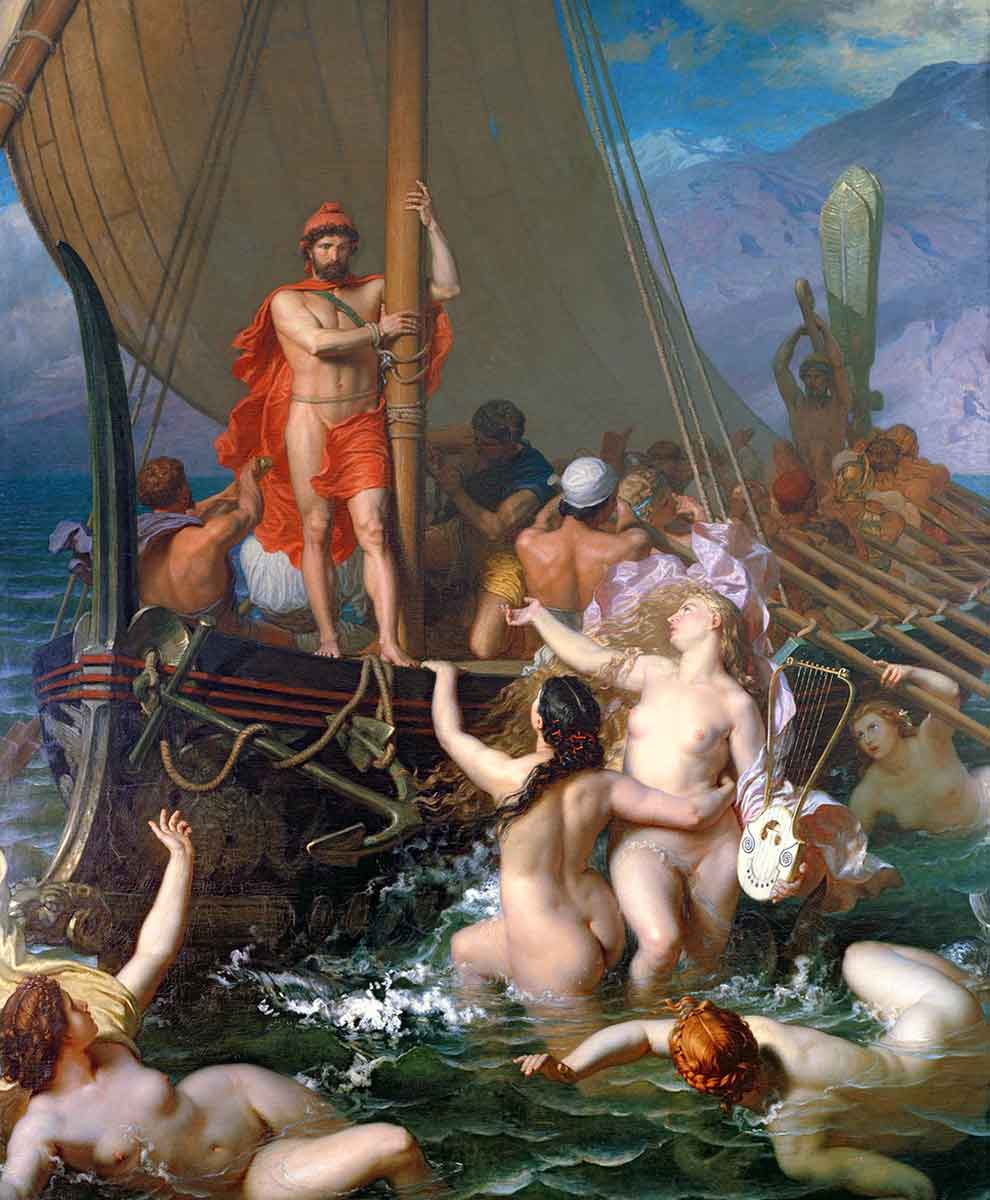
These three instances of “forgetting” illustrate the theme of duty to one’s comrades, as duty is not always chosen willingly. It is often up to others to remind us of what we have to do, especially when the desire for other things intervenes and endangers the long-term goal.
In the land of the Lotus Eaters, Odysseus rescues his men. On Circe’s island, Odysseus’ men rescue him, and in the episode with the Sirens, they rescue each other. By the time they encounter the Sirens, Odysseus trusts his men to bind him tighter when he begs to be released.
The Lotus Eaters in Popular Culture

Despite Homer devoting so few words to the Lotus Eaters, the theme has become a popular trope in history, appearing in literature, art, and on the screen. One of the most famous examples is Tennyson, whose poem “The Lotos Eaters” describes a crew of seamen who eat the “lotos” and find themselves in an altered state, outside the bounds of reality.
The episode has also influenced fantasy and science fiction. Stanley G. Weinbaum published a sci-fi short story, “The Lotus Eaters” in 1935, which focuses on intelligent plants that care nothing for their own well-being, and whose spores cause a soporific effect on humans.

The theme of trying to forget is also explored in “The Lotus Eaters,” a BBC television series from 1972-1973, which focuses on a group of British expats who live on Crete, while a 2011 film, “Lotus Eaters,” is a story of a group of disaffected youth in London, who struggle to find meaning in their lives, with drugs and sex.
As an allegory for escapism, the episode with the Lotus Eaters is one that strikes a chord with people. Few, if any, have never felt the pull of the temptation to give up and forget the hardships of life. When presented with the opportunity, this is exactly what Odysseus’ men do, and something that many people have done in other circumstances throughout the thousands of years of human history. If they were lucky, they had an authority figure like Odysseus to yank them back to reality.