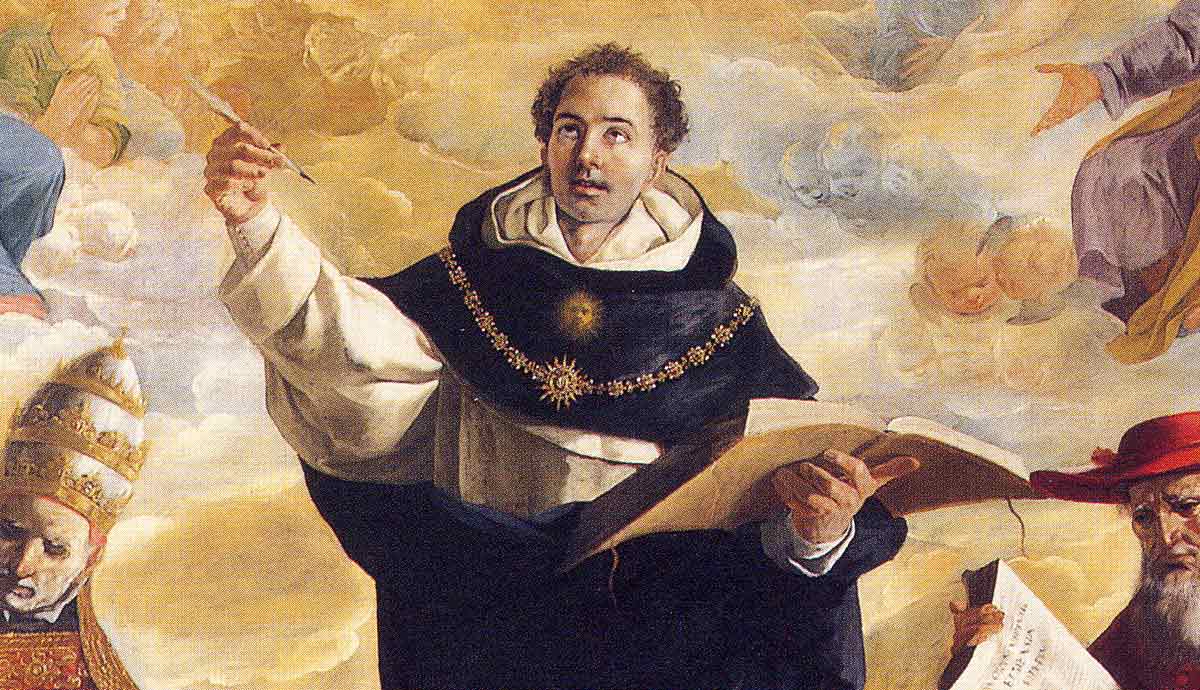
Thomism (the philosophical system founded by Thomas Aquinas) is intended to be an interrelated web of complementary concepts and arguments, akin to overlapping layers of a flower’s petals, which can only be appreciated by contemplating all its imbricated structures. Asking the question “Does God know evil?” occasions asking what evil is, what its cause is, what reasons God has for permitting it, what role it plays in providence, and what its consequences are.
Here, the first question is addressed.
Evil as Privation
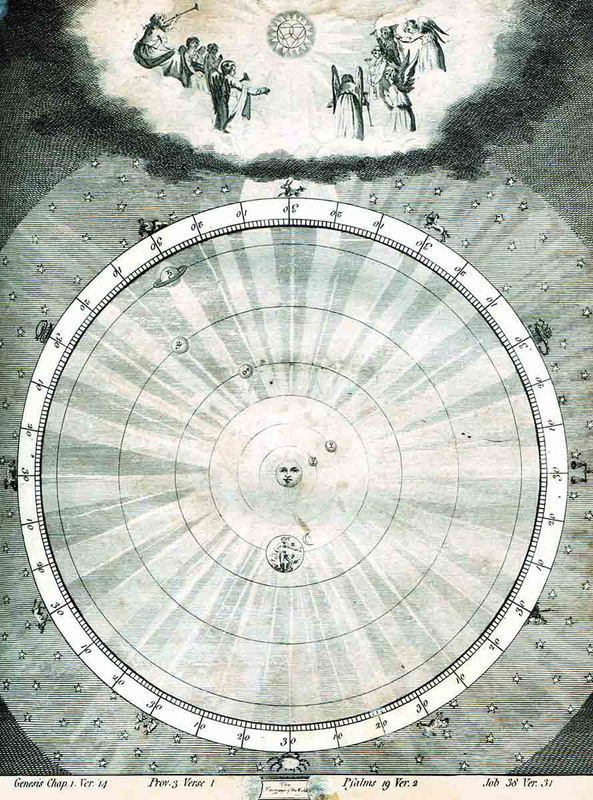
How does Thomas Aquinas conceive of evil? He holds that evil is not a “thing”— a doctrine known as privatio boni (Latin for “privation of the good”), which dates back at least to Augustine of Hippo. All created essences possess being and contain, qua essences, no defect, and are good in that they bear a likeness to the being of God. In this way, the order of beings excludes evil from its essential nature. Put differently, God doesn’t directly create any evil thing.
However, God has morally sufficient reasons for permitting corruption and privation in that created order (reasons we cannot detail here) through the agency of secondary causes—those creatures endowed by the Creator with the capacity to be their own causes, whether through natural laws or through the powers of voluntary action. The first grouping corresponds to the world of the physical sciences; the second refers to the spheres of moral interaction that we will into existence.
Thomas Aquinas generally defines evil as “the privation of that which is connatural and due to a thing” (Book III, Ch. 7, Summa contra Gentiles). It consists either in a defect in the apprehension of good, in the case of moral evil, or in a deficient cause within the physical order of things, pertaining to one or more of the four Aristotelian causes. For example, a person limps, Aquinas says, only on account of some defect or “crookedness in the tibia” that hinders their power to walk (Book III, Ch. 10, Summa contra Gentiles). Moral evil, having to do with a failing in our powers to act, arises due to a misperception of the ends towards which we ought to be directed, whether misguided by our will or reason.
In this way, evil always parasitizes what is good—it lives by living on what is good. It exists exploitatively, through some mal-achievement or some misconception.
How God Knows Evil Exists Without Creating It
Some might think that God cannot know evil, since He knows only Himself, who is the sovereign good; and further, can neither tolerate the company of evil nor turn away from His own essence. Similarly, one might think that it would be beneath Him to contemplate ignoble things, such as the forms of mud, filth, or hair, let alone think eternally about every seemingly trivial detail or fact, such as an infinite number of tautologies or logical equivalences, or sets of endless and meaningless combinations of letters or words.
One rebuttal Aquinas issues in response is that God must know even those things we might consider lowly since the order of the universe is nobler than any of its parts, which follows if the parts are directed toward the good of the whole. Thus, if God knew only the parts we consider dignified to the exclusion of the rest, it would render His knowledge less noble, not more so. Further, God knows all these things because he pours Himself out into all things as their Creator and First Cause.

Thomas Aquinas maintains that God knows evil things by virtue of His omniscience. He also knows particular evils in the world, and how they work to providentially fulfill His plan. However, only the first aspect will be discussed below.
- That evil is evil and opposed to good is true, which an omniscient God would know to be true, implying that God knows evil.
- God perfectly knows the form, that is, the perfection due to every created thing. Evil is the lack or absence of perfection due to a thing. To know the form of a thing perfectly is to know what it would look like if that form were somehow lacking in it. Thus, by knowing the form of things, or by knowing the complete reality of the good in things, he knows evil;
- God creates both form and matter. Matter can actualize either toward what is not (privation) or toward what is (form), and God perfectly knows every possible state in the universe pertaining to material potentiality, being its Creator. As already said, Aquinas understands natural evil to arise when privation occurs within material potentiality. So, God would know evil;
- In fashioning the universe, God arranged every part to work together for the perfection of the whole. This would require knowing how the parts would ward off specific types of harm. God thus possessed knowledge of evils in the context of how certain things were designed to remove them.

These arguments are only part of the larger story of Thomism, and here we have barely begun to investigate a single petal of the flower mentioned earlier. Many questions remain unresolved, but perhaps that is not why they are important. His arguments unceasingly prompt further reflection on the divine nature, and his works are in that regard nearly unparalleled.