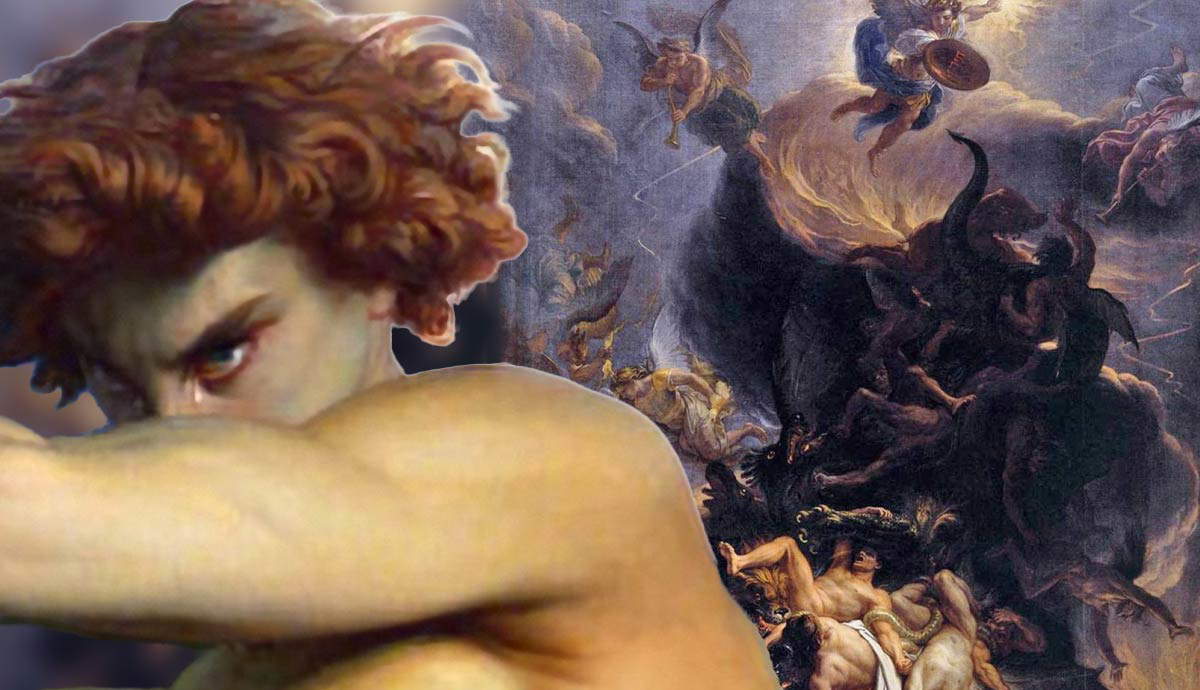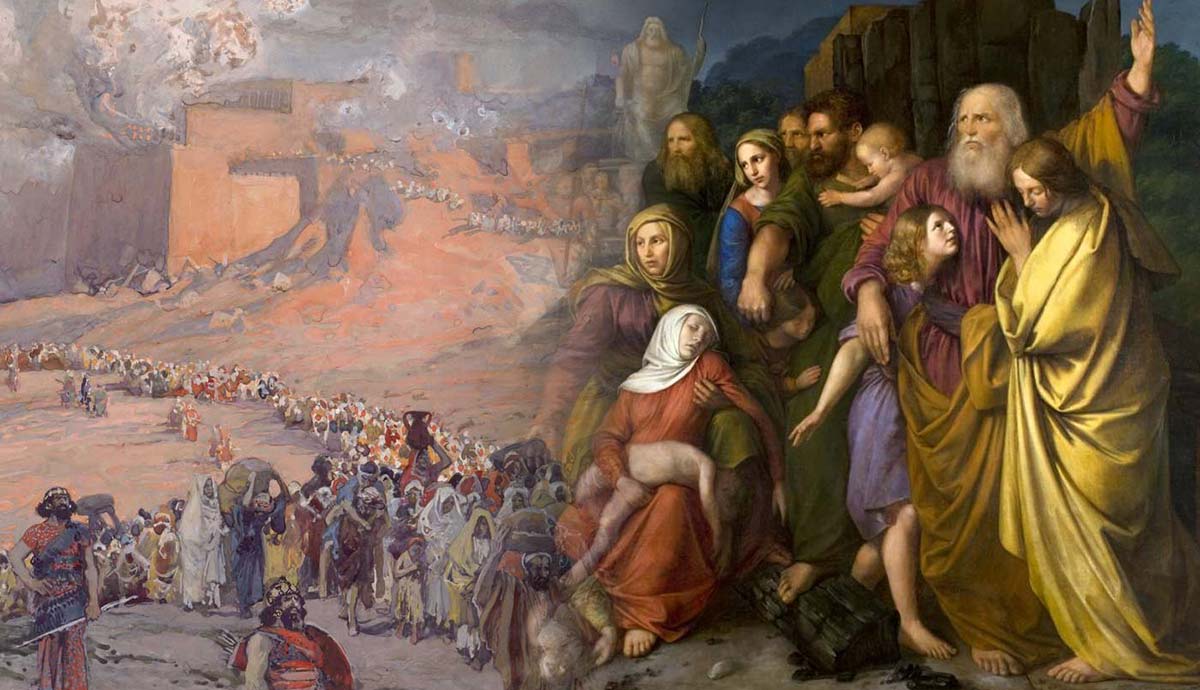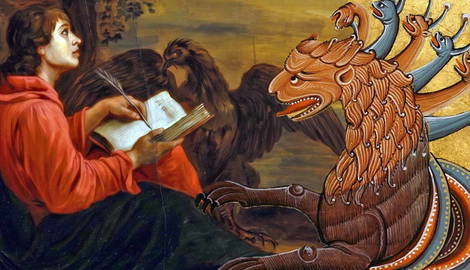

Few literary works have stirred as much fascination as the biblical Book of Revelation. Written by John on the Isle of Patmos in the late 1st century AD, it combines vivid visions, cosmic imagery, and cryptic metaphors. Though often read as a prediction, Revelation also functions as a literary and theological masterpiece of apocalyptic imagination. It speaks to believers under persecution, offering both warning and hope. Understanding its genre, structure, and symbols reveals how Revelation transcends a single moment to become a timeless meditation on evil, hope, and divine justice.
The World of the Book of Revelation
It is impossible to begin to understand the Book of Revelation without knowing who wrote it and under what conditions. The author of Revelation was supposedly the John who is often called “the Beloved Disciple.” He was one of the original twelve disciples of Jesus, along with his brother James. Tradition has it that he was the youngest disciple and the only one to die of natural causes, outliving the others. It is likely that when he wrote Revelation, the last New Testament book, he was the only apostle left alive.
According to tradition, John wrote Revelation while exiled on the island of Patmos, a Greek island in the Aegean Sea. John was banished there by the Roman authorities during the persecutions under Emperor Domitian. John says he was exiled “for the word of God and for the testimony of Jesus Christ.” Banishment was a common punishment used during the Imperial Period for a number of offenses, such as prophecy and preaching, which the Romans viewed as a political threat.

So, the context of Revelation was one of crisis in which early Christians faced suspicion and sometimes violence as they lived under Roman rule. The empire demanded loyalty, but their faith demanded defiance, since they placed King Jesus above any emperor. Revelation used coded language to give believers hope without agitating open rebellion or further persecution. It gave comforting words to the sufferers, promising that empires rise and fall, but their truth would triumph forever.
The Meaning of Apocalypse in the Ancient World
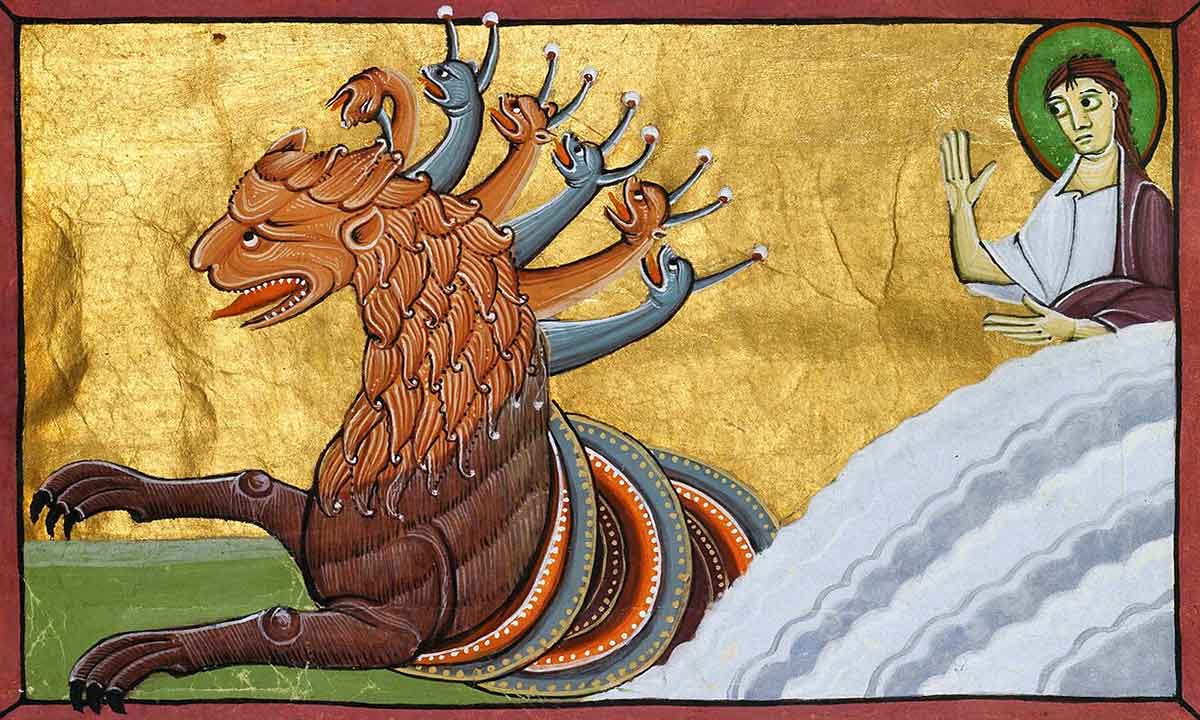
When we hear the word apocalypse, we tend to think of the end of the world, or at least, of some terrible disaster. But in the ancient world, an apocalypse wasn’t about destruction at all. The literal meaning of the Greek word apokalypsis is unveiling or revealing. It refers to a literary genre that flourished between 200 BCE and 200 CE, in periods of Jewish and Christian persecution. Apocalyptic literature, such as Daniel, 1 Enoch, and 2 Esdras, interpreted history through divine visions.
Jewish and early Christian writers used vivid images to reveal hidden, spiritual realities that gave them hope under oppression. For example:
- Fire, mountains, and stars symbolized powers beyond human control
- Beasts, horns, and Babylon symbolized imperial oppression
Apocalyptic writing didn’t predict exact events. Rather, it provided coded protest and hope by dramatizing the cosmic struggle between good and evil. So, for readers in the 1st century, who were enduring exile and martyrdom, Revelation wasn’t a horror story. It was the apocalyptic genre reworked through Christian theology to give them reassurance. It told them that history had meaning, angels were for them, and their faith would survive when the world seemed lost.
The Structure and Symbols of Revelation
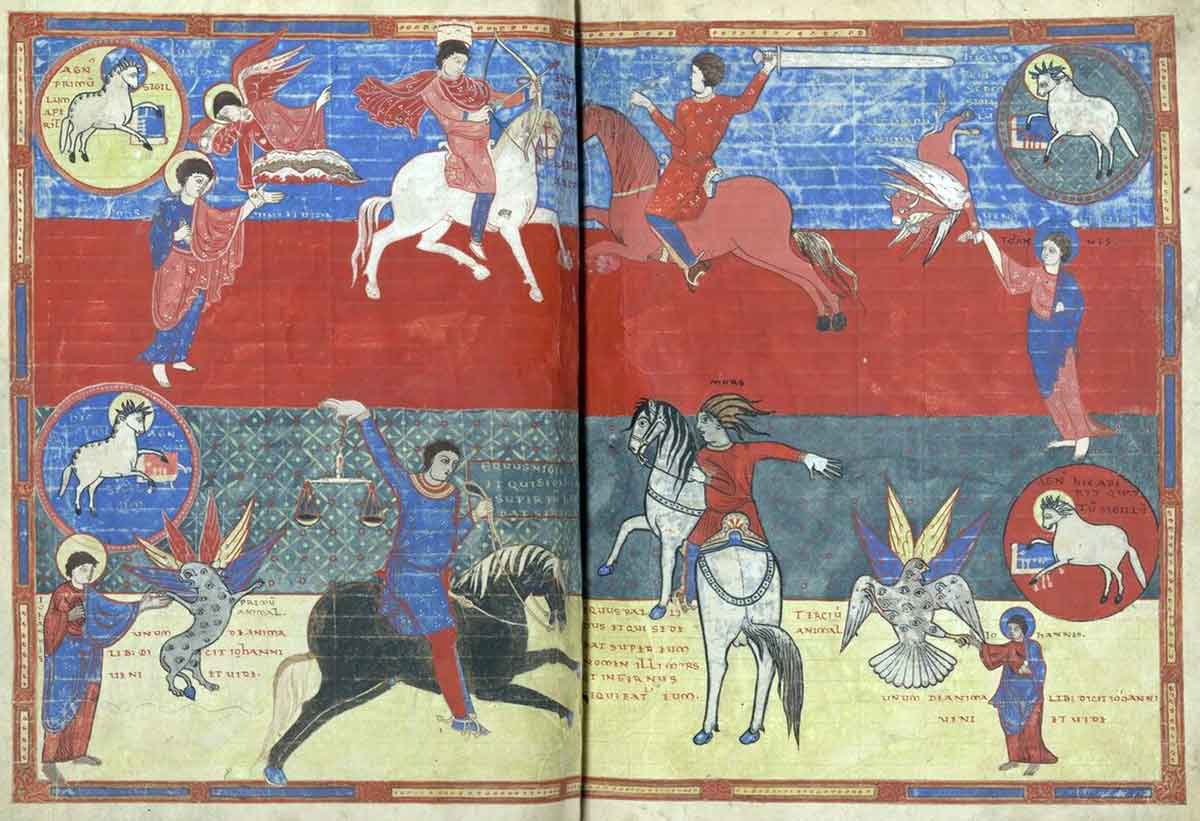
The structure of Revelation is not as random or chaotic as it might first appear. It is a carefully composed story about the world’s moral order. The book is built around a series of cyclical visions rather than a single, linear timeline. Each cycle presents a different symbolic perspective on the same event: the conflict between divine and demonic powers. Repetition and layering are used to retell this same end-time conflict from new angles. Each conflict is preceded by a vision of divine order, followed by rebellion. After the conflict comes a judgment, which brings resolution and restoration.
The structure of Revelation is mirrored in its dense use of symbols that operate on multiple levels. Revelation frequently uses symbols in numerical patterns of sevens, fours, and twelves to amplify their significance and create expectation. The dragon (Satan), beasts (empires), and lamb (Christ) function as theological archetypes. Other symbols, such as the Four Horsemen, have created archetypes. This symbolism transforms a historical event into a cosmic drama with spiritual and moral implications that transcend the limits of authorial context.
The Theology of Revelation
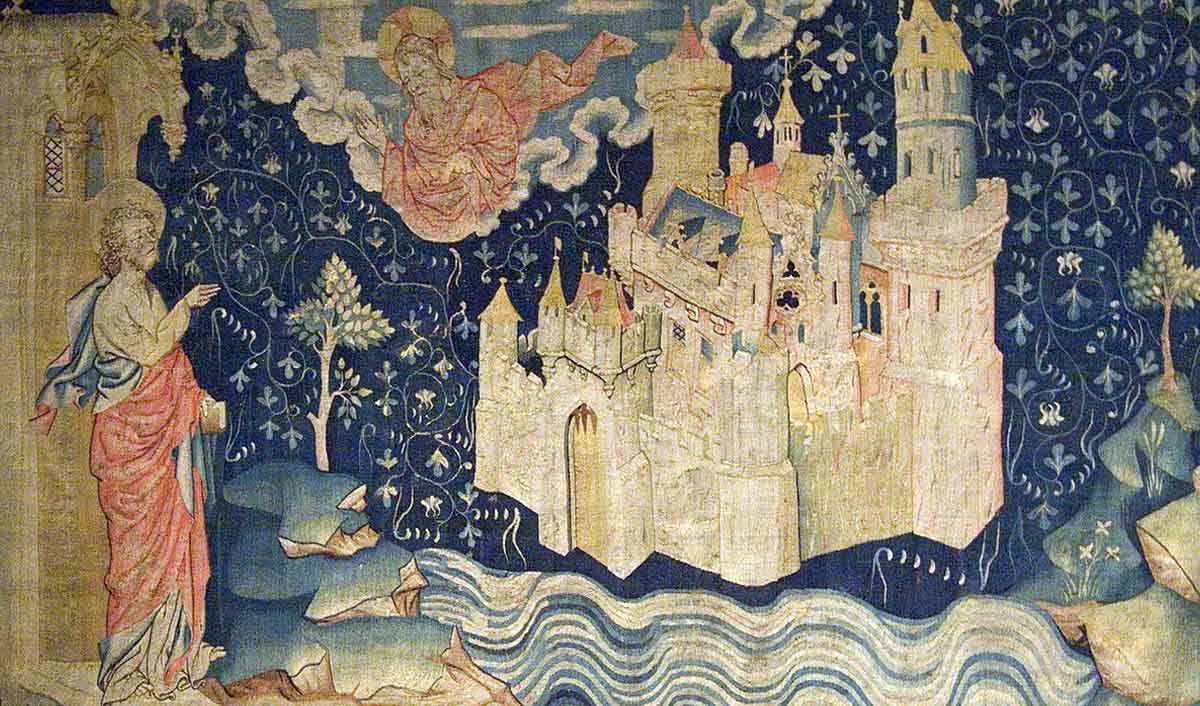
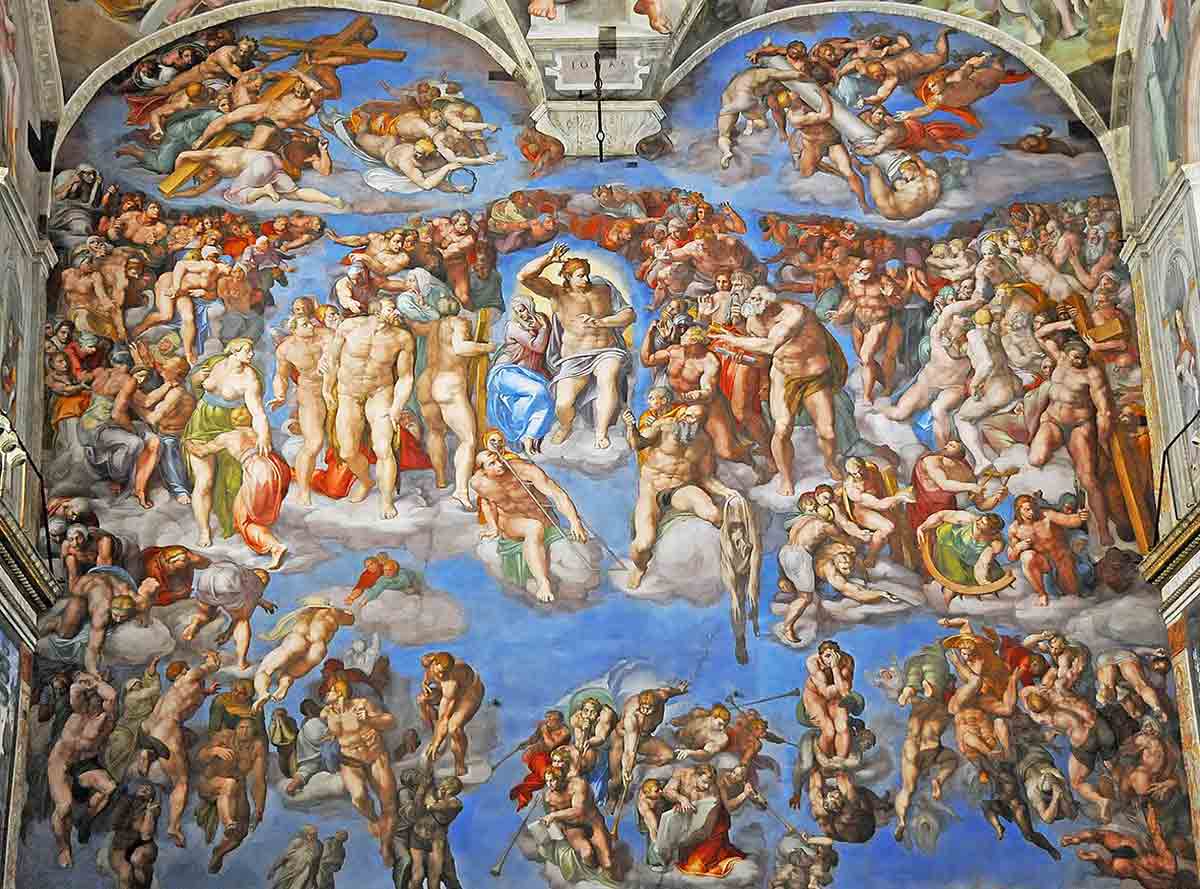
Revelation’s theology centers on divine justice. Judgment scenes, such as the opening of the seals or the pouring of the bowls, symbolize the moral consequences of human rebellion. Yet it is not a judgment without redemption, and after punishment comes renewal. The “New Jerusalem” (Rev 21) embodies reconciliation between God and humanity. Theologically, Revelation unites justice with mercy, so that evil has limits and suffering has meaning within divine providence, offering hope to the faithful.
Another way to divide the theology of Revelation is between God’s sovereignty in Heaven and moral conflict in human history. This twofold message mirrors Revelation’s rhythm between a heavenly vision and an earthly struggle:
- Theocentric themes on the vertical dimension. The heavenly order of who God is and the victory Christ has accomplished.
- Anthropological themes on the horizontal dimension. The earthly drama of who we will serve and how we will respond.
Revelation unites these two planes to show that what happens as earthly history participates in heavenly triumph. However, some Christian thinkers like Augustine and Aquinas later interpreted Revelation as a cosmic allegory of the soul’s journey toward God.
Interpreting Revelation Through the Centuries
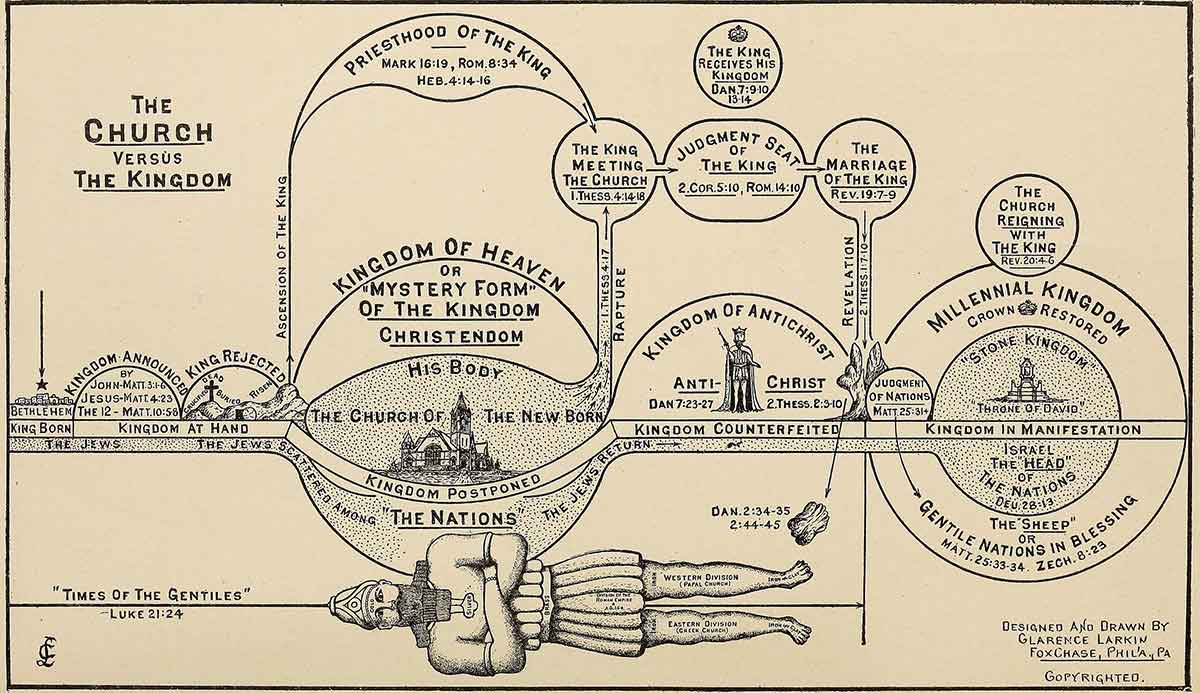
Revelation has never had only one meaning. The book’s symbolism has left it open to multiple interpretations and misinterpretations. One common tendency is for readers to interpret it in terms of their own times. Early Christians saw it as a promise of deliverance from Rome. Reformers linked the beast and the antichrist to the Papacy. Modern movements link it to global politics and environmental disaster. Another tendency is to seek in its pages a secret code to predict the future.
Here are four of the main interpretative frameworks that scholars have used to approach Revelation.
- Preterist interpretation— This is a past-focused approach that believes Revelation is describing events that were happening or soon to happen in the first century, particularly in relation to the Roman Empire and early Christian persecution.
- Futurist interpretation— This is a future-focused view that thinks Revelation predicts events that will occur at the end of all human history, including the rise of the Antichrist, the rapture and tribulation, the Second Coming of Christ, and the final judgment.
- Historicist interpretation— This sees Revelation as applying to all of Church history in a continuous sense, from John’s time until the end times, using symbols that represent successive historical events, empires, or religious movements.
- Idealist interpretation— This gives a spiritual or moral reading of Revelation, with symbols that are timeless, illustrating the ongoing struggle between good and evil, faithfulness and rebellion in a way that is not tied to specific events.
Revelation as Songbook
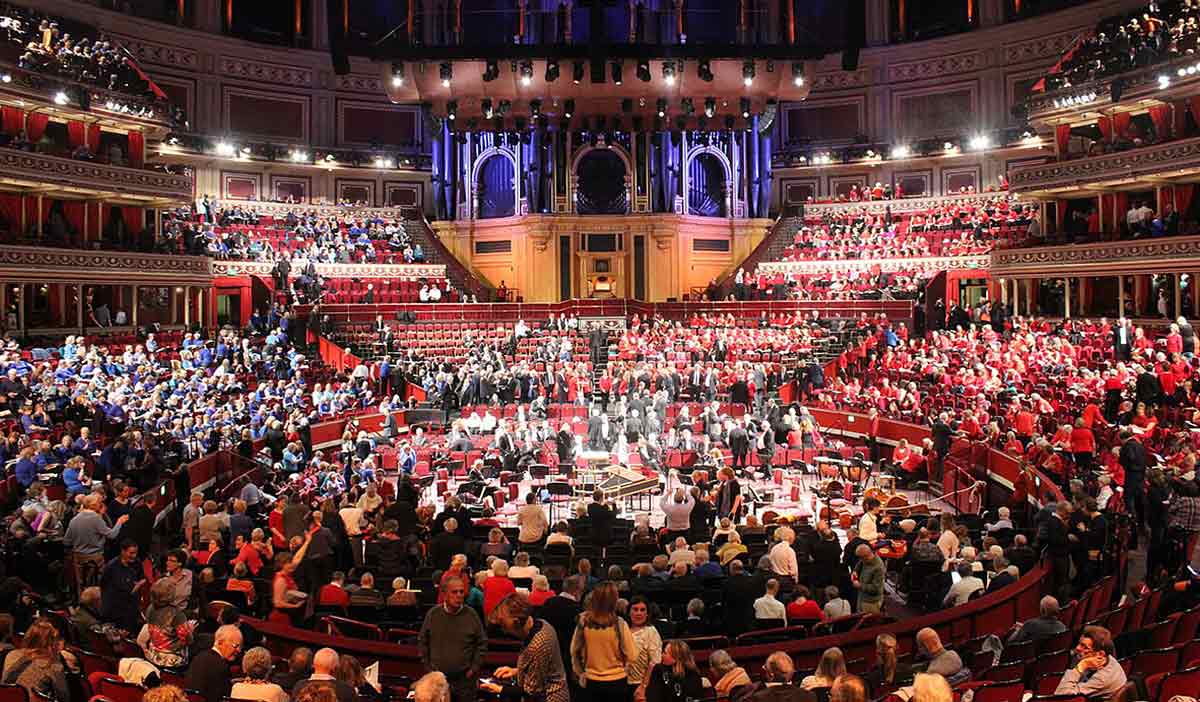
Revelation is more than a book to read and interpret. Hymns and doxologies appear throughout it, and worship frames almost every section. “Holy, holy, holy” (Rev 4:8) and “Worthy is the Lamb” (Rev 5:12) echo liturgical worship. These passages draw from temple ritual, the Book of Psalms, and prophetic poetry. This means the book itself functions partly as a heavenly hymnal, merging prophecy and worship. In contrast to the false worship demanded by the Beast, heavenly worship reveals the true order of reality. According to Revelation, to worship God alone is to see reality rightly. Worship is both resistance and revelation.
Early Christian worship adopted Revelation’s imagery, influencing chants and hymns. Ambrose of Milan (4th century) drew on Revelation’s imagery in hymn-writing, creating metrical hymns emphasizing the victory of Christ (e.g., Veni Redemptor Gentium). Medieval mystery plays and Gregorian chants were influenced by Revelation. Later musical works like Handel’s Messiah or Bach’s cantatas and chorales draw directly from the Revelation’s words. Revelation became both text and template for Christian doxology.
Revelation’s Legacy Today

Today, Revelation shapes pop culture as much as it does theology. Films, novels, and music borrow their imagery from the Four Horsemen to the Battle of Armageddon. The language of apocalypse defines how we picture global crisis and renewal. Films with end-times themes (The Omen, The Day After Tomorrow, and Left Behind) as well as horror themes (The Exorcist, Constantine), draw heavily from Revelation, as do novels like The Stand and Good Omens.
Modern readers can easily forget its ancient purpose. It wasn’t written to terrify, entertain, or prognosticate. It was written by a man in a definite situation and context, but to strengthen others who were experiencing the same suffering. Revelation’s final words, “Come, Lord Jesus,” remain a call to hope. Beyond beasts and horsemen, it’s a story of faith enduring through fear, light through darkness, and the belief that endings are also new beginnings.