
The number seven has great significance in scripture. It speaks of completion, as when God created the earth in six days and rested on the seventh. We see it in the Lord’s order to Joshua and the Israelites to march around the walls of Jericho once a day for seven days. On the last day, he commanded them to march around the city seven times more, at which point seven priests blew seven trumpets, and the walls of the city fell. In light of this, scholars suggest that the seven sayings of Jesus Christ represent a divine completion of sorts.
The History of Crucifixion
While scholars believe that the ancient Assyrians initiated the practice by impaling their enemies, the first historical record of a crucifixion dates to the 6th century BC, when King Darius I of Persia crucified 3,000 rebels. Other nationalities, including the Carthaginians, Seleucids, and, of course, the Romans, employed it as a means of capital punishment. The practice only ended when Constantine the Great abolished it in the 4th century AD.
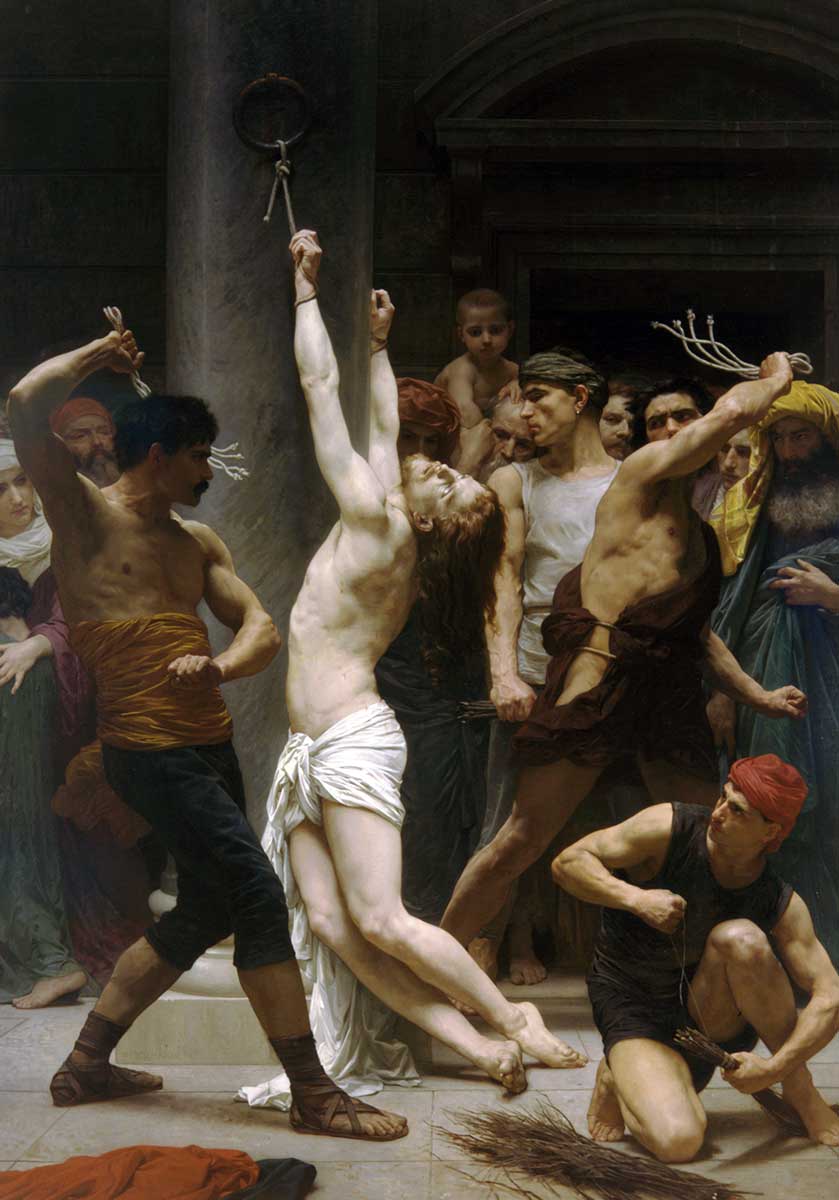
Crucifixion represented the worst torture that could be inflicted on a human being. It began with a severe beating of the victim, almost to the point of death. Then the culprit was forced to carry the large wooden crossbeam to the site of the crucifixion in front of crowds of people who vilified him as he struggled along.
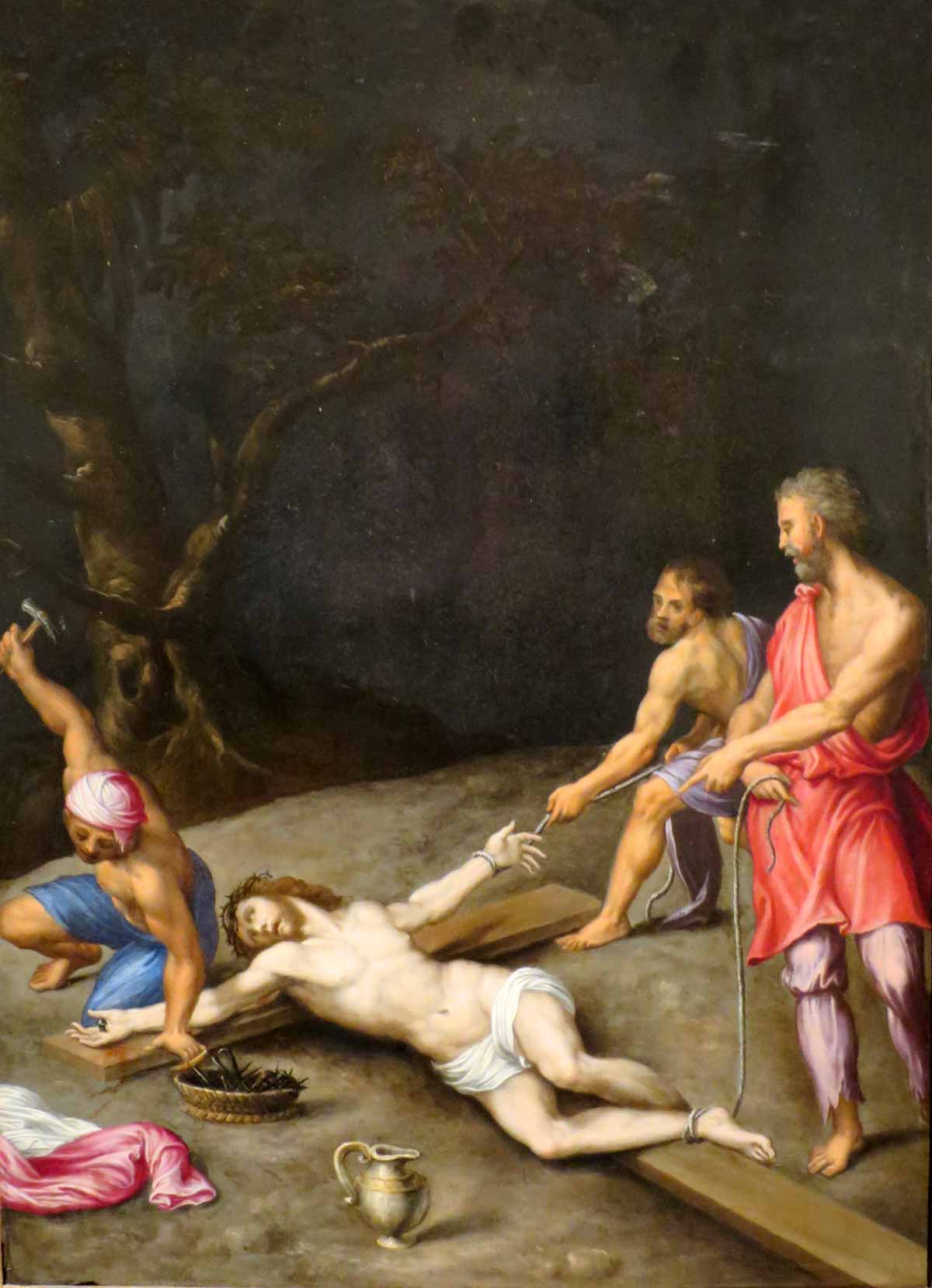
Criminals were stripped naked. Their executioners nailed them to the cross, arms outstretched, using spikes hammered through their wrists to cause excruciating pain. The soldiers would then hoist the crossbeam up to a post that remained in place between executions. At this point, they would drive nails through the middle and arch of each foot of the victim.
With the arms stretched out, it was hard for the sufferer to breathe. He had to push himself up with his feet, gasping for air, only to slump down again. When the victim was no longer able to repeat this action, he would die of asphyxiation. Dehydration and blood loss also played a role in the deaths of those crucified.
The Theological Significance of Christ’s Crucifixion
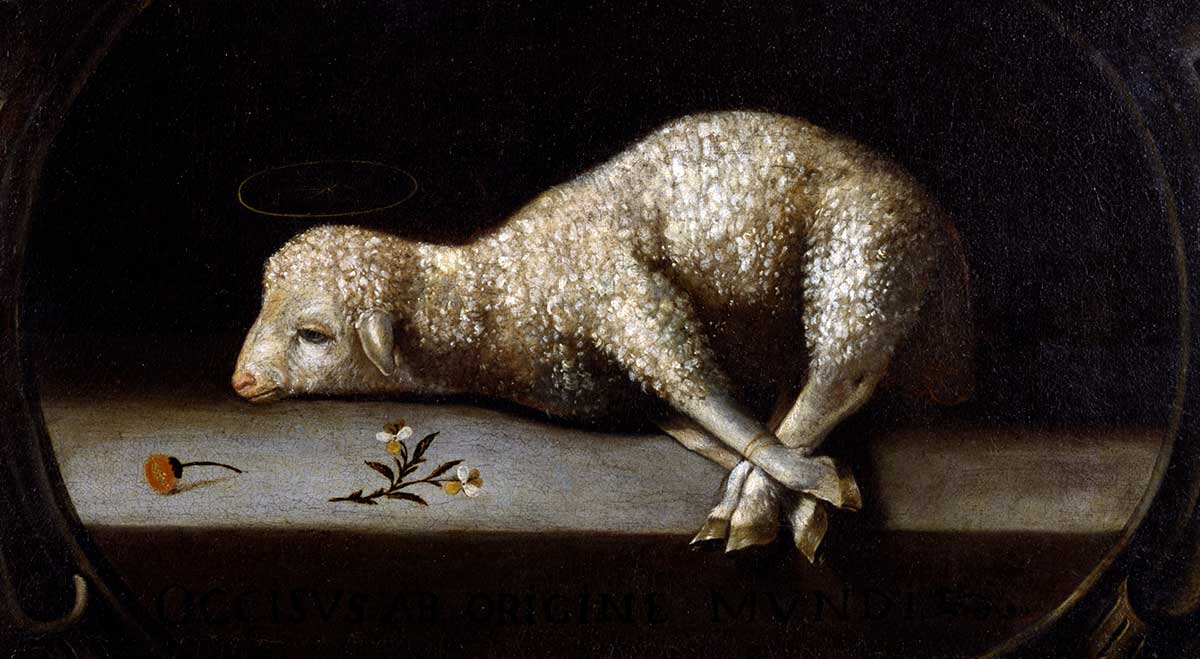
When Adam and Eve disobeyed God in the Garden of Eden, sin entered the world, and humankind became estranged from God. To atone for their sins, people sacrificed animals. However, these sacrifices had to be repeated and did not remove sin, only covered it.
It would take a sinless man to atone for the sins of humanity, but human beings were born with sinful natures that they could not eradicate themselves. It would take the human counterpart of an unblemished lamb to atone for humanity’s sins. That was Jesus who, being God, was sinless, and being man, could pay the debt on our behalf.
Where Was Christ Crucified?
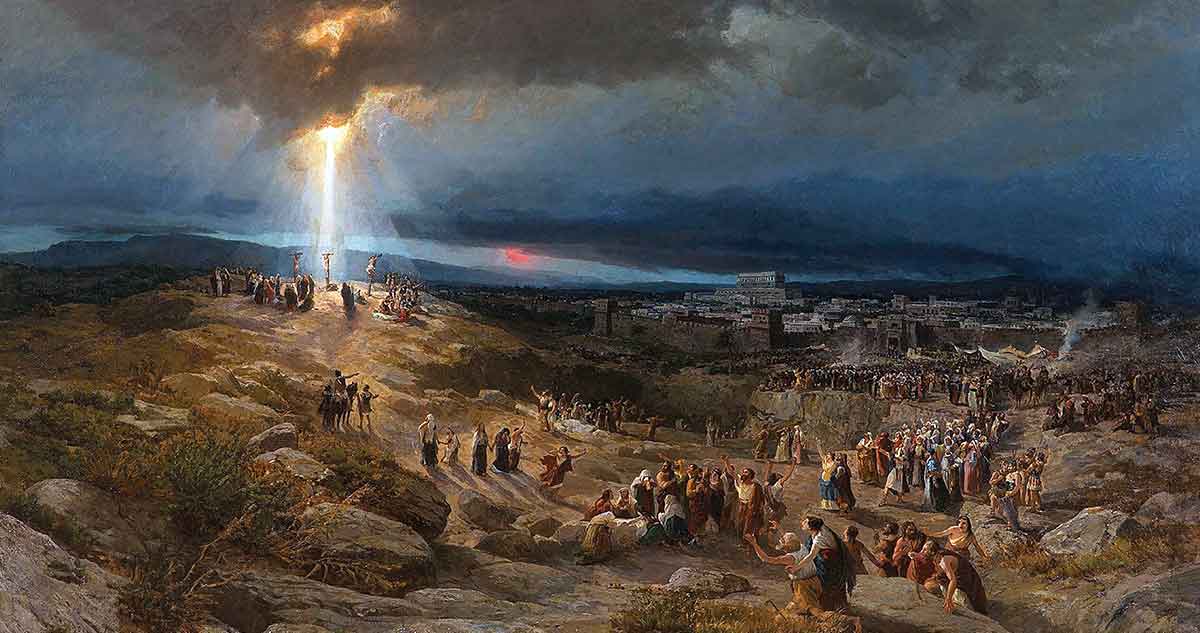
All of the Gospel writers tell us that Jesus was crucified at Golgotha, an Aramaic word that means “the place of the skull” (Matthew 27:39; Mark 15:22; Luke 23:33; John 19:17), suggesting that the hill on which the cross was placed was shaped like a head. Scholars are not sure exactly where that location is today. Certainly, it was outside of the gates of the ancient city of Jerusalem for the simple reason that Jews would not allow any impurity within its walls because it was God’s Holy City. John tells us in his gospel that it was “near the city” (John 19:20) while Mark states that you could see the location “from a distance” (15:40). Matthew and Mark both tell us that the spot was accessible to passers-by (Matthew 27:39; Mark 15:29).
The Romans purposely placed the crosses at sites that could easily be seen and where people could gather to watch men suffer and die. They hoped to deter people from breaking their laws or fomenting rebellion by showing them just how brutal Roman punishment could be.
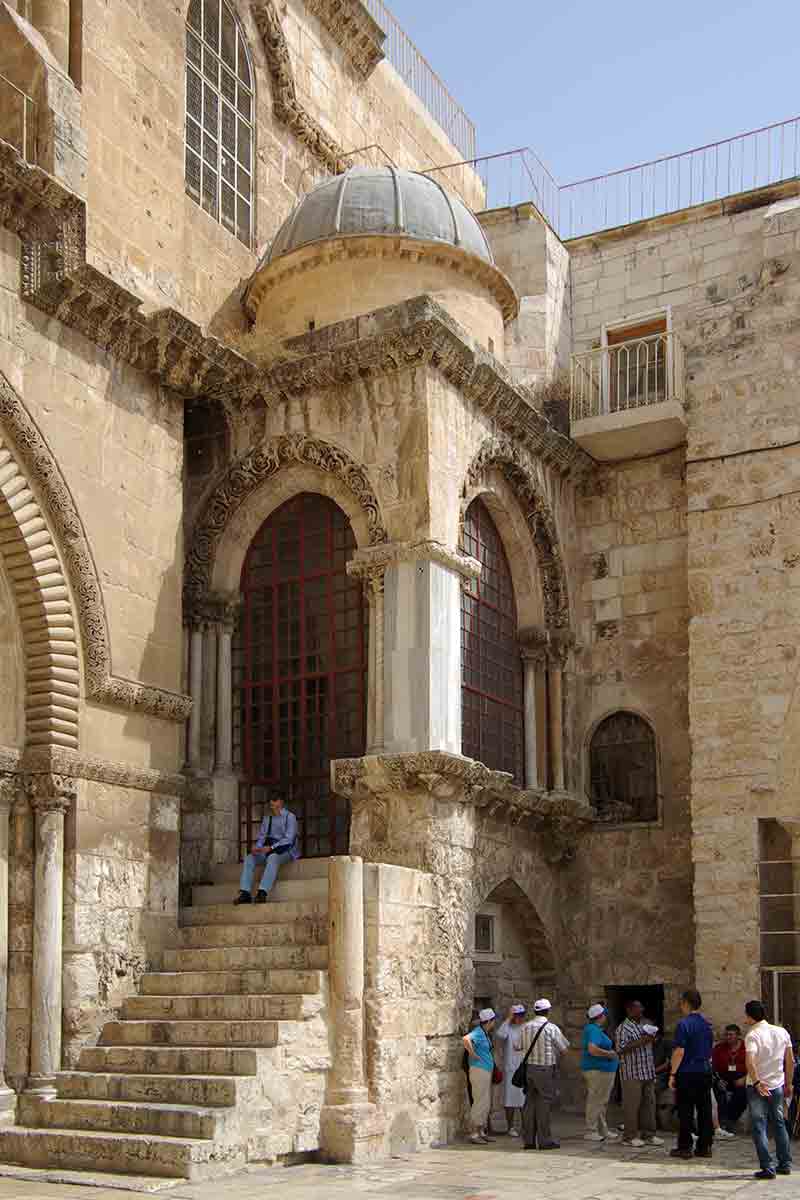
Today, visitors to Jerusalem can explore two possible sites for the Crucifixion. One is within the Church of the Holy Sepulchre, which is located in the Christian Quarter of the ancient city. Historian Eusebius, writing in the 4th century AD, places it there. While it is within the city today, the site was probably outside its walls at the time of Jesus’s crucifixion. Some scholars believe that it is the site of Christ’s burial tomb as well.
In the late 19th century, British Major-General Charles Gordon trumpeted another site, a skull-shaped hill outside the north wall of Jerusalem, near the Garden Tomb, which he believed to be the location of the burial site of Jesus. The place now bears his name, being called Gordon’s Calvary. However, no one can be totally sure that either place was the location of the crucifixion simply because Jerusalem has changed greatly over the centuries.
Father, Forgive Them, For They Don’t Know What They Are Doing (Luke 23:34)
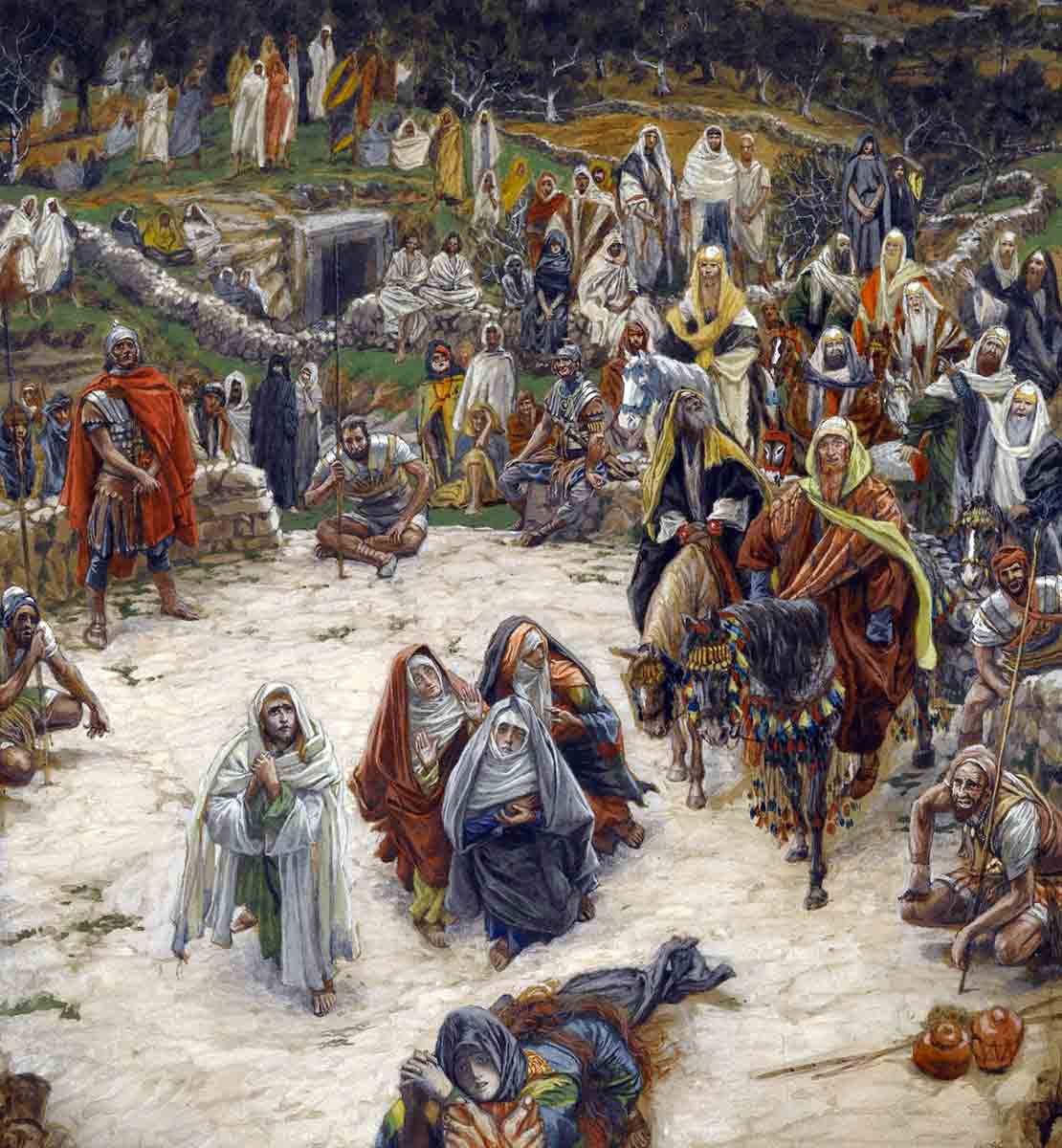
The Pharisees wanted to get rid of Jesus for a variety of reasons. They regarded his claim to be God blasphemous (Matthew 9:3; John 10:30-33). He socialized with tax collectors and sinners (Matthew 9:10, 11; Mark 2:15, 16). He challenged their teaching that righteousness came to those Jews who kept the Law (Matthew 5:20). And many people were following him rather than them, which jeopardized their positions, their power, and even their place in Roman society (John 11:48).
A man being crucified was expected to confess his wrongdoings. Here, Jesus confesses the wrongdoings of those responsible for his death, from the soldiers who whipped him, spat on him, and pounded the nails into his wrists to the Pharisees and other Jewish leaders who conspired to have him executed. He notes that they have no idea that they are killing the Son of God and, for this reason, he does not want God to hold their actions against them. He came to Earth preaching forgiveness, and he lives out that message as he is dying, thinking of others even as he is suffering and in great pain.
Truly, Today You Will Be With Me in Paradise (Luke 23:43)
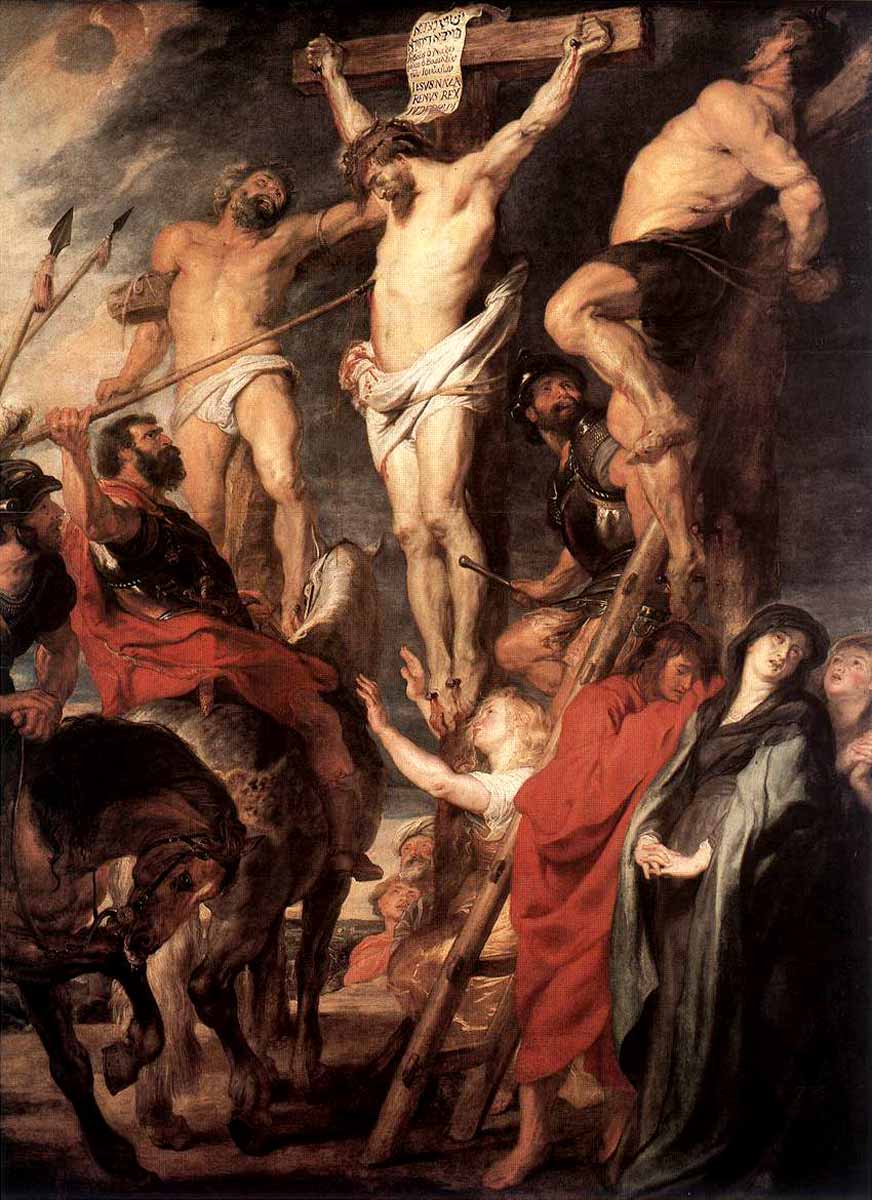
Some scholars suggest that there may have been more than three crosses on Golgotha, but the Gospels only speak of Jesus and two criminals, one hanging on each side of him. One of them speaks derisively of him, joining in the taunting of the soldiers, the Jewish leaders, and various other observers. All of them hurl insults at him and mock him, saying, “If you’re the king of the Jews, if you’re the Messiah, then save yourself.”
But the thief on the other cross rebukes his fellow criminal. “Don’t you fear God,” he says, “since you are under the same sentence? We are punished justly, for we are getting what our deeds deserve. But this man has done nothing wrong” (Luke 23:40, 41).
The repentant thief then asks Jesus to remember him when Christ “comes into his kingdom” (Luke 23:42), to which Jesus responds, “Truly I tell you, today you will be with me in paradise.”
Even from the cross, Jesus is telling people how they might be saved, through sincere confession, repentance, and faith in his ability to give them eternal life.
Woman, Here is Your Son (John 19:26)
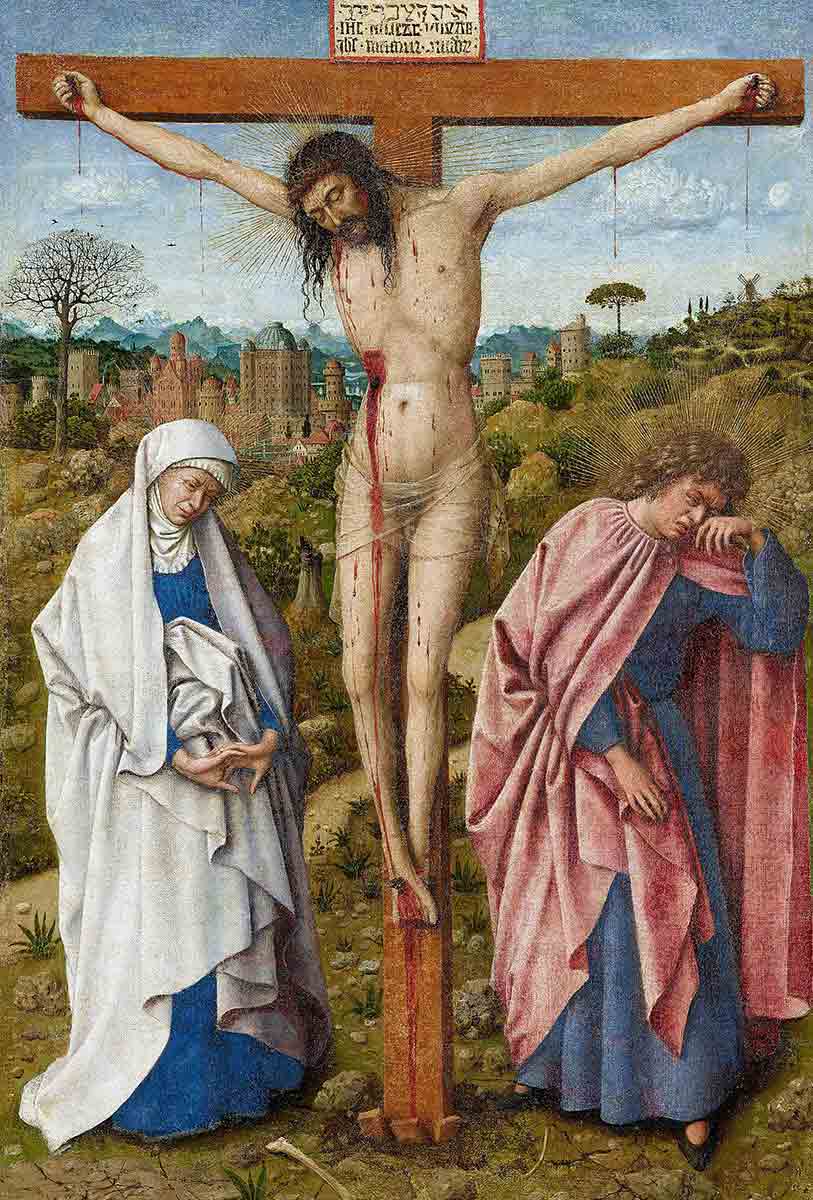
Some paintings depict Jesus high up on a cross. However, records show that the corpses were left on the crosses for wild animals to eat. This suggests that they were fairly close to the ground. Christ was certainly within speaking range as he called out to his mother, Mary, and his disciple, John.
It is likely that Mary’s husband, Joseph, who was somewhat older than she, had passed away by this time. A dying son had the responsibility of finding someone to look after his mother. Therefore, it is not surprising that Jesus made arrangements, even from the cross, to ensure that his mother would be taken care of. To her, he said, “Woman, here is your son,” and to his disciple, John, he said, “Here is your mother.” We read that John took Mary into his home from that day on.
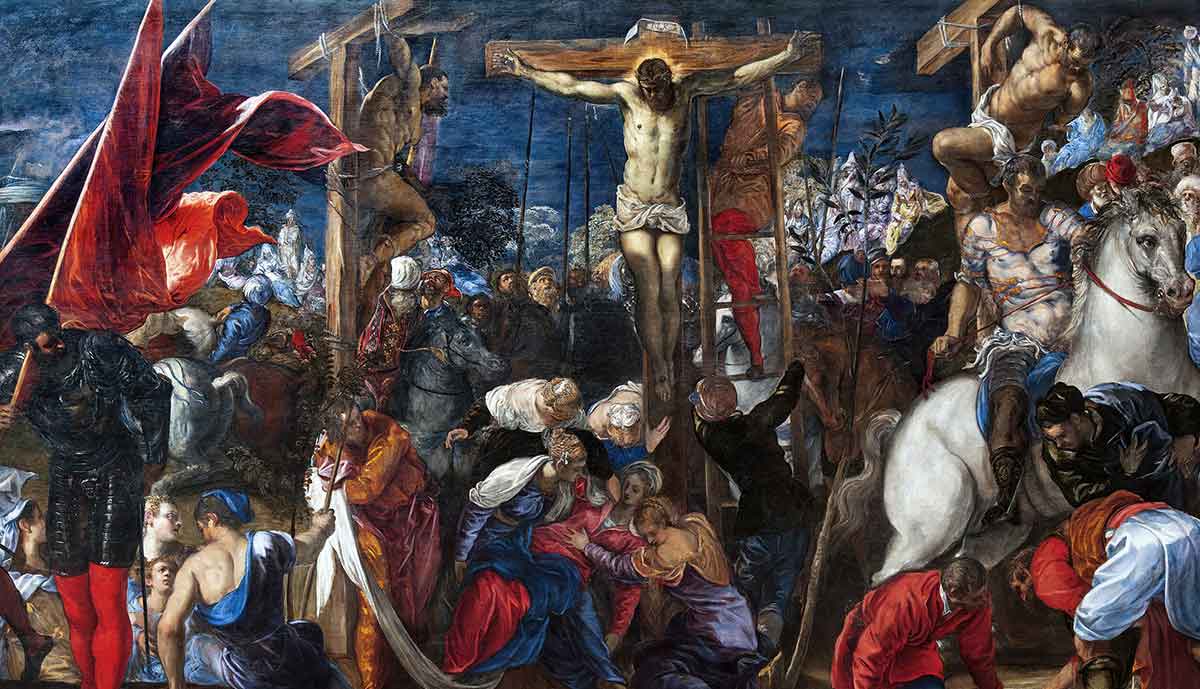
Some may question why Jesus did not leave his mother in the care of one of his half-brothers. However, at that point, none of them believed that he was the Messiah, the Son of God, and God Incarnate. Only after Christ’s resurrection did they realize it, at which point his brother James became a key member in the early Church and authored the New Testament book that bears his name. And historians suspect that John was actually Jesus’s cousin, his mother, Mary, being the sister of John’s mother, Salome. However, whether a blood relative or not, he was a spiritual brother to Jesus.
Of note here is the way Jesus addresses his mother as “woman.” He does so in the story of the wedding in Cana as well, when she suggests he do something about the shortage of wine. To modern readers, it may sound abrupt and even harsh. However, it was a term of respect and affection in that culture. The New Living Translation of the Bible translates it as “dear woman” to reflect this.
My God, My God, Why Have You Forsaken Me? (Matthew 27:46)
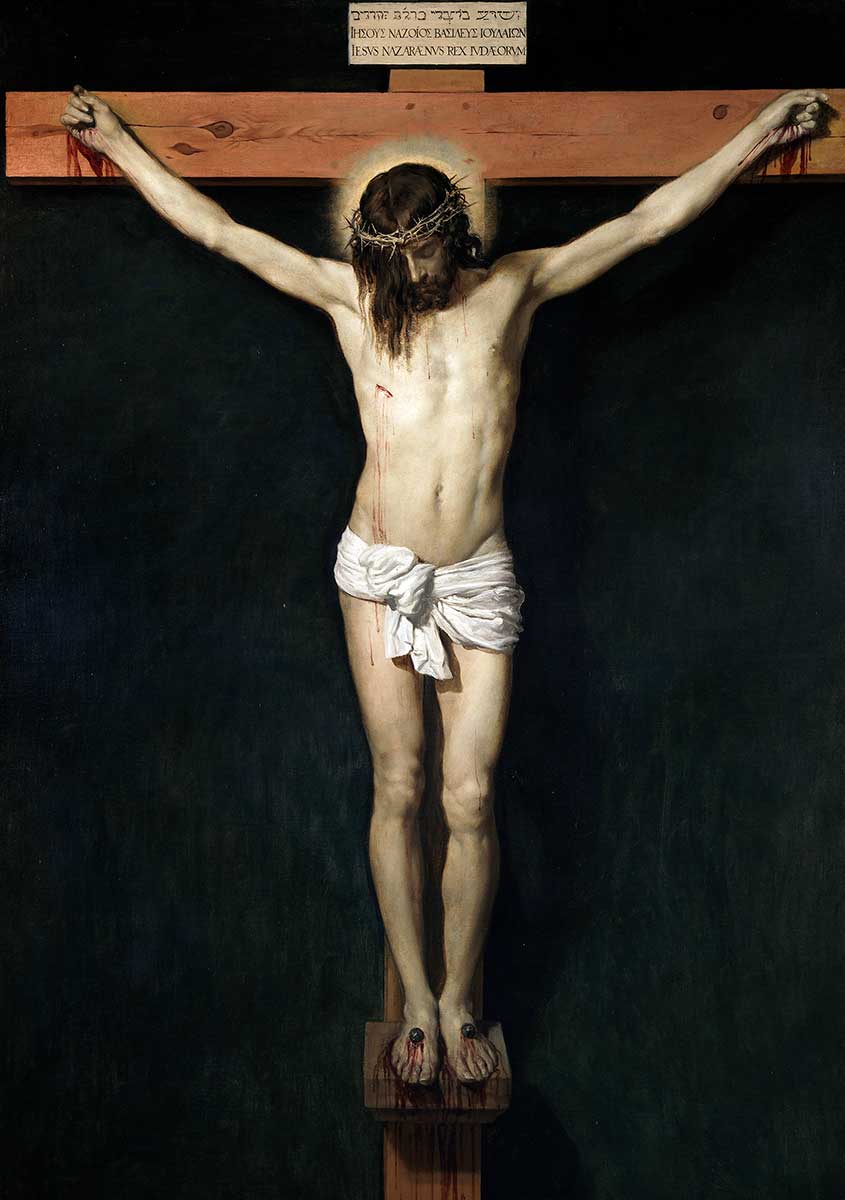
Jesus uttered what theologians call his “cry of dereliction” at the ninth hour, that is, at three o’clock in the afternoon, which was the hour of prayer designated by the Jews (Acts 3:1). This statement is just one of the many references to Christ’s crucifixion found in Psalm 22, a messianic text that scholars believe predicted the event. In fact, the psalm has been nicknamed the fifth gospel account of the crucifixion. The words, “My, God, my God, why have you forsaken me?” are found in its first verse.
Did God really abandon Jesus, or did he just feel as if his heavenly father did? The reality is that God did indeed desert him. Two verses from two of Paul’s letters explain why:
“God made him who had no sin to be sin for us, so that in him we might become the righteousness of God” (2 Corinthians 5:21).
“Christ redeemed us from the curse of the law by becoming a curse for us, for it is written: ‘Cursed is everyone who is hung on a pole’” (Ga. 3:13).
In other words, Christ, who was sinless, took all of the sins of humanity upon himself on the cross. Sin separates the sinner from God, and so, momentarily, Jesus was cut off from his heavenly Father.
I Am Thirsty (John 19:28)
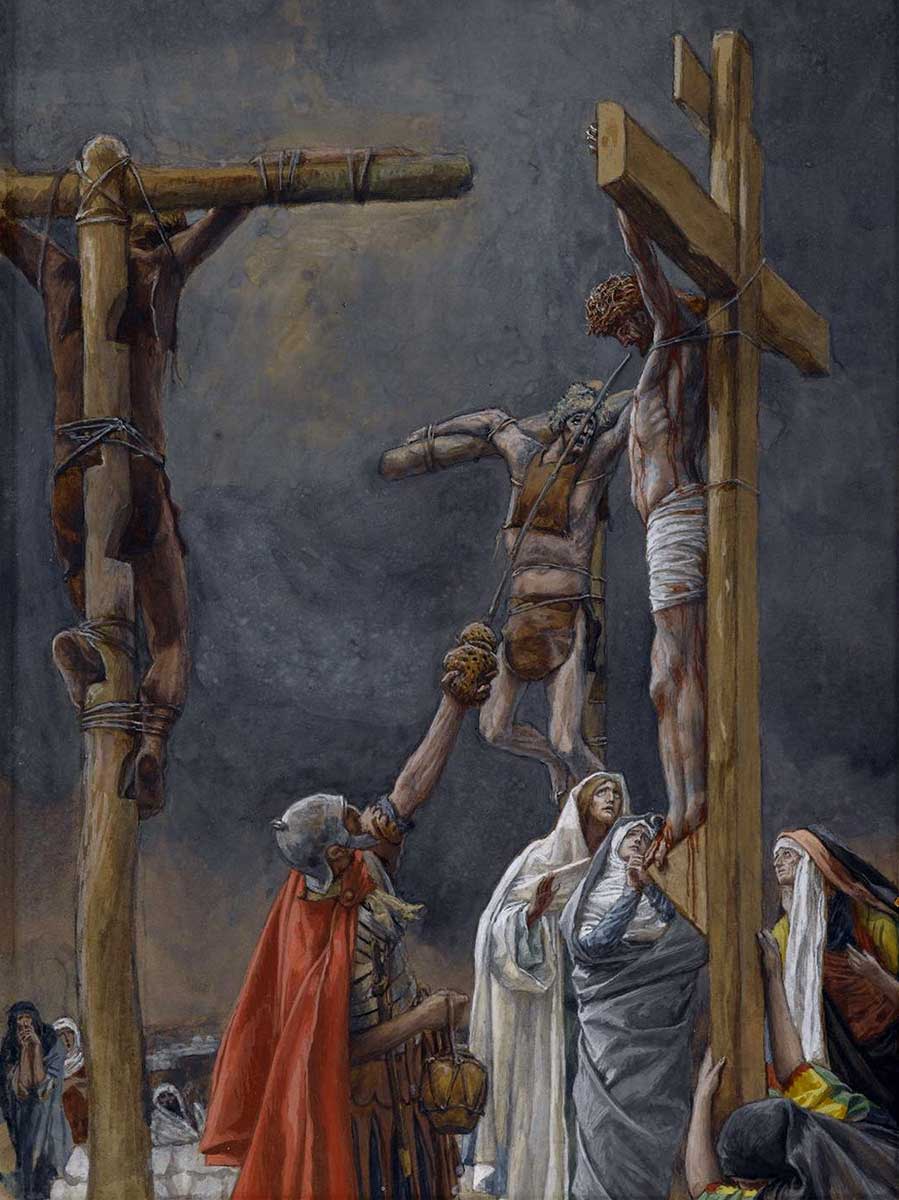
Jesus, knowing that the end is near, requests a drink. It is unlikely that he had had fluids of any kind since the Last Supper that he shared with his disciples some 18 hours before. Therefore, he was probably dehydrated and, anticipating that he was about to declare the end of his ordeal, he needed moisture to lubricate his throat and tongue.
The statement fulfills the prophecy in Psalm 69:21 which reads, “They put gall in my food and gave me vinegar for my thirst” as well as verse 15 of Psalm 22, that states, “My mouth is dried up like a potsherd, and my tongue sticks to the roof of my mouth; you lay me in the dust of death” which John mentions earlier in this chapter.
In response to Christ’s request for something to quench his thirst, a soldier in attendance soaked a sponge in cheap wine vinegar, put it on a stalk of a hyssop plant, and lifted it to Jesus’s lips.
Notably, hyssop branches were used to mark the houses of the enslaved Israelites with the blood of a sacrificed lamb in Egypt when the angel of death came to destroy all firstborn sons of their captors. Here, on the cross, Jesus represents that lamb, whose shed blood would ensure that the angel of death did not come near his followers, then and now.
It Is Finished (John 19:30)
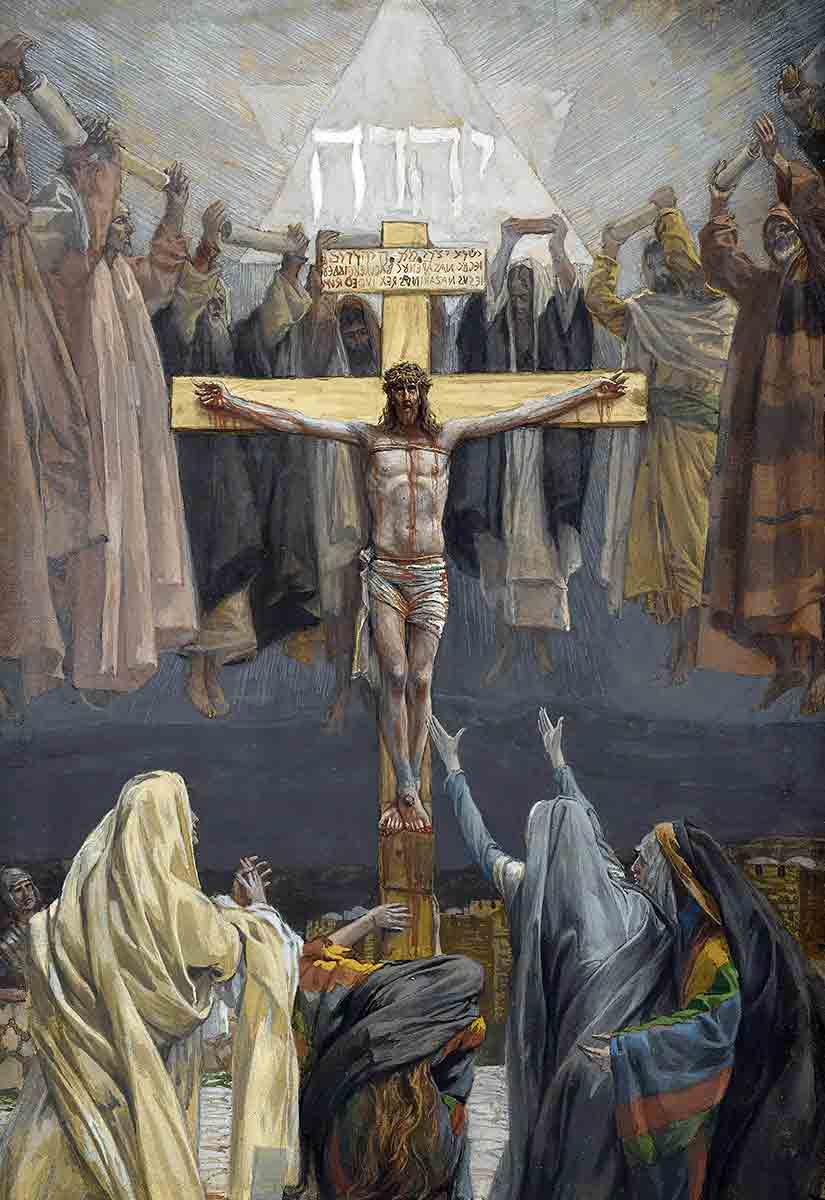
In Greek, the sentence “it is finished” is encapsulated in one word—tetelestai. It is an accounting term that literally means “paid in full.” It refers to the fact that Christ’s death paid the sin debt that humanity owed to the God who had created them and against whom they had rebelled. The apostle Paul, in his second letter to the Corinthians, explains it this way:
“All this is from God, who reconciled us to himself through Christ and gave us the ministry of reconciliation: that God was reconciling the world to himself in Christ, not counting men’s sins against them” (2 Corinthians 5:18-19).
The verb tense is perfect, which means that, while it states an event in the past, it focuses on the present consequence of the activity. In other words, Jesus’s life and ministry on Earth had come to an end, but the effects of his work on the cross go far beyond that.
Father, Into Your Hands I Commit My Spirit (Luke 23:46)
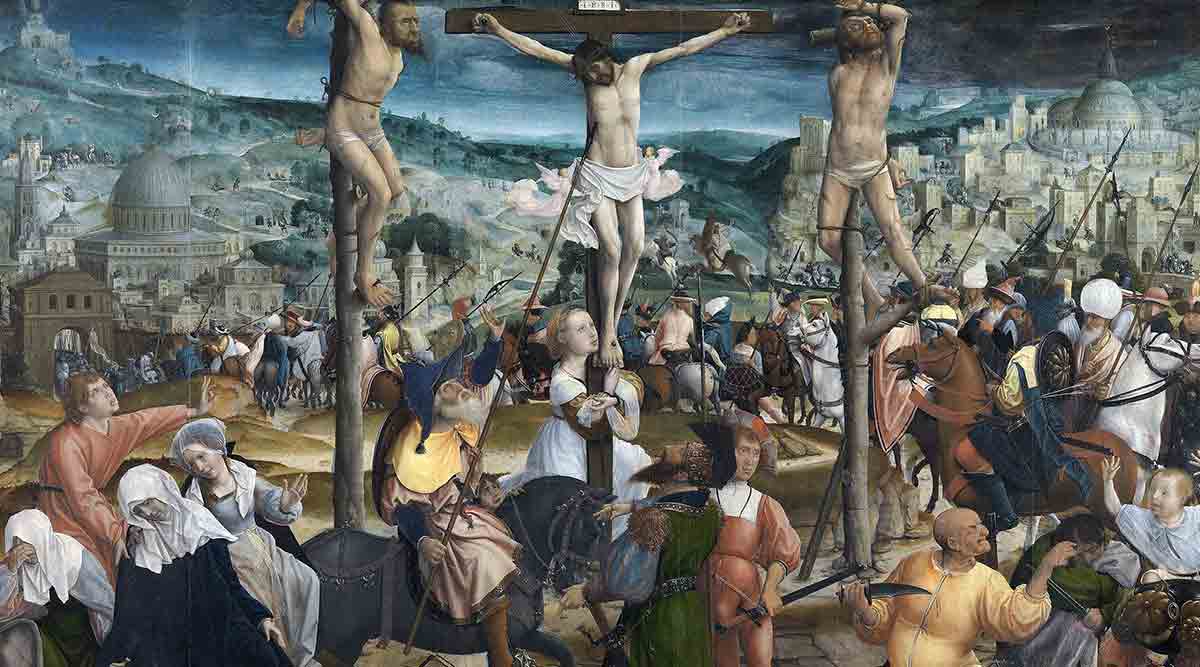
Noticeably, Jesus calls God “Father,” as he did in his first words on the cross. The separation between them is over. The intimacy has returned. Once again, we look to a psalm for its original expression. In this case, it’s Psalm 31, verse 5. It’s a plea for deliverance from one’s foes in the face of death. The phrase “hands of God” denotes the incomparable omnipotence of God. Jesus voluntarily commits his soul to hands that will, ultimately, deliver him from death itself.
It is interesting to note that the gospel-writers do not use the word “die” when referring to Christ’s demise. Scholars suggest the word is too pedestrian to describe the event. Luke and Mark say that he breathed his last (Luke 23:46 b; Mark 37, 39), with some translations using “expired” to note his passing. However, Matthew and John emphasize the fact that Jesus chose the moment to let go of life, saying that he yielded or gave up his spirit, an action of his own accord.
The Symbol of the Cross
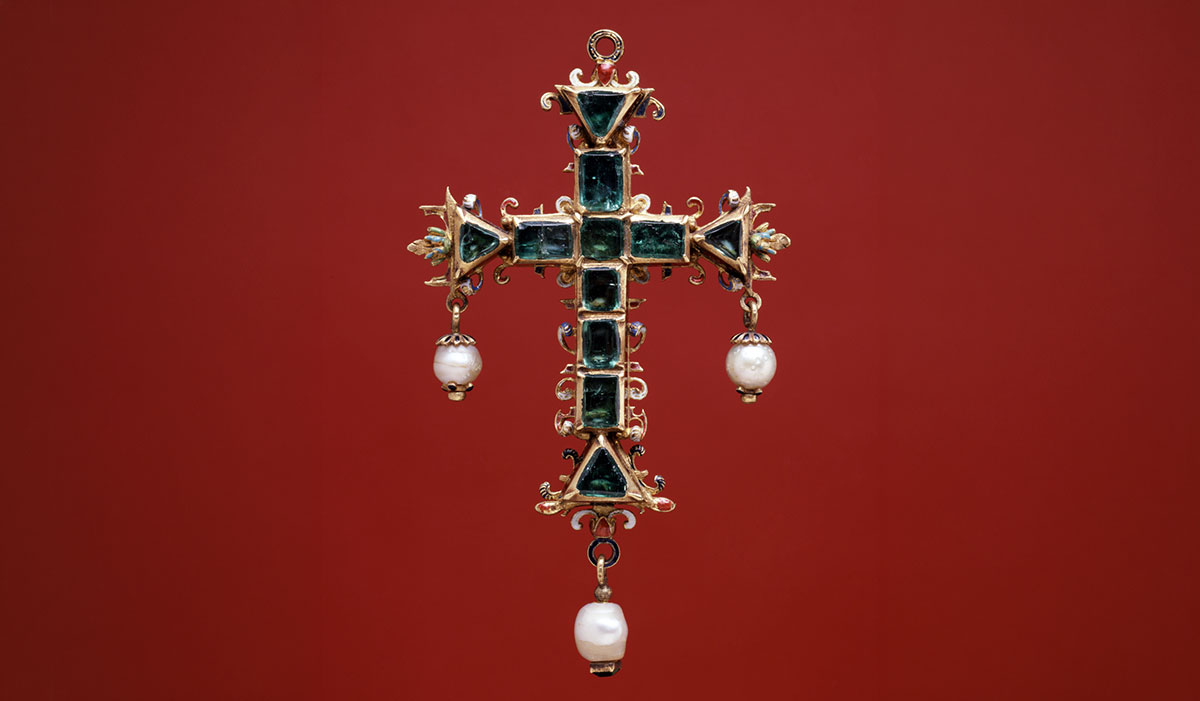
For the Christian, the cross symbolizes the victory that Christ had over sin and death as he atoned for the iniquities of humanity. As such, it became a popular subject of art down through the centuries, in paintings and sculptures, and also in the form of jewelry. Interestingly, the Roman Catholic Church often presents crucifixes with the figure of Christ on them as its adherents recall the agony he went through to give people eternal life with God, while Protestants prefer an empty cross as it speaks to his glorious resurrection and conquest of death.