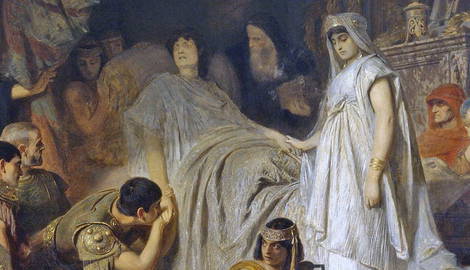
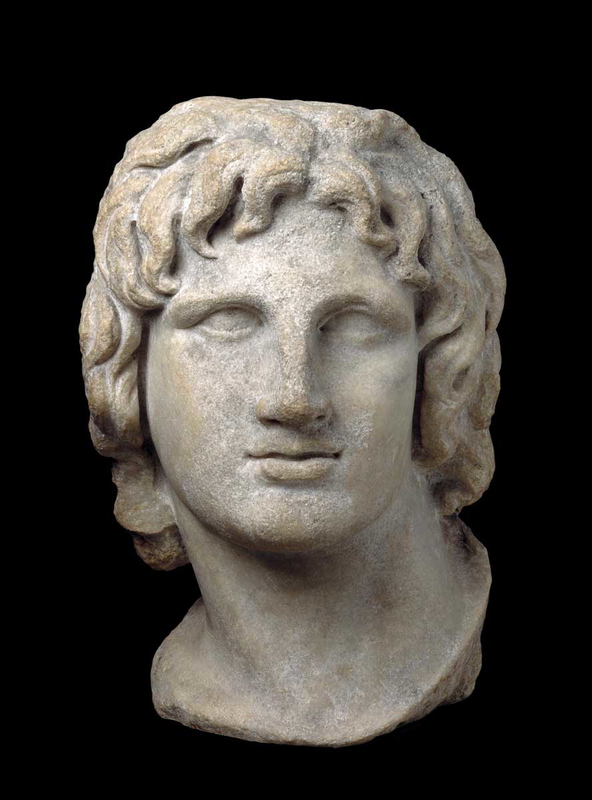
In June 323 BC, Alexander the Great died at just 32 years of age while at his palace in Babylon, likely from an illness. His sudden death created a huge power vacuum across his vast new empire. He had left no clear heir, and his wife, Roxana, was pregnant. No one knew if the child would be a boy. His only other family was a half-brother, Philip III, who was not considered mentally fit to rule. What happened after Alexander the Great’s death that would shape the Hellenistic world for the next century?
The Immediate Aftermath of Alexander the Great’s Death
Alexander’s illness took 12 days to kill him, giving the people around him time to consider the succession problem. With no suitable biological heir, his close retinue of commanders and generals looked to themselves. But when they asked the general to indicate who should succeed him, he reportedly replied with the cyrptic statement “to the strongest.”
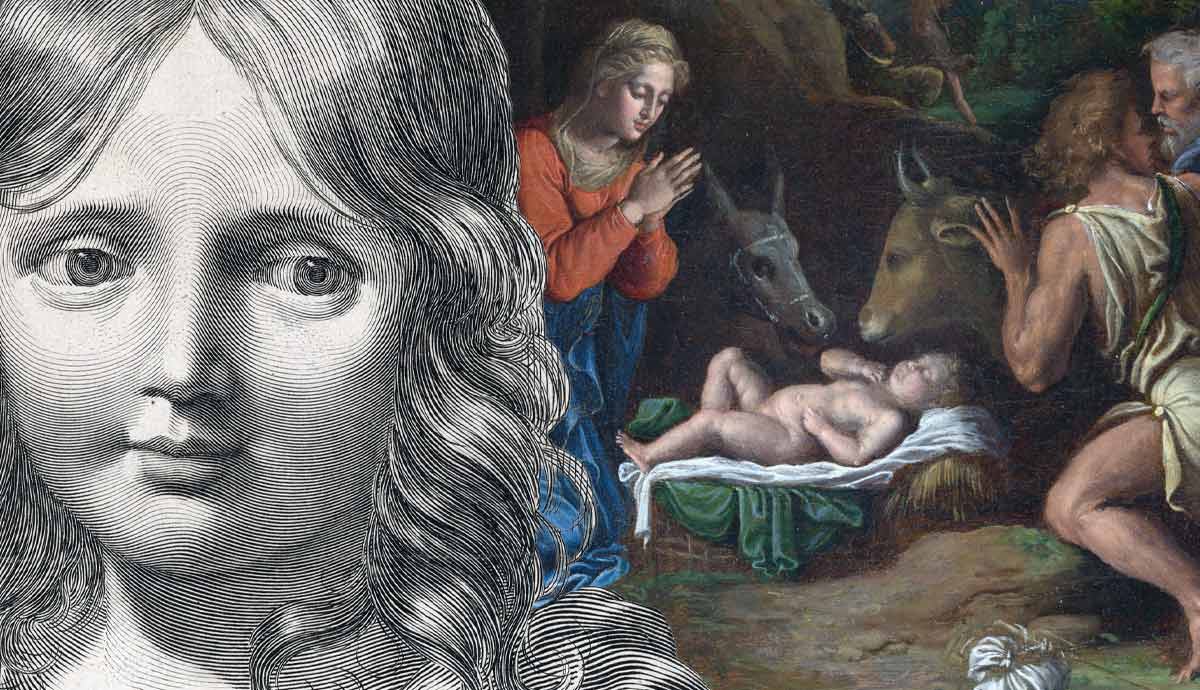
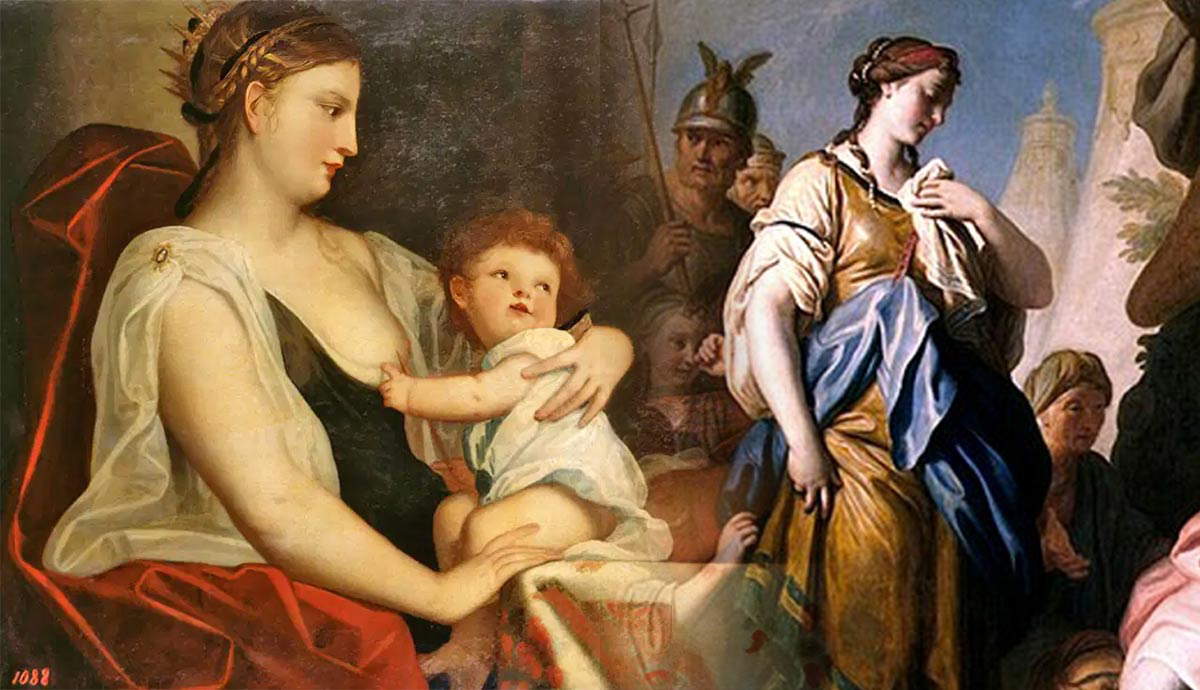
In the end, the Macedonian court at Babylon agreed that Philip III and Roxana and Alexander’s unborn child (who would be a boy, Alexander IV) would be kings together. Perdiccas, Alexander’s trusted subordinate, was to oversee the succession as a regent as the two were just kings in name. This agreement, known as the Partition of Babylon, was not reached peacefully. The common soldiers reportedly wanted stability and therefore favored the adult Philip III, while the cavalry, led by Perdiccas, preferred Alexander’s unborn child, presumably because he would be easy to control. The infantry seized the palace, forcing the compromise.
The Diadochi & Division of Power
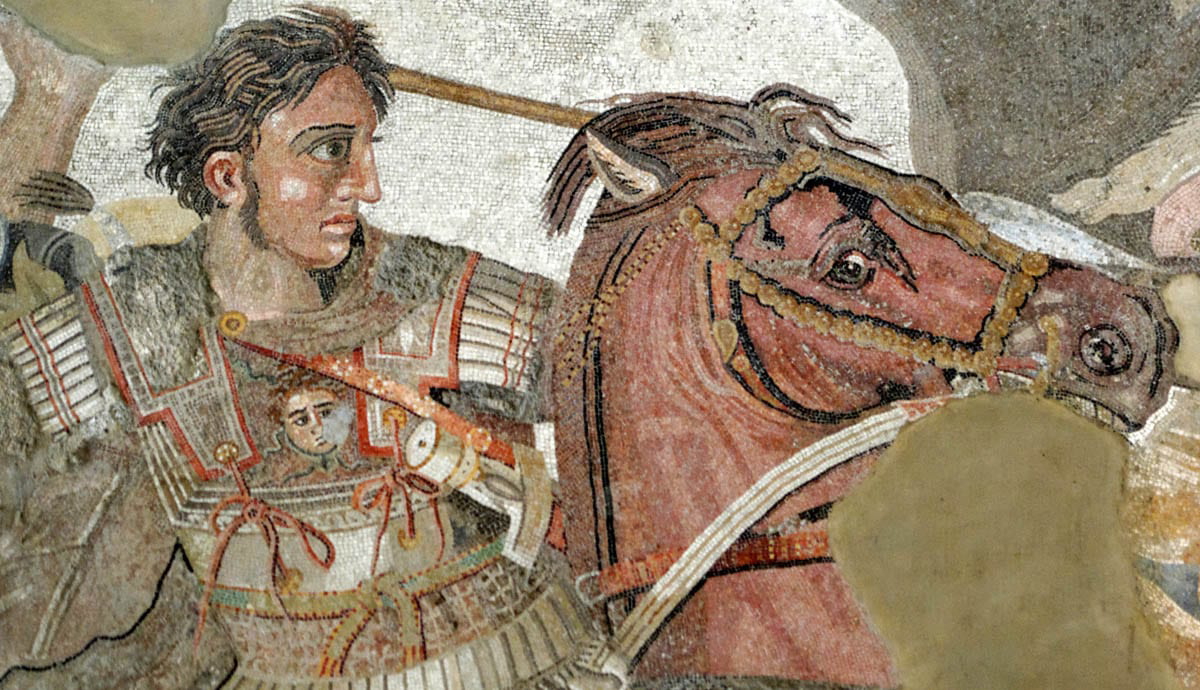
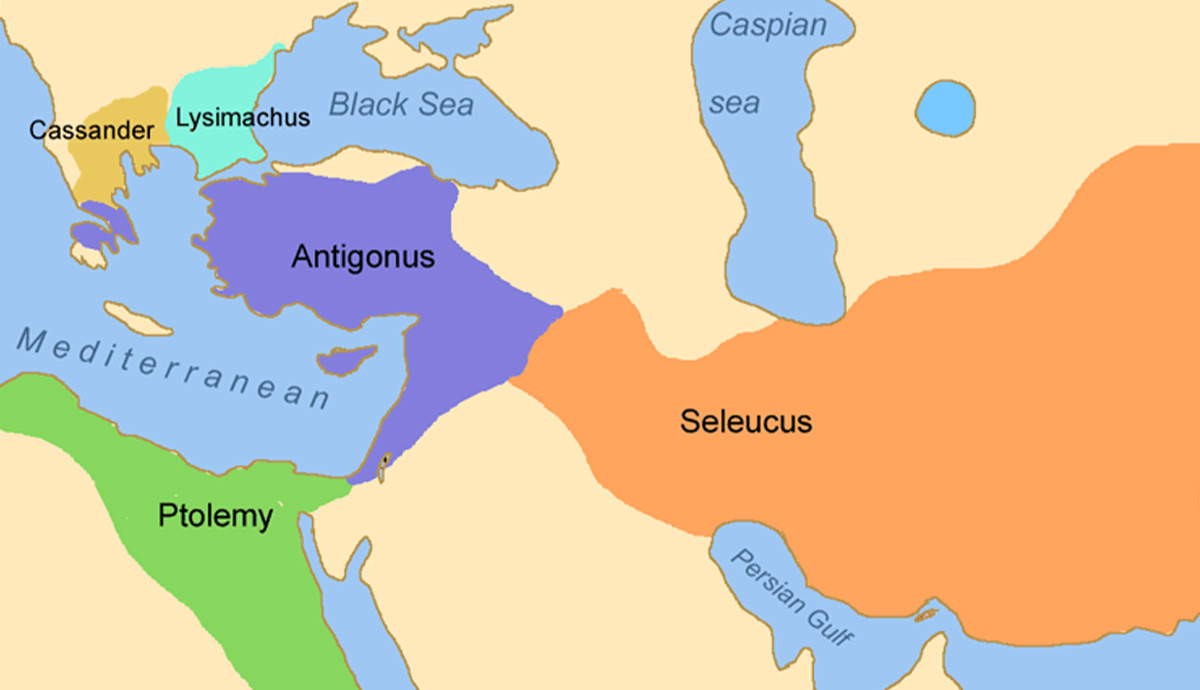
To protect himself from Alexander’s other powerful generals, Perdiccas made them satraps (governors) of the different regions of the empire. Ptolemy was given Egypt, Antigonus I Monophthalmus got a big part of modern-day Turkey, Lysimachus got Thrace, Antipater and Craterus were given Macedon and Greece, and Eumenes Cappadocia. Perdiccas sent them off to get them out of the way, but he was essentially giving each a private kingdom, where they could build armies.
This settlement lasted less than two years, as Perdiccas tried to assert his power as supreme ruler and the generals, who became known as the Diadochi, assertedtheir independence.
The first major conflict started when Ptolemy, who was already building his power in Egypt, and also claimed to be the conquerors half-brother. He rerouted Alexander the Great’s funeral procession to take control of his body. Ptolemy knew this was a powerful relic to possess, so he took it to Memphis and robbed Perdiccas of the right to bury the king. This led to the First War of the Successors in 322 BC.
The First War of the Successors
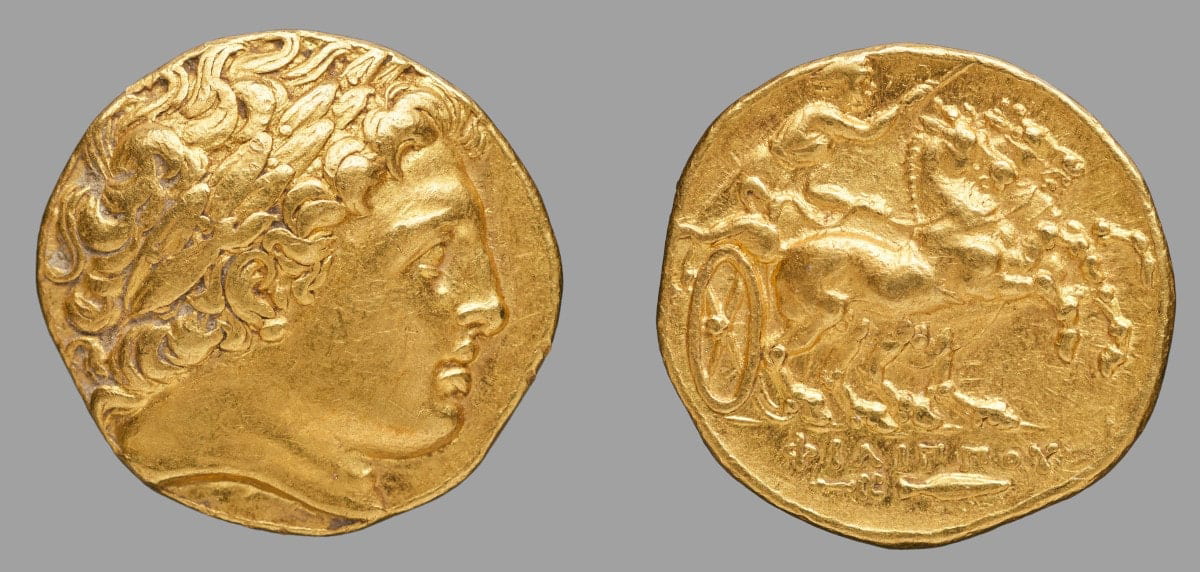
In the First War of the Successors, Perdiccas marched to Egypt to punish Ptolemy for taking Alexander’s body, but was met with strong resistance. After he failed to cross the Nile River, his own officers, including Seleucus, a Macedonian Greek general, turned against him and killed him in 321 BC. The death of Perdiccas was the true end of any central power holding together Alexander’s empire.
The empire was now a free-for-all and the wars that followed were a messy series of deals and betrayals. The main goal of each warlord was no longer to serve the empire but to cut out the biggest kingdom for himself. The most powerful of these was Antigonus I Monophthalmus who, with his son Demetrius, came closest to putting Alexander’s lands back together in a 20-year war across the Middle East and Greece.
Key Players in the Succession Wars
| Player | Original Role under Alexander | Territory Claimed / Controlled |
| Ptolemy I Soter | General, Close Friend, and Bodyguard | Egypt, Libya, and parts of Syria |
| Seleucus I Nicator | Commander of the elite “Silver Shields” infantry | Babylonia, Persia, and Central Asia (The East) |
| Cassander | Son of Regent Antipater (Did not campaign in Asia) | Macedonia and parts of Greece |
| Antigonus I Monophthalmus (One-Eye) | Veteran General and Satrap of Phrygia | Asia Minor, Syria, and Mesopotamia |
| Demetrius I Poliorcetes (The Besieger) | General and Admiral (Son of Antigonus One-Eye) | Greece, the Aegean, and later Macedonia |
| Lysimachus | Personal Bodyguard and General | Thrace and Western Asia Minor |
| Perdiccas | Supreme Commander of Cavalry / Right-hand man | The entire Empire (as Regent) |
| Eumenes of Cardia | Chief Royal Secretary and Commander | Central Asia Minor (Cappadocia) |
End of the Argead Dynasty
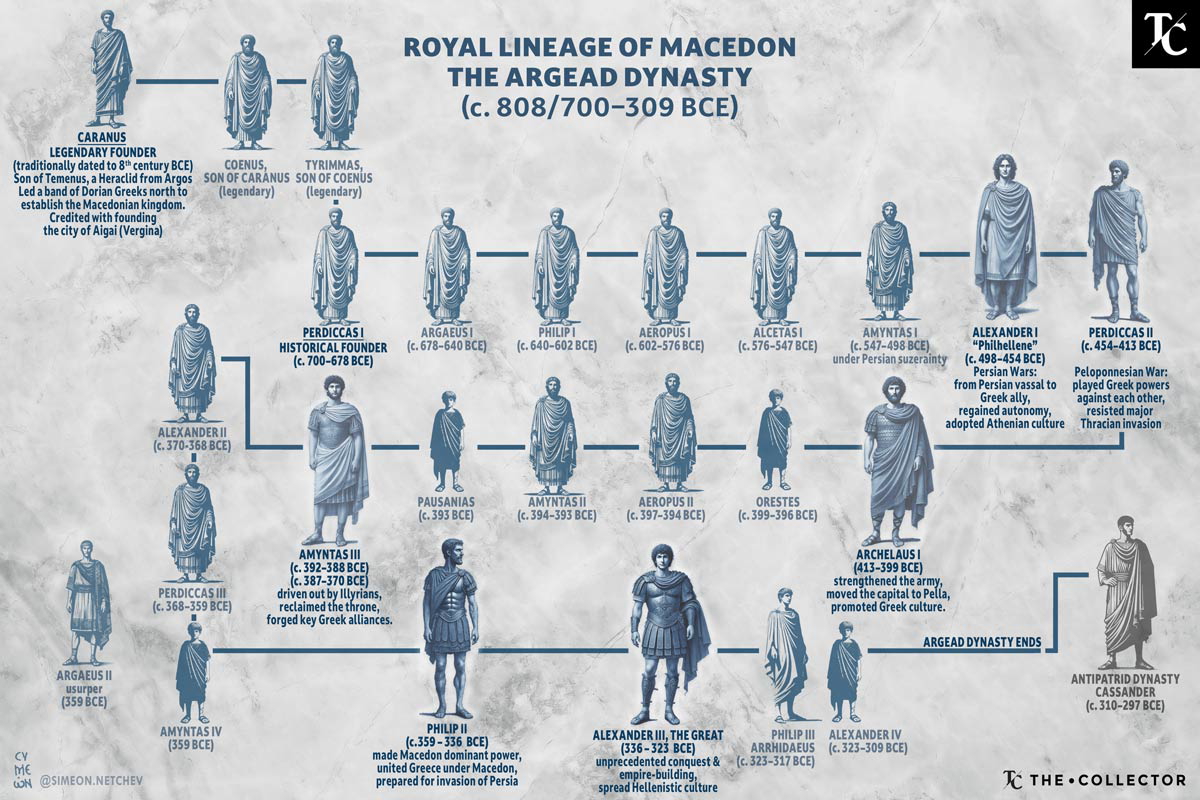
While the generals fought for land, the remaining members of Alexander’s family were used as pawns. Their royal blood made them both useful and a threat to the generals with regal ambitions. In 317 BC, Alexander’s mother, Olympias, had his half-brother Philip III and his wife killed. The act showed just how ruthless the time was.
One of the generals, Cassander, son of Antipater, took control of Macedonia. He feared the claim of Alexander’s real heir and so he locked up the young Alexander IV and his mother, Roxana, around 310 BC. He then had them secretly murdered.
The move ended the Argead family line that had ruled Macedonia for hundreds of years. With the royal family gone, the leadership claims through Alexander’s bloodline subsided. Antigonus, Ptolemy, Seleucus, and the other top generals all began calling themselves kings of their own lands. This made the breakup of the empire official.
The Battle of Ipsus
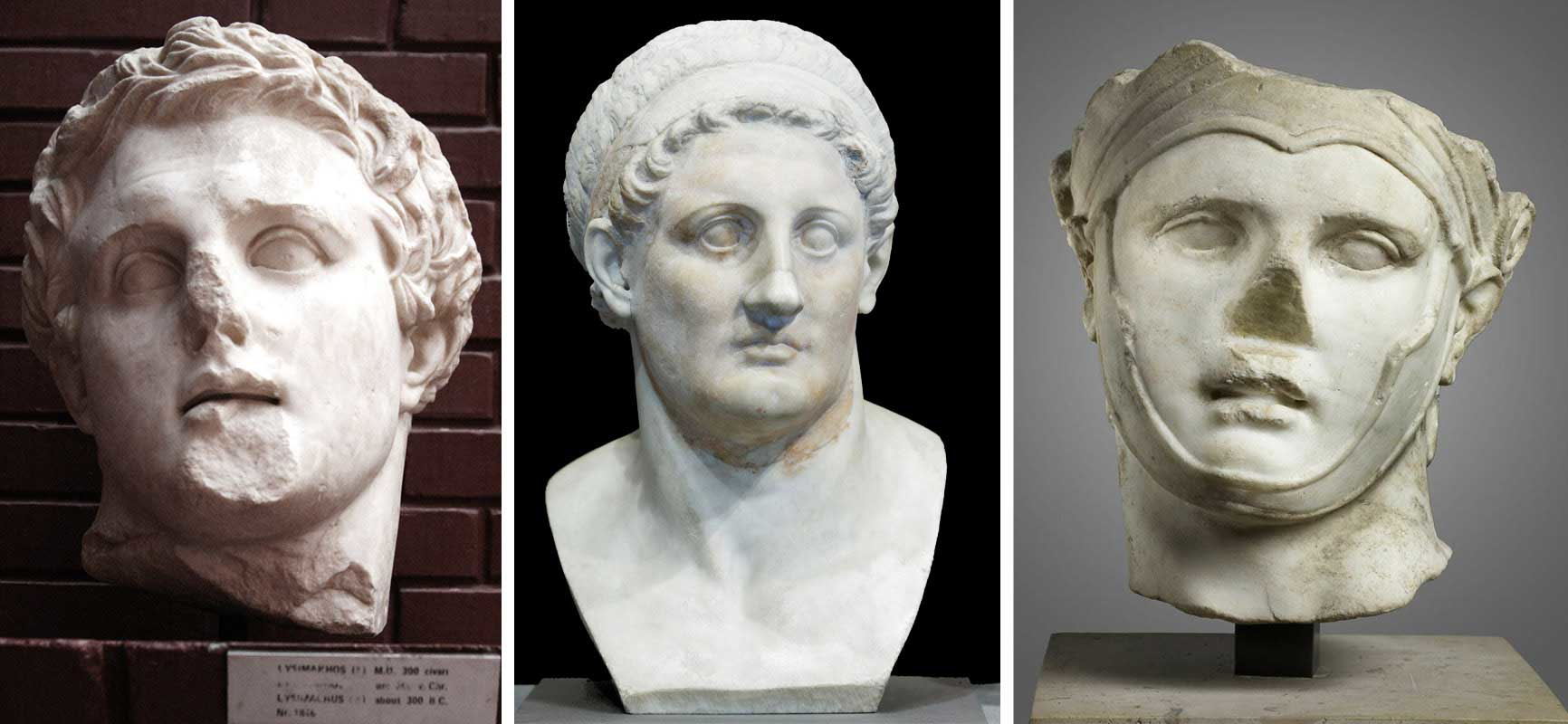
The great ambition of Antigonus to be the one true ruler led to a final team-up against him. The final battle of the Succession Wars, called the Battle of Ipsus, took place in 301 BC near Ipsus in modern-day Turkey. The joint armies of Lysimachus, Cassander, and Seleucus, who brought war elephants from his battles in India, went up against the army of Antigonus. The 81-year-old Antigonus fought bravely but was killed on the battlefield. His death at Ipsus was the end of the endeavor of one big empire. The winners split his huge territories among themselves. The change created a new map of the Hellenistic world and ended any real chance of putting the initial territories ruled by Alexander the Great back together.
As such, the death of Alexander the Great did not lead to one new ruler, but to a violent imperial collapse. The legacy of the successors was the creation of a new Hellenistic world that was a vibrant, mixed-culture society where the Greek language and ideas blended with the cultures of the East.
Succession Wars Timeline
| Year (BC) | Event | Summary |
| 323 | Death of Alexander & Partition of Babylon |
Alexander dies in Babylon. The Partition of Babylon establishes the disabled Philip III and the unborn Alexander IV as joint puppet kings, with Perdiccas as Regent.
|
| 322–321 | The First War of the Successors |
Triggered by Ptolemy hijacking Alexander’s body and Perdiccas’s growing ambition. Perdiccas invades Egypt but is assassinated by his own officers.
|
| 321 | Treaty of Triparadisus |
The empire is re-carved. Antipater becomes the new Regent and takes the puppet kings to Macedonia. Seleucus is rewarded with the governorship of Babylon.
|
| 319–315 | The Second War of the Successors |
Antipater dies, sparking a civil war in Macedonia between his son Cassander and the new regent Polyperchon. Antigonus defeats and executes Eumenes, becoming the most powerful general.
|
| 314–311 | The Third War of the Successors |
The other generals form a grand coalition to stop the rapid expansion of Antigonus. Peace in 311, which recognizes Cassander’s control of Macedonia until Alexander’s young son comes of age.
|
| 310–309 | Extinction of the Argead Dynasty |
Cassander secretly murders Alexander’s 14-year-old son (Alexander IV) and his mother Roxana. Shortly after, Alexander’s illegitimate son Heracles is also murdered.
|
| 308–301 | The Fourth War of the Successors |
Antigonus and his son Demetrius try one last time to fully reunite Alexander’s empire. In 306–305 BCE, the remaining generals all formally crown themselves Kings of their respective regions.
|
| 301 | The Battle of Ipsus |
Known as the “Battle of the Kings,” Antigonus is killed, ending any hope of a unified empire.
|
| 288–285 | The Fall of Demetrius |
Demetrius (son of Antigonus) seizes Macedonia but is driven out by a joint invasion. He launches a desperate campaign in Asia Minor but is captured by Seleucus and drinks himself to death in luxurious captivity.
|
| 281 | The Battle of Corupedium |
The elderly Seleucus defeats and kills the elderly Lysimachus. Months later, Seleucus is assassinated, marking the definitive end of the Successor generation.
|