
Millions of Bison roamed the American Great Plains in the early 19th century. They were an essential part of the ecosystem and a tremendous resource for thousands of Indigenous people. However, as the century progressed, the bison herd collapsed in a catastrophic way—and it was no accident. The United States, driven by industrialization, a growing railroad industry, military conquest, and greed, made it a policy to kill off the powerful animals. So successful were these efforts that the American bison almost didn’t survive to see the 20th century.
The North American Plains Before the Great Slaughter
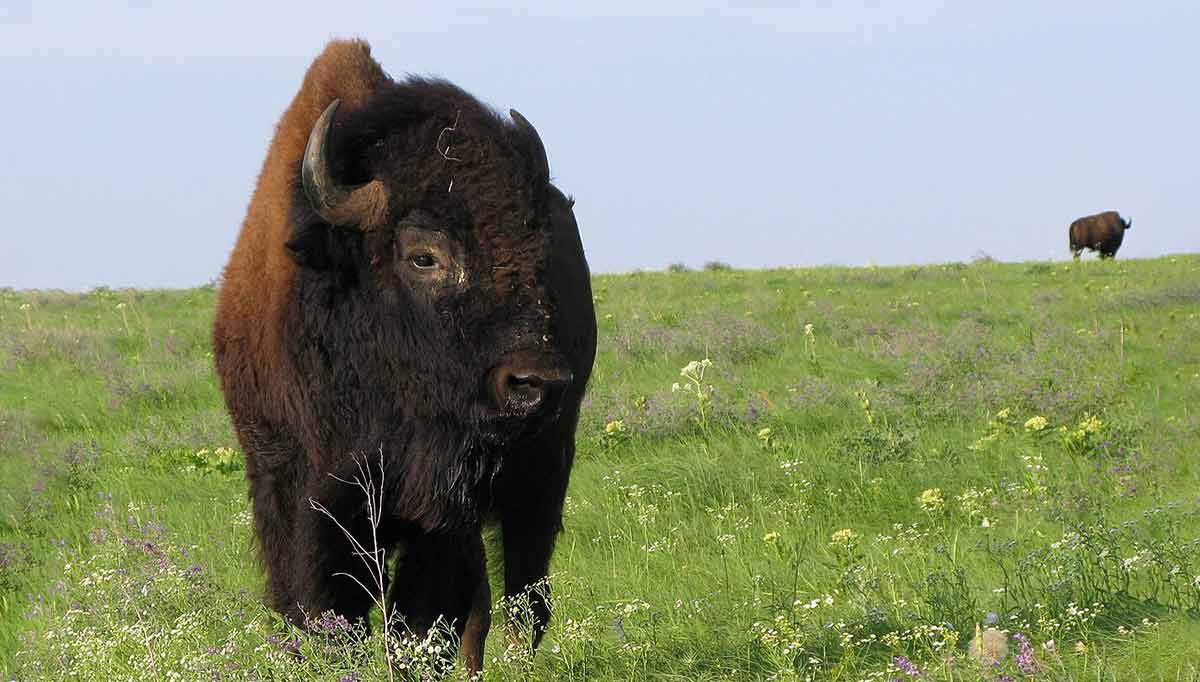
Now the National mammal of the United States, bison were omnipresent across the American Great Plains in the time before westward expansion. Biologists estimate that at one time 30-60 million of these majestic animals roamed America, outnumbering humans ten to one. These huge creatures were a driving ecological force in their natural habitat and are considered a “keystone species,” an organism that holds an ecosystem together. Without them, the natural environment changes drastically. Bison grazing, wallowing, and trampling affect the world around them and the other species that live in that system. They are an important protein source for large predators and scavengers, and their waste provides rich nutrients for the soil.
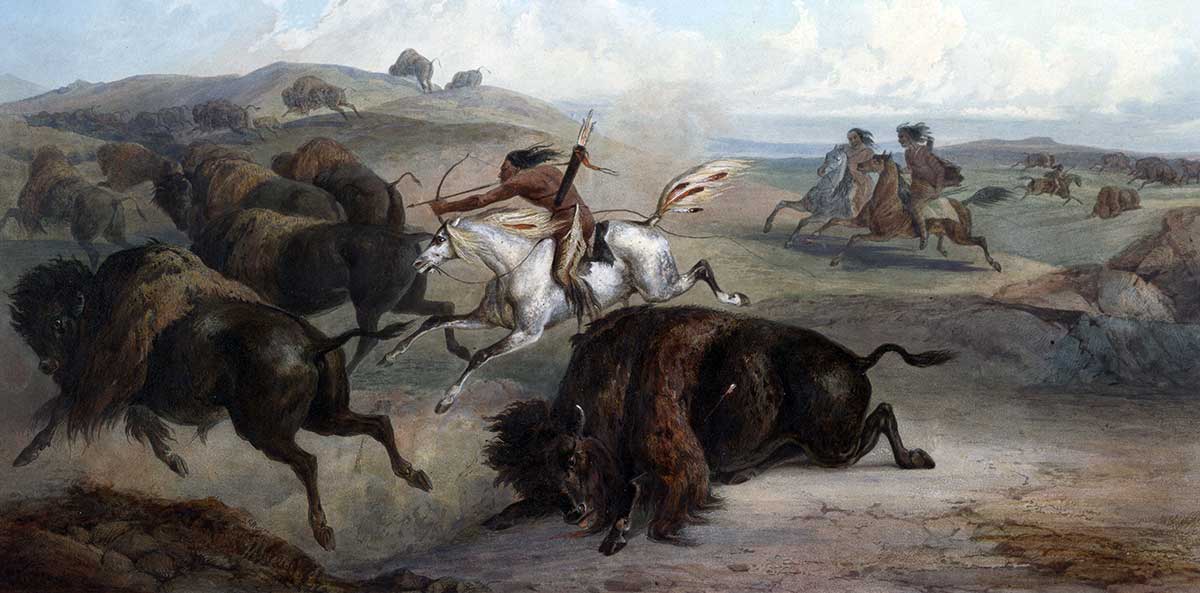
In addition to serving a vital role in the ecosystem, bison were of immeasurable importance to a number of Indigenous groups that called the Great Plains home. Tribes such as the Lakota, Cheyenne, and Arapaho relied on the bison for their survival, using every bit of the animal in some way, including food, shelter, tools, and clothing. How tribes connected to the bison varied, but the animals often played a role in ritual and ceremony, too.
How Industrial Demand & Railroads Accelerated the Destruction
In the early 1870s, a cheaper commercial process for tanning hides was developed in Europe, and it would contribute to the decimation of the bison herd. Tough bison hides were valued for making boot soles, industrial belts, and more. Tanning innovation made bison hides easier to process and sell, and demand for slaughtered bison jumped. The price for a hide surged from $0 in 1870 to $2.80 in 1871 (equivalent to working 17.5 hours at the average hourly wage), and the bison were easy to find.
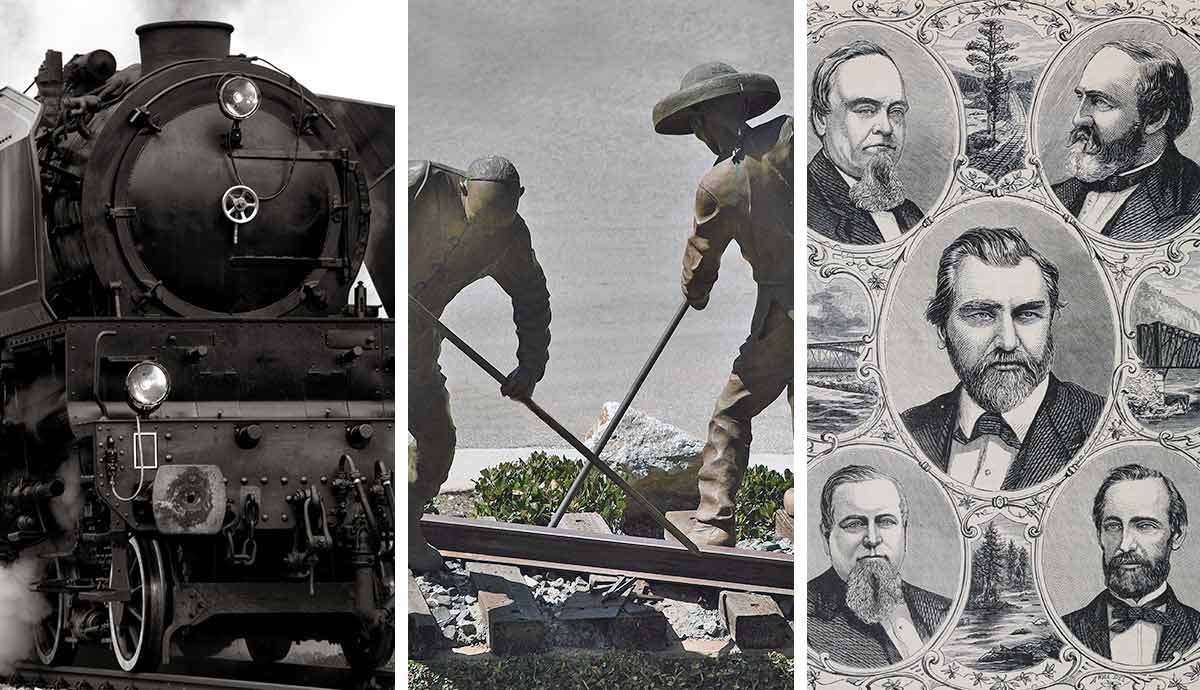
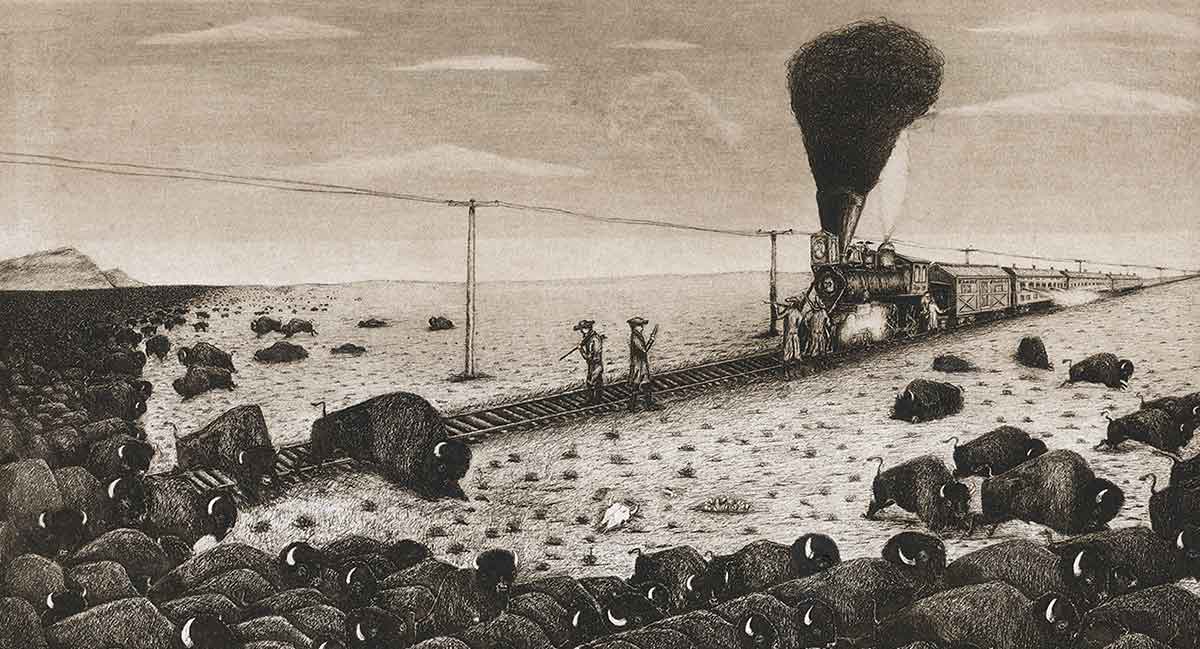
These now-profitable hides became easy to transport with the completion of the Transcontinental Railroad in 1869. The trains also brought legions of buffalo hunters west, with some train services slowing to allow passengers to shoot out the windows for sport, leaving wasteful carnage in their wake. Bison had the potential to be hit by trains, or the large herds could pause service as they loitered near the tracks or passed through. The train service eventually split the bison herd into smaller, weaker factions.
The Military Strategy to Subdue Native American Tribes
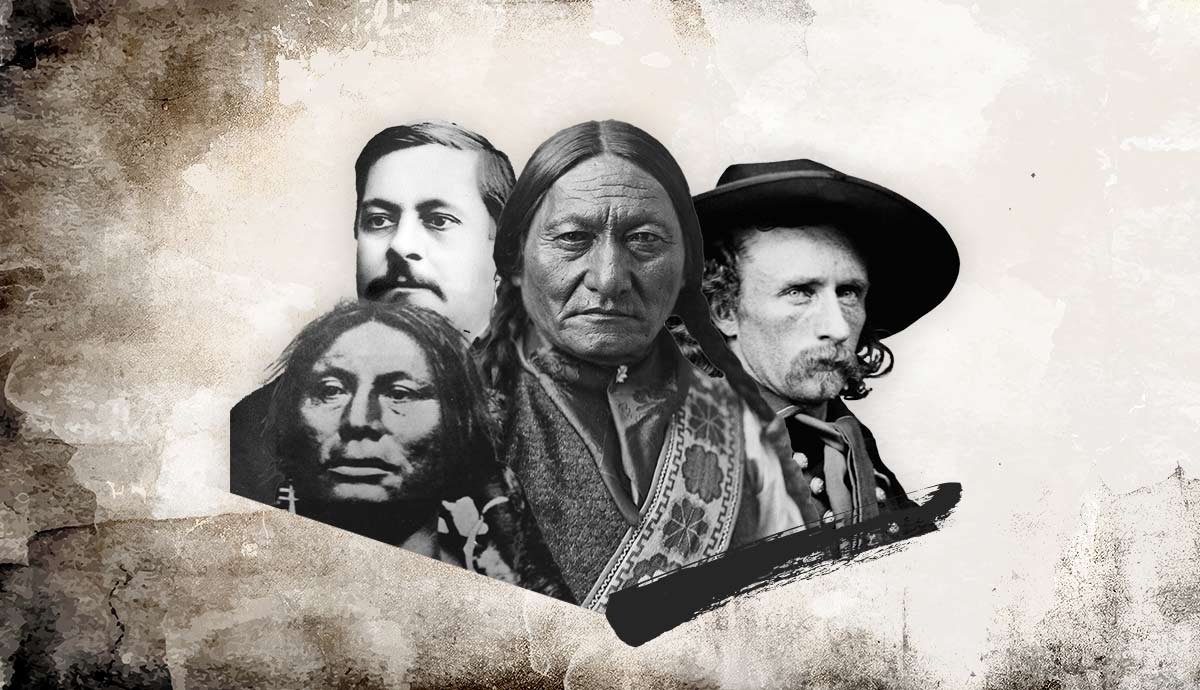
While conservationists saw the decimation of the buffalo as a tragedy, others saw benefits in the slaughter. At this time, the US military was pushing to subdue Indigenous peoples and confine them to reservations. Battles raged as tribes fought to hold onto their way of life, including events such as the Battle of the Little Bighorn (Greasy Grass).
When bills were proposed to create laws protecting the withering bison herd, many military officials stepped up to stop them. General Philip Sheridan maintained that the destruction of the herd would “…settle the vexed Indian question.” Without their main resource, the tribes of the Great Plains faced decimation themselves. Civil War Union hero William Tecumseh Sherman further supported the policy of resource destruction, much as he had against the Confederates in his March to the Sea, saying “the fastest way to force the indians into…a civilized way of life is…to shoot down the bison, until they are too few to sustain the redskins any longer.” President Ulysses S. Grant quietly supported this policy by using a pocket veto after Congress adjourned to avoid the implementation of HR 921, “A bill to prevent the useless slaughter of buffaloes within the Territories of the United States.”
The Catastrophic Aftermath & Fight for Bison Conservation
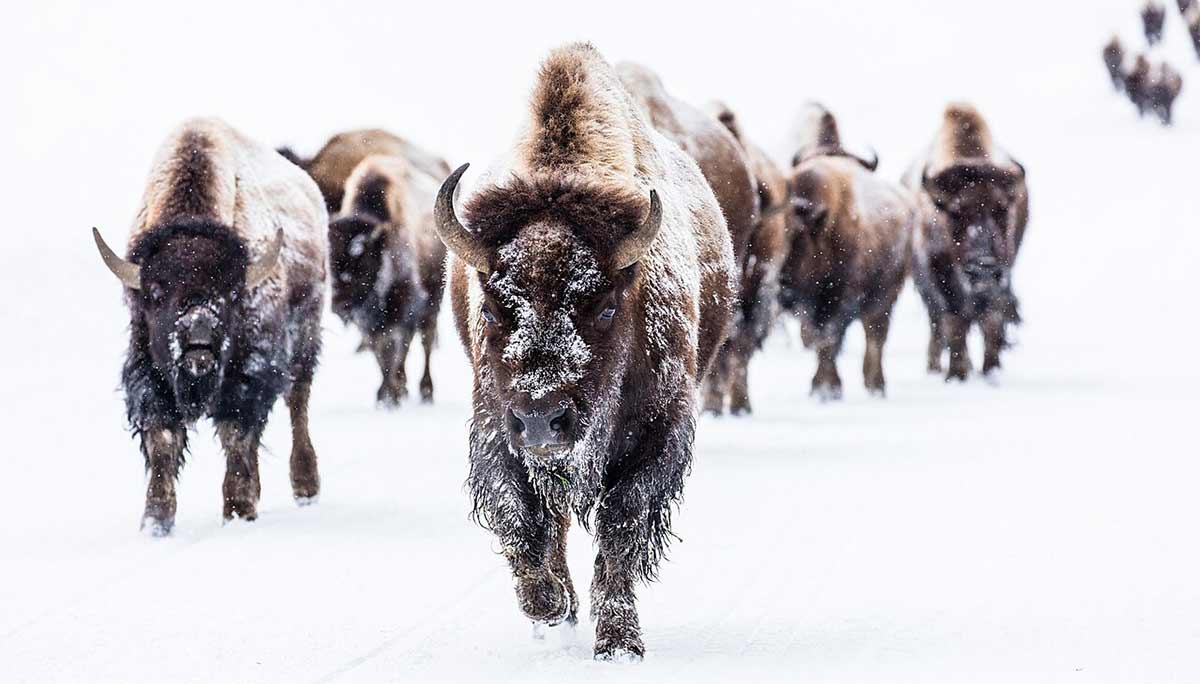
By 1889, only 512 bison individuals remained of the once thriving American herd. The decimation played a devastating role in confining Indigenous people to reservation life or leading directly to their demise.
In 1882, William T. Hornaday was appointed chief taxidermist at the National Museum (now the Smithsonian). Despite his role in history as a problematic racist, Hornaday became interested in the American bison herd and played a pivotal role in efforts to restore it. He orchestrated captive breeding programs that released bison back onto the Plains. By the 1930s, herd numbers were back up around 20,000, largely credited to the “Hornaday herds.”
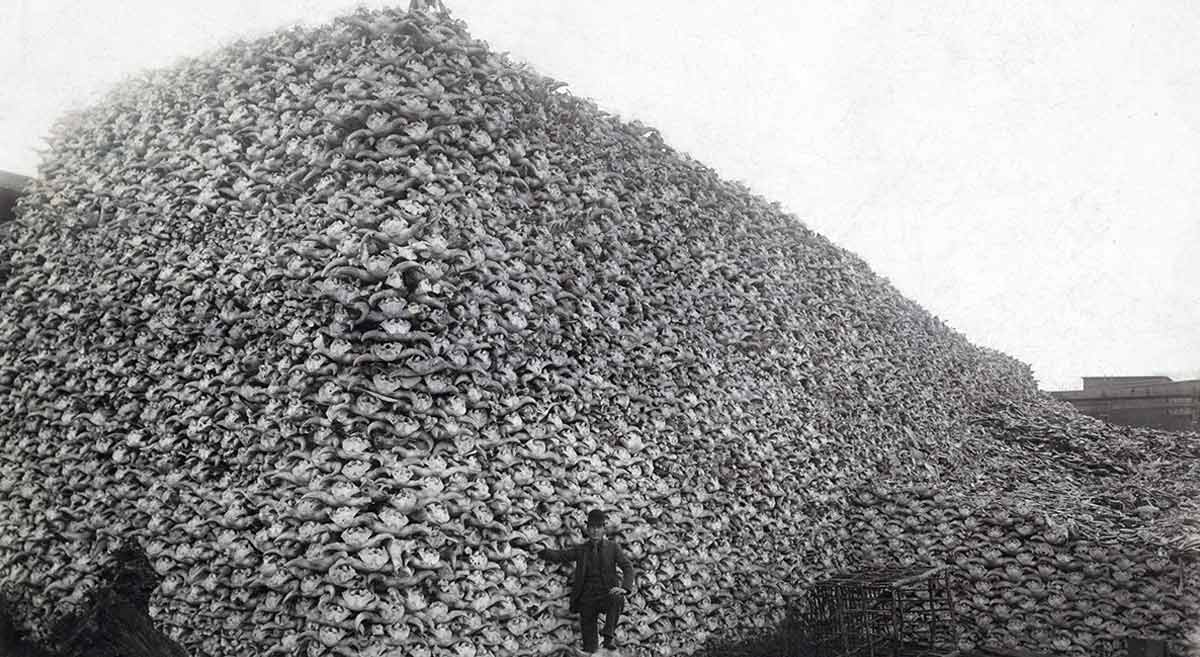
Today, bison are no longer considered in danger of extinction, with about 20,500 in wild conservation herds and over 400,000 being raised commercially. However, protection is still a priority concern for bison conservationists, facing issues such as the loss of genetic diversity and the introduction of domestic cattle genetics.