
When examining any book on the history of philosophy, it’s very common for Anaxagoras to be left out. However, he remains one of the most prolific thinkers in antiquity. Anaxagoras was a Presocratic Greek philosopher. He, just like his predecessors and contemporaries, had a lot to say about the universe and the world that we live in, and contributed greatly to his work. His major ideas emerged in response to Parmenides’ work because he disagreed with what Parmenides said.
Early Life
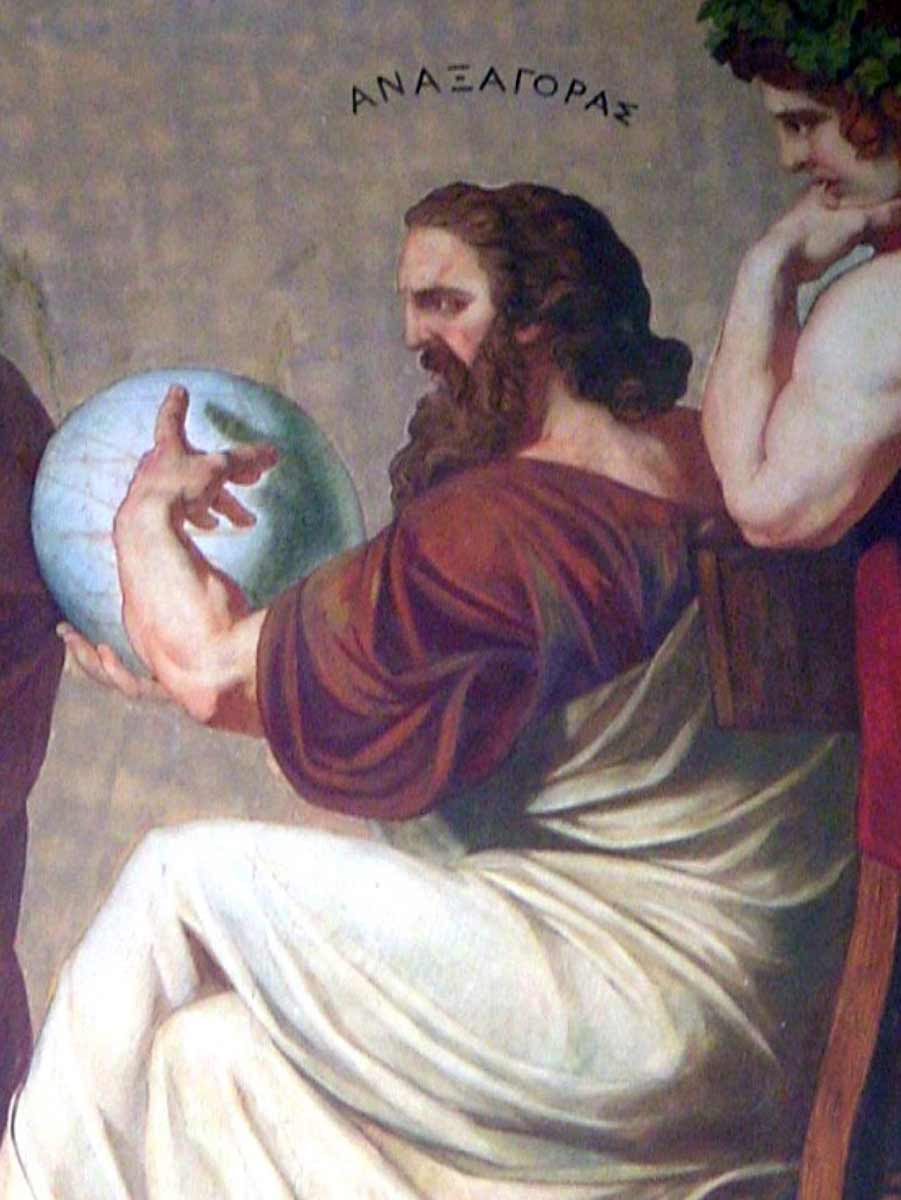
Anaxagoras was a pre-Socratic Greek philosopher born in Clazomenae, then part of the Persian Empire. The legend says that he was among the rarest of philosophers, if not the only one, who received a voice message telling him to become a philosopher.
According to the legend, he was only 17 years old when he first heard it, and he told only his mother, who truly believed in supernatural forces. She advised him to disregard it at first, as it may have been a bad spirit trying to lure him into a world of darkness. But she also advised him that if he hears it for a second time, then he should trust it. However, two days had not even passed when Anaxagoras heard the same voice again. So, he decided to follow it.
At only 20 years old, he decided he would go to Athens to fulfill his dream and prophecy. Some authors even say that although philosophy already existed in Athens at that time, Anaxagoras sparked people’s interest in learning it, and because of that, he contributed to Athens becoming the center of philosophical wisdom.
Before arriving in Athens, however, he decided to give up all the land and capital he had inherited from his father to his relatives so that he could dedicate himself fully to philosophy. Plato himself testified to that in his book Hippias Minor.
He also never married throughout his life and did not want to deal with any politics at all. At first, this was strange to many people because a lot of Athenians only cared about having a good time, surrounded by women and alcohol. However, he later became popular and accepted by everyone surrounding him.
Late Stage of Anaxagoras’ Life
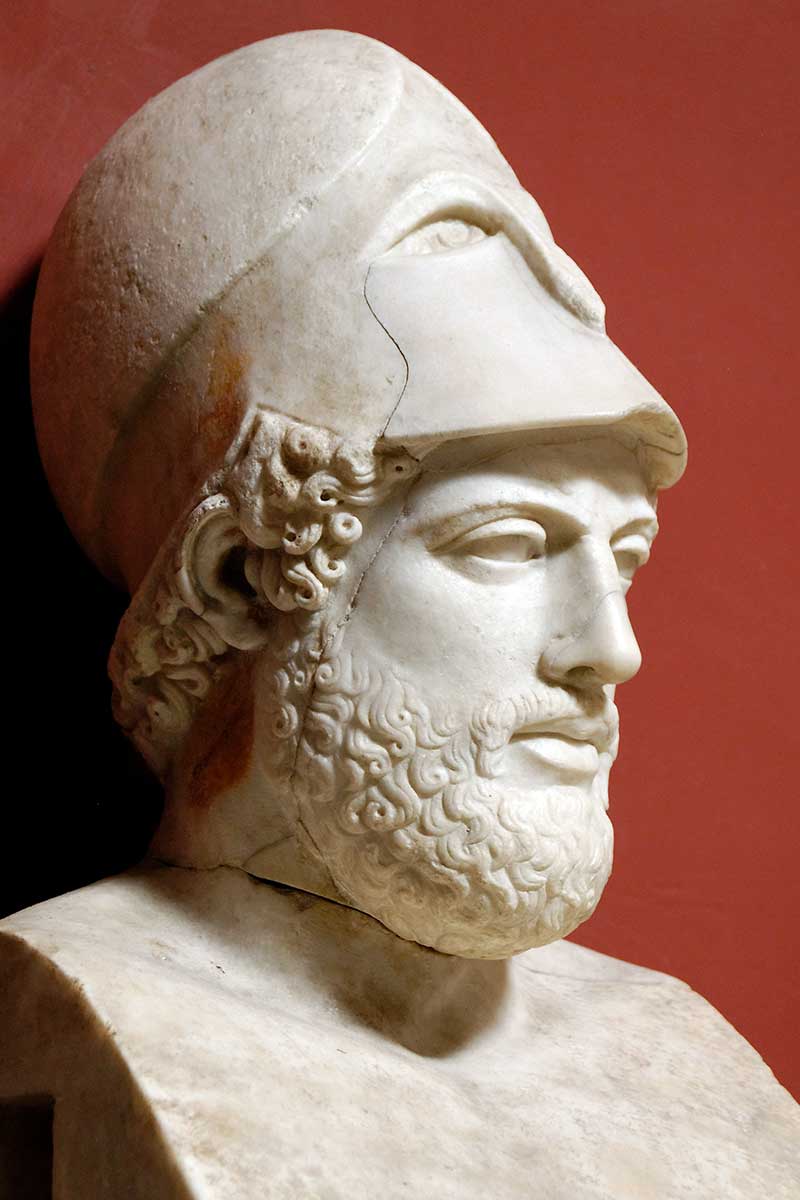
In another book, Plato also states that Anaxagoras was the tutor of the famous Greek politician and general Pericles, during the Golden Age of Athens. There are other sources that confirm that as well. But his relationship with Pericles also caused him a lot of trouble.
After 30 years of living in Athens, he was accused of spreading heretical teachings, namely that the sun is not a God but rather a burning, floating stone. Pericles had a lot of enemies at that time, and because of that, Anaxagoras was found guilty along with his pupil. In the end, however, his friendship with Pericles helped him escape prison, after which he left Athens.
After living in Athens, Anaxagoras moved to Lampsacus, where he founded his own school. His last wish was that the month of his death be declared a holiday for all pupils and students, which was later honored, as the famous historian and biographer Diogenes Laërtius wrote.
The Principle of Nous
Anaxagoras is one of the first philosophers who sought to explain the universe not through a myth or divine perspective but instead through natural principles and rational thought. Because of that, he is considered to be a pivotal figure in the transition from mythological to scientific cosmology.
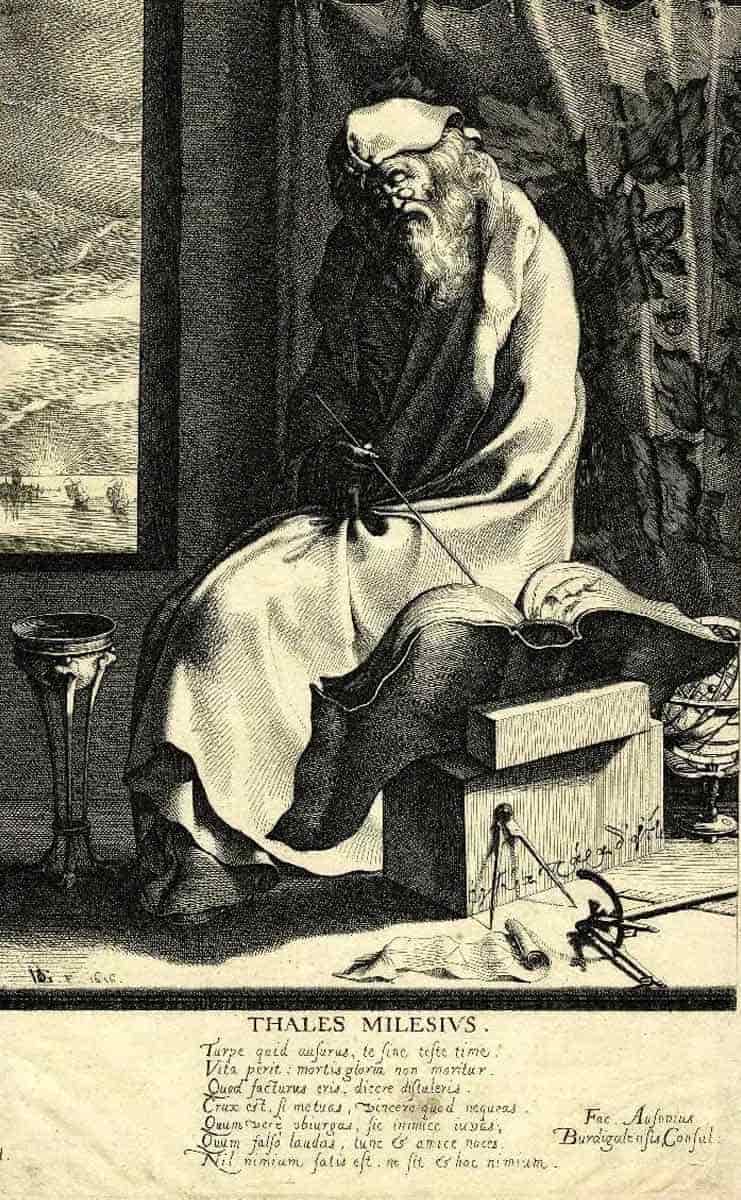
Unlike his predecessors, who emphasized a single, fundamental substance, such as water (Thales) or air (Anaximenes), Anaxagoras proposed a more complex and dynamic view of reality, one that embraced diversity and infinite complexity.
The concept of Nous is at the heart of Anaxagoras’ philosophy, which is why it’s essential to begin explaining his philosophy here. We can even say that the concept of Nous was among the earliest philosophical attempts to define an abstract, intelligent force as the origin of cosmic order. Anaxagoras saw Nous as the organizing and initiating principle of the universe. It is a pure, infinite, and independent entity that is distinct from matter.
The Principle of Nous as the Mind
Nous is pure and unmixed with any other substance, which allows it to remain distinct and to exercise control. It is not omnipresent in the sense of being everywhere equally, but it is the finest and most autonomous of all things, initiating motion without itself being mixed with anything else. It is rational, but Anaxagoras does not clearly attribute to it purpose or intention in a fully teleological sense.
Because Nous is the rational principle underlying cosmic motion and order, Anaxagoras describes it as “Mind,” and many interpreters follow him in doing so. However, this should not be understood as equivalent to a fully developed concept of mind or consciousness in later philosophical traditions.
Nous is also said to be present in living beings, particularly those capable of perception, but Anaxagoras does not clearly claim that it directly accounts for all life or consciousness. Its primary role is cosmological: it initiates and governs the original rotation that structures the cosmos. In this sense, it is more accurate to describe Nous as a cosmic ordering principle rather than a biological one.
Now let us see how this fits into the broader structure of Anaxagoras’ philosophy.
How Was the Universe Created?

It’s important to note that Anaxagoras was primarily interested in explaining how the universe, or cosmos, was created. Because of that, we can often find him classified as a cosmological philosopher. He thought that the universe started as a chaotic mixture of particles, and by “chaotic,” he meant it lacked any order or control.
In the beginning, Anaxagoras wrote, the universe was an indistinguishable, motionless mixture where all things (elements, substances, and properties) existed together in an undifferentiated state. There was no separation or order; they did not exist. All elements containing the matter were combined into one mass.
Anaxagoras called the elements “seeds.” So the question arises: how did this undifferentiated state begin to separate, and how did things come into existence? Well, this is where the principle of Nous comes into play.
Thanks to the principle of Nous, all these separate particles or “seeds” are orderly put, and later put into motion. This, said Anaxagoras, caused the creation of the cosmos through a process of rotation and separation.
The rotation caused differentiation, as particles began to separate according to their characteristics. So, particles with similar properties began to group together, forming distinct substances and objects. Furthermore, it’s important to mention that this process is ongoing and perpetual, as new combinations and forms constantly arise.
Anaxagoras vs. the Presocratics: Being, Change, and Motion Explained
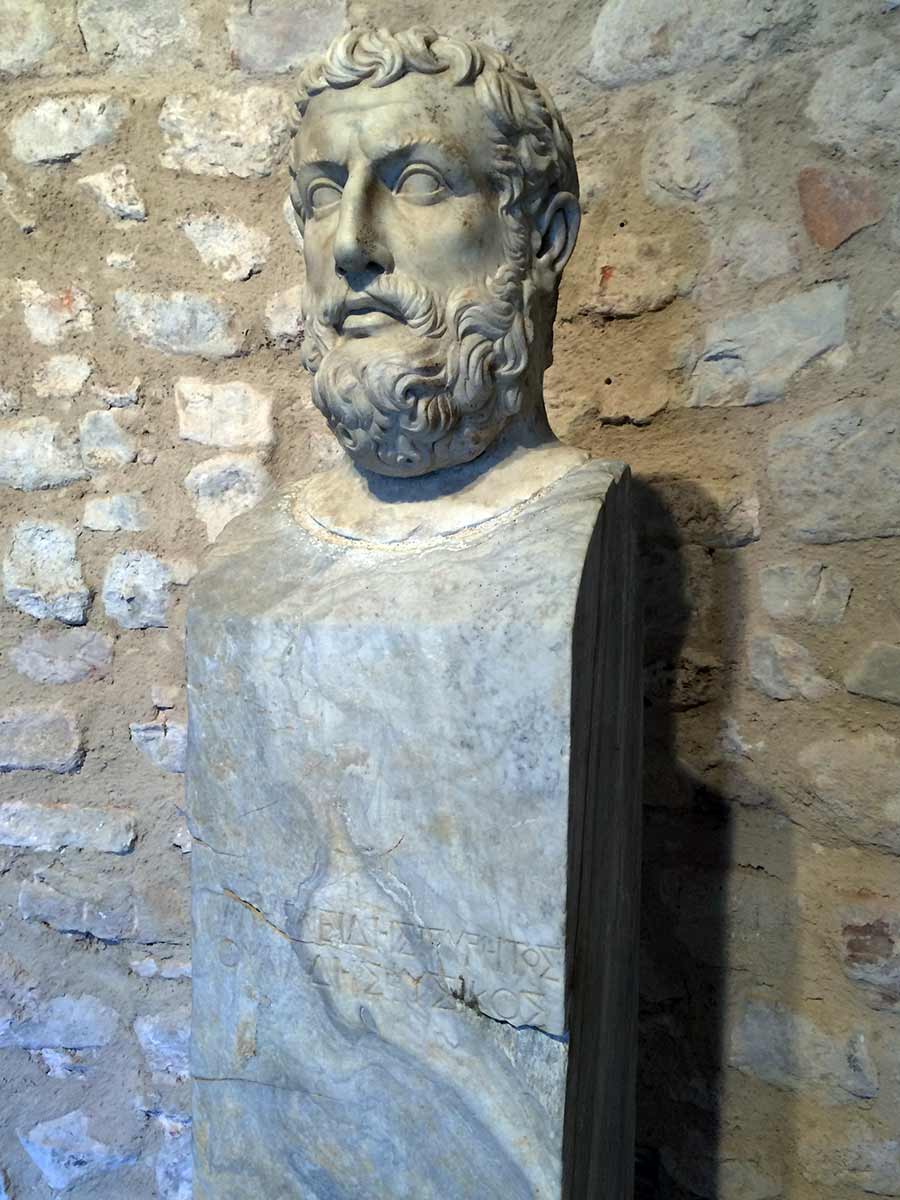
As mentioned at the beginning of the text, Anaxagoras’ philosophy stands in direct contrast to that of Parmenides or Zeno. Their theories are considered diametric opposites. But why is that? To answer that question, we would need to briefly review the philosophy of the other Presocratics.
Parmenides was the founder of the Eleatic school of thought, also known as the Eleatics. Just like Anaxagoras, he was also interested in exploring the universe and trying to get to the bottom of the underlying principle of the world. He thought that reality is one being only, and is in fact The One.
The One is the ultimate being that exists, and everything in the world is within The One. The One is also conceived as homogeneous, without any parts or distinctions. Parmenides firmly rejected the existence of plurality, claiming that any notion of multiplicity in the world is illusory.
On the other hand, Anaxagoras claimed that reality is fundamentally pluralistic. As we showed, the universe according to Anaxagoras consists of infinite particles, and as a testament to that, we have the multiplicity of objects and things in the world surrounding us.
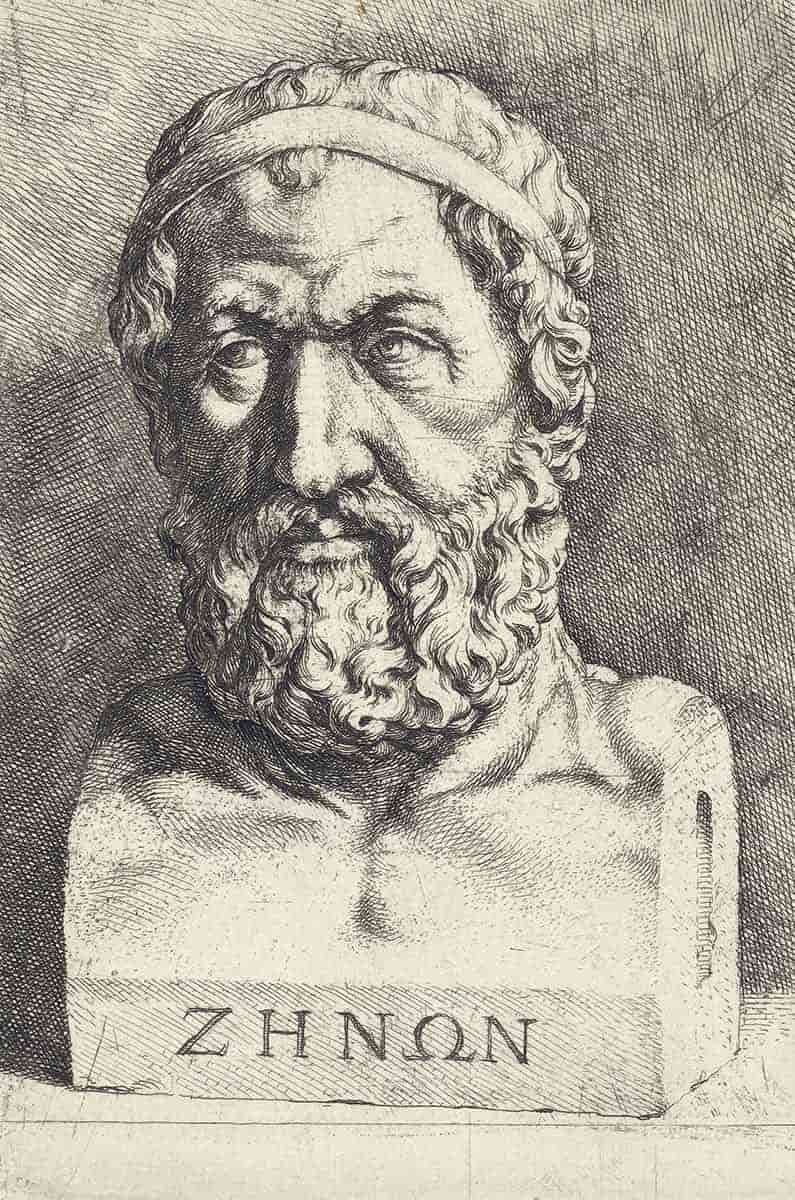
Their teachings also differ in their views on change and motion. Parmenides denied the reality of change. He thought that change does not exist in the world and that things are just the way they are from birth till death. He famously stated that “what is, is, and cannot not be.” What he means by that is that reality is a single, unchanging, and eternal “being.”
On the other hand, Anaxagoras embraced the notions of change and motion in his philosophy by seeing them as real and fundamental drives in the cosmos. In this sense, we can even say that Anaxagoras had a similar conception to Heraclitus, who is often referred to as the philosopher of change.
Another important point is that Parmenides rejected the idea of motion, claiming that motion is impossible because it implies the existence of “non-being,” which cannot exist. This is later elaborated even further in Zeno’s philosophy, Parmenides’ pupil. But Anaxagoras opposes this view as well, stating that motion is real and essential to the cosmos. He introduced Nous as the force that initiates and sustains motion, causing the separation and organization of the initial mixture.