
If you visit Europe today, you are likely to come across the ruins of some ancient Roman structure that looks like it should not have survived for around two millennia. But the Romans knew how to build things to last. They were prolific builders, from the functional, such as roads and aqueducts, to the aesthetic, such as temples and commemorative monuments. This article examines the artistic, architectural, and aesthetic strategies used by the Romans to both expand their Empire and project its ideological grandeur.
Classical Inspiration
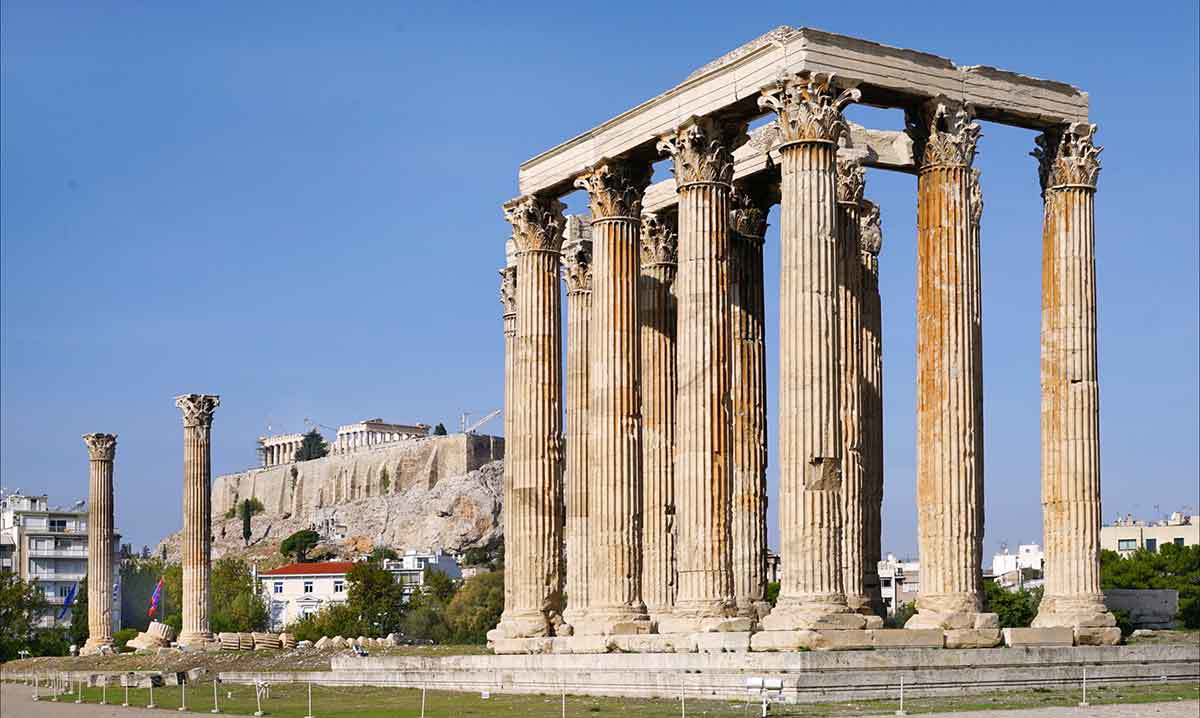
It would be remiss to talk about Roman aesthetics and not mention the Greeks. The Romans were heavily influenced by Greek designs during the Republic. The earliest example of this is the adoption of the Post-and-Lintel system. This basic system uses vertical columns topped with horizontal beams. This was a foundational concept that the Romans used for their public buildings. The tops of the columns were carved in Doric, Ionic, or Corinthian styles, which also originated in Greece. Eventually, the Romans began combining the styles and even created two unique Roman styles: Tuscan and Composite.
What the Romans also loved about Greek architecture was their emphasis on symmetry and proportion. The Romans took it further, however, using mathematical proportions and geometric constructions, often based on the square, to ensure balance and harmony. They built most of their temples with this idea in mind. They were rectangular in shape, and certain architectural elements—doorways, apses, columns—always appeared opposite each other. A great example of this symmetrical beauty is the Pantheon.
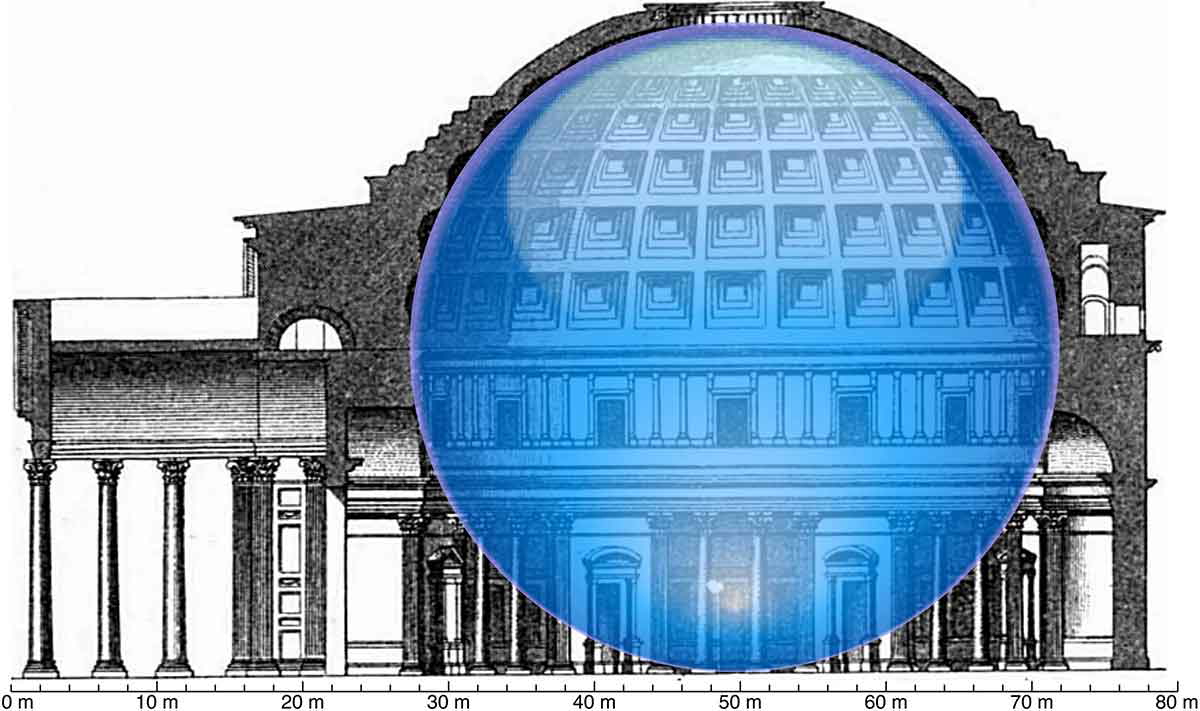
Built in about 27 BCE by Marcus Agrippa, Augustus’ right-hand man, and then rebuilt by emperor Hadrian in 126 CE, the interior of the Pantheon can perfectly fit a sphere within its walls. This is because the height of the rotunda (from the floor to the oculus) and the diameter of the dome both measure exactly 142 feet. In addition, the façade exhibits classic bilateral symmetry, where the left and right sides are mirror images of each other. Lastly, there are seven niches in the rotunda to house the seven planetary deities (Mercury, Venus, Mars, Jupiter, Saturn, Uranus, and Neptune); three pairs directly facing each other, with the central niche facing the main entrance. The use of symmetry creates a sense of equilibrium and grandeur, reflecting the stability and permanence of Roman authority.
Colossal Structures
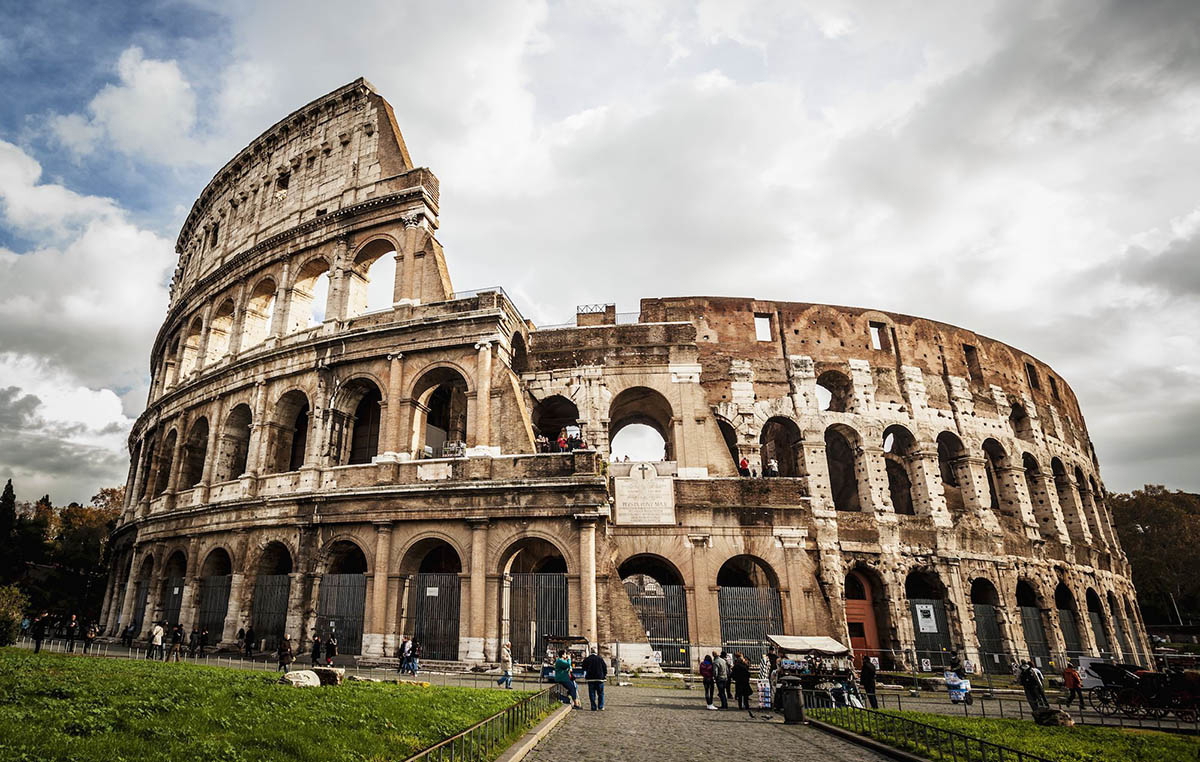
Romans built everything from temples to arenas to bathhouses on a colossal scale, and they did so for several reasons. As the borders of the Empire expanded, the urban populations grew, which drove a need for more large-scale infrastructure. Rome adapted new designs for its infrastructure, including domes, vaults, and arches. These features allowed ceilings to be built much higher than ever before without the risk of caving in.
Some examples of massive public spaces include the Flavian Amphitheater. Known today as the Colosseum, it was built after the Roman victory in Jerusalem in 70 CE. The spoils of war brought more people under Roman rule, so when Emperor Vespasian wanted to build a public entertainment venue, he knew it had to be large and extravagant. The result was the grandest amphitheater in the empire. Originally 615 feet at its widest point and 157 feet tall, it could seat between 50-80,000 people.
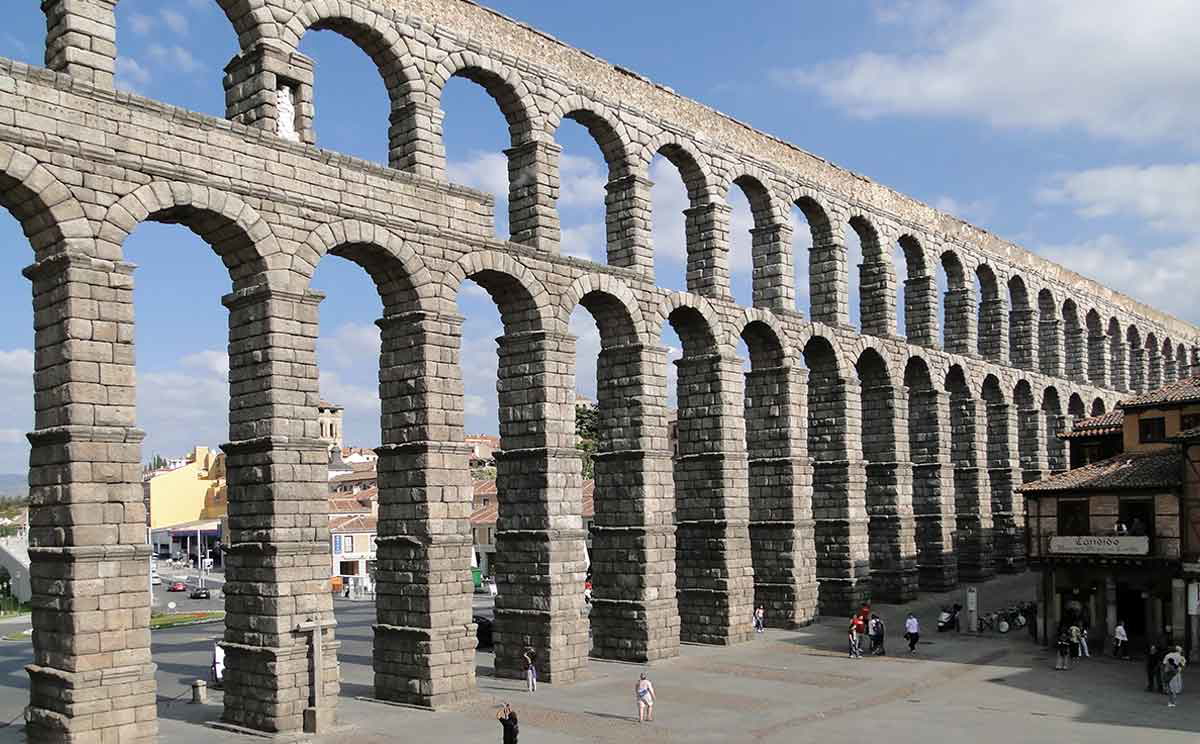
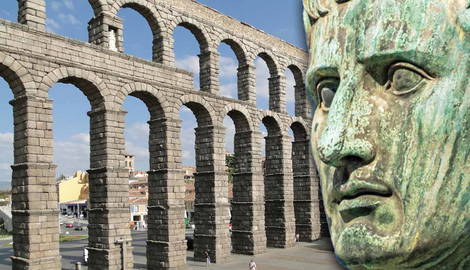
Other Roman structures that were not just massive but also served a practical function were aqueducts. The first aqueducts were built three centuries before imperial Rome, but the population growth in the subsequent centuries brought greater demand for clean water. This led Emperor Augustus to build at least three major aqueducts during his reign alone, including the Aqua Virgo, which still supplies the iconic Trevi Fountain today. By the late imperial period (c. 250–450 CE), the Romans had built over 200 aqueducts throughout Europe, Africa, and Asia Minor.
While functional, the massive scale at which Roman infrastructure was built also sent an underlying message, one of wealth and intimidation. Building such large, extravagant structures was not cheap. Foreigners in Rome for the first time, seeing enormous structures, such as the Colosseum or the Pantheon, made out of the finest materials, would easily get the impression of how rich and powerful the Roman civilization really was. They also constantly used the same materials (often luna marble) to give a sense of uniformity throughout all the territories of the Empire.
Extreme Ornamentation
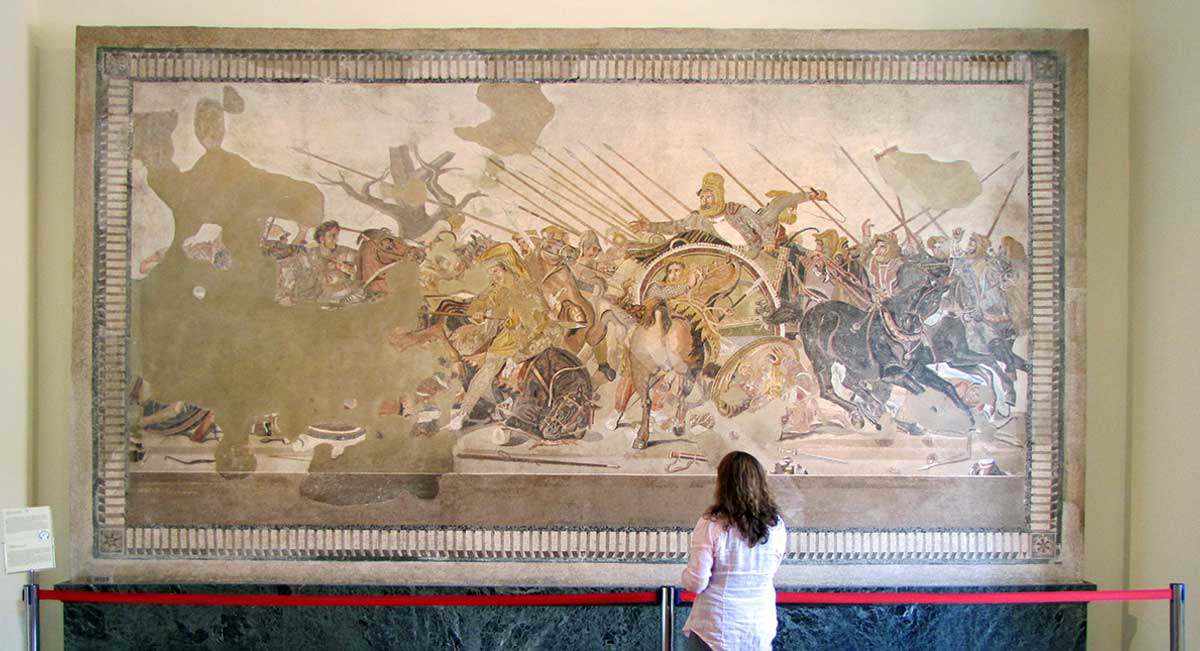
Not only did the Romans build almost everything on a large scale, but they also went above and beyond with their artwork, both public and private. Intricate carvings, mosaics, frescoes, and reliefs were used to enrich surfaces and tell stories, often with motifs such as human figures, mythological scenes, and laurel wreaths.
In the domestic sphere, particularly in wealthier households, large frescoes were prominent. These not only reflected the owner’s wealth and status, but also showed that they were cultured and educated; something the Romans took very seriously. In the Villa of Mysteries in Pompeii, one of the rooms is completely adorned with a scene of a bride being initiated into a Bacchic mystery cult. Similarly, in the House of the Faun, also in Pompeii, a large floor mosaic depicts a battle between Alexander the Great and the Persian forces of Darius III.
Public architecture was similarly decorated with such mosaics and carvings. As well as depicting myths, sculptural reliefs and monumental inscriptions commemorated the military victories of Rome’s great generals and reinforced the power and position of the emperor.
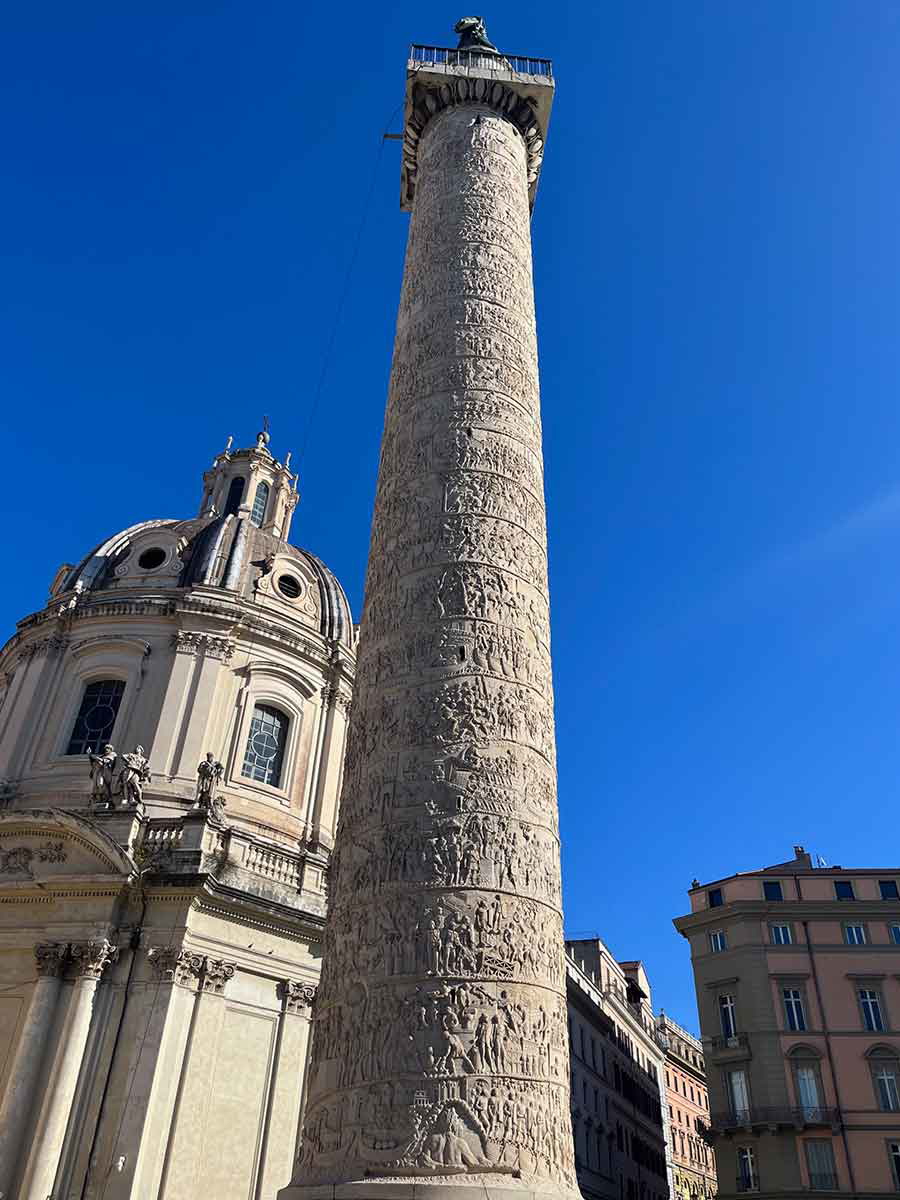
Built as a monument and a tomb for Emperor Trajan, his column in Rome stands over 100 feet tall and features a 200-yard-long frieze wrapped around it from top to bottom. The frieze contains more than 2,000 individual figures, creating a continuous, overwhelming, and intricately detailed narrative of the war against the Dacians.
Art as Propaganda
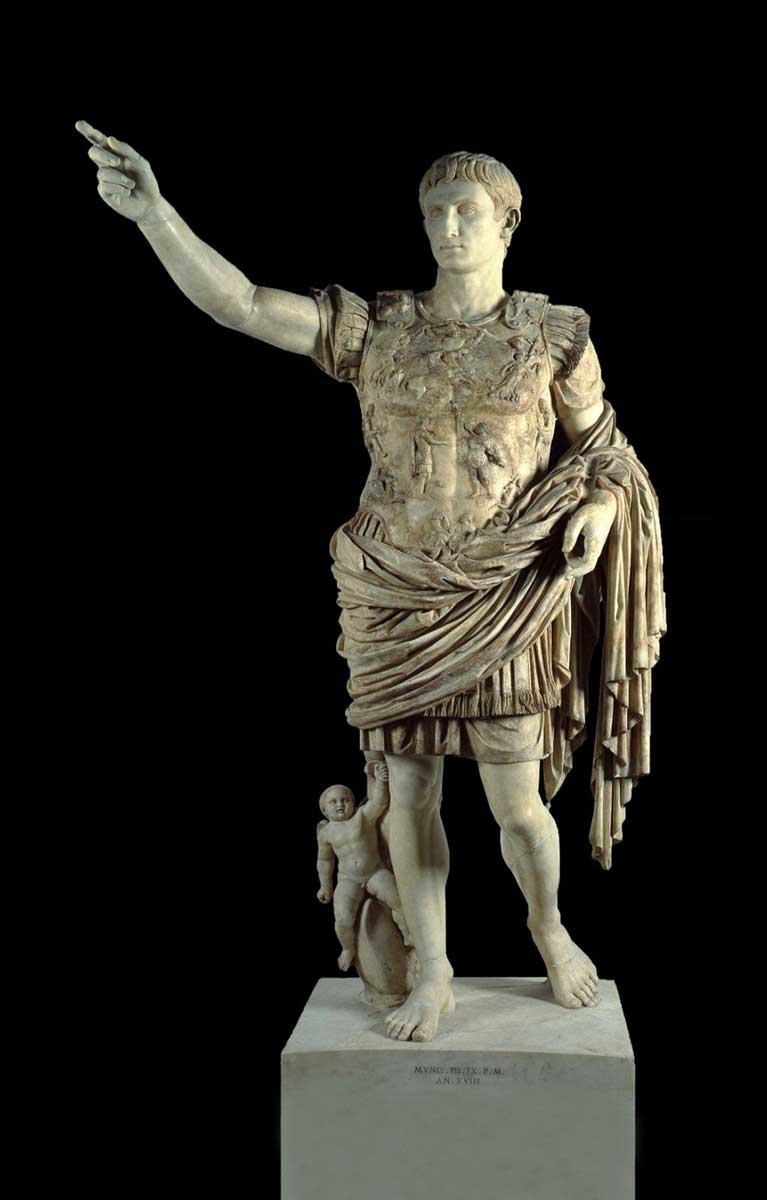
One of the most commonly studied themes in Roman art is how it was used as imperial propaganda. Many emperors commissioned grand statues, monuments, reliefs, and other media to highlight their attributes and paint them in the best light possible. It was quite popular to even depict them in a godlike manner. After all, in the eyes of the Romans, emperors were linked with the divine, so they should be portrayed as such.
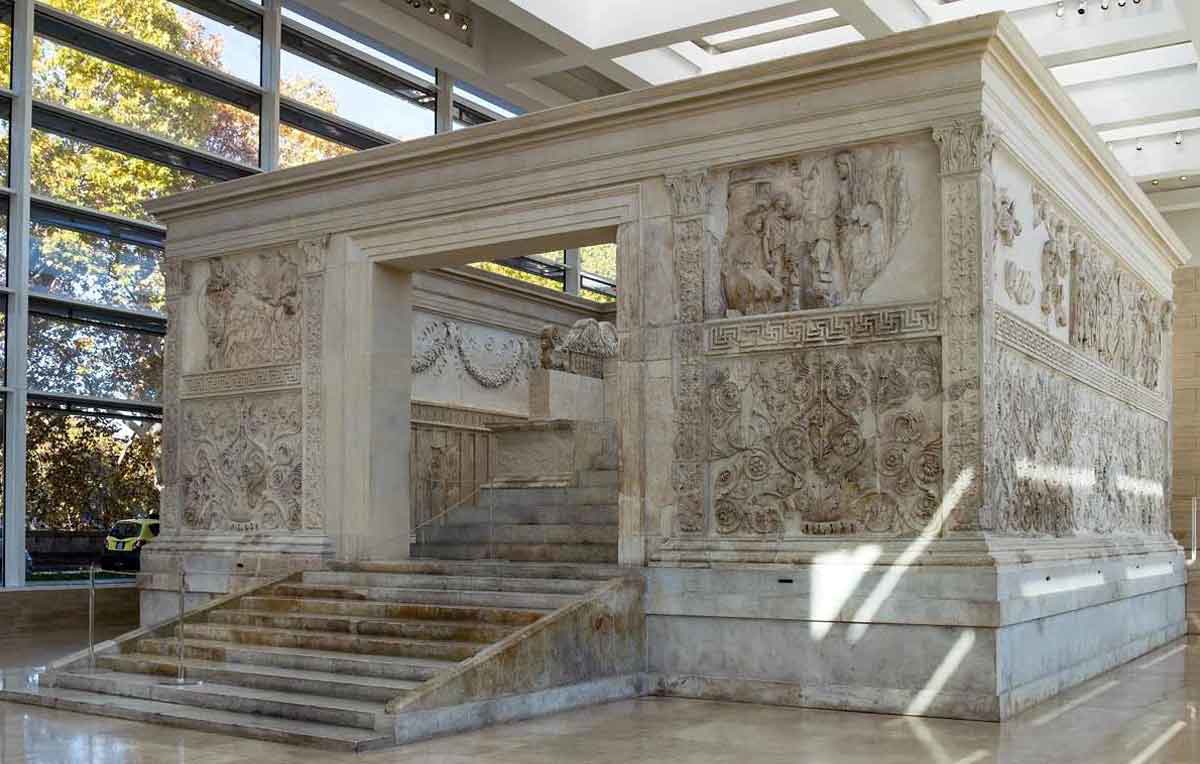
Emperor Augustus was very well known for this. The statue Augustus of Primaporta is an imposing work of art showing an idealized version of the first emperor: a strong, young soldier touched by the divine. Its message is crystal clear. Augustus also built the Ara Pacis, or Altar of Peace. He dedicated it to the people of Rome and to the new era of peace he ushered in after a period of civil chaos. The panels on the outside show the benevolent Augustus leading a religious procession, accented by scenes depicting peace and abundance for Rome. Augustus built such grandiose monuments so the people would not forget who “saved” Rome from ruin and dedicated his life to the prosperity of the Empire.
Some statements were not as obvious. The Arch of Titus, built after 81 CE, details Emperor Titus’ victory over the Jews in Jerusalem. The meaning of the art on the inside panels showing Romans carrying off treasures from Jerusalem is unmistakable. But the placement of the arch along the Via Sacra is interesting. It is situated at the highest point of the Via Sacra, where the Flavian Amphitheater, built by Titus’ father, meets the Roman Forum, almost connecting the two both geographically and metaphorically.
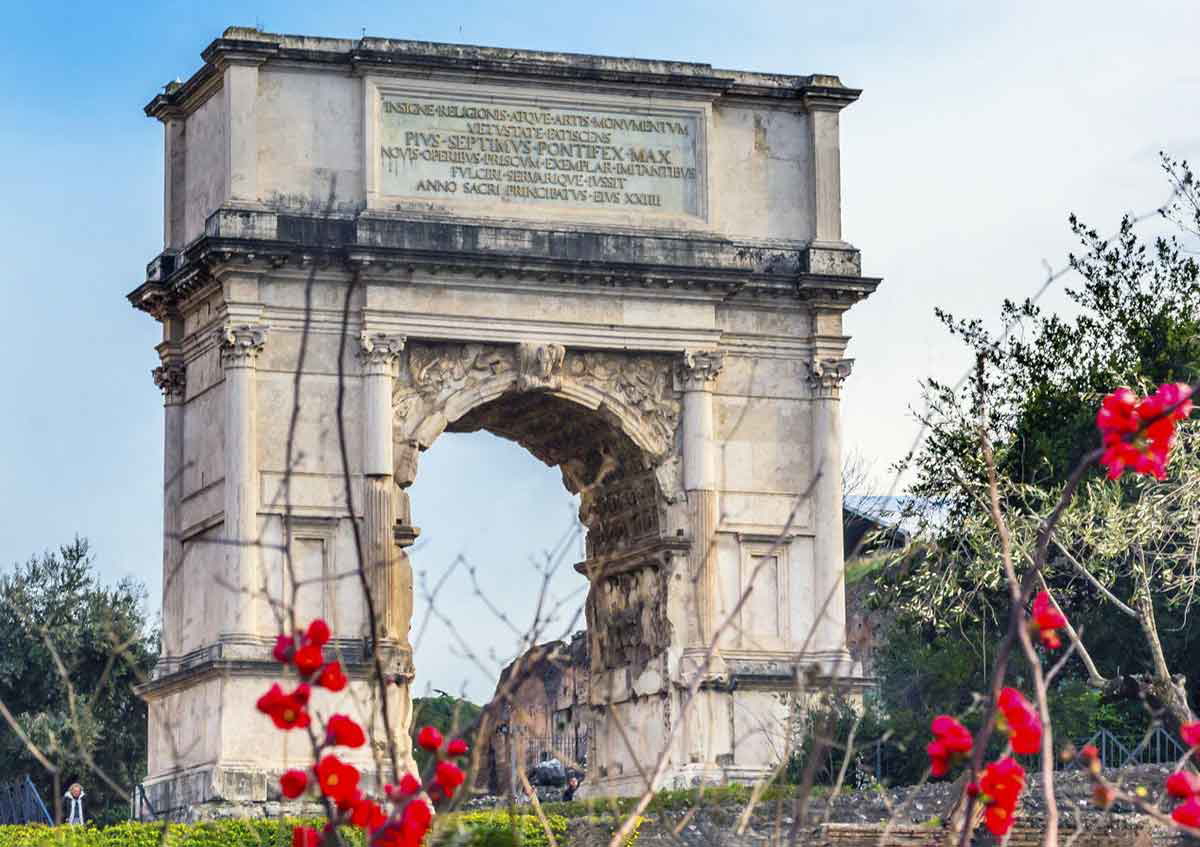
This also means that triumphal parades had to march past the Amphitheater and through Titus’ Arch on their way to the Capitoline Hill and therefore behold the glory of the Flavians. This subtle power move garnered respect and legitimacy for the Flavians at a time when they were still relative newcomers to the Roman power structure.
Use of Spolia
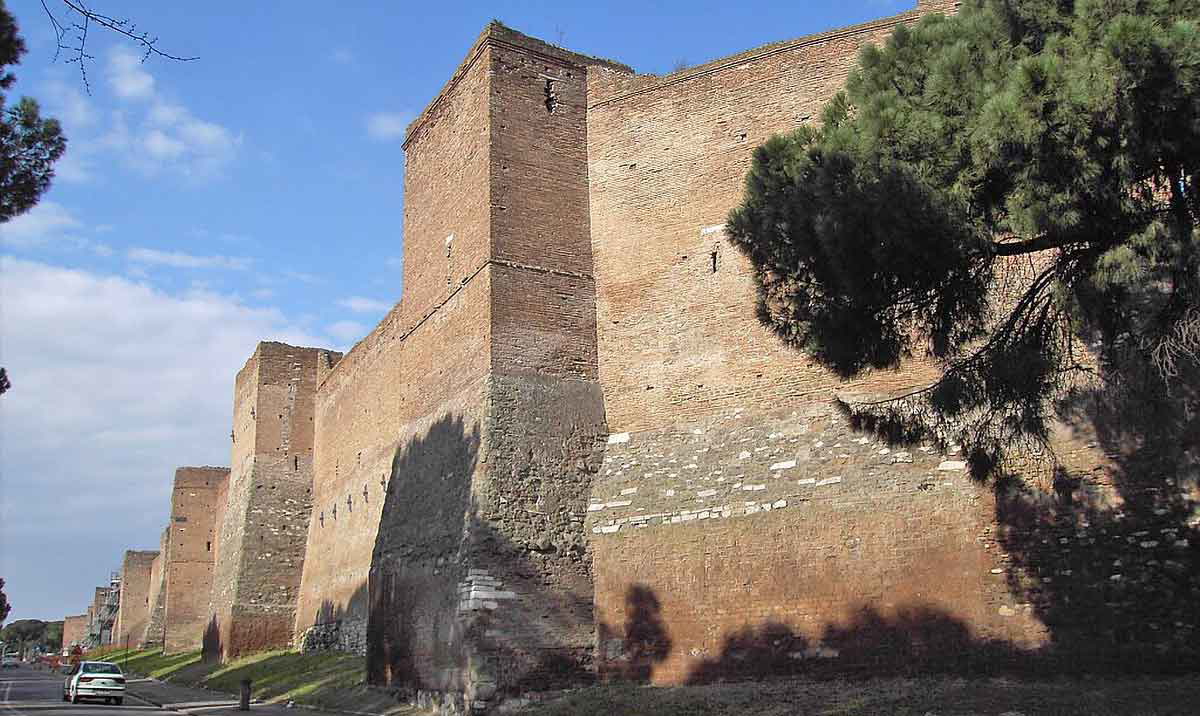
In late antiquity, Rome was declining economically, shifting culturally, and facing possible attacks from barbarians to the north. Money and resources to construct defensive fortifications were sparse, let alone those needed for grand art projects. Romans took to repurposing old building materials—called spolia—to construct necessary infrastructure.
Built between 271-275 CE, the Aurelian Wall was constructed to deter the threat of barbarians in the north and to reinforce Emperor Aurelian’s authority. The Romans decided to incorporate pre-existing buildings into the wall, including the Amphitheatrum Castrense, the Castra Praetoria, the Pyramid of Cestius, and sections of the Aqua Claudia aqueduct. Not only did this decision expedite the project and reduce construction costs, but it was also symbolic of Rome’s adaptability in times of crisis.
But spolia was not just used for military reinforcements. As Rome was transitioning from the glorious Empire of antiquity to the smaller, Christian Rome of the Middle Ages (c. 476-1520), art and architectural features of the past were being recycled for use in new structures, especially churches. The Basilica di Santa Maria in the Trastevere neighborhood contains 22 massive columns taken from the nearby Baths of Caracalla, some of which still depict heads of pagan deities. The original St. Peter’s Basilica was also built using columns taken from older Roman buildings. Not to mention the red porphyry baptismal font in St. Peter’s was the lid to Emperor Hadrian’s sarcophagus, and later to the sarcophagus of Emperor Otto II.
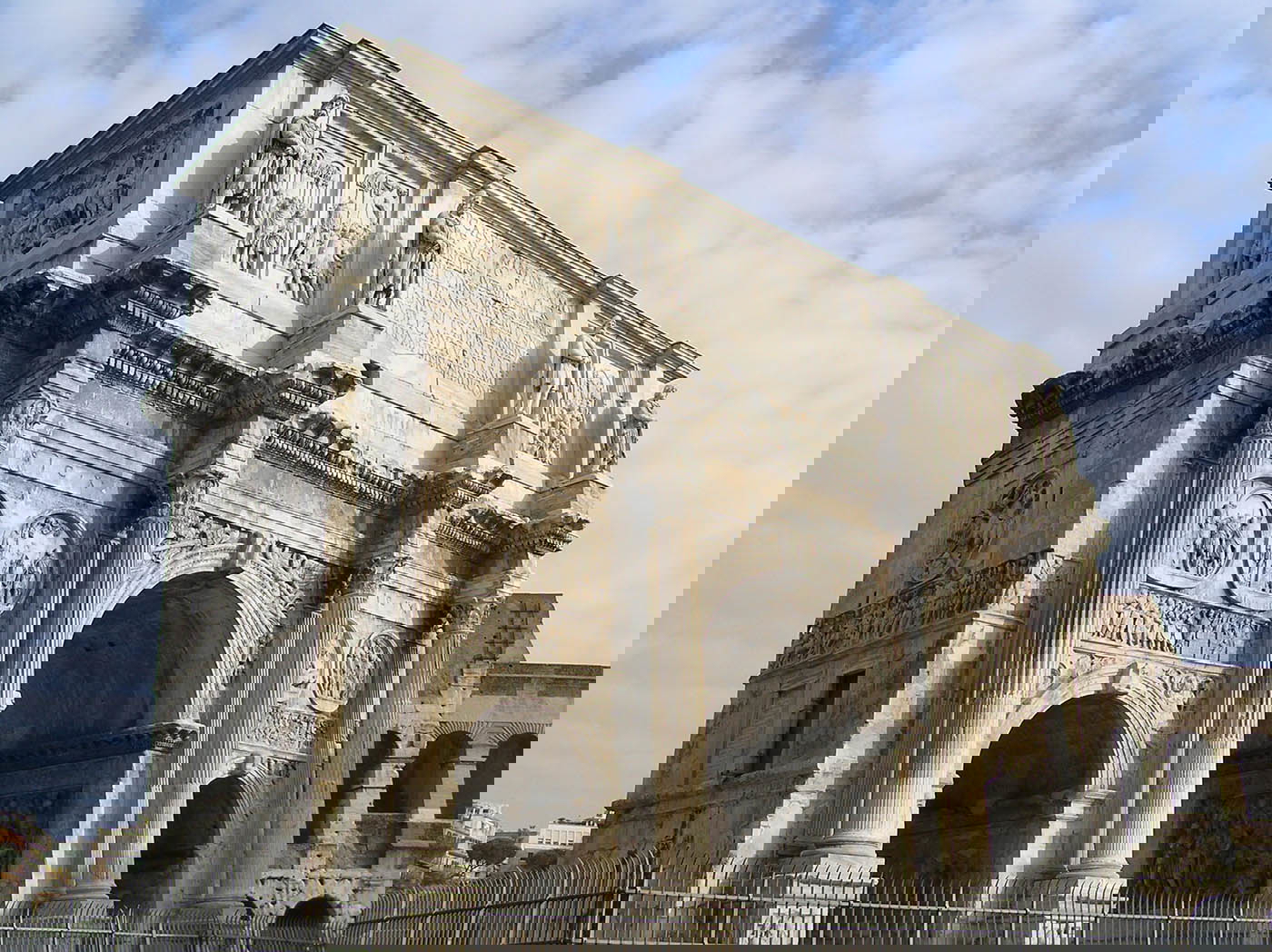
Spolia was also used in imperial monuments not just to save money and resources, but also for emperors to link themselves to great rulers of the past. The Arch of Constantine (315 CE) is a great example of this. Builders lifted entire sculptural panels from earlier monuments dedicated to Antonine Emperors, also known as the “Five Good Emperors,” and incorporated them into this new arch; very few parts were specially sculpted for the arch. Many of the past emperors’ faces were even re-carved to resemble Constantine. By doing so, Constantine was able to present himself as a living continuation of the most successful Roman emperors, renowned for their military victories and good government.
Much ink has been spilled on understanding Roman aesthetic and architecture, but in summary, they weren’t minimalists. In the early years of the Empire, they spared no expense on public art projects. Whether it be to beautify cities, intimidate enemies, or simply solve new problems, nearly everything was designed to be both functional and aesthetically imposing. Roman art and architecture reflected the values of an Empire that sought to organize, control, and commemorate its world. In that, they certainly seem to have been successful, leaving a lasting impact that continues to shape art and architecture.