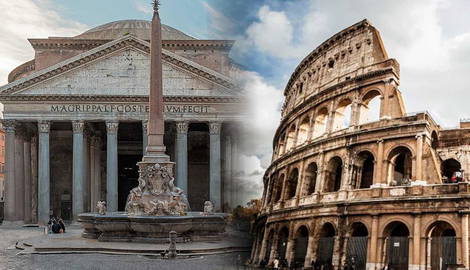

Rome, the heart of the Roman Empire from 27 BC to 476 AD, hosted some of the world’s most monumental structures. From arenas to temples, many of these buildings survive today thanks to restoration, repurposing, and creative adaptation. This article explores five ancient Roman monuments that have endured from empire to modern-day attraction.
1. Castel Sant’Angelo
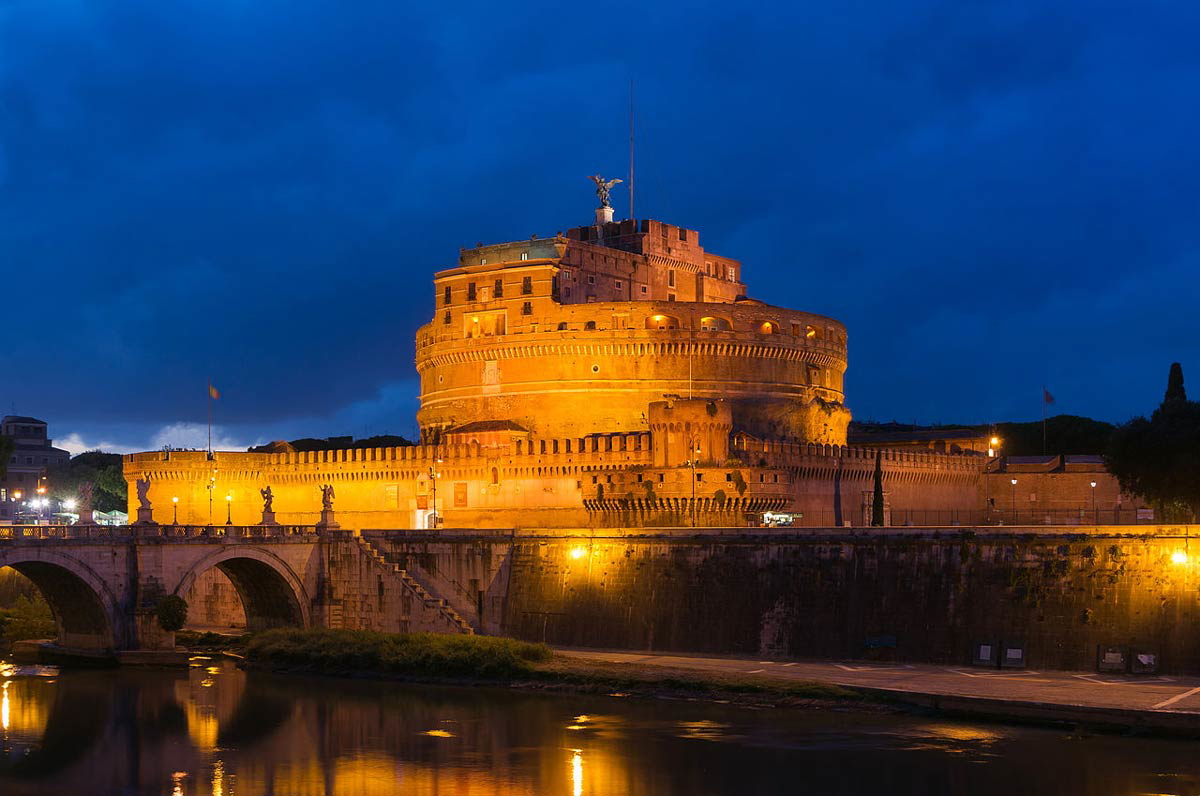
Looking at this beautiful castle, one might assume that Castel Sant’Angelo, or the Castle of the Holy Angel, was a Medieval fortress before becoming the museum it is today. While it did serve as a fortress in Medieval times, it is much older—built around 135 AD during the reign of Emperor Hadrian as a colossal mausoleum for himself and his family.
The tomb’s primary architect was Decriannus, who took inspiration from the Mausoleum of Augustus (still visitable today) and, in turn, the tomb of Alexander the Great. This pattern of emulating past monuments was common in ancient Rome, signaling continuity with great rulers. Many emperors and their wives were later laid to rest in Castel Sant’Angelo, including Marcus Aurelius and Caracalla, though their remains are no longer there.
After the fall of the Western Roman Empire in 476 AD, the castle’s strategic location on the Tiber River and its massive structure made it a natural point of defense for the papacy. Over the centuries, it was transformed into a fortress. Today, it still contains the Passetto di Borgo, a concealed passage connecting the Vatican to the castle, and even features a baptismal font in St. Peter’s Basilica repurposed from a sarcophagus lid, possibly Hadrian’s.
Castel Sant’Angelo at a Glance
- Built: 135 AD, Emperor Hadrian
- Original purpose: Mausoleum for Hadrian and family
- Architectural influence: Inspired by Mausoleum of Augustus and Alexander the Great’s tomb
- Later adaptation: Fortress for papacy; connected to Vatican via Passetto di Borgo
- Modern use: Museum open to the public
2. Baths of Diocletian
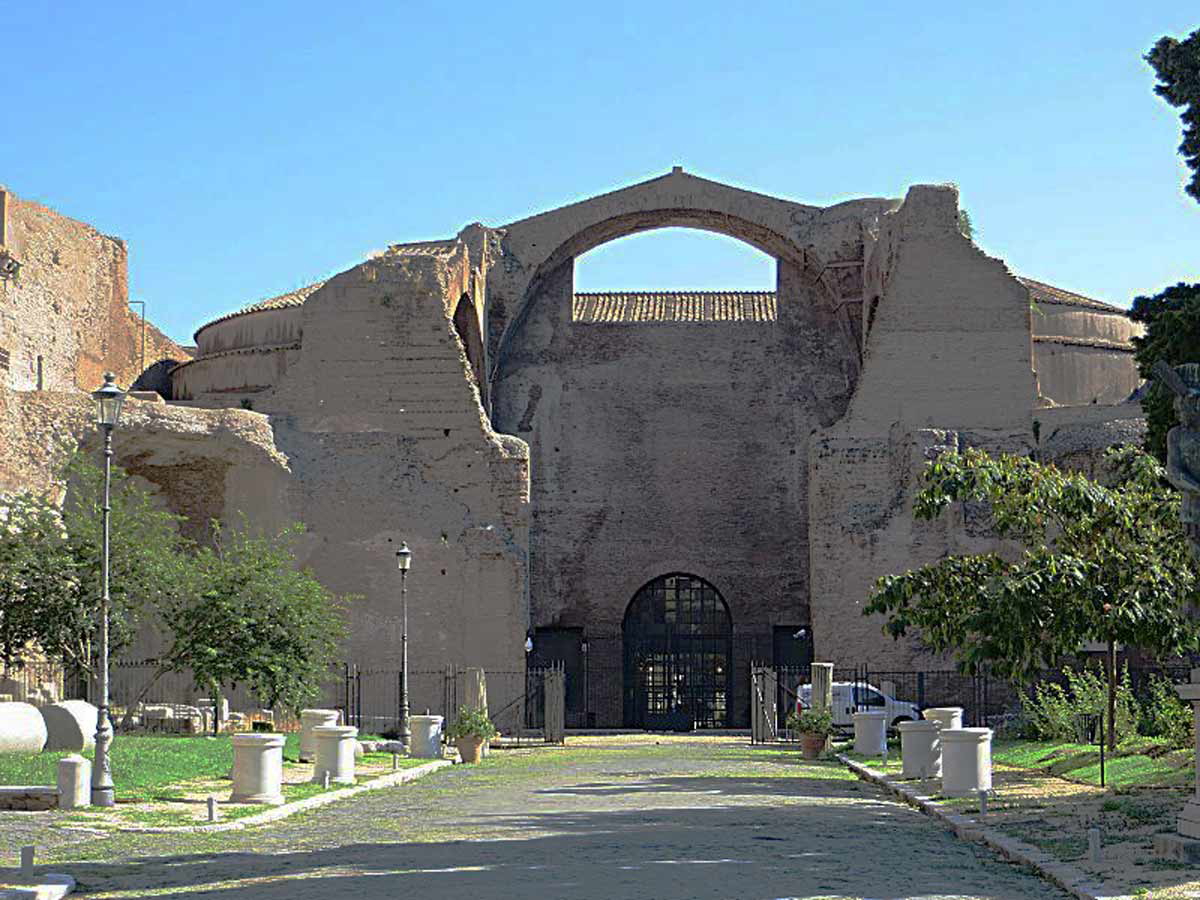
Roman bathhouses were central to daily life across the empire, serving not only for bathing and relaxation but also as social and political hubs. The Baths of Diocletian were completed in 306 AD by Emperor Diocletian. They were the largest imperial baths ever built, spanning eleven acres in Rome. The complex included three main rooms—the frigidarium (cold), tepidarium (warm), and caldarium (hot)—each with pools corresponding to its temperature. Surrounding these were gyms, changing rooms, libraries, offices, and outdoor gardens.
Parts of the bath complex are preserved in the National Roman Museum, with the Aula Ottagona (Octagonal Hall) being the best-preserved section, likely once a smaller frigidarium. After the baths closed in 537 AD, the structure was repurposed multiple times: a gymnastics school and film room in the 19th century, and in 1928, part of the largest planetarium in Europe. Some of the metal webbing from that period remains today despite modern restorations.
The central frigidarium was later transformed into the Basilica of St. Mary of the Angels and Martyrs in the 16th century by Michelangelo. Through the church’s Baroque interior and Renaissance artwork, visitors can still admire the original domed ceiling of the cold room, a testament to Michelangelo’s skill in preserving and adapting the ancient structure.
Baths of Diocletian at a Glance
- Built: 306 AD, Emperor Diocletian
- Original purpose: Largest imperial public baths; social, recreational, and political hub
- Key features: Frigidarium, tepidarium, caldarium, palestra, libraries, offices, gardens
- Later adaptation: Aula Ottagona became a planetarium; the central frigidarium was converted into a Renaissance church
- Modern use: Museum and Basilica of St. Mary of the Angels and Martyrs
3. Temple of the Deified Hadrian
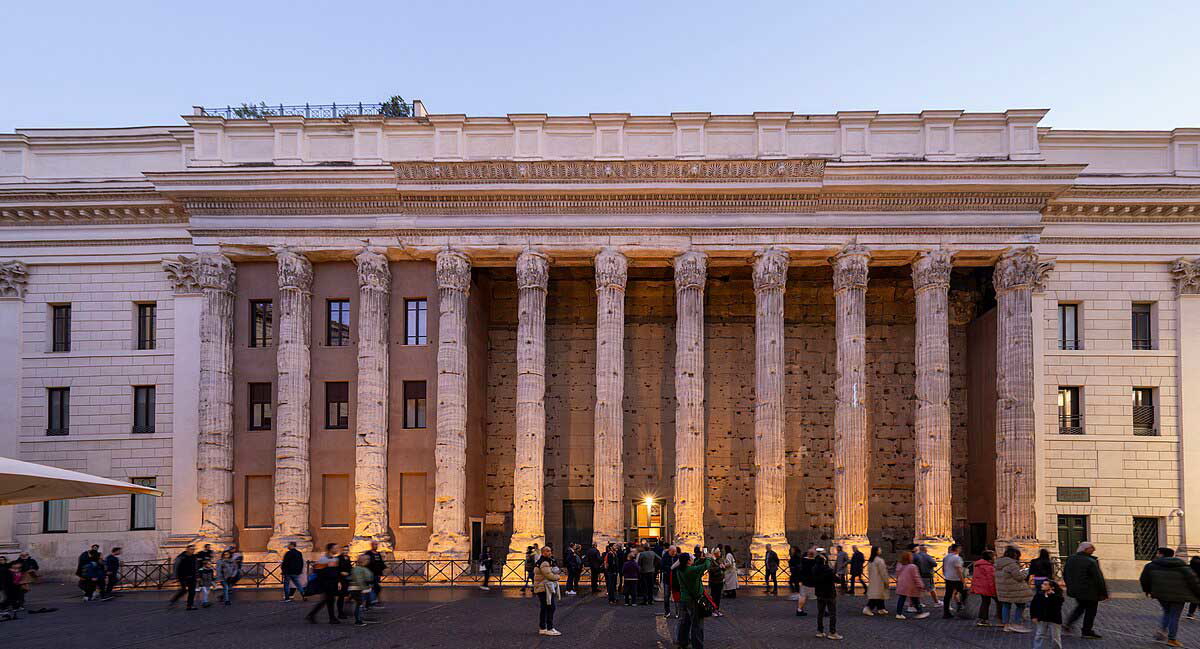
In the early Roman Empire, deceased emperors were often deified, a process that included constructing a temple in their honor. Emperor Hadrian, who died in 138 AD, was one such ruler. His successor, Antoninus Pius, dedicated a temple to the deified Hadrian in 145 AD, located in the Campus Martius near the Pantheon.
Much of the original temple has since been destroyed. However, 11 of the original 38 columns, each 15 meters tall, remain on its north side. A portion of its original wall also remains, though the marble façade is gone. For a time after the fall of the Roman Empire, the temple was misidentified as the Basilica or Temple of Neptune.
In 1695, Pope Innocent XII commissioned architect Carlo Fontana to build a papal palace on the site, incorporating the surviving elements of the temple. By the 1830s, the building had been repurposed as the home of Rome’s stock exchange. Today, the structure functions as a conference and multipurpose building for the Chamber of Commerce of Rome, with the ancient façade serving as a reminder of the city’s imperial past.
Temple of the Deified Hadrian at a Glance
- Built: 145 AD, Emperor Antoninus Pius
- Original purpose: Temple honoring the deified Emperor Hadrian
- Key features: Originally 38 columns (11 remain), part of the original wall is preserved
- Later adaptation: Incorporated into the papal palace by Carlo Fontana; later home of Rome’s stock exchange
- Modern use: Conference and multipurpose building for the Chamber of Commerce of Rome
4. Colosseum
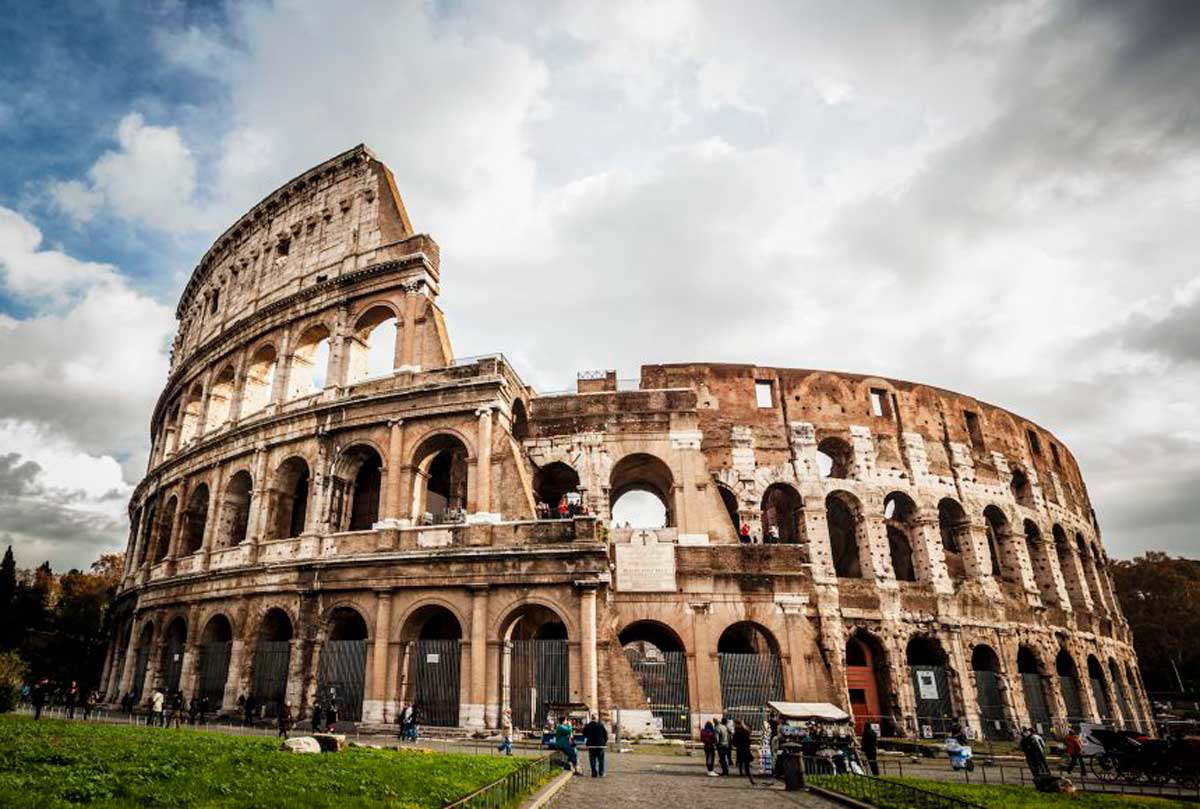
The Flavian Amphitheater, better known as the Colosseum, was completed in 80 AD and stood as the largest amphitheater in the Roman Empire. Built by Emperors Vespasian and Titus, it was intended to revitalize Rome after the civil war of 69 AD and showcase the power of the new Flavian dynasty. Famous worldwide for gladiatorial games, executions, and mock naval battles, the Colosseum remains a lasting testament to ancient Roman culture. Over time, however, financial difficulties and political instability led to the end of the spectacles and to the monument’s neglect.
The last fight took place in 523 AD. Afterward, the structure was abandoned, repurposed as a burial ground, and its vaults were converted into workshops, stores, stables, and even small homes well into the 12th century. Citizens also quarried its stone for building materials. Around 1200, the Frangipani family transformed it into a fortress with tunnels connecting it to their other properties, though their control was brief. In the mid-13th century, Pope Innocent IV claimed the site for the Catholic Church, which attempted several projects over the following centuries—including a hospital, wool factory, bullfighting ring, and chapels—but most failed.
By the 17th century, the Colosseum was abandoned again until 1749, when Pope Benedict XIV designated it as a shrine to Christian martyrs. Subsequent excavations and restorations throughout the 19th and 20th centuries turned the Colosseum into a museum. Today, it is one of the world’s most visited archaeological sites.
Colosseum at a Glance
- Built: 80 AD, Emperors Vespasian & Titus
- Original purpose: Amphitheater for gladiatorial games, executions, and public spectacles
- Later adaptation: Burial ground, fortress, residential and commercial spaces, failed projects (hospital, bullring, chapels)
- Preservation efforts: Excavations and restorations from the 18th to the 20th centuries
- Modern use: Museum and iconic archaeological landmark
5. Pantheon
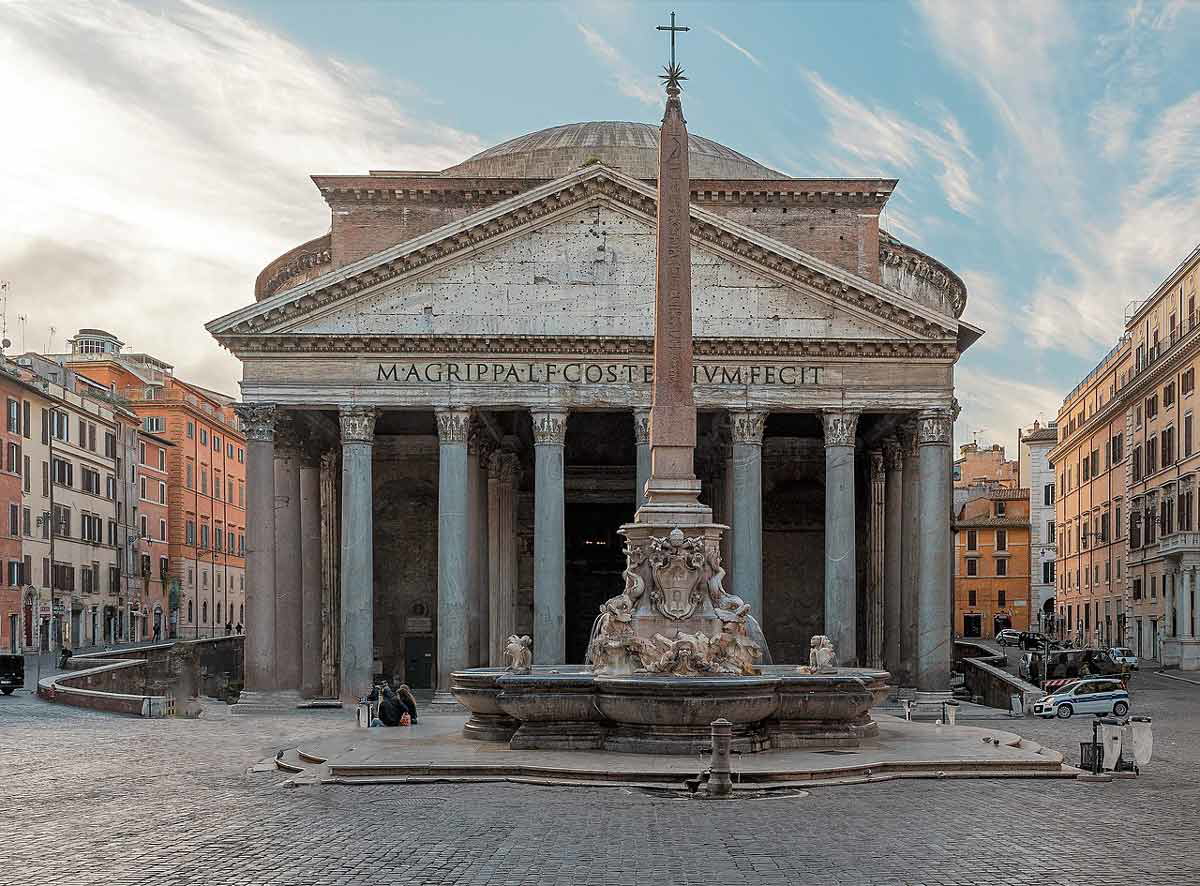
Located in the heart of modern Rome, the Pantheon is one of the city’s most iconic and visited landmarks. Its name, meaning “relating to all the gods,” reflects its original purpose as a temple dedicated to all deities of Roman mythology. The Pantheon was built in 27 BC by Marcus Agrippa, a general, architect, and close advisor to Emperor Augustus. Agrippa placed statues of several gods—including Venus, Mars, and Jupiter—inside the temple. Statues of himself and Augustus were placed outside.
The temple remained open for public worship, but much of its early history was lost due to fires and lightning strikes. After the fall of the Roman Empire, the Pantheon became the first Roman temple converted into a Christian church. It was renamed St. Mary and the Martyrs, and pagan statues were removed or replaced with Christian figures. The pope also had the remains of Christian martyrs transferred from the catacombs to the church.
Today, the Pantheon still functions as a church. It is also the final resting place of several notable figures in Italian history, including King Vittorio Emanuele II, his son Umberto, Umberto’s wife Margherita, and the Renaissance artist Raphael.
Pantheon at a Glance
- Built: 27 BC by Marcus Agrippa (rebuilt 118–125 AD by Hadrian)
- Original purpose: Temple dedicated to all Roman gods
- Later adaptation: Consecrated as a Christian church (St. Mary and the Martyrs) in 608–613 AD
- Key features preserved: Marble decorations, domed ceiling, Christian tombs
- Modern use: Church and tombs of notable figures, including Raphael and Italian royalty