The Anglo-Saxons invaded Britain in the 5th century. However, it would take many centuries before anything resembling “England” actually existed. Yet, by the Norman Conquest of 1066, England existed to such a strong degree that the Norman French conquerors came to be absorbed by it rather than the other way around. How was this firm and unshakable English identity created in those intervening centuries? To what degree was it the result of natural processes compared to the conscious effort of a select few? This article takes a look at the evidence.
The Venerable Bede: Writing a Nation Into Existence
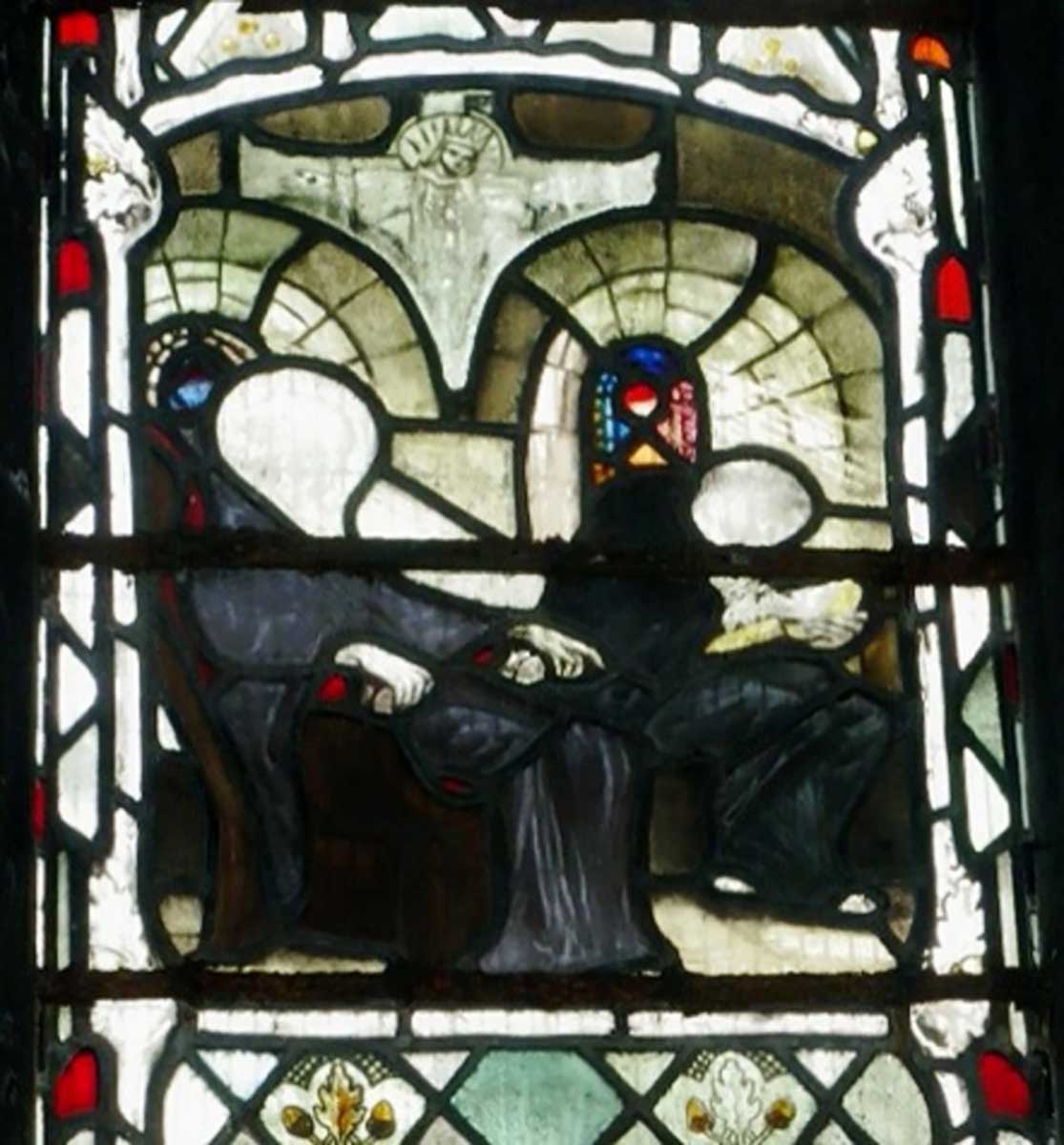
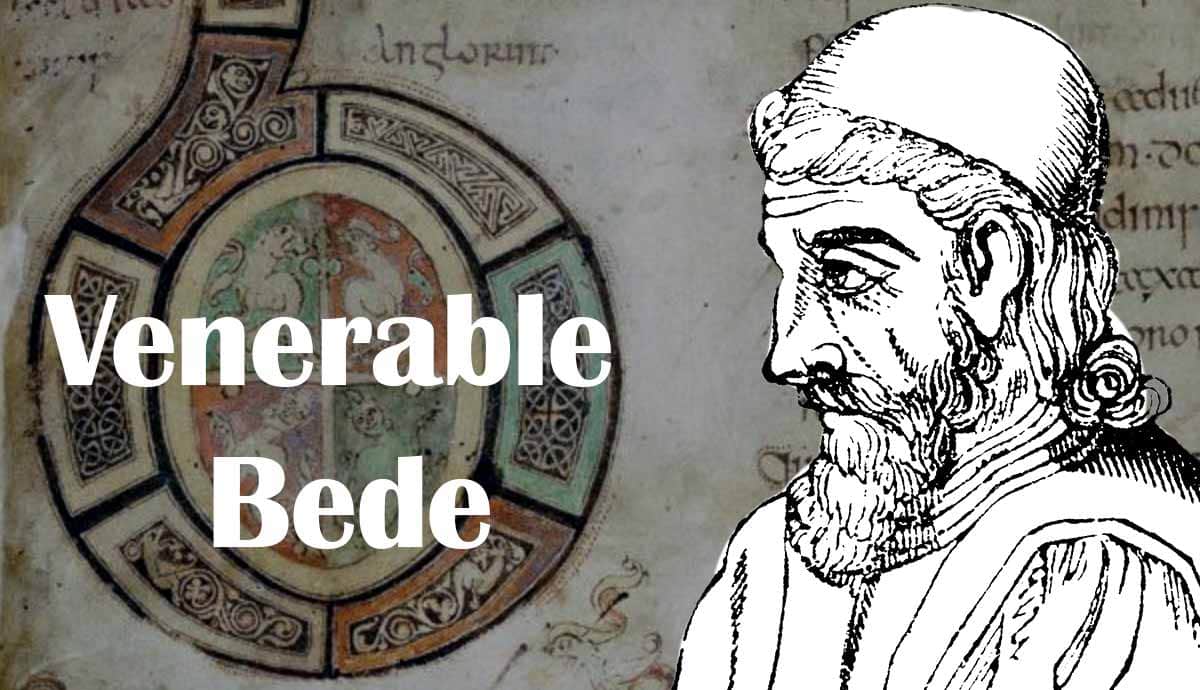
A unified political entity which can be recognized as England did not emerge until the 10th century. However, even before it was a political reality, it was effectively a literary reality. Or at least, we can identify the presence of a collective English identity in the writings of Bede. He was a historian from the 8th century who wrote a work entitled Historia ecclesiastica gentis Anglorum. It is better known in English as An Ecclesiastical History of the English People.
From the very title of the work, we can see that Bede promoted the idea of the various Anglo-Saxon kingdoms being part of one collective English identity. They were, collectively, the “English people.” This description tore down the barriers that were in place by the existence of various separate and competing kingdoms in the minds of those who read it.
We know that Bede’s work was extensively read. Even missionaries on the continent in the 8th century requested copies of it. The idea of a distinct English identity was thus quickly and extensively propagated through Bede’s Ecclesiastical History of the English People.
Old English: The Language of the People

One key factor involved in forming a sense of common identity is the existence of a common language. After all, imagine if the various inhabitants of what is now England spoke different languages, or they spoke one language, but it was the same as that spoken by some other ethnic group. This would tend to work against the formation of a distinct, collective identity.
In the case of the early English, we know that the Anglo-Saxons did not entirely wipe out the native Britons from the territory that they conquered in the 5th century. In fact, in some areas of what was gradually becoming England, quite a large percentage of the population were Britons. They had their own language, Common Brittonic. Furthermore, the language of literature was Latin, which was a language used by countless other nations as well.
In the next section, we will see how Alfred the Great influenced the adoption of English over Latin as the language of literature. However, in the case of the spoken language of the countless Britons inhabiting Anglo-Saxon territory, the explanation for why they adopted English is unknown. What we do know is that there are almost no identifiable Brittonic loan words in Old English. This suggests that there was immense social pressure for the Britons to adopt Old English and stop speaking their own language.
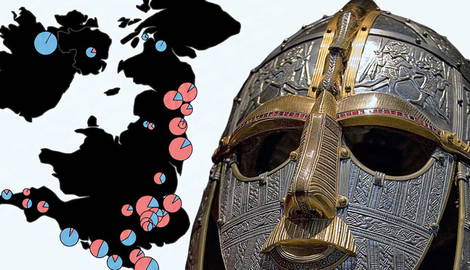
This evident fact dovetails with a 2022 genetic study into the medieval English, which found evidence for significant integration between the Britons and the Anglo-Saxons. Hence, it was evidently a matter of the Britons wanting to adopt the language that would allow them to be better accepted within the communities in which they lived.
Alfred the Great: The Architect of “Englaland”

The social pressure that forced the native Britons to abandon their native tongue and speak Old English is only part of the equation. It does not explain how English won out over Latin as the language of literature.
In the 10th century, King Alfred the Great made significant contributions towards creating an English identity. One way was by actively promoting literacy among his people. He did not just promote any kind of literacy, or literacy in Latin. Rather, he specifically encouraged his people to become literate in English. In fact, he promoted the West Sussex dialect as a kind of standardized form of English. This significantly contributed to the sense of shared identity by the population across England.
Furthermore, Alfred commissioned the translation of various important Latin works into English. There is even evidence that some translations were done by Alfred himself. By doing this, he enabled his subjects to take pride in themselves as English people and not simply poor imitations of the Romans.
As well as promoting a shared language and encouraging literacy, Alfred also contributed to the identity of England by styling himself as the King of the Anglo-Saxons. This was in stark contrast to simply calling himself the king of his own kingdom, Wessex. By referring to everyone as “Anglo-Saxons,” he was intentionally portraying his subjects as part of one people, with one identity.
The Common Law: One People, One Justice
While England was still divided into various Anglo-Saxon kingdoms, the inhabitants were subject to various contradictory laws depending on where they lived. The inhabitants of Northumbria, for example, did not have the same laws as those of Mercia, who did not have the same laws as those of Wessex.
When Alfred the Great managed to establish himself as the King of the Anglo-Saxons, he established a law code which, in theory, was supposed to apply to all the English. To what degree it actually did is debatable. In any case, the law code in question is called the Doom Book. This law code is commonly seen as the ancestor to what later became Common Law in the Norman period, and as establishing the concept of a standardized legal system throughout the whole country.
Medieval sources make mention of a concept called the witan. The witan was an assembly of men of various positions who would hear a matter in the presence of the king and assist him in making a decision. For a long time, this was viewed as a precursor to the Parliament of modern England. However, scholarship over the past century has emphasized that this particular aspect of Anglo-Saxon governance does not, in fact, appear to have contributed to the identity of England as we know it. In fact, the assembly of the witan appears to have simply been an assembly of the king’s royal court. There was nothing substantively democratic about it. Rather, it was a royal institution.
The Viking Threat: Unity Through Adversity
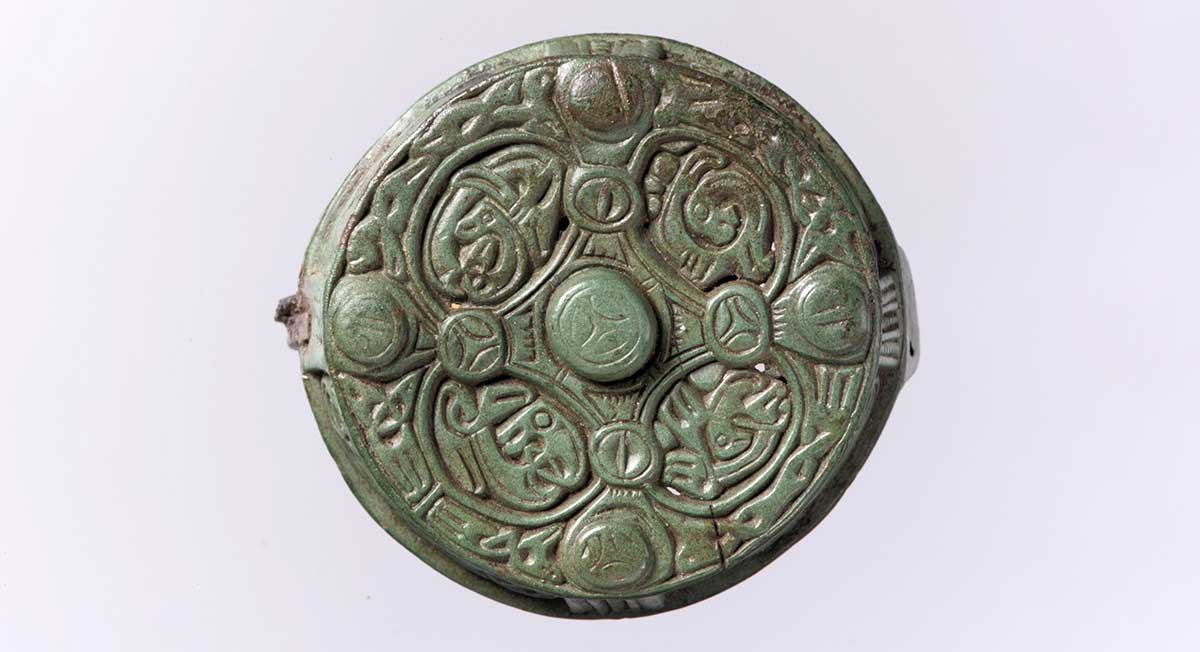
Another factor that contributed to the formation of the identity of England came about through an external threat. From the late 8th century onwards, the Vikings fiercely and relentlessly attacked Britain. They managed to successfully conquer a large portion of it, which was governed under what was known as Danelaw.
Before this time, the different Anglo-Saxon kingdoms battled for supremacy. This cultivated a sense of distinction and “otherness” between the inhabitants of those kingdoms. However, when the Vikings started to invade, the Anglo-Saxons saw that they all had a common enemy. This had the natural consequence of forcing them to work together and thus come to see themselves as one people fighting against an outside group.
Additionally, the Vikings successfully managed to conquer some of the major Anglo-Saxon kingdoms. For instance, they conquered Northumbria, East Anglia, and at least parts of Mercia. Therefore, this removed most of the competition from Wessex, which thus quickly stepped up to become the leading Anglo-Saxon opposition to the Vikings. As a result, the borders that had existed between the separate Anglo-Saxon kingdoms were mostly torn down.
The Vikings might have completely snuffed out the identity of England before it had even truly formed if they had been more successful in their attacks. As things turned out, Alfred the Great achieved a decisive victory against the Vikings at the Battle of Edington in 878. The result was a truce between Alfred and Guthrum, the Viking ruler. Due to this, the Anglo-Saxons were preserved as a people, and a distinct, collective identity was able to gain traction and flourish during the rest of Alfred’s reign.
The Legacy of the Angelcynn
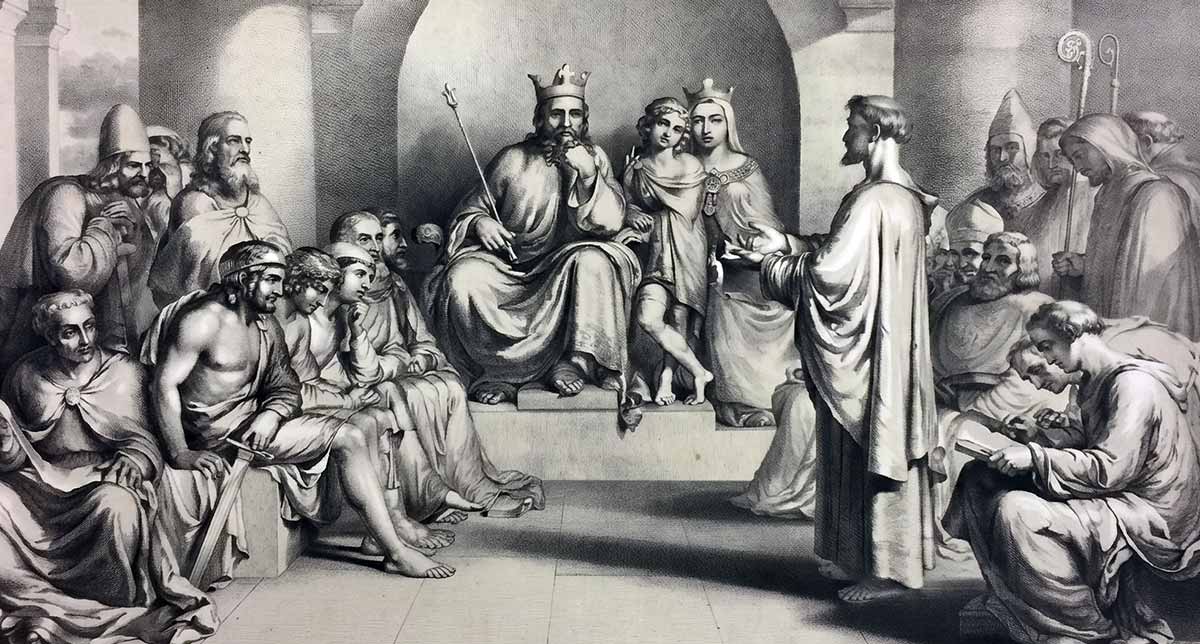
As we can see from this brief consideration of the emergence of the identity of England, much of it has to do with Alfred the Great. As well as styling himself the King of the Anglo-Saxons, we also see a surge in the use of the term “Angelcynn,” meaning “English folk.” While that may just be a consequence of the greater English literacy that marked his reign, such literacy in itself had a large part to play in fostering the concept of a shared English identity.
Alfred’s development of a single law code for his kingdom likewise played a large part, as did his defense of the English against the invading Vikings, especially at the Battle of Edington. However, even before Alfred, Bede contributed to the formation of an English identity by writing a history specifically of the “English people,” which history quickly became enormously popular.
These factors, as well as others that we have seen, led to such a strong English identity that it was not snuffed out by the Norman invasion of 1066. Rather, the new ruling class eventually succumbed to that strongly established English identity.