
Who is Anish Kapoor? Depending on your interest in art and sculpture, your answer will likely vary greatly. If you keep up with drama in the contemporary art world, you’ve certainly heard his name before. Even if you haven’t, however, you’ve almost certainly seen one of his sculptures. From paintings to massive public works, there’s nowhere Anish Kapoor has not ventured in his artistic career.
Anish Kapoor’s Background
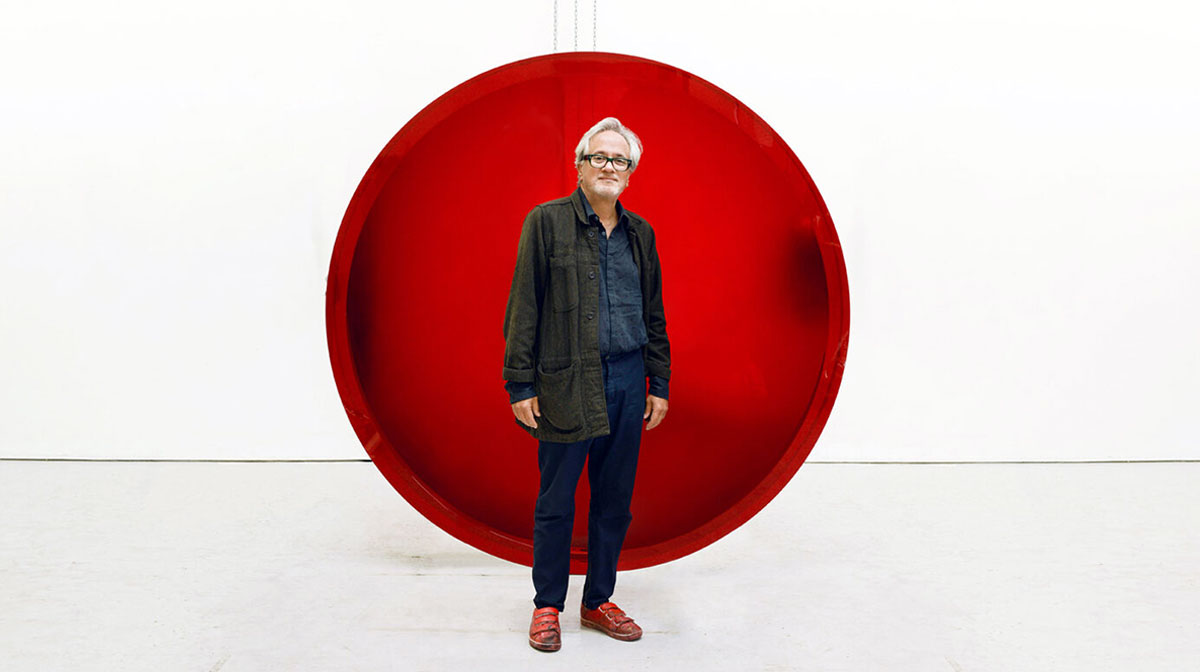
Anish Kapoor was born in 1954 in Bombay, India, to an Indian mother and an Iraqi father. The downfall of the British Raj that occurred less than a decade before Kapoor’s birth, and the concept of diaspora, would become an important theme in the artist’s future works, particularly after the artist’s move to Great Britain in the early 1970s.
Even though he spent the first twenty years of his life living in India and the Middle East, Kapoor is often referred to as Britain’s ‘darling,’ and his works are considered as much a product of his British lifestyle as his Indian upbringing. Kapoor has openly addressed this contradiction, stating he has “always had problems with the idea of being an immigrant.” He goes on to acknowledge that, being from India, it “must be true.” As a result, Kapoor’s work often focuses on the universality of humanity, while his sculptures often ask the viewer to engage with a collective fantasy of a potential utopia. He has been known to align himself with the Fluxus movement, although this alignment is more a matter of artistic intention than an outright artistic output.
Visual Motifs
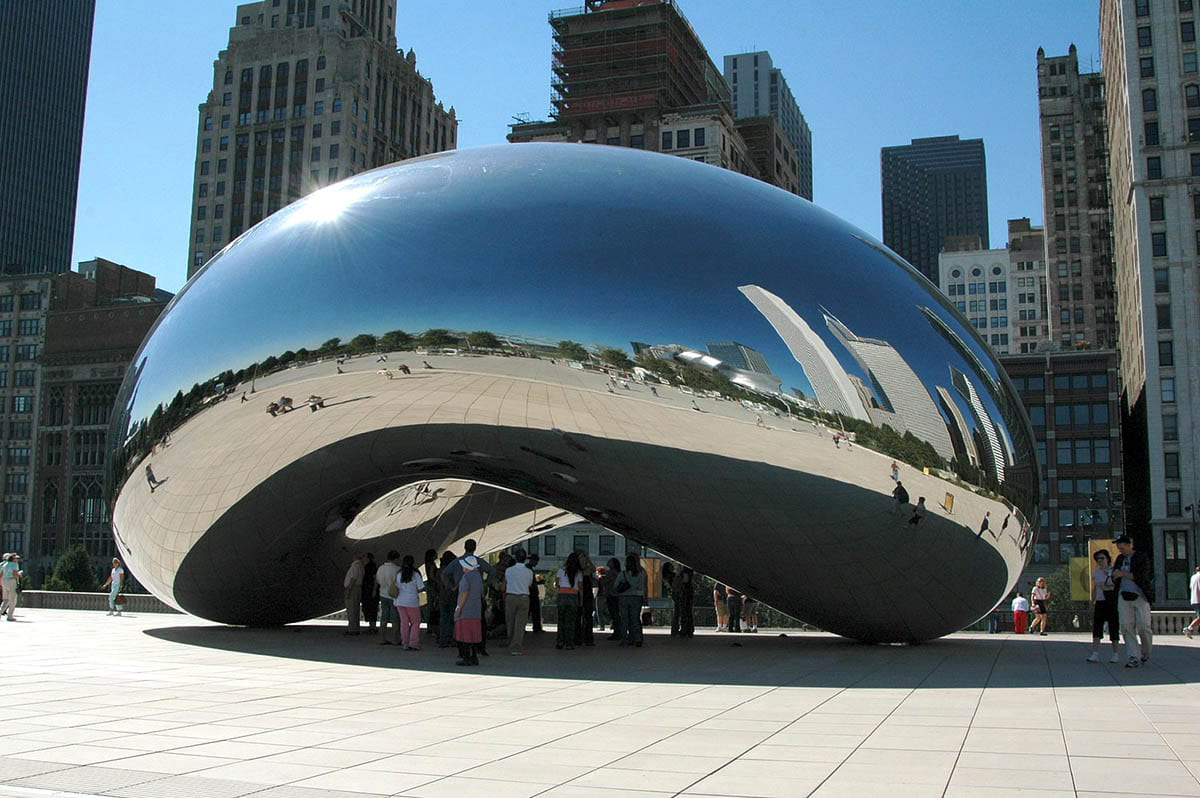
In developing the message of his works, Anish Kapoor has created a strong visual language, characterized by recurring materials and textural motifs. One of his most famous motifs is his use of polished stainless steel. Most commonly, Kapoor constructs an entire sculpture from highly reflective steel, creating a mirror-like effect across the entire surface of the object. The result often gives a distorted view of reality, creating a portal into another world both like and unlike our own.
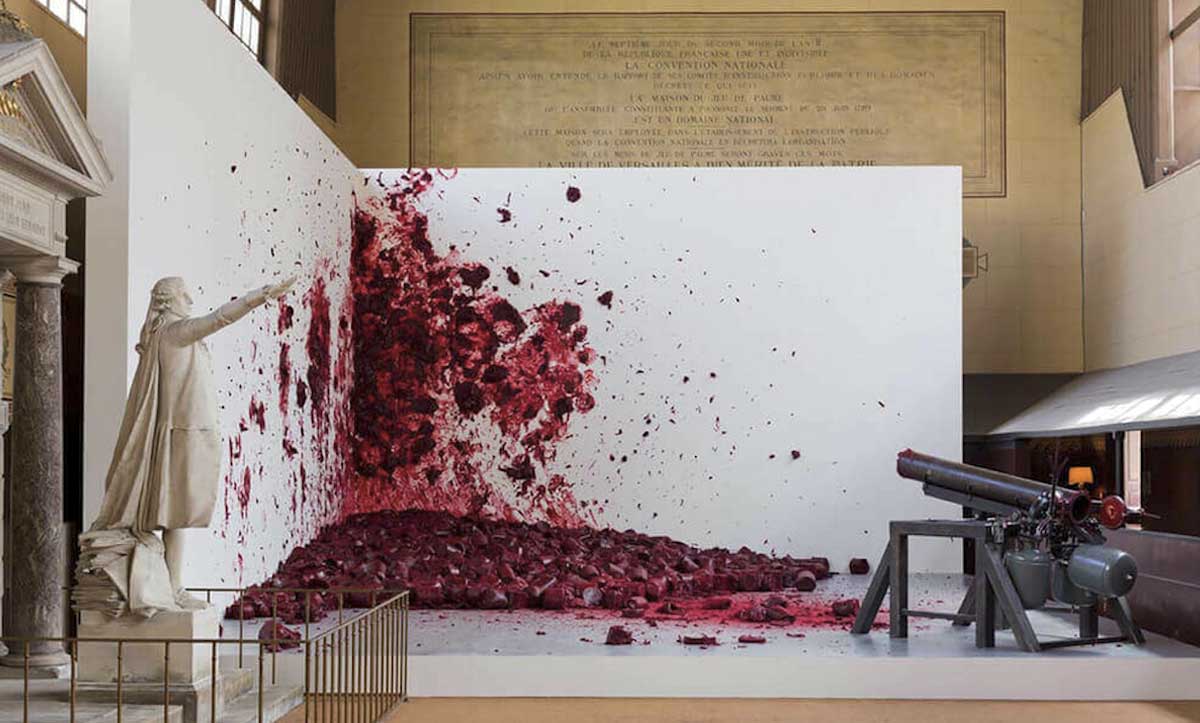
Another material motif in Kapoor’s repertoire is his use of wax. Both solid and liquid, able to hold form and lose it without compromising its structural integrity, the use of wax reflects Kapoor’s emphasis on mutability. Like a phoenix rising from the ashes, a wax Kapoor sculpture can be destroyed and reformed, once again reflecting the artist’s preference for mediums that demonstrate both the permanence of eternity and the ephemerality of time.
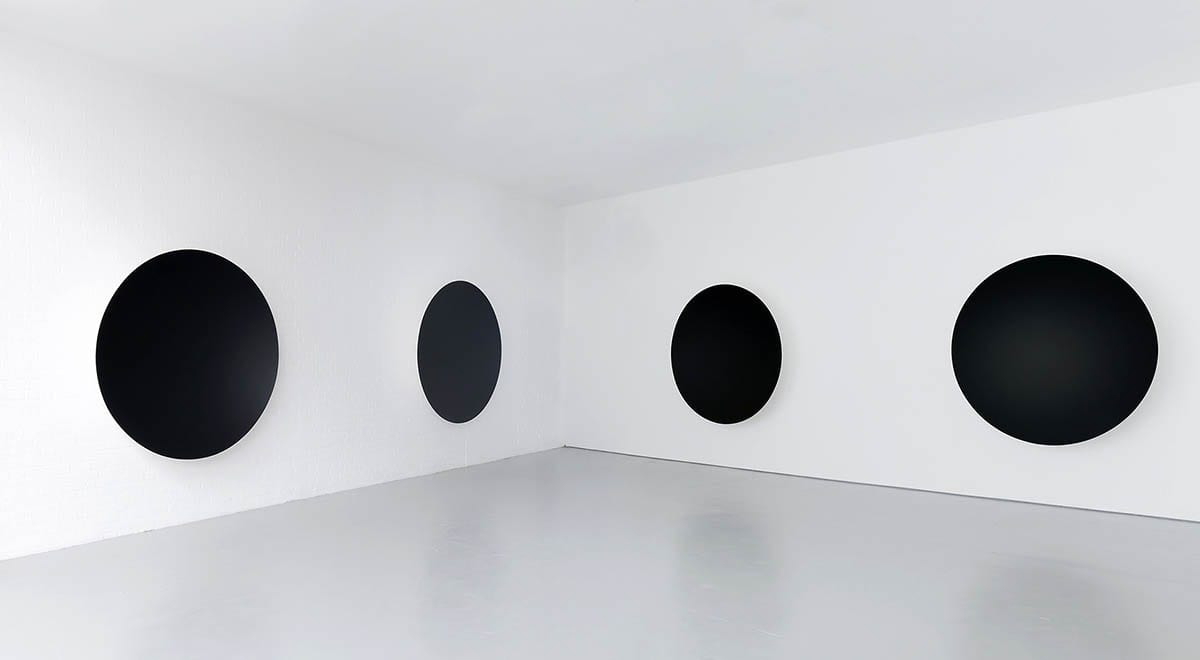
His other most famous motifs include dense piles of pigment (particularly the use of red), an incredibly dark pigment known as Vantablack (in part due to the controversy surrounding the pigment), and large structures made of red steel. His use of visual motifs is often so consistent that, once familiar with Kapoor’s work, even the most casual art fan will be able to recognize an Anish Kapoor original out in the wild.
Kapoor’s Famous Works
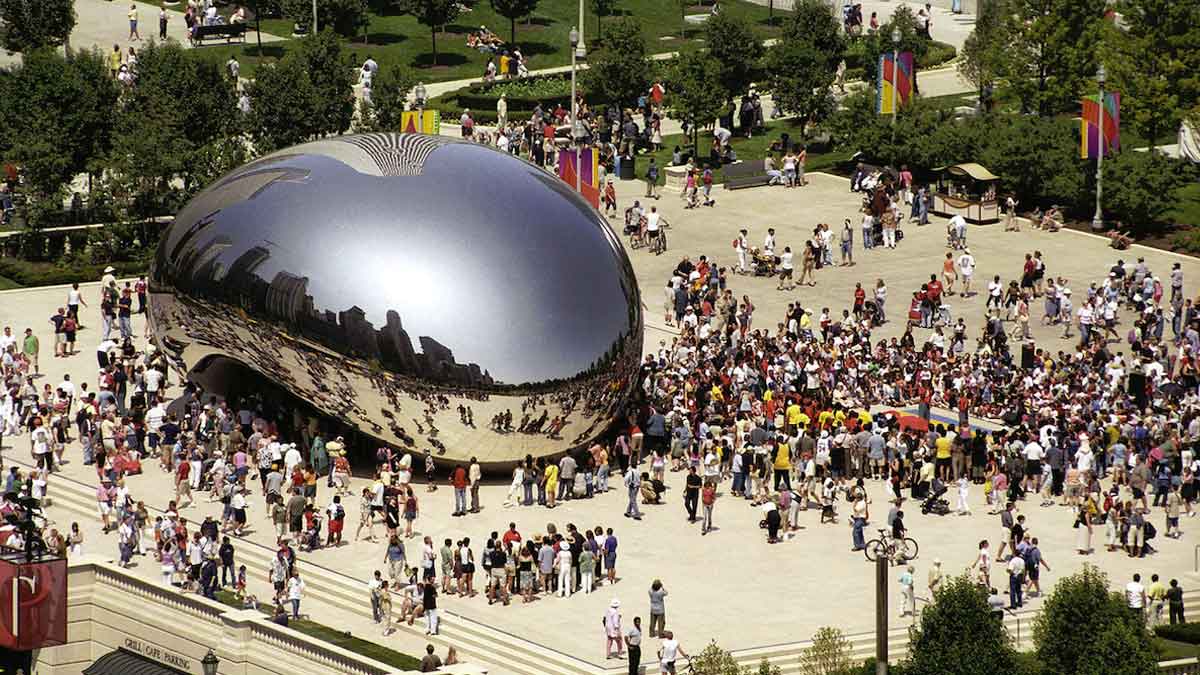
Being famous and beloved, Anish Kapoor has had the opportunity to create several well-known art pieces. Among those, the most famous are his sculptural installations. In the United States of America, Kapoor’s most famous work is a public sculptural installation in Chicago, Illinois, known as Cloud Gate.
Referred to colloquially as “the Bean,” Cloud Gate has been a beloved destination for tourists and Chicago residents alike since its unveiling. Its reflective surface allows viewers to take photos of themselves reflected in the sculpture, and its bean-like shape enables them to walk both around and through the sculpture itself. To maintain its shine, workers polish Cloud Gate twice a day, removing all the handprints left behind by thousands of daily visitors.
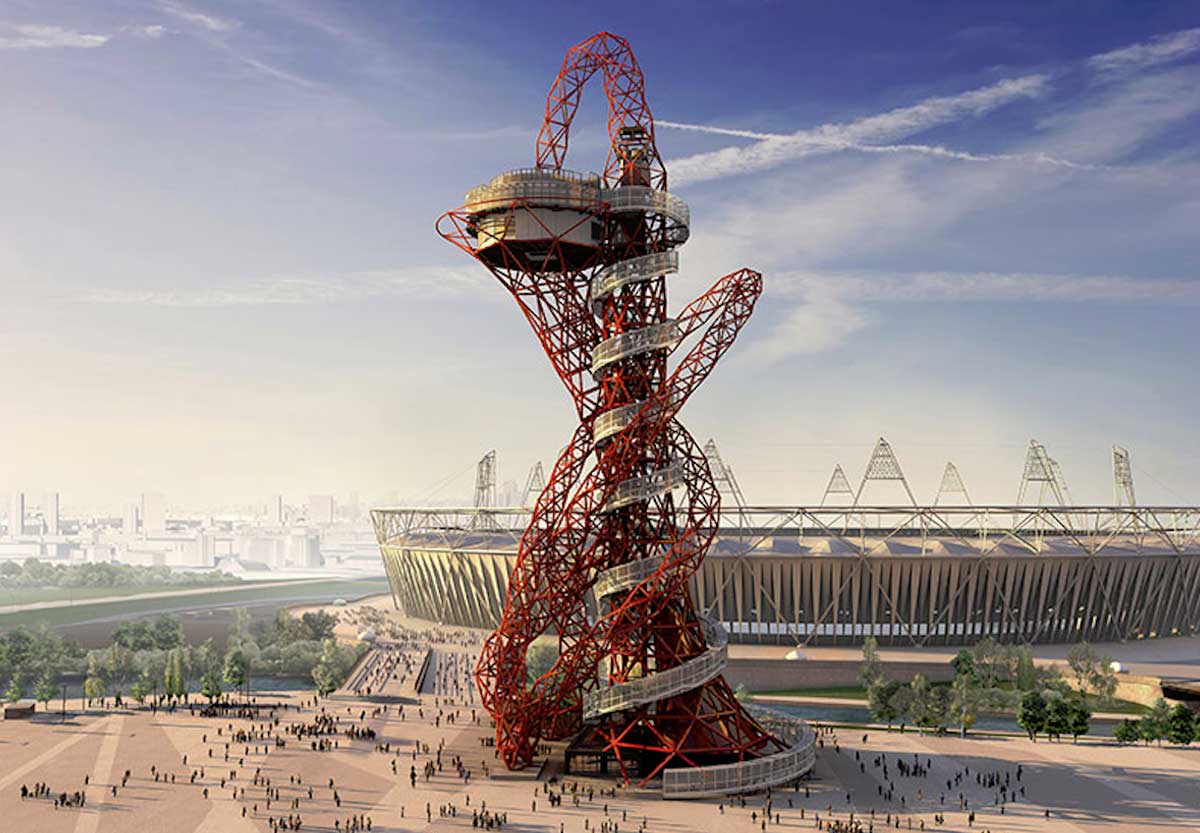
For non-Americans, many people’s first introduction to Kapoor’s massive sculptures happened during the 2012 Olympics, held in London, England. Due to his beloved status in Great Britain, Kapoor was selected to create a permanent structure to commemorate the monumental occasion of the Olympics. The result was Orbit, a twisting observation tower constructed from red steel that overlooks East London.
The building itself required collaboration with multiple architectural engineers, and at its opening, it contained a restaurant and a viewing gallery. However, unlike Cloud Gate, Orbit has failed to become quite as beloved, with many London residents deeming it an eyesore and a waste of public funds. Regardless, the tower is an icon in its own right, unmistakable in the London skyline. It even appears on UK passports issued after 2015.
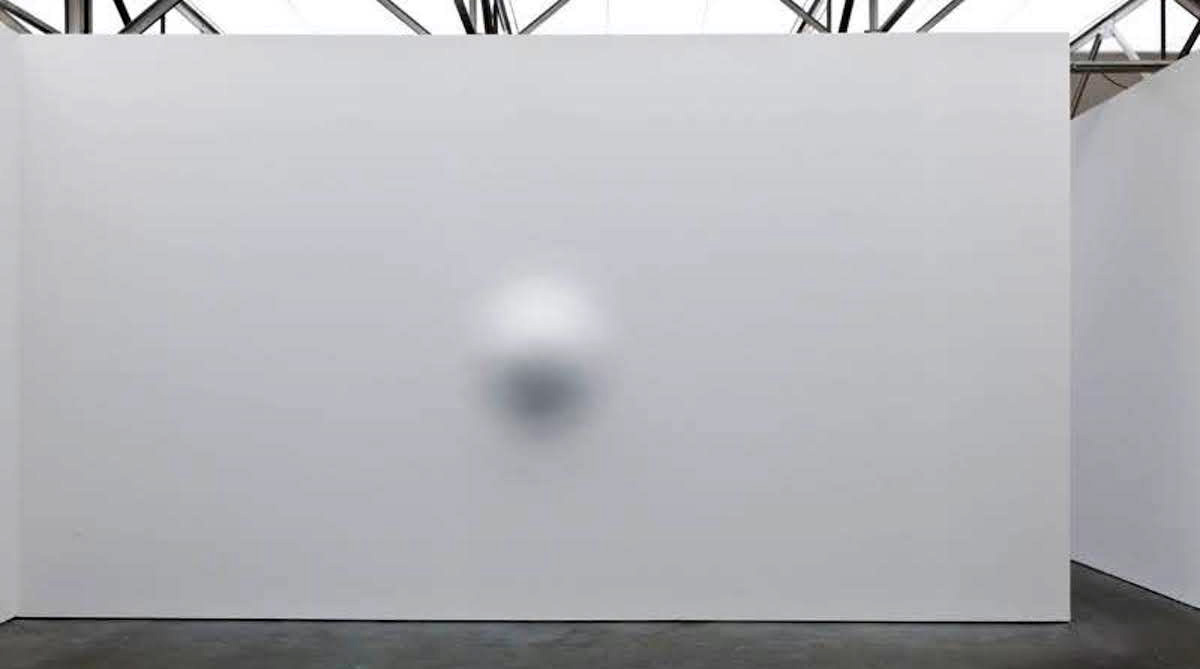
Some other famous works in Kapoor’s arsenal include Shooting Into the Corner, a neo-Expressionist work in which red wax is fired repeatedly at the corner of the gallery from a cannon. There are also When I Am Pregnant, a bulging wall piece that reduces the aesthetic of pregnancy to its essence, and Descent into Limbo, an eight-foot hole in the ground coated with Vantablack, which removes all perception of dimensionality and depth. Each of Kapoor’s works that gain public traction often face some kind of scrutiny, as is common for contemporary art. In the case of Descent into Limbo, the artist received negative feedback when one gallery viewer misjudged the artwork itself and fell into the Vantablack-coated hole.
Themes of Duality
While Anish Kapoor has many famous works, Cloud Gate remains his most iconic sculptural piece. It seamlessly compiles many of his recurring artistic themes in its simple design, and sums up much of his more optimistic artistic views. While some of his contemporaries play with the medium of truth, Kapoor prefers a more abstract approach, dabbling in the medium of fantasy.
Cloud Gate is, at its core, a massive carnival funhouse mirror. Looking into its surface on a sunny day, the viewer’s reflections, as well as the world around them, are distorted, stretched across the surface of the sculpture. In a strange way, this sculpture both occupies a large amount of space and fades into its surroundings due to its mirrored surface. The essence of duality, of being here and not here, is crucial to understanding Kapoor’s thematic approach to his art.
Duality is often at the core of Kapoor’s approach, regardless of the piece: the sacred versus the profane, humility versus pride, the sky versus the earth, and so on. In creating these dualities, Kapoor is able to create a new, third place in between, entirely unique in function and experience. This interest in duality dates back to the conditions of Kapoor’s birth and the diaspora he experienced as an Indian man in Great Britain. In the nature of his diasporic existence, both the human and the divine, the love and the hate, the fantasy and the reality coexist. As a result, Kapoor has transfigured these warring complexities into a legendary oeuvre sure to stand to prove their worth for generations to come.
Collaboration With Salman Rushdie
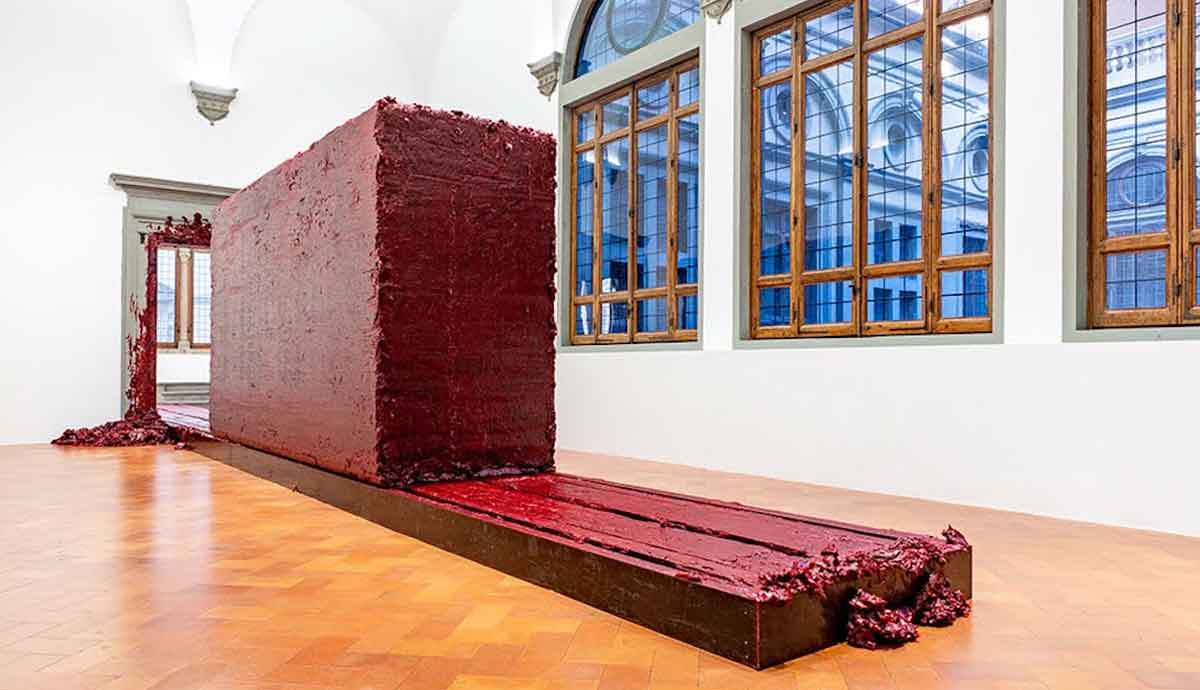
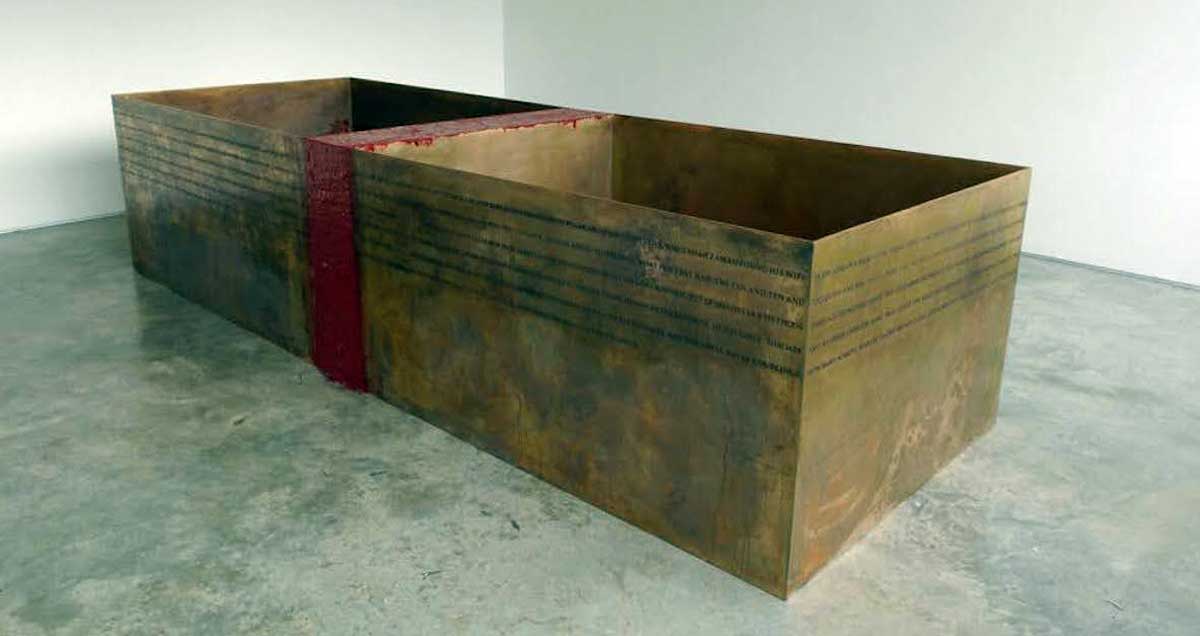
In the United Kingdom, there is a large number of diasporic Indian artists due to Britain’s former occupation of India, including Salman Rushdie, a British and Indian author famous for writing The Satanic Verses, among other novels. Although at times a controversial figure himself, Rushdie often employs concepts of duality, much like Kapoor, in his work. In 2006, Anish Kapoor collaborated with Rushdie to complete Blood Relations. The work combined Kapoor’s red wax and Rushdie’s words to create an enigmatic piece addressing the nature of familial relationships.
Although the duo did not create many artworks together, Kapoor and Rushdie’s collaboration highlights the specific approach to polarity that both creators hold as diaspora artists. After their collaboration, Anish Kapoor shifted from leaving his works untitled to giving them poetic names. Today, as is common in contemporary art, the title of an Anish Kapoor piece is often crucial to understanding the work’s intention.
2018 National Rifle Association Lawsuit
In 2018, the NRA (National Rifle Association) in the United States created a promotional video featuring Cloud Gate. The video, titled “The Violence of Lies,” was a call to arms against American liberal-leaning media and featured a shot of Kapoor’s sculpture in the middle of a pro-gun monologue by conservative talk show host Dana Loesch. Anish Kapoor called the video abhorrent, stating that it “seeks to promote fear, hostility, and division in American society.” Kapoor successfully sued the NRA, although versions of the advertisement that include the sculpture can still be found online.
The 2018 incident represents a direct statement of Kapoor’s opinion on neoconservatism and gun violence. The incident prompted the artist to speak more directly about the meaning of Cloud Gate to him, stating that the NRA’s vision “perverts everything that Cloud Gate… stands for.” Kapoor also requested that the NRA donate $1,000,000 to charities for victims of gun violence in America, but the National Rifle Association declined to comment on this.
Anish Kapoor’s Impact
Anish Kapoor is a visionary and a grandiose thinker. Never satisfied with small gallery works, he has pushed the limits of sculpture, aiming to open portals to other worlds, to imagine the future and bring it here, to the present. While his ideas are complex, the simplicity of his designs accesses something primal in us, allowing us to connect with each other on a spiritual level.
His works create new destinations for pilgrimage and centers for congregation. A closer examination of his sculptures pulls us into a new world, a world in which crossing borders is less daunting, finding connection is less challenging, and envisioning a greater future begins to feel wholly within our grasp. So while we can’t leave our world wholly behind, thanks to Anish Kapoor, we can always find a little portal to get away from it.