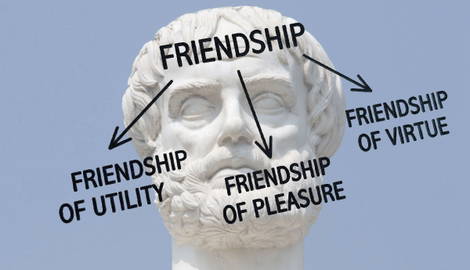
We often think that friendship is easy. Of course, we can meet another person and feel connected. There can be laughter and mutual support among us. Friendships just form naturally. But on observing many relationships closely, we sense an inherent fragility within them. Individuals grow apart very fast. More than two thousand years ago, Aristotle observed some similarities too. In his Nicomachean Ethics, he wrote down one of the most thorough analyses ever on friendship, and you could be surprised by his conclusions.
Why Aristotle Thought Friendship Was Essential to Happiness

Not all friendships are alike: this was Aristotle’s most popular statement. While there are those that exist on the basis of usefulness or some amount of enjoyment, only very few are true because both “friends” are interested in each other’s welfare. Aristotle thought that friendships were not luxuries in life or extra goodies we get along the way. Rather, they were necessary if you wanted to thrive in humanity.
Even somebody who is very rich or has achieved high levels of success is unable to live properly by themselves. Achievements mean very little without individuals to share them with. Enjoyment is bigger when shared. Difficulty becomes endurable with somebody standing right next to you. Nonetheless, Aristotle observed that people often use the term “friend” lightly.
An individual may refer to their workmates as friends since they coexist harmoniously. Another person could also call their exercise companion a friend for providing them with the motivation necessary. Then there are people using this label on strangers whom they met on social media. Those relationships may seem meaningful. However, they do not usually endure through changes. Aristotle believed that friendship is based on the reason for the connection between two individuals. The motivation takes precedence over emotions.
He divided friendship into three different kinds. These are friendships of utility, friendships of pleasure, and friendships of virtue. And comprehending these differences explains why some of them dwindle while others last for many years.
Friendship of Utility: When You Need Each Other

Aristotle describes the first kind of friendship as being based on usefulness or utility. These connections are established due to mutual benefits in practical ways. For example, business associates depend on each other. Coworkers cooperate to achieve specific tasks. Parents relate on the basis of their children’s involvement. Students share resources to back each other up while facing exams.
In reality, there is nothing wrong with them as they are instrumental in the running of a particular society. Humans cannot do without cooperating with each other if they have to meet certain objectives. But such kinds of relationships can last only until there is some useful outcome to be derived from them. To illustrate this, think about two colleagues getting along with one another during particularly demanding periods. They get to have lunch every day and share frustrations and happiness of having achieved some targets together. But then one leaves his job for another position.
Suddenly, the flow of communication between the two becomes slow, and meetings cease to happen. A friendship like this also just naturally loses steam over time without any given reason and ceases to exist, but still, there were no hidden mysteries in this entire process, as per Aristotle’s point of view, since the grounds upon which it was built had undergone changes.
Present-day networking culture promotes the establishment of a friendship type under consideration. Individuals engage themselves in networking of opportunities. Connections on LinkedIn increase. Professional connections also multiply. Even so, usefulness is very sensitive and fragile because the connection weakens as soon as an individual’s demands vary or change. Many individuals feel so hurt after losing out on these types of friendships. But it is suggested by Aristotle, in a calm manner, that such a friendship has simply served out the purposes set for it and therefore never failed at all.
Friendship of Pleasure: Fun While It Lasts

There’s also another kind of friendship based on pleasure. These tend to be very passionate and entertaining connections. You genuinely enjoy spending time with them. You can laugh with them or share a common way of living, daily routines, and things you do for pleasure.
Think of those whom one spends time traveling with, who accompany at social gatherings, or among those with whom one has something in common in video games. Conversations seem to flow very smoothly. Time seems to pass very quickly. Young people mostly enter into such kinds of friendships. They get connected by shared tastes in music, a craze for nightlife, a love of sports, or a similar sense of humor. Friendships founded on pleasure give off feelings of emotional strength because pleasure makes bonding between individuals happen.
But what gives rise to happiness can change. A person who used to love staying up all night in their twenties might want peaceful evenings afterwards in life. An individual who develops bonds by sharing his hobby may lose initial interest over time. Now the feeling of close connection becomes unnatural and difficult to maintain.
Aristotle saw this friendship as genuine though temporary because it relies heavily on preferences that keep shifting. This is further exacerbated by the ever-changing nature of today’s lives. Algorithms are continuously connecting individuals through their mutual interests. In a short period, online platforms emerge where common interests and trends hold people together.
Even with that, trends come and go. One could experience surprise when a previously very close friendship ends after a change in priorities, such as getting married, starting a family, moving away, or advancing in a profession. Again, Aristotle would state that such a friendship was established on the basis of pleasure. The moment the pleasure changes, so does the relationship in question.
Friendship of Virtue: The Rare and Difficult One

The third type is what Aristotle thought of as real friendship. He stated that friendship of virtue occurs when both individuals esteem each other’s ethical qualities. They are worried about who the person they are turning into is. This kind of friendship does not hinge upon mutual benefit or amusement. Rather, every individual wishes good things for their counterpart purely because they appreciate them in reality.
It may seem like an easy thing. However, Aristotle thought that it was very uncommon. Virtue friendships need time. One cannot know a person’s character too soon. Trust grows over time through shared experiences such as successes and failures, disagreements, and forgiveness.
Visualize a couple of people who develop alongside one another over the years. When they get promoted, they rejoice, but they also have their backs up during difficult times. They confront each other candidly. They fight out on some matters but still hold on to their companionship. And if one prospers, then the other truly takes pride rather than being filled with envy.
These friendships endure change because they are not linked to anything circumstantial. Changing the location does not destroy the relationship. A career shift also cannot abolish such relationships. Even extended silence cannot break the bond of affection.
Modern psychology supports this idea. Scientific studies suggest that lasting friendships require openness. The virtue type of friendship calls for effort. It requires perseverance and emotional maturity. Maybe this explains why it is rare.
Why Modern Friendship Often Feels Fragile

Suppose Aristotle walked through our world now, he could almost feel a sense of familiarity. We have more connections than ever. The presence of messaging applications, social networking websites, and many online community platforms really does increase communication all the time. And yet loneliness keeps rising. The root cause of this issue might be muddled lines between different friendships.
Social media generally encourages those very fun and enjoyable friendships through shared laughter, funny memes, or an interest in common pastimes. Yet professional culture lays emphasis on friendships that can be described as very useful because they serve towards team cooperation.
But all these depend heavily on certain factors that determine them. When individuals experience job changes, changing interests, or changes in their daily routines, friends with whom they used to hang out drift away from them.
Another difficulty is speed. Virtuous friendships require time to build, but the current fast-paced way of life emphasizes effectiveness most of all. Individuals move to different places very often. Work careers change quickly, and attention is scattered in every direction. It becomes difficult to form long-lasting friendships in an era that values speed in relationship development. Fears also come into the picture.
You must be honest to develop virtuous friendships. One is supposed to provide room for one’s friend so as to see one’s shortcomings and demerits. Most people shy away from being so open about their vulnerabilities. Connections at the surface level appear safer. Aristotle would tell us that we are being surrounded by mere acquaintances, whereas there is an inner emptiness yearning for a true, genuine friendship.
Aristotle and How to Recognize Virtue Friendship
Aristotle did not believe that virtuous friendships occur coincidentally. These relationships grow through shared experiences. Some sign of this can be noticed in stability. Consider whether your friendship will endure should utility be absent, and enjoyment at an end, or should circumstances alter?
Another trait is honesty. Virtuous companions do not merely concur. They foster personal development in each other. A companion who tells them the truth that they dislike may show deeper concern than one who totally evades disagreements.
The matter of time is also significant. Aristotle thought that friendship demands shared histories over the years. Trust cannot be hurried.
Examples in today’s world abound. Mothers and fathers supporting each other during demanding phases of life are cases in point. Pals reuniting instantly, even after long separation, is seen every so often. Individuals staying closely linked, though living apart from each other, are common. These friendships have a sense of serenity rather than drama. They lack continuous agitation. These are based upon dependability. And importantly, virtuous friendship is reciprocal. Appreciation flows in all directions. Nobody can carry this on their own.