Art Nouveau patterns were defining features of the movement and were evident in all visual arts of the period. Beyond painting, they influenced architecture, furniture, and interior design. Inspired by the harmonious beauty of nature and earlier artistic movements, Art Nouveau incorporated a wide range of organic shapes, geometric patterns, curvilinear forms, and abstract designs. Read on to explore more about Art Nouveau patterns and their existence in various visual arts.
What Were the Main Art Nouveau Patterns?
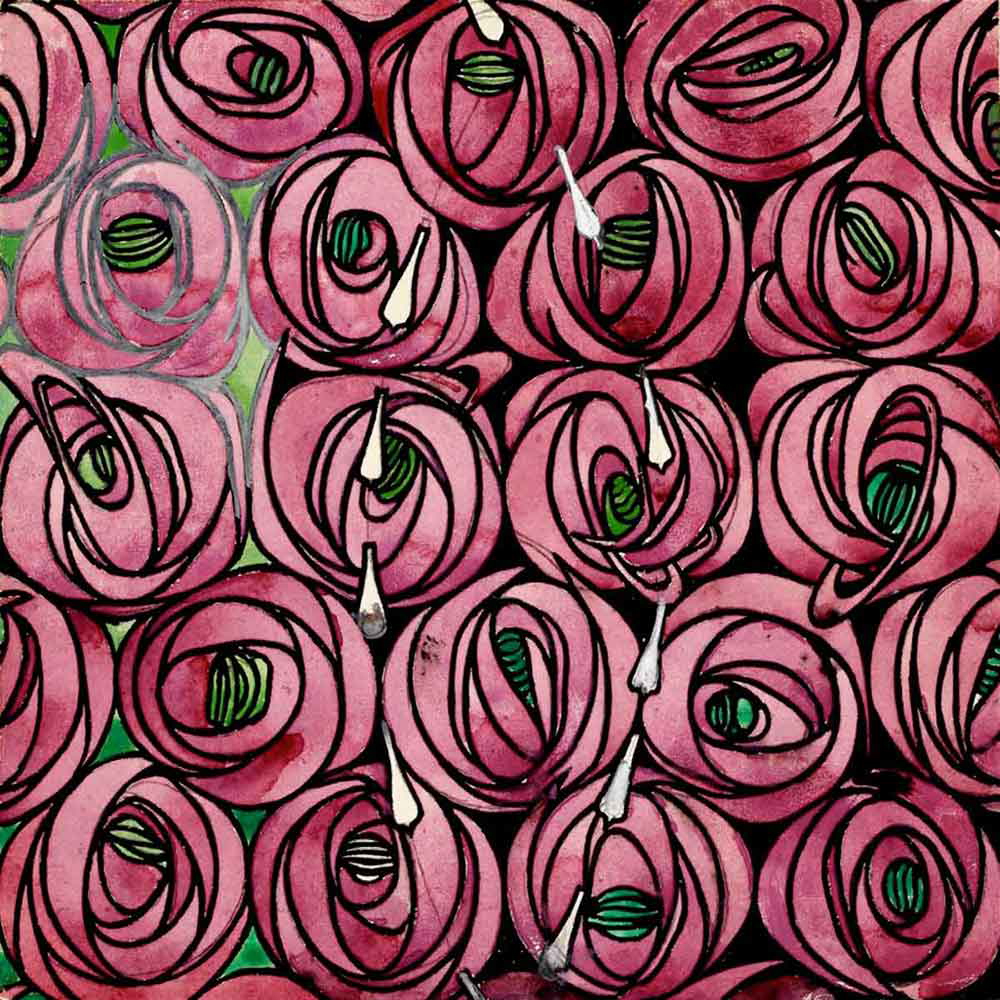
Art Nouveau was a style that emerged in the 1880s and lasted until the beginning of World War I. It spread throughout Western Europe and the US, particularly in industrialized countries, while maintaining a modern and cosmopolitan character despite local variations. The term Art Nouveau literally means New Art and originated in the 1880s from the Belgian magazine L’Art Moderne, referring to the collective works of Les Vingt, a group of artists who advocated for the integration of fine and decorative arts.
This new art movement was influenced by various sources, including the Arts and Crafts movement, Pre-Raphaelite painters, Medieval art, Japanese art, and, above all, the beauty of nature. Art Nouveau generally opposed academicism, eclecticism, and historicism.
The main patterns of this movement featured organic and geometric elements, elegant curves, flowers, animals, flowing lines, agility, dynamic movement, and feminine beauty. The prevalent materials of this period included modern substances such as iron, glass, ceramics, and later, concrete, which were used to create unusual forms and larger open spaces. The primary colors associated with Art Nouveau included various shades of green, brown, and soft yellows, along with complementary colors such as lilac, violet, and purple. Other common colors included peacock blue, turquoise, sage, emerald green, and olive.
Art Nouveau Patterns in Architecture
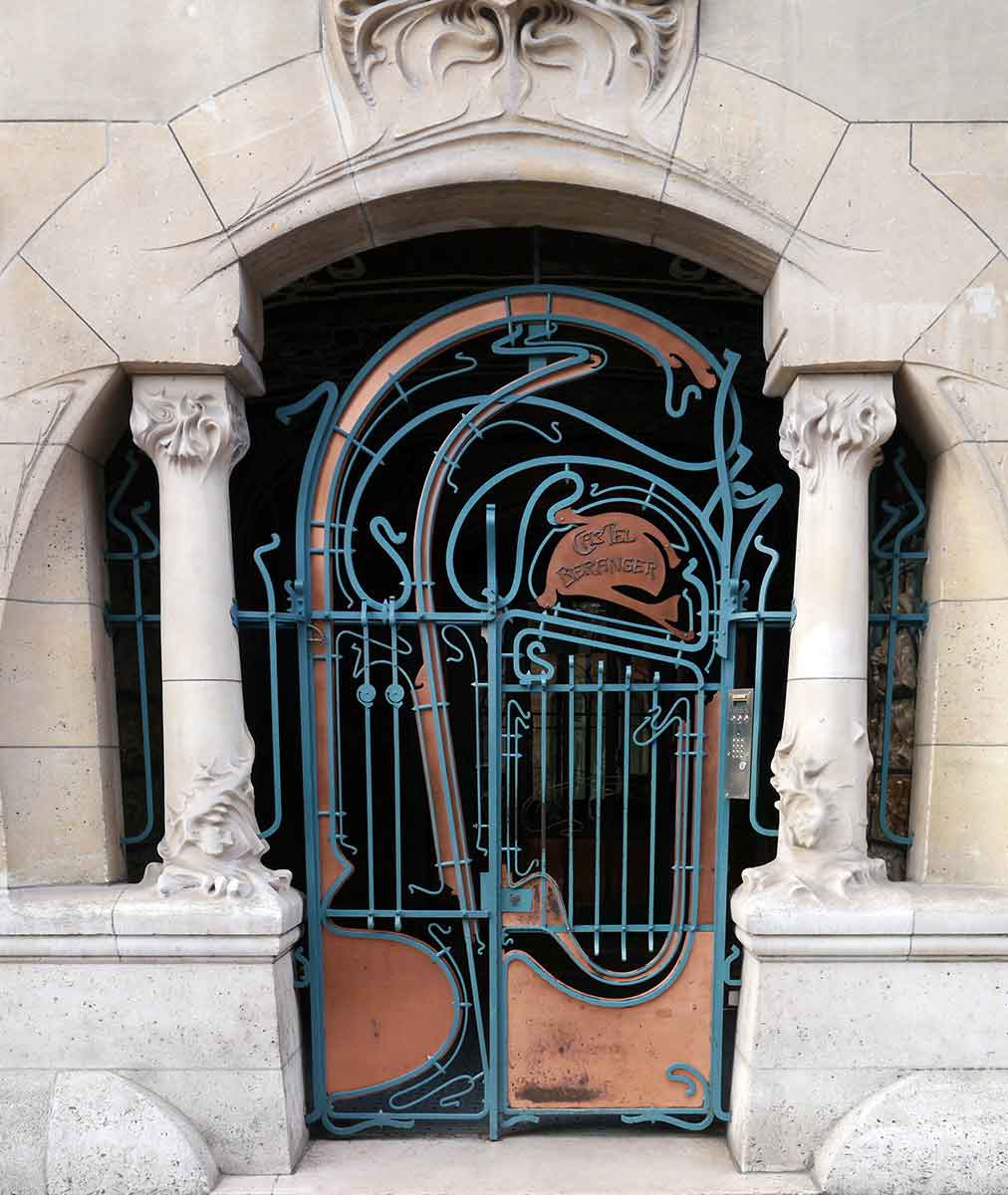
Art Nouveau is notable for its patterns inspired by nature. The lines characteristic of this period are often curved, resembling tree branches and leafy tendrils. A prime example of these motifs in architecture is the Castel Béranger, designed by Hector Guimard and completed between 1895 and 1898. Hector Guimard, originally from Lyon, studied at the École des Beaux-Arts in both Lyon and Paris. His encounter with Victor Horta in Belgium had a profound influence on him, leading Guimard to incorporate the naturalistic elements of Art Nouveau into his designs. For Castel Béranger, he persuaded his client, Madame Fournier, to adopt this innovative style, overseeing all aspects, from exterior architecture to decorative details. The building showcases a variety of original forms, materials, and colors that blend marine and floral themes. The main entrance is particularly striking, featuring distinctive naturalistic and curvilinear details in both the iron door and the surrounding organic-shaped columns.
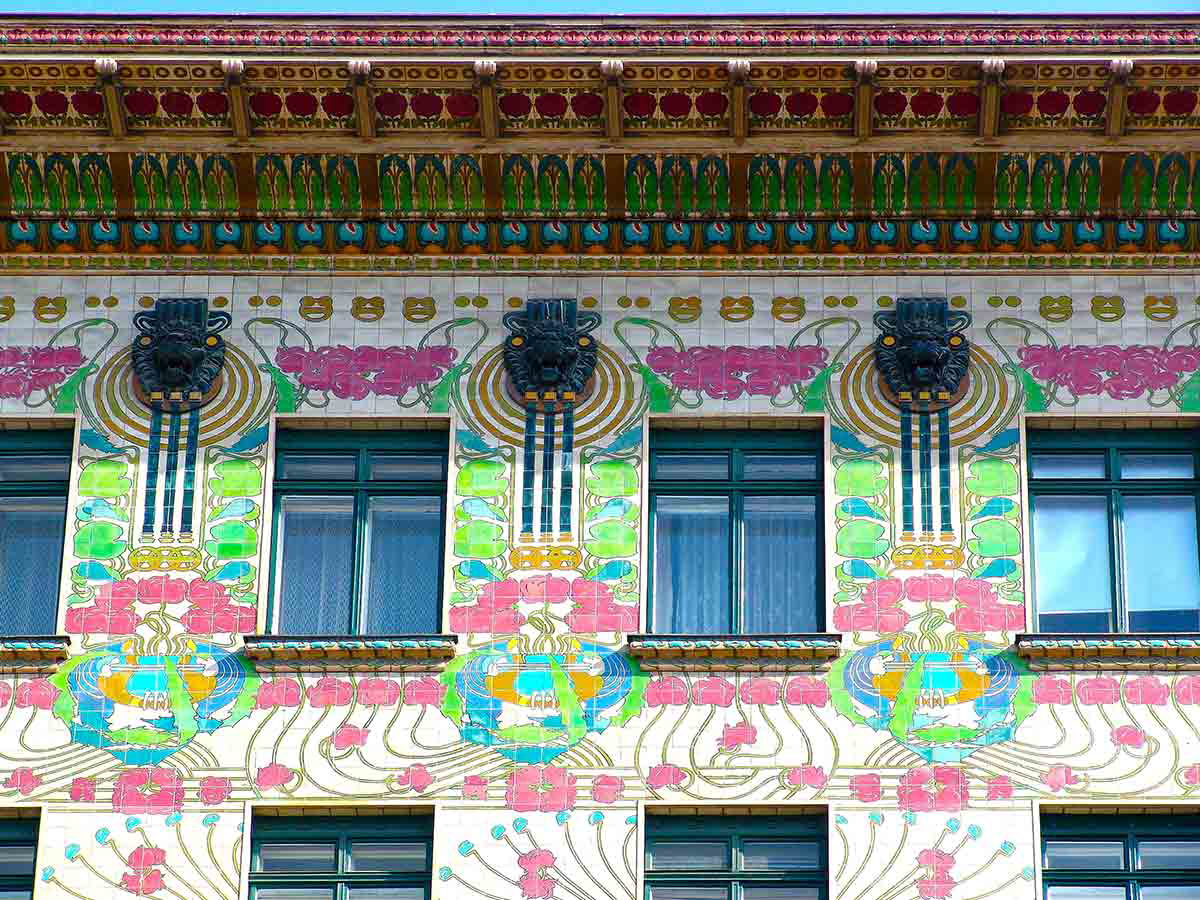
Another prominent trend during this period, rooted in the beauty of nature, was the depiction of flowers and animals. A notable example of this exterior decoration in architecture is the Majolica House. Built in 1898 by Otto Wagner, this building is part of the Linke Wienzeile Buildings complex in Vienna. The Majolica House features elaborate decorations of colorful tiles, sculptures, and wrought iron. Its facade is entirely covered in majolica tiles arranged in a floral pattern, while imposing iron busts of lions adorn the windows in between.
The cornice of the building is particularly noteworthy, showcasing organic designs in a rich color palette reminiscent of ancient classical temples. There is a gradation of detail and color from the bottom to the top of the building. It begins with a green iron base and gradually increases in complexity and vibrancy, shifting from red to green as it reaches the roof. The transitions between the buildings on each side are managed by a band of balconies.
Art Nouveau Patterns on Utilitarian Objects
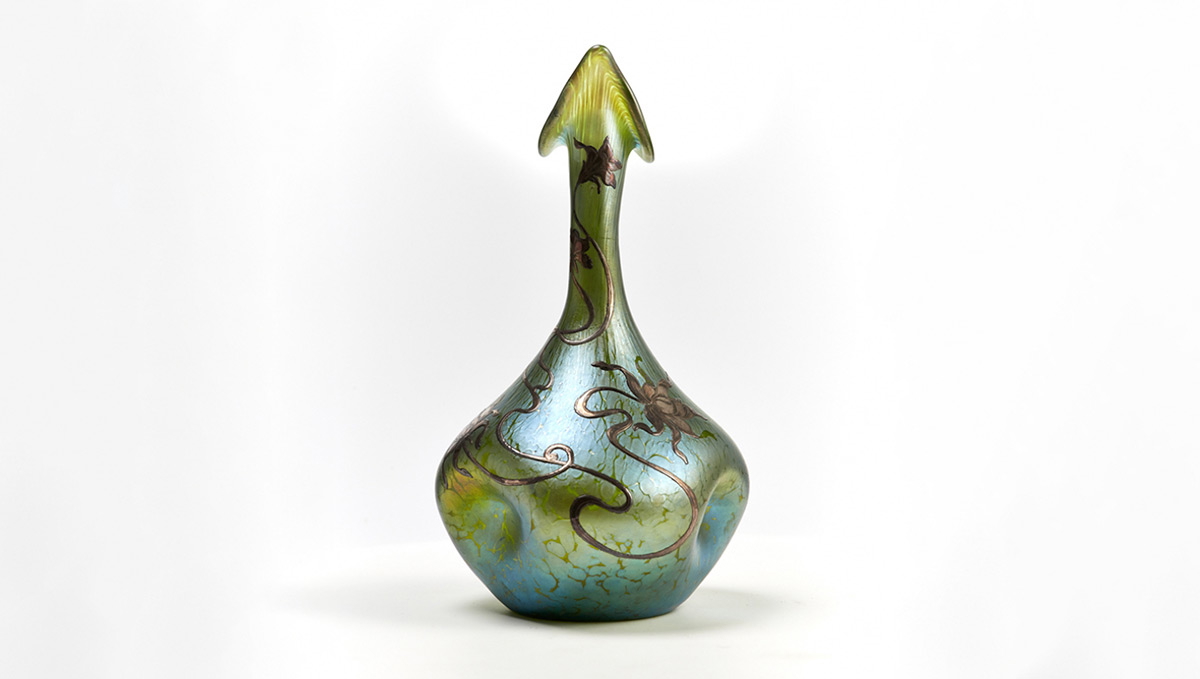
Art Nouveau was a movement that sought to infuse everyday utilitarian objects with the beauty of fine art. An excellent example of this is a rosewater sprinkler attributed to the Bohemian manufacturer Johann Loetz Witwe. This exquisite piece draws inspiration from traditional Persian rosewater sprinklers as well as the graceful, curved lines found in nature. Crafted from iridescent green glass, the sprinkler features a spherical body with a spiral neck and a crescent-shaped opening that resembles unfolding leaves—motifs that are characteristic of the Art Nouveau style. Additionally, the silver plating highlights stylized floral designs, while the scattered cavities on the surface create an appealing texture to the touch.
Loetz company, founded in 1840 in Klostermühle, Bohemia, produced designs that were influenced by Roman excavated glass and aimed to imitate hard stones. This approach resonated with the tastes of the late 19th century. During this era, Bohemian glass was transformed to fit the Art Nouveau style, resulting in a range of iridescent and incised creations. Loetz collaborated with renowned designers such as Josef Hoffmann and Koloman Moser to create innovative works.
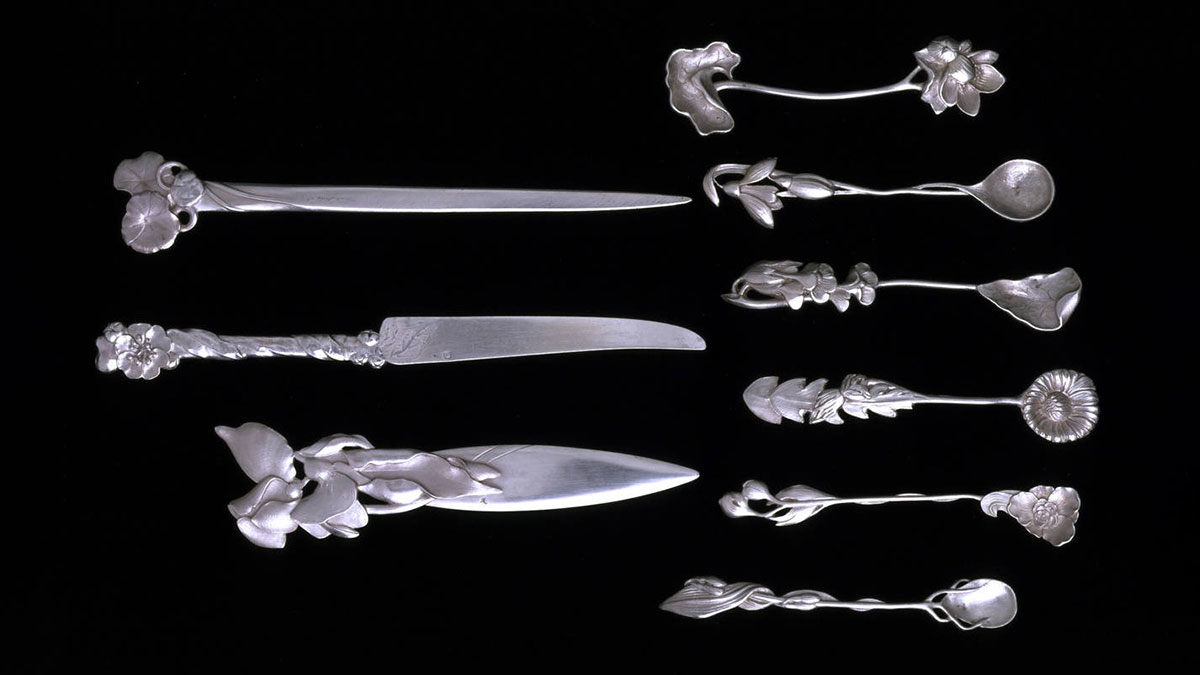
The patterns of the movement adorned even the most ordinary objects, enhancing their functionality with elegance and uniqueness. This set of silver knives and spoons featuring Art Nouveau motifs was created around 1895 by Prince Bojidar Karageorgevic, a member of the exiled Serbian royal family. This silver dinnerware features elegant lines and embossed decorations, crafted through a casting process. The handles and the bowls of the spoons are adorned with intricate floral designs that evoke the beauty of watercress plants. The buds, leaves, and flowers enhance the finely detailed base, resulting in a harmonious overall appearance.
Bojidar spent most of his life in exile in France and served in the French Army, earning the Cross of the Legion of Honor. He taught singing and drawing and later became a translator and journalist. His artistic interests led him to Munich, Dresden, Berlin, and Italy before settling in Paris, where he contributed to various publications. He mingled with notable figures in the arts and later focused on decoration, producing panels and medallions. His works were first exhibited in Belgrade in 1908.
Art Nouveau Furniture
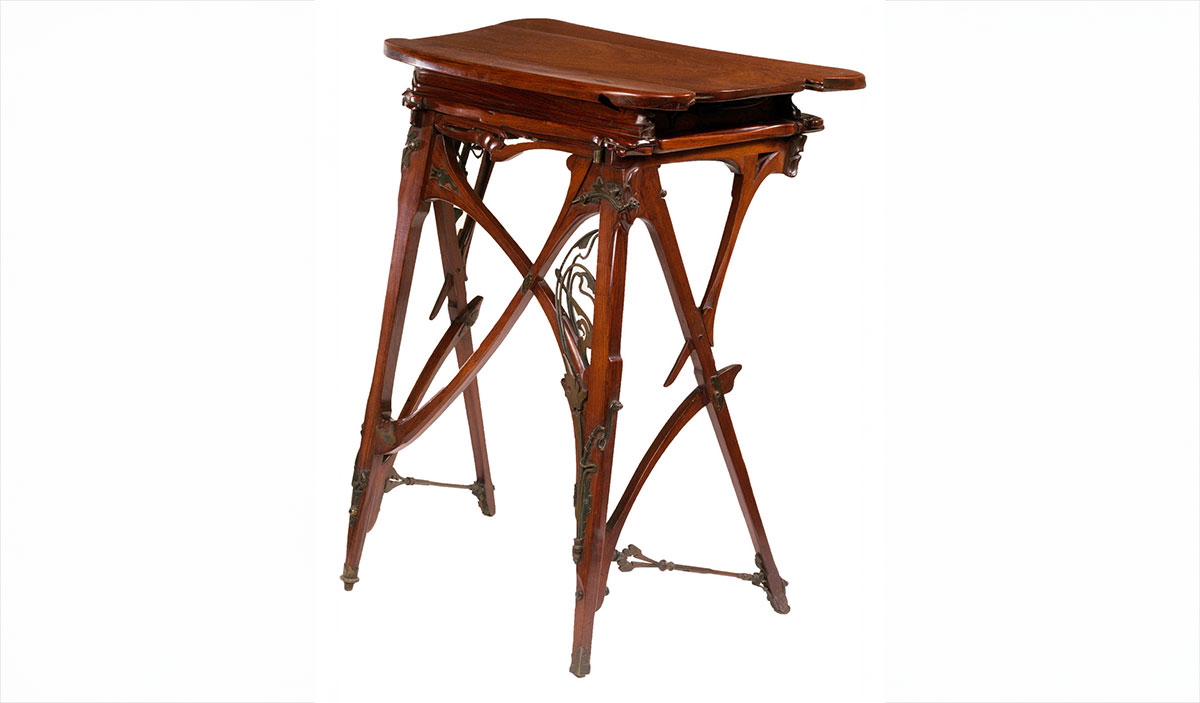
During the Art Nouveau era, unique patterns had a profound influence on furniture design, as evident in this exquisite writing table. Although it may seem like a simple folding table, its sturdy construction showcases durability and craftsmanship. The decorative bases frame the screws, merging beauty with functionality, while the brass accents add a touch of sophistication. Each meticulously crafted piece of wood highlights the elegance of the timber, and the flowing carvings reflect the charming aesthetic of Japanese design. Art Nouveau artists drew significant inspiration from Japanese art, adopting its patterns in their works. This table embodies the harmony of form and function, as well as tradition and innovation.
This work is likely attributed to the French architect and designer Hector Guimard, best known for designing the metal arches that adorn the entrances of Paris metro stations. As a young man, Guimard studied at the École des Beaux-Arts in Paris under Gustave Raulin, a teacher influenced by the Gothic Revival architect Eugène Viollet-le-Duc. This influence is evident in Guimard’s work, including this table, where visible structural elements are integrated into the decorative design.
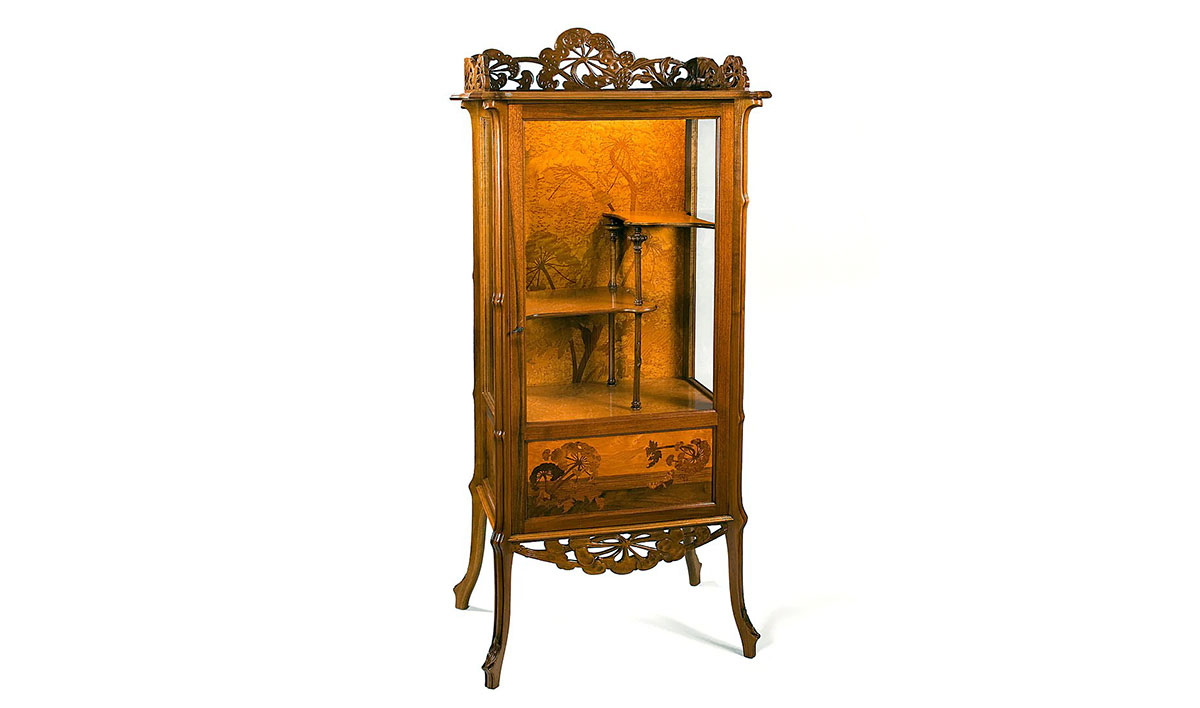
Another masterpiece in the world of cabinetmaking, inspired by Japanese art, is the Ombelliféres Fruitwood Marquetry Vitrine. Crafted by Émile Gallé from intricately carved wood, it features elaborate marquetry with naturalistic decorative patterns and stands on four elegantly curved legs. This piece highlights the often underappreciated beauty of the umbel flower, showcasing full relief carvings on both the top and bottom.
The back of the display is enhanced by narrow shelves that separate a large umbrella flower depicted in various shades of wood. The front panel showcases three umbel flowers reminiscent of Kitao Shigemasa’s Tree Peony and Finch, reflecting the influence of Japanese woodblock prints. Emile Gallé’s interest in wood started in 1885 when he sought exotic species for sculptural vase bases. Intrigued by their colors and reflective qualities, he established a furniture workshop within a year, collaborating with skilled craftsmen and designers like Victor Prouvé, developing his artistic activity.
Art Nouveau and Interior Design
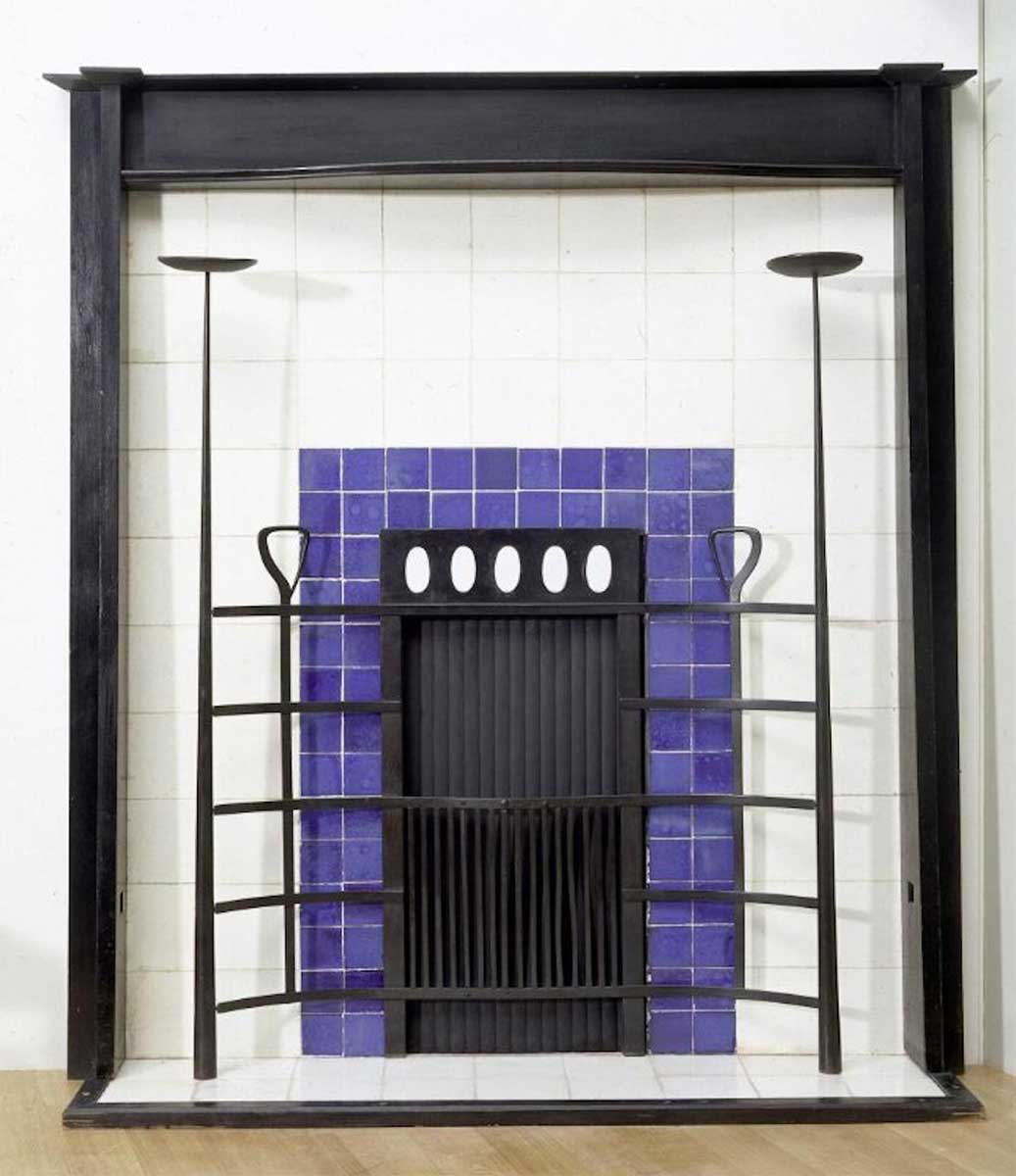
The unique patterns of Art Nouveau played a significant role in the interior design of the period. From ceilings to walls, every aspect was designed to reflect the beauty of this new movement. One notable example is the fireplace in the billiard room of the Willow Tea Rooms on Sauchiehall Street in Glasgow. Designed by Charles Rennie Mackintosh, it features a white and blue tile surround complemented by delicate wrought iron elements. This fireplace showcases Art Nouveau patterns influenced by the minimalism of Japanese art.
Mackintosh designed the interiors for Kate Cranston’s popular tea rooms, which resembled art galleries. He had full creative control over the Willow Tea Room, with his wife contributing some decorative motifs. Mackintosh’s design style was marked by simple shapes, such as squares, circles, hearts, and vertical lines. He incorporated stylized natural forms, including flowers, seeds, and leaves. As a prominent figure of the Art Nouveau movement, he effectively combined its motifs with elements of Celtic designs and Japanese art.
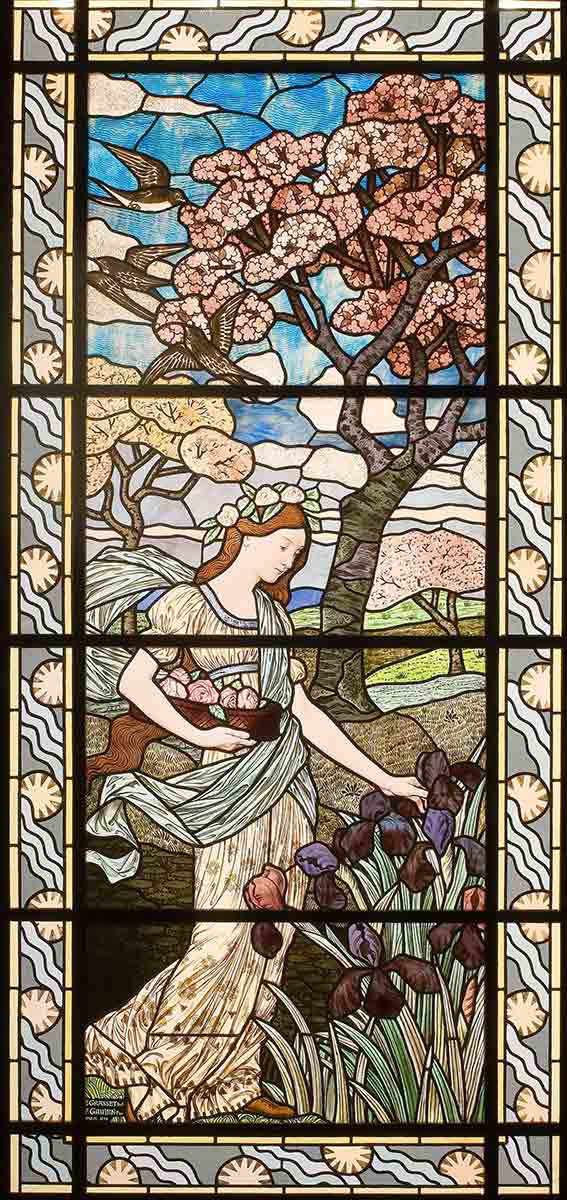
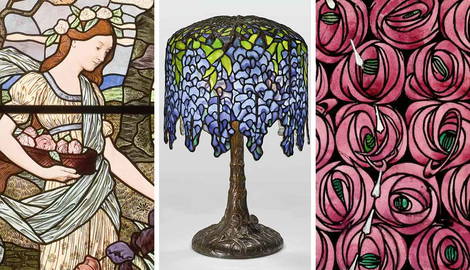
A key aspect of interior design featuring Art Nouveau patterns was seen in the use of stained glass windows, which added elegance and style to the buildings. These windows often showcased themes inspired by nature and femininity, incorporating both organic and geometric motifs. A notable example is Spring, a stained glass window that depicts an ethereal female figure surrounded by a lush green landscape. This artwork resembles poster art due to its vivid colors and simplified shapes. It was created by Eugène Grasset and displayed at the Salon du Champ-de-Mars in 1894.
Eugène Grasset was a French painter, engraver, illustrator, and decorator who is recognized for his contributions to the Art Nouveau movement. He studied at the Polytechnic of Zurich before moving to Paris in 1871, where he developed his artistic career. Grasset’s work is characterized by organic decoration, formal clarity, and cultural motifs, reflecting an interdisciplinary approach to creativity. His compositions often emphasize a timeless and ethereal beauty, evident in his stained glass windows, such as Spring, and in his posters, including the 1890 poster for actress Sarah Bernhardt. In addition to stained glass, Grasset designed jewelry and furniture, and he also expanded into interior and graphic design.
Art Nouveau Patterns in Decorative Objects
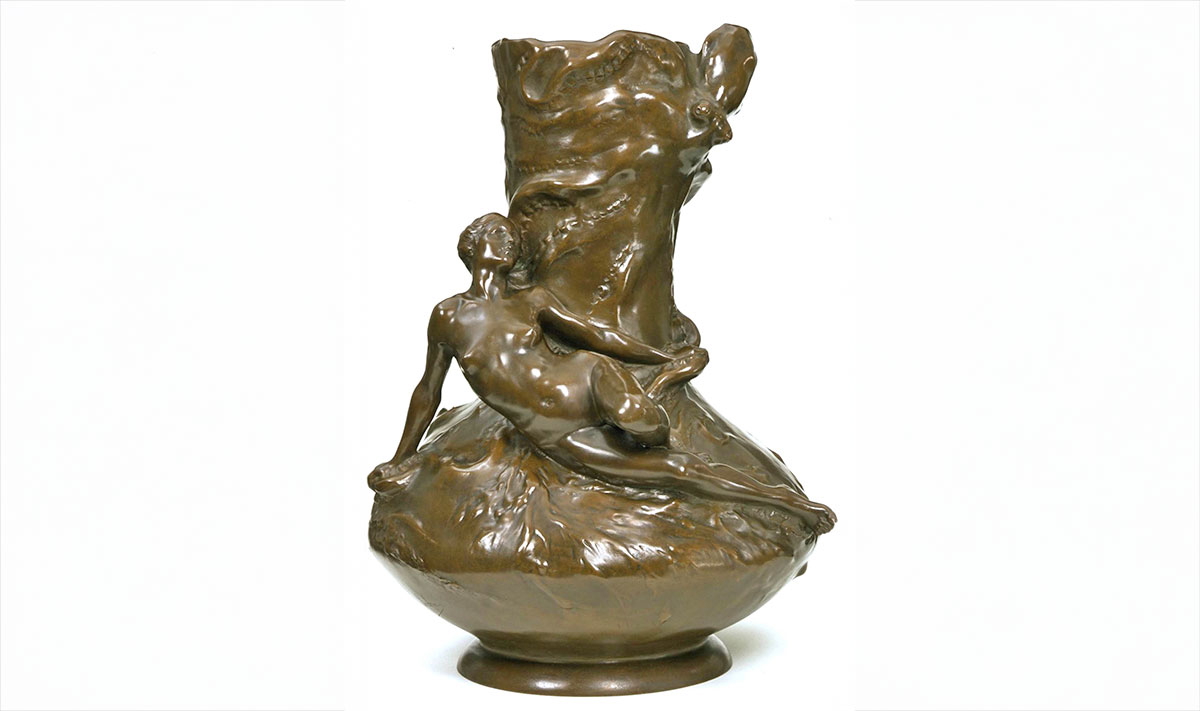
The Prey is another remarkable artwork that features Art Nouveau patterns celebrating femininity. It was produced by Susse Frères, one of the largest and most successful bronze foundries in France during the latter half of the 19th century. The piece was designed by Auguste Ledru, an artist who studied under notable figures like Jean-Marie Bonnassieux and worked as a sculptor and decorative artist.
This masterwork, crafted in patinated bronze, showcases marine and erotic images in high relief. At its center, a reclining nude woman rests on a rock, surrounded by seaweed. She gazes upwards, her hair styled in a chignon, with her arms positioned behind her—one hand on the rock and the other holding a large octopus’s tentacle. Her left knee rests on her right thigh. The vase’s surface depicts swirling waters, along with three finned fish and a large octopus clinging to the neck, its head rising above the rim while its tentacles wrap elegantly around it. The vase glorifies female beauty, sexuality, and freedom—qualities that began to be widely accepted and celebrated during the era when Art Nouveau emerged.
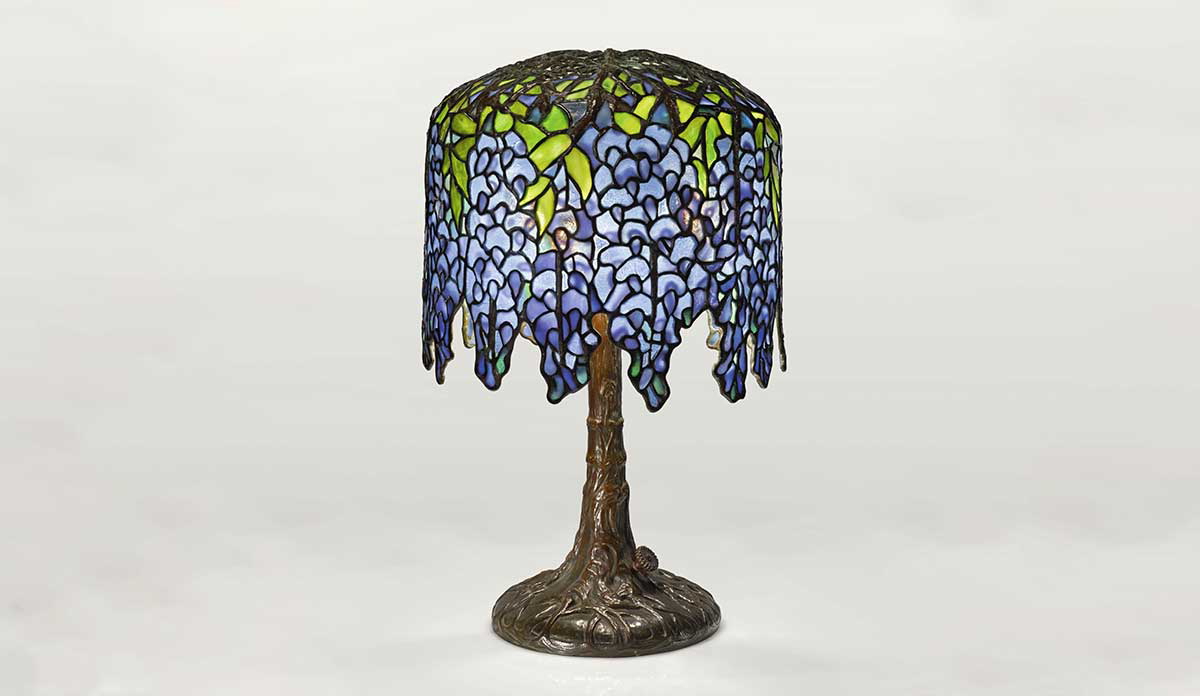
One of the most famous works from the Art Nouveau period that showcases naturalistic motifs is the Wisteria Τable Lamp. Created by Tiffany Studios, this lamp is renowned for its intricate design, which consists of over 2,000 pieces of glass meticulously arranged together. The lamp features a cluster of lavender-blue flowers and floral patterns in shades of purple and turquoise. The base resembles a tree trunk, complete with embossed details and a rich brown color.
Louis Comfort Tiffany, the influential designer behind Tiffany Studios, was known for his innovative glasswork. He transitioned from painting to glassmaking and gained fame for his Favrile glass and elaborate lamps. During the 1892 male glassmakers’ strike, he employed the Tiffany Girls, including Clara Wolcott Driscoll, who played a vital role in bringing his designs to life, such as the Wisteria lamp.