
From around 1100 AD into the late 1500s, manuscripts were produced, with topics ranging widely in subject matter. While many manuscripts that remain are religious in subject matter, even the most spiritual of texts drip with aesthetic and poetic choices. For example, a Book of Hours was commissioned for one person, and the commissioner had full command of what content would be in their copy. Additionally, the scribe who wrote the book and/or the person who illustrated it had full creative liberty outside of the standard prayers.
Telling Time With a Book of Hours
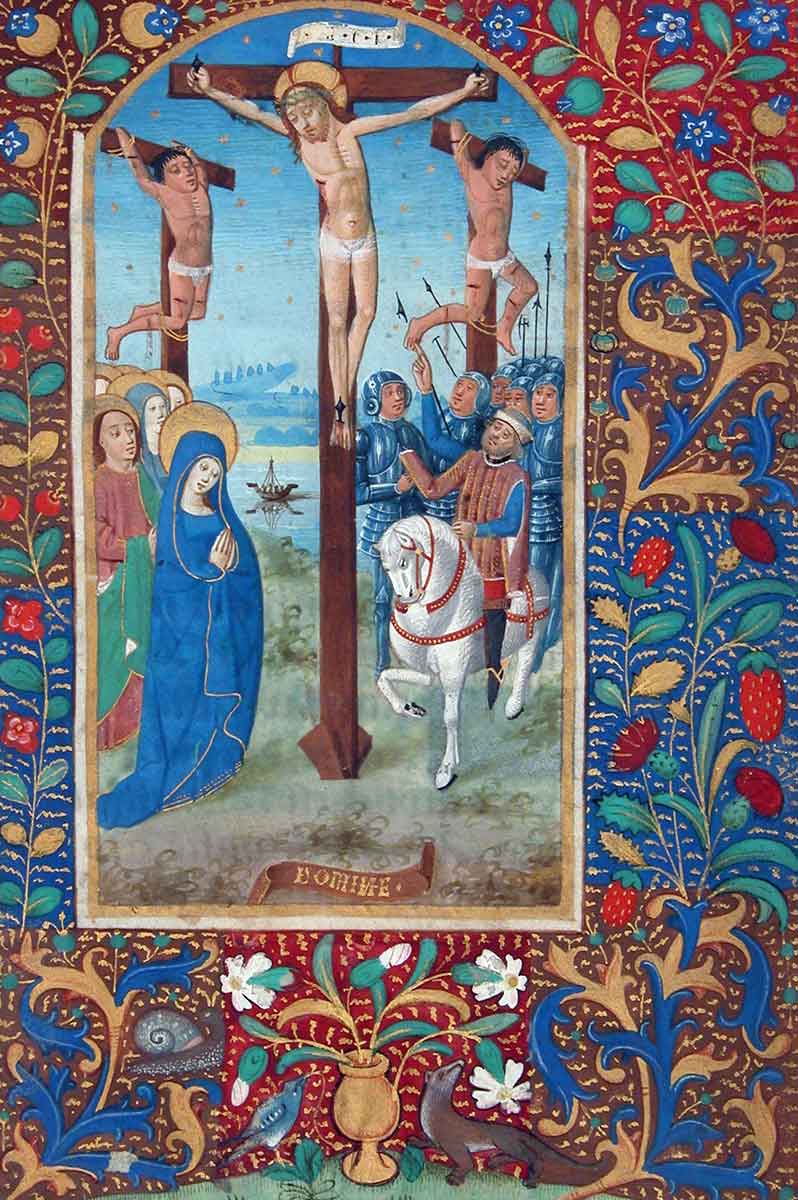
Many extant copies of Books of Hours from around the world remain to this day, yet no two are the same. Because of this, modern historians can analyze the artistic choices made between them. Due to the bespokeness of working from an individual commission, Books of Hours can even reveal personal spiritual meaning that people of the Middle Ages found within the cultural confines of the church.
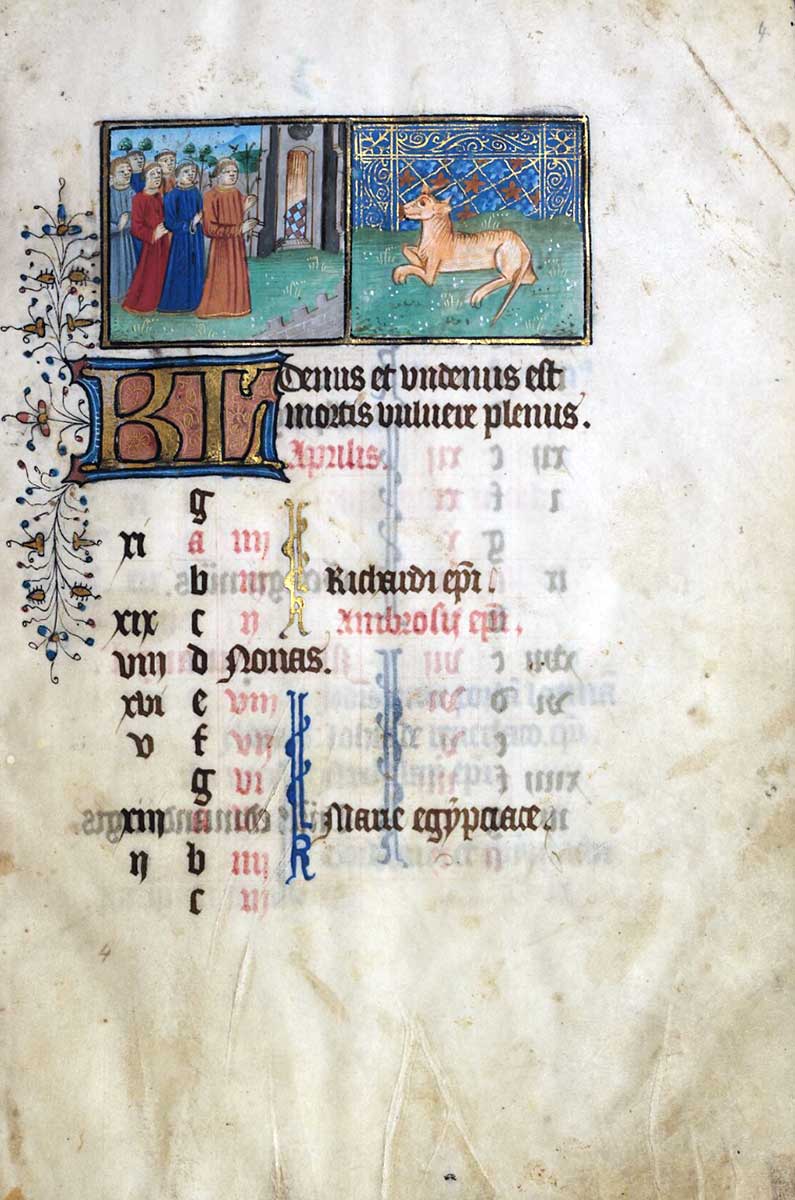
A Book of Hours was meant for the use of one individual, and was commissioned specifically so that the individual could recite the offices of prayer throughout the day (every 3 hours of the 24-hour day). The heart of the text was the written prayers, that were normally said aloud in mass, for the individual to recite to themselves while going about their day. Additionally, a Book of Hours usually contained other elements, such as a calendar, which would list all of the holidays, masses, saints’ days, and feast days for the devotee to remember. On the De Grey Hours calendar page, you can see a group of monks holding plants, perhaps to symbolize the flowers blooming, or as a reference to Palm or Easter Sunday. Additionally, a bull is pictured, symbolizing the April zodiac sign, Taurus.
Personalization and Spiritual Identity
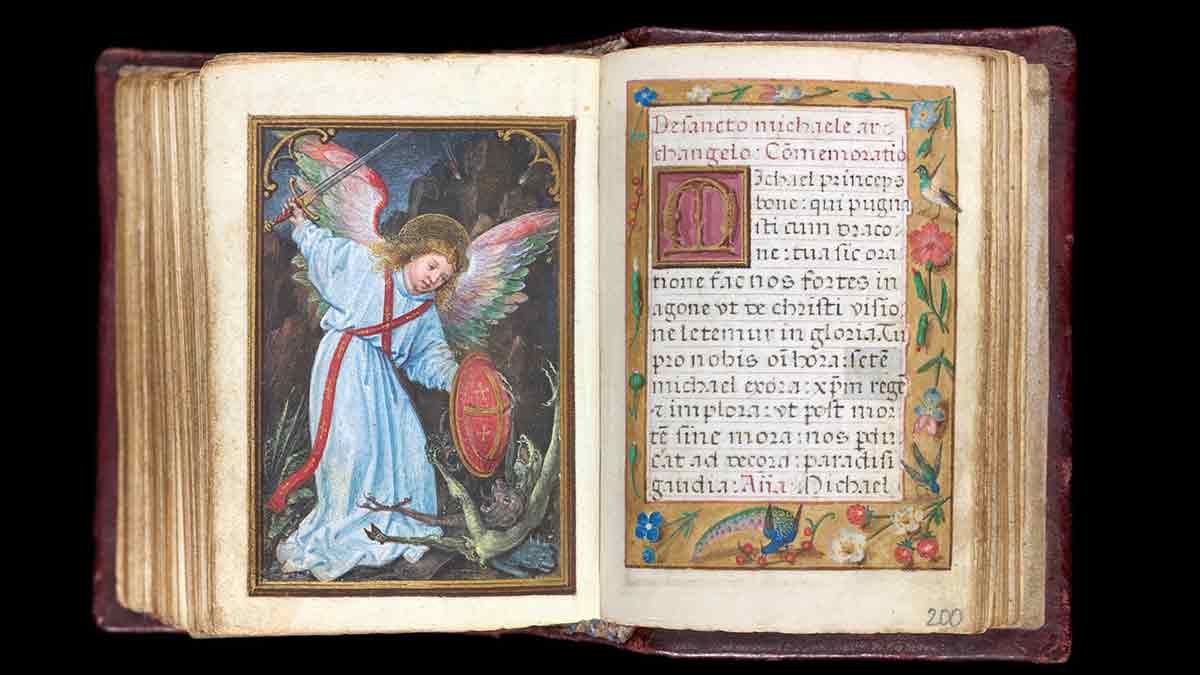
Since the Book of Hours was intended for individual, on-the-go use, many extant copies can be quite small. One impressive example of a miniature Book of Hours is by Simon Bening. It is less than three inches on either side. While this might seem impractical, practicality is actually what motivates this size: a book of hours was meant to be easily kept with you on your person. On the page’s edge, you can see how it is worn and slightly brown in the middle, where the individual likely thumbed through.
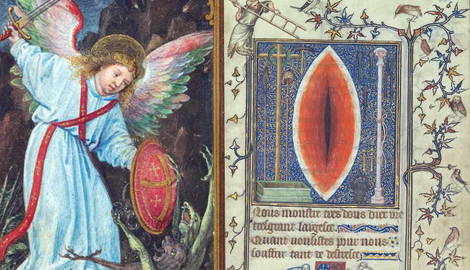
While a Book of Hours is no doubt a work of art, it was made to be used regularly. Practicality, for a medieval artisan, never acts as an obstacle to decoration. However, practicality certainly did not prevent a full page, richly colored, and detailed illustration of St Michael. With a sword and shield in hand, he fights five devils at his feet, and gossamer-light line work brings out the iridescent pastels of St Michael’s divine wings and halo. This triumphant image is one of dozens of equally striking works of art embedded between pages of text.
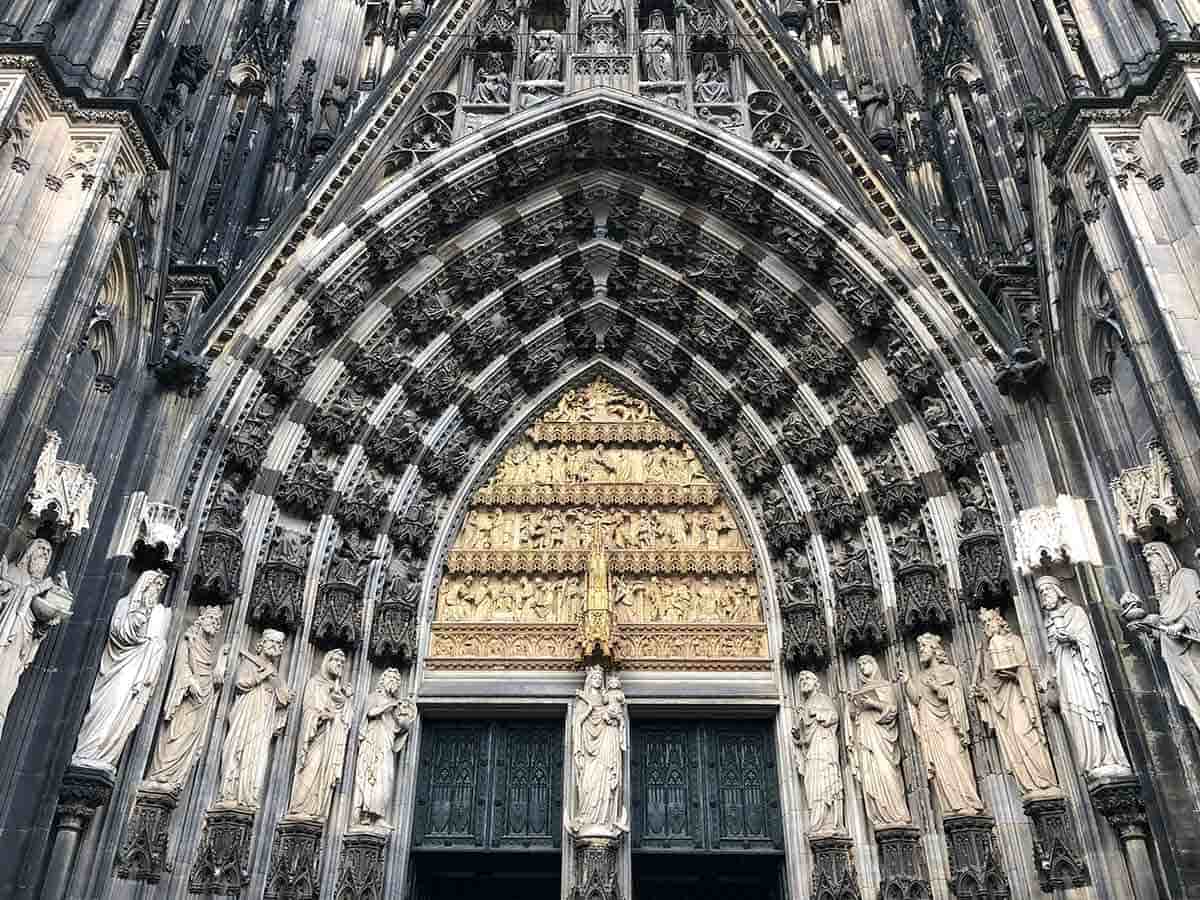
For people living in Europe during the high-late Middle Ages, Christianity dominated many aspects of their lives. While an individual may not actually be personally spiritual, this faith and its use of art to communicate the messages from its text remain a powerful influence in the history of art. Art was used to show scenes from the Bible, whether through a massive cathedral covered in sculptures, or in the form of stained glass windows, painted murals, tapestries, mosaics, and, of course, illuminated manuscripts. The reason for this was so that people who were not literate or who did not know Latin could still learn about and be inspired by the Bible verses recited in Mass. Still, ecclesial art served (and continues to serve) complex liturgical and theological functions for elite, clerical, and common audiences alike.
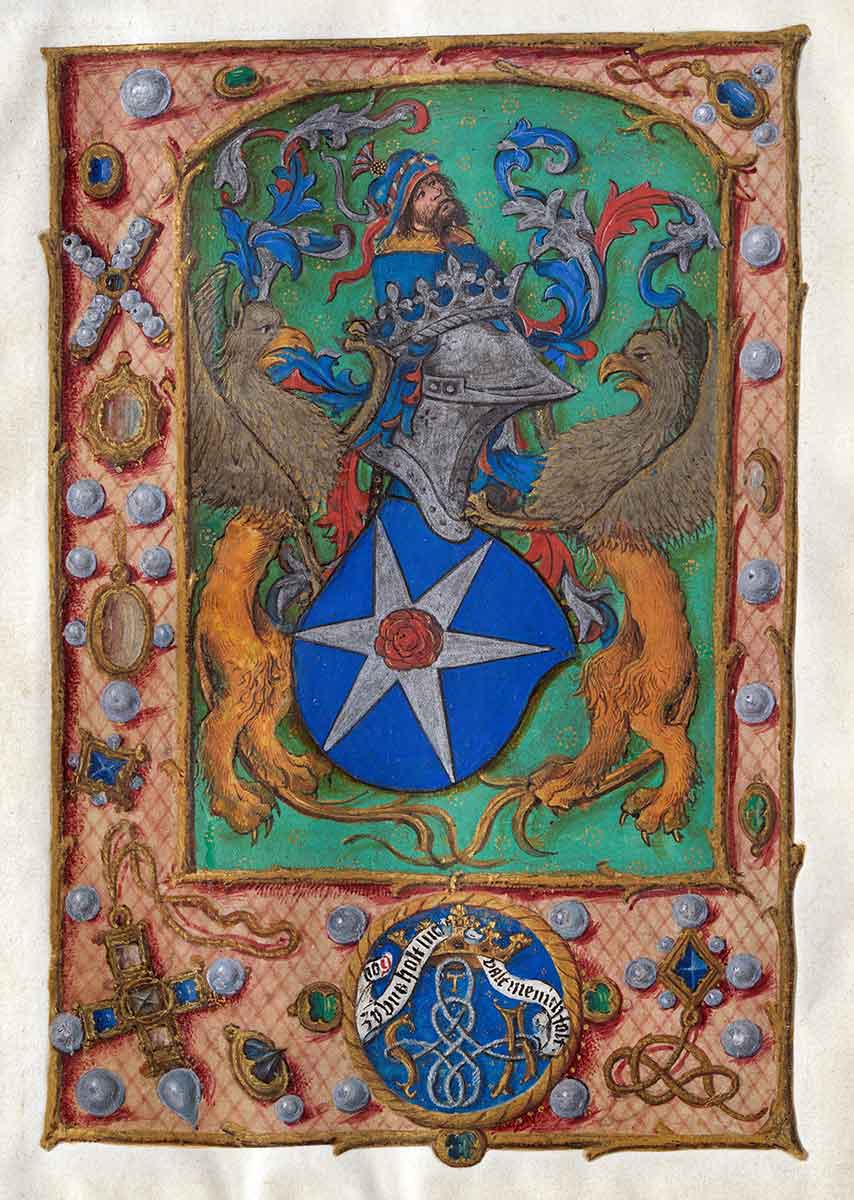
Communicating even one story through a striking work of art enabled anyone who simply entered the church to visually absorb some meaning from their rich surroundings. In this way, I like to think of Medieval art not as inherently religious in subject, but rather as a colorful, decadent, and stylistic expression of Christianity. Art is the product, and religion is the medium. There might be a dozen Moses sculptures; however, each one is created differently, with the individual or team of artists not shying away from making personal artistic decisions in the appearance of the final work.
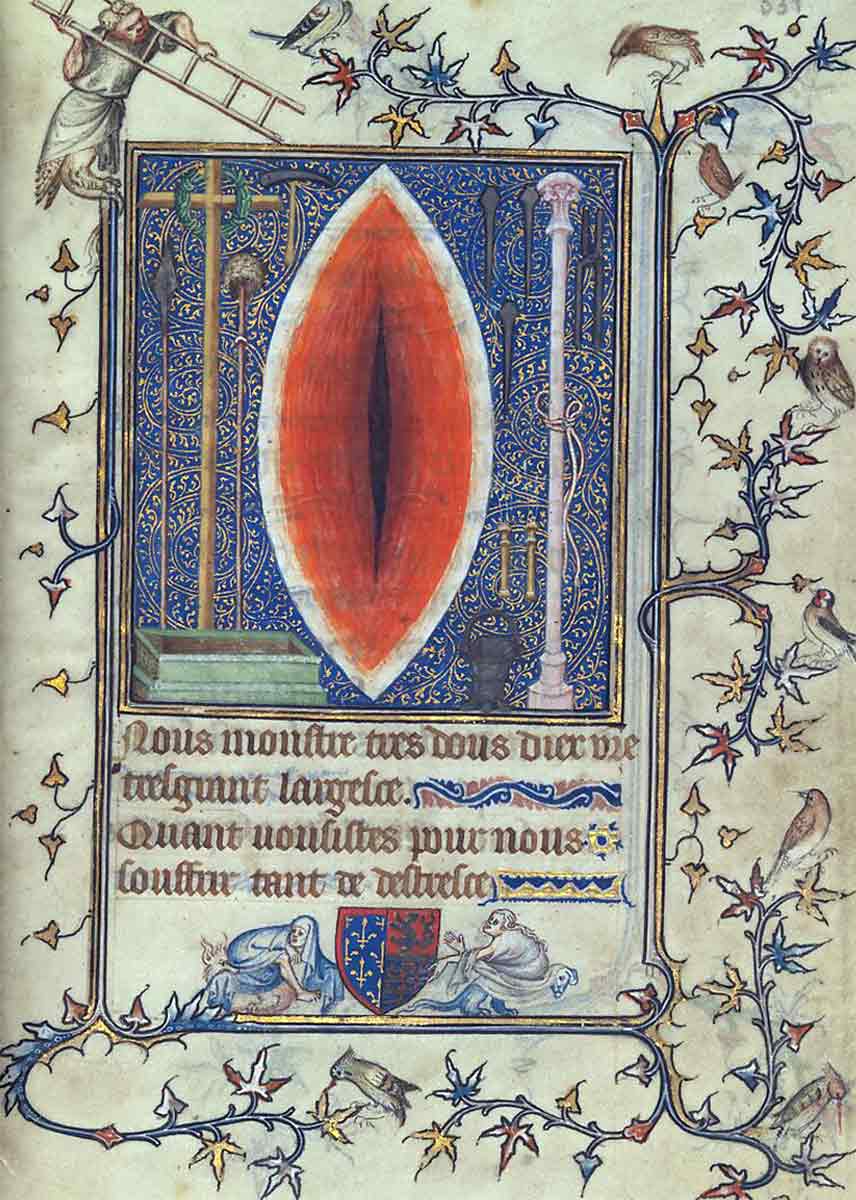
Now, if we continue this perspective, imagine living as a Princess in the Middle Ages who has just commissioned a Book of Hours: what topics might be included? The Prayer Book of the Bonne of Luxembourg offers a surprisingly introspective glimpse into how a medieval person might interpret Christianity. Pictured is perhaps the most famous page from this specific Book of Hours, which is a representation of Christ’s side-wound stigmata. However, when you see it at first, this may not be at all what comes to mind, but rather, a vulva. While this might seem like a crass adolescent conclusion, it is the correct one. Many extant artistic representations of Christ’s side wound, where the Roman soldier pierced Him to ensure He had died, are stylized to be reminiscent of a vulva.
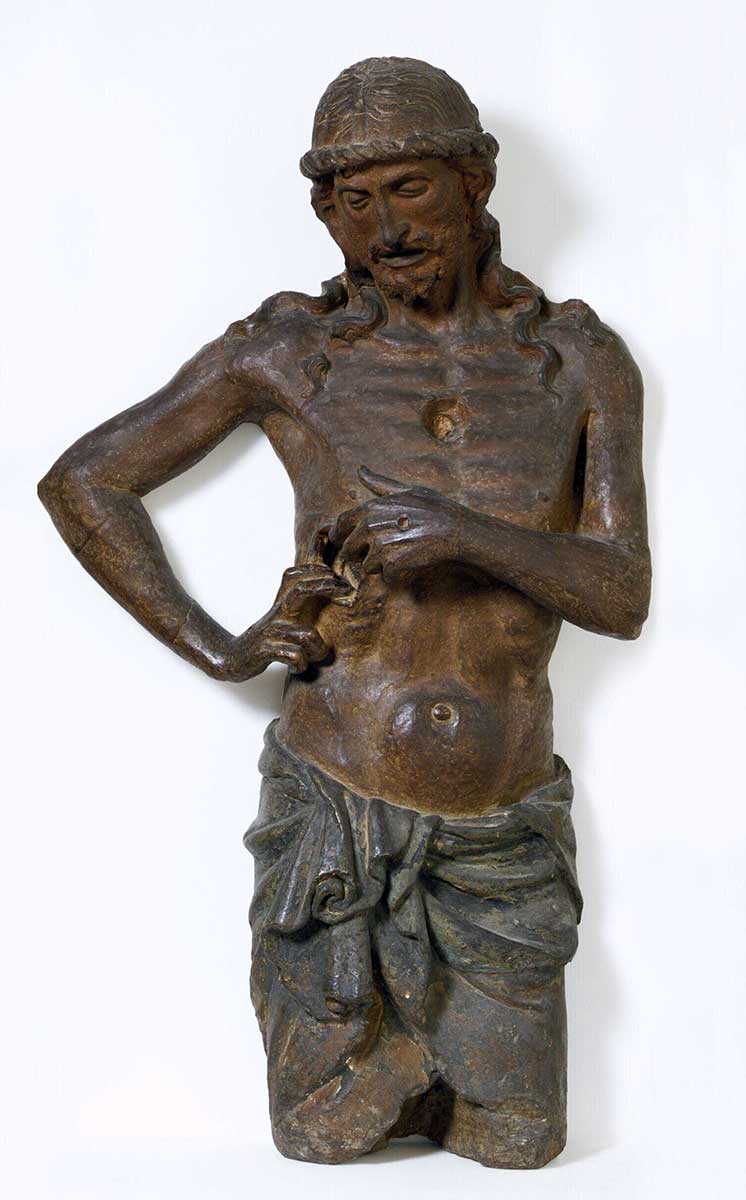
This is because at the moment of Christ’s death and then resurrection, Christianity as a religion was born. For medieval devotees, this correlation between the side wound and the birth of Christianity was beautiful and comforting. For Princess Bonne to commission this motif, we could assume she, too, felt resonance with this symbol. Historians know that Princess Bonne had nine children, with some dying young, and so motherhood, and literally the physical act of birth, is absolutely something she understood intimately.
Variations Around the World
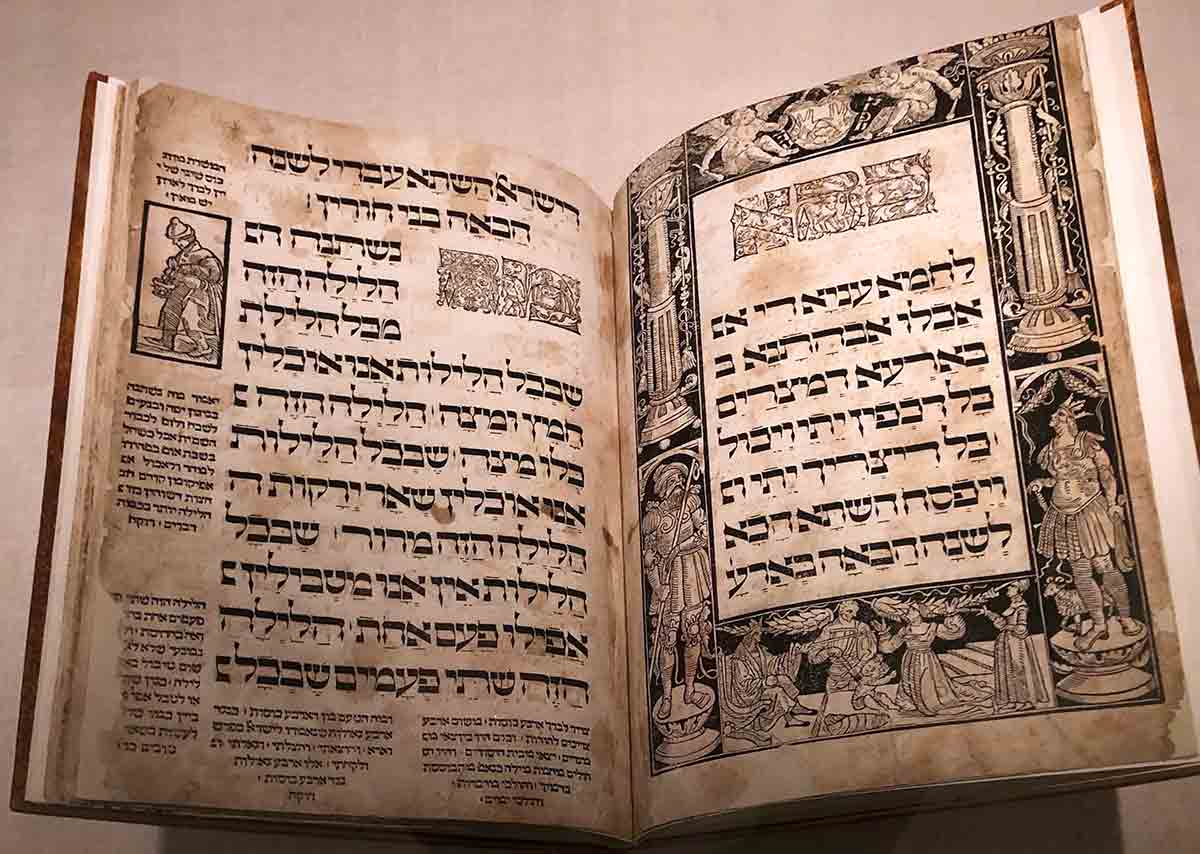
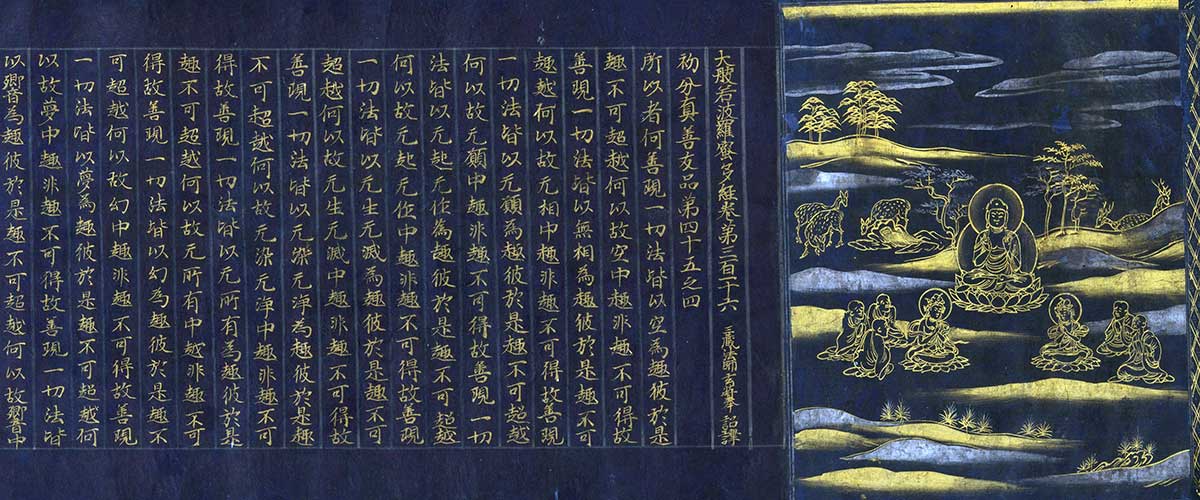
Similar to a Book of Hours, there are comparable medieval books in different religious practices around the world. The Jewish Haggadah, for example, is a sumptuous text that includes all the instructions for the Jewish high holiday of Passover, such as food and table preparation, Hebrew prayers, and songs. Another example is Buddhist sutras, or teachings, which were usually recorded on a handscroll. Often containing spiritual philosophy, poetry, and meditations for the reader to contemplate, usually intended for the instruction of a monk in training, or created by a devout Buddhist trained in the art of calligraphy as an expression of faith.
Modern Book of Hours Equivalents
If you look at any bookstore, art supplies store, or even in the checkout at your grocery store, you will likely find copies of the annual Farmer’s Almanac. First printed in the 18th century, containing information intended mostly for farmers raising plants and livestock, the Farmer’s Almanac is a compendium of charts of weather patterns, star and planetary events such as eclipses, ideal planting and harvesting times for specific crops, as well as recipes, articles, and more. Another example is the modern practice of guided journaling. The journals are often very decorative and full of inspirational quotes, journaling prompts, and artwork, and they are intended to be filled with your own thoughts, memories, and ideas, but to help you keep a focused theme.