
When considering Renaissance artworks about Rome, what we are really investigating is how the artists, writers, and thinkers of the Renaissance did not merely feel influenced by ancient Rome; they felt themselves to be the equals of the Romans. Although they created works reflecting Roman mythology, they understood that, for the Romans, mythology was not just storytelling; it offered guidelines on politics, morality, and religion. Great emphasis was placed on the individual’s responsibility to the state, and heroism frequently served as a reminder to serve the state rather than oneself.
1. Renaissance Version of The Meeting of Dido & Aeneas
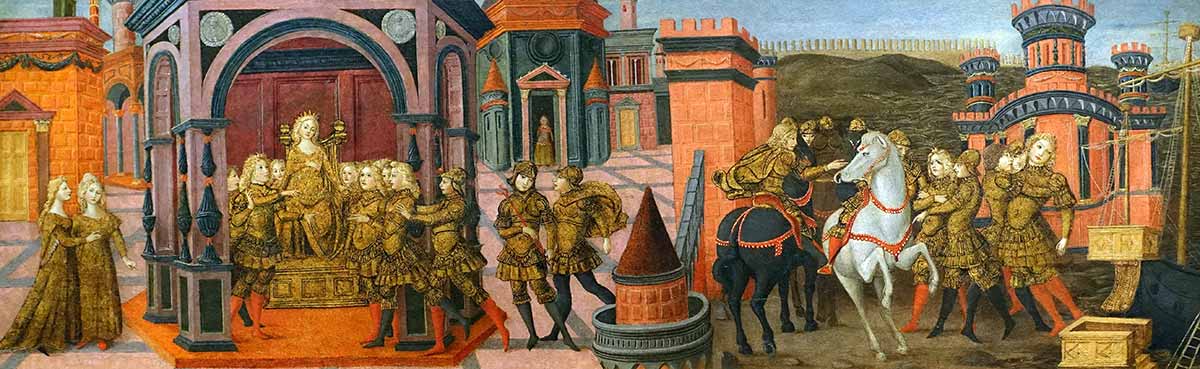
Francesco di Giorgio Martini was the archetypal Renaissance man. A renowned engineer and architect, Francesco was among the first painters to attempt to replicate Roman architecture in his work. In The Meeting of Dido and Aeneas, pictured above, he creates a version of Carthage based on Virgil’s 1st-century BC Aeneid, filled with elaborate architecture, rendered in three dimensions. His attention to the detail of the buildings portrayed is impressive. It is, however, not surprising considering that he was responsible for a treatise on architecture, engineering, and the art of war that was important enough to warrant a place on Leonardo’s bookshelves.
Francesco’s approach to his work reflected the influences of the great Humanists of the 14th century, such as Petrarch, Boccaccio, and Alberti. Petrarch, in particular, was seminal in emphasizing the importance of classical antiquity, a return to the purity of thought, and the reinvention of the self and the world around us.
Francesco’s Dido and Aeneas, taken from a cassone (wedding chest), offered the artist and his studio a chance to demonstrate their modern way of thinking. The studio’s artists revert to their Renaissance roots in the cast’s dress. There is no attempt to reflect the costumes of the ancient Romans who inhabited Dido’s Carthage. Instead, we see the richly decorated gowns and tunics of late medieval and early Renaissance fashion, reflecting the best of both worlds.
2. The Birth of the Virgin
In Comparison of Old and New Rome (1411), Manuel Chrysoloras called attention to the fact that ancient Roman sculpture could provide vivid snapshots of antique costumes, customs, and the like:
One can see clearly what kinds of arms the Ancients had, what kind of clothes they wore, and what the devices of their rulers were … these reliefs show how things were in past times.
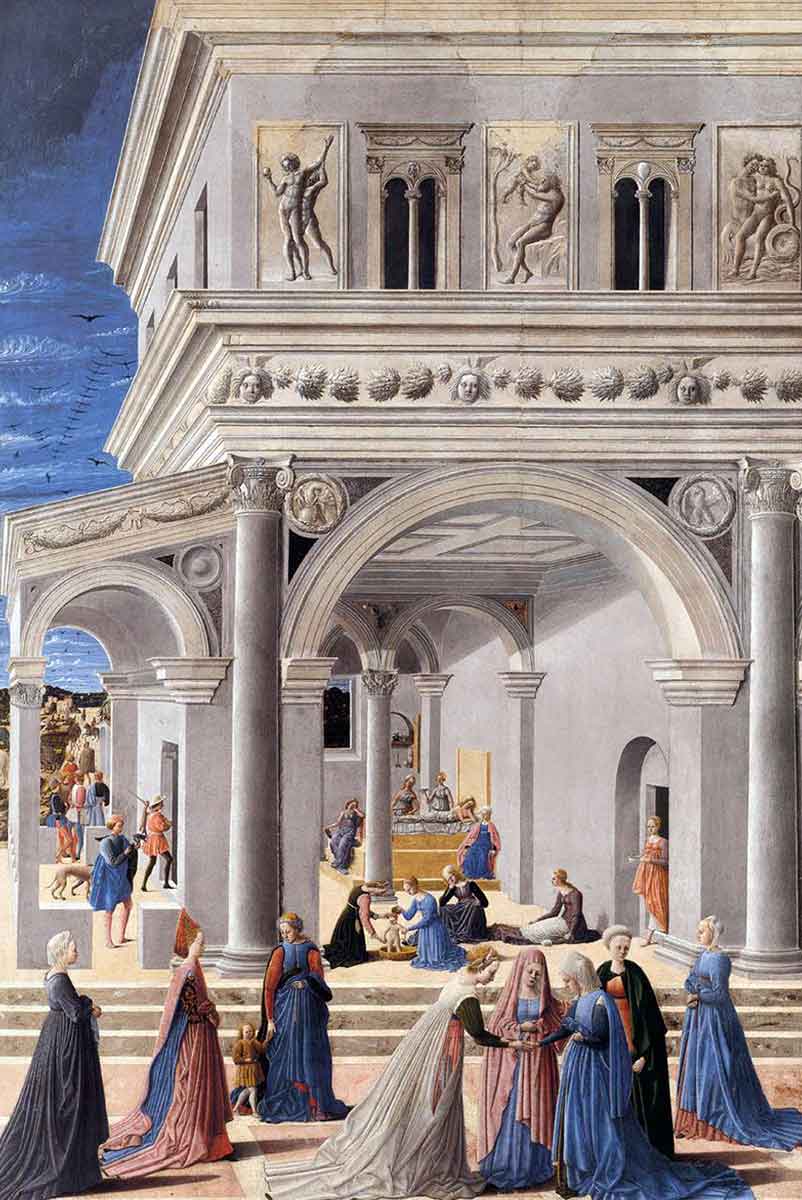
Renaissance artists were scrutinizing antique relief sculpture for authentic historical details. Before this, they had tended to depict the history and legends of ancient Greece and Rome using costumes and archaeological settings of more recent times, as seen in Fra Carnevale’s work The Birth of the Virgin.
While the Renaissance artist fully believed in his own skills in design and composition, the humanist revival of the classical spirit provided a ready source of subject matter. Here, Fra Carnevale showed off his knowledge of the architectural and sculptural styles of ancient Rome to great effect. Friezes and tondos adorn the loggia where the Virgin’s birth is taking place. The clothing of the people in the painting bears testament to the humanist exploration of ancient cultures. Some of the women in the background wear distinctly Roman robes, while the group in the foreground is dressed in typical 15th-century Tuscan garb. As if to draw the two periods together, we see a servant girl emerging from the building. She wears the customary Tuscan dress, belted high at the waist but drawn up in the manner of a toga.
3. The Funerary Bust of Andrea Mantegna
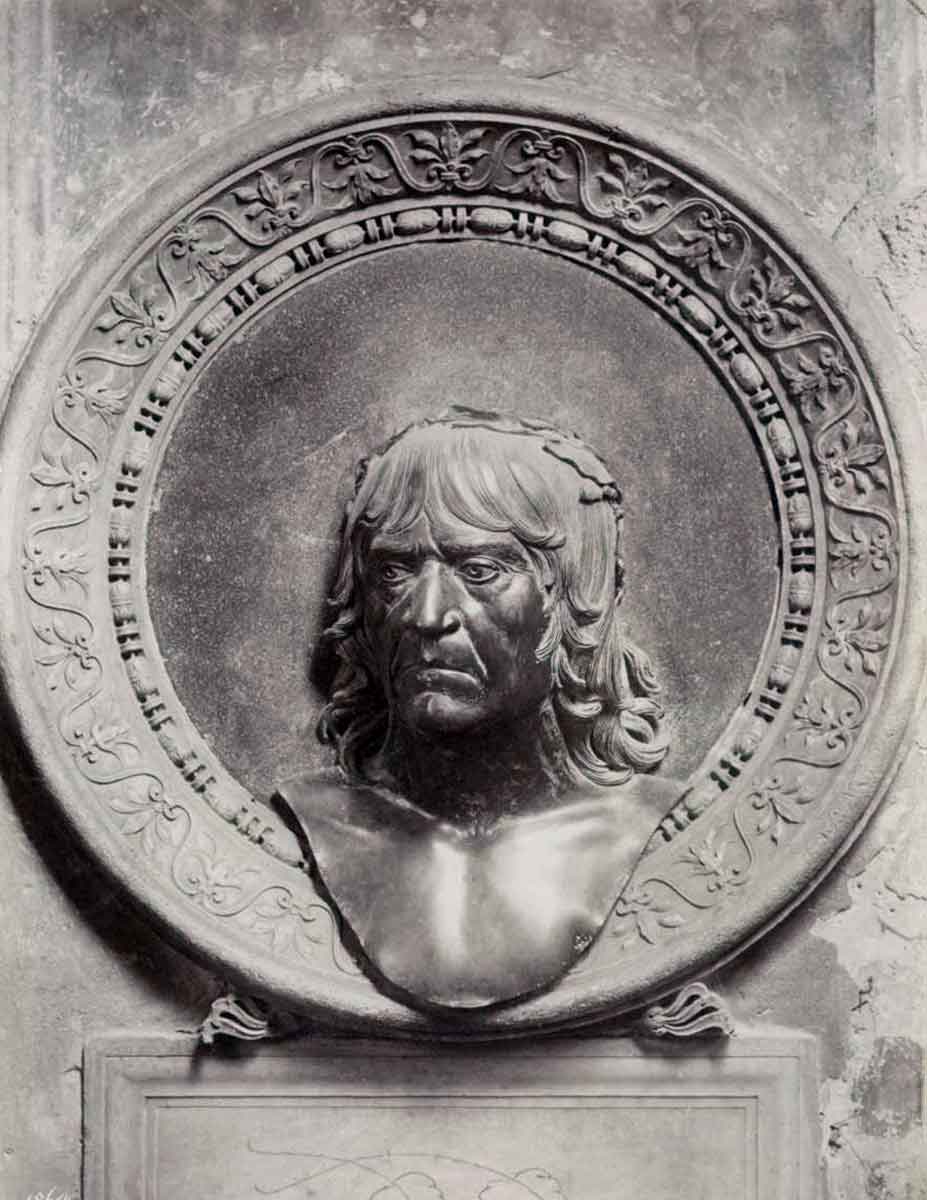
As the Renaissance progressed and Humanism reached ever deeper into the psyche of the time, artists like Andrea Mantegna, who had worked for the powerful Gonzaga family for over forty years, drew comparisons to the great creators of antiquity. Mantegna, firmly believing that his genius was equal to that of the ancient Romans, designed a funerary chapel for himself similar to those commissioned by prominent ancient Roman citizens.
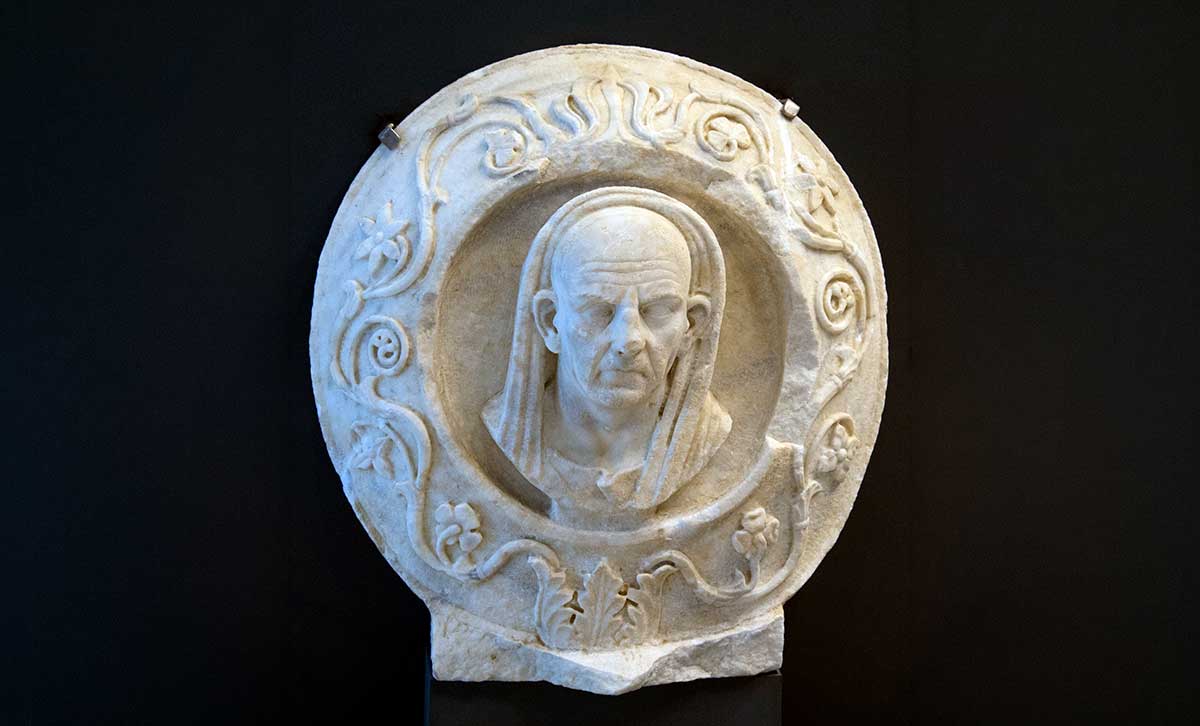
The chapel’s most striking feature is the bronze bust, set in a wreath of laurel leaves with his image emerging from the center in the manner of the Roman aristocracy for whom this style of commemorative art had been strictly reserved. An accompanying text places Mantegna side by side with Apelles, the most revered painter in ancient Greece, confirming Mantegna’s high opinion of himself as an artist.
4. Portrait Medal of Sultan Mehmed II
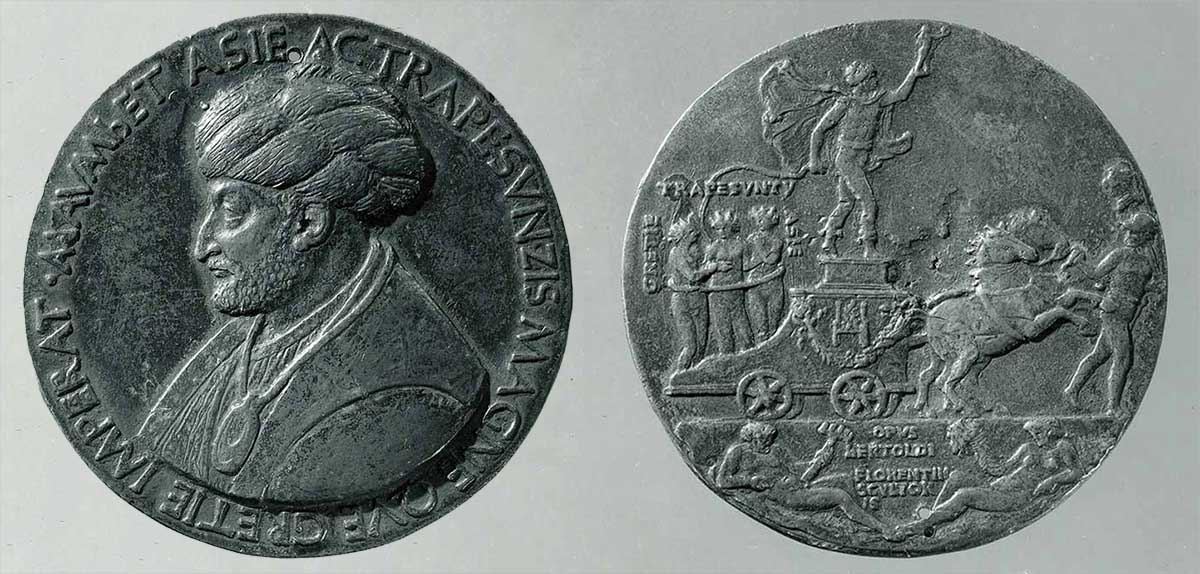
With Humanism’s focus on the importance of the individual rather than the ethereal or supernatural, Renaissance artists and their patrons revived the Roman practice of issuing commemorative medals. These medals, often designed by leading artists of the day, usually celebrated the individual commissioning them.
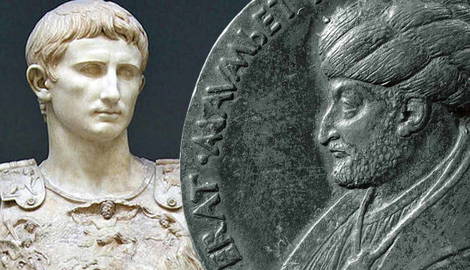
The above example, Bertoldo di Giovanni’s portrait medal of Ottoman Sultan Mehmed II, was not just another image akin to a painting. Commissioned by Lorenzo de’ Medici in honor of Mehmed’s victories in war, both men would have been well aware of how the medal would resemble those of the ancients, verifying Mehmed’s rightful descent from the emperors of Byzantium and Rome. The reverse of the medal, depicting a chariot similar to those familiar in Roman imagery, reinforces the point. The Renaissance man took his image and place in the world seriously. Emulating Roman honors seemed a perfect way to signal to the rest of society how influential you were.
5. Apollo Belvedere
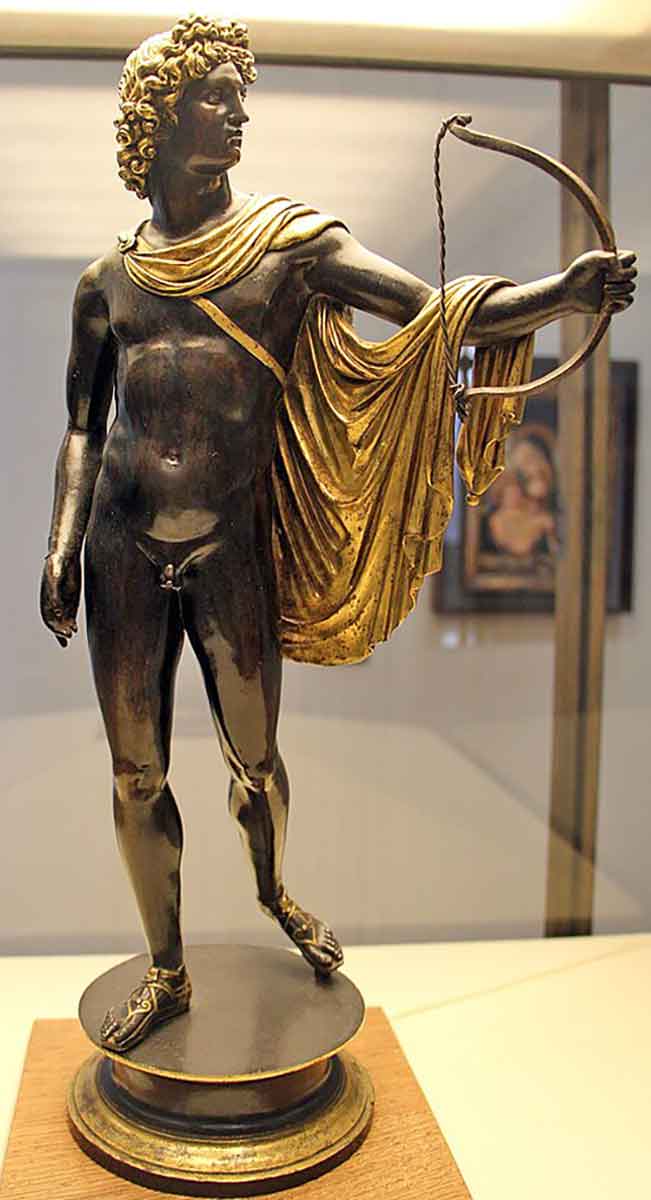
As the Renaissance progressed, the collection of antiquities reached a fever pitch. Of course, demand began to outstrip supply. With only a limited number of pieces available and those inevitably ending up in the studiolo of wealthy families such as the Gonzaga or Medici, a Mantuan sculptor named Pier Jacopo Alari Bonacolsi saw an opportunity to recreate some of the most famed Roman-period sculptures in miniature, cast in bronze. Such was the popularity of his work that he became known as Antico in recognition of his ancient subject matter.
Perhaps his most renowned work is the Apollo Belvedere. The original 2nd-century statue of Apollo had been excavated in Rome in 1489 and immediately admitted to the Belvedere at the Vatican. Antico, seeing a demand for copies of the famed statue, set to work. He had perfected a new casting technique that permitted him to recreate numerous identical copies of the same statue. In doing so, he solved the problem of the shortfall in supply of ancient visual art. The avid desire of Renaissance collectors was satisfied by these exquisite small bronzes, aiding the rejuvenation of antiquity’s ideals. Far from being seen as mere copies of the original Roman statues, these Renaissance miniatures were appreciated as their equals. However, this may say more about the self-aggrandizing, competitive nature of the period’s great families than about the artworks themselves.
6. Primavera
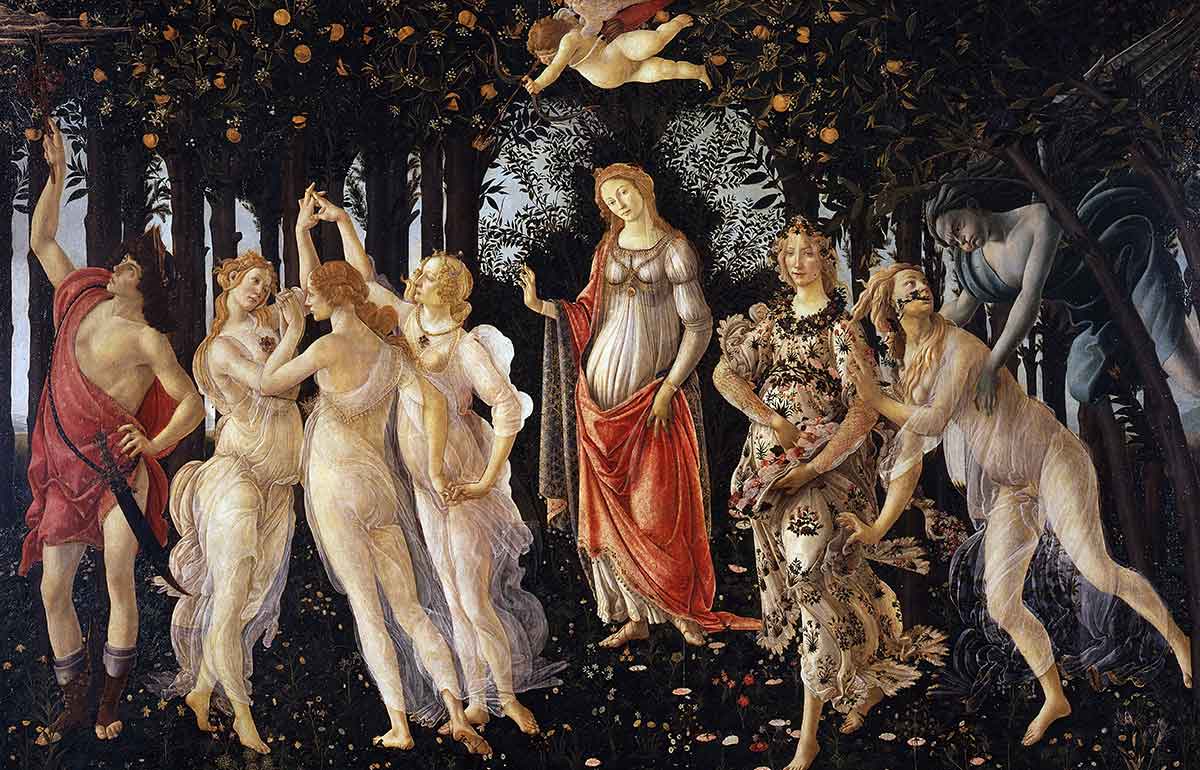
Sandro Botticelli, under the tutelage of Fra Filippo Lippi, had learned his trade at a time when art was struggling to assimilate the staid imagery and style of the Middle Ages with the ideals of classical antiquity. It was fortuitous for him that the renewed interest in ancient Rome and Greece permitted him to break free of medieval austerity.
When Botticelli was commissioned by Lorenzo di Pierfrancesco, a relative of Lorenzo de’ Medici, to paint Primavera for his private apartments, the result was a work that was a true product of its times. The Medici and their associates were the most powerful people in Florence, wealthy enough to commission the finest artists and to obtain the best education for their children. Indeed, it was Angelo Poliziano, a Humanist and tutor to the Medici offspring, who may have influenced the painting’s subject matter, as suggested by a line in one of his poems about Chloris, Venus, and Zephyr. The painting depicts how Chloris is kidnapped and transformed by the March wind, Zephyr, who becomes the symbol of rebirth, Primavera, or Spring. Other aspects of the painting reflect the Roman poet Ovid’s work Fasti.
Not only does the painting reflect the core beliefs of the Renaissance, such as the rebirth of classical ideas (in this case, Rome), but it is also a veritable riot of fertility and renewal. From its incredibly detailed horticultural references to the classical literature that inspired it, Primavera justly deserves its place in the pantheon of Humanist Renaissance art.
7. The Fall of the Giants
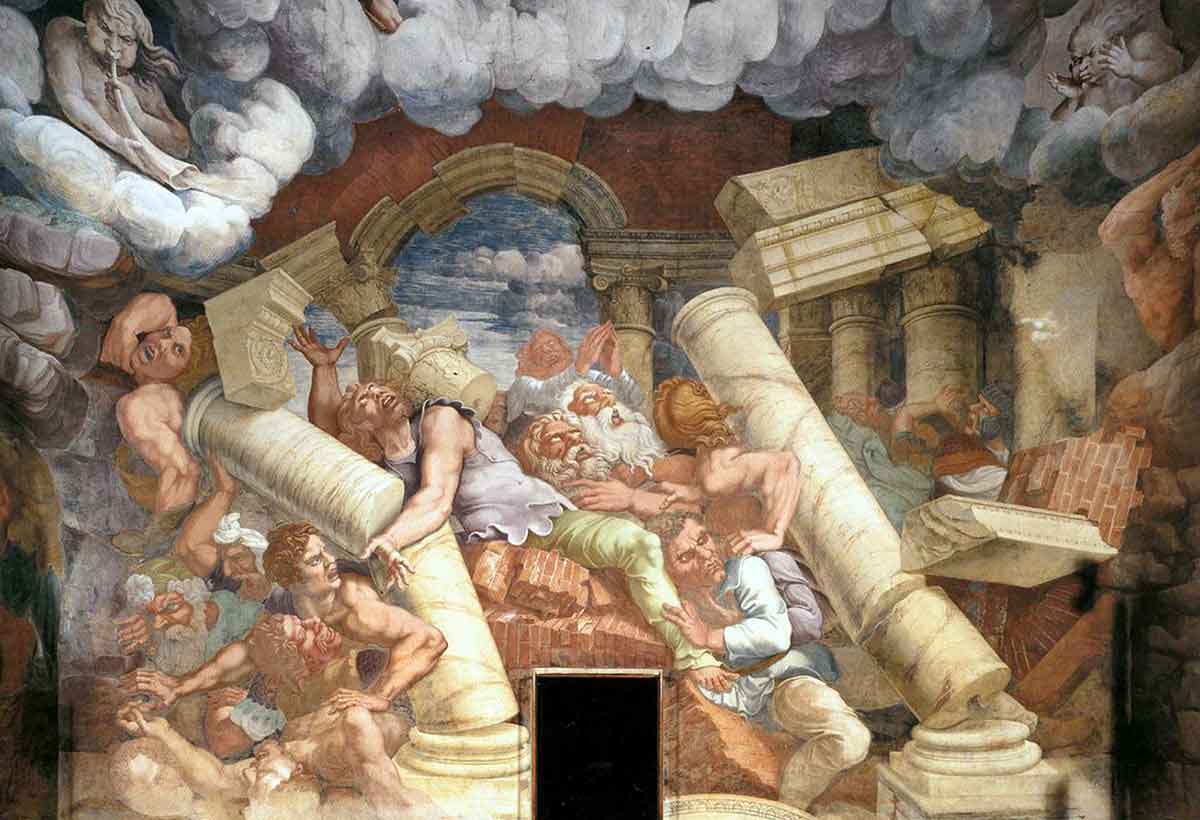
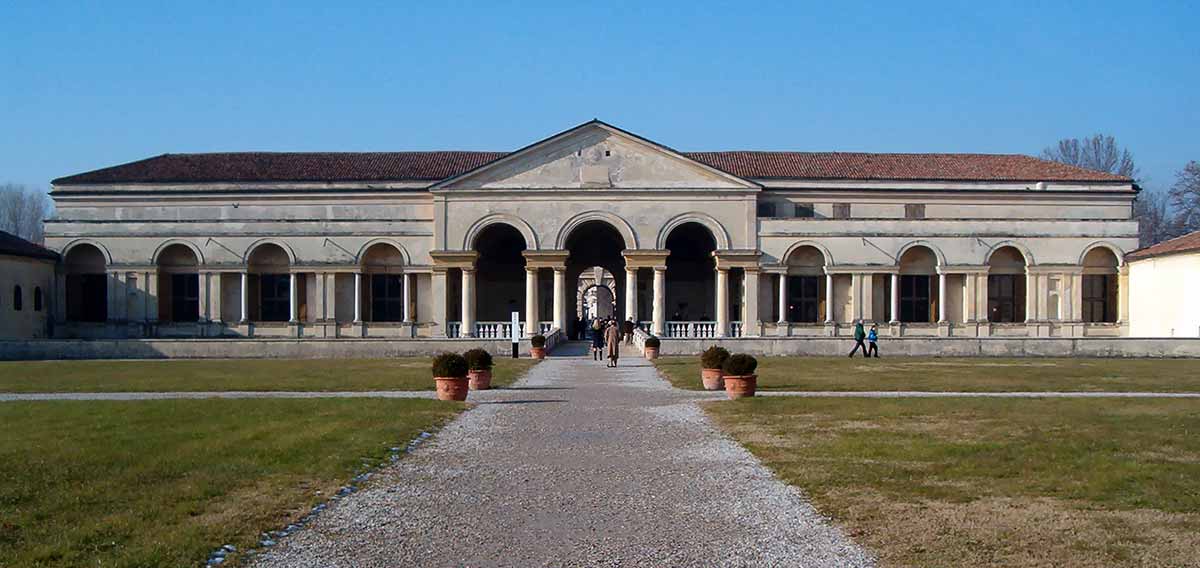
Just as Ovid’s writings had influenced Botticelli’s Primavera decades earlier, so his Metamorphoses formed the basis of Giulio Romano’s epic paintings on the walls of the Room of the Giants at Federico II Gonzaga’s Roman-influenced Palazzo dei Te in Mantua. Completed in 1535, the Fall of the Giants cycle of frescoes covers almost every surface of the room. Giulio provided the Duke with one of the most comprehensive examples of the dramatic Mannerist style ever painted in northern Italy during the High Renaissance.
The influence of classical Rome is evident throughout the palace. The architecture is that of a typical single-story Roman villa, although it seems impossible to imagine that anyone would have foreseen Giulio’s intentions for the Sala dei Giganti.
Ovid’s epic poem spans an expansive period, from the creation of the world to the death and deification of Julius Caesar in 44 BC, one year before Ovid’s birth in 43 BC. In this room, Romano depicts the battle between the earthly giants and the divine Jupiter, who hurls thunderbolts from the heavens. Although the frescoes are considered to be based on a Roman text, the poem’s overall themes are drawn from both Greek and Roman mythology.
Federico II Gonzaga seemed to have several ideas in mind when he commissioned the room. He wanted Romano to make those who entered feel overwhelmed and bewildered by the gargantuan battle scenes and the exaggerated facial expressions of the gods and giants. He also, privately, wanted visitors to understand the influence he could wield over them, emphasizing his authority over Mantua. With its pseudo-Roman architecture and spectacular artwork, Federico was flexing his Renaissance muscles. He was an important man and, like many others in his position throughout Europe, he showed this in his choice of art and architecture.
8. Paolo Uccello
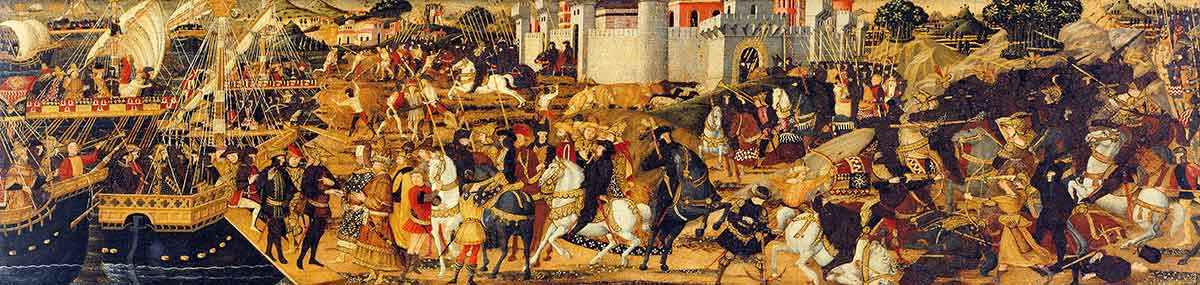
Virgil’s epic Latin poem, The Aeneid, published in 19 BC, told the story of Aeneas, who fled to Italy after the fall of Troy and eventually became a central figure in the founding of Rome. Although the tale crafted by Virgil is associated mainly with Roman history, like many ancient writings, The Aeneid was a palimpsest of Greco-Roman myth and legend, laced with Etruscan and Latin.
To look at Uccello’s Episodes from The Aeneid, it would be almost impossible to detect the original period of Virgil’s poem if you were unfamiliar with it. Uccello paints a scene straight out of late Gothic Florence. Crenelated castles and the courtly dress of the cast tell us nothing of the ancient period. The painting formed part of a cassone, a wedding chest, and, as such, references to ancient Roman legend, even when portrayed in a chivalric manner, speak to the romantic and heroic themes necessary for such a piece.
9. The Medici Tombs
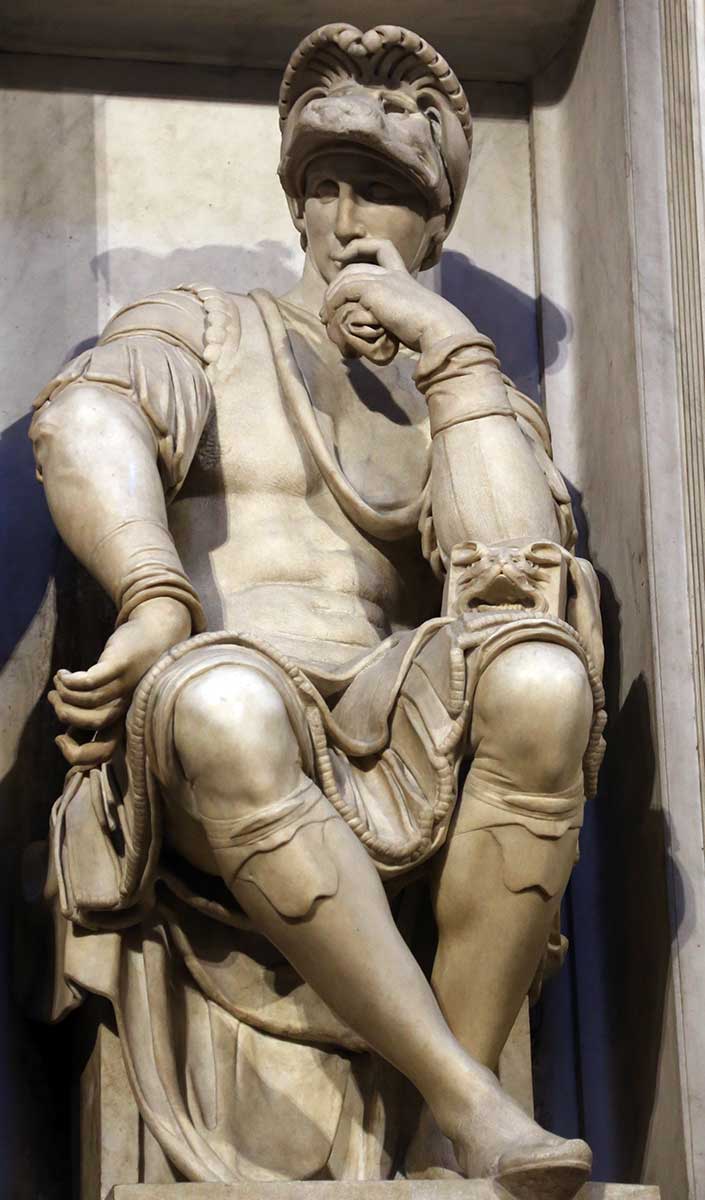
The fact that the Medici chose Michelangelo to create the New Sacristy in the Basilica di San Lorenzo in Florence to house the tombs of Lorenzo de’ Medici, Duke of Urbino, and Giuliano de’ Medici, Duke of Nemours, says much about how highly the family thought of themselves. Michelangelo had a long association with the Medici, but this mausoleum had to rival, if not outshine, the Old Sacristy, solemn and unadorned, designed by Brunelleschi and Donatello, finished in 1440.
The Medici viewed ancient Rome as the pinnacle of political power and cultural excellence. The Villa Medici in Rome served as a prestigious private garden gallery for displaying the dynasty’s extensive collection of Roman sculptures. When it came to the design of the New Sacristy statues for Lorenzo and Giuliano, there could be only one reference point, ancient Rome.
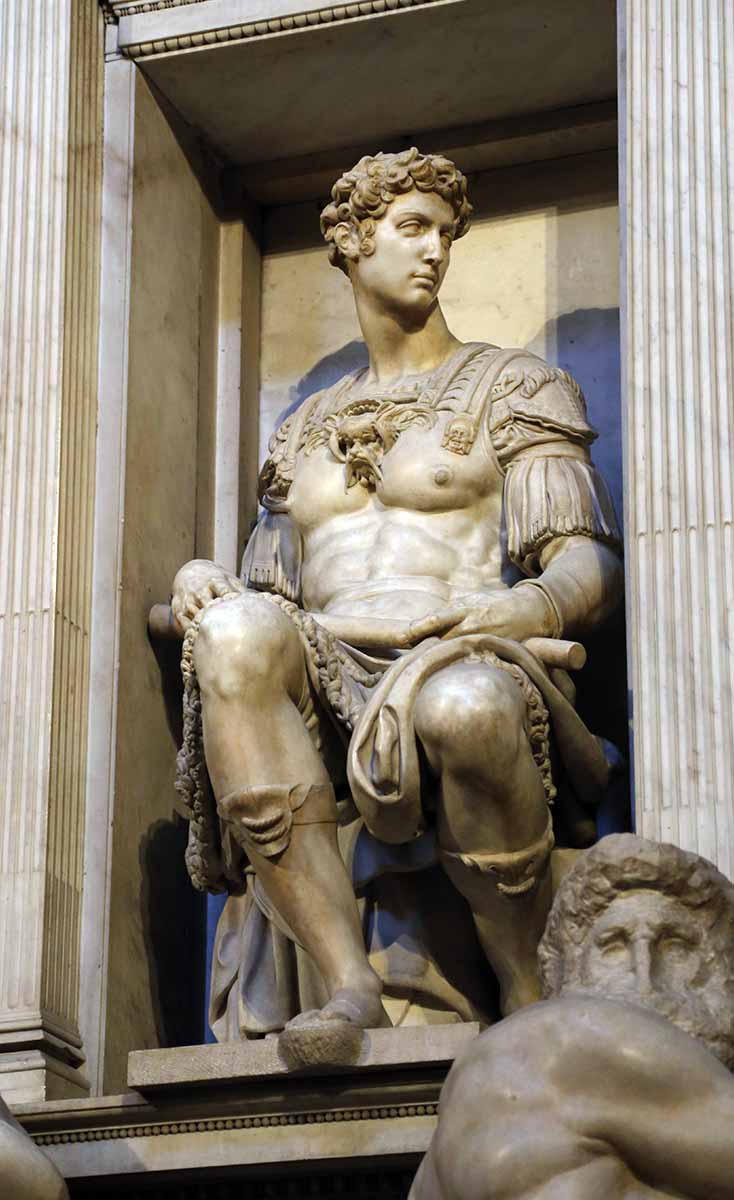
To reinforce the alliance between the Medici and the grandeur of ancient Rome, Michelangelo clothed the two dukes in the style of Roman leaders. Never intending that the statues bear a physical resemblance to the men themselves, Michelangelo focused on an idealized portrayal of ultimate power. The Medici got what they wanted: an unflinchingly prestigious and sophisticated vision of the most influential dynasty Florence has ever seen.
10. The Pantheon
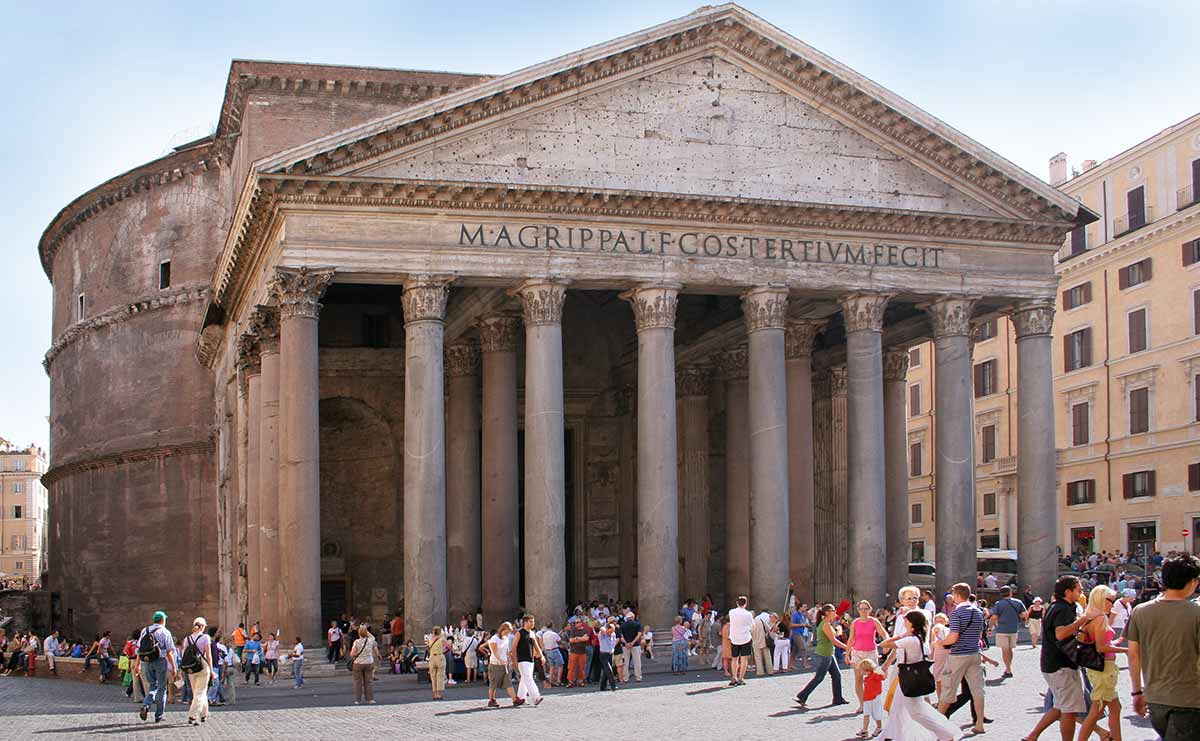
The Pantheon, or the temple of all gods, in Rome, has endured from the construction of the original temple in the 2nd century to the present day, while remaining in constant use. The current structure, built by Emperor Hadrian, was built on the site of an earlier one by Marcus Vipsanius Agrippa, although the date of construction is unclear. Undergoing structural and decorative changes over the centuries, the Pantheon stands as an example of Roman ingenuity, engineering expertise, and adaptability to ever-changing rulers and religious uses without losing its identity.
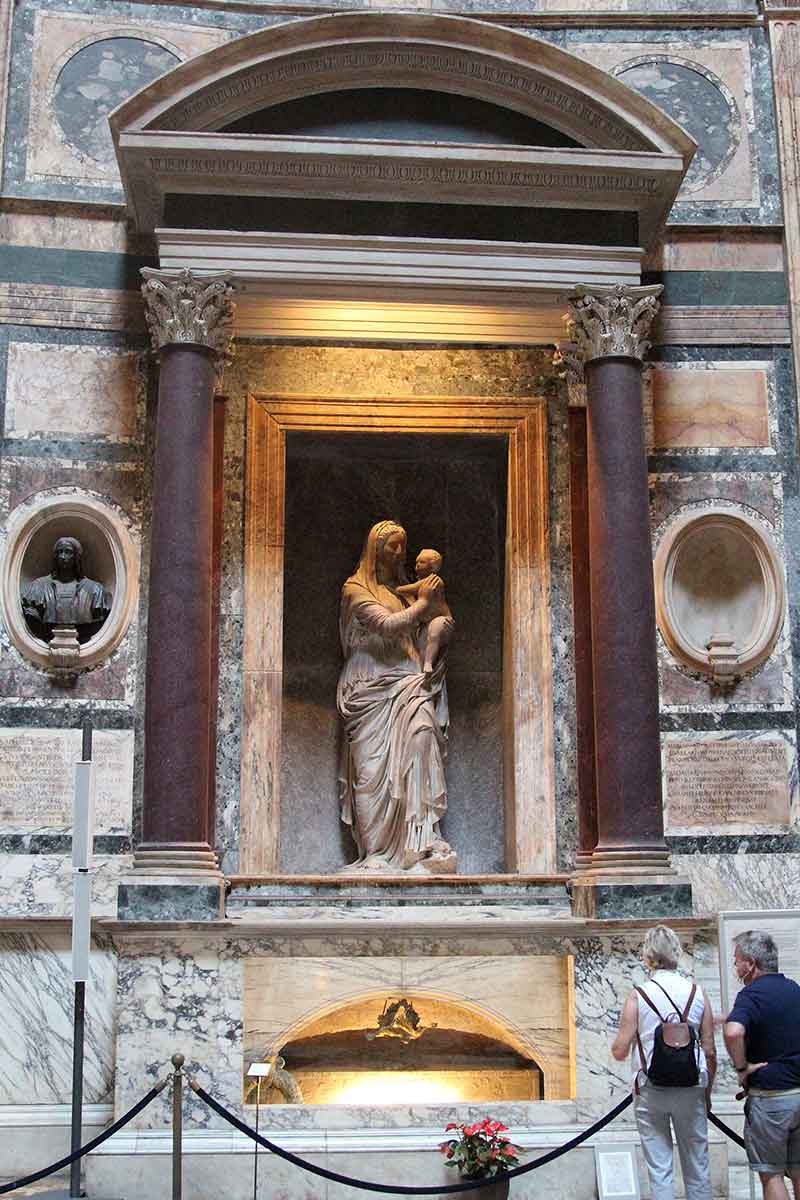
During the Renaissance, with its increased interest in humanism and the achievements of the ancient Romans, the Pantheon was viewed as a place of reverence fit for its most venerable artists, composers, and architects. Among them, Raphael’s tomb stands out beneath the glorious rotunda. Sculpted by one of Raphael’s pupils, Il Lorenzetto, the Madonna del Sasso, in its Roman-style setting (changed and enlarged over the centuries), dominates the Pantheon. As if to reinforce Raphael’s standing as an equal to the greats of antiquity, the sarcophagus that holds his remains dates to the 1st century and was donated by Pope Gregory XVI in 1833.
Ancient Rome: The Pinnacle of Civilization
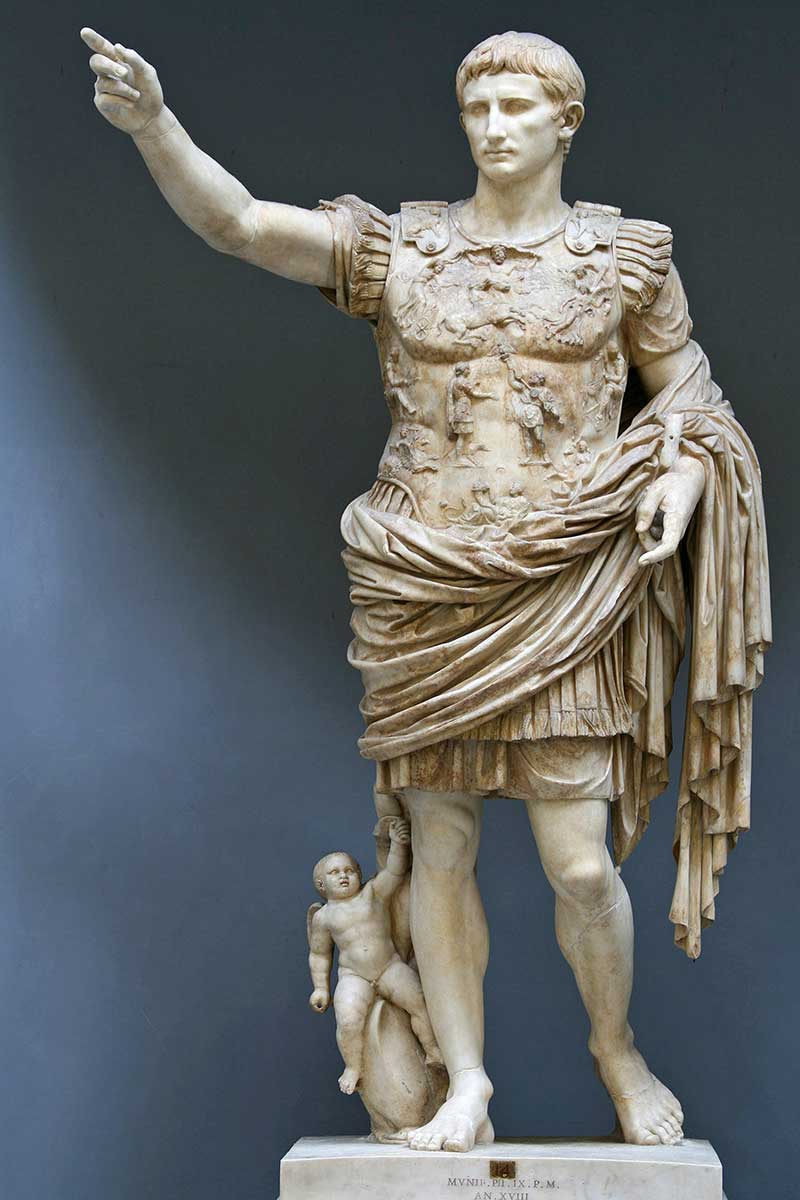
From what we see of the importance Renaissance leaders and patrons placed on the achievements of the ancient Romans, it seems clear that they viewed antiquity as the pinnacle of learning, society, and the arts. Not only were Renaissance families like the Medici keen collectors of Roman artifacts, but they also modeled their lives and deaths on the Romans too. From paintings illustrating the myths and legends of antiquity to being dressed as Roman leaders for their tombs, Renaissance potentates recognized that, in order to bring Europe out of the dark years of the medieval period and into the enlightenment they so desired, only alliances forged with the rulers of antiquity would get the job done.