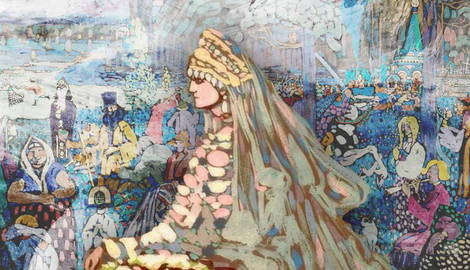

Wassily Kandinsky’s decisive turn toward art happened relatively late in his life. Until his thirties, he was a promising lawyer. His vision transformed after encountering the bright and diverse folk art in remote Russian villages where he traveled to study local interpretations of law. Instead of simply creating and observing art, the locals lived in it, with their houses, household objects, and clothes entirely covered with ornaments. The same idea of entering art rather than turning one’s gaze on it Wassily Kandinsky later applied to his abstract works.
Wassily Kandinsky’s Childhood: The Origins of His Abstract Art
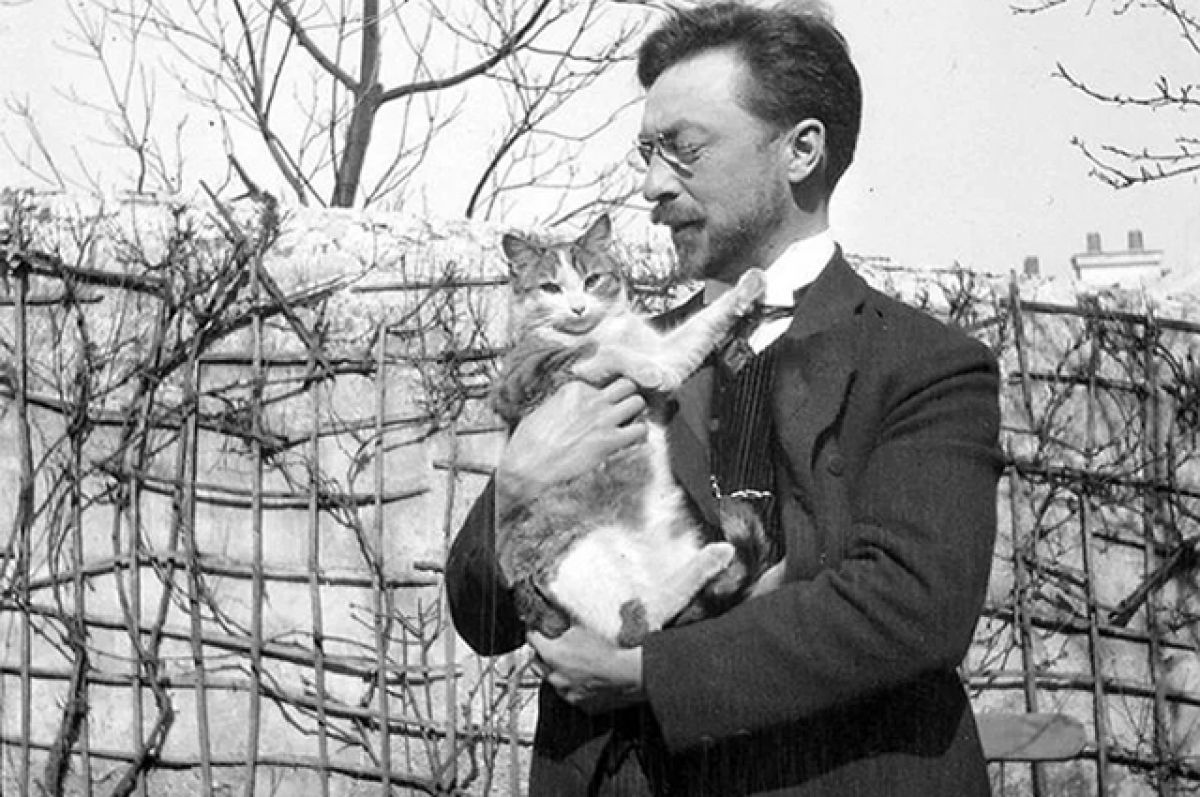
Wassily Kandinsky was a rare painter who left behind not only his artistic work but a written testimony of the formative events of his early years that made him an artist. In his autobiographical essay, he recounted his childhood memories of color: green, brown, and white of freshly cut tree branches in the family’s garden, the black waters of Florence where his mother took him to travel, the yellow of a toy horse his aunt gave him. Thirty years after receiving this gift, on the day he decided to become an artist, he saw the same horse in the streets of Munich, this time alive, and interpreted it as a symbolic approval of his decision.
Although he was born in Moscow, Wassily Kandinsky had a complex ethnic heritage. His grandmother was German, and thus the family frequently spoke German at home. His father’s side of the family originated from the Evenki people, an Indigenous group of North Asia. Kandinsky’s grandfather was a gang leader who attacked trade expeditions in Siberia. After being arrested, he managed to avoid punishment and open a completely legal business enterprise, building a fortune for the family. Such a diverse family background provided Kandinsky with different cultural influences and impressions.
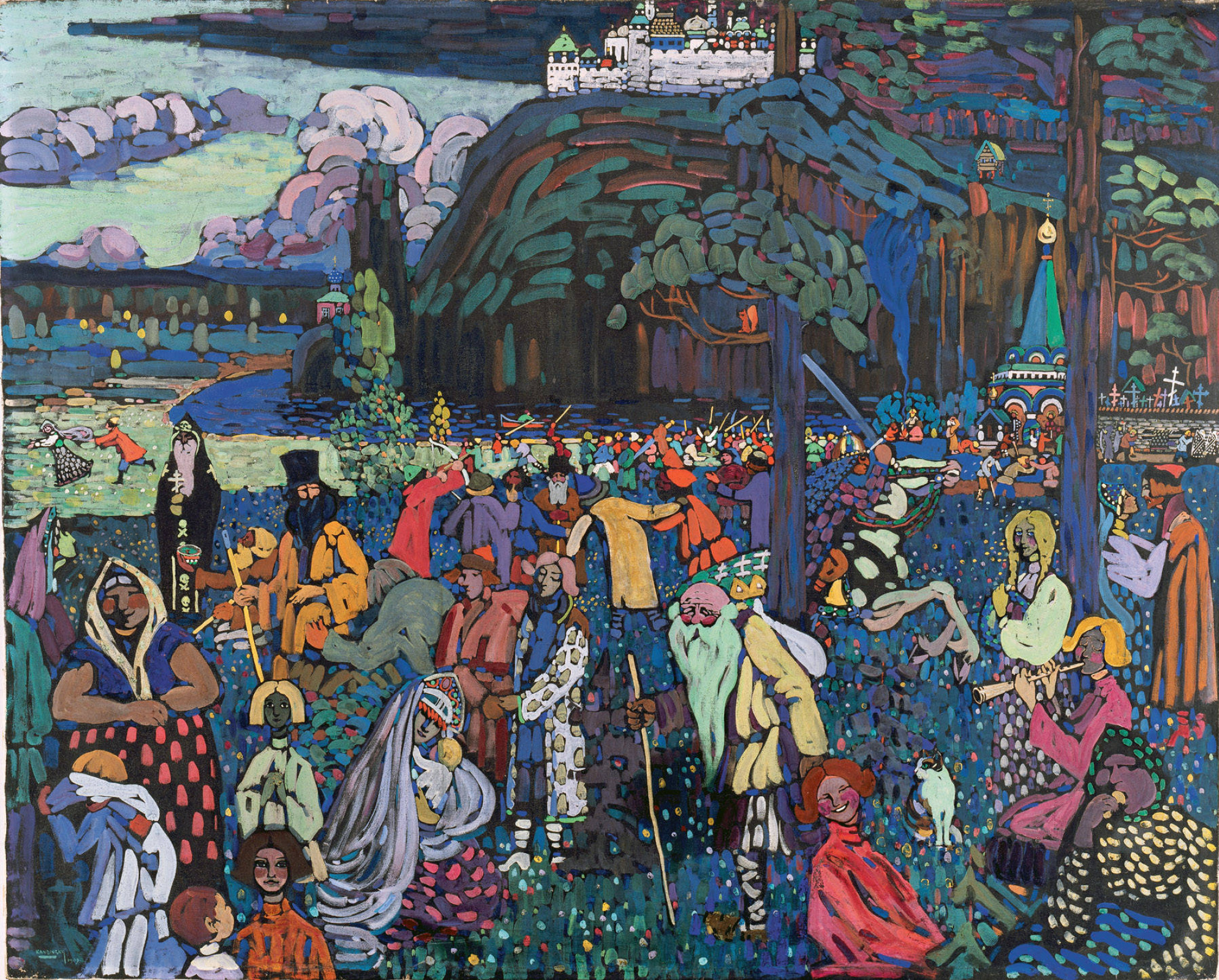
Kandinsky had artistic inclinations since his childhood. He remembered that drawing and painting were the only things for him that immersed him completely as a child as if placing him somewhere outside of time and space. However, he hardly ever thought of making it his career at first, preferring the conventional occupation of a lawyer. Still, art was always around him and always excited him. He remembered seeing a red ring of the Kremlin wall, pierced by a strict white column of the bell tower. The tower’s gilded dome appeared to him in the dimming evening light as another sun slowly descended upon the city. Obsessed with this image, Kandinsky wanted to paint it but did not yet have the means or skills to convey it the way he wanted to. It would take him years to finally find his artistic path and turn his memory into a coherent image.
Another formative aesthetic experience for Kandinsky was his first encounter with Richard Wagner’s music during his student years. The famous opera Lohengrin, based on a medieval German romance, in Kandinsky’s mind entirely corresponded to the image of old Moscow in the pre-evening hours he was so struck by. Shocked and mesmerized, Kandinsky made a parallel between visual arts and music for the first time.
Kandinsky’s Trip to Vologda
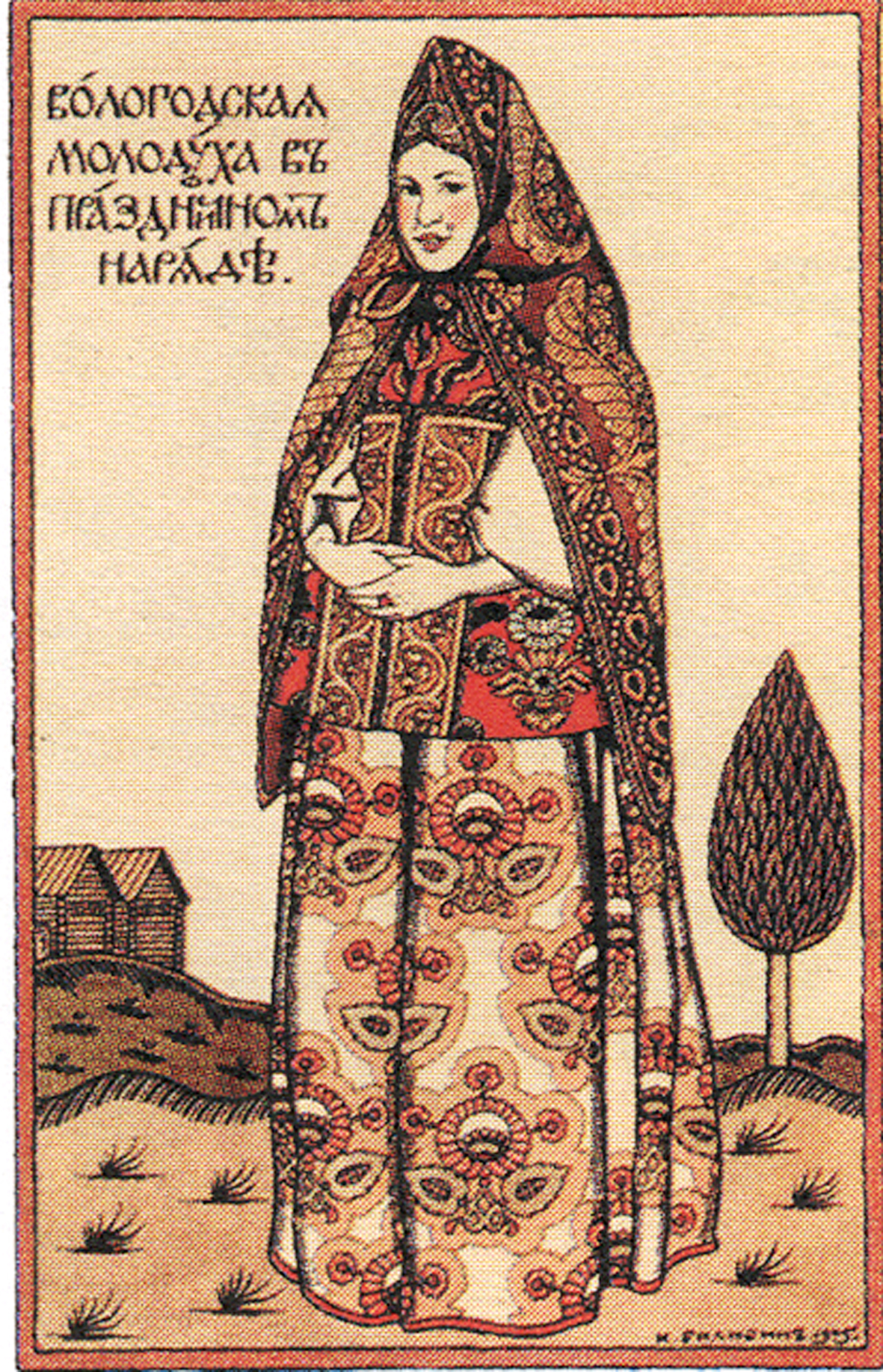
Another influential event in Kandinsky’s life that opened his eyes to Russian heritage and the new progressive style of painting was his 1889 trip to the Vologda region north of Moscow. At the time, Kandinsky was just 23 years old and was sent there on an ethnographic expedition to remote villages. His two main objectives were to study the interpretation and application of Russian law in these areas and to search for the remnants of pagan practices and beliefs in Orthodox communities separated from the mainstream church.
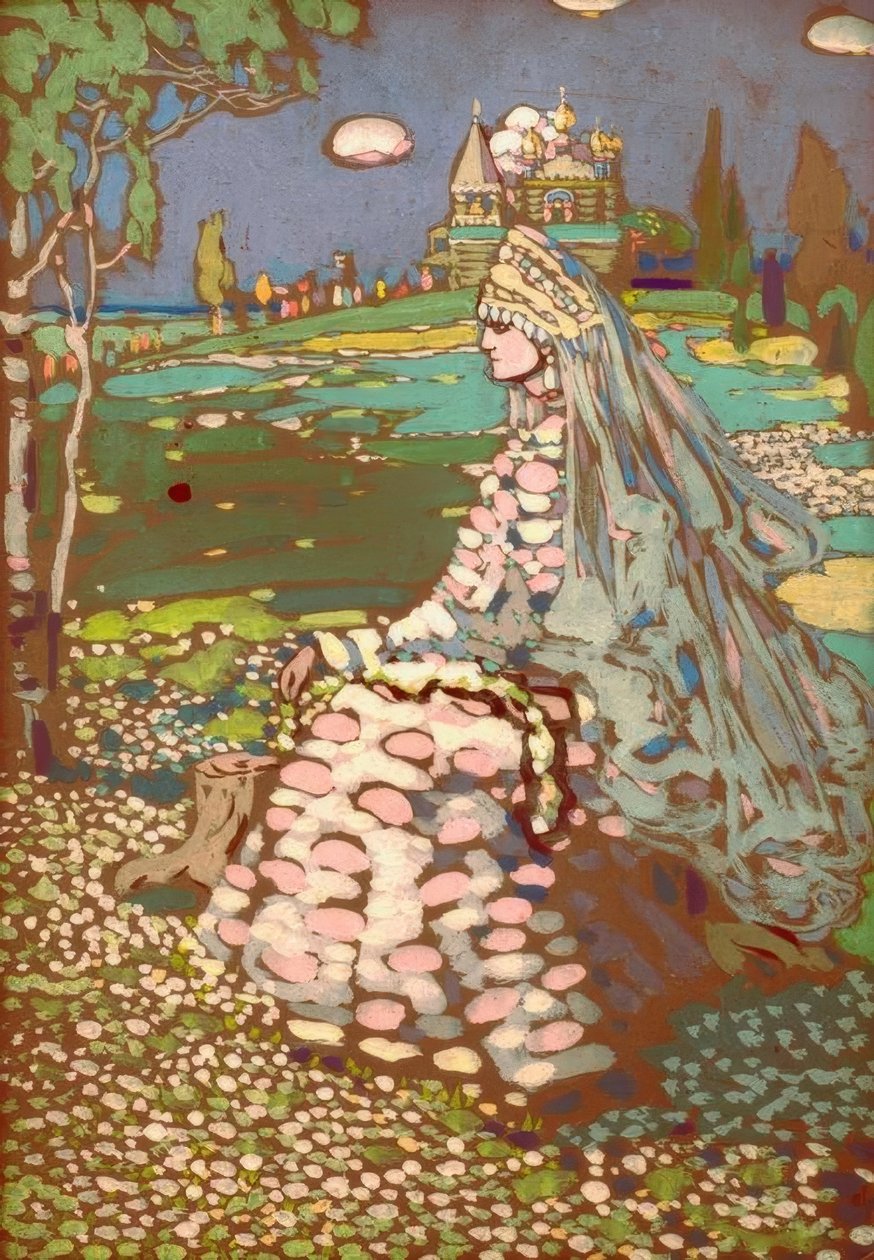
Kandinsky frequently painted during his law studies and recounted his experiences and memories of color. However, he was still not entirely sure what to do with them. He visited museums and exhibitions and studied the works of great artists like Rembrandt. Still, his inspiration came from an unexpected source. Kandinsky joined the expedition later than the rest of the group and had to travel for days through deep, dark forests. This meditative experience prepared him for what he was about to see. His first impression came from the village locals, who were dressed so brightly and so vividly that Kandinsky, used to a somber and reserved palette of the city, compared them to walking paintings.
Another wave of shock came from their homes. Despite living in poverty and having little to eat apart from oat-based bread, they covered their houses both inside and outside with carvings, textiles, and paintings. These people did not see art—they inhabited it. Over the painted walls, shelves, and stoves, they hung colorful prints and tapestries. All these elements were painted so vividly and boldly that the subject matter literally dissolved in them, turning into an expressive ornament.
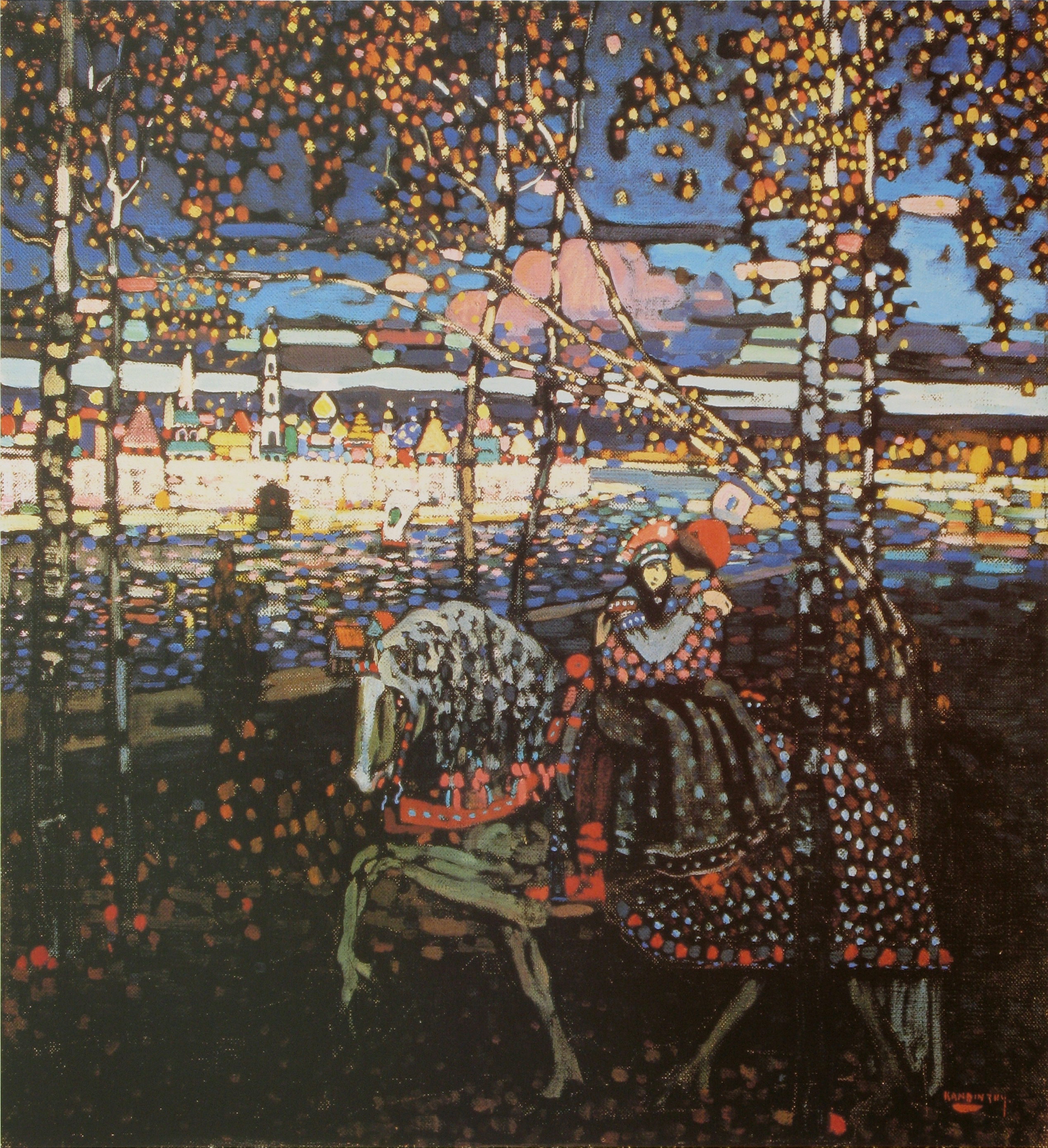
Later, Kandinsky remembered that for the first time in his life, he realized how to stop looking at art and start living in it. These painted houses immersed him into a completely different reality rich with aesthetic and emotional experiences. Once triggered, these experiences began traveling with him, reappearing again in old Catholic and Orthodox churches and next to some outstanding pieces of art. Years later, he would learn to recreate it and incorporate it into his abstract works, making the experience the central element of a painting. In his Expressionist years, Kandinsky would often paint folk characters and magical scenes inspired by tales.
Kandinsky & Orthodox Icons
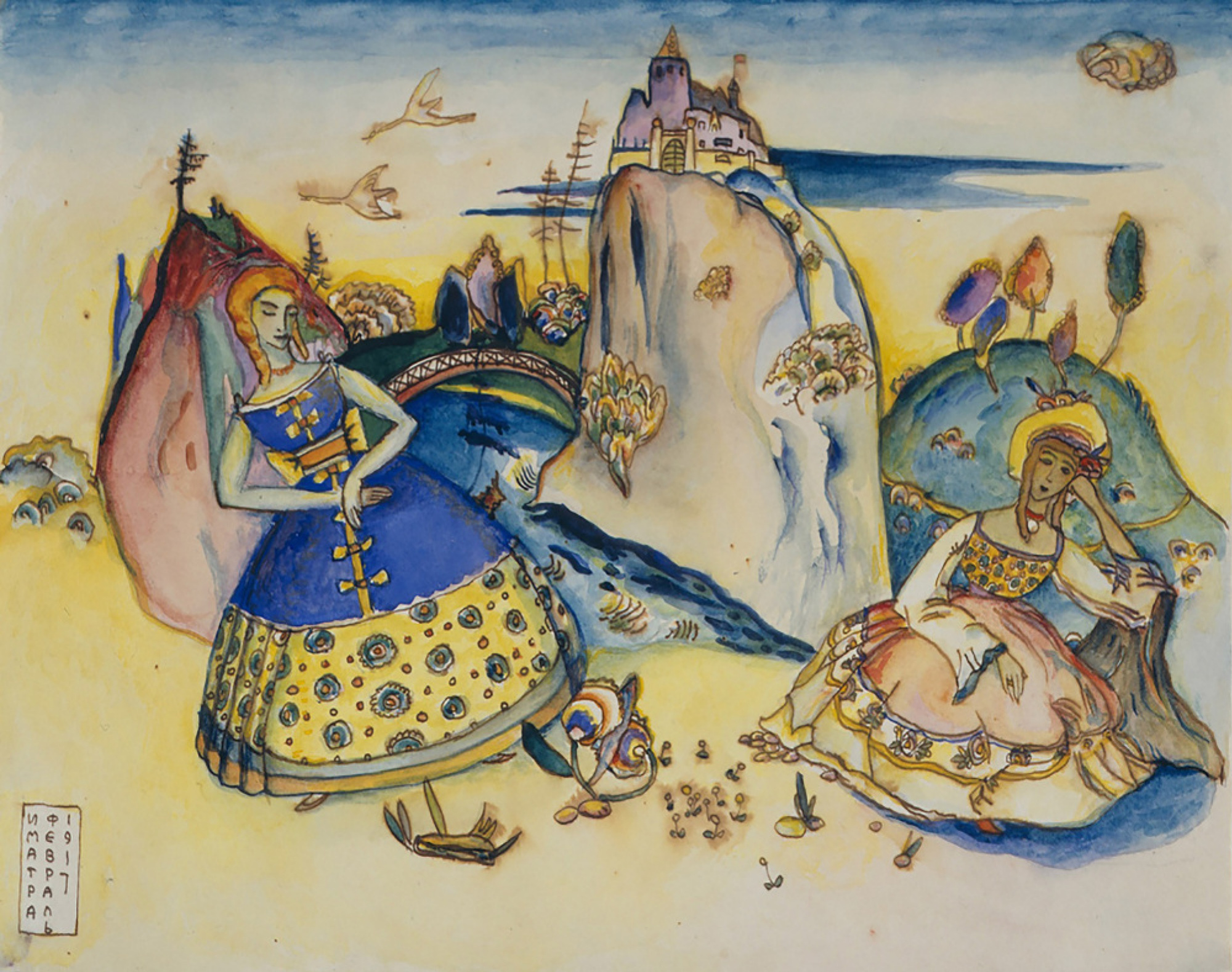
Kandinsky finally abandoned his law career in 1896 and began studying art to make it his full-time job. At the time, he already employed influences from his native culture. After his experience in Vologda, he began collecting lubki—printed graphic works that were sold at provincial fairs and used as home decor. Lubki depicted religious, folkloric, or even mundane scenes and were usually similar to comic strips, presenting text and images together in several sequences.
Another crucial influence for Kandinsky was the centuries-long tradition of Orthodox Christian icons. At the beginning of the 20th century, many Russian artists finally recognized this art as an independent form with its unique plastic qualities. In 1911, Henri Matisse arrived in Moscow and was struck by the icon style he had never encountered before. Kandinsky was an Orthodox Christian, but his interest in sacred images went far beyond ritualistic purposes. He believed that painterly qualities gave way more expression in these images than the actual subject matter. The radical and easily recognizable stylization of Orthodox works distanced them from the material world and approached the viewer to the domain of the immaterial and non-figurative.
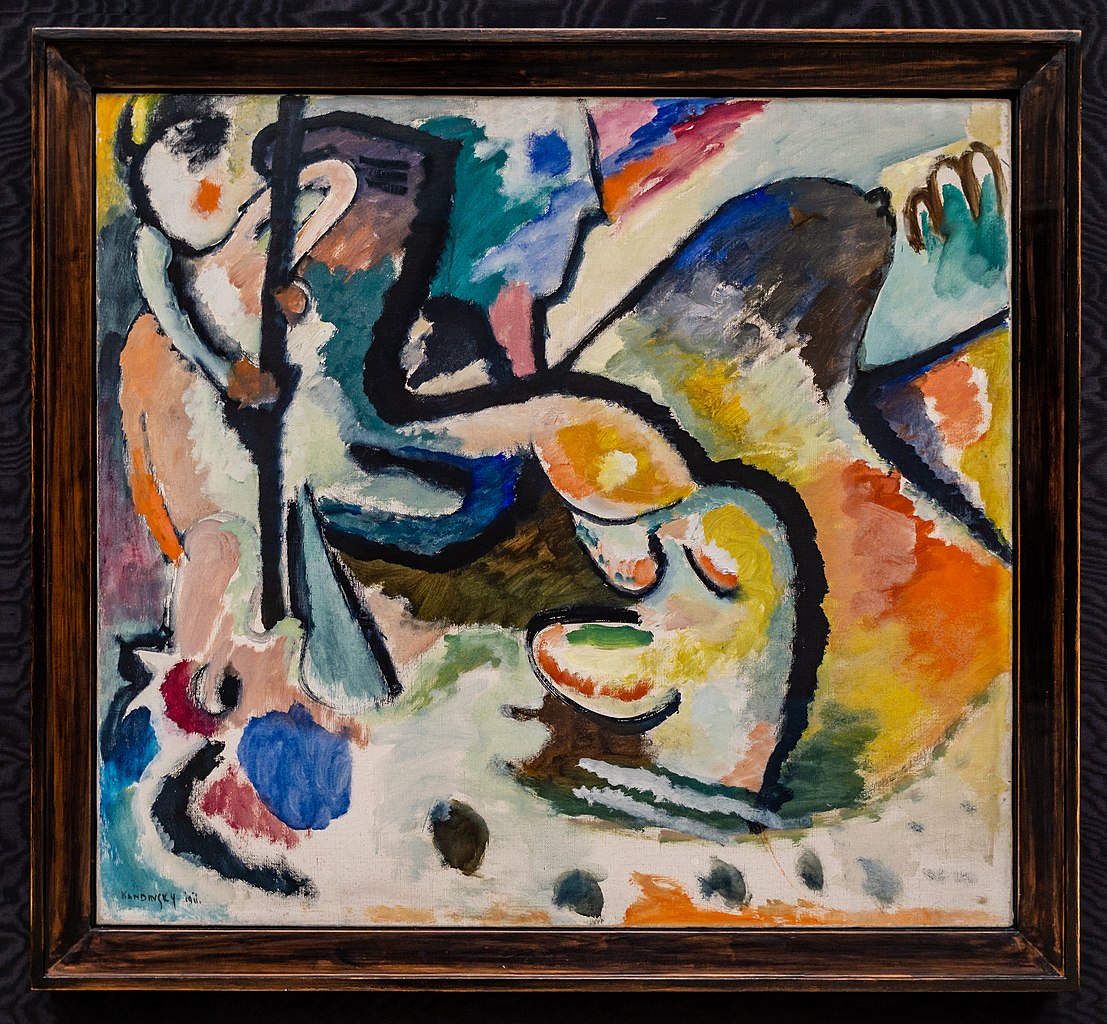
Many of Kandinsky’s early abstract works were inspired by religious Orthodox scenes or figures. His abstract paintings of saints, such as the series centered around the figure of Saint George, presented not iconographically correct images, but rather their spiritual and emotional essence. Devoid of clearly readable subject matter, these works were meant to convey the same spiritual state as the original icons. Another popular concept for Kandinsky’s abstract works was the Genesis flood myth, in which God chose to wipe off the entire world except for Noah, his family, and some animals. The flood myth in its various forms was popular in different cultures and represented renewal through destruction.
Wassily Kandinsky in Germany: His Abstract Art and German Heritage
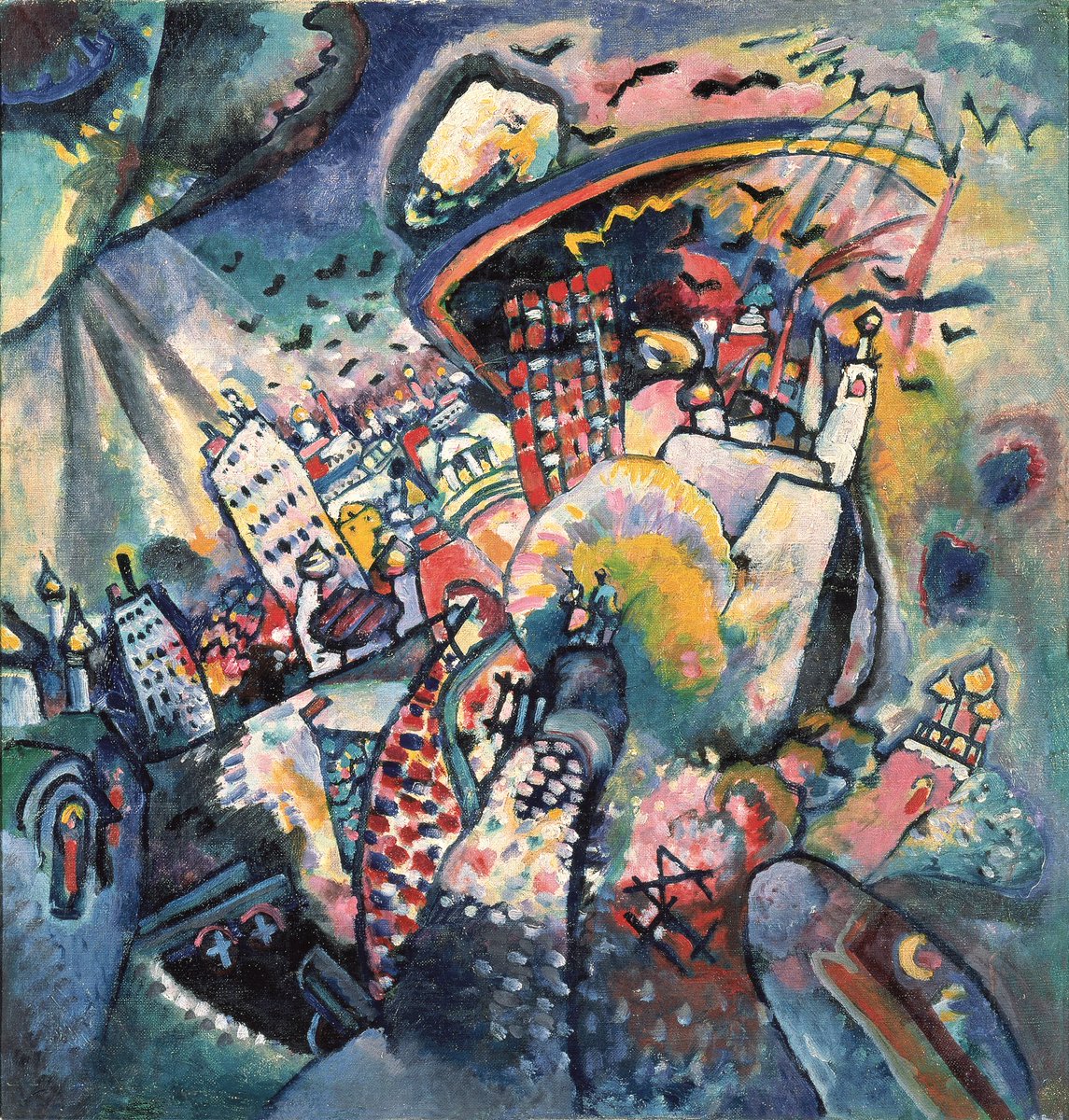
Despite having worked with abstract art since the 1910s, Kandinsky did not completely abandon figurative art. In 1914, after the outbreak of World War I, he was forced to leave Germany and return to Moscow. There, he once again remembered his native culture, creating several series of fantasy-like paintings of folk characters, castles, and forests, typical for Russian fairy tales. These collections of images were not a step back in his exploration, but rather a logical offshoot of it. Highly decorative forms hardly relied on natural forms, bending and molding painted reality in a manner that defied all natural laws.
One of Kandinsky’s most well-researched and appreciated artistic periods was his return to Germany in 1921 and his years in the Bauhaus. The newly formed Soviet Union rejected the artist, discarding his ideas as absurd. In the Bauhaus, the new progressive art school launched by architect Walter Gropius, he found a responsive and interested audience. He was also able to unite many of his influences and fragments of vast knowledge into an extensive study program that would raise a new generation of radical contemporary artists and designers.
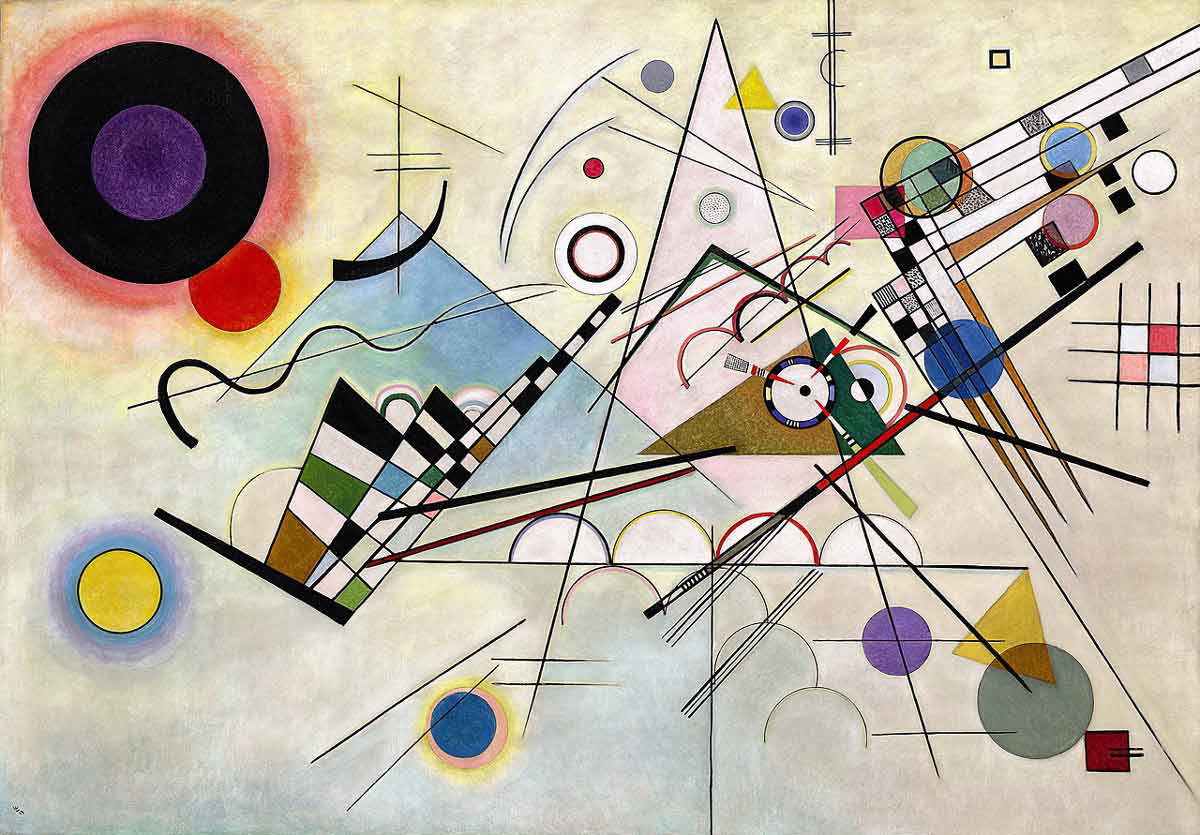
While working in Germany, Kandinsky often highlighted his Russian identity—perhaps, due to the flair of exoticism it gave him. Kandinsky’s Asian features, reserved temper, and the sheer strangeness of his art led to all kinds of assumptions about him and his works. German critics speculated about the influence of Byzantine art on his work. While Kandinsky had certainly studied it, he primarily drew on distinctly Russian Orthodox art forms. Some accused him of promoting anarchism, and others called him The Red Commissar, hinting at his stereotypically implied connection to the Soviet government.