
When the Florentine poet Dante Alighieri wrote the Divina Commedia in his native city’s vernacular rather than in Latin, he created a path that would determine what the Italian language would eventually become. This article traces how that decision, made in the 14th century and backed by his linguistic treatise De vulgari eloquentia, produced a 9,000-word vocabulary that functioned as a language-building laboratory. Read on to explore the regional dialect chaos Dante inherited, the institutional debates that followed his death, and why, at Italian unification in 1861, only a small number of Italians actually spoke the language Dante began creating five centuries earlier.
Timeline: The Evolution of the Italian Language
| Time Period | Historical Development |
| 8th–9th Century | Emergence of early vernacular writing, such as the Veronese Riddle. |
| 13th Century | The Sicilian School at Frederick II’s court experiments with refined vernacular. |
| Early 14th Century | The Dolce Stil Novo movement; Dante drafts De vulgari eloquentia. |
| 1308–1320 | Dante writes The Divine Comedy, establishing the prestige of the Tuscan vernacular. |
| 1349–1353 | Boccaccio publishes the Decameron, setting the foundation for Italian prose. |
| 1525 | Cardinal Pietro Bembo publishes Prose della volgar lingua, proposing Tuscan as the literary standard. |
| 1612 | The Accademia della Crusca publishes its dictionary, codifying the Italian language. |
| 1840 | Alessandro Manzoni publishes I promessi sposi, the model for modern Italian. |
| 1861 | Political unification of Italy; standard Italian is spoken by only a small fraction of the population. |
| Mid-20th Century | Linguistic unification achieved via compulsory education, mass media, and internal migration. |
Setting the Stage: Italian Language(s) Before Dante
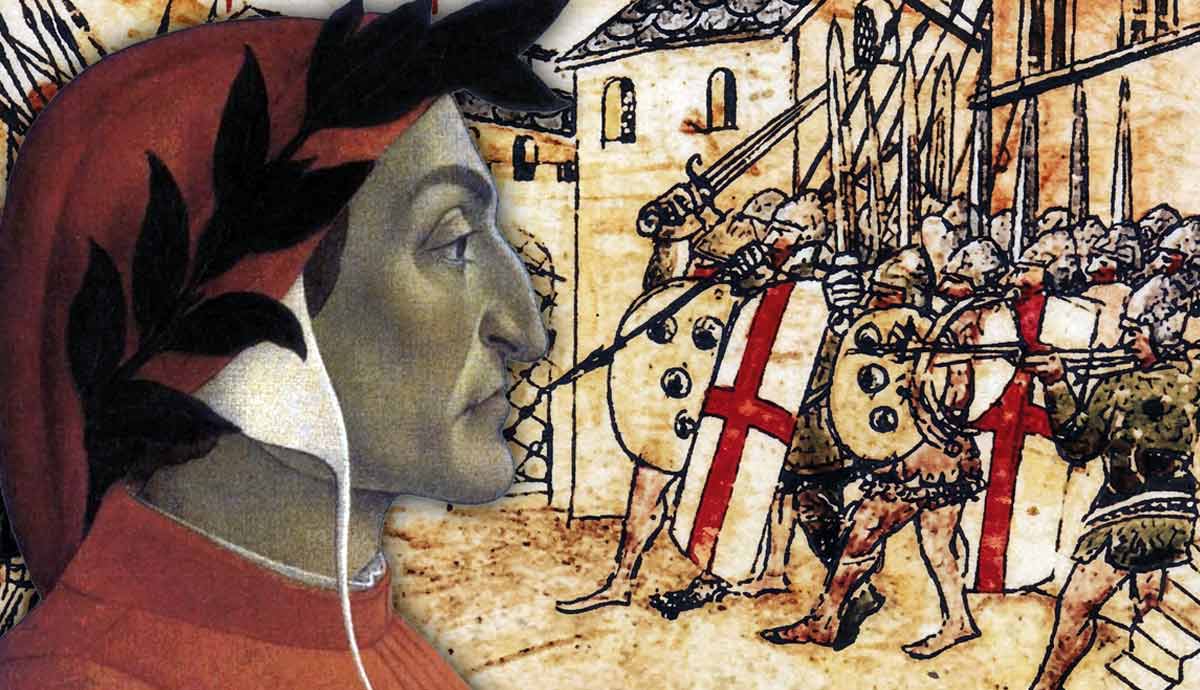
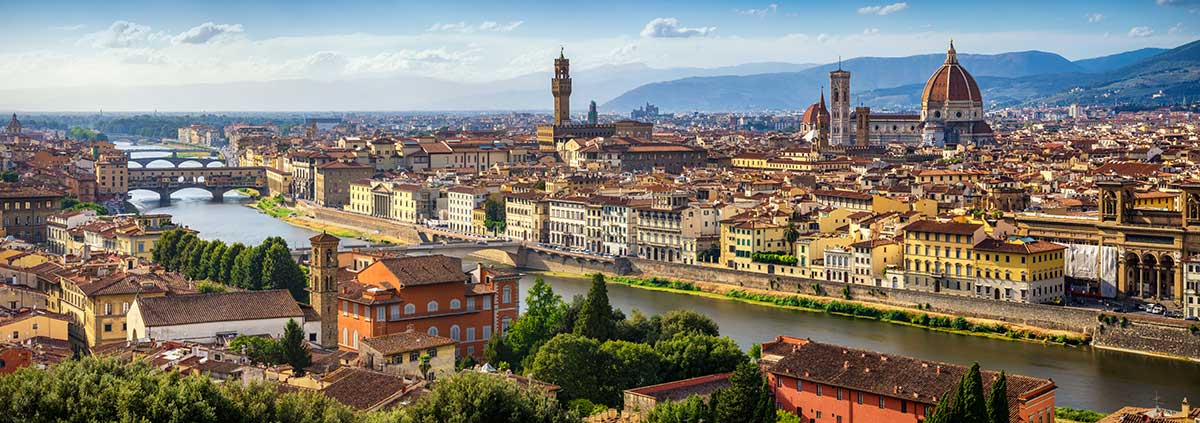
In 1265, when Dante was born in Florence, Tuscany, the Italian peninsula was politically fractured among independent communes (comuni), rival city-states, and the competing claims of the papacy, backed by the Guelphs, and the emperors, supported by the Ghibelline faction.
This geopolitical mosaic led to a linguistic fragmentation. Indeed, under the canopy of Latin, the language of the Church, the universities, the law courts, and literary works, emerged dozens of mutually intelligible regional dialects (many of them still spoken today). These dialects, known as vernaculars (or Romance languages), have a common ancestor in the Vulgar Latin, which spread across the territories of the Roman Empire.
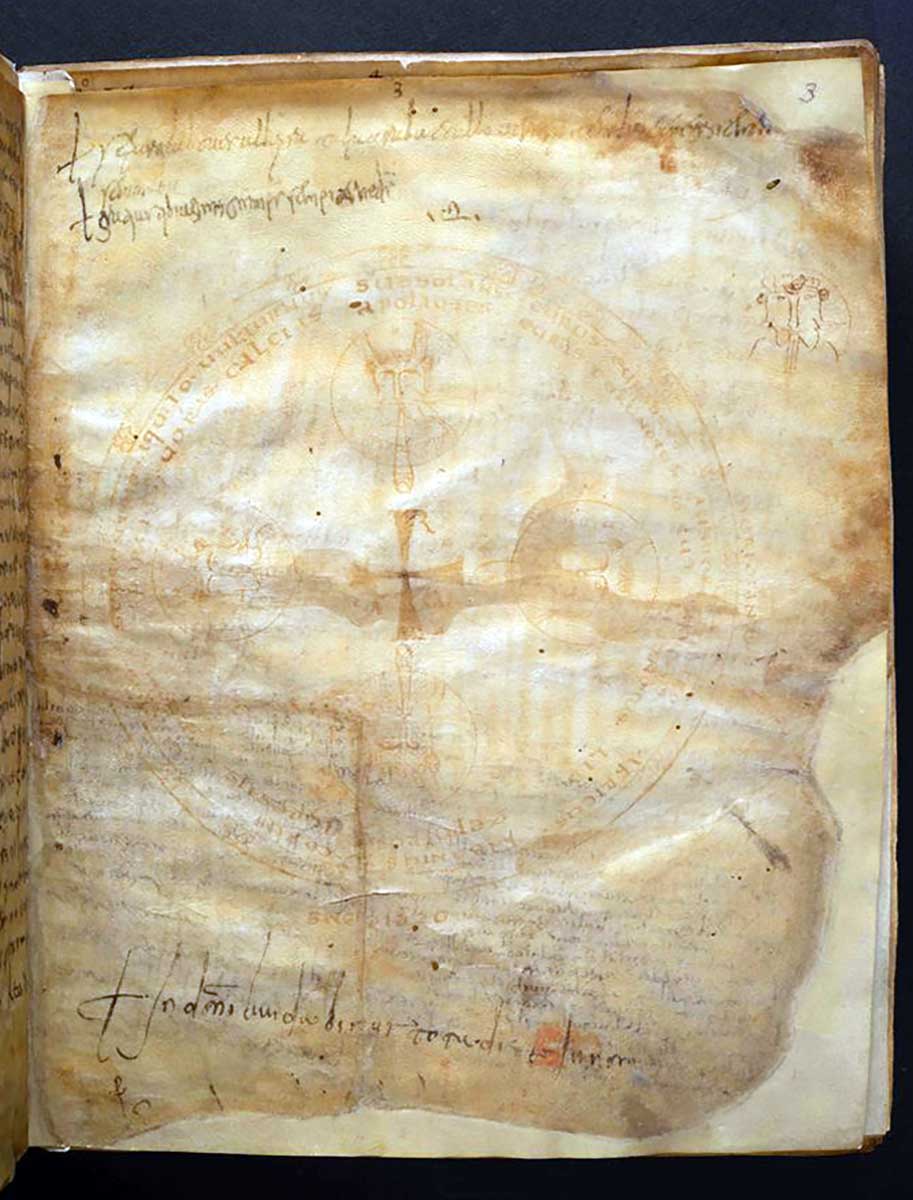
Among the earliest examples of vernacular writing in Italy are the so-called Veronese Riddle, a note penned by an unknown monk between the 8th and 9th centuries, and the so-called Fragment of Würzburg, a 9th-10th-century piece of popular poetry found in 2022 by Italian scholars in the margins of a manuscript stored at the Würzburg University Library.
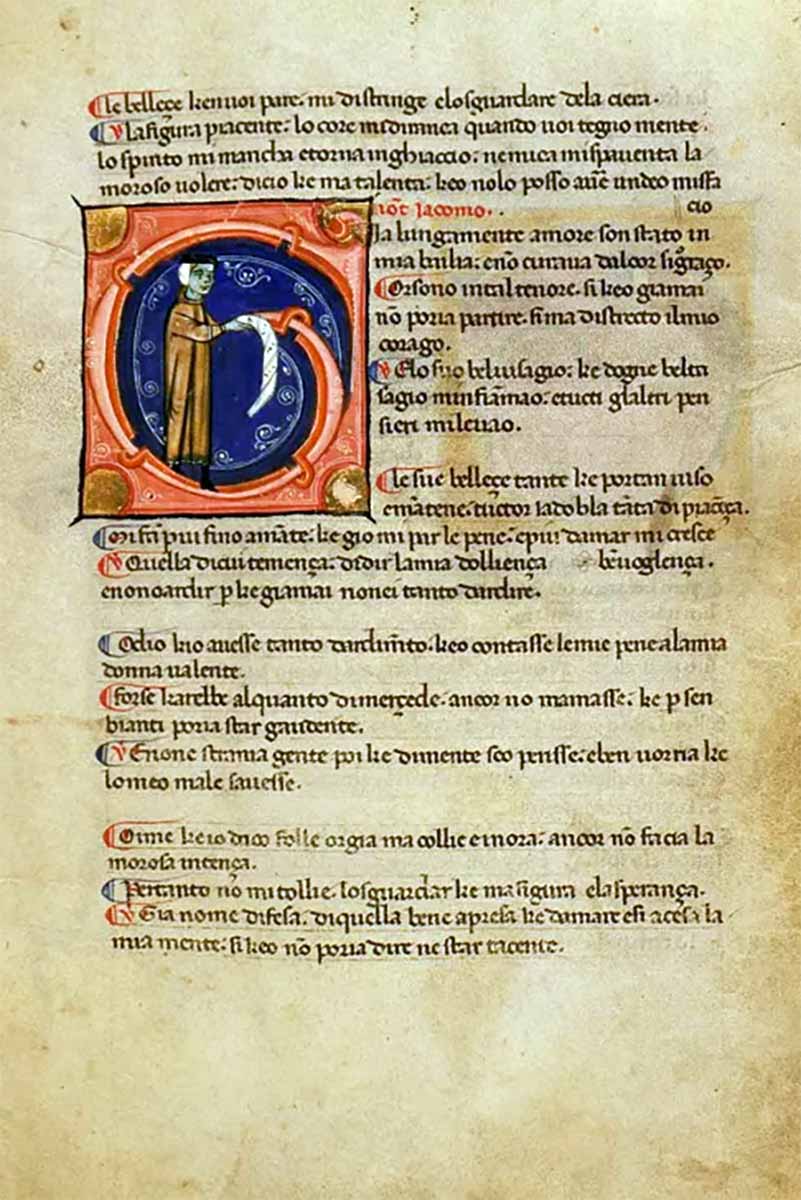
The first serious attempt to elevate one of the medieval vernacular languages into a literary instrument took place at the court of the Holy Roman Emperor Frederick II in Palermo. The group of southern Italian poets forming the so-called Sicilian School produced lyrics inspired by Provençal, northern French, and possibly Arabic poetic traditions and revolving around themes of love and angelic women. Written in a refined version of the Sicilian vernacular, the works of the Sicilian School, especially the verses by Jacopo da Lentini, are commonly credited with the invention of the canzone and the sonnet.
The Sicilian literary experiment ended with the death of Frederick II in 1250 and the subsequent dissolution of his court. The original manuscripts of the Sicilian School were also lost, but the poetry survived thanks to later Tuscan transcriptions. It was in Tuscany that the legacy of the Sicilian School was picked up by poets involved in vernacular literature.
Why Did Dante Write in Vernacular?
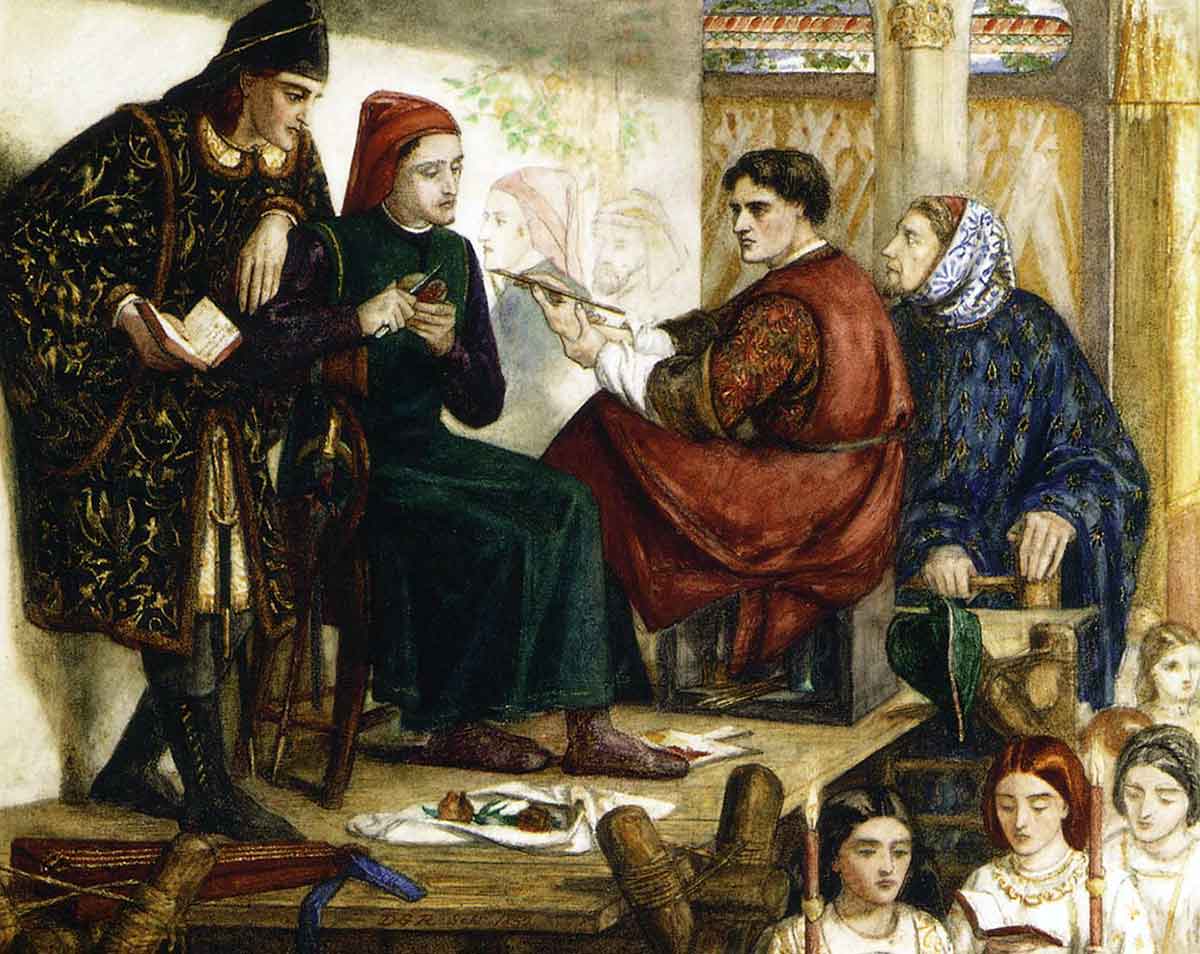
In Tuscany, the new cultural capital of the Italian peninsula, the spread of literary production in vernacular was aided by the proliferation of the communes, where the rise of a new merchant class contributed to the development of more secular sensibilities.
Among those active in vernacular literature was the group of poets writing in the so-called dolce stil novo (sweet new style). The expression commonly denoting this new school of poetry was first used by Dante, a member of the group, in the 24th canto of the Purgatorio. Influenced by the troubadour tradition and the Sicilian School, the stilnovisti developed a refined version of the Tuscan dialect to pen elegant and melodic verses on love. “Chi è questa che vén, ch’ogn’om la mira,” (Who is she coming, whom all gaze upon) reads the first verse of one of the sonnets by Guido Cavalcanti, Dante’s friend and the leading poet of the dolce stil novo.
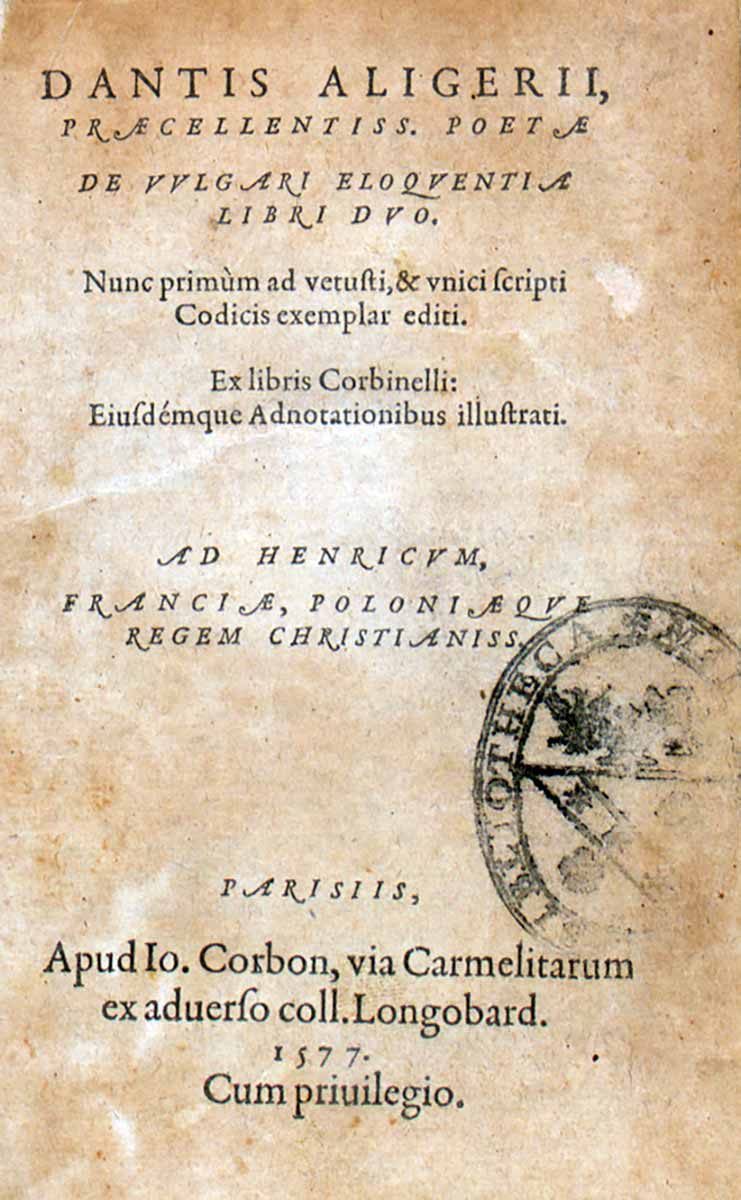
It was Cavalcanti who convinced Dante to write his first major work, Vita nuova (The New Life), in vernacular rather than Latin. In the later De vulgari eloquentia (literally, “Concerning Vernacular Eloquence”; usually translated as “Literature in the Vernacular”), drafted in Latin to reach a specialist audience between 1304 and 1305 (ultimately left unfinished), Dante makes a case for the defense of the vernacular language.
In the first theoretical reflection on Italian vernacular literature, Dante, by then already exiled from Florence, emphasizes the role of the Sicilian School and hunts for the volgare illustre (illustrious vulgar) among the different dialects to form a supraregional literary language. After reviewing 14 regional vernaculars, however, he is forced to admit defeat: “We went hunting through the woods and pastures of Italy, but could not find the panther we wanted to flush out.”
Dante could not know that it would be his own version of the Tuscan vernacular to set the written standard for the Italian language.
The Divina Commedia as Linguistic Laboratory
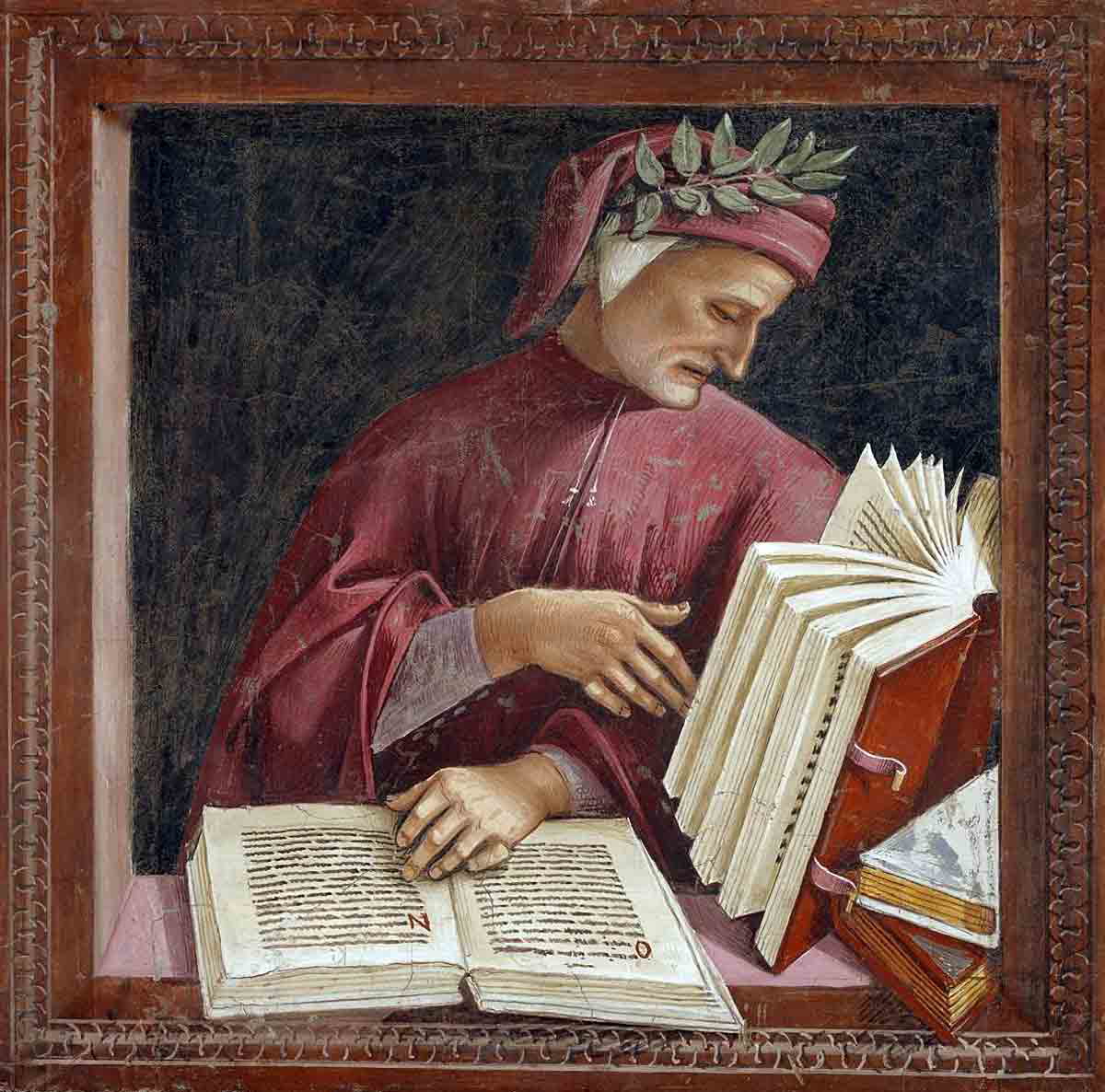
“It is no mere rhetoric to say that we speak the language of Dante,” declared Italian linguist Tullio De Mauro. Indeed, in his Divine Comedy, the supernatural journey from Hell to Heaven through Mount Purgatory, Dante showed all the potential of the 14th-century Florentine vernacular.
In the approximately 9,000 word forms in the Commedia, the Florentine poet revealed an impressive lexical range that encompassed the technical vocabulary of Scholastic philosophy, the registers of Virgilian epic, the intricacies of theological discourse, the idioms of street speech, and terms Dante invented or adapted because no existing word would do.
Some of his expressions have become integral parts of everyday Italian: senza infamia e senza lode (without praise nor blame), le dolenti note (sore points; an expression often used by disappointed teachers), il bel paese (the beautiful country; a nickname for Italy).
Throughout the poem, Dante deployed the full spectrum of human speech (from heavenly neologisms to the obscene), making the Divine Comedy a linguistic laboratory that showed how the vernacular was capable of everything. This range, commonly referred to as plurilinguismo dantesco (Dante’s multilingualism), is never accidental. In the Inferno, the souls of the damned speak in the dialects and registers of their earthly lives, often uttering harsh, rough terms. In the Paradiso, the language, full of Latinisms and Provençal words, strains under the pressure of the inexpressibles, and Dante coins new terms as he tries to render in words what words were not made to explain.
Building the Canon: Boccaccio, Bembo, and the Accademia della Crusca
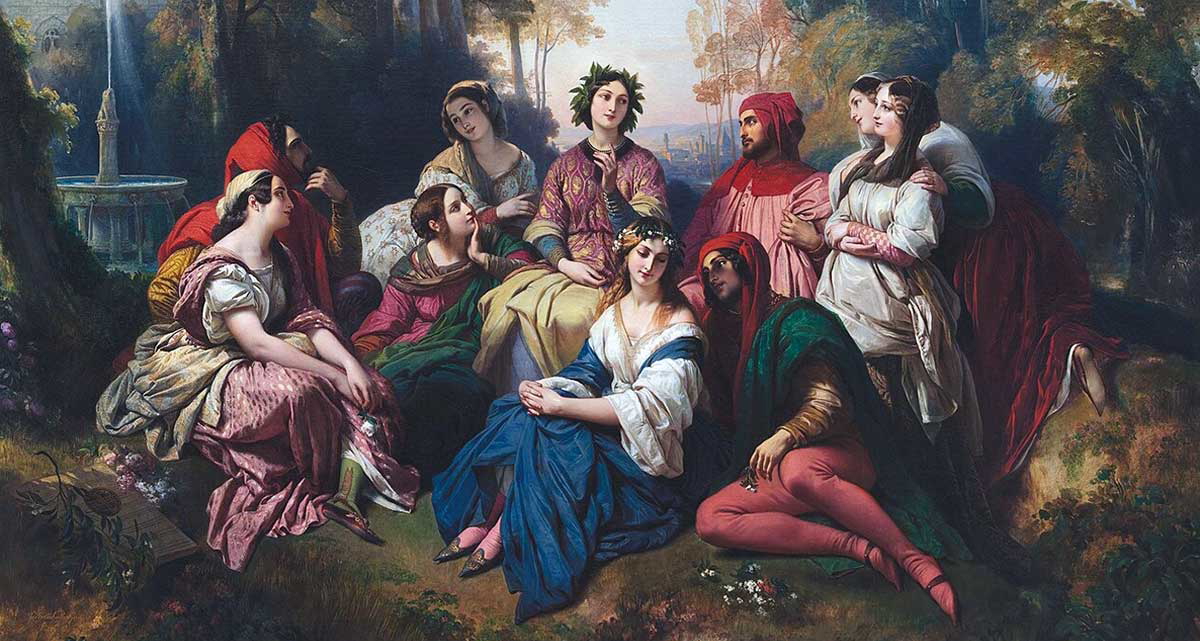
Dante died in Ravenna in 1321, still in exile from Florence. After his death, the Commedia became popular with readers from diverse social backgrounds, who found the vernacular language was far more accessible than Latin. As the popularity of Dante’s poem grew, the Tuscan dialect spread across the Italian peninsula.
Among the admirers of Dante was Giovanni Boccaccio. Appointing himself as the first Dante scholar, Boccaccio copied the Commedia by hand, wrote the first biography of the poet Trattatello in laude di Dante, or “Little Tractate in Praise of Dante”), and in 1373, delivered a series of public lectures on the Divine Comedy at the church of Santo Stefano di Badia in Florence. Though interrupted at the 17th canto of the Inferno, this was the first time any Italian vernacular work had been the subject of academic exposition.
The son of a wealthy Florentine merchant, Boccaccio greatly contributed to the growth and prestige of the Tuscan vernacular. Similarly to the Commedia, his Decameron (1349-1353), a bestseller and leading work of Italian prose, combined high and low registers and encompassed all aspects of life in late 14th-century Italy, laying the foundation for Humanism and the Renaissance. More than 80 percent of the words Boccaccio used in the Decameron are still in use today.
Together with Petrarch, who, while more comfortable with Latin, raised the vernacular poetry to its highest refinement in the Canzoniere, Boccaccio and Dante are commonly referred to as the Tre corone (Three Crowns), the triumvirate whose works made the Tuscan vernacular into the standard of modern Italian.
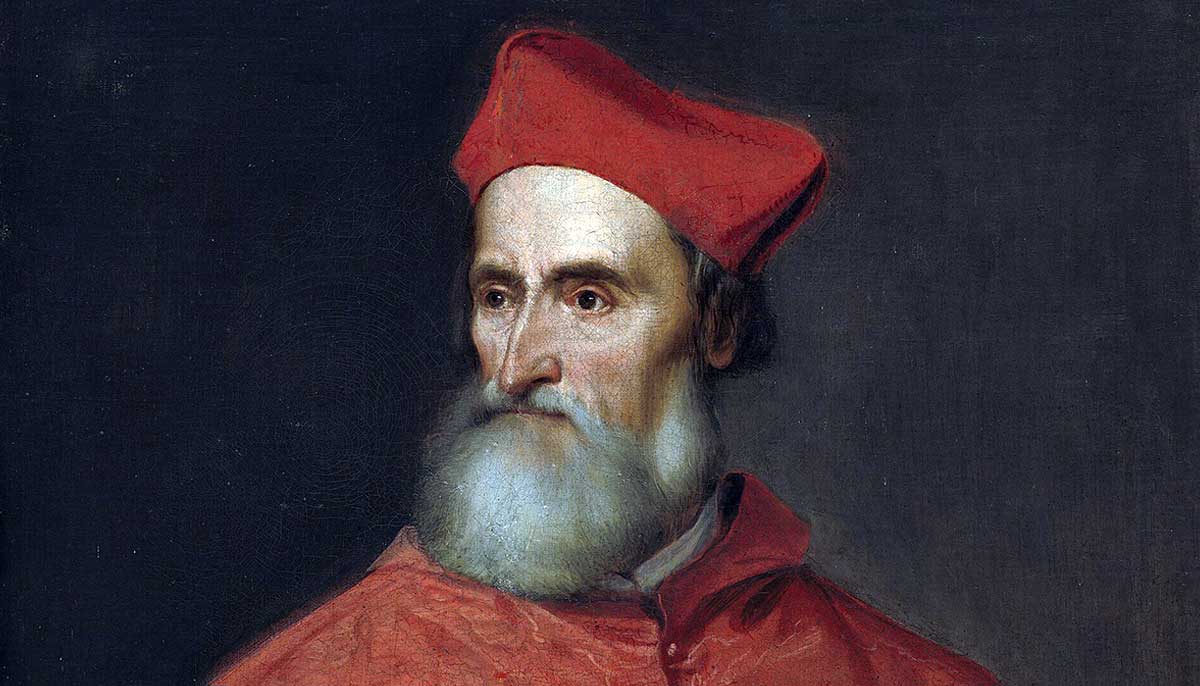
The canonization of Tuscan, however, was not without controversy. In the early 16th century, an intense debate, known as the “Language Question,” erupted in Italy: which vernacular should be chosen as the standardized literary language? Some proposed Latin; others, such as Niccolò Machiavelli, argued that contemporary Florentine would be the best fit. Ultimately, it was cardinal Pietro Bembo, a patrician of the Venetian Republic, who would put an end to the question with his 1525 Prose della volgar lingua (Writings on the Vulgar Tongue).
Written as a dialogue between humanists, Bembo’s book proposed the 14th-century Florentine vernacular, identifying Petrarch and Boccaccio as the model for poetry and prose respectively. Dante was left out, as Bembo, while admiring the Florentine poet, found his lexical creativity too bold.
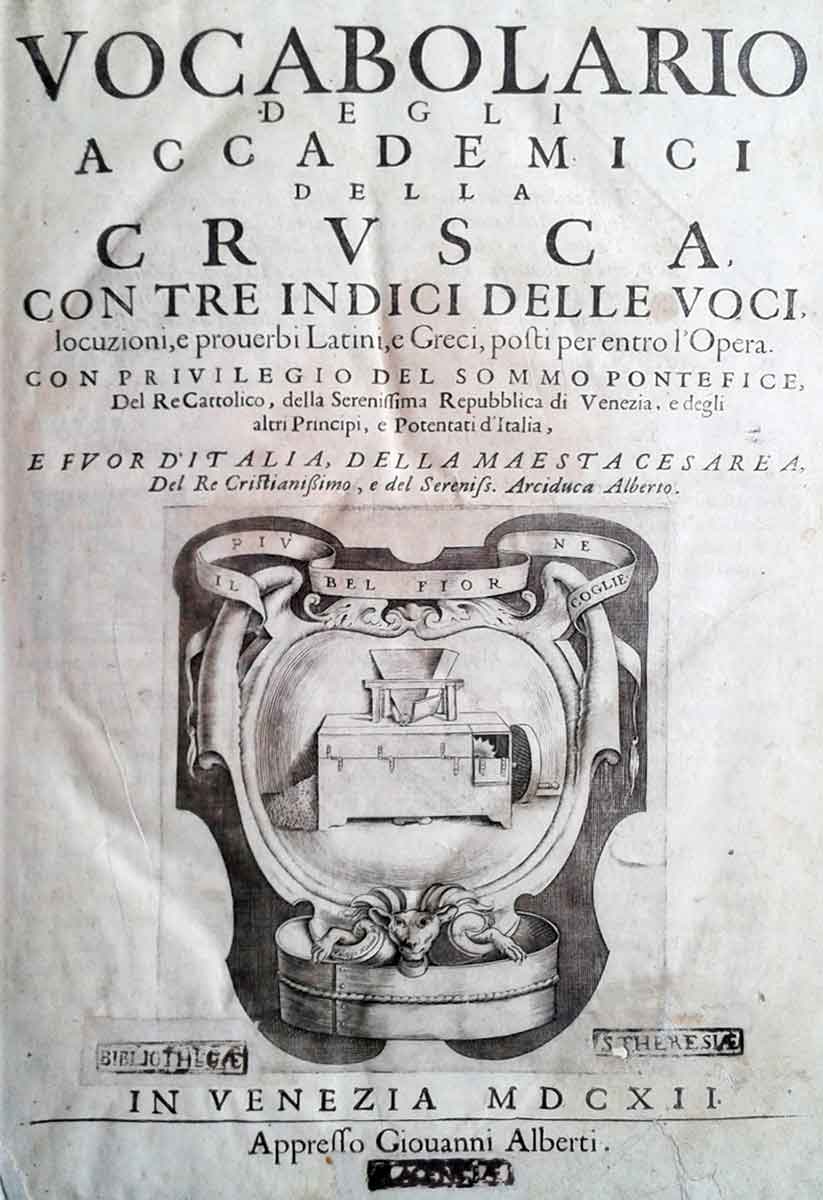
As the debate raged across the Italian peninsula, the institutional answer came from the Accademia della Crusca (Crusca Academy; crusca is the Italian for bran), founded in Florence in 1583 by a group of friends who regularly met together to discuss what they ironically called cruscate, or “things of little importance.” What they actually did was go through texts to extract the “finest flour” (hence the name crusca) from the lexicon.
The result of this 21-year-long cataloging effort was the publication of the 1612 Dictionary in Venice. The first great dictionary of any modern European language, it drew its authority from 14th-century Tuscany, extending Bembo’s selection not only to include Dante but also more recent authors, such as Machiavelli. The volgare illustre that Dante had theorized three centuries earlier had finally become reality.
The Legacy: The Risorgimento & the Italian Language
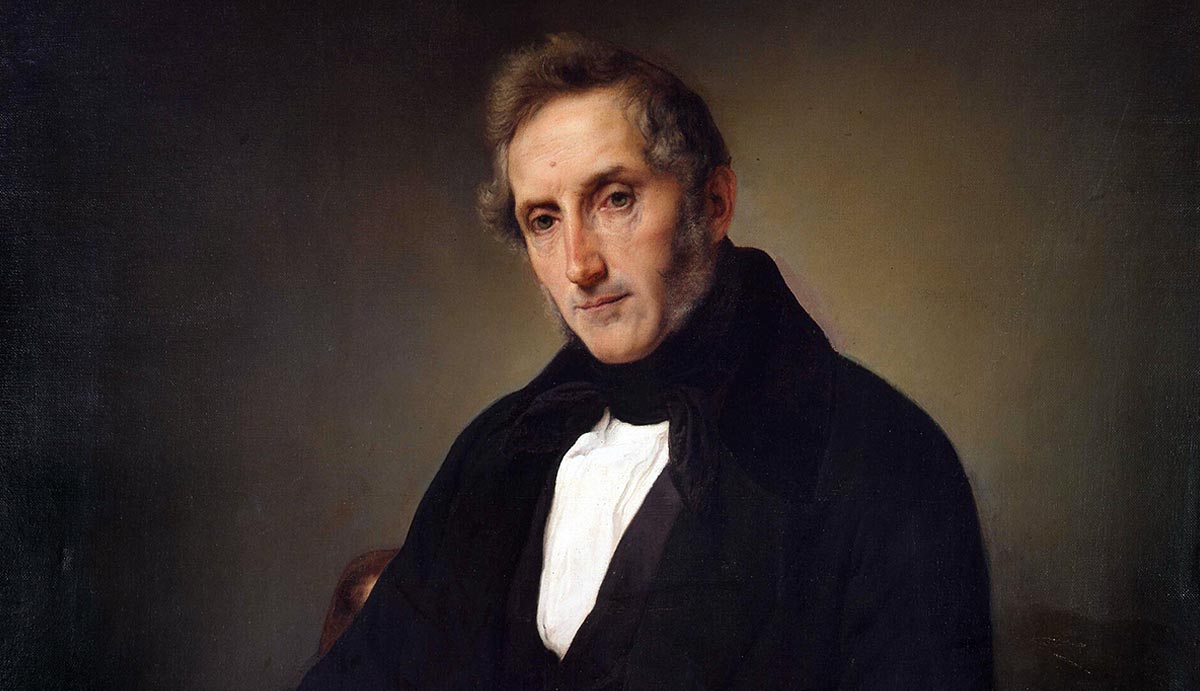
While the still politically fragmented Italian peninsula now had a standard literary language, across the various regions people continued to speak in their local dialect. The lack of a common Italian everyday language bothered 19th-century novelist Alessandro Manzoni, who, like many patrioti (patriots), dreamed of a unified, independent Italy: “One in arm, in language, in faith.”
Manzoni’s search for a national language led him to the cultivated Florentine. After familiarizing himself with the idiom spoken in the Tuscan capital (a process he famously described as “washing the sheets in the Arno,” the river flowing through Florence), Manzoni rewrote his novel I promessi sposi (The Betrothed) in 1840, discarding all antiquated forms. The result was a book whose patriotic appeal brought Manzoni immediate acclaim. It also became the model for modern Italian.
Yet, when Italian unification finally arrived in 1861, the new Kingdom of Italy confronted a paradox: the Italian peninsula was now a nation, but Italians did not speak Italian. In his Storia linguistica dell’Italia unita (A Linguistic History of United Italy), Tullio De Mauro calculated that, at the moment of unification, no more than approximately 2.5% of the population used standard Italian as their everyday language. The vast majority spoke their dialects as the main means of communication. Illiteracy was also widespread.
It took compulsory education, mass literacy, military conscription, internal migration, radio and television to complete, by the mid-20th century, the linguistic unification that Manzoni dreamed of achieving. Throughout this long process of nation building, Dante was always present. The Risorgimento made him into a myth, casting him as the father of the Italian language. His exile from Florence was read as a prefiguration of Italy’s centuries of foreign domination.