Inspired by Homer’s Iliad and Odyssey, the Roman poet Virgil composed his own epic poem between about 30 and 19 BC, when Augustus ruled as the first Roman Emperor. Left unfinished at the poet’s death, the Aeneid follows the Trojan prince Aeneas as he flees from the ruins of Troy and sails toward his promised new homeland: present-day Italy. In the Aeneid, Virgil included mythical locations, but also used many real places that his Roman readers would have recognized. Most of them still exist today. Here are 12 stops on Aeneas’ route, in order, from Troy to Lavinium, Italy.
1. Troy, Hisarlik, Türkiye
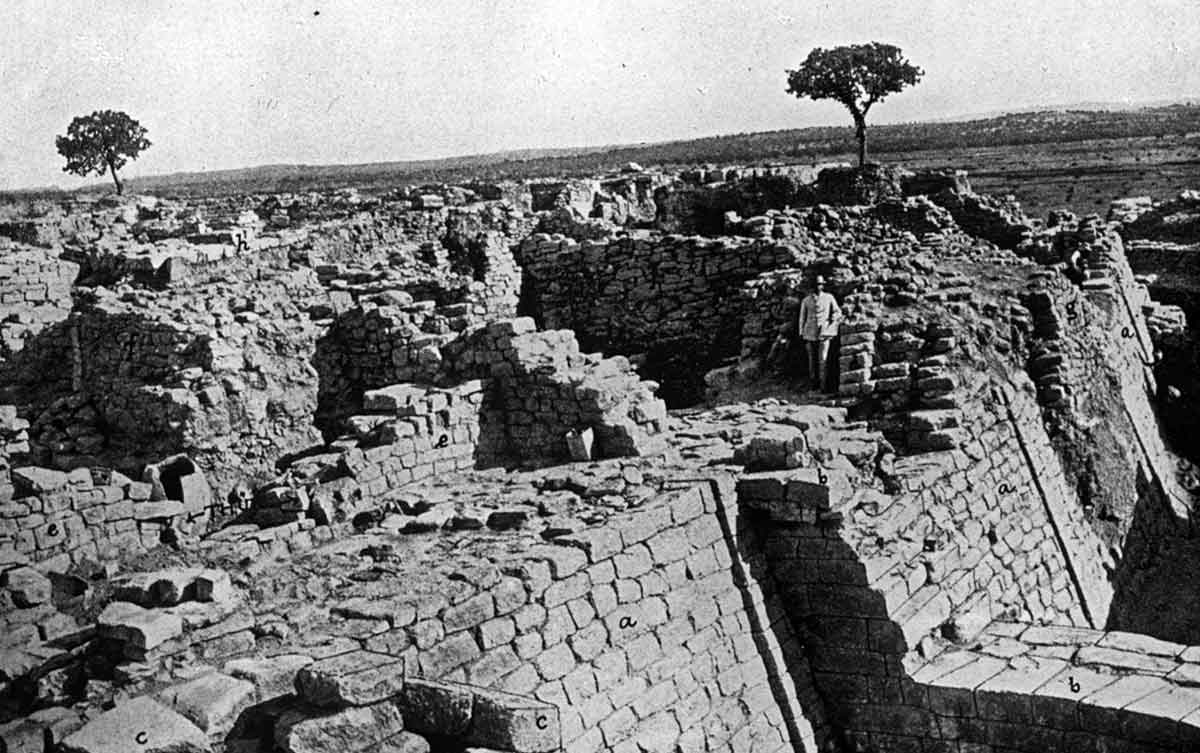
“I sing of arms and the man, who first from the shores of Troy, exiled by fate, came to Italy and the Lavinian shores.” Aeneid, Book I
Virgil’s epic poem begins with the fall of Troy. After a ten-year war, the Greeks, thanks to Odysseus’ cunning trick of the Trojan Horse, have entered the city. As everything around him is in flames, the Trojan prince Aeneas, carrying his father Anchises on his back and holding his young son Ascanius’ hand, flees from his motherland. He will never return.
Today, the city of Hisarlik, in present-day northwestern Türkiye, is widely believed to be the location of Troy. After the first excavations headed by Heinrich Schliemann in the 19th century, subsequent digging campaigns have uncovered at least nine layers of cities built one on top of another.
The layer of Troy commonly identified as the city mentioned by Virgil and Homer is Troy VIIa, dating to the Bronze Age. It was demolished by a fire around 1180 BC. Subsequently rebuilt, the city was again destroyed in the 7th century BC.
2. Thrace, Southeastern Balkans
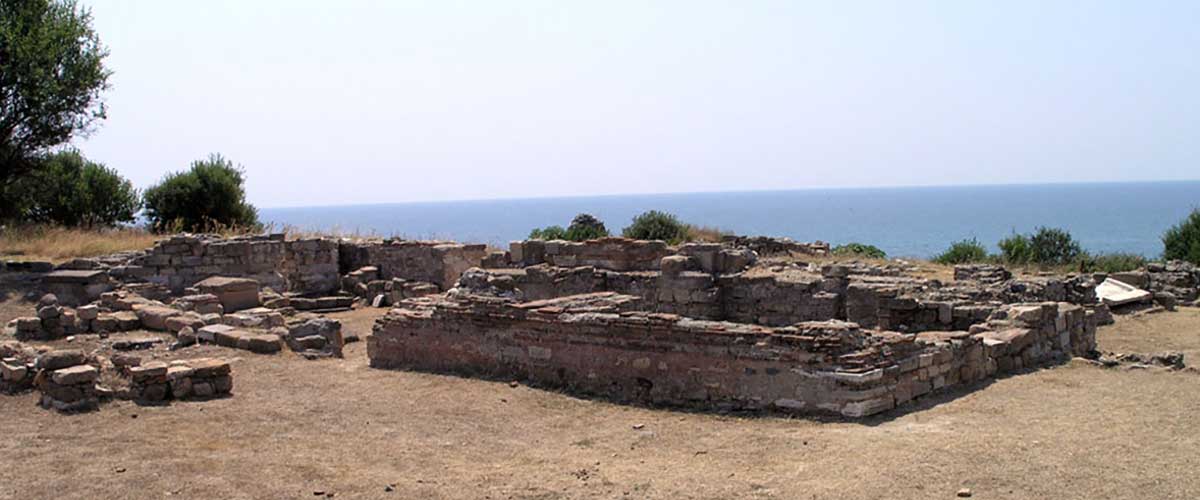
“There I was building a city—my people were eager—and I called the place Aeneadae, from my own name,” Aeneid, Book III
After fleeing from the burning Troy, Aeneas and the other Trojan exiles reach Thrace (an area comprising present-day Bulgaria and parts of Romania, Greece, and Turkey), where they start building a city: Aeneadae.
While Aeneas hopes to have found a place to settle, an eerie event changes his mind. As he tries to uproot a tree from a burial mound, the ground and bark start to bleed. The tree then speaks to him with the voice of Polydorus, Priam’s youngest son.
During the Trojan War, King Priam sent the young prince to the allied Thrace for safety. After Troy’s defeat, however, the Thracians sided with the victorious Greeks and killed Polydorus. Now, the murdered prince’s spirit tells Aeneas to leave Thrace.
3. Delos, Cyclades, Greece
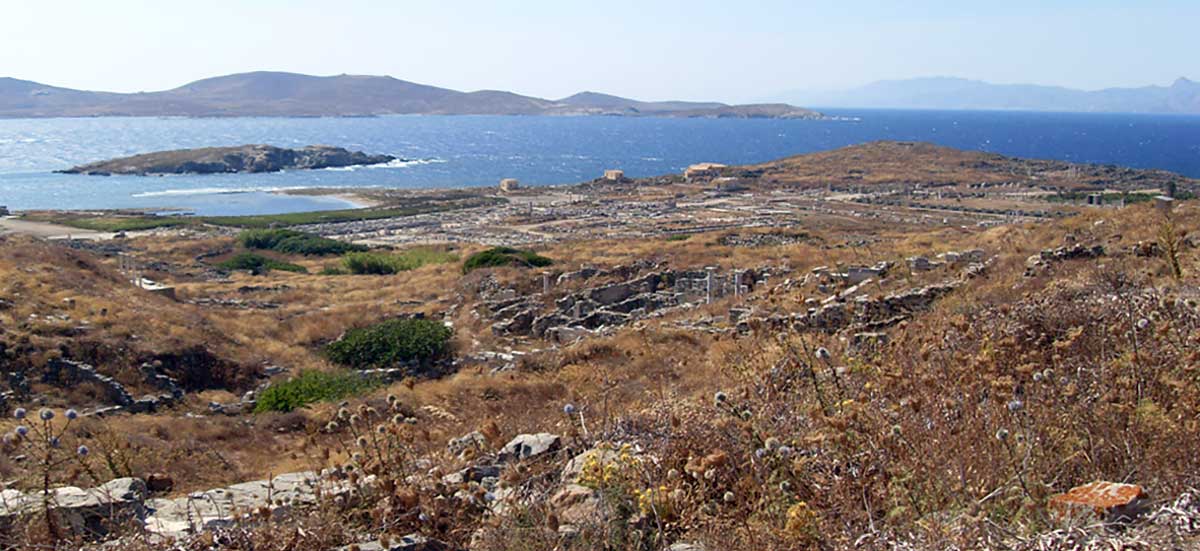
“Seek out your ancient mother. There the house of Aeneas shall rule over all regions, as shall his sons,” Aeneid, Book III
After re-burying Polydorus, Aeneas sets sail again and lands on the sacred island of Delos in the Aegean Sea. In ancient Greece, Delos was an economic and religious hub, and, according to myth, the birthplace of the gods Apollo and Artemis.
On Delos, Aeneas receives a prophecy from the oracle of Apollo: he must seek his “ancient mother,” the land from which his ancestors came.
Today, Delos is a largely uninhabited archaeological site, where visitors can admire the Temple of Apollo and the Terrace of the Lions. The granite island, about 1.3 square miles in area, is one of the smallest of the Cyclades. The island group forms a rough circle around Delos, hence the name Cyclades, “encircling islands.”
4. Crete, Greece
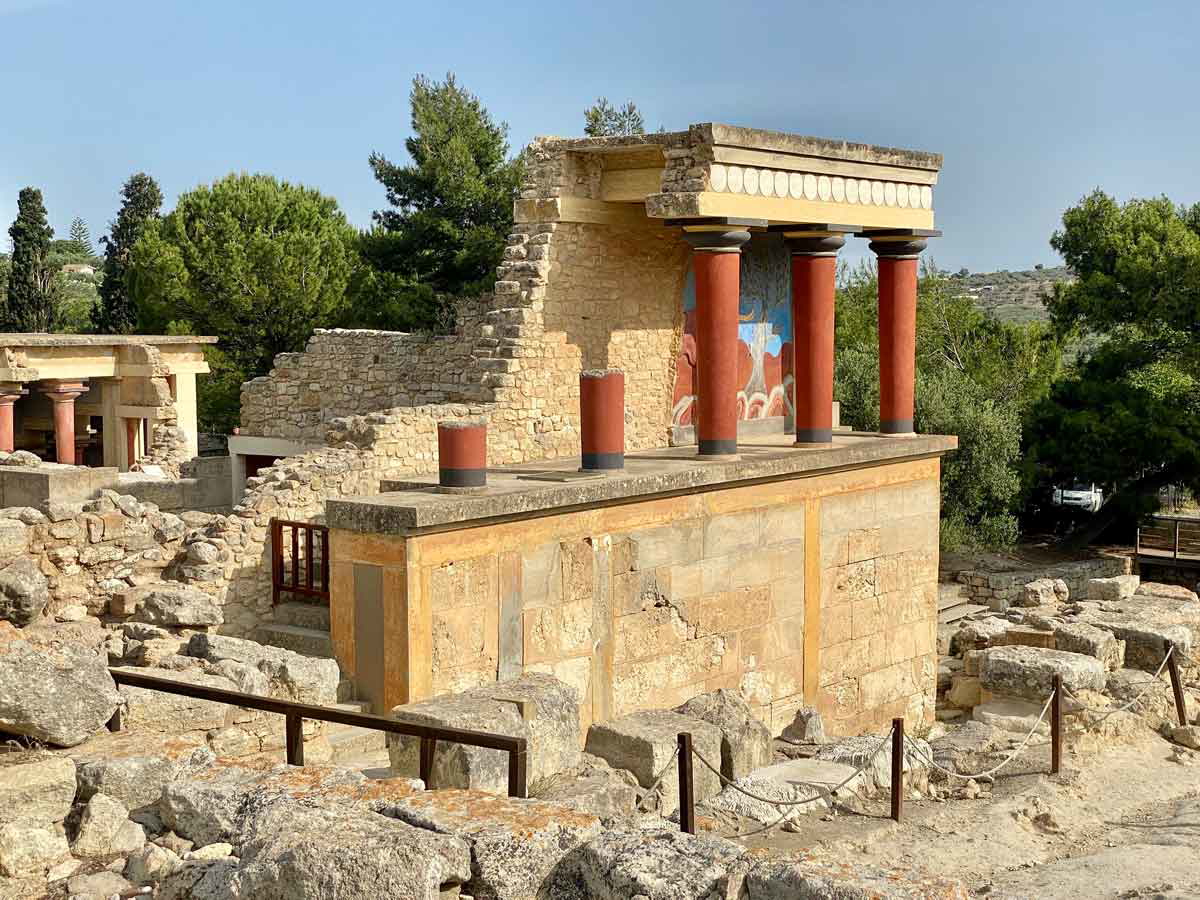
“There is a place, Crete, the island of great Jupiter, lying amid the sea, where Mount Ida is, the cradle of our race,” Aeneid, Book III
Upon receiving Apollo’s prophecy, Aeneas sets sail to Crete, mistakenly identifying it as the ancestral homeland mentioned by the god. Dominated by mountains (Mount Ida, its highest point, is more than 8,000 feet tall), Crete is the fifth-largest island of the Mediterranean Sea and was home to the Minoan civilization, a Bronze Age culture.
When the Trojans reach their new destination, they begin to build a settlement. However, once again, misfortune strikes. A plague strikes and crops fail. Then, the gods appear to Aeneas in a dream to inform him of his mistake: the “ancient mother” of the prophecy is not Crete but Italy, the homeland of his ancestor Dardanus.
5. The Strophades, Ionian Sea, Greece
“Suddenly, with a horrible swoop, the Harpies are upon us from the mountains, shaking their wings with a loud clatter.” Aeneid, Book III
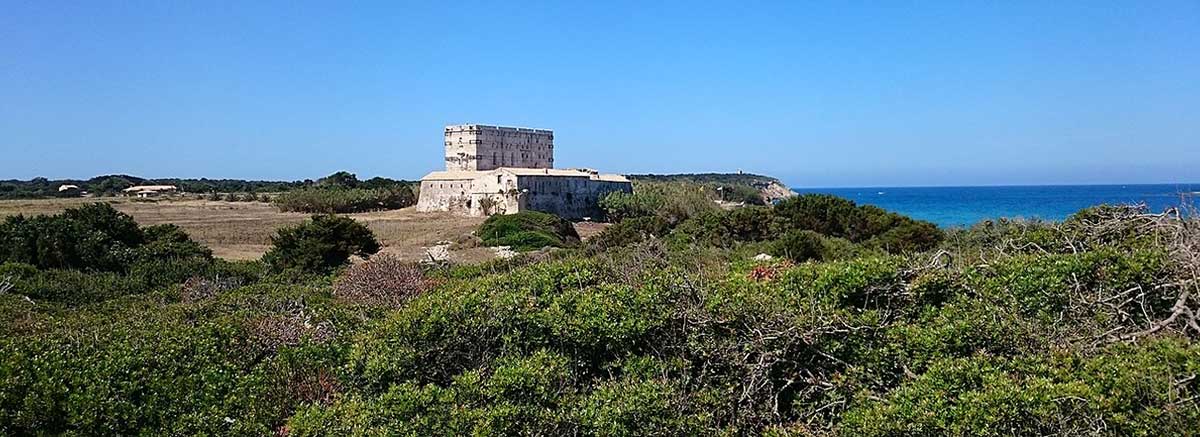
After leaving Crete, black storm clouds hinder the Trojan refugees’ voyage. In search of food, they land on the Strophades, two tiny islands in the Ionian Sea, west of the Peloponnese. There, Aeneas and his crew held a feast after killing several cows and goats roaming free on the island.
Their meal, however, is soon spoiled by the arrival of unwanted and unpleasant guests: the Harpies, winged, bird-like creatures with women’s faces, and the local residents. Furious, their leader, Celaeno, curses the Trojans, delivering a rather grim prophecy: they will reach their destined land, but they will be so hungry that they will “eat their own tables.”
The real Strophades are remote, largely uninhabited islands. In the 13th century, the emperor of Nicaea, Theodore I Laskaris, built a fortress-like monastery there.
6. Buthrotum, Butrint, Albania
“Could it be that a second Pergamum has risen here, built by some Hector’s hand?” Aeneid, Book III
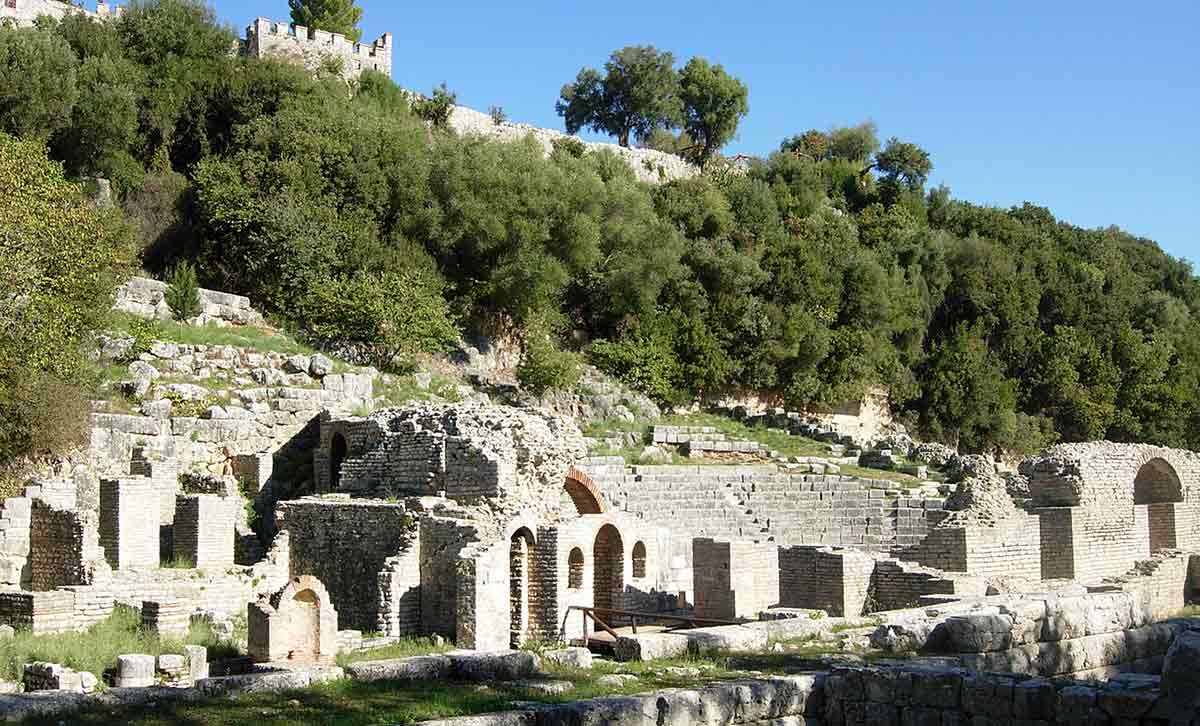
On the next stop on his long journey, Aeneas finds some familiar faces. Indeed, a group of fellow Trojans has already settled in Buthrotum, present-day Butrint, under the leadership of Helenus, one of Priam’s sons. After being captured by Pyrrhus, Helenus and his wife, Andromache, managed to gain their freedom and succeed to a portion of Pyrrhus’s kingdom after his death.
Before his departure, Helenus and Andromache advise Aeneas to take the long way around Sicily to sail past the Strait of Messina, where Scylla (a multi-headed monster) and Charybdis (a deadly whirlpool) lurk. Part of Odysseus’s crew, on its way home, had already fallen victim to the hazardous passage.
Today, Butrint is a UNESCO World Heritage Site. Layered with Greek, Roman, Byzantine, and Venetian ruins, the city is wrapped in forest and overlooks a lagoon.
7. Sicily, Italy
“A port there is, untouched by winds’ approach; but nearby Etna thunders with appalling crashes, and sometimes hurls a dark cloud to the sky,” Aeneid, Book III
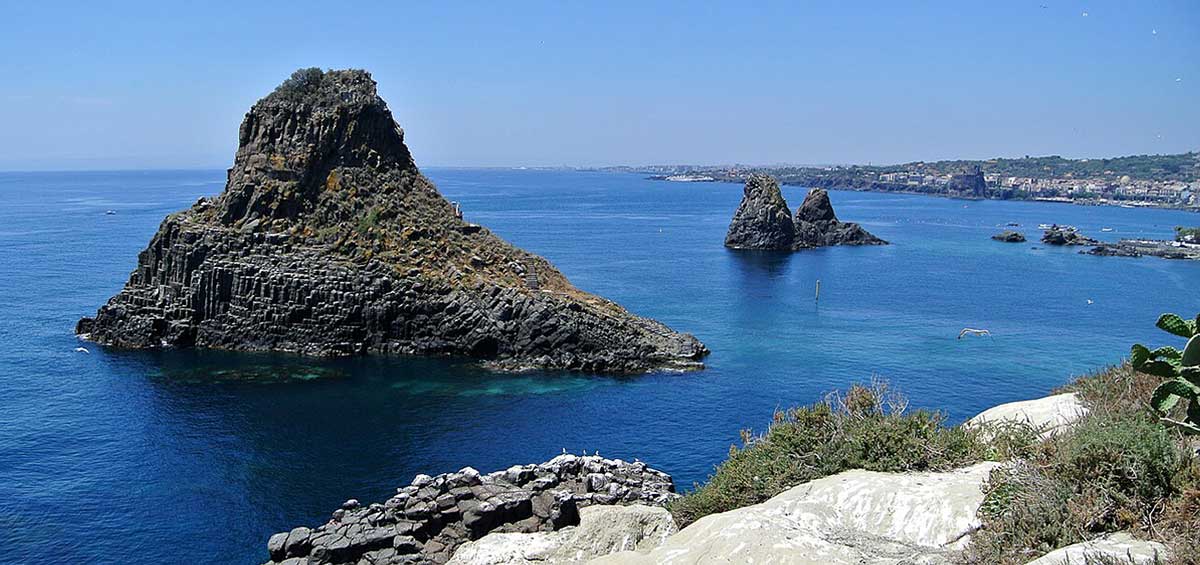
Following Helenus’ advice, Aeneas lands safely in Sicily near Mount Etna. As the tired Trojans are resting on a beach, they encounter a ragged Greek soldier named Achaemendes. He landed on the island before them as part of Odysseus’s crew, but was left behind when the others managed to flee from the Cyclops Polyphemus.
As he finished telling his misfortunes to the Trojans, Polyphemus, blinded by Odysseus, stumbled down the shore. Achaemendes and the Trojan run to safety as the other Cyclopes follow Polyphemus to the beach. They will make a second stop in Sicily after leaving Carthage (more on that later). Here, they hold a series of games to commemorate the anniversary of Anchises’ death.
Today, Mount Etna is still Europe’s most active volcano, and the Strait of Messina, though thankfully free of the mythical Scylla and Charybdis, has strong currents. As for the island of Sicily, its position as a crossroads of Mediterranean civilizations (Greek, Phoenician, Roman, Arab, and Norman) left behind traces of Italy’s long (and fragmented) history.
8. Carthage, Tunis, Tunisia
“O queen, the grief you bid me to renew is unspeakable… But if you have such longing to know sour disasters, I will begin,” Aeneid, Book II
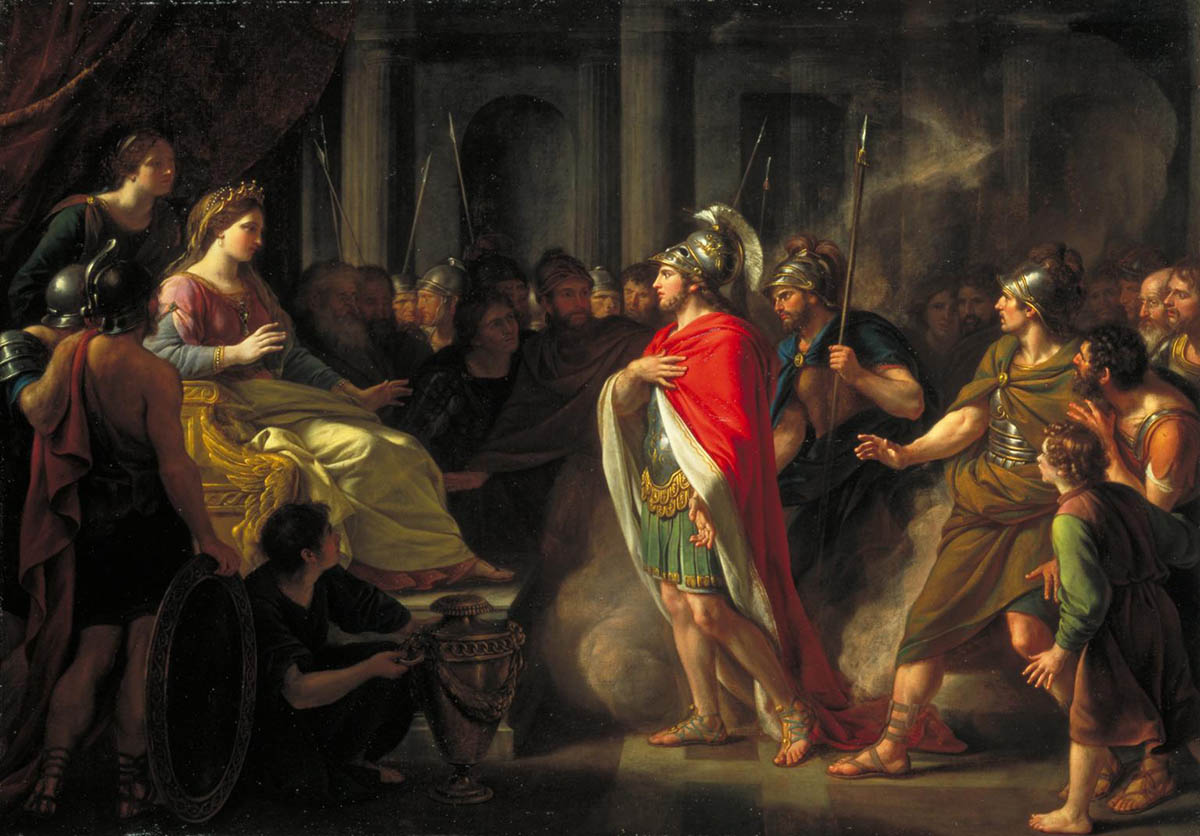
When Aeneas’ crew sets sail from Sicily, the goddess Juno, who harbors no love for the Trojans, whips up a storm that blows the refugees off course, leading them to the coast of North Africa. There, they reach Carthage, ruled by Queen Dido. According to tradition, the African city was founded by the Phoenicians, probably in 814 BC. In the Aeneid, however, Virgil traces the origin of Carthage to Dido herself, who, according to the Roman poet, founded the settlement after fleeing from her brother Pygmalion, who murdered her husband.
In Carthage, the Trojan prince shares with the queen the tale of the fall of Troy and his subsequent voyage through the Mediterranean Sea. Queen Dido falls in love with Aeneas, even though she vowed never to love again. During a storm caused by Venus (Aeneas’ mother) and Juno, Dido and Aeneas consummate their love.
Their relationship, however, is not destined to last. Indeed, Jupiter sends Mercury to remind Aeneas of his mission: to found a new Troy in Italy. Despite Dido’s plea to remain in Carthage, the Trojan prince leaves, telling her he must obey the gods, even when their plans do not align with his desire. Distraught, Dido builds a pyre and, after cursing Aeneas, takes her own life. The curse foreshadows a future enmity between Rome and Carthage: the Punic Wars.
Today, the ruins of Carthage are an extensive archaeological site belonging to UNESCO’s World Heritage List.
9. Cumae, Campania, Italy
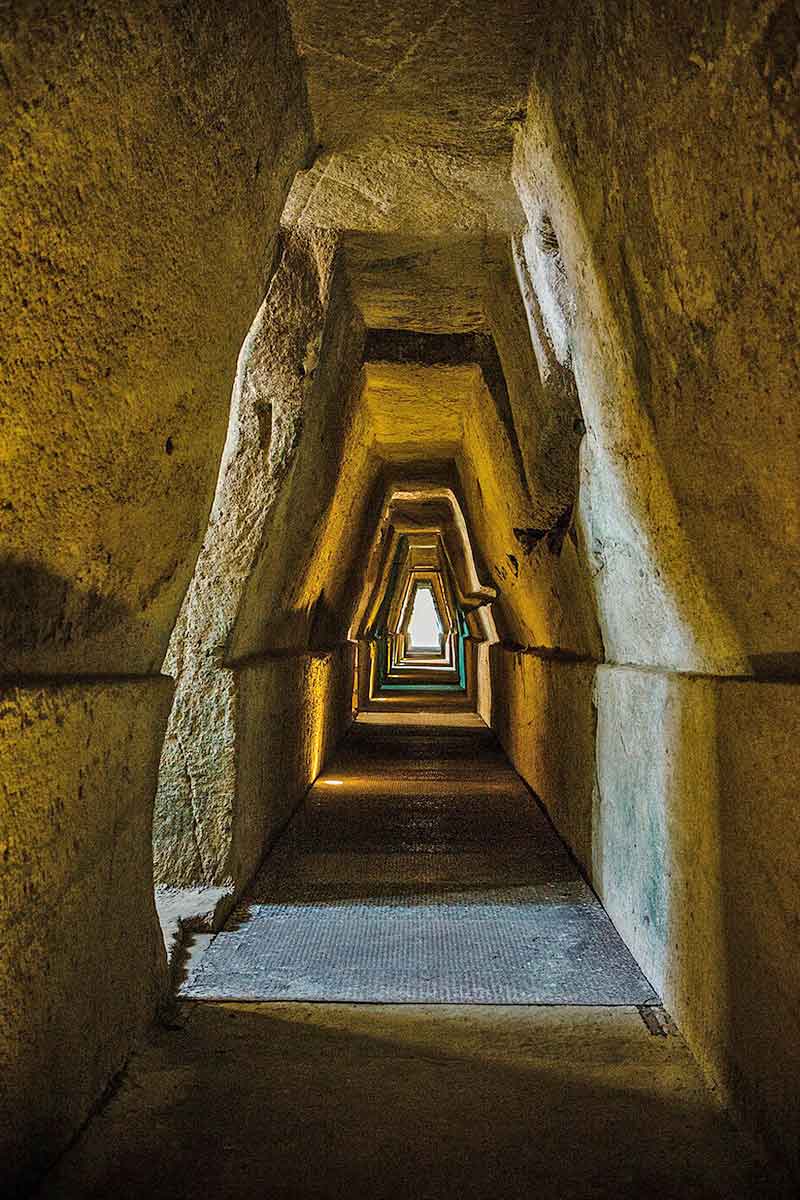
“The descent to the Underworld is easy; the door of dark Dis stands open night and day. But to retrace your steps and escape to the upper air—that is the task, that is the toil,” Aeneid, Book VI
Like Odysseus, Aeneas must journey to the underworld before fulfilling his destiny. After finally reaching the Italian shores, the Trojan prince arrives at Cumae, near present-day Naples. There, he consults the Sibyl, a prophetess who lives in a cave carved into the rock. The priestess warns him that he will face more trials in Italy, but agrees to guide him into the underworld to speak with his dead father.
Anchises rests in the Elysian Fields among the souls of the virtuous. During their reunion, he shows his son that from the line of Ascanius a Caesar will come, who will guide Rome into a “Golden Age.” In the Underworld, Aeneas also meets the soul of Dido, who refuses to speak to him.
Today, the “official” Sibyl’s cave (Antro della Sibilla) at Cumae is a long, trapezoidal tunnel cut into volcanic rock, with shafts of light cutting through from its sides. Probably of Etruscan origin, the cave is located near the ruins of the Temple of Apollo and the Acropolis that look out over the Tyrrhenian Sea.
10. The Tiber Mouth, Lazio, Italy
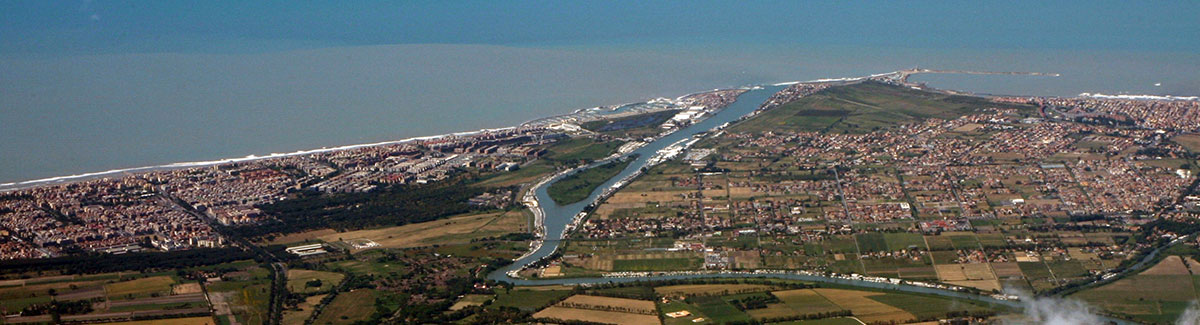
“Here at last, worn out by the seas, by every hazard of land, by long wandering, the Trojans set foot on the shore of Latium,” Aeneid, Book VII
After years of wandering and trials, Aeneas lands on the shores of Latium, the area around the Tiber River in present-day Lazio, central Italy, and sails up the stream. Ravenously hungry, they bake flatbreads (the antecedents of modern pizza) and pile them with fruits. When they finish the toppings, they devour the flatbreads too, prompting Ascanius to joke that they have even eaten their tables. This fulfills the Harpies’ prophecy and confirms to Aeneas that he has finally reached his promised land.
The mouth of the Tiber River is located near present-day Fiumicino, mostly known for its international airport. Just south of the town is the ancient harbor of Ostia Antica, where visitors can walk through some of the best-maintained Roman ruins.
11. Pallanteum, Palatine Hill, Rome
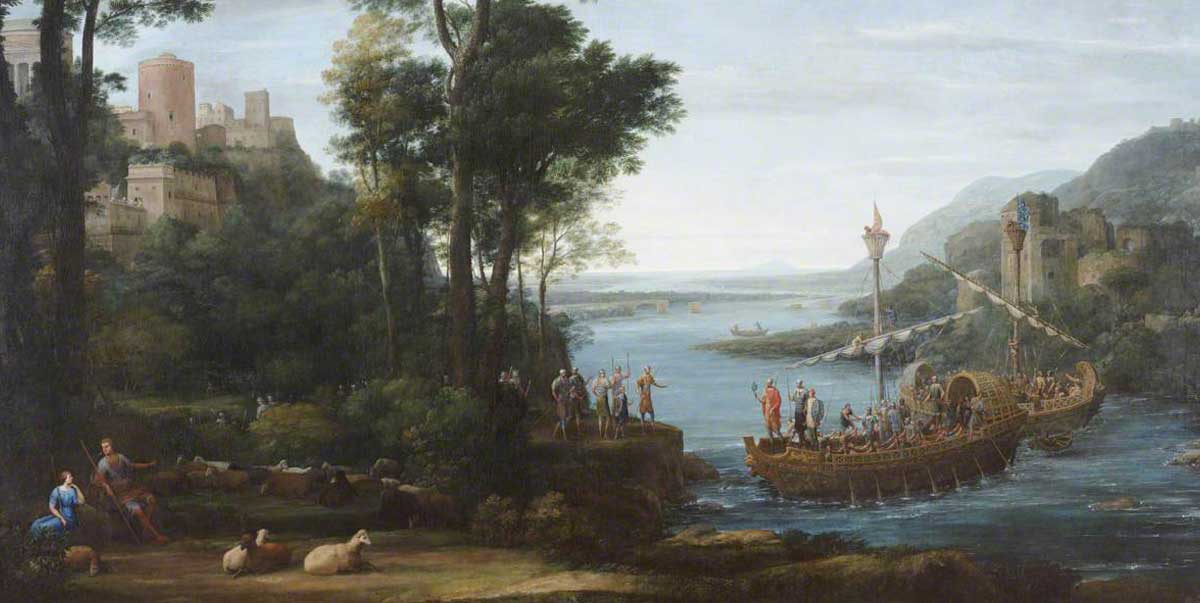
“This forest, this hill with its leafy crown—some god inhabits it, which god we know not… We Romans believe that Jupiter himself we have often seen here,” Aeneid, Book VIII
When Aeneas and the Trojans land at the mouth of the Tiber River, they are welcomed by the king of the region, Latinus. Other local rulers, however, resent their presence and the prospective marriage between Aeneas and Lavinia, Latinus’ daughter. Among the resentful is Turnus, leader of the Rutuli tribe and Lavinia’s suitor.
As war between the Trojans and Turnus is about to break out, the god of the Tiber River tells Aeneas to form an alliance with the Arcadians and their King Evander, a Greek who founded the city of Pallanteum in Italy. During his visit, Evander leads Aeneas through the site of the future city of Rome.
Virgil identifies Pallanteum as the Palatine Hill, one of the settlements that will form Rome and the very site of its mythical birthplace. Indeed, according to Roman legend, the infants Romulus and Remus, abandoned on the Tiber River, were deposited at the foot of the Palatine.
Today, the Palatine Hill is a plateau located near the Roman Forum. It houses mostly ruins dating back to Imperial Rome and offers a sweeping view of the Forum and the Capitoline.
12. Lavinium, Lazio, Italy
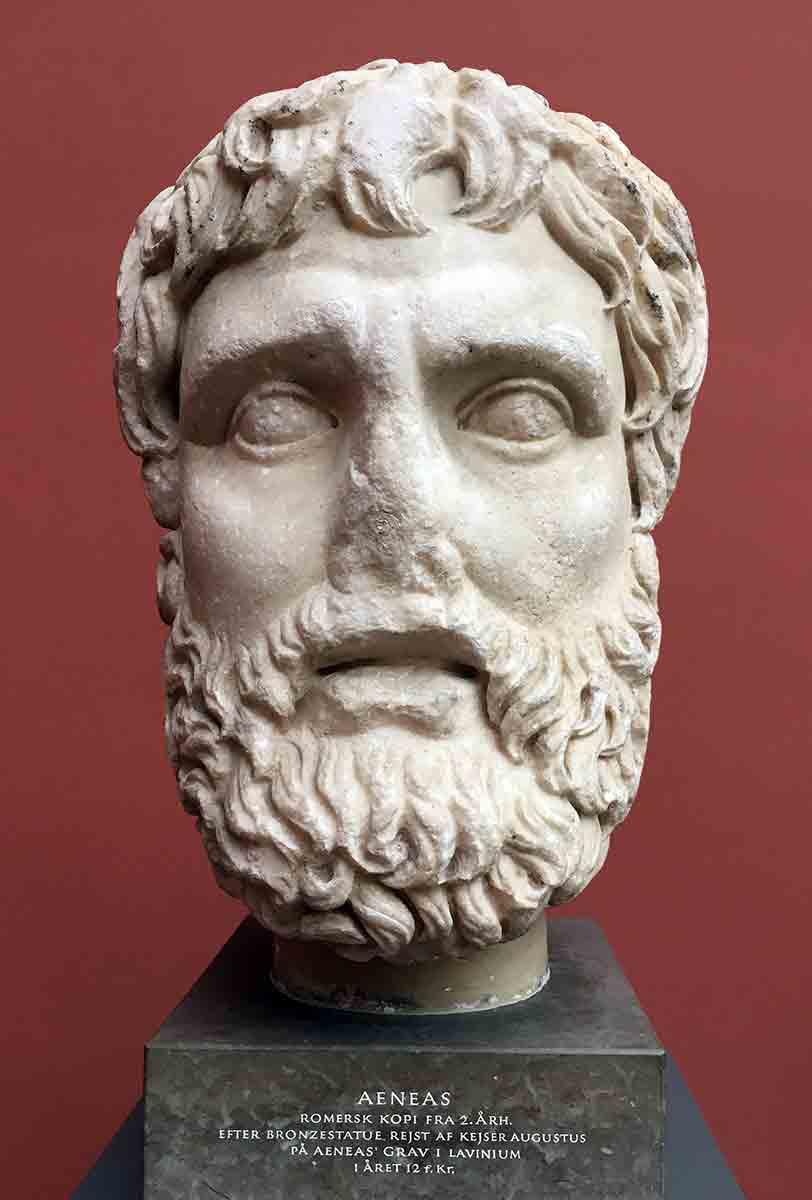
“He shall build a city for Lavinia his bride, and shall call it Lavinium. Wars, horrid wars I see, and the Tiber foaming with blood,” Aeneid, Book VI
After defeating King Turnus in single combat, Aeneas marries Lavinia and fulfills his destiny by erecting a new city of the Trojan refugees: Lavinium, named after his wife. It is from Lavinium that his son Ascanius will eventually found Alba Longa.
Located southeast of Rome, near present-day Castel Gandolfo (the town where the popes’ summer residence was built in the 17th century), Alba Longa is, according to legend, the birthplace of the future founders of Rome: Romulus and Remus. Indeed, their mother, Rhea Silvia, was the daughter of Numitor, the King of Alba Longa.
In the 20th century, archaeological excavations on the site where Virgil places Lavinium have revealed 13 altars, Bronze Age artifacts, and a shrine that may have been associated with Aeneas by the Romans. These findings confirm that the area was occupied long before the birth of Rome.
Source
- Virgil. Aeneid. Trans. H. Rushton Fairclough. Loeb Classical Library. Harvard University Press, 1916 (rev. 1934).