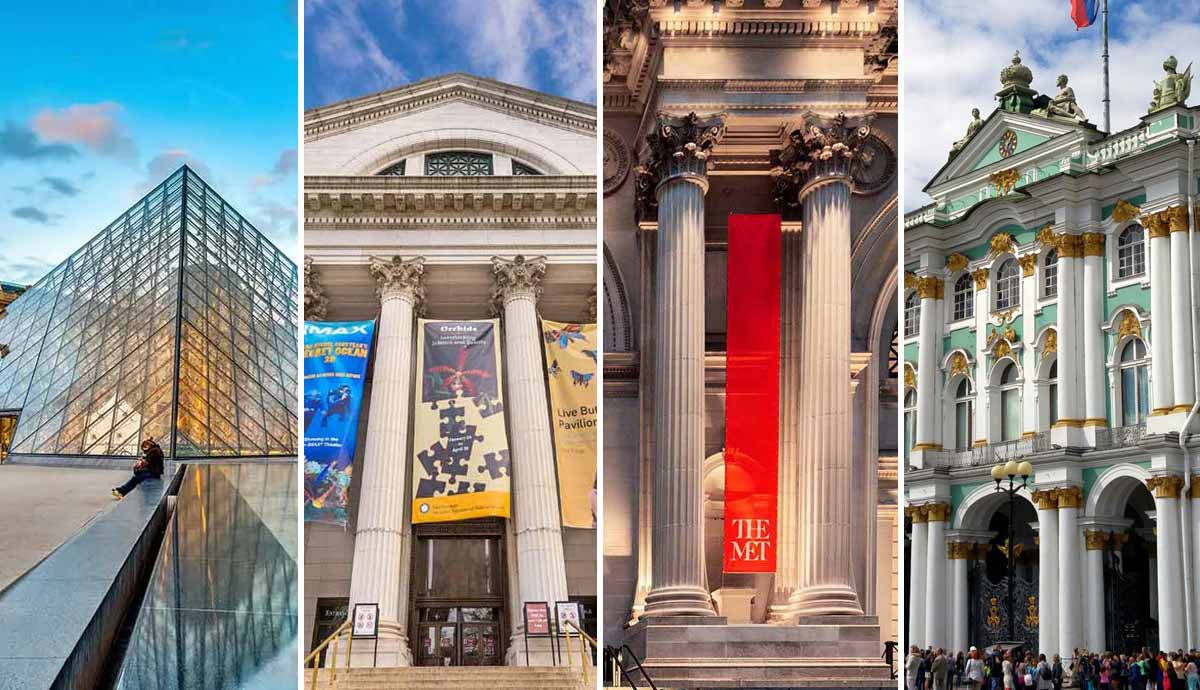
For most of her life, the Mona Lisa was one semi-important portrait among many, admired by the odd Renaissance scholar but seemingly overlooked by nearly everyone else. Then a handyman named Vincenzo Peruggia walked out of the Louvre with her under his coat in 1911, and the two-year manhunt that followed turned an unassuming little panel into the most famous face on Earth. Crowds have been chasing her ever since. But just a few steps away from the mob in the Salle des États are five of the museum’s masterpieces enjoying the kind of peace the Mona Lisa lost more than a century ago.
How to Beat the Crowds at the Louvre
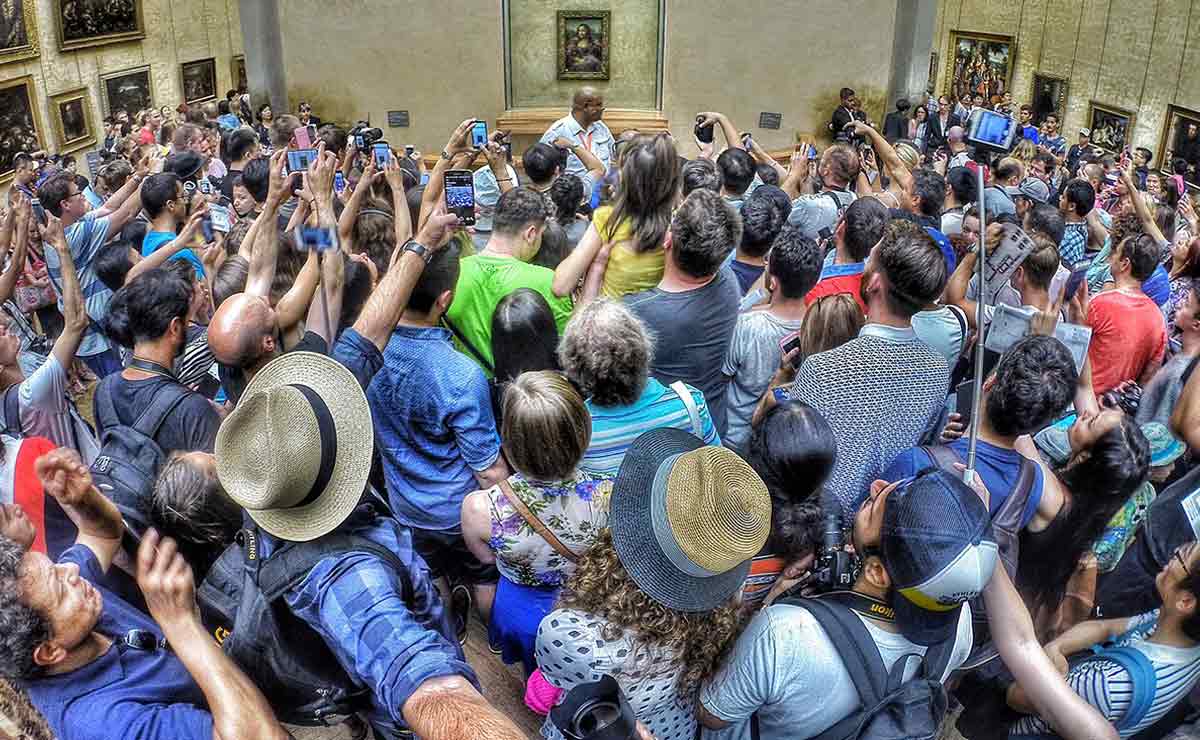
The Louvre is quite the sprawling mammoth, set on former royal grounds. It only puts some 35,000 works on show at once, so nobody does it justice in a single day, try hard as they may. Push too hard, and all you end up being is exhausted and cranky in front of a painting behind glass, squeezed among a throng of folks.
The trick to avoid the drama is to skip the Denon wing scrum for your first hour and make for the Richelieu wing instead, which stays oddly uncrowded even at the height of summer. The museum also opens late on Friday evenings, and once the tour groups clear out, the marble halls turn blissfully empty. Pick three or four things you really want to see, then let yourself get pleasantly lost between them.
Note that the following five pieces are not secret, by any means, yet they are often sidelined, which makes seeking them out all the more rewarding.
1. The Five-Legged Lamassu of Khorsabad
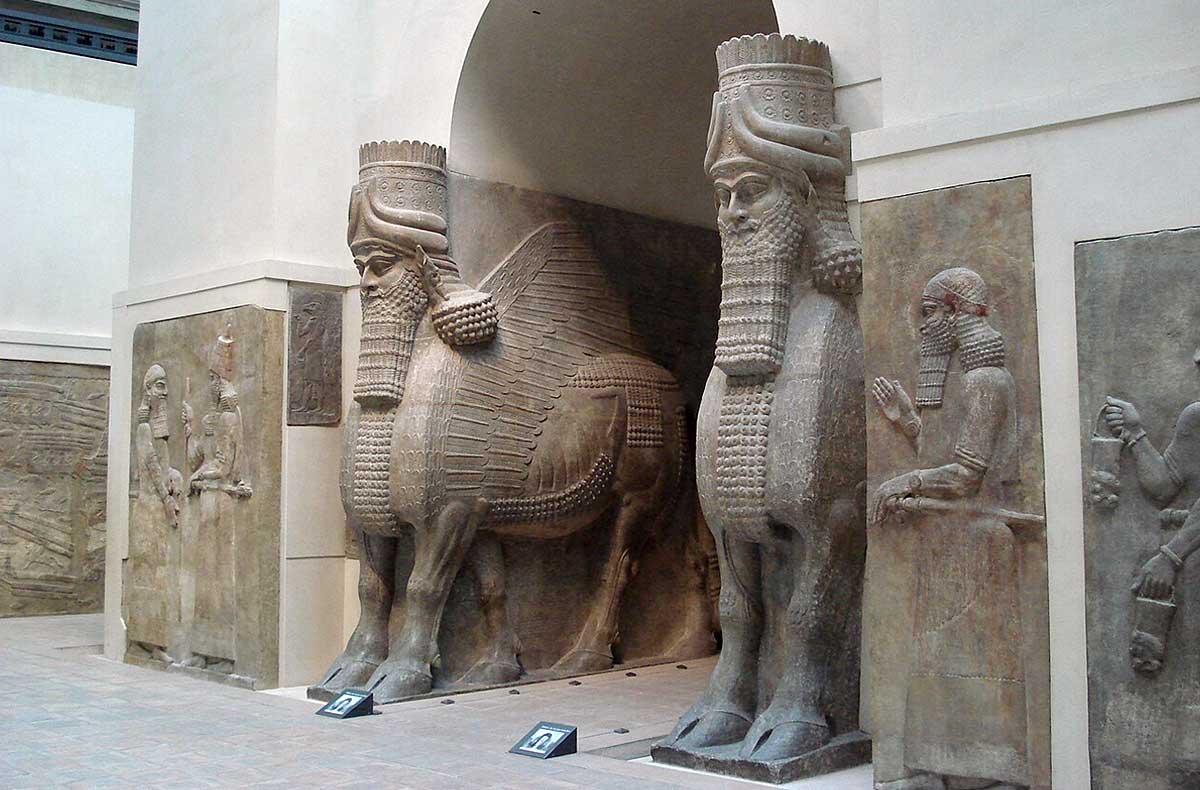
Deep in the Richelieu wing, in a courtyard most people march straight through on their way to the Italian paintings, stand two giant winged bulls with bearded human faces. Look at one head-on, and it looks as if it’s planting itself on guard, yet step to the side, and it looks as if it’s striding forward. It’s a trick the sculptors pulled off by carving it with five legs instead of four, each one cut from just a single block of alabaster weighing close to 30 tons.
The pair once guarded the gates of the Assyrian king Sargon II, who grabbed the throne around 720 BC, probably as a usurper, and set out to prove the gods were on his side. His big move was building a whole new capital from scratch in under a decade, a city he modestly named Dur-Sharrukin, or Fortress of Sargon. He barely got to enjoy it, though, as he was killed in battle in 705 BC. Since his body was never recovered, his court took it as a sign the gods were not so approving after all. The omen spooked his son Sennacherib so badly that the young king abandoned the barely used city and moved the capital to Nineveh, leaving Sargon’s fortress to the wind.
You will find the pair today in Room 229, the Cour Khorsabad.
2. The Card Sharp in Georges de La Tour’s The Cheat
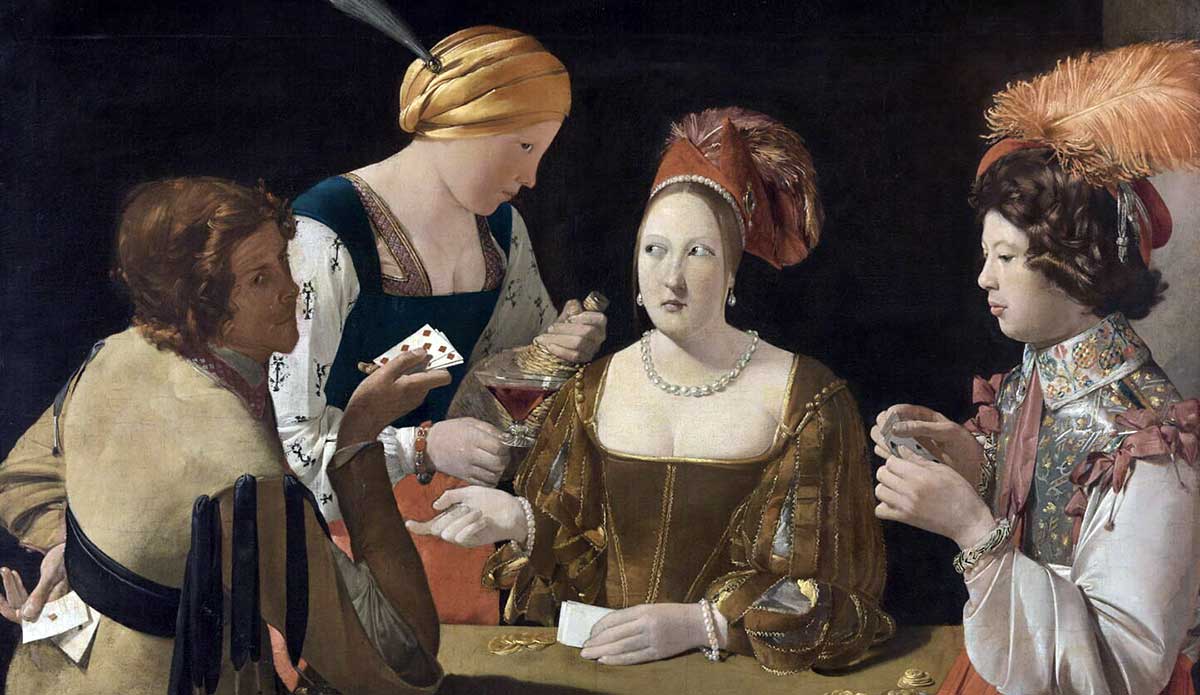
At first glance, The Cheat seems to show four ordinary people playing cards. Look again, and you have a sneaking suspicion you’ve just walked into a robbery. On the right, a richly dressed young man frowns at his hand, about to lose his shirt and completely oblivious. On the left, the card sharp is already sliding an ace of diamonds out from behind his belt.
Between them sit a courtesan and her maid, and here is the clever bit: you get the notion that everyone at that table is in on the scam except the victim. You can read the whole scheme in their eyes, the glances flicking between the three accomplices while the young man studies his hand. La Tour seems to suggest that cheating like this was so routine nobody needed to say a word.
Georges de La Tour was a star in his own lifetime, then slid so far out of view after he died in 1652 that scholars only pieced his story back together in the 20th century. This canvas helped a great deal. It surfaced in 1926 with a dealer on the Île Saint-Louis, signature still in the lower left, and hauled his reputation back from three centuries of darkness. Look for it in Room 912 of the Sully wing.
3. Vermeer’s Tiny Masterpiece: The Lacemaker
Vermeer is a household name today, but he had been reduced to something akin to a myth for nearly two centuries after his death. He worked slowly and rarely strayed from Delft, selling most of what he painted to a small circle of local buyers, so even in his lifetime his fame barely reached past his home town. Then came 1672, the year the Dutch still call the Rampjaar, or Disaster Year, when the armies of Louis XIV poured into the Republic and the art market collapsed along with the economy. Vermeer dealt in other painters’ work as well as making his own, and the crash ruined him. He died three years later at 43, woefully deep in debt, leaving his widow Catharina and their 11 surviving children, dealing with a long line of creditors banging at the door. To settle years of unpaid bills, she is said to have even handed the local baker two of her late husband’s paintings just so the family could eat.
For almost 200 years thereafter, the painter all but vanished from the record. Then a French critic named Théophile Thoré-Bürger became obsessed in the 1860s, hunting down the scattered canvases and publishing the research that pulled Vermeer back into the light.
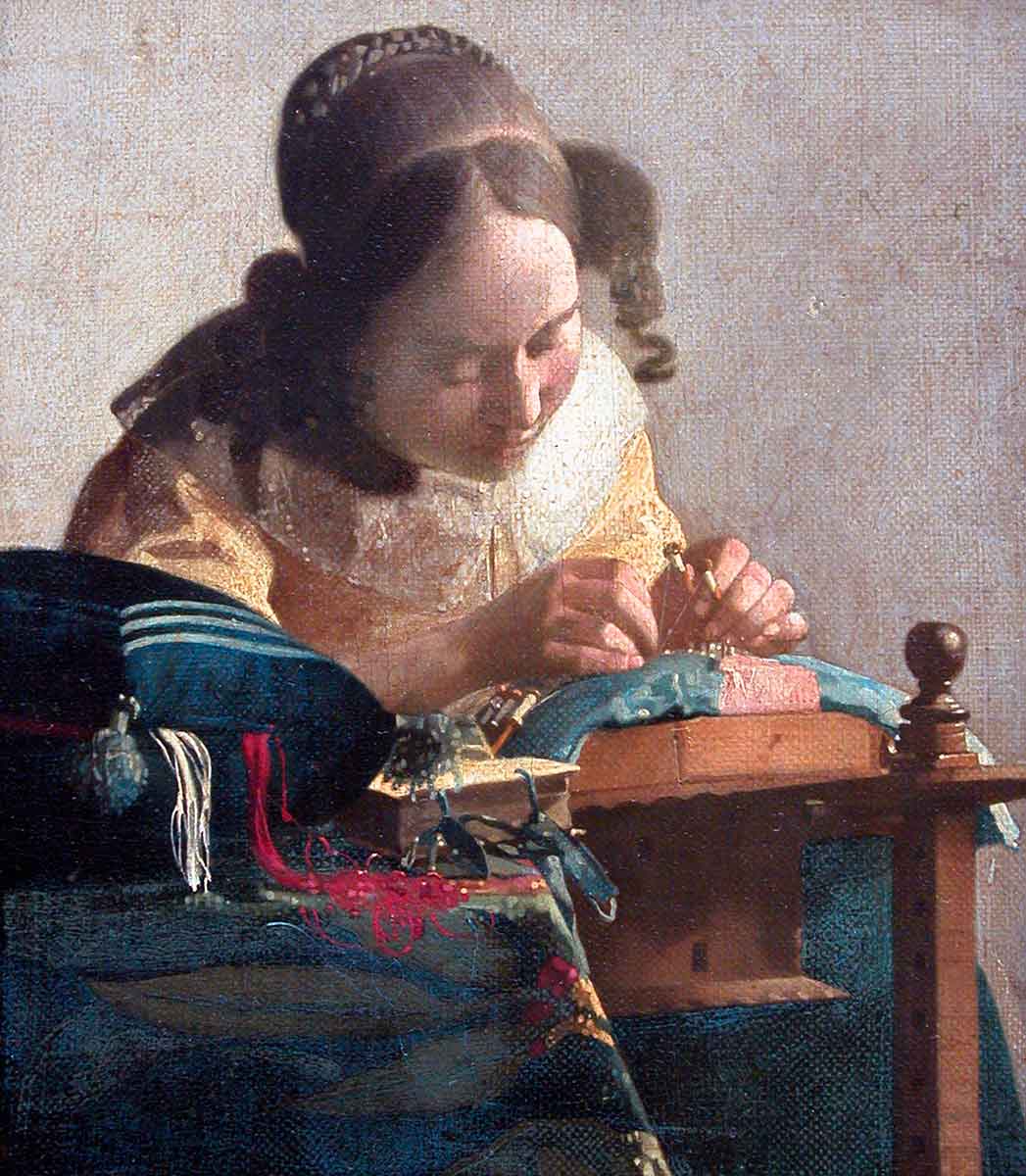
The smallest masterpiece Vermeer ever painted is the one hanging at the Louvre that you ought to seek out. At about 24.5 by 21 centimeters, or roughly 9.6 by 8.3 inches, The Lacemaker is smaller than a sheet of paper, and its strange, almost photographic clarity probably owes something to a camera obscura, the lens-and-box device Vermeer seems to have used to study how light really falls, long before a camera could do the job for him.
4. The Sleeping Hermaphroditus and Bernini’s Marble Mattress
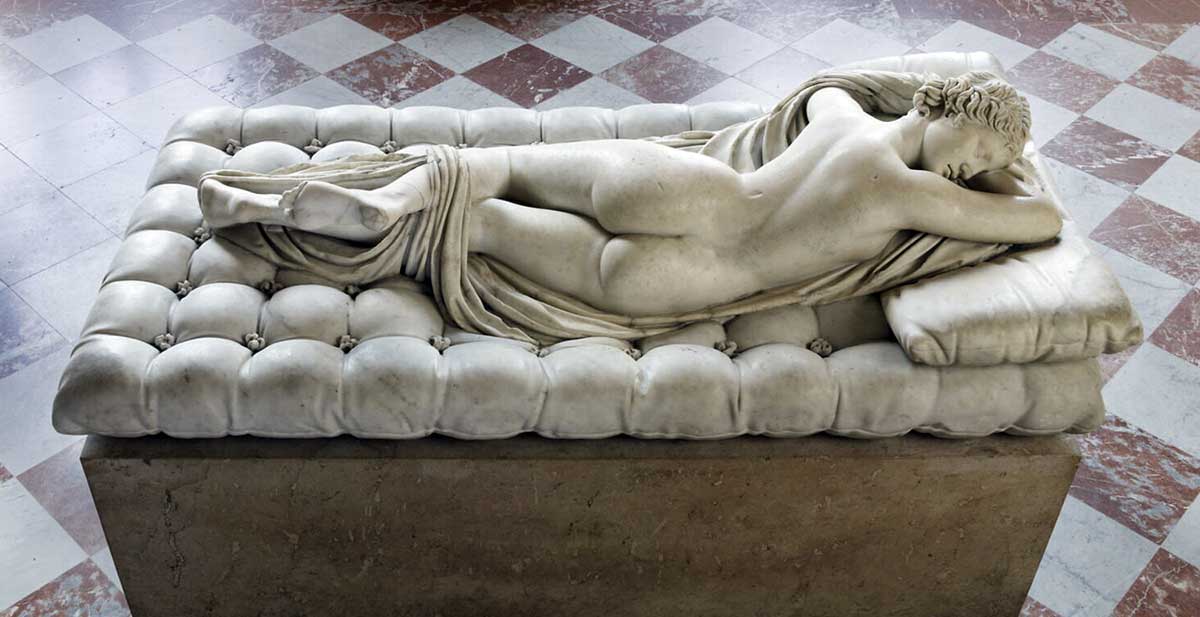
Stare at this reclining marble from one side, and you’ll see a beautiful woman asleep on her front. Walk around to the other side, however, and the body turns out to be both female and male, an astonishing bit of artistic sorcery. The figure is Hermaphroditus, child of Hermes and Aphrodite, who in the myth is fused with a besotted water nymph named Salmacis into a single body.
The sculpture is a Roman copy of a lost Greek bronze, though the real highlight is what lies underneath. In 1620, Bernini, barely into his 20s, was paid 60 scudi to carve the mattress the figure rests on, and he made the stone look so plump and yielding, buttoned and dimpled under the weight of the sleeper, that you’ll probably be tempted to reach out and touch it to double-check.
The Borghese family clearly missed it once it was gone, because a second sleeping Hermaphroditus, fitted with its own carved marble mattress, soon took its place back in Rome. The Louvre’s original waits among the Roman antiquities.
5. Poussin’s Arcadian Shepherds and That Conspiracy
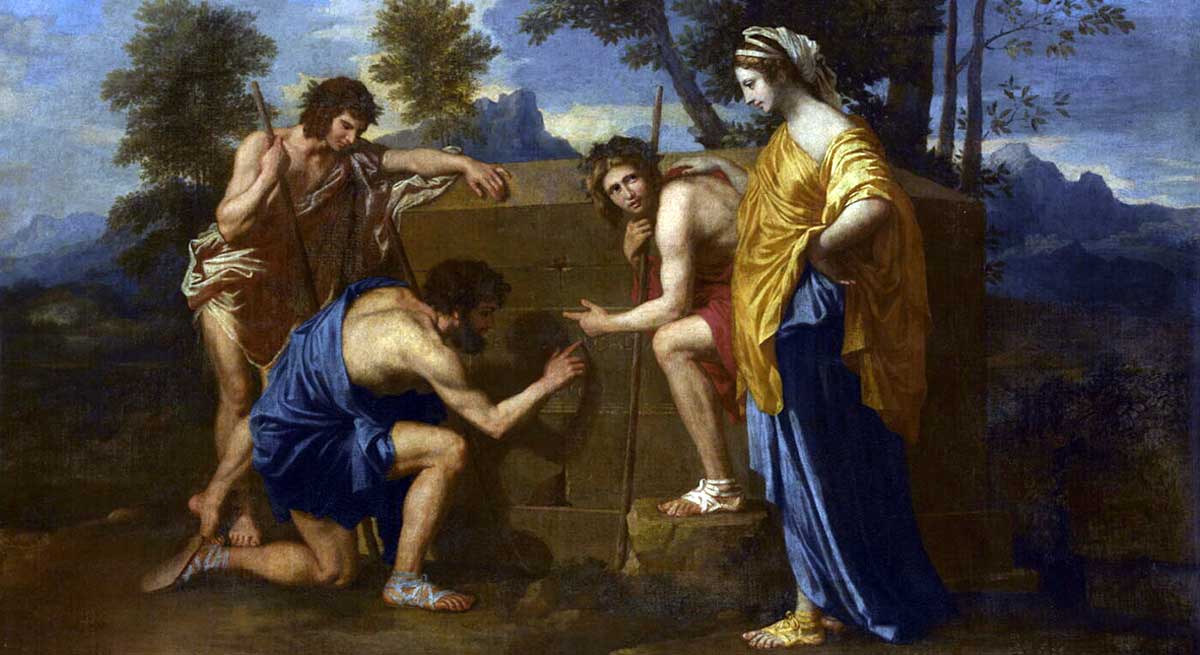
Most of this painting’s fame rests on four words carved into the tomb, “Et in Arcadia ego.” The Latin is deliberately unfinished, so it works two ways. It can be Death speaking, “Even in Arcadia, I am here,” or the person in the tomb, saying they too once lived in this paradise. Either way, the conveyed message is the same: that however lovely the setting, death is already part of it. The phrase has never been found on any ancient text. Antiquarians in 17th-century Rome seem to have coined it, and it first appears in a 1618 Guercino painting. Art historians have puzzled over that small ambiguity ever since; Erwin Panofsky most famously of all.
Now, none of that is what made the painting famous with the public. From the mid-1900s, conspiracy theorists decided the tomb in the picture was a real one, standing in the south of France near a village called Rennes-le-Château, with a secret clue hidden in it by Poussin himself.
The wildest version, spread by The Da Vinci Code, said that clue pointed to the Holy Grail, reimagined as a hidden bloodline rather than a cup. Believers even found a roadside tomb near the village that looks a lot like the painted one! The snag is that it was built in 1903, and Poussin died in 1665, so if anything copied anything, the modern tomb copied the painting. You can judge the likeness yourself in front of the painting in the Louvre’s French galleries.