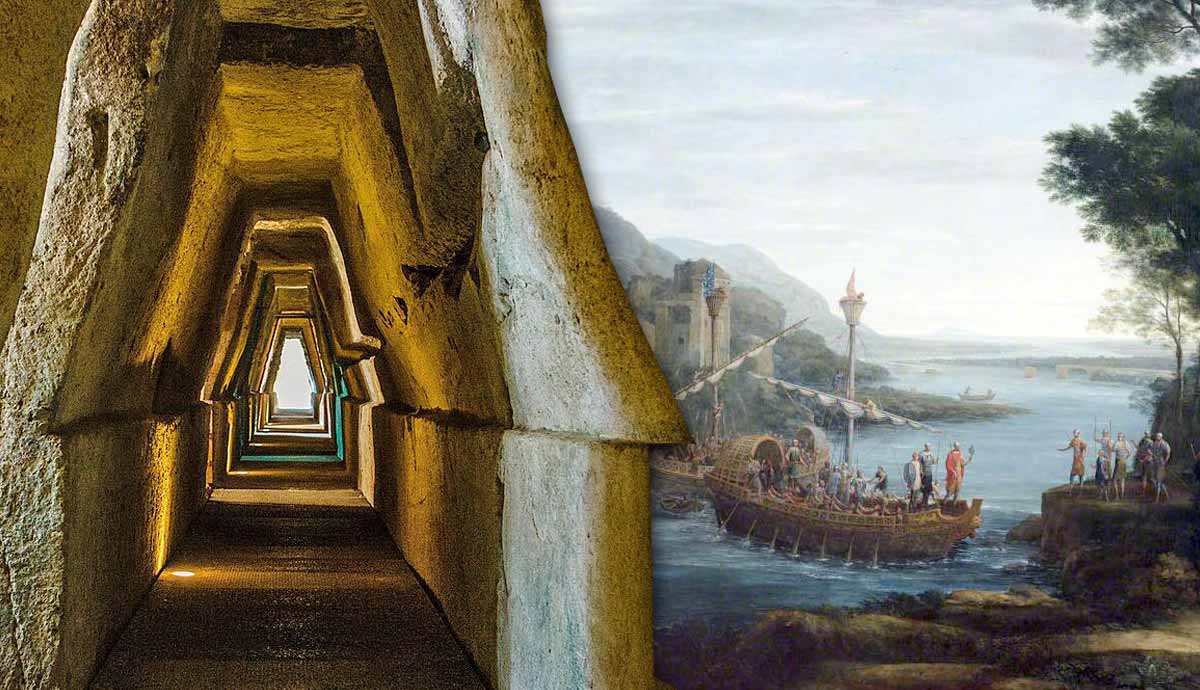
Around AD 150, a Greek named Pausanias set out on foot to describe his whole country and left what many call the first travel guide ever written. Read it now, and you’ll notice how the places he singled out 18 centuries ago, Acropolis included, are the same ones pulling the biggest crowds today. Venture past Athens, though, and Greece opens up like a historical atlas. The five sites in this guide run from Delphi, where Greeks came for prophecies, to Delos, an all-but-empty island treated as holy ground. Four filled his pages. The fifth he never reached.
But you can.
First, a Word on Exploring Greece Beyond Athens
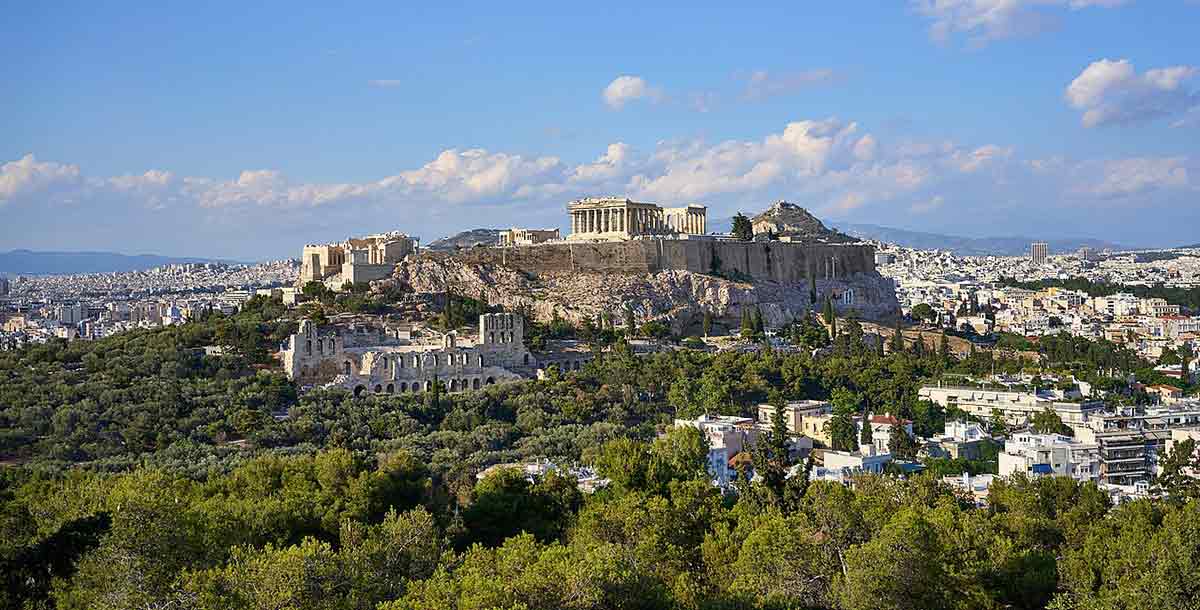
Greece might be infamous for boasting some of the biggest tourist crowds in Europe, especially in summer. While this is true to some extent, it really only concerns Athens and some of the most famous islands, like Santorini. The country is expansive and bursting at the seams with UNESCO-listed archaeological sites, and no matter where you drive, you’ll come across a brown heritage sign pointing one out. The local joke is that nobody dares dig a basement pool, for fear of turning up something priceless and losing the land to the archaeologists.
I was absolutely amazed to have had Delphi to myself until mid-morning on my visit, which left me wondering how somewhere this important can stay so quiet. In reality, precious sites are so abundant that the country, outside the Acropolis, absorbs tourist crowds into near oblivion.
So do explore the five ancient Greek sites below and know that you’ll discover so many more along the way.
1. Delphi, Central Greece
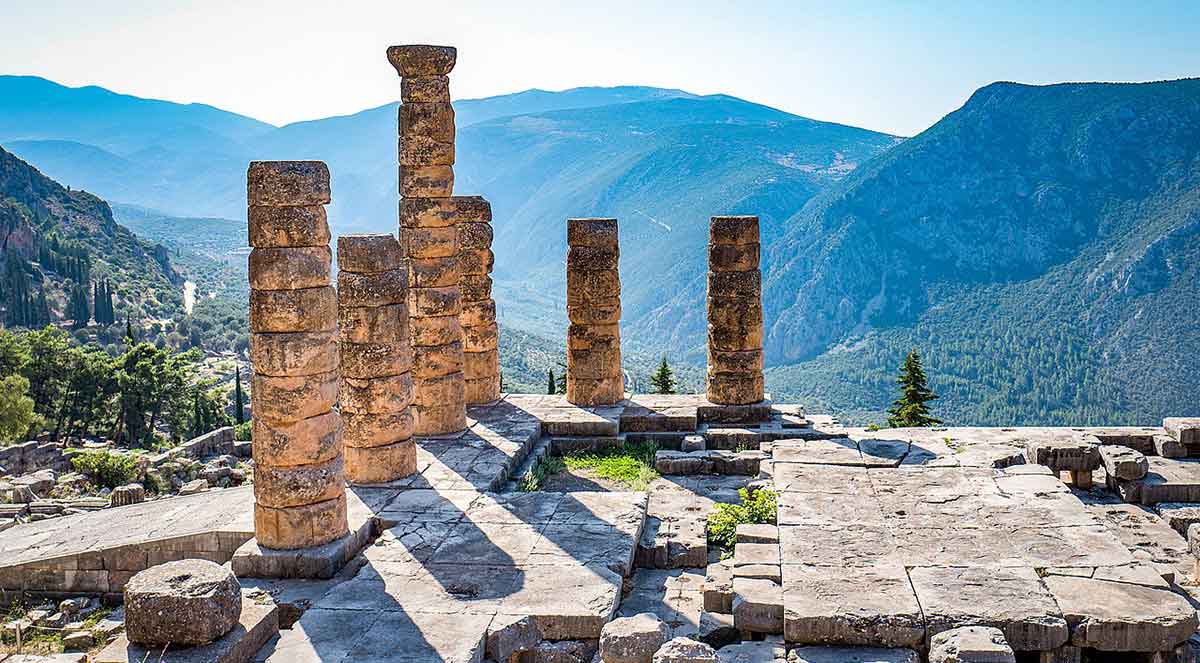
For roughly a thousand years, Delphi was where the Greeks would come in search of answers as to what the future held. Kings and generals climbed the slopes of Mount Parnassus to put their questions to the Pythia, the priestess who spoke for Apollo, something they’d usually do before starting a war or founding a colony. The Greeks reckoned this was the center of the world, a spot Zeus had marked with a stone called the omphalos, or navel.
The catch was that the oracle dealt in riddles, which led to some “lost in translation” moments. When King Croesus of Lydia asked whether he should attack Persia, for example, he was told that if he did, he would destroy a great empire. Delighted to no end, onward he marched, only to discover that the great empire he was destined to destroy ended up being his own. Carved at the temple entrance was a sobering piece of advice he should have read first: “know thyself.”
The ruins climb the hillside in tiers, from the Temple of Apollo up to a theater and stadium with a spectacular view over a valley of olive trees. Come early, ahead of the Athens tour buses, and give yourself a couple of hours.
2. Theater of Epidaurus, The Peloponnese
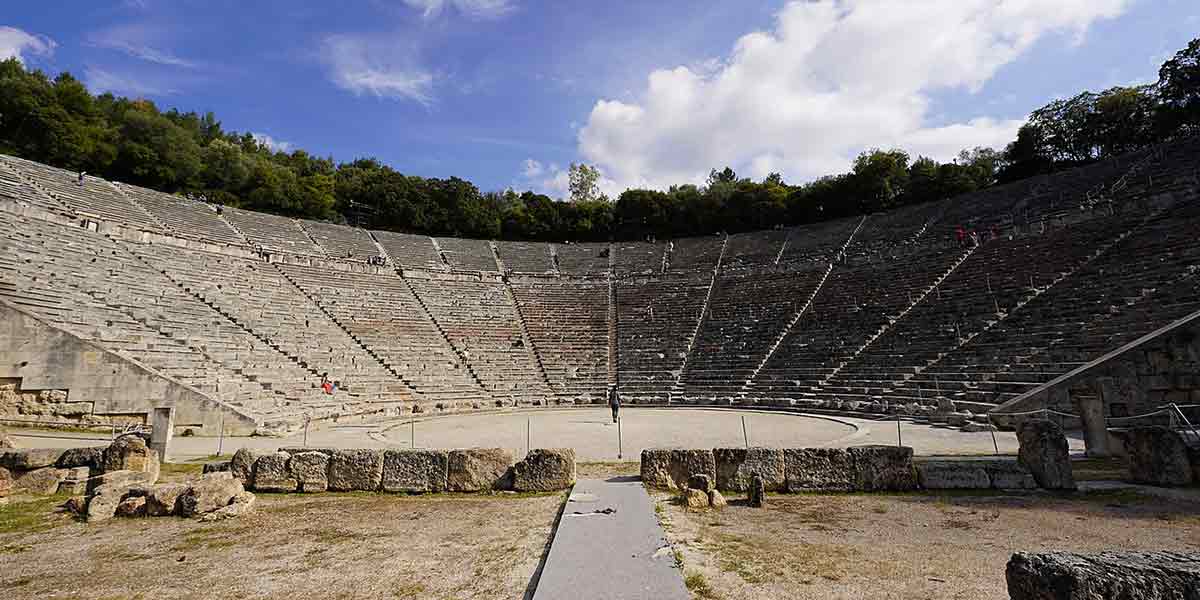
Epidaurus is famous for its theater, but it was actually once a side attraction. It sat inside the Sanctuary of Asclepius, the god of medicine, and people came here sick, hoping to be cured. The treatment was mostly sleep, which sounds immensely reasonable.
Patients bedded down in a hall called the abaton and waited for the god to appear in a dream with a diagnosis, while non-venomous snakes sacred to Asclepius were left to glide through the wards. That snake, by the way, coiled around a staff, is the rod you still see on ambulances and pharmacy signs.
The theater appeared later and seats around 14,000 across 55 rows of limestone. Guides love to stand at the center and drop a coin to prove that a whisper carries to the back. The truth is a little less kitsch than the sales pitch. The limestone does filter out low background rumble and carry a raised voice unusually far, but an actual whisper could never reach row 55, and that hardly matters. The proportions and the peacefulness of the hills make it one of the loveliest ruins in the country. FYI: Search for “Ancient Theatre at the Asklepieion of Epidaurus” on Google Maps, or you might end up at its smaller namesake on the coast.
3. Olympia, The Western Peloponnese
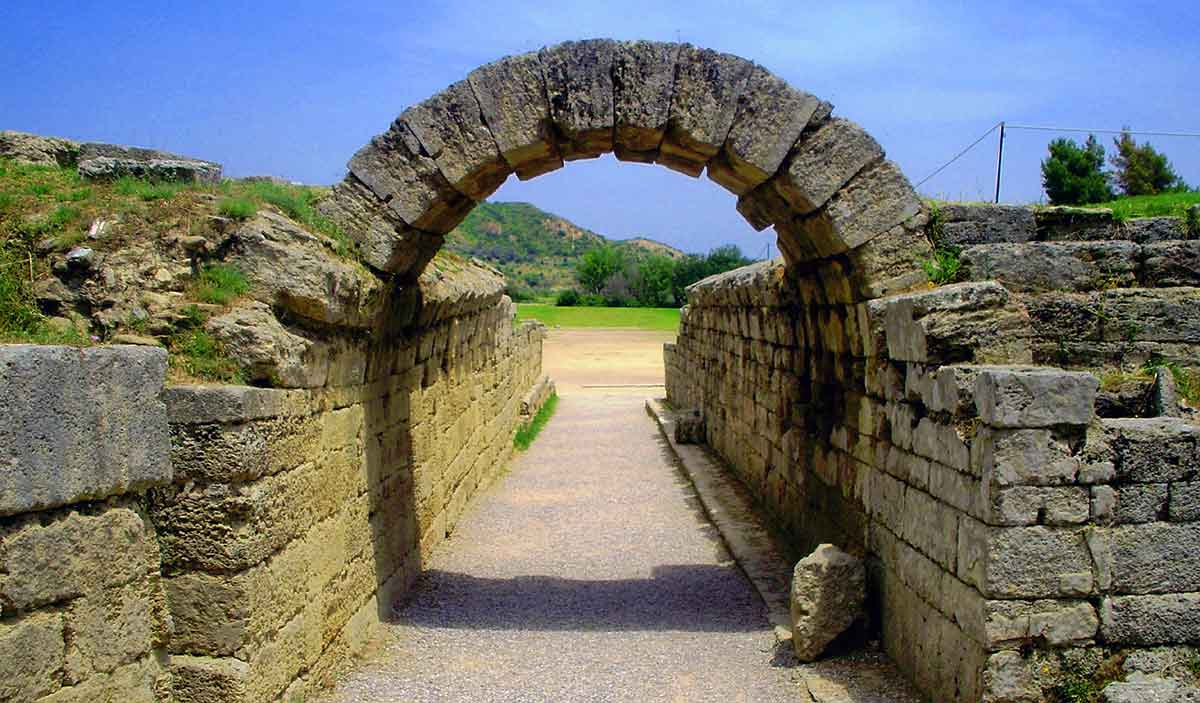
The Olympic Games began at Olympia in 776 BC, and during the festival, the city-states were meant to lay down their weapons and travel in safety to honor Zeus. That was the idea, anyway, although the reality is written into a row of statue bases near the entrance to the stadium.
These were the Zanes: bronze statues of Zeus paid for with fines levied on athletes caught cheating, whether because they had taken bribes or fouled an opponent. Each base carried the offender’s name and his offense, placed so that every competitor had to pass this wall of shame on the way in, and spectators reportedly spat on them as they filed by.
The Temple of Zeus once held Phidias’s gold-and-ivory statue of the god, one of the Seven Wonders and long since lost. So, although you cannot see it, you can still walk onto the original stone starting line in the stadium and stand where the runners crouched, toes wedged into the grooves cut for grip. You can also, if you were so inclined, challenge your fellow travel companion to a 100m sprint. It is tradition, after all. Although…
Did you know? The ancient sprint was not 100 meters but the “stade,” one length of the track, which stretched about 192 meters (629 feet) and is where “stadium” comes from. For the first 13 Olympiads, it was the only race on the program. Now the fun part: competitors ran stark naked and lathered in olive oil (not sure if it was extra virgin or just the regular kind), and a false start earned a public flogging from the judges. You might want to mention that to your companion before you both toe the line.
4. Mycenae, The Argolid
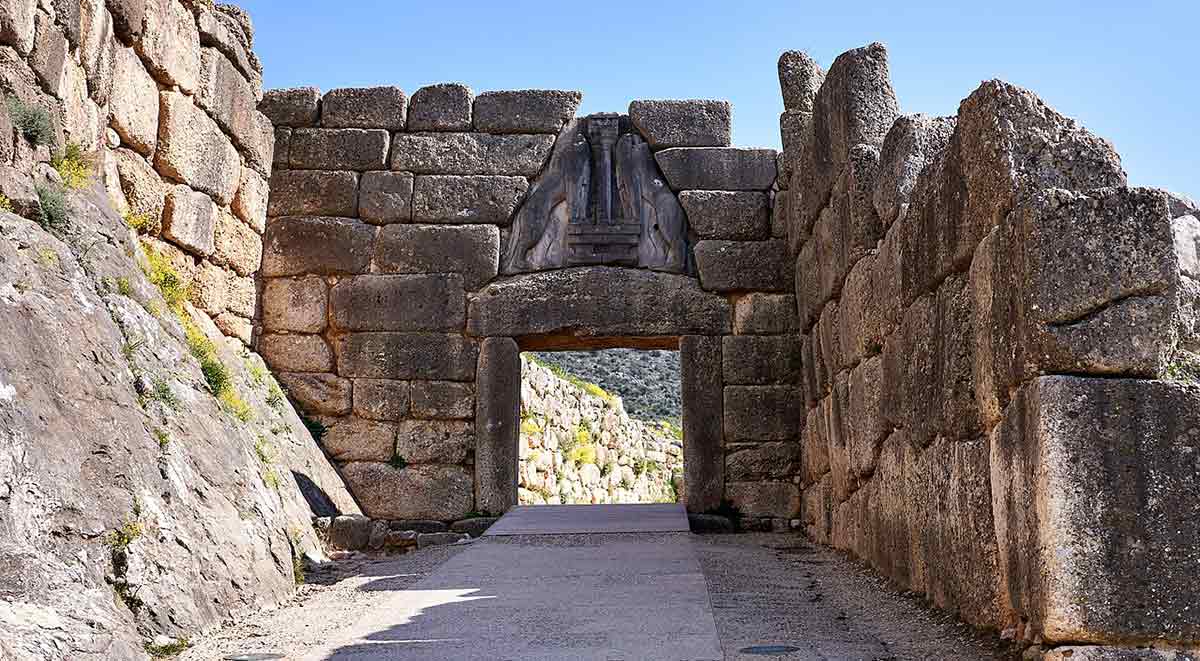
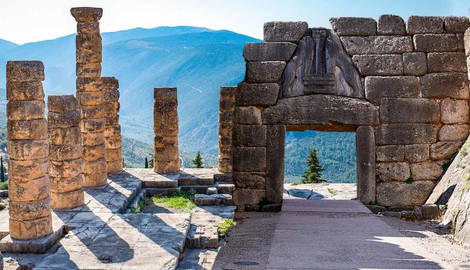
Long before classical Athens, Mycenae was a Bronze Age fortress and, in Homer’s telling, the seat of Agamemnon, the very same who led the Greeks to Troy. You still enter through the Lion Gate, whose stones have been unnerving visitors for more than 3,000 years. Almost everything else about the place, funnily enough, comes wrapped in a wrong name.
When Heinrich Schliemann dug here in 1876, guided by his own copy of Pausanias, he pulled a gold funerary mask from a grave and decided on the spot it belonged to Agamemnon. He supposedly telegraphed that he had gazed upon the face of the king, a line that looks to be a later embellishment. The mask is real and truly magnificent, yet it predates any Agamemnon by some 300-400 years.
If you are based in Athens, you could potentially visit Mycenae and Epidaurus on one long but rewarding day trip. Buy your tickets to both online before heading off.
5. Delos, The Cyclades
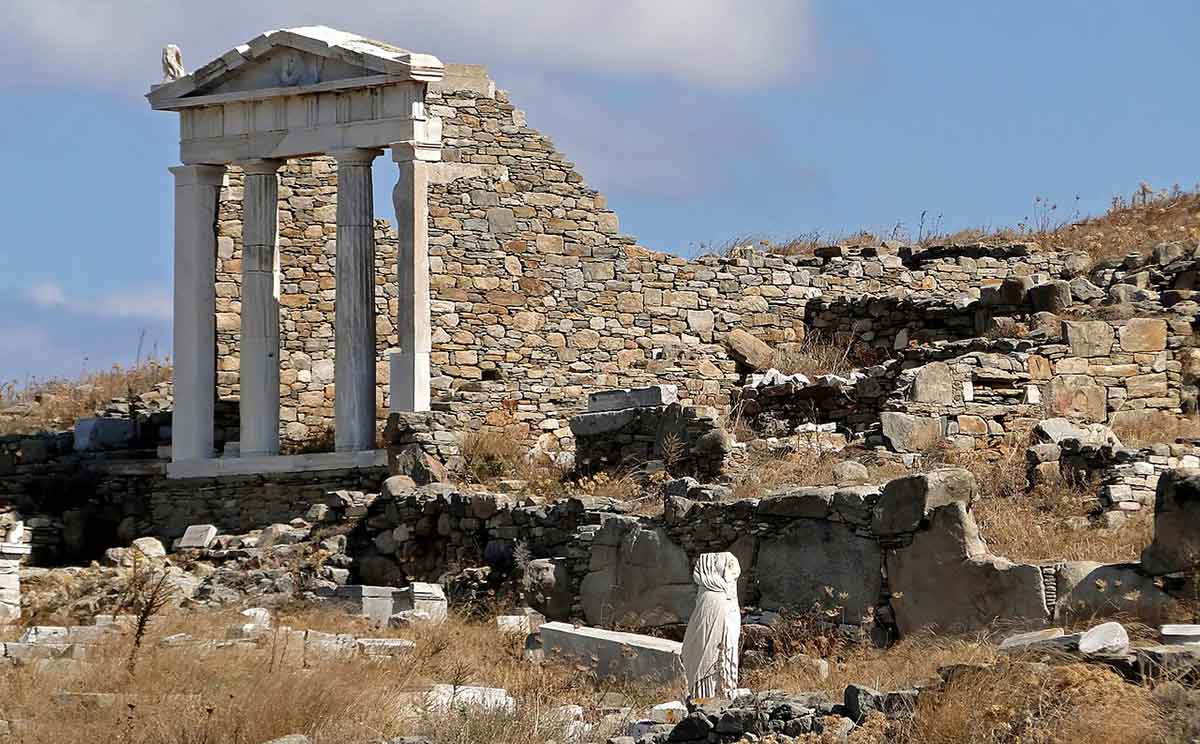
A short boat ride from party-hard Mykonos lands you on Delos, its polar opposite in every way: windswept, uninhabited, and blissfully silent. The Greeks believed this was the birthplace of Apollo and his twin Artemis, which made it holy ground, and holy ground came with an abundance of rules. In 426 BC, Athens ordered the island purified, so every grave was dug up and bones shipped to a neighboring islet. From then on, no one was permitted to be born or to die on Delos. Expectant mothers and the dying were ferried off before either could happen.
The purity doubled as a cover for political control, and it did not stop Delos from later becoming a booming port and one of the ancient world’s biggest slave markets. What you can admire today is an entire open-air city of mosaic floors and roofless houses, watched over by the marble beasts of the Terrace of the Lions. The ones on site are copies, as most originals sit in the museum. And one, hauled off many moons ago, still guards the gate of the Venetian Arsenal.
Boats run from Mykonos most mornings, and you get a few hours on the island before the last one back. There is nowhere to stay the night, by ancient decree and modern practice alike. Head off on the first boat across because cruise line passengers and most other tourists coming from Mykonos don’t usually arrive before mid-morning. At the very least, you will have some peace for the first hour of your visit.