If there’s one thing that can be said about the crowds at the Vatican Museums, it is that they are delightfully predictable. Almost everyone moves en masse in the same direction, carried along a single slow current toward Michelangelo’s jaw-dropping ceiling.
Yet the walls they pass on the way hold some of the finest Renaissance masterpieces in Rome, and most are barely noticed. Side step that current and head into the quieter Pinacoteca to see artwork that carries stories even the headline attractions find difficult to match.
Here are five pieces worth seeking out.
1. The Painted Borgia Apartments Meant to Sell a Fake Bloodline
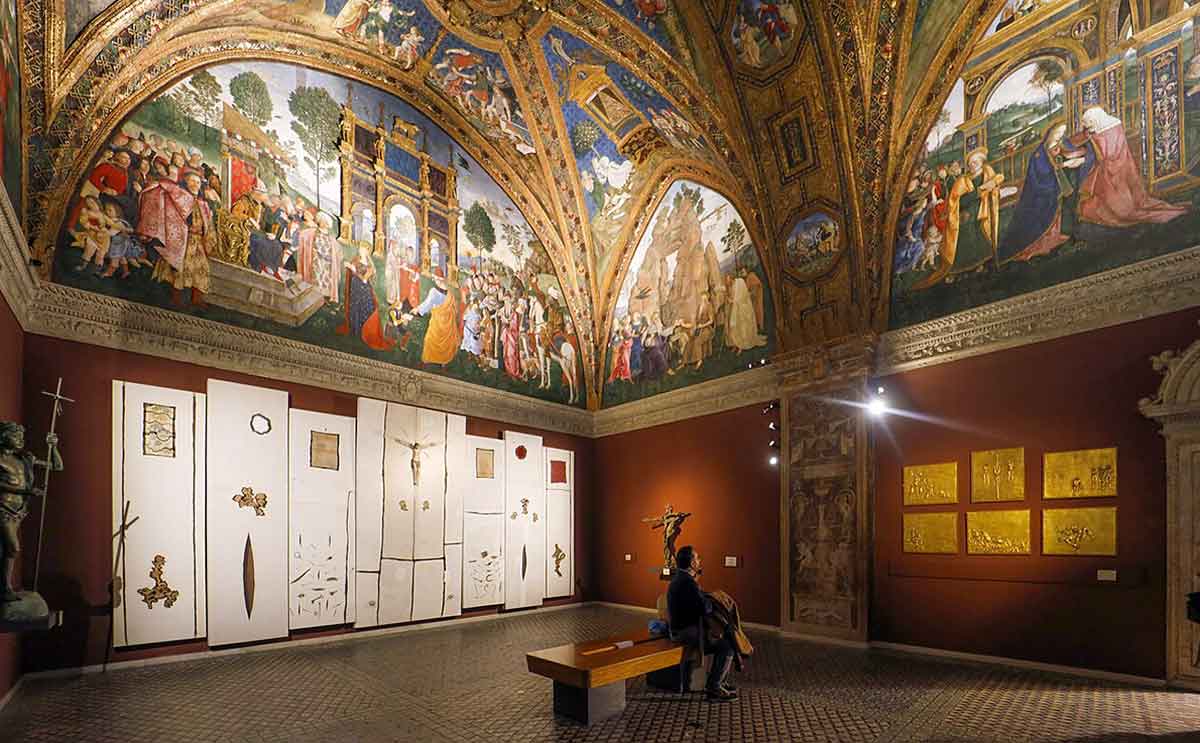
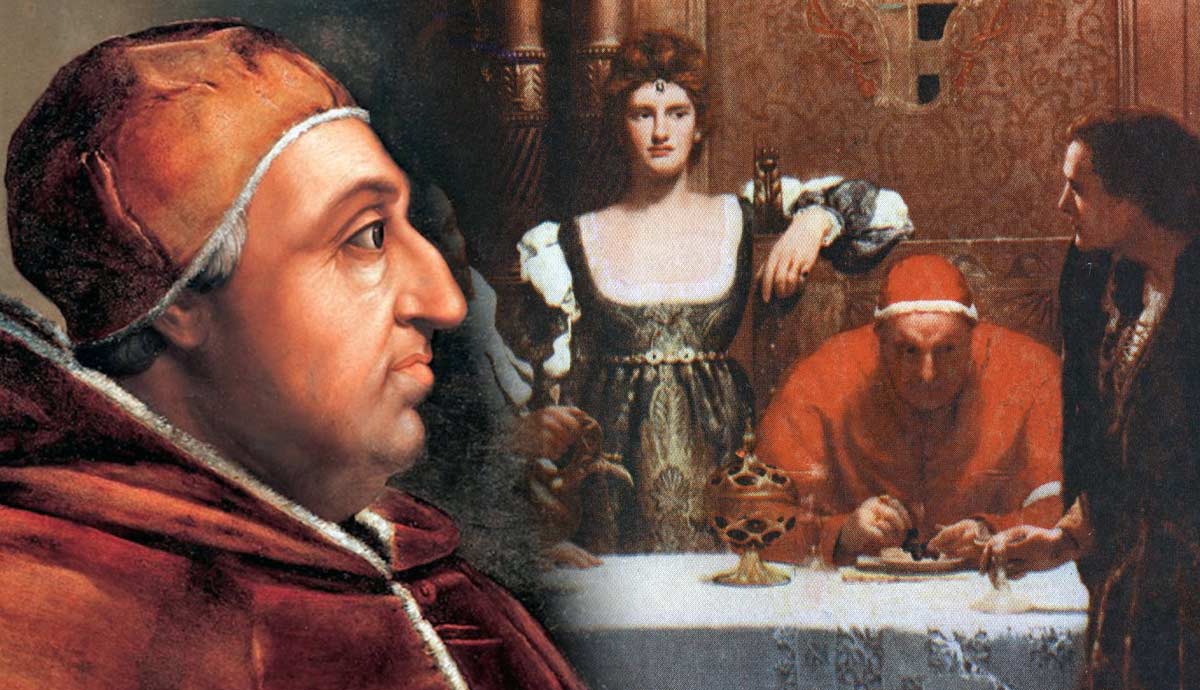
On the way up to the Raphael Rooms, most tour groups pour through several dimly lit rooms without slowing down, which suits the rooms’ history. These are the Borgia Apartments, the private quarters Pope Alexander VI (Rodrigo Borgia) had decorated with frescoes by Pinturicchio between 1492 and 1494, and they later fell out of regular use for centuries before becoming part of the museum complex.
The man who sealed them shut was Julius II, who disliked his Borgia predecessor so fiercely that he refused to live among his things and moved one floor up, into the rooms Raphael would later make famous. The Borgia frescoes have been the forgotten downstairs ever since, now sharing the space with the Vatican’s modern religious art.
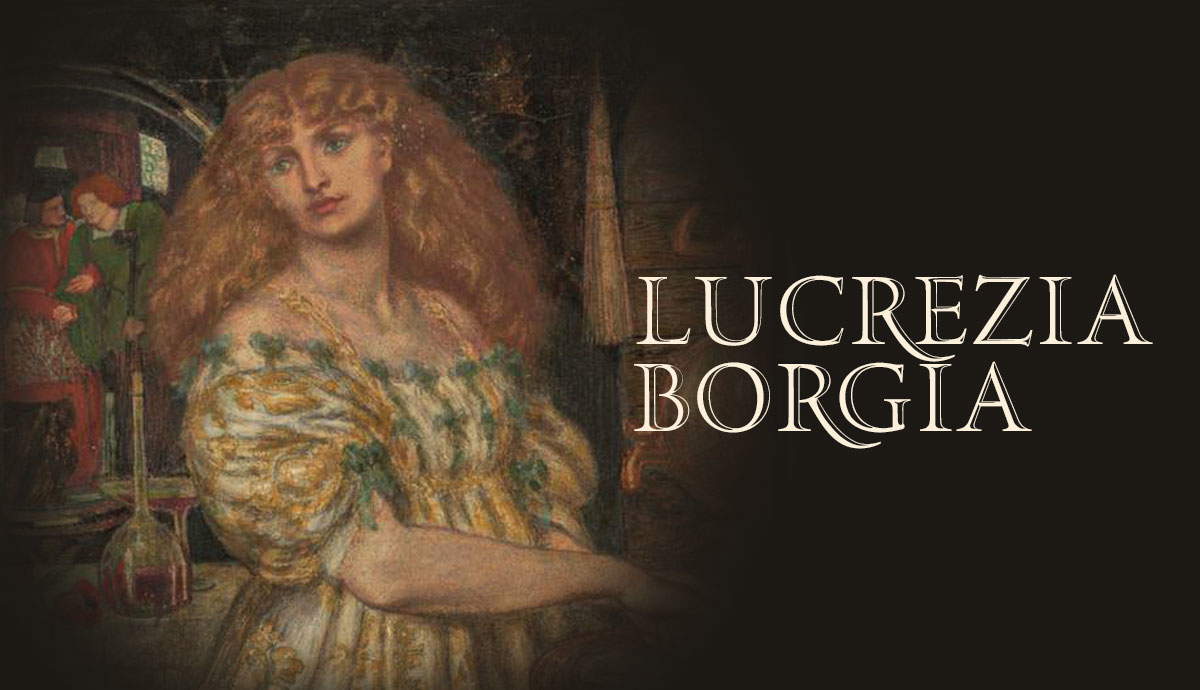
The room you ought to hunt down is the Sala dei Santi, the Hall of Saints. The walls carry the expected lineup of martyrs, but the ceiling tells a far odder story, with the Egyptian gods Isis and Osiris painted alongside the sacred bull Apis. None of that was a simple decorative whim. Alexander VI had allegedly relied on a theologian named Annio da Viterbo, a man with a well-earned reputation for forging ancient documents, to concoct a family tree tracing the Borgias back to the Egyptian gods. Apis happened to be a bull, and a bull happened to sit on the Borgia crest, so the ceiling appears less as mythology and more as a pope documenting his own divine pedigree. On the wall below, the young saint in the Disputation of Saint Catherine is widely thought to be Lucrezia Borgia, though this has never really been proven.
2. Leonardo’s Unfinished Saint Jerome
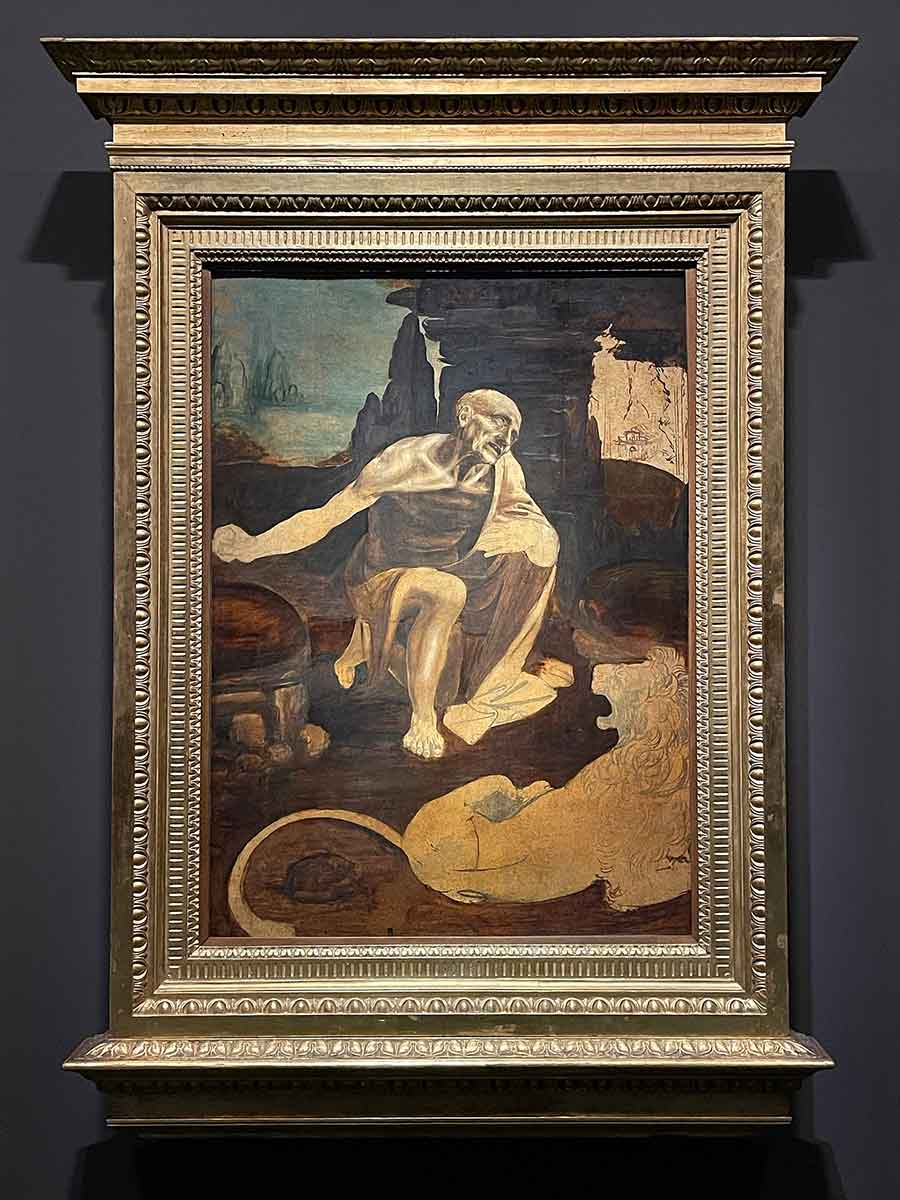
Of the five entries on this list, this may be the one you may already know, since it turns up on nearly every list of the Vatican’s quieter treasures. But it earns the repeat. The stunning piece hangs in Room IX of the Pinacoteca, just a short detour off the route most visitors take.
Leonardo da Vinci left this Saint Jerome unfinished, and after his death in 1519, the panel dropped out of the record for the better part of three centuries. When it resurfaced in 19th-century Rome, it had been sawed apart. The lower section had reportedly served as the lid of a box in a junk shop, while the piece bearing the saint’s head was found doing duty as the seat of a cobbler’s stool.
Cardinal Joseph Fesch, an uncle of Napoleon, hunted down the scattered fragments and had them rejoined, and the repair lines still run visibly across the surface. Accounts disagree on how many pieces it was cut into, somewhere between two and five, so the exact butchery stays fuzzy. Fesch treasured the reassembled panel for the rest of his life, reportedly hanging it above his favorite armchair. Soon after his death, the masterpiece was discovered in a pawnshop in Rome and promptly rescued by the Vatican.
3. Raphael’s Tapestries Intended as Wall Art for the Sistine Chapel
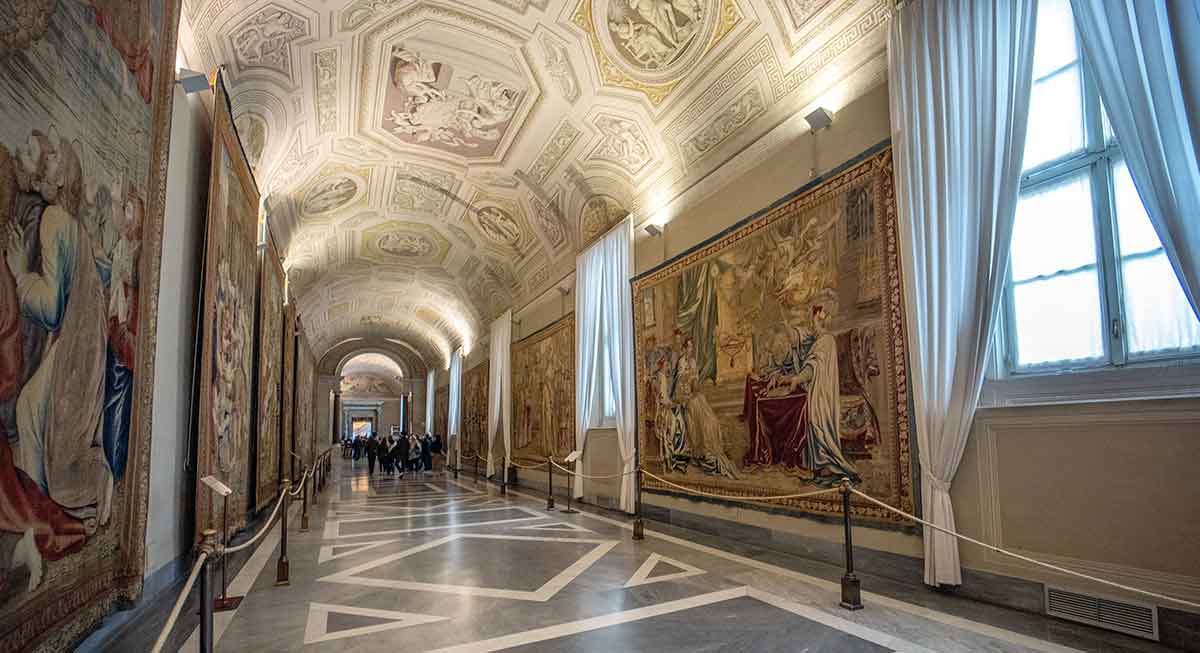
Most people picture the Sistine Chapel as Michelangelo’s ceiling and little else, but it was meant to be seen with a set of woven hangings on the lower walls, and those were designed by his great rival. Around 1515, Raphael drew full-scale cartoons for a series of tapestries showing scenes from the lives of Saints Peter and Paul, made to hang beneath the ceiling on feast days.
The designs went to Brussels to be woven in wool, silk, and gold thread, an enormously costly commission. Then came the 1527 Sack of Rome, when mutinous imperial troops looted the city, and the tapestries were scattered and damaged.
Of the ten original tapestries, most were eventually recovered. The Vatican still owns them, and you can see them in rotation in the aptly named Gallery of Tapestries. But it’s interesting to know that the room nearly everyone comes to photograph is, strictly speaking, only half-dressed. The cartoons Raphael drew for them ended up in London’s V&A, where they are treated as masterpieces in their own right.
4. Melozzo da Forlì’s Angels Rescued From a Demolished Apse
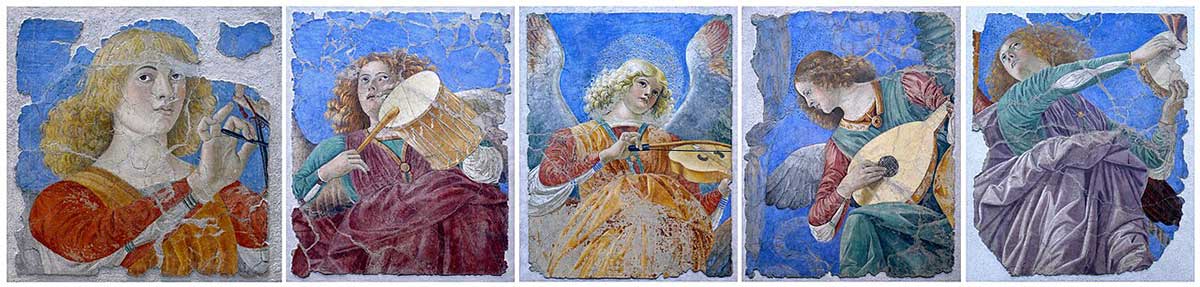
Around 1480, Melozzo da Forlì covered the apse of the church of Santi Apostoli with a soaring Ascension of Christ, the kind of dramatic upward-looking perspective that later caught the eye of Michelangelo. The fresco survived for roughly two centuries. Then, in 1711, the church was rebuilt, and the old apse came down, and the painting with it.
Rather than lose the work outright, restorers cut what they could from the wall in sections. That is why the figures now hang as separate fragments, the calm musician angels and watching apostles in the Vatican Pinacoteca, and the central figure of Christ over in the Quirinal Palace on the other side of the city.
What looks like a gallery of individual heads is really the wreckage of one enormous scene, salvaged in panels. Even the patron is uncertain now, with names ranging from Cardinal Bessarion to the future Pope Julius II attached to the commission over the years.
5. A Painted Celestial Globe That the Vatican Long Credited to the Wrong Man
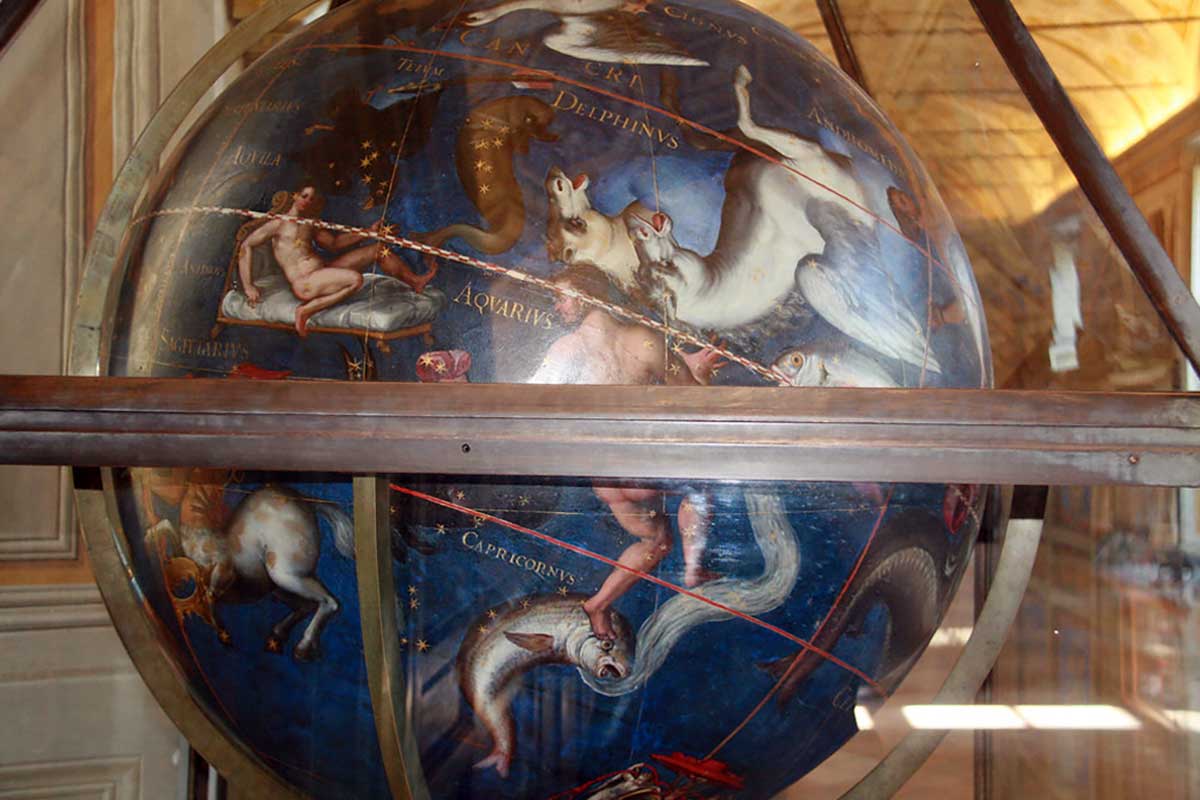
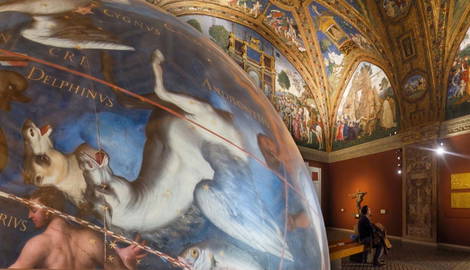
On the way toward the exit, in the old library wing, sits a large painted wooden globe from 1567, mapping the heavens as the ancient astronomer Ptolemy understood them, with the constellations drawn as the mythological figures they were named after. For a long stretch, the Vatican credited the work to Giulio Romano, Raphael’s most gifted pupil, a famous name to attach to a beautiful object. That attribution appears to have grown out of a misread line in Giorgio Vasari, the Renaissance biographer whose word was often taken as gospel.
The globe is now widely credited instead to Giovanni Antonio Vanosino, a specialist Renaissance mapmaker who helped decorate grand rooms such as the Vatican’s own hall of maps. He was never a household name by any means, which is probably the point.
The piece sat for centuries under a borrowed reputation, admired as the work of someone who, as far as we can tell, never even touched it.