
Certain objects throughout history have earned a reputation so dark that even the most rational minds hesitate before dismissing them as nonsense. Ancient curses, after all, were serious business: priests and craftsmen inscribed spine-chilling warnings on tombs and sacred talismans to deter anyone foolish enough to interfere. Whether those warnings retained any power across the millennia is a question these seven artifacts have done their best to answer.
1. The Hope Diamond, Smithsonian Institution, Washington, DC
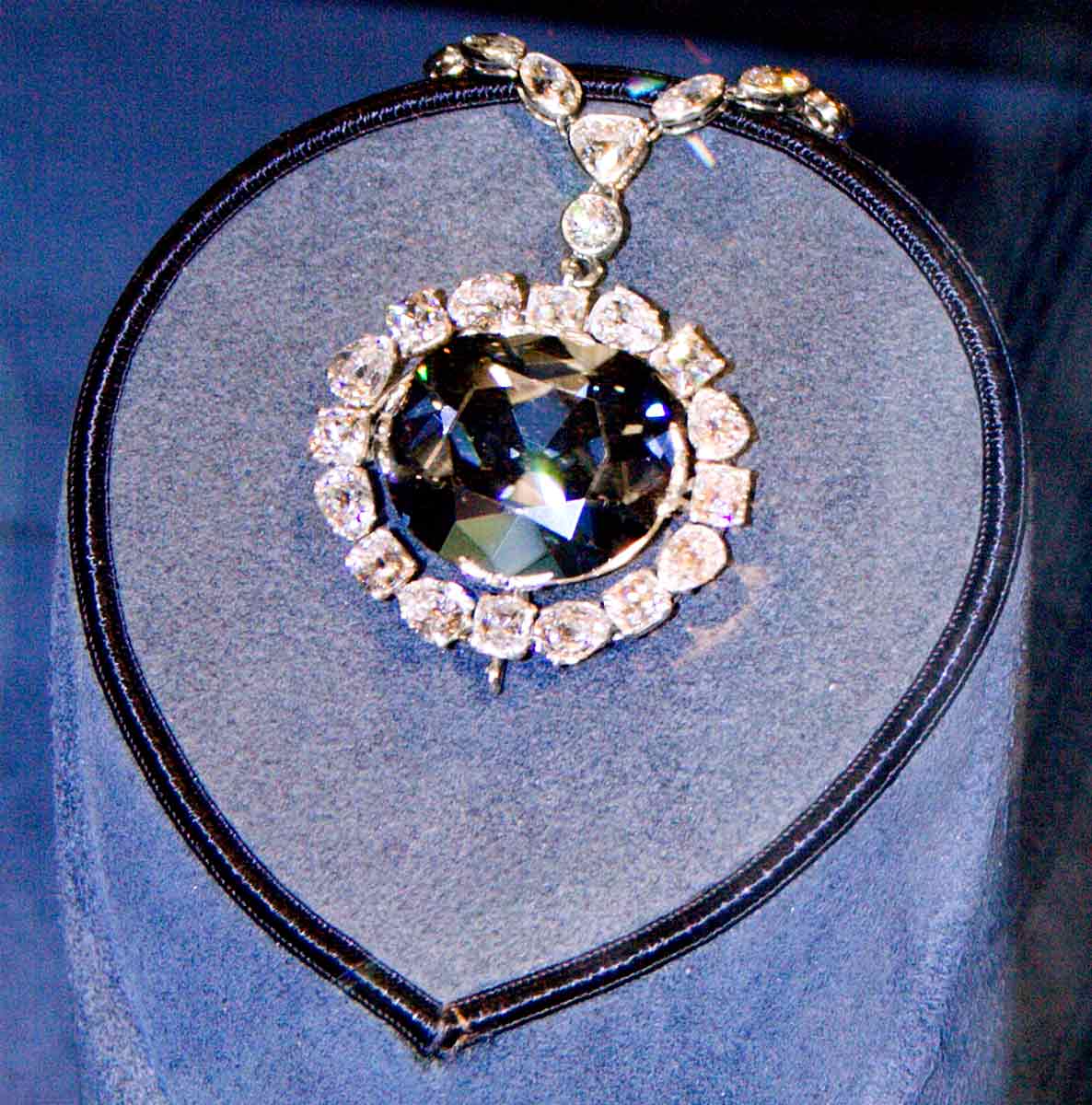
Few objects have inspired as much awe and dread as the Hope Diamond. This 45.52-carat blue diamond, on permanent display at the Smithsonian National Museum of Natural History in Washington, DC, has a documented history that stretches back to 17th-century India, where it was allegedly stolen from a Hindu idol. You can probably already deduce what happened next.
The stone passed through the hands of French King Louis XIV (who reportedly died of gangrene), then Louis XVI and Marie Antoinette (both guillotined during the French Revolution), and later a string of European aristocrats who fared not much better. In the 20th century, eccentric American socialite Evalyn Walsh McLean purchased the diamond from Pierre Cartier and wore it frequently and rather flamboyantly. She had the diamond blessed by a priest to cleanse it of its ancient curse, laughing off the concern of essentially every single person in her life.
In totally unrelated news, McLean went on to suffer the untimely deaths of both her son and her daughter, suffered through her husband’s mental breakdown, and her own early death by pneumonia in 1947. Her extensive jewelry heritage was sold off to prominent jeweler Harry Winston, who eventually donated a perhaps-truly-not-so-lucky gem to the Smithsonian in 1958. He mailed it to them in a plain brown paper package. Make of that what you will.
FYI: The Hope Diamond is one of the most visited artifacts in the US. Visit on a weekday morning to stand closest to the display case and witness the stone’s remarkable red phosphorescence under ultraviolet light, a quality unique among blue diamonds.
2. Tutankhamen’s Tomb Objects, Egyptian Museum, Cairo
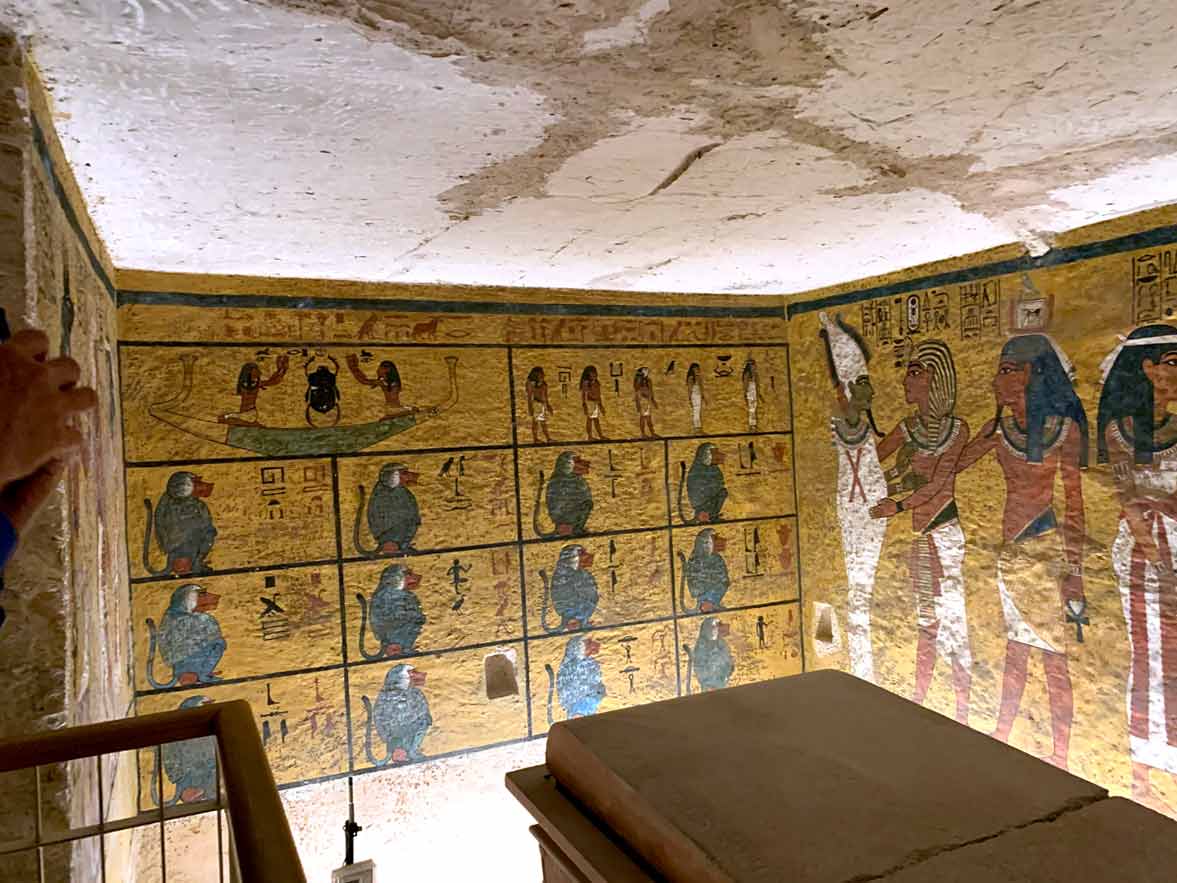
When Howard Carter and Lord Carnarvon broke the seal of Tutankhamen’s tomb in the Valley of the Kings in 1922, they made one of the greatest archaeological discoveries in history. They also, according to popular legend, made a significant personal error in judgment, and this is the one mysterious curse you’ve probably already heard about.
Apparently, an inscription found in the tomb warned that “death shall come on swift wings to him who disturbs the peace of the king,” although historians debate whether any such inscription actually even existed (now widely believed to have been a bit of media-created fake news).
What is beyond dispute is what followed. Lord Carnarvon died just five months after the opening, from an infected mosquito bite. Not quite swift wings, but close enough. Within a mere decade, around a dozen people connected to the excavation died under circumstances considered more than a little “unusual.” Scientists have proposed plenty of rational explanations, of course, including toxic mold or ancient bacteria inside the sealed tomb. Despite many such theories being tested, none were definitively proven.
3. The Unlucky Mummy (Priestess of Amen-Ra), British Museum, London
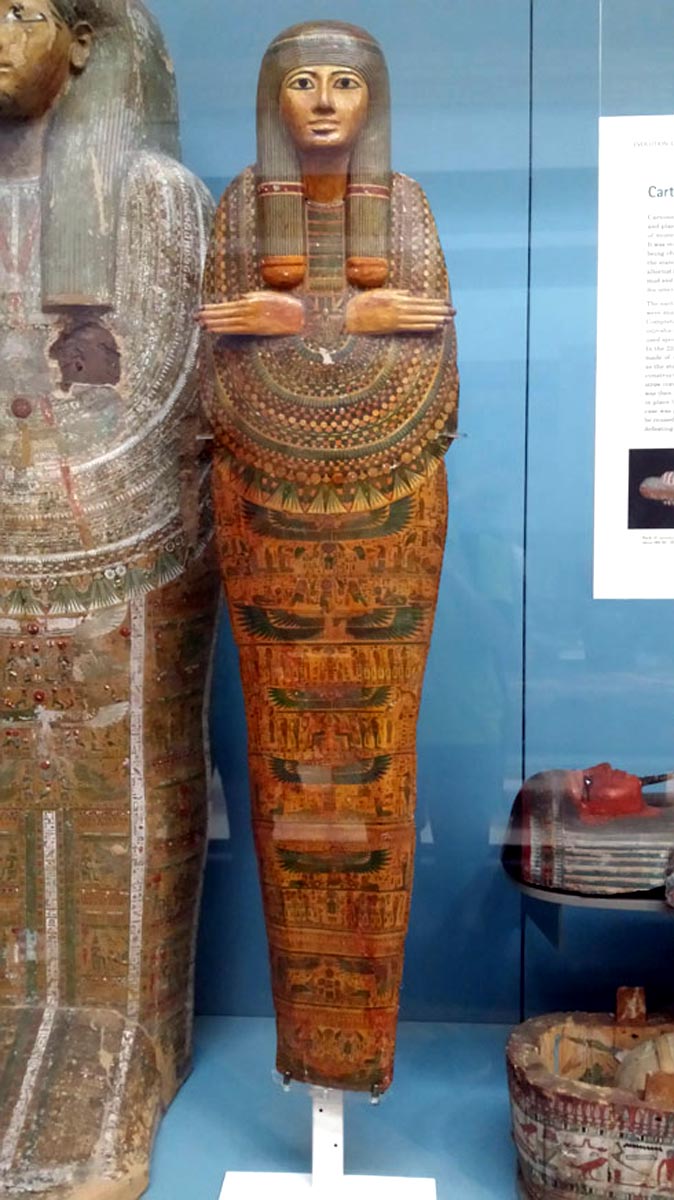
Of all the objects in the British Museum’s vast collection, one has generated more ghost stories than any other: the decorated inner coffin lid of a young Egyptian priestess of Amen-Ra, dating to around 950 BC. Worth noting, however: it is not actually a mummy on display; it is just a painted lid. The British Museum insists you know this.
Since arriving in Britain in the 1880s, the object has been linked to the deaths of multiple owners, a photographer who reportedly died shortly after taking its picture, and, most dramatically, the sinking of the Titanic. According to one widely circulated account, the coffin lid was secretly transported on the ship’s maiden voyage. The British Museum has owned the object since 1889 and firmly disputes this, noting it never left the collection during the period in question.
Whether you find that reassuring is entirely up to you.
4. The Delhi Purple Sapphire (Cursed Amethyst), Natural History Museum, London
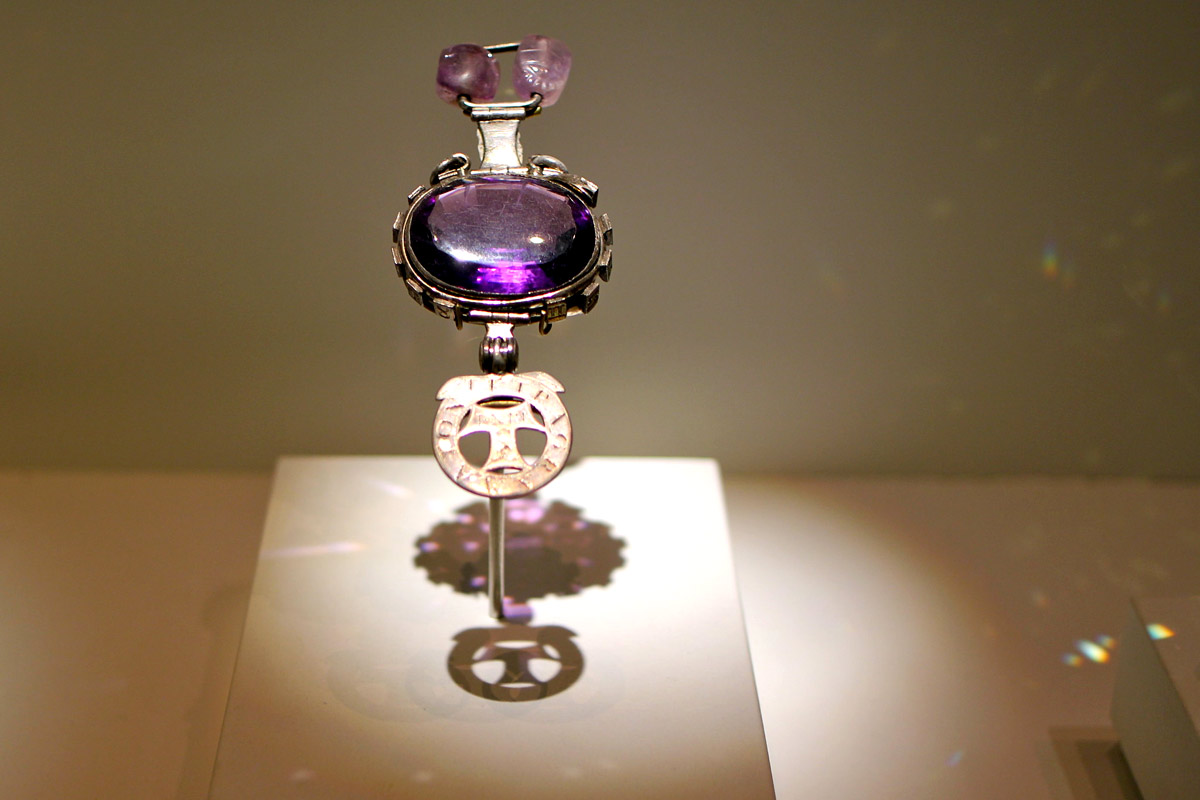
The stone known as the Delhi Purple Sapphire is not an actual sapphire but rather an amethyst of no particular visual distinction. What distinguishes it is its paperwork.
Reportedly looted from the Temple of Indra in Cawnpore during the Indian Rebellion of 1857, the stone moved hands several times over the following decades. And every single time, coincidence or not, it brought misery and ruin to its owner.
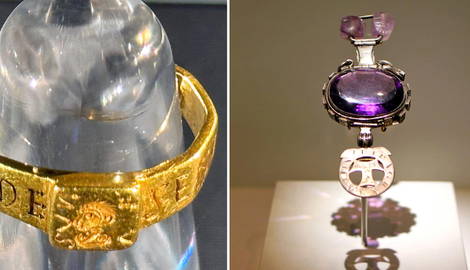
When scientist and occultist Edward Heron-Allen had it posthumously donated to the Natural History Museum in London in 1944, he included a handwritten note calling the stone “trebly accursed” and instructing that it be locked away and never worn. For good measure, he wrapped it in seven bags, sealed it with a Solomon’s seal charm, and sent it over. The museum obliged.
The amethyst sits in vault storage and surfaces for public display only occasionally, which is almost certainly how Heron-Allen would have preferred things.
5. The Busby Stoop Chair, Thirsk Museum, Yorkshire, England
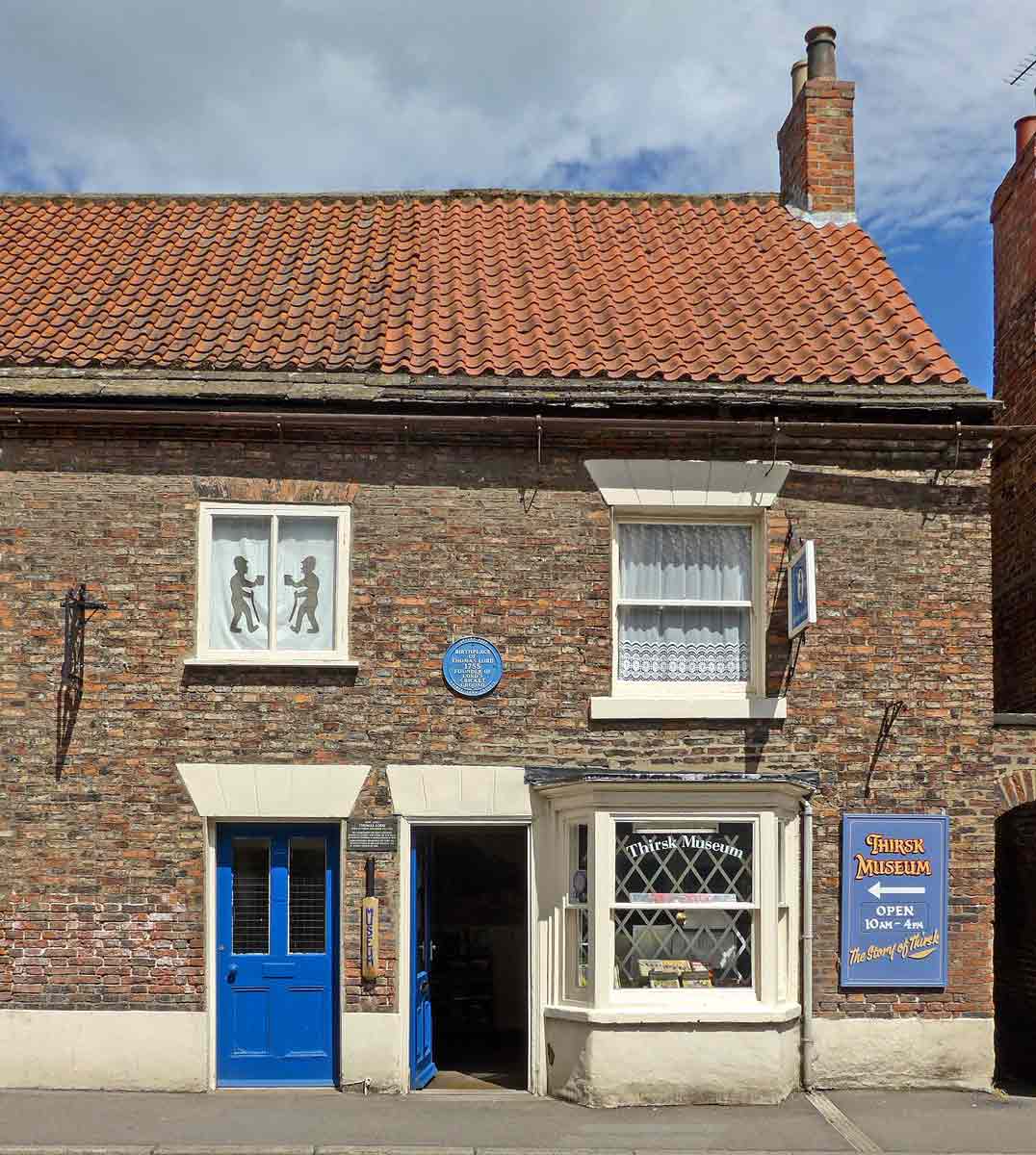
Not all cursed artifacts come from ancient civilizations; some are positively more modern. The Busby Stoop Chair, an ordinary-looking 17th-century wooden chair in the Thomas Lord Room at the Thirsk Museum in North Yorkshire, proves that more recent history was perfectly capable of producing its own supernatural baggage.
Thomas Busby was a murderer who was hanged in 1702 near Thirsk, who, according to local legend, declared before his execution that anyone who sat in his favorite chair would die. The chair spent years in the Busby Stoop Inn, where generations of locals dared each other to sit in it. An alarming number of those who did so subsequently died, including Royal Air Force pilots stationed nearby during World War II.
The pub’s owner donated the chair to the Thirsk Museum in 1978, where it was immediately hung on the wall so that nobody could sit in it. A practical solution, and perhaps, quite a wise one, too.
6. The Ring of Silvianus (The Vyne Ring), The Vyne, Hampshire, England
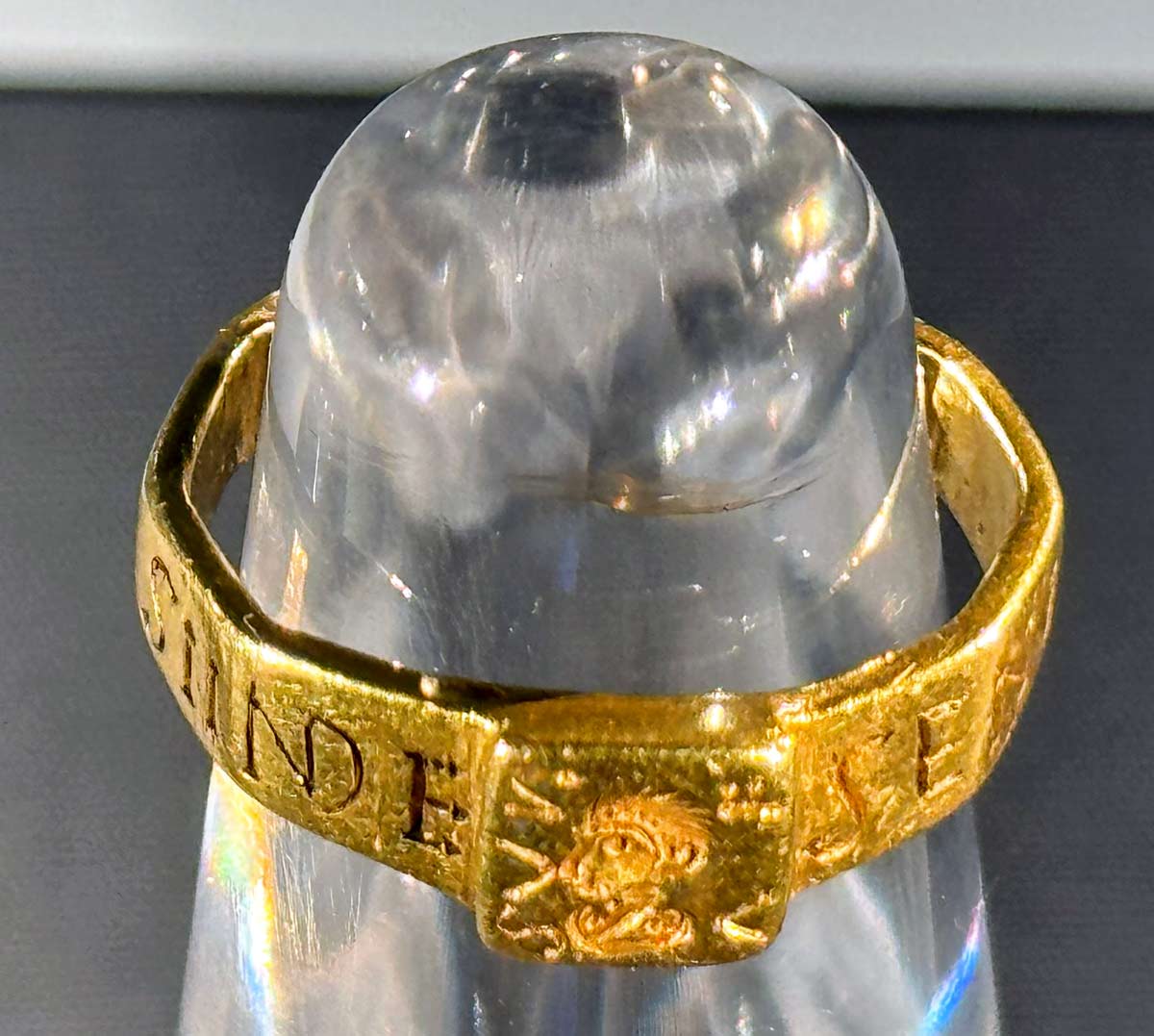
Of all the artifacts on this list, the Ring of Silvianus may have the strongest case for cultural immortality. This 4th-century Roman gold ring, found in a field in Silchester in 1785, is believed by many scholars to have been the possible inspiration for J.R.R. Tolkien’s One Ring. That alone earns it a proud place on this list.
The ring’s connection to a curse predates Tolkien by roughly 1,600 years. Discovered nearby was a defixio, a Roman curse tablet, reading (roughly translated): “Senicianus, do not enjoy good health until you bring back the ring to the temple of Nodens.” Tolkien, who had intimate knowledge of the ring’s story, consulted on excavations near Nodens’s temple in 1929 and seems to have put that knowledge to remarkable use.
The ring is now held at The Vyne, a National Trust property in Hampshire. It is smaller and plainer than you might expect, and all the more interesting for it.
Insider tip: The Vyne is a beautiful Tudor mansion well worth visiting in its own right, with the ring displayed inside the house. If you are a Tolkien devotee, pair this with a visit to the Tolkien archive at the Bodleian Library in Oxford, about an hour’s drive north.
7. Ötzi the Iceman’s Belongings, South Tyrol Museum of Archaeology, Bolzano, Italy

Ötzi the Iceman is not, strictly speaking, an artifact. He is a 5,300-year-old mummified man found frozen in the Alps in 1991, and the objects recovered with him, including a copper ax, bow and arrows, are extraordinary windows into Copper Age life. They are also, according to a growing body of anecdotes, not entirely safe to be around.
Seven people connected to the discovery or early study of Ötzi have since died in ways described as premature or unusual, including the mountaineer who guided researchers to the body and a forensic examiner. Scientists are quick to note that the sample size is too small to constitute a meaningful pattern, and they are probably right. It is worth noting, though, that Ötzi himself was murdered: shot with an arrow and possibly finished with a blow to the head.
The South Tyrol Museum of Archaeology in Bolzano is one of the finest regional museums in Europe. Ötzi’s preserved body is viewable through a small porthole window in a refrigerated cell. Plan at least two hours for a thorough visit, and combine the trip with a walk through Bolzano’s beautiful medieval town center.