It is easy to look at a stunning Italian castle and see only the beauty of its frescoed halls and courtyards made for postcards (or Instagram). Yet, behind those impossibly thick walls, tragedy never roamed too far, and not only in the supposedly dark Middle Ages. This was the other side of the Italian Renaissance, where a marquis could behead his teenage wife for adultery, or a king could invite his rebellious barons to a feast and bolt the doors behind them. Because the Red Wedding had to come from somewhere.
1. Castello Estense, Ferrara
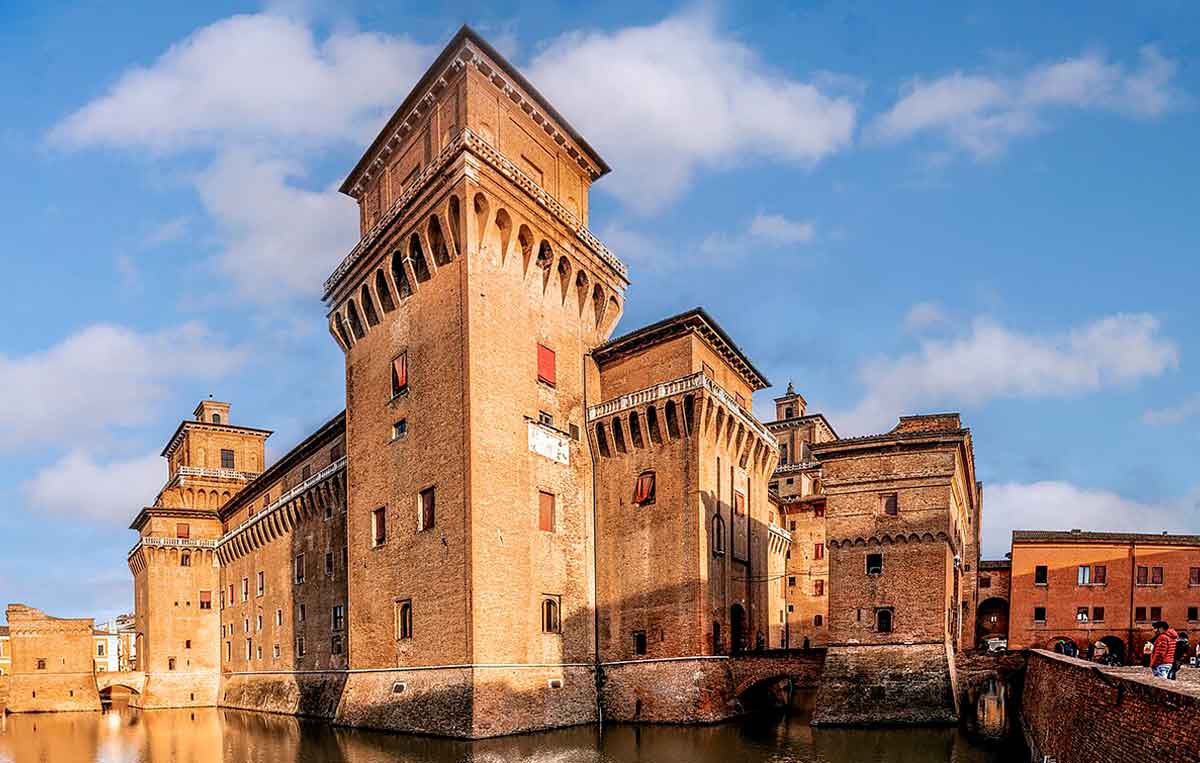
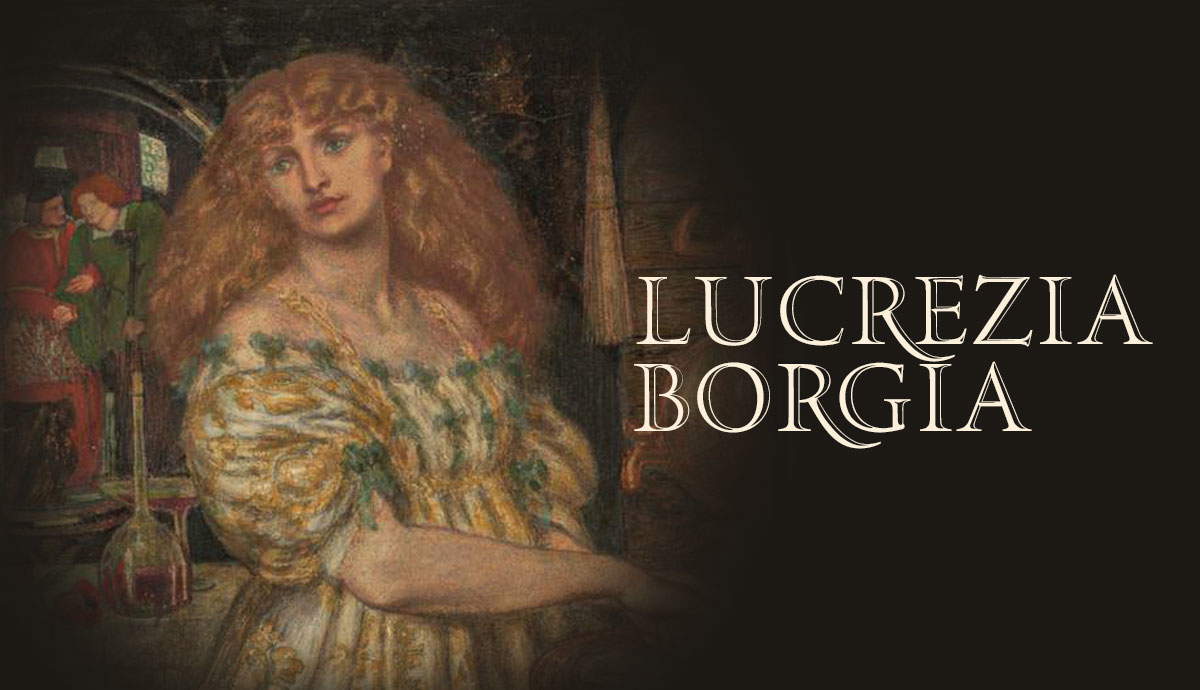
The Este family ran Ferrara for three centuries from this moated brick fortress, the same court that would later claim Lucrezia Borgia as its duchess. The beautiful Italian castle was the scene of many famous and infamous historical happenings, but is best known for the one about love and tragedy that played out in 1425. It was the year the reigning Marquis Niccolò III d’Este, after marrying the young Parisina Malatesta, discovered she’d been having an affair with his illegitimate son, Ugo, who was much closer to her in age. Enraged by the betrayal, even though his own affairs could be counted by the dozen, the Marquis reportedly had the young lovers beheaded in the cold dungeons beneath the Lion Tower.
Expect to spend at least two, if not three, hours here, exploring the seedy dungeon cells, the stunning halls with their priceless artworks, and leave time at the end to climb the tower for the most stunning views of Ferrara’s skyline.
2. Castel Nuovo, Naples
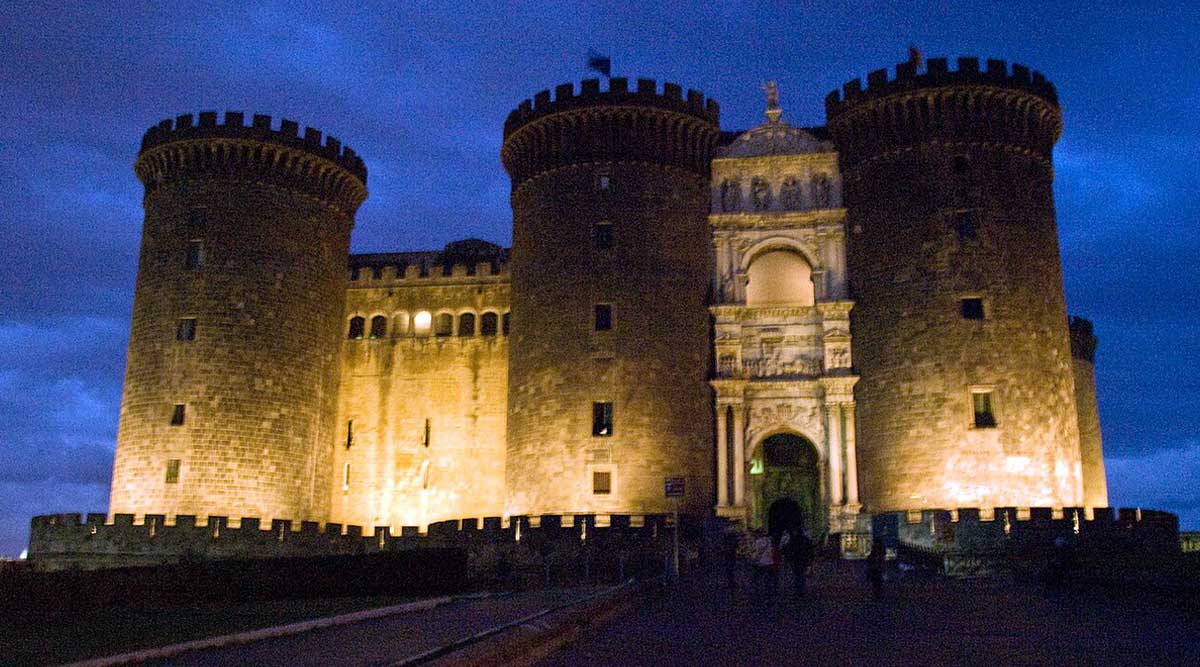
Naples’s great seaside fortress, which locals call the Maschio Angioino, earned its grandest room a sinister name. Through the mid-1480s, the kingdom’s barons plotted against Ferrante of Aragon, who was busy stripping away their feudal power. Rather than fight them in the field, Ferrante played host, inviting the leading conspirators to his niece’s wedding at the castle in 1486.
The barons, who clearly hadn’t seen the infamous Game of Thrones episode, happily joined the feasting, and once they had settled in, Ferrante had the doors bolted and the men arrested. The ringleaders were executed, and macabre rumors soon spread that Ferrante had their mummified bodies dressed in fine clothes and placed on display in a private chamber as a warning.
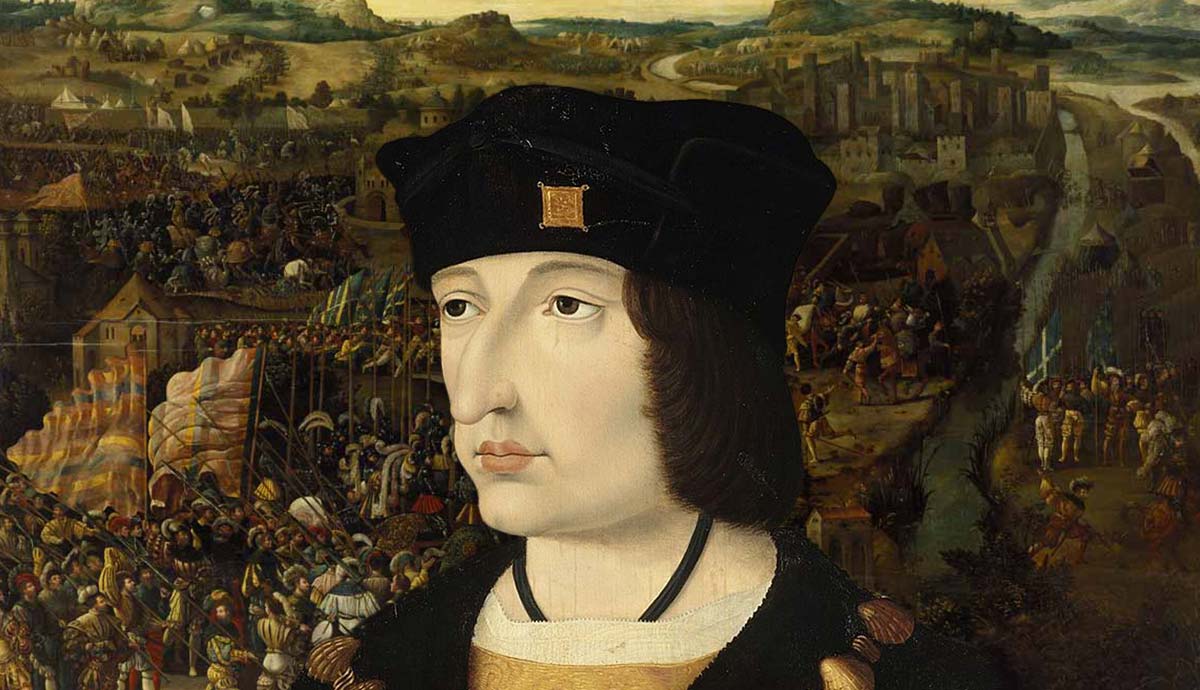
The room has been the Sala dei Baroni, the Hall of the Barons, ever since. It was meant as a lasting show of strength, though the control it advertised did not last long. When Charles VIII of France marched into Naples a few years later, the Aragonese grip Ferrante had fought (and killed) for fell apart.
3. Castel Sant’Angelo, Rome
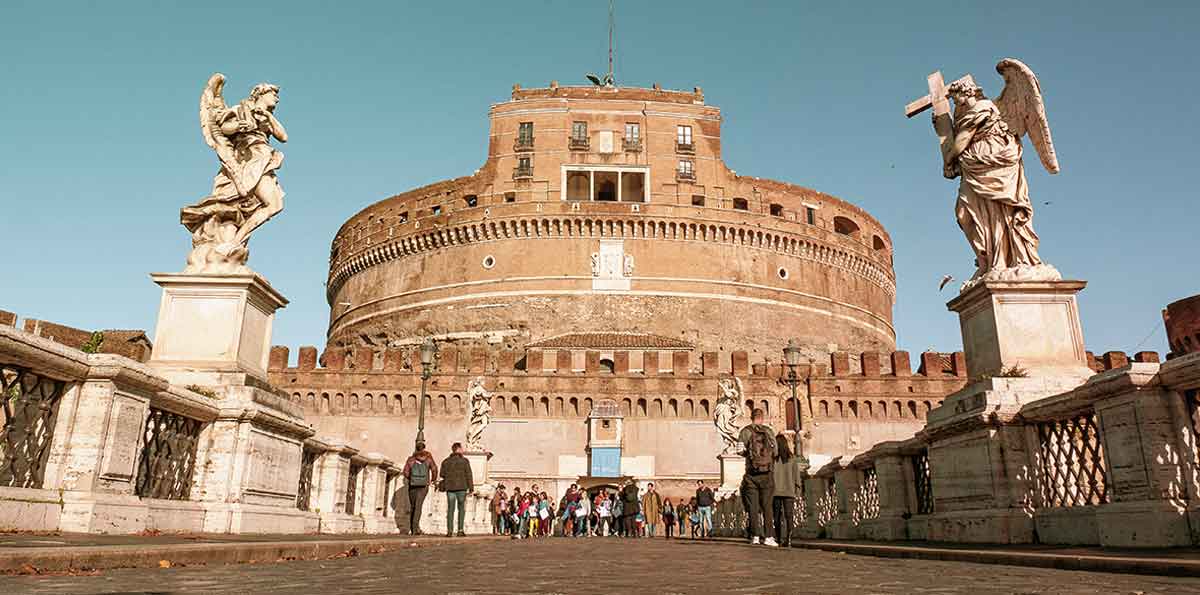
Rome’s round fortress on the Tiber started life as Emperor Hadrian’s mausoleum and spent the Renaissance as a papal fortress and prison. Its most famous inmate was Beatrice Cenci, a young noblewoman who had plotted with her stepmother and brothers to have her abusive father, Francesco, murdered.
The plot faltered, and Pope Clement VIII refused every plea for mercy, possibly with one eye laser-focused on the flush Cenci estate, most of which duly passed to his own nephew, Cardinal Aldobrandini, once the family was gone.
The executions in 1599 were staged on a scaffold on the bridge in front of the castle. Beatrice’s brother Giacomo was tortured on the way there, then killed with a mallet, and his body quartered, while Beatrice and her stepmother were beheaded with an axe. Only the youngest brother, 18-year-old Bernardo, was spared, made to watch the others die before being sent off to the galleys. The crowd was huge and openly on Beatrice‘s side, and very few locals accepted the verdict.
Climb to the top terrace, where Puccini set the last act of Tosca, and you get one of the best views in Rome.
4. Castello Sforzesco, Milan
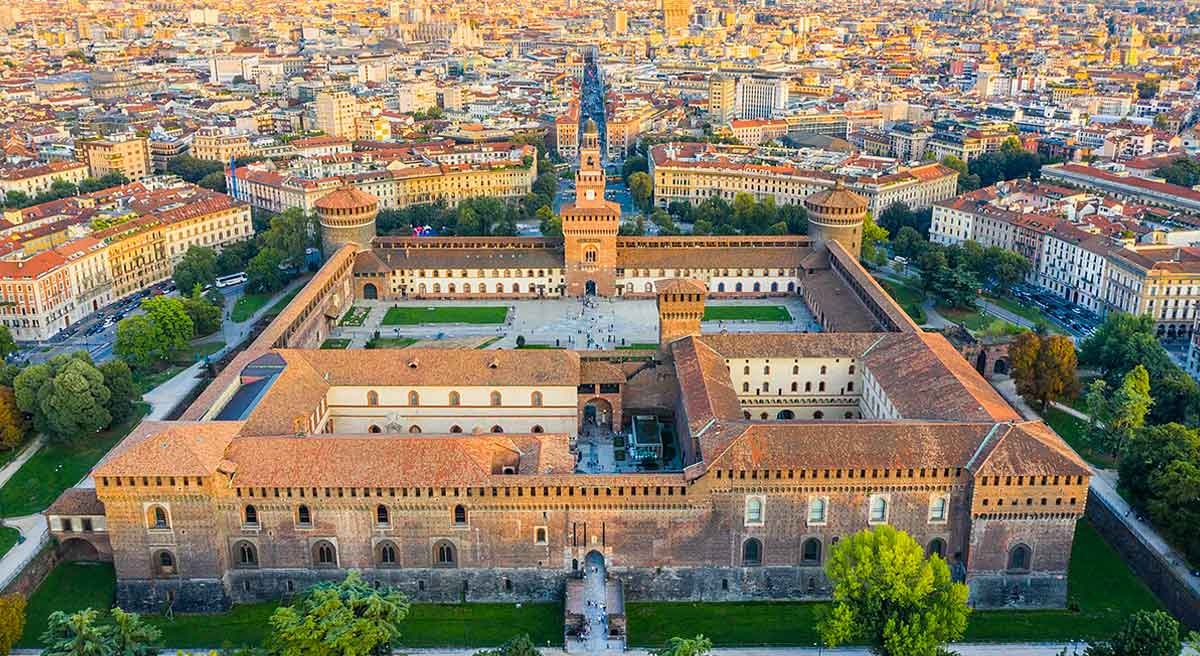
Milan‘s enormous red-brick citadel was the seat of the Sforza dukes, and it grew up around one of the smoothest power grabs of the age. The rightful duke was young Gian Galeazzo Sforza, whose uncle Ludovico ruled in his place as regent and never quite got around to relinquishing power. When Gian Galeazzo died in 1494, conveniently clearing the path to the title, Milan whispered poison, though the young man’s lifelong ill health meant the conspiracy theory was only that.
Ludovico kept a dazzling court here and employed Leonardo da Vinci as everything from portraitist to party engineer. The clever plotting came at a price, though. To outflank his Italian rivals, il Moro invited the French across the Alps, and the invasion he set in motion eventually swallowed Milan in its entirety and left him to die a prisoner in France.
5. Castello di Carini, Sicily
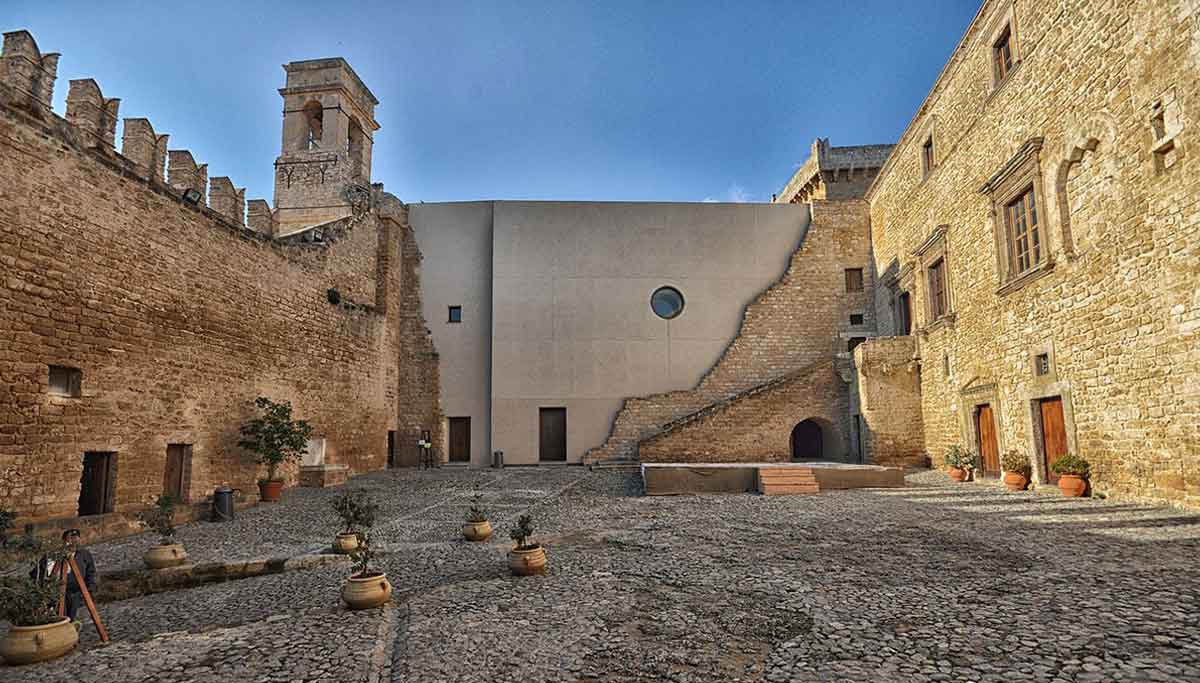
High above the coast near Palermo, Castello di Carini is remembered for a single December night way back in 1563. Laura Lanza, the Baroness of Carini, had been married off at 14 and had taken a lover, Ludovico Vernagallo, who happened to be her husband’s cousin.
When word reached her father, Cesare Lanza, he rode to the castle, killed them both, and then wrote a strikingly calm letter to King Philip II of Spain confessing to the honor killing. He was promptly pardoned.
A famous Sicilian poem, the bitter tale of the Baroness of Carini, kept the story alive for centuries as the story of a tragically doomed romance. The less romantic reading, which several historians now prefer, is that Cesare owed Vernagallo money and stood to swallow his estate and reclaim his daughter’s dowry, and that “honor” was simply the cheapest cover. Interestingly, Italian law traditionally kept a softer sentence for honor killings until the early 1980s.
6. Castello Orsini-Odescalchi, Bracciano
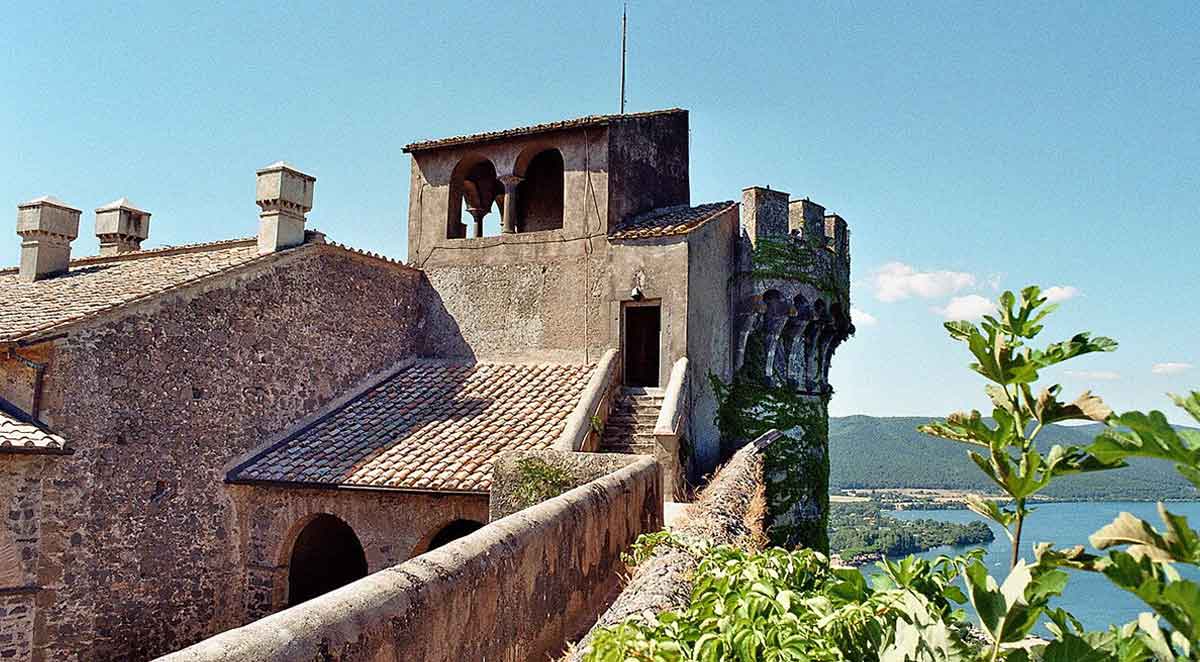
This lakeside fortress north of Rome was the stronghold of the Orsini and the marital home, in theory, of Isabella de’ Medici, the brilliant and independent daughter of Cosimo I. Her husband, Paolo Giordano Orsini, spent most of the marriage in Rome with his own affairs, while gossip in Florence tied Isabella to his cousin Troilo.
She stayed safe as long as her powerful father lived, yet soon after he died, in July 1576, Paolo called her away on a hunting trip, and she turned up dead at one of the Medici’s villas in Tuscany (most likely Cerreto Guidi).
Her own brother put out that she had collapsed while washing her hair, but not many believed him. The Ferrarese ambassador reported she had been strangled, and chillingly, her cousin Leonora had died the same way at another villa just days earlier. A recent study of the couple’s letters has muddied the story even more, hinting she may have died of a long illness instead.