
If you were to stand in the Roman ruins of the Colosseum on an afternoon in July, the worst you’d face would be oppressive heat and a sweaty shuffle toward the exit. Nearly 2,000 years ago, that very same spot looked down on blood-soaked sand raked clean between slaughters, your throat itchy as the air filled with thick, rancid smells.
While we love romanticizing ancient Rome as all marble forums and philosopher-emperors, the tragedy is that, for the most part, the empire was held together by systematic killings, a sprawling sex trade, mass enslavement, and executions that doubled as public entertainment.
1. The Mamertine Prison, Rome
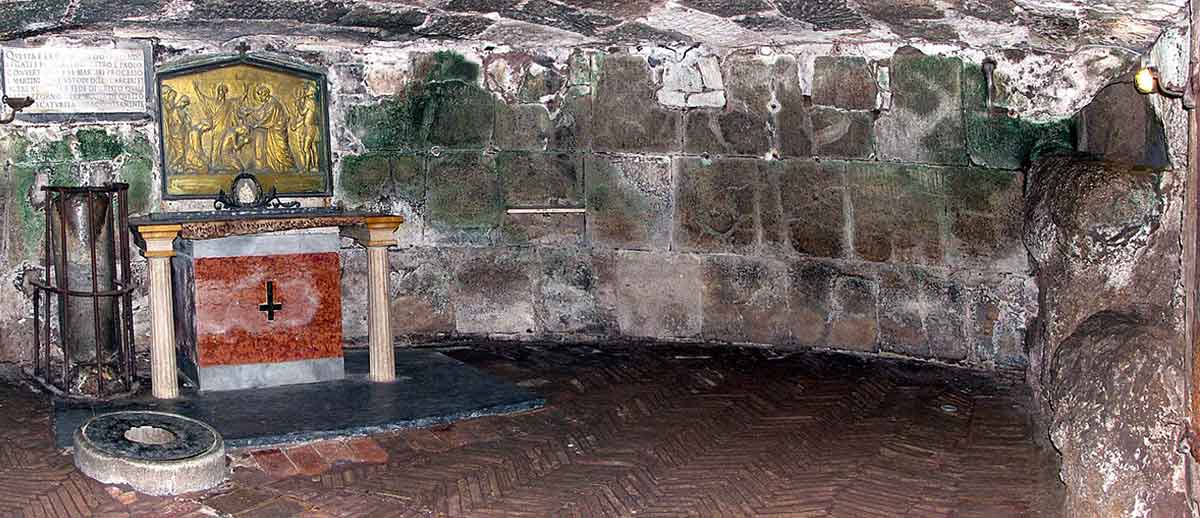
Beneath a church at the foot of the Capitoline is a small and thoroughly unappealing stone chamber the Romans reserved for their most loathed enemies. The lower room is shaped like a bottle and, in its earliest phase, the only way in or out was through a hole in the ceiling. Prisoners would be lowered through it and, more often than not, never brought back up. The historian Sallust called the place repellent for its “filth and darkness,” but that seems a bit redundant nowadays, given that it was arguably the entire point.
The prison’s real function was clearest at the end of a triumphant battle, spearheading the victory parade every Roman general longed to lead. While the crowd cheered and the general made his way toward the Capitol, the captured enemy leader was quietly pulled from the procession, taken down into the Mamertine, and strangled out of view.
Vercingetorix, the Gallic chieftain who gave Julius Caesar his toughest fight, was kept alive for years so he could be displayed and then eventually killed in this way. The North African king Jugurtha met a much slower and more agonizing version of the same fate, in the same cell, left to waste away.
By the Middle Ages, the dungeon had been rebranded as a shrine, on the tradition that St. Peter was held there and miraculously brought a spring up from the floor to baptize his jailers.
2. The Brothel of Pompeii
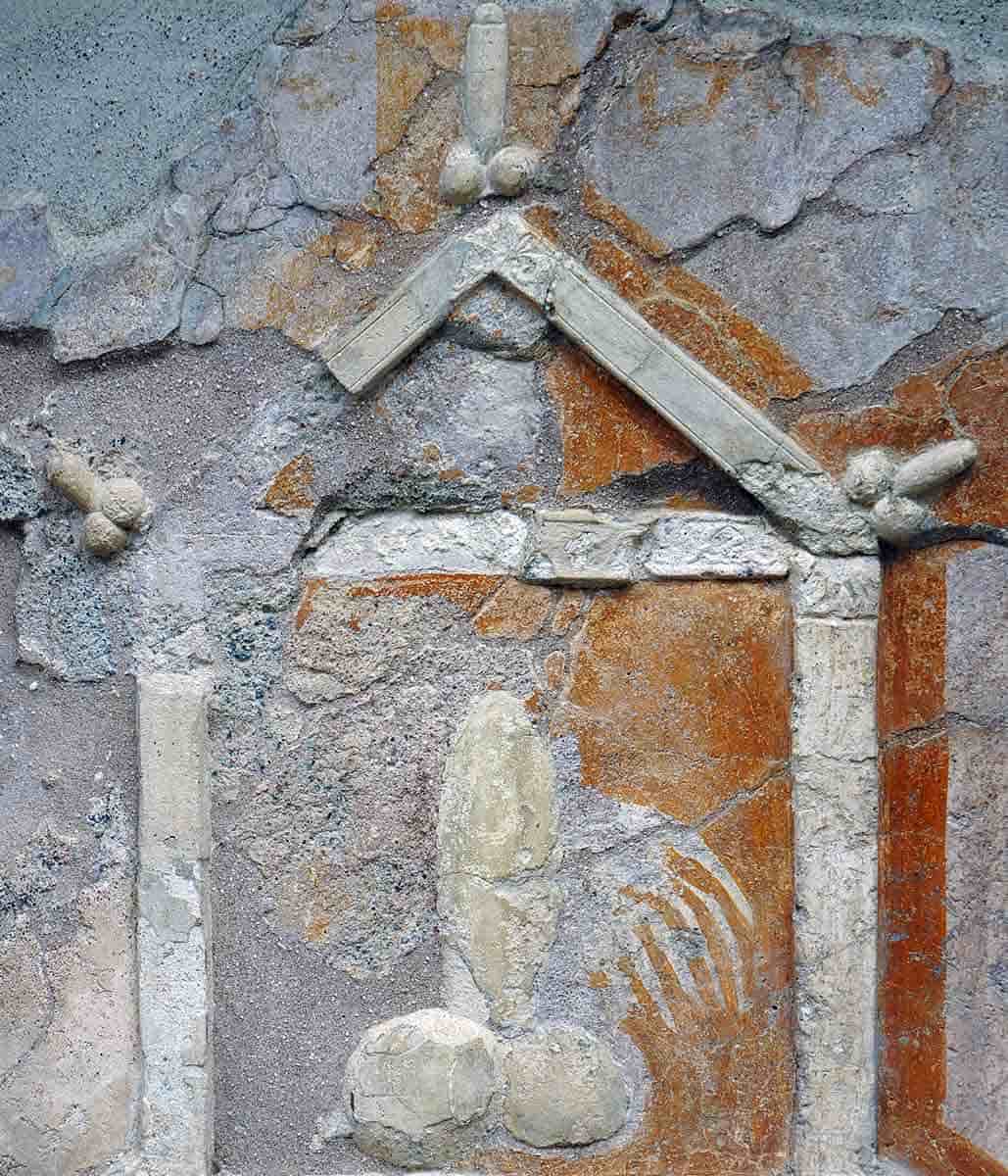
Pompeii has a dark history in every direction, a town frozen at the moment of death. But nature caused this particular disaster, so, somehow, it makes the place feel less sinister than others on this list. But that innocence is only on the surface. Head below ground and you’ll find a building that says more about everyday Roman sleaziness than any collapsed roof: the Lupanar, Pompeii’s purpose-built brothel dungeon.
This cramped two-story block had five small rooms downstairs, each fitted with a built-in masonry bed that would have held a thin mattress. Erotic frescoes, like the one pictured above, are found on the doorways. Some scholars describe them as menus of “services rendered herein,” though that reading is still very much debated. They may simply have been there to set a mood.
More than a hundred messages are scratched into the plaster of the rooms. A fair few seem to have been left by the sex workers themselves, most of them likely enslaved, many with Greek names pointing to the eastern edges of the empire. They recorded their own names and the men they’d been with, sometimes with a boast attached. The going rate, as it was scratched on the walls, was roughly the price of a couple of cups of wine.
The word lupa, “she-wolf,” was slang for a prostitute, which is where lupanar comes from. Oddly enough, the she-wolf is also the revered symbol of Rome today and the emblem of its football team, which makes the whole idea feel infinitely less romantic.
3. The Colosseum, Rome
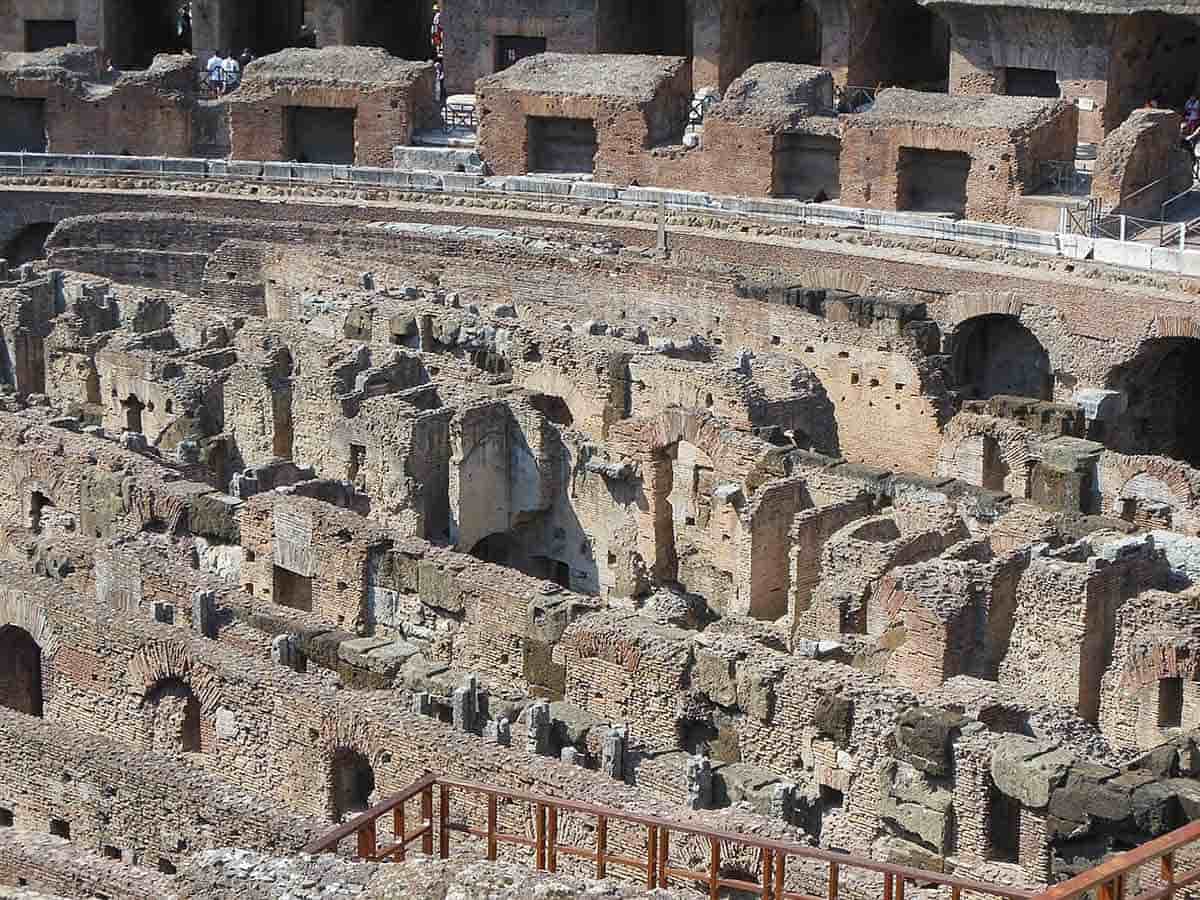
Most people know the Colosseum as a killing ground, but below the arena floor was the machinery that turned it into something close to an industrial slaughterhouse.
The hypogeum is a two-level warren of tunnels, cages, and lifting gear that Emperor Domitian began adding to the Colosseum about a year after it opened. Around 80 vertical shafts and a set of counterweighted wooden lifts, worked by teams of laborers in torchlight with little air and no daylight, could send a starved lion shooting up through a trapdoor into the middle of the arena in seconds.
Mornings were given over to animal hunts and middays to executions, when condemned prisoners were pushed out to be torn apart by those same ravenous beasts, the punishment the Romans called damnatio ad bestias.
4. The Via Appia and Capua
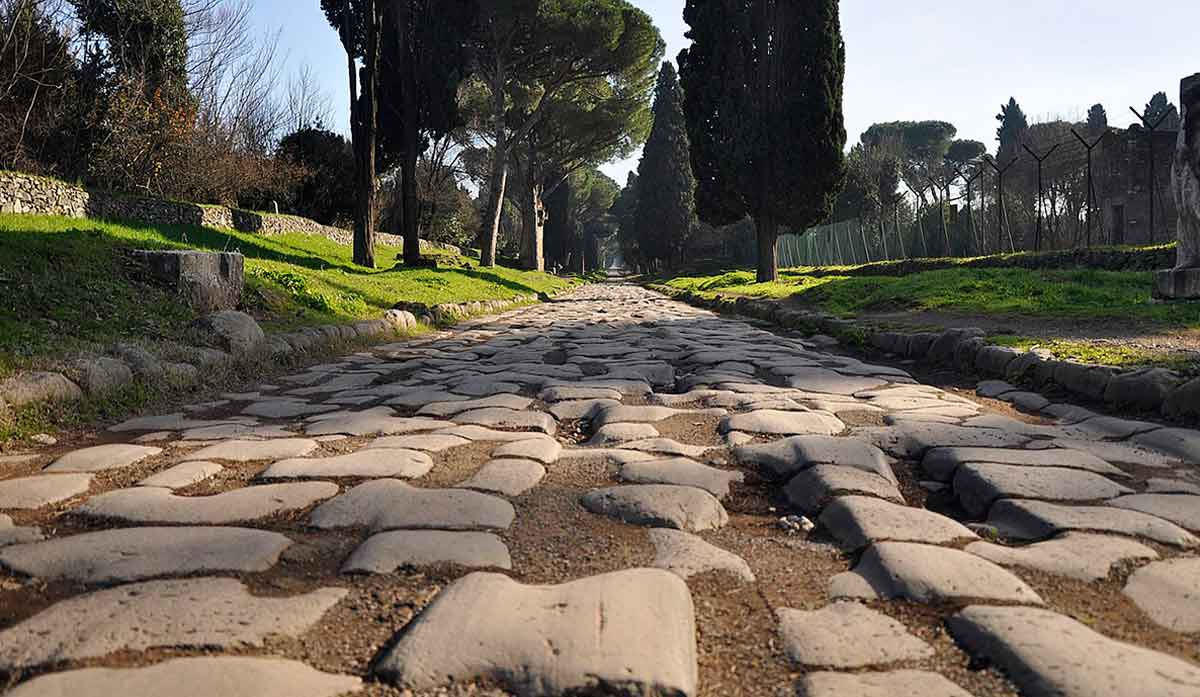
The Via Appia was the showpiece road of the Republic, a dead-straight ribbon of basalt running south from Rome. In the spring of 71 BC, it became the longest execution site in Roman history.
The story begins about 120 miles south in Capua, where a gladiator school kept men like Spartacus alive only as long as they were useful in the arena. Spartacus and around 70 others broke out using kitchen knives and spits, and within two years, the revolt had swollen into an army that kept embarrassing Rome over and over.
When Crassus finally crushed it, he made sure no one would ever forget who ruled whom. According to Appian, a prominent Greek historian who served as an official in ancient Rome, some 6,000 captured rebels were crucified at intervals along the whole road from Capua to Rome. They were left hanging as a warning to anyone else who got funny ideas about revolution.
5. Baiae, Bay of Naples
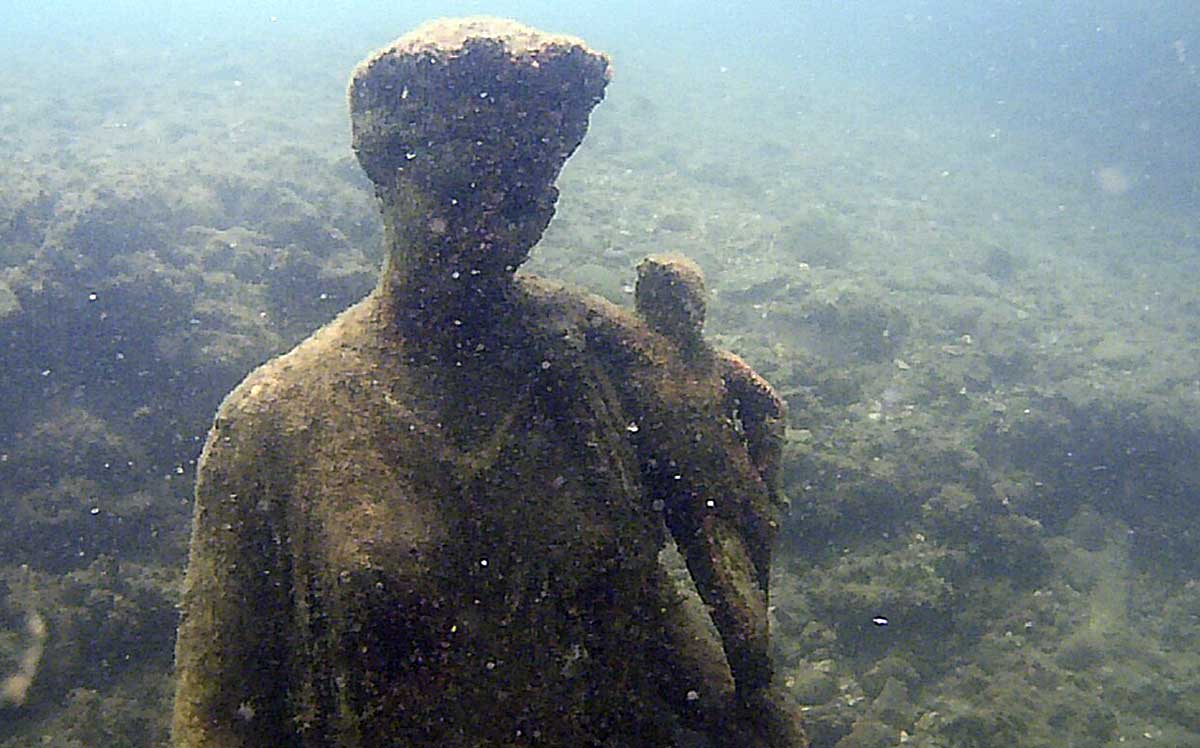
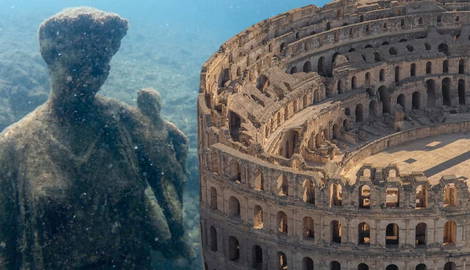
If Rome had a Las Vegas, it was Baiae, a seaside resort on the Bay of Naples where the wealthy went to misbehave well out of sight of the Senate. Moralists loathed it, and Seneca grumbled that it was a place where vice ran loose and a stay could wreck a respectable reputation. Much of the old resort has since slipped beneath the sea, dragged down over the centuries by the slow rise and fall of the volcanic ground in the area, so today you can snorkel or take a glass-bottomed boat over sunken mosaics and villa walls.
The dark story attached to Baiae is more of a family saga. It was near here, in 59 AD, that Nero is said to have tried to murder his own mother, Agrippina, with a booby-trapped boat rigged to come apart and sink her at sea. The contraption failed, Agrippina swam ashore, and Nero, having run out of patience with subtlety, simply sent men to finish the job in her villa.
Standing on the stunning shoreline today, with half a Roman party town glimmering under the water just offshore, it’s an oddly peaceful spot for somewhere with that on its record.
FYI, the marble statues scuba divers see on the seabed nowadays are copies. The originals were lifted to a museum and casts set back in their places, so the underwater park still has something to show.
6. The Amphitheater of El Djem (El Jem), Tunisia
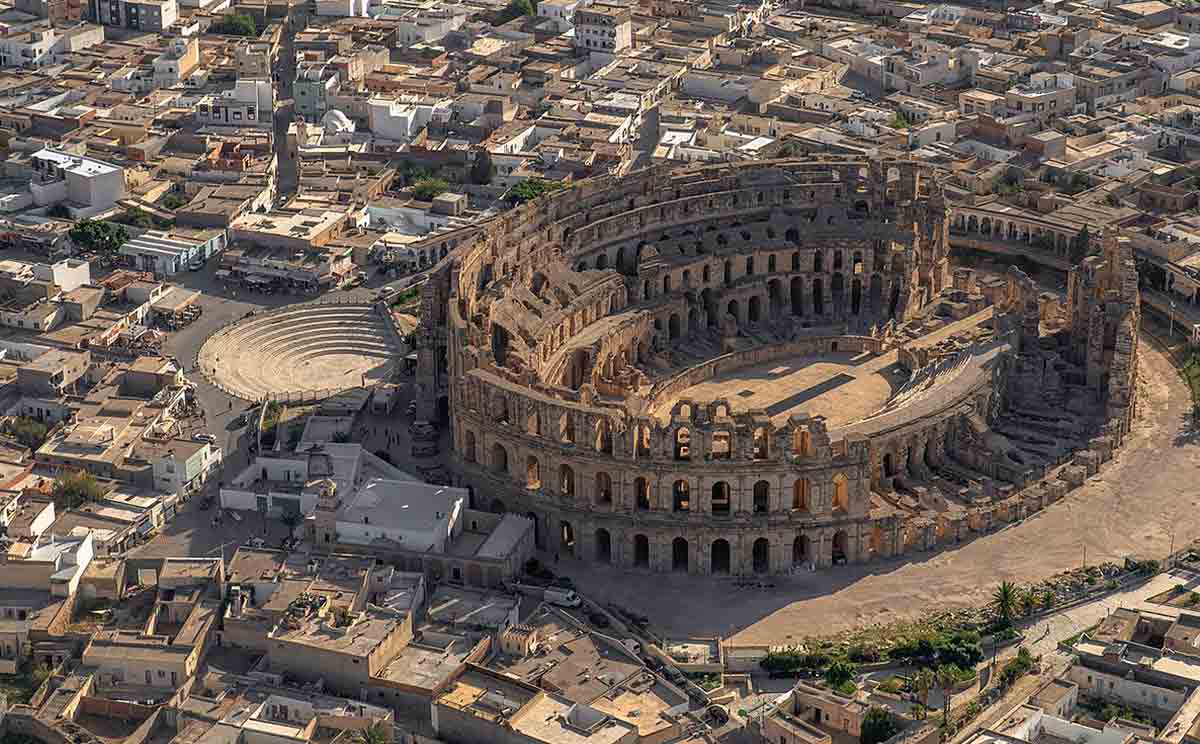
Rome did not keep its blood culture at home, of course. The games traveled with the empire as it expanded, and nowhere is that clearer than in a small farming town in central Tunisia, where a stone amphitheater almost on the scale of the Colosseum rises straight out of the flat plain. This was Thysdrus, a place grown rich on the production of olive oil, and its arena could seat something like 35,000 people, roughly the entire population of the town.
A provincial city built one of the largest killing venues in the Roman world essentially to prove it belonged, and to give the locals the same spectacle of animal hunts and staged executions that drew the crowds in the capital.
Construction is usually dated to around 238 AD, the same year Thysdrus erupted in a tax revolt so violent that the mob killed the emperor’s local finance official and declared an elderly local landowner named Gordian emperor on the spot. That ad-lib reign lasted barely a few weeks before it collapsed, and it would seem the arena was never completed. It later doubled as a fortress, sheltering the townspeople during Vandal and Arab attacks, before generations of scavengers quarried it for building stone.
7. Villa Settefinestre, Tuscany
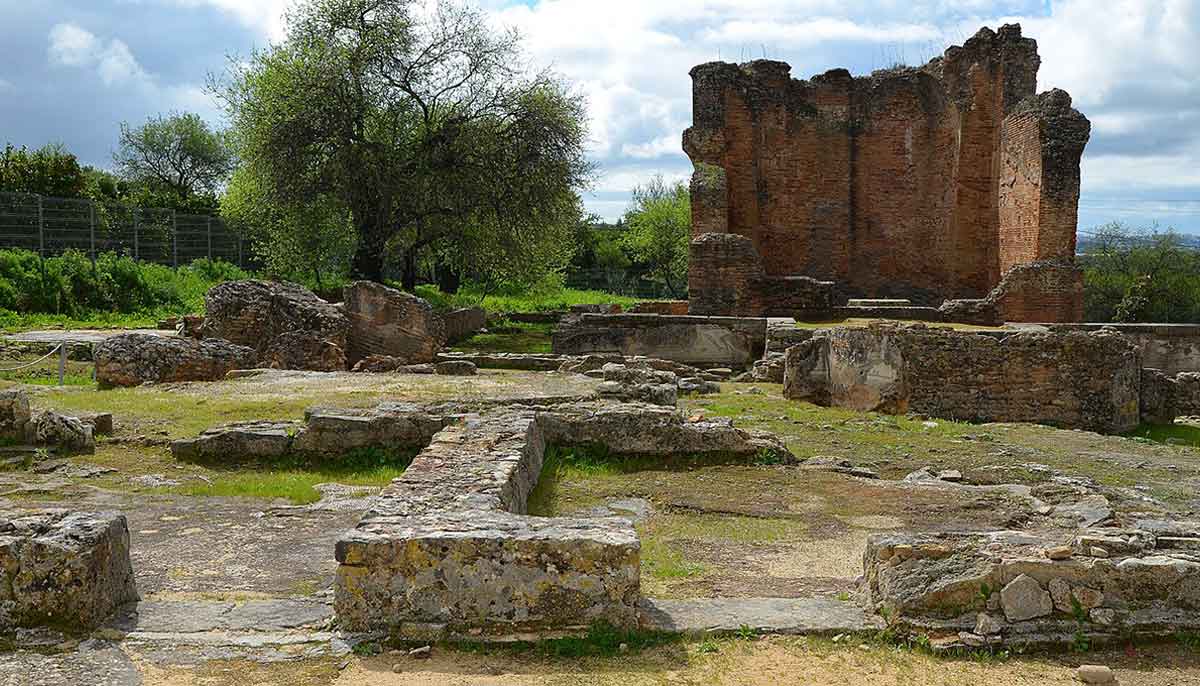
Most of the sites on this list are monuments. This one is a farm.
Villa Settefinestre sat in the rolling countryside near Cosa in southern Tuscany. When archaeologists dug it up in the late 1970s, it became the textbook example of the thing the marble version of Rome leaves out: the large agricultural estate run on slave labor that generated so much of the Republic’s wealth.
The villa belonged to the senatorial Volusii family, and it was built for profit rather than for show, with olive presses, wine cellars, a piggery, and quarters for a workforce that rarely, if ever, got to leave.
Andrea Carandini was tasked with the excavations, and he read the layout as a kind of familiar-looking plantation. He pointed to a block of small, windowless rooms as an ergastulum, the spartan barracks where one would keep chained field slaves at night after a day spent toiling the land under the whip. He compared it openly to the slave plantations of the American South, yet whether those particular rooms really were slave cells is now one of the longest-running arguments in Roman archaeology. Plenty of historians see the comparison as a bit of a stretch, but, knowing what we now know about the ancient Romans, it might not seem such a preposterous assumption.