
Bill Viola was one of the most influential video artists of all time. Unlike his other colleagues, he did not have any classical artistic training, moving from technology backward toward more traditional forms of art. Inspired by the dramatism and dynamism of Baroque art, Viola created video works that bridged the gap between the old and the new art. His works required a prolonged involved contemplation rather than a brief passing glance. Read on to learn more about Bill Viola and his most famous artworks.
1. Tape I, 1972: Bill Viola’s Early Video Experiments
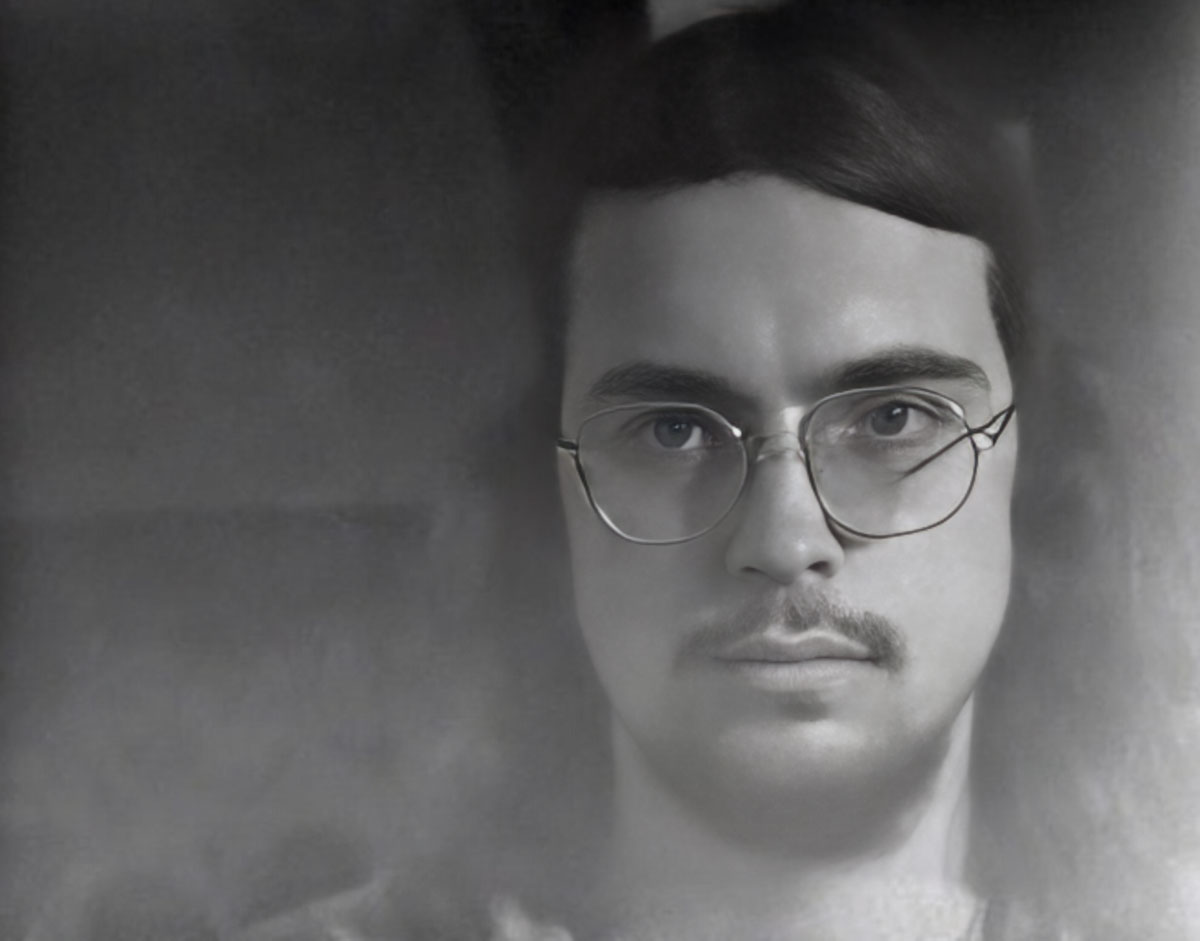
Bill Viola started his career in video art in the 1970s when the technology was still rather primitive compared to the possibilities the artist enjoyed in the 2000s. Back then, video art was mostly seen as a passing fad that would soon disintegrate, reestablishing the hierarchy of classical media. Unlike many other artists working with technology, Viola had no prior training in more traditional forms of art. He described his first encounter with the video-making process as something revolutionary and miraculous. Over the years, his artistic language evolved with the development of video technology, transforming not only instrumentally but philosophically as well.
Viola’s first video works had little in common with the dramatic and highly aestheticized compositions that brought him fame. Rather than that, he was part of the artistic scene that aimed to defy the suffocating conventions of the art world and break the barrier between art and reality. He did it quite literally in one of his early works, a 1972 video titled Tape I. There, Viola entered a room and stood in front of the camera, interacting with it as with a mirror. After several minutes of intense staring, he screamed and broke the tape recorder, symbolically destroying himself and his double in the mirror, imitated by the video’s viewers. I in the title thus had a double meaning, it functioned both as a Roman number one and a pronoun.
2. Quintet of The Astonished, 2000
The definitive impact on Bill Viola’s visual language and work was made by his 1974 move to Florence, Italy. Although Viola explained that back then he had little to no interest in classical art, he clearly soaked in experiences and concepts that would later be resurrected in his work. The art found in Florentine churches requires a radically different way of engagement than any museum collection or a sterile white gallery. Such type of art demands its viewers to take time to appreciate the complexity and intensity of religious experience. It also requires movement—not frantic but careful, slow, and respectful. Viola managed to translate these principles into video art and reconstruct the ecstatic religious experience in a secular setting.
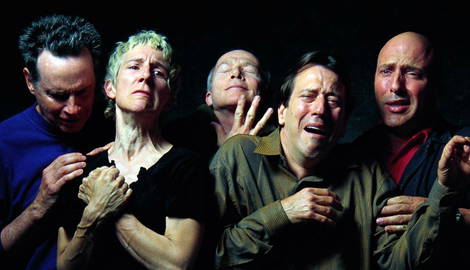
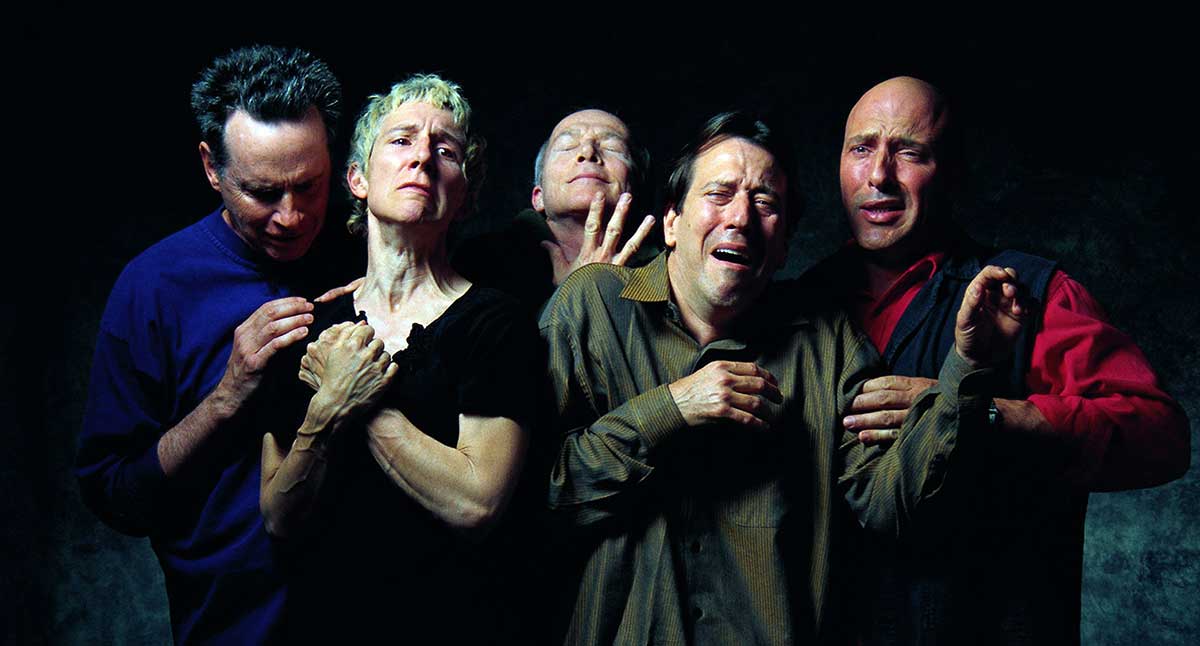
One of the greatest examples of Renaissance influence on Bill Viola is his film Quintet of the Astonished, which shows five figures in slow motion, each face distorted with intense emotion. The figures’ feelings and experiences are hard to verbalize and almost impossible to explain with any level of certainty, yet their expressions and feelings feel overwhelmingly familiar and contagious. Their faces are archetypes in a sense attributed to the word by Carl Jung: primitive and universally relatable emotions coming deep from the collective unconscious.
3. Chott El-Djerid, 1979
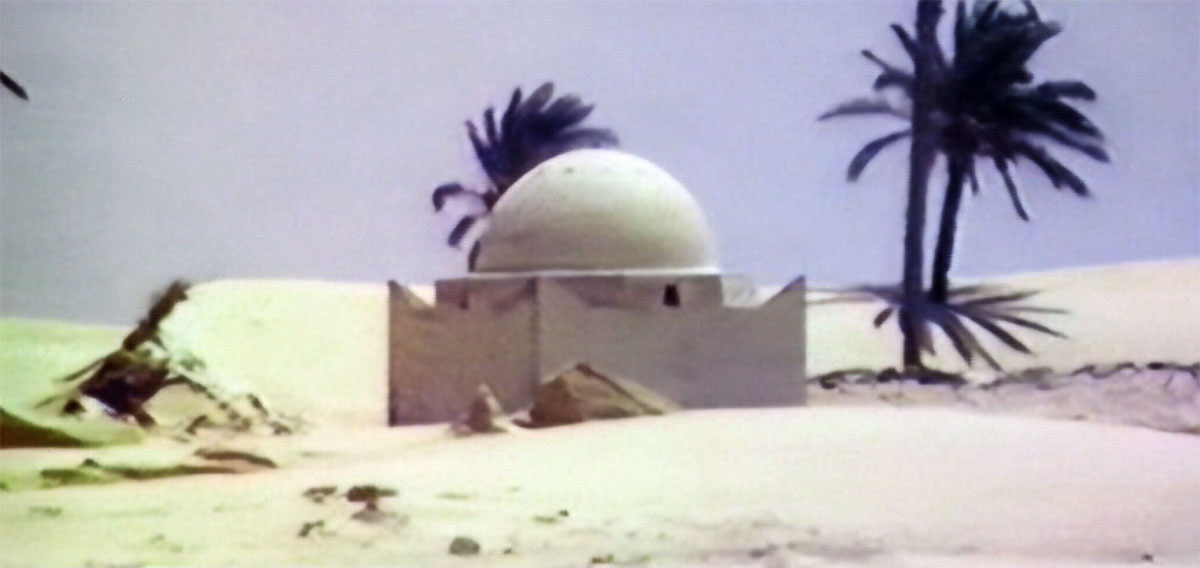
However, before entirely focusing on Baroque inspiration, Bill Viola explored other formats and applications for video art. Another formative trip for him was his brief voyage to Tunisia in 1979. There, he created a film that demonstrated how unreliable our visual perception could be, how cruel our imagination was, and how misleading—the seemingly objective medium of video. Two parts of the video were shot in Tunisia and Canada, respectively, and brought together snowy landscapes and burning hot sand. In Chott El-Djerid, Viola expressed the origins of mirages and hallucinations, creating and recording optical and sound illusions.
4. The Tristan Project, 2005
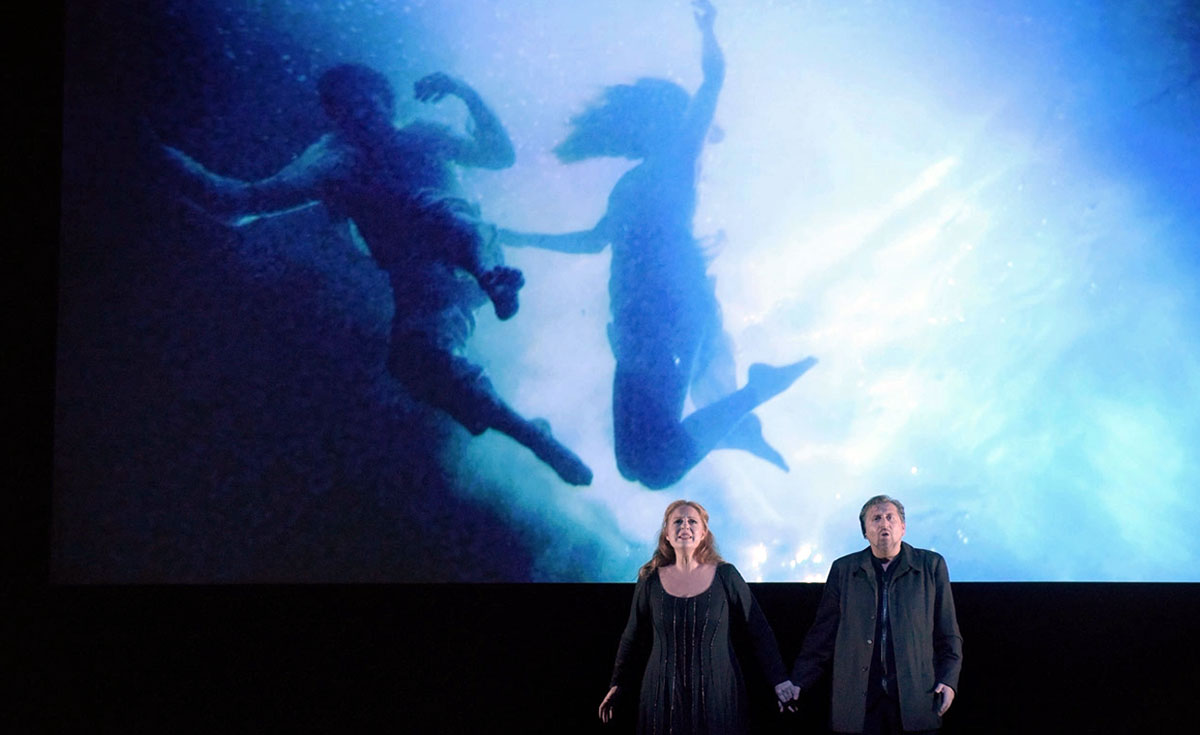
Another significant project by Viola connected his video art to music and theater. In 2005, he created a video work based on Richard Wagner’s opera Tristan and Isolde. Initially, the four-hour film was shown on screens, and real opera singers performed in a minimalist stage setting. However, Viola later reworked it into pieces that could be presented in museums. The artist described Tristan and Isolde as a story of love that was too overwhelming to be contained within the characters. This love poured into the environments and natural forces surrounding them.
Viola has no interest in explaining the plot of his scenes, focusing on pure emotions and impressions. Together with the intensity of his artworks, this creates an astonishingly disorienting effect. Despite the obvious association with the religious art of Caravaggio’s era, Viola’s works have no direct references to Christianity or any other religion. There are no quotes, no figures, or situations borrowed. Strictly speaking, Viola’s works are a deception: the viewer is looking for a coherent narrative and a reference point, readily equipped by a belief system of any sort, and is doomed to wander in confusion.
5. The Raft, 2004
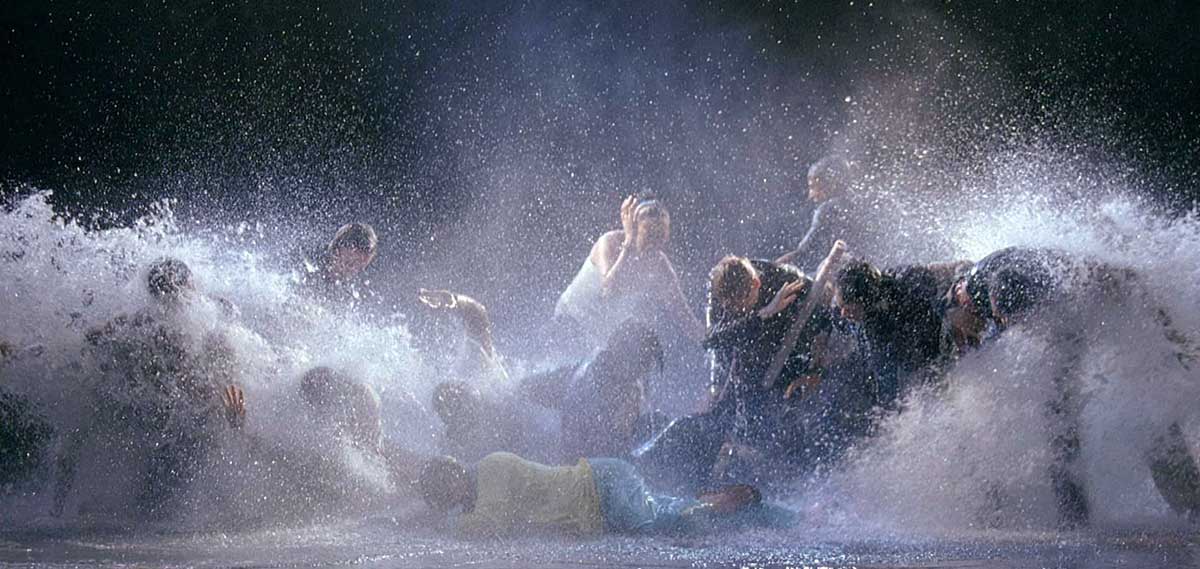
Another Bill Viola work that referenced an already famous piece was the 2004 video The Raft. Both the title and the scene alluded to the legendary painting The Raft of The Medusa by Theodore Gericault. Gericault depicted the events of his time—the tragedy of a raft full of shipwreck survivors. Betrayed by their captain, the raft drifted into the ocean for two weeks. Most of the passengers died, and the remaining ones had to resort to cannibalism to survive.
Bill Viola’s raft gathered people of all ages and ethnicities. They stand quietly until the mass of water throws them to the ground and drags them apart. The instability and fragility of the contemporary world, shown by these waves, are balanced by people’s kindness—after the sudden storm is over, they help each other get back on their feet.
Viola frequently worked with the four elements of earth, air, water, and fire. Water, in particular, has special significance for the artist. When Viola was six, he almost drowned in a lake, yet he remembered it not as a horrifying experience but as a mystical dream. The underwater world seemed magical and heavenly, and in many of his works, he strived to recreate the feeling.
6. The Crossing, 1996
Although Viola had no traditional art historical training, he developed a deep understanding of Medieval and Baroque sensibility. For his nuanced and intense work, he was dubbed the Rembrandt of the video age. Unlike other artists, he did not start his work based on the artistic expression and visual experience of the Old Masters but walked a conscious path towards it, moving backward.
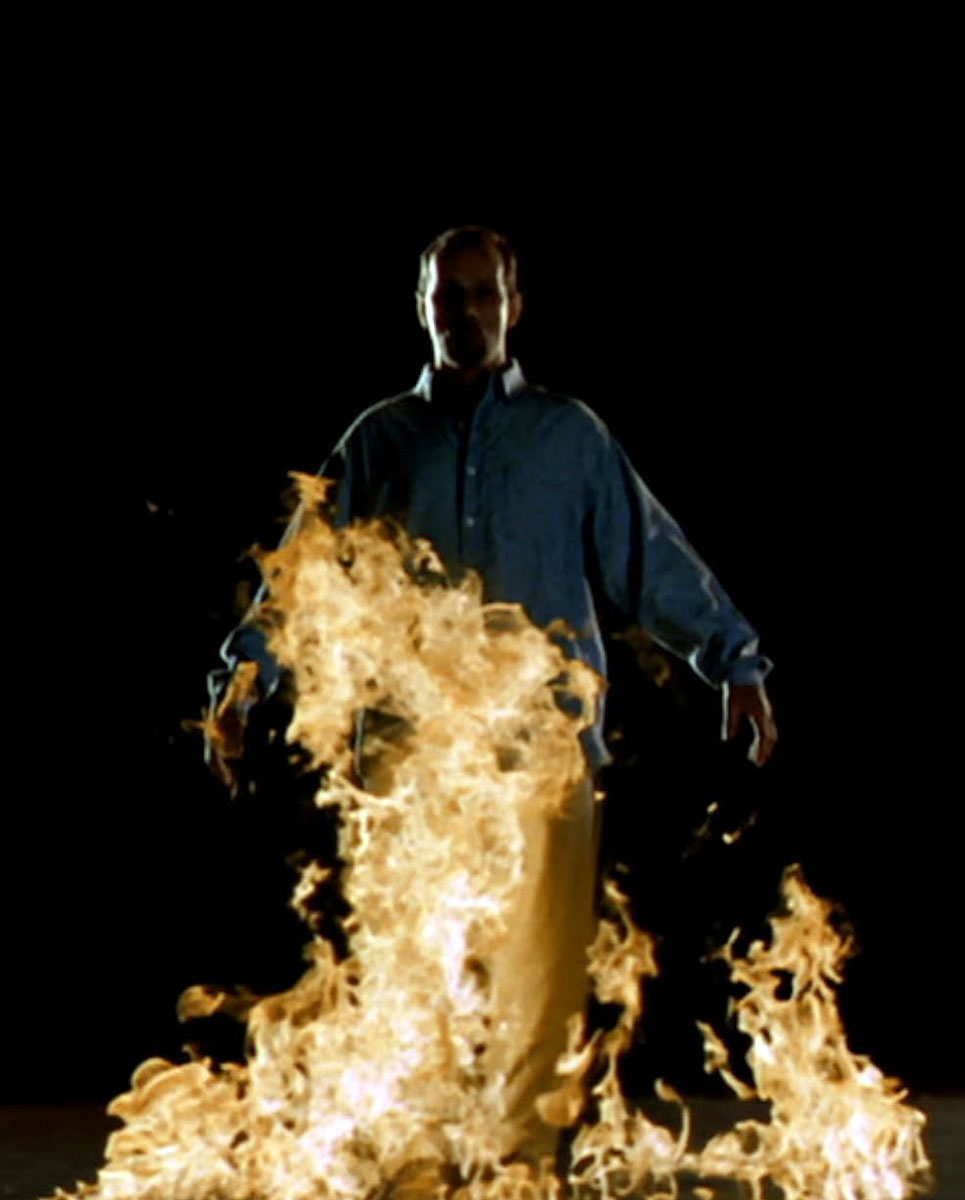
Bill Viola stated that the main inspiring force for him was the art of the Italian Gothic painter Giotto. Giotto’s works preceded Renaissance art, and he was the first artist in Western history who focused on the realism of emotion and feeling. From the Renaissance paintings, Viola borrowed the obsession with movement and dynamism, expressed through bodies, draperies, and shadows. He was usually compared to Caravaggio for his expert use of light and shadow and compositional principles. Still, unlike Baroque artists, he never based his art completely on Christian symbols and values. The Crossing, a video work that reflected Viola’s Baroque influences, used fire and water as universal metaphors of rebirth and spiritual transformation.
7. Martyrs, 2014: Bill Viola’s Famous Work
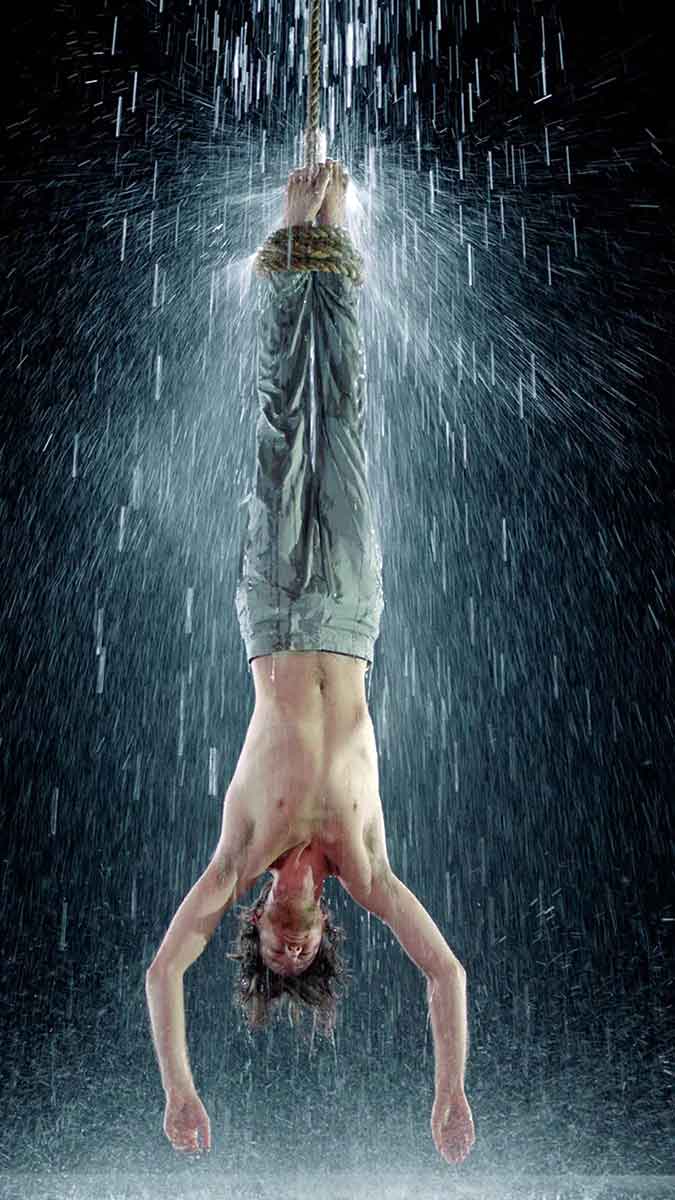
Martyrs is one of Bill Viola’s most famous works. It featured four screens with four people—burning alive, drowning, being hung mid-air with their limbs unnaturally bent, or gradually covered with earth. Initially, Viola created the work for Saint Paul’s Cathedral in London, yet, as usual, stripped it of the traditional Christian iconography and turned it into a universal spiritual experience. He was not interested in the concept of martyrdom as a spiritual act but rather in the transformative processes expressed through human emotion. As Viola stated, initially, the Greek word for martyr meant witness. Contemporary media turned us into witnesses of others’ traumas, effectively scarring us all and turning us into martyrs in the original sense of the word.