
The novel Lonesome Dove follows two retired Texas Rangers, Captain Woodrow F. Call and Captain Augustus “Gus” McCrae, who own the Hat Creek Cattle Company and Livery Emporium in the small Texas town of Lonesome Dove. As they drive a herd of cattle from Texas to Montana, they endure dust storms, dangerous river crossings, and conflict with the Kainai (Blood) people.
Lonesome Dove’s Woodrow Call and Captain Augustus McCrae
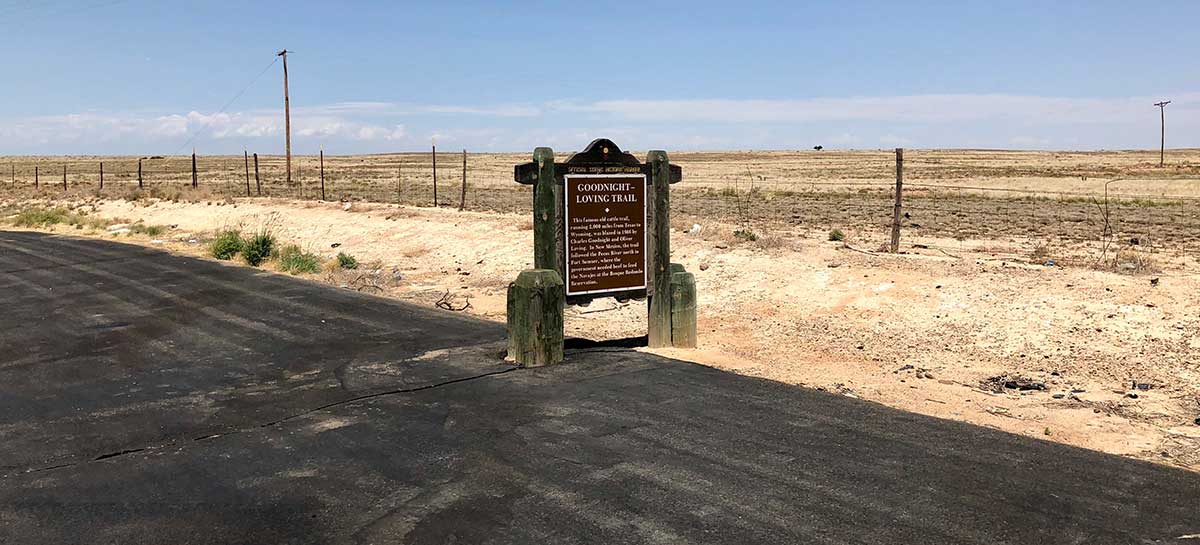
The two central characters in Lonesome Dove, Captain Woodrow F. Call and Captain Augustus “Gus” McCrae, are loosely inspired by real cattlemen Charles Goodnight and Oliver Loving, respectively. Goodnight and Loving are the namesakes of the Goodnight-Loving Trail, which they themselves established in 1866. The historic cattle trail originated in west Texas, running southwest to connect with the Pecos River before continuing up the river’s valley to Fort Sumner, New Mexico. It was primarily used for the movement of Texas Longhorns, which later became unnecessary due to the arrival of railroads in West Texas in the early 1880s.
The fate of Loving is similar to that of Gus. While along a stretch of the Pecos River in 1867, Loving was trapped by Comanche braves and was subsequently shot in the arm and side. While he managed to escape to Fort Sumner, he later succumbed to his injuries after developing gangrene. Before he died, Goodnight promised to honor his wish of being buried in Texas. Although he was temporarily buried in Fort Sumner while Goodnight drove the herd to Colorado, he later had Loving’s body exhumed and transported home to Texas for it to be reburied.
Similarly, in the novel, Gus is wounded in the leg by two arrows during a conflict with members of the Kainai (Blood) tribe, leading to a fatal infection. Even though Gus’s leg is amputated in the novel, he still passes away from complications with blood poisoning. Before his passing, he asks Call to bury him in Texas. Although Call leaves Gus behind, he later retrieves his body and takes him to an orchard in San Antonio, where he buries him. Despite the similarities, McMurtry had insisted that Call and Gus were not meant to be accurate depictions of Goodnight and Loving. In fact, McMurtry himself has stated that Gus and Call are more closely influenced by Sancho Panza and Don Quixote.
Everyday Life of Texas Rangers
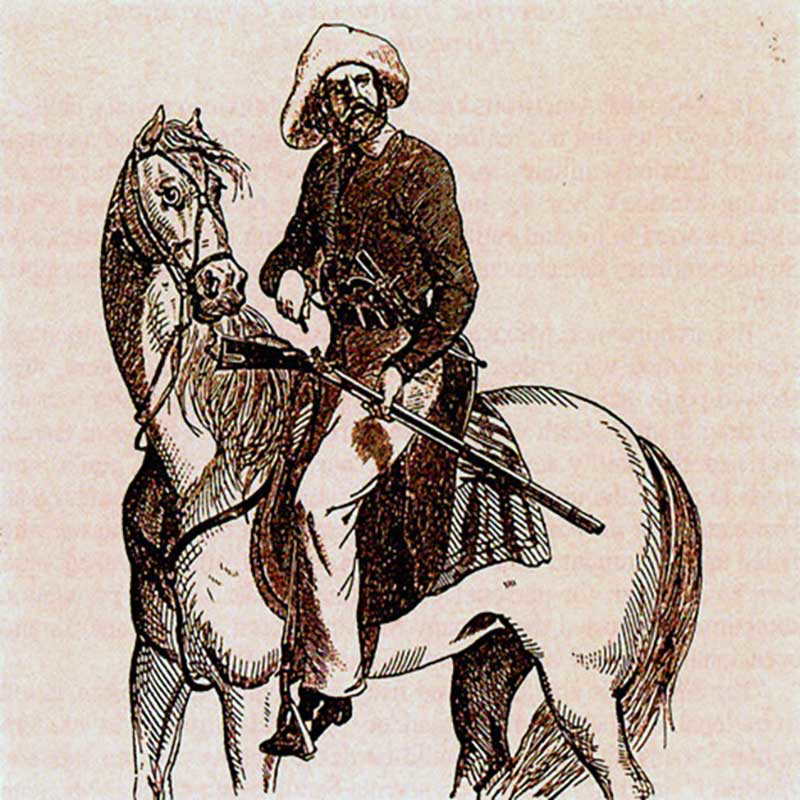
Although ten experienced frontiersmen were hired as rangers in 1823 for an expedition against bands of Native Americans, it was not until 1835 that a specific force known as the Texas Rangers was formally instituted by Texas lawmakers. Texas Rangers patrolled the frontier, fought in military battles, and arrested cattle rustlers. Despite stories of their bravery and heroism, that idea is somewhat hypocritical due to incidents of executing thieves without a fair trial, driving Native American tribes from their land, and, in some cases, the lynching of Mexicans and Mexican Americans along the border between Texas and Mexico. Post-Civil War, the role of Texas Rangers shifted to suppress lawlessness, track fugitives, protect the border, and manage conflicts.
While Gus and Call are retired Texas Rangers, they still uphold the law when they learn that the Suggs Brothers and their gang attacked Wilbarger and stole his horses, resulting in his death. When Gus, Call, Pea Eye, and Deets discover Jake Spoon with the Suggs Brothers, they hang him alongside them. As the Texas Rangers did, Gus and Call act as judge, jury, and executioner. However, despite adhering to a frontier code of justice, Jake is their old friend and former Texas Ranger himself who accompanied Gus and Call into Mexico to rustle cattle. The difference is that while stealing of horses was common in the frontier, riding with men who murdered a civilian was unforgivable, as in their eyes, Spoon shared the same responsibility. Call is known for his stoic nature, maintaining a strong moral boundary in the decision to hang Spoon.
Cattle Rustling Across the Borders
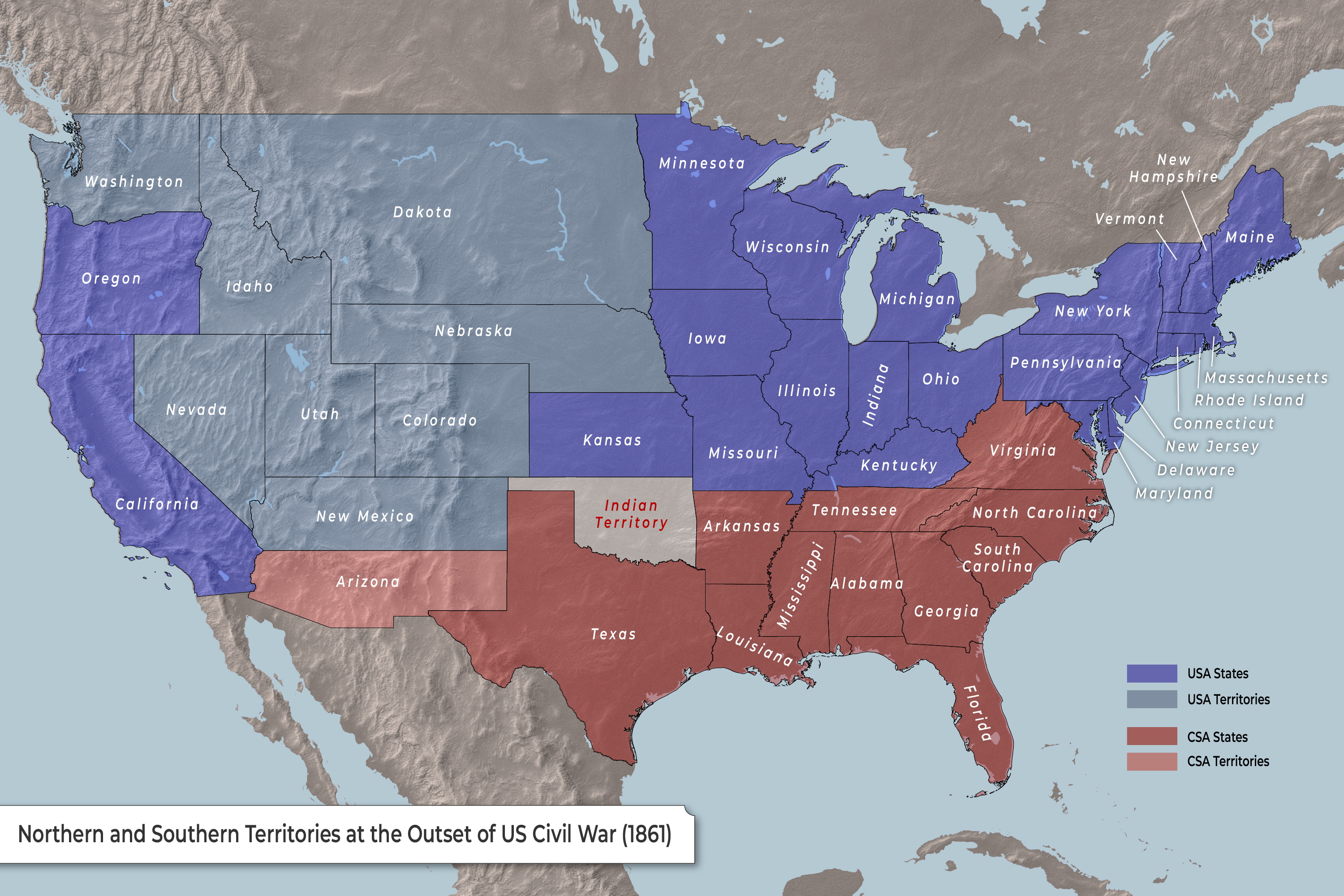
Following the end of the Civil War, cattle rustling became a problem in southwest Texas, especially around the 1870s, when the novel is set. Cattle theft began after the severe winter of 1863-1864, when large numbers of cattle strayed from their native range and ranchers had very little capacity to retrieve them. Consequently, cattle became an easy target for any horseman who wanted to make two to four dollars for nothing but driving the cattle across the river into Mexico. Cattle rustling posed very little risk, as by this time the Texas Rangers had disbanded and local Texas law enforcement had limited capacity to prevent cattle raids.
Raiding of Texas ranches was consistent between 1865 and 1878. It was estimated that at their peak, these cattle raids saw as many as 200,000 head of cattle stolen annually. However, ranchmen of Mexico also fell victim to Texas thieves who swam herds of cattle across the Rio Grande during the night, often leading them to Kansas markets. This is reflected in the novel when the Hat Creek outfit enters Mexico to rustle thousands of cattle and drive them towards Montana, in an attempt to establish the first cattle ranch north of the Yellowstone River.
Conditions on cattle trails were often unpredictable and treacherous. Many hazards included harsh weather, cattle thieves, difficult river crossings, stampedes, and conflicts with Native American groups. The Hat Creek company experiences dust storms, dangerous river crossings, and conflicts with Native Americans as they drive the herd through Texas.
Tensions With Indigenous Nations of the Plains
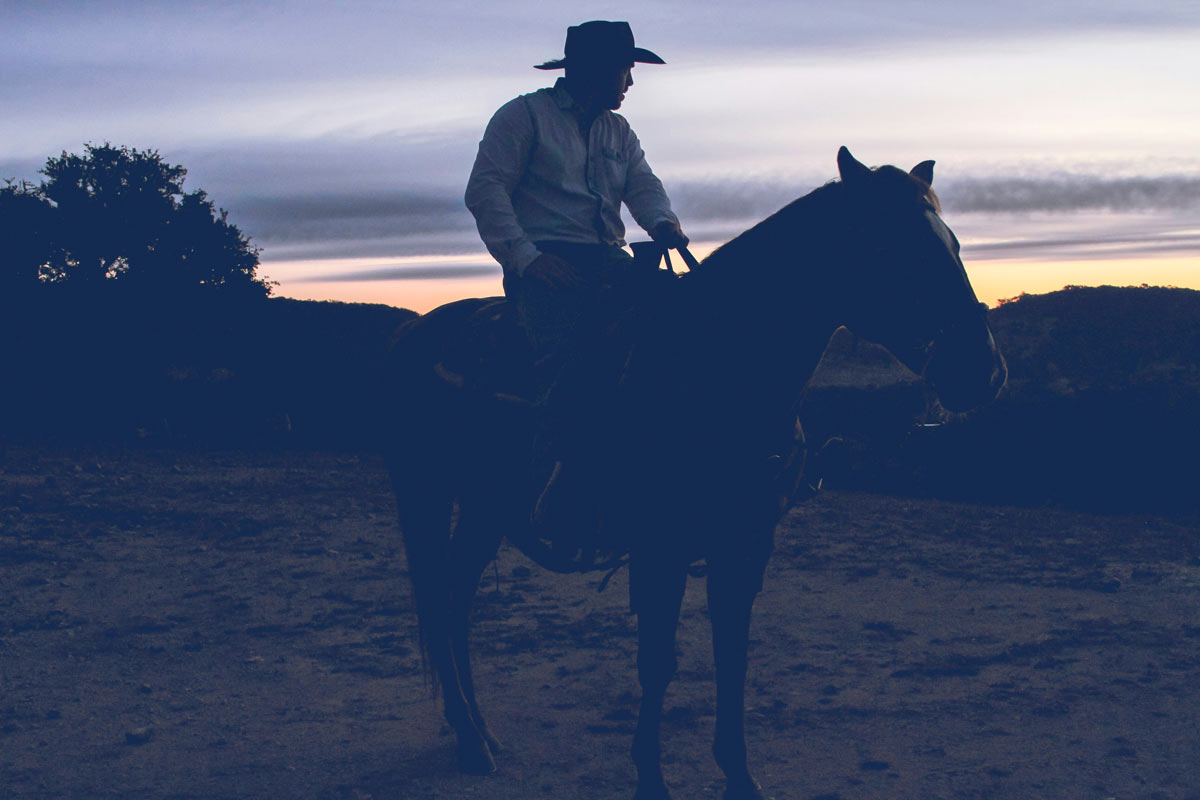
Early settlers in Texas and Native American groups often came into conflict with one another on the plains. Sometimes, their conflict was in relation to cattle theft. While Native Americans were more likely to steal horses, if their food supply was low, they were known to butcher beef, dairy cows, and oxen. Other times, they stole cattle to right wrongs or push white settlers from their hunting grounds. They were also known to start stampedes and kill cattle if they could not move them.
In the novel, fears of raids, ambushes, and attacks during cattle drives by Native Americans are common. It becomes a reality later in the novel when the Hat Creek outfit is in Wyoming, and their horses are stolen by half-starved Indians. Call, Gus, and Deets pursue them; however, Deets is killed by the last remaining Comanche brave. Gus and Pea Eye are later attacked by Kainai (Blood) warriors after the cattle drive arrives in Montana, an encounter that leads to Gus’ eventual death.
Blue Duck is an Indigenous man known by Gus and Call as a Comanchero. He is an antagonistic force in the novel responsible for raids, murders, rapes, and kidnappings. Blue Duck was a real Native American, but this was purely coincidental, and the similarities between the two end there. Blue Duck is in the novel as particularly violent and merciless.
The 1870s did see desperate and sometimes violent actions from Indigenous groups due to survival pressures, and intensified by the encroachment of white settlers, whom tribes viewed as invaders into their territory and hunting grounds. However, frontier violence was reciprocal, with settlers also committing violent acts against Native American groups. Blue Duck is more of a sensationalized stereotype, creating an antagonist that aligns with the fears of White settlers.
Diversity Within Cowboys
Despite conflicts between early settlers with Mexicans and Native Americans, there was a lot of ethnic diversity on the cattle frontier, with many cowboys of Black, Mexican, or Native American descent. Joshua Deets, an African-American former Texas Ranger and ranch hand at the Hat Creek Cattle Company, was inspired by Bose Ikard, a friend of Charles Goodnight who accompanied Goodnight and Loving on their 1866 trip to Colorado. While Ikard and Deets both worked as trackers and cowboys for their respective duos, Ikard died of natural causes in Texas, unlike Deets in the novel. However, Call carved an epitaph for Deets, similar to the one Goodnight carved for Ikard after his death.
While not based on any real-life individual, Bolivar, a former Mexican bandit, works as a cook for the Hat Creek Cattle Company. This is reflected in real-life, as before White settlers were prevalent across Texas, Spanish and Mexican ranchers brought generations of expertise and techniques in roping, riding, and handling livestock, which American ranchers and cowboys later adopted. While Bolivar is valued, Mexican workers in Texas sometimes faced discrimination and exploitation, specifically following the Texas Revolution and Mexican-American War. While Bolivar is not explicitly discriminated against, insight into Gus’ point of view early in the book suggests that breakfast is too important a meal for a Mexican bandit to be trusted to cook.
Is Lonesome Dove Accurate?
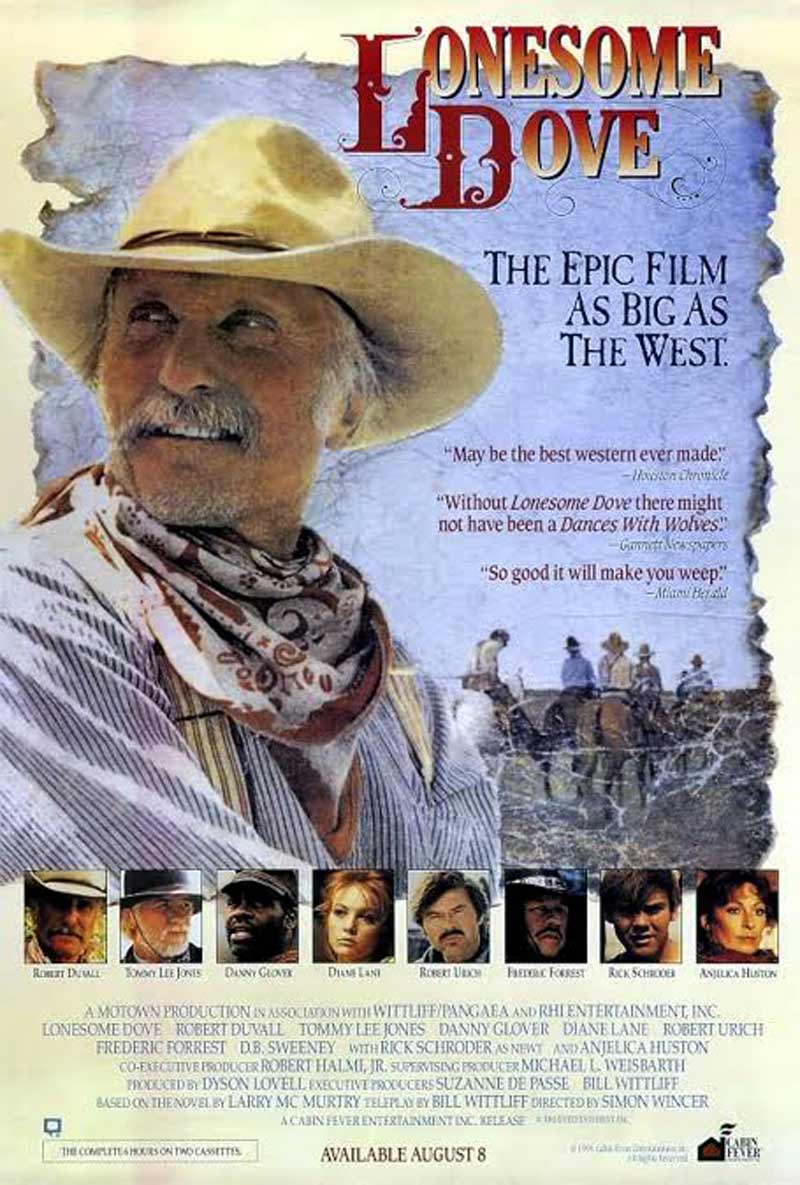
Lonesome Dove is not a strict historical account, but that was never McMurtry’s intention. Gus and Call have remained beloved heroes for many readers by drawing on real figures like Charles Goodnight and Oliver Loving, incorporating the hardships of cattle drives, and reflecting the lawlessness of the post–Civil War West. Lonesome Dove portrays a fictional narrative that closely mimics the real-life hardships that settlers and ranchers experienced. It is not an attempt to romanticize the Old West, but rather to capture the authenticity, to criticize it for the terrible culture and events that took place. As a result, Lonesome Dove stands not only as a classic Western novel but also as a powerful literary interpretation of life on the 19th-century frontier.