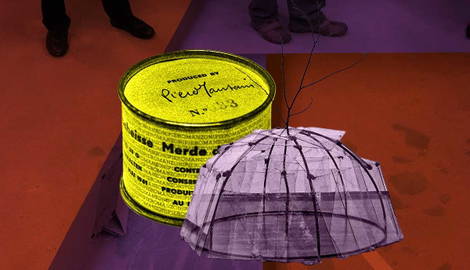

Arte Povera originated in the 1960s in Italy. The term, coined by the art critic Germano Celant, was translated as poor art and referred to the artists’ use of cheap non-artistic materials like metal scraps, rags, foil, earth, or wood. Arte Povera was a protest against the increasingly commodifying art sphere, as artists created works that fell out of the category of high-price elitist art. Read on to get familiar with six important works of the Arte Povera movement.
1. Arte Povera’s Iconic “Venus of the Rags” by Michelangelo Pistoletto
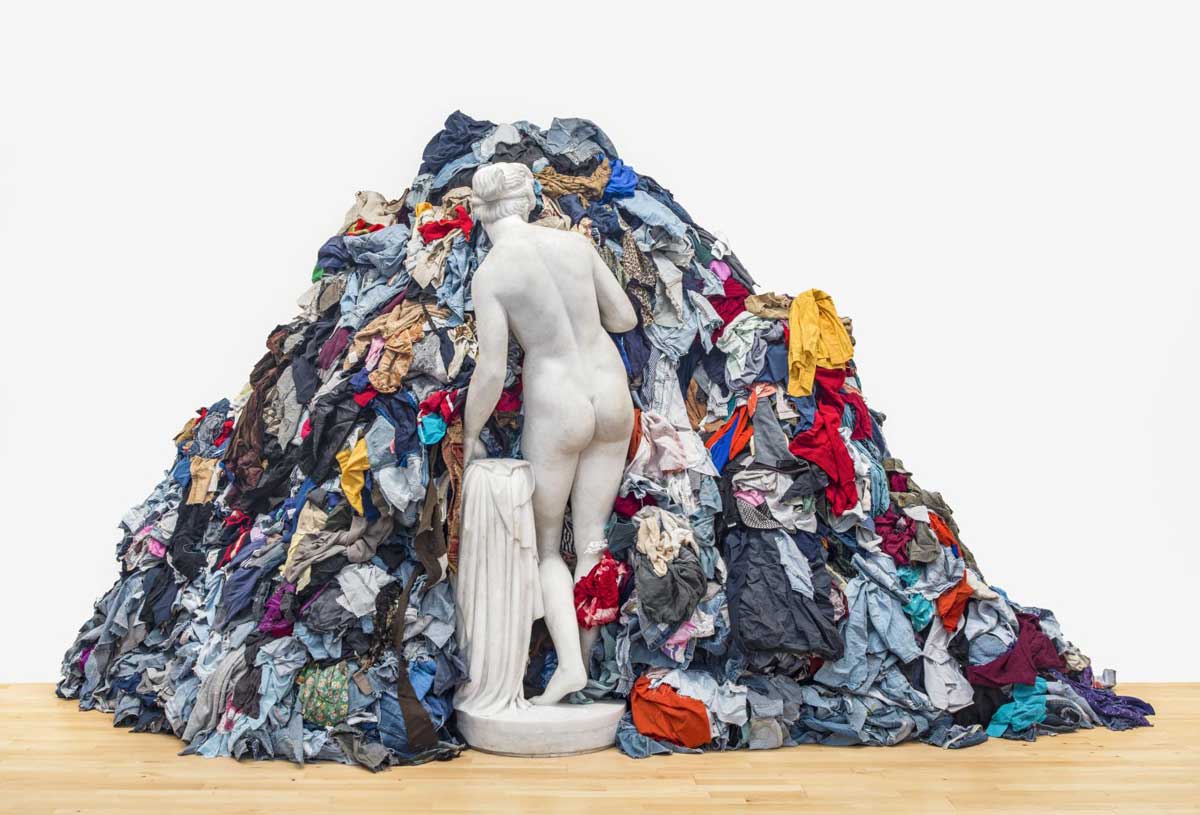
Michelangelo Pistoletto was perhaps the most popular of all Arte Povera artists. His Venus of the Rags became emblematic of the entire movement. Contrast was the main expressive method of the Arte Povera artists—the contrast of high and low, of outstanding and mundane, as well as highbrow gallery spaces and cheap materials found in trash or taken directly from nature. The visitor, confronted by piles of wood, scraps of metal, and live horses within the gallery space, stands astonished, almost identical to Pistoletto’s Venus, facing a stack of cheap rags.
Pistoletto’s sculpture featured a pile of cheap clothing items discarded in a corner. The unique sculpture of the goddess of beauty, Venus, is almost lost in it, standing with her back to the viewer. Pistoletto’s sculptures show how strange high art looks when it encounters the objective reality of the world outside art markets and collectors’ parties. Pistoletto reacted to the wave of student protests of the late 1960s and created work that commented upon destructive capitalism and elitism of the art world. Today, this sculpture has gained a new meaning: the fast fashion industry is one of the biggest polluting forces today, not just threatening our existence but also causing a detrimental impact on the climate.
2. “To Invent of The Spot (12 Live Horses)” by Jannis Kounellis
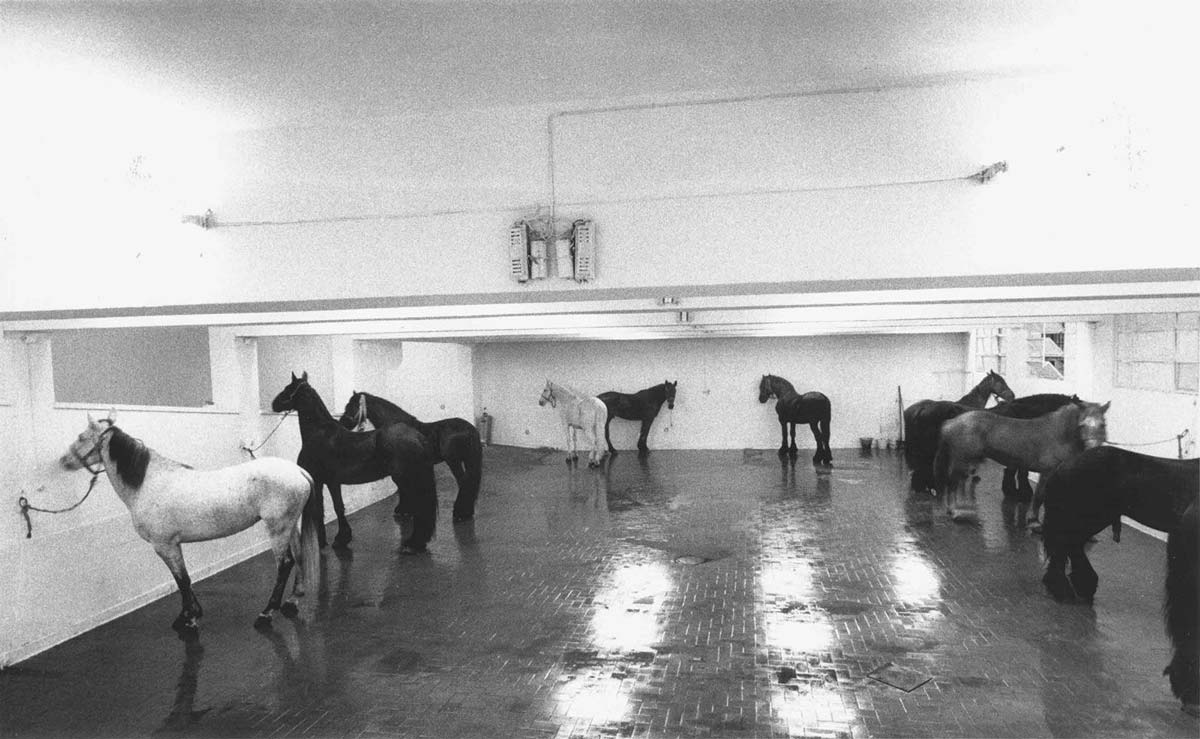
In 1969, a Greek-Italian artist called Jannis Kounellis brought 12 live horses into the prestigious Galleria L’Attico in Rome. The animals calmly chewed on hay and occasionally gently explored the gallery space. Still, their quiet presence turned into a disruptive force of nature that turned the snobbish gallery space into something alive and functional. Some saw Kounellis’ piece as a celebration of pre-industrial techniques and the joyful superiority of natural experiences over urban ways of life. Indeed, the living and breathing horses seemed much more pleasant than the sterile exhibition space on its own.
In the years that followed, Jannis Kounellis repeated this performance several times. He considered its fleeting nature one of the most important aspects of the work. Unlike a painting or a sculpture that could be hung in place, sold, or passed from owner to owner, the presence of horses in time and space could not be replicated or captured. Each iteration of the performance was slightly different due to the animals’ natural behaviors. Kounellis’ animal performances thus were powerful anticapitalist actions focused on organic and genuine experiences of reality.
3. “Merda d’artista” by Piero Manzoni
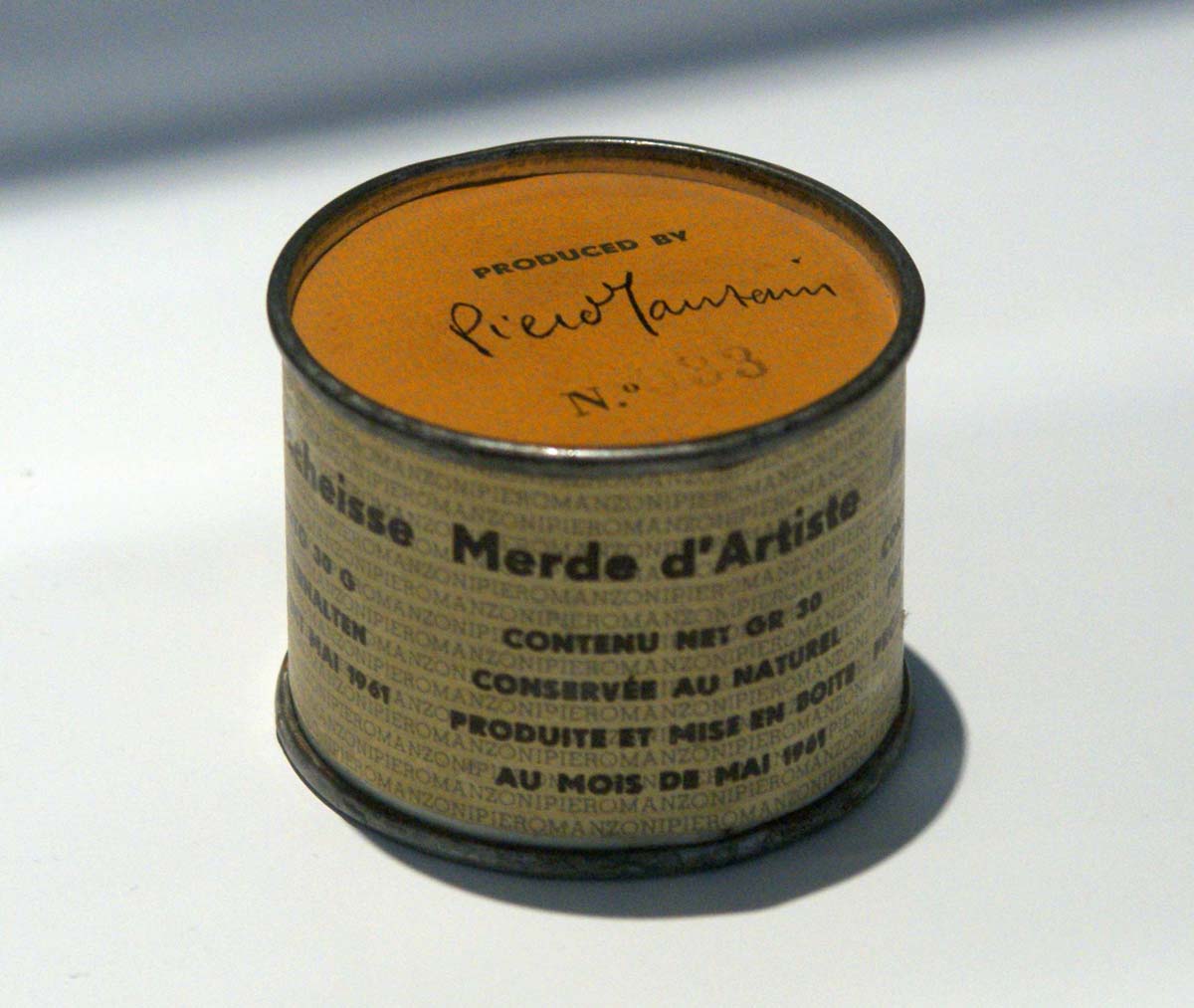
One of the most provocative and scandalous gestures in the history of contemporary art was made in 1961 by Piero Manzoni. Manzoni died before he could participate in Arte Povera as a coherent movement, yet his works perfectly corresponded to the spirit and the goals of the movement.
In 1961, Manzoni presented 90 sealed tin cans, each one of them supposedly containing 30 grams of human feces. The labels on cans stated the title of the work and the date of its creation. Despite a rather repulsive concept, the works successfully and fairly expressed Manzoni’s disdain for the art market and the celebrity status of artists who stood in the way of creating quality art. Artists themselves turn into commodities, fetishized into prestigious pieces someone could own. Collectors rushed to get the most intimate and personal expression of an artist’s activity, so Piero Manzoni gave them exactly that.
Curiously, we still don’t know if the contents of these cans correspond to Manzoni’s claims, as any attempt to learn the truth ultimately leads to the work’s destruction. Even if someone mastered the courage to dismantle the work, it would hardly bring them any satisfaction. If someone broke into a sealed can with such a label to find exactly what the label stated, the situation would only turn even more absurd, unpleasant, and devoid of any exploratory excitement.
4. “Untitled (Eating Structure)” by Giovanni Anselmo
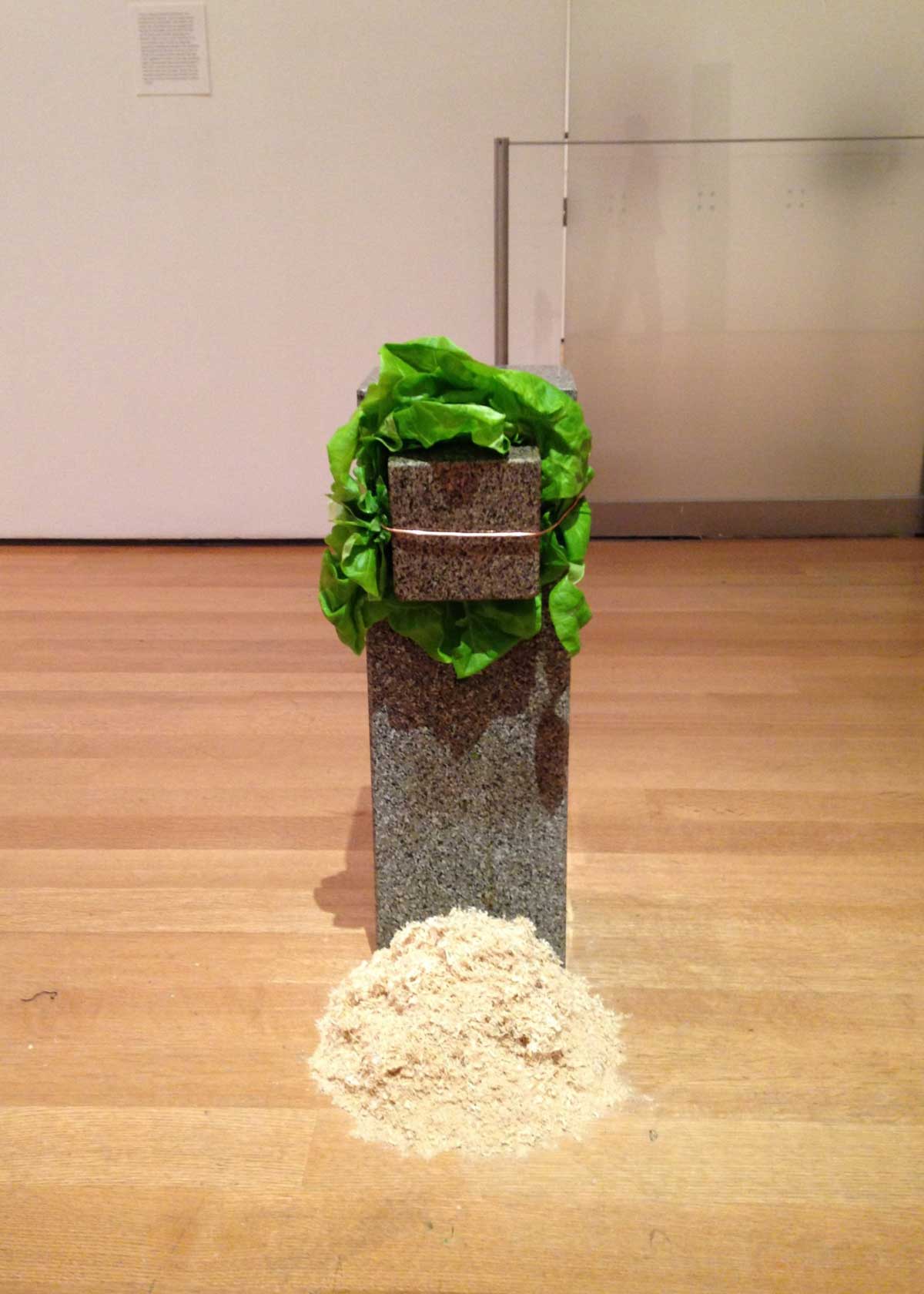
The contrast of materials and their interrelation played a surprising role in the work of Giovanni Anselmo. Anselmo juxtaposed organic and inorganic, light and heavy, eternal and short-lived. His most significant piece was the sculpture Eating Structure. Anselmo took two blocks of polished granite and loosely tied them with a copper wire. To fix the blocks, he placed fresh lettuce between them to add volume and tighten the wire. Over time, the water evaporating from lettuce caused it to fall apart. Thus, without the force holding the wire, the entire structure fell apart. To maintain the structure’s integrity, someone had to pay attention to the work and replace the lettuce. Alselmo’s work explored the ideas of replenishment and maintenance, as well as the care and attention required to balance any structure, be it a physical sculpture or an intangible feeling or relationship.
In one of his later interviews, Anselmo stated that initially, he used a piece of meat for the work to make the contrast between the living object and the stone even sharper. However, he soon changed his mind upon learning more about the global problem of hunger and the scarcity of food in certain parts of the world. Lettuce, in this case, was an easily renewable material that wasted significantly fewer resources and did not evoke associations with death and decay.
5. “Igloo with Tree” by Mario Merz
Many artists of various movements throughout history glorified utopian hi-tech futures or created images of idealized scenes, conditions, or events. Instead of continuing the cycle of creative daydreaming, Arte Povera artists grounded themselves in the present. For this reason, they relied on simple, readily available materials. Transformed into works of art, these materials received a chance to be appreciated anew.
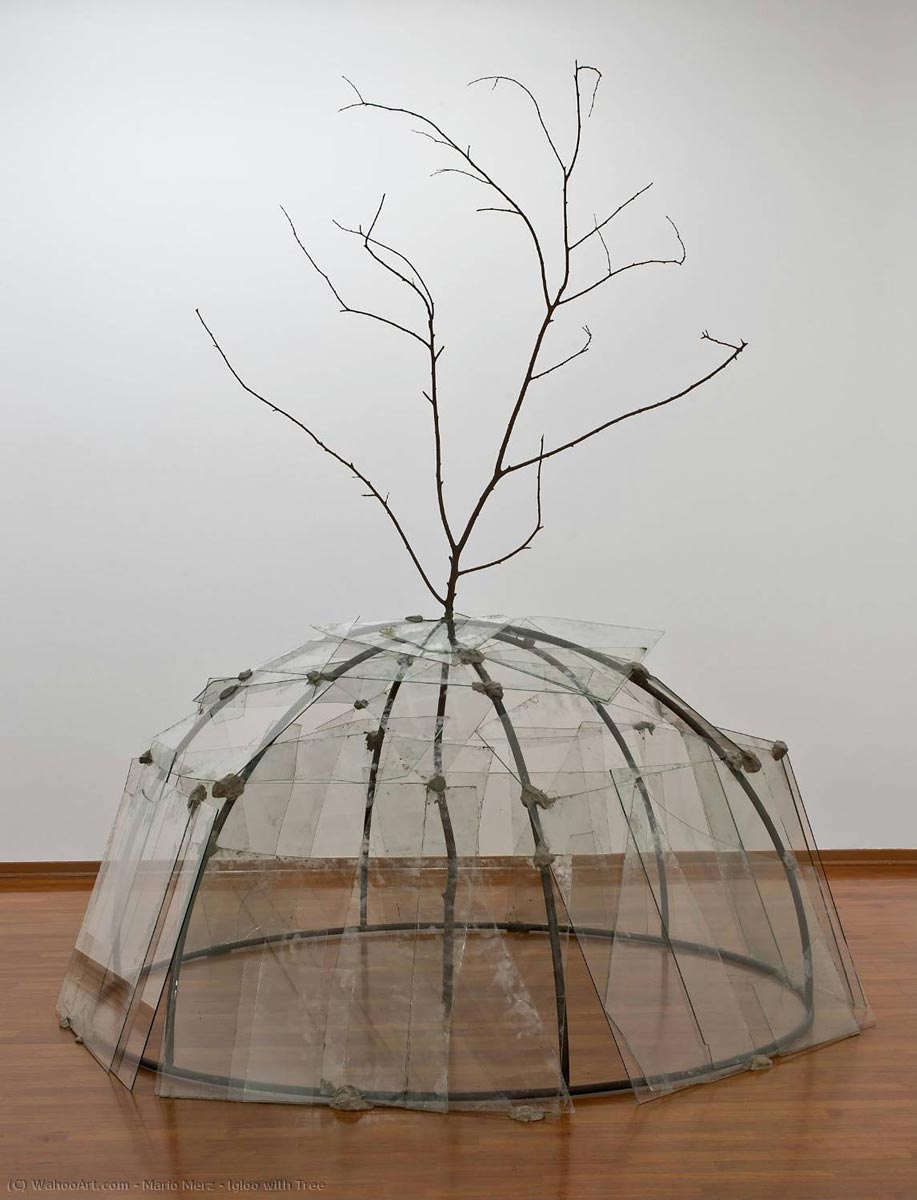
In the 1940s, Mario Merz was a medical student at the University of Turin and a secret member of an anti-fascist organization. In 1945, he was arrested and imprisoned, and during his months in jail, he started to channel his stress into drawing. After being released, he chose to make art his full-time profession. The dominant motif in Merz’s art was the igloo—a shelter usually built from snow that protects people from cold, even in the most hostile parts of Canada and Greenland. The igloo is a symbol of home as a concept, as well as the safety and warmth it provides. The hemisphere form is also universal for many cultures and climates.
During his long artistic career, Mario Merz designed dozens of igloos from different materials. One of the most famous was a clear glass dome with a tree that grew right through it, not breaking the glass but becoming part of it. The structure was deliberately crude, as if assembled by hands in need of shelter. Merz’s igloos were manifestations of human resilience and determination to survive, the celebration of unbreakable spirit and our desire to make a home out of any place, however dangerous, hostile, and unforgiving it might be.
6. “Imprint” by Luciano Fabro: Destruction as an Arte Povera Statement
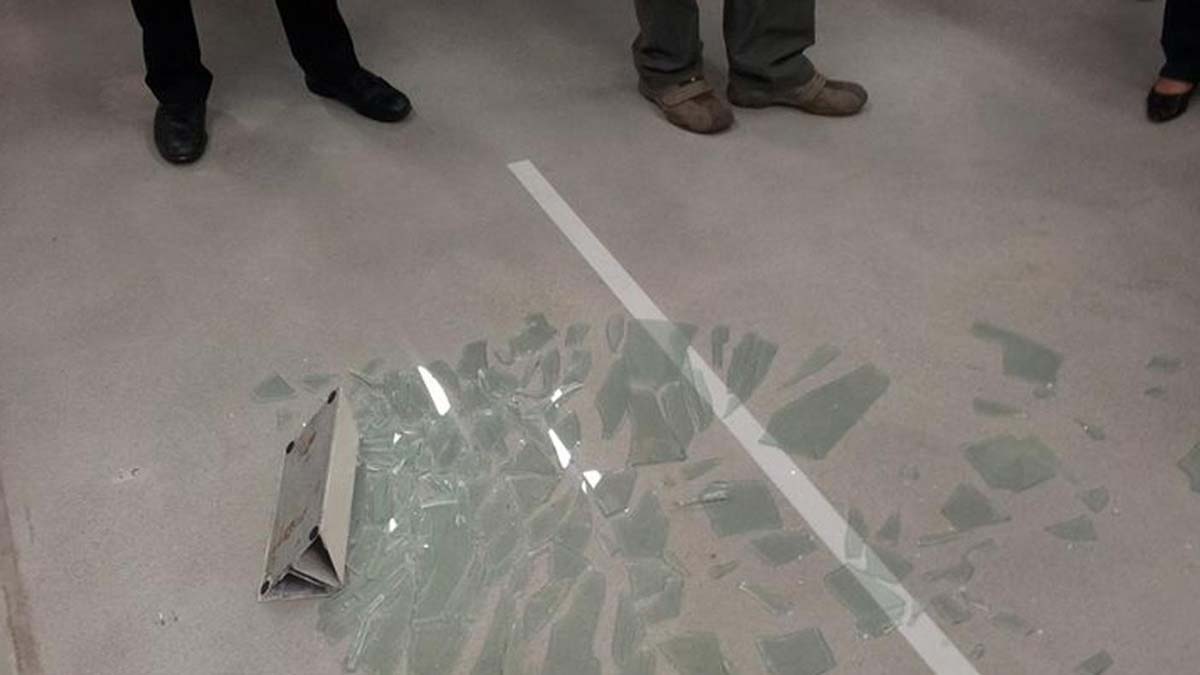
Luciano Fabro was one of the most prominent Arte Povera artists who worked extensively with glass. One of his most celebrated works was the opaque-glass circle with a footprint at the center, titled Imprint. The footprint strangely resembled the vision of a planet from space and, according to Fabro, celebrated the longevity of the Earth and our connection to it.
The work itself would not be as significant if it were not for its untimely and absurd demise. In 2013, during an exhibition opening in a Turin art gallery, an unnamed journalist representing Radio Switzerland reached to grab some canapés from a plate and knocked the sculpture, shattering it into countless pieces. Ironically, this event added an extra layer of commentary to Fabro’s idea of the Earth’s longevity and the Arte Povera artists’ concerns about the art world and media acting as destructive forces rather than promoters of art.