
The issues concerning gender and its boundaries were important preoccupations of many modern artists. Interested in the difference in external perception of men and women, as well as the limitations of such distinction, they adopted attributes commonly associated with the opposite gender into their works to deconstruct it. Read on to learn more about the art of drag and seven famous artists who manipulated gender markers in their art.
1. Marcel Duchamp’s Art of Drag: Rrose Sélavy
For the forerunner of conceptual art Marcel Duchamp, the dichotomy and relation of masculine and feminine was always a source of symbolic and philosophical musing. Even his mechanical installations like The Large Glass reflected upon the social and sexual rituals between genders.
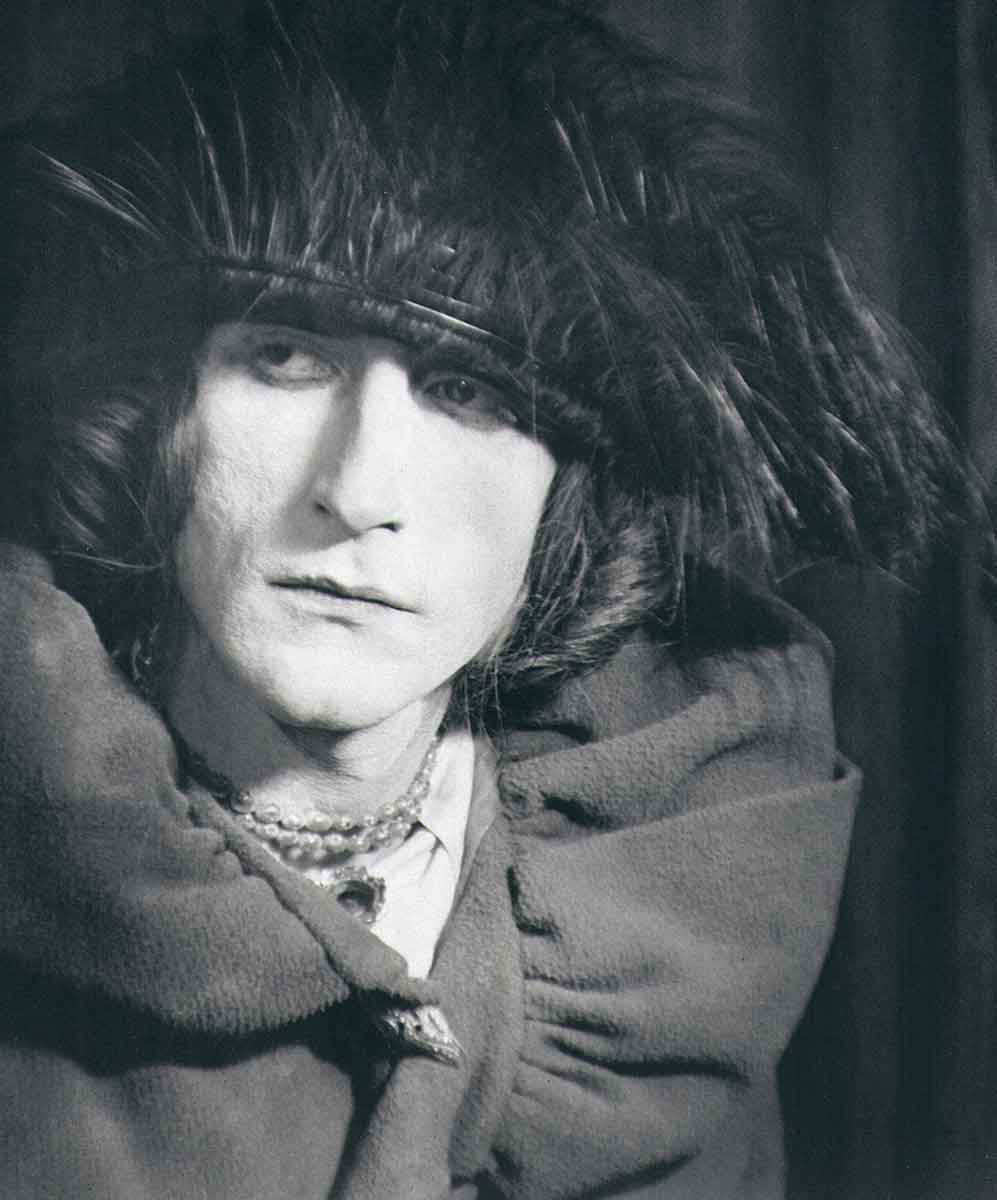
In 1920, Duchamp revealed his feminine alter ego, Rrose Sélavy. Initially, Duchamp wanted to invent a character that was a radical opposite to him and thought of creating a Jewish persona to oppose his Catholic identity. However, he realized that a person of another gender would cause a much more radical effect. When read out loud, the name turned into a pun translated from French as “eros is life.”
Rrose represented a more sensual part of Duchamp’s character and was the personification of his art, blending intellect and vulgarity. Like many artists of his time, Duchamp was interested in the concept of creative androgyny and believed that the ideal artist should embrace both male and female traits of their character and ways of thinking. With the help of his friend Man Ray, Duchamp transformed himself into Rrose inside a photographic studio. Despite the use of feminine attributes such as makeup or jewelry, in the case of Duchamp, Rrose was not a woman’s costume but rather a way of authentic self-presentation and definition.
2. Barbette, the Forgotten Surrealist Icon
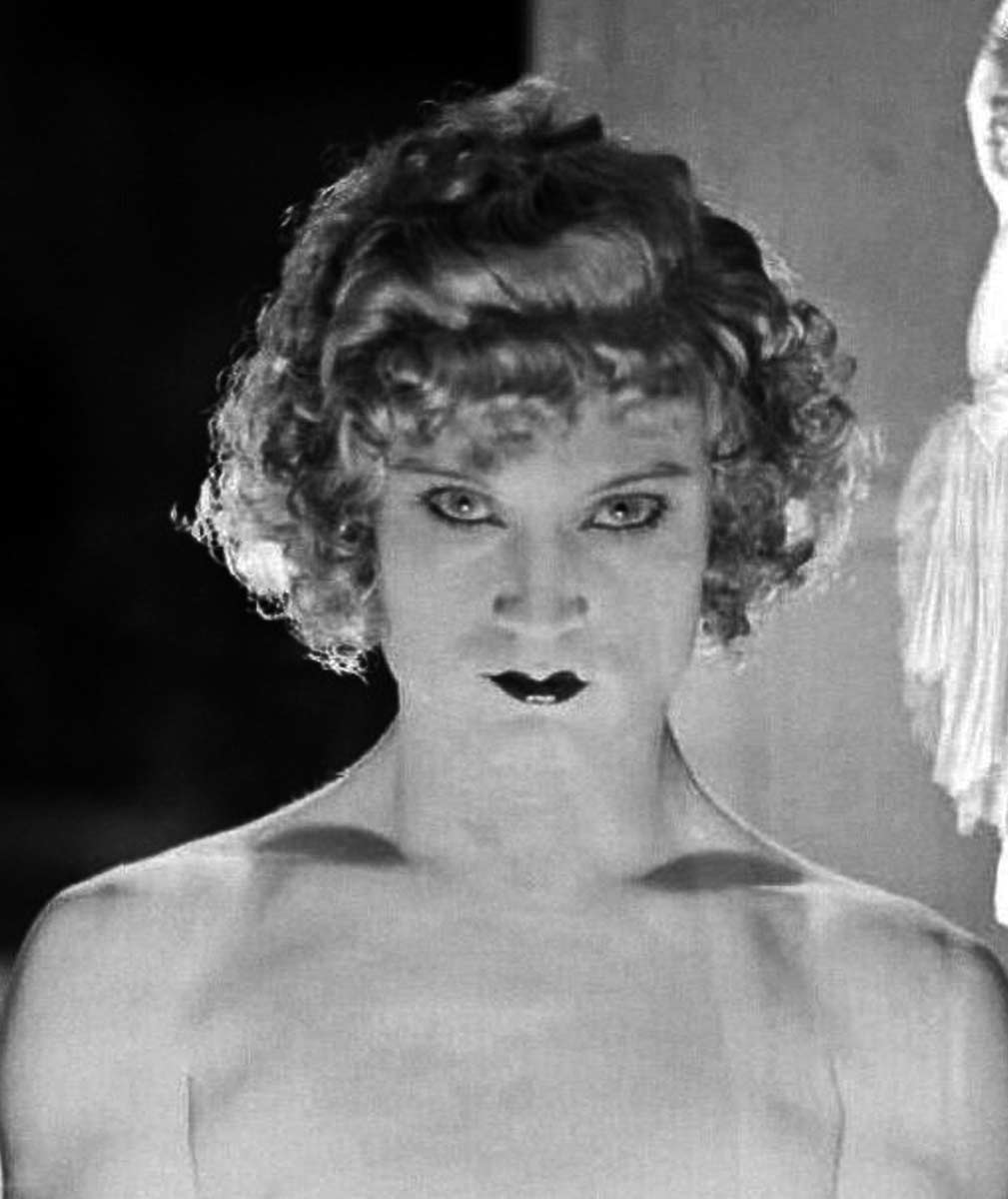
The aerial performer Barbette is largely forgotten today, yet he was an important figure in the Surrealist movement despite not creating visual art himself. His real name was Vander Clyde, and he was an American trapeze artist, usually labeled as a female impersonator. He appeared on stage as Barbette, wearing ostrich feathers and wigs, fascinating the audience with his acts. Jean Cocteau and Man Ray frequently attended Barbette’s European performances. Cocteau described that at the end of each performance, Barbette took off his wig to reveal a bald head, but instead of revealing his actual gender, he continued to perform the part of a man. From gentle and elegant “feminine” gestures, he transformed into a heavy and somewhat clumsy male athlete, awkwardly shuffling away from the stage.
During his performances, Barbette seamlessly moved between male and female personas, making the audience doubt his real identity. At the same time, his artistic skill and movement made him seem almost non-human. In his way of subverting and challenging gender boundaries through his performative actions, Barbette could be defined as one of the first performance artists. According to Vander Clyde himself, he initially found inspiration in the tradition of Shakespearean theater, where female characters were played by men. Barbette was much more than a circus performer in drag: he was an artist who confronted the public’s expectations of gender and dismantled them, not through aggressive attack, but through pure admiration of beauty.
3. Romaine Brooks
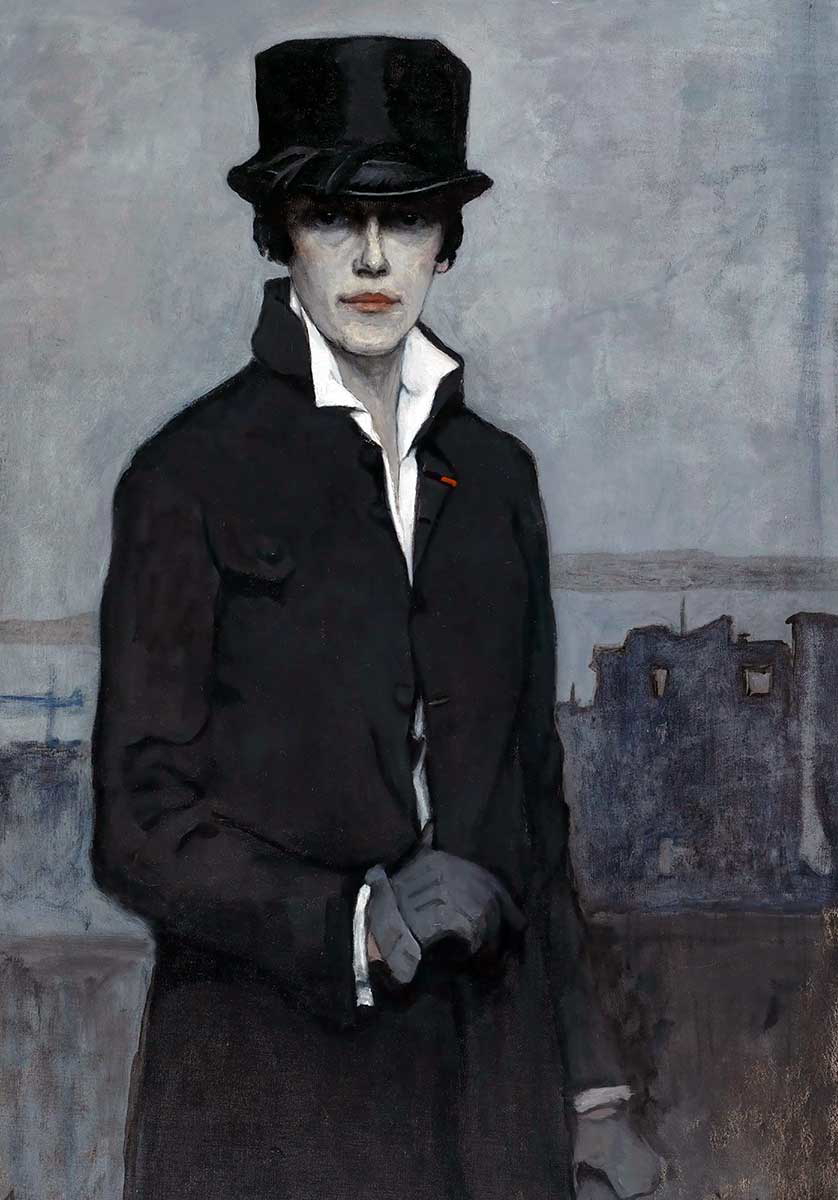
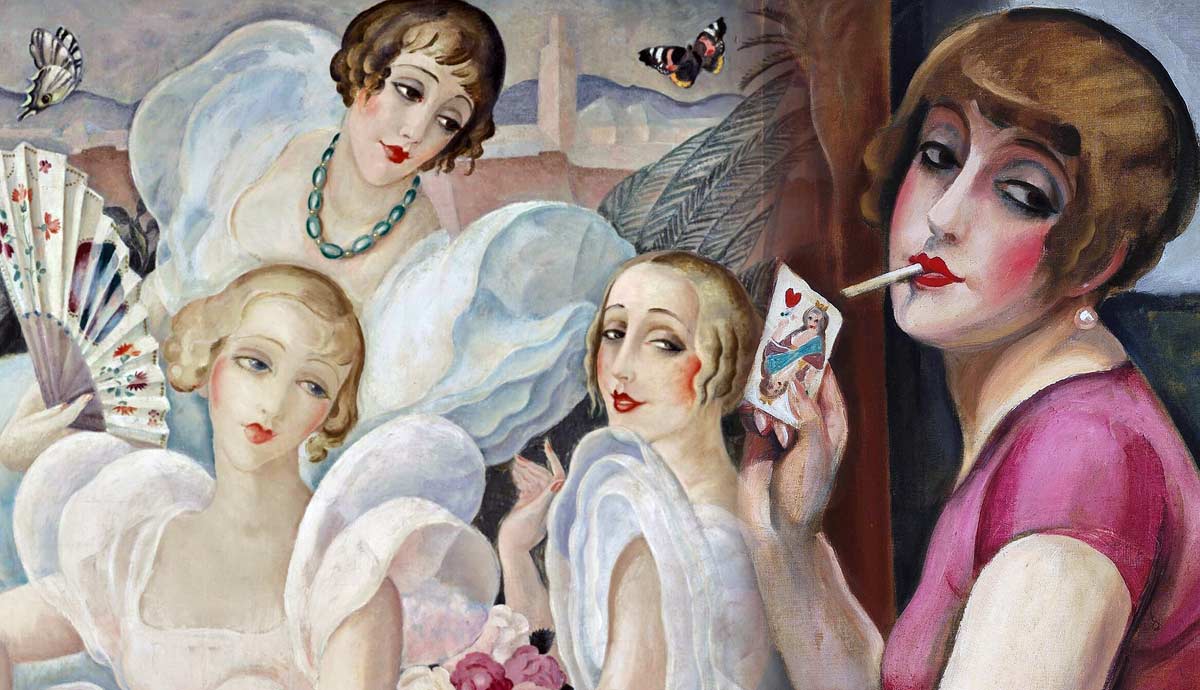
Romaine Brooks was one of the brightest artists who represented the Parisian queer community of the first half of the 20th century. She arrived in France as an American expat and built her oeuvre mostly by painting portraits of queer women from her social circle. Thus, issues of gender and sexuality were crucial for the conceptual landscape she worked in. The notion of queer identity, as well as the idea of separating sexuality from gender, was only emerging at the time. Many of Brooks’ painted characters illustrated the gendered dilemmas of the time.
Brooks herself wore short hair and tailored suits but never regarded them as male attributes. Rather, she argued for the actual comfort of these attributes. Moreover, they visually separated her from the normative expectations of femininity, acting as markers of belonging to another group. Brooks was rather critical of the over-masculinization of queer women and reflected it in a caricature portrait of her friend Una Troubridge who, in Brooks’ opinion, came too close to imitating a man.
4. Claude Cahun
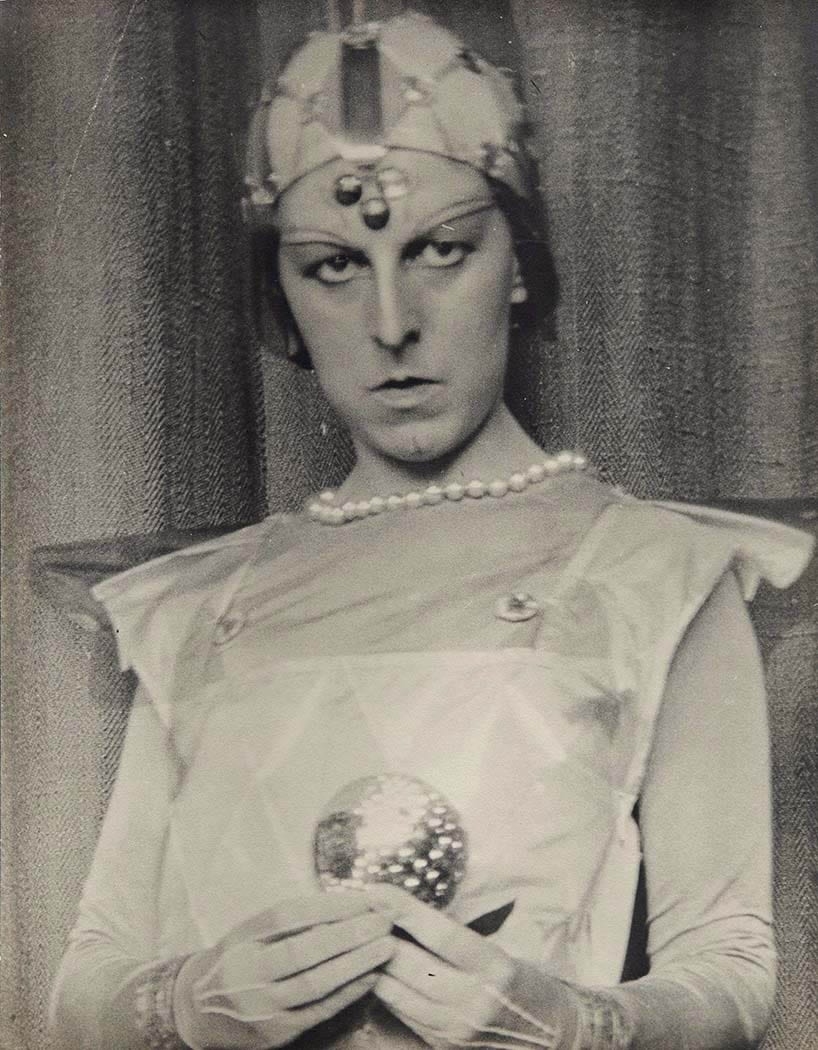
French Surrealist Claude Cahun mostly worked outside of well-known art groups and collectives despite being friends with Andre Breton and some other artists from his circle. Cahun’s most important works were created in collaboration with their partner, Marcel Moore, and were mostly intended for personal use rather than for public display. Cahun’s own relationship with gender was complex and frequently stood outside of traditional binary dynamics. They say that “neutral” was the only gender that suited them permanently.
Together with Moore, Cahun created a series of images that recorded their transformation from woman to man to androgynous being. In these images, gender markers were often confusing and did not give a definitive answer. For Cahun as a queer person living in Nazi-occupied Jersey, experiments with gender presentation could have also been acts of protest and resistance against conservative and oppressive values.
5. Cindy Sherman
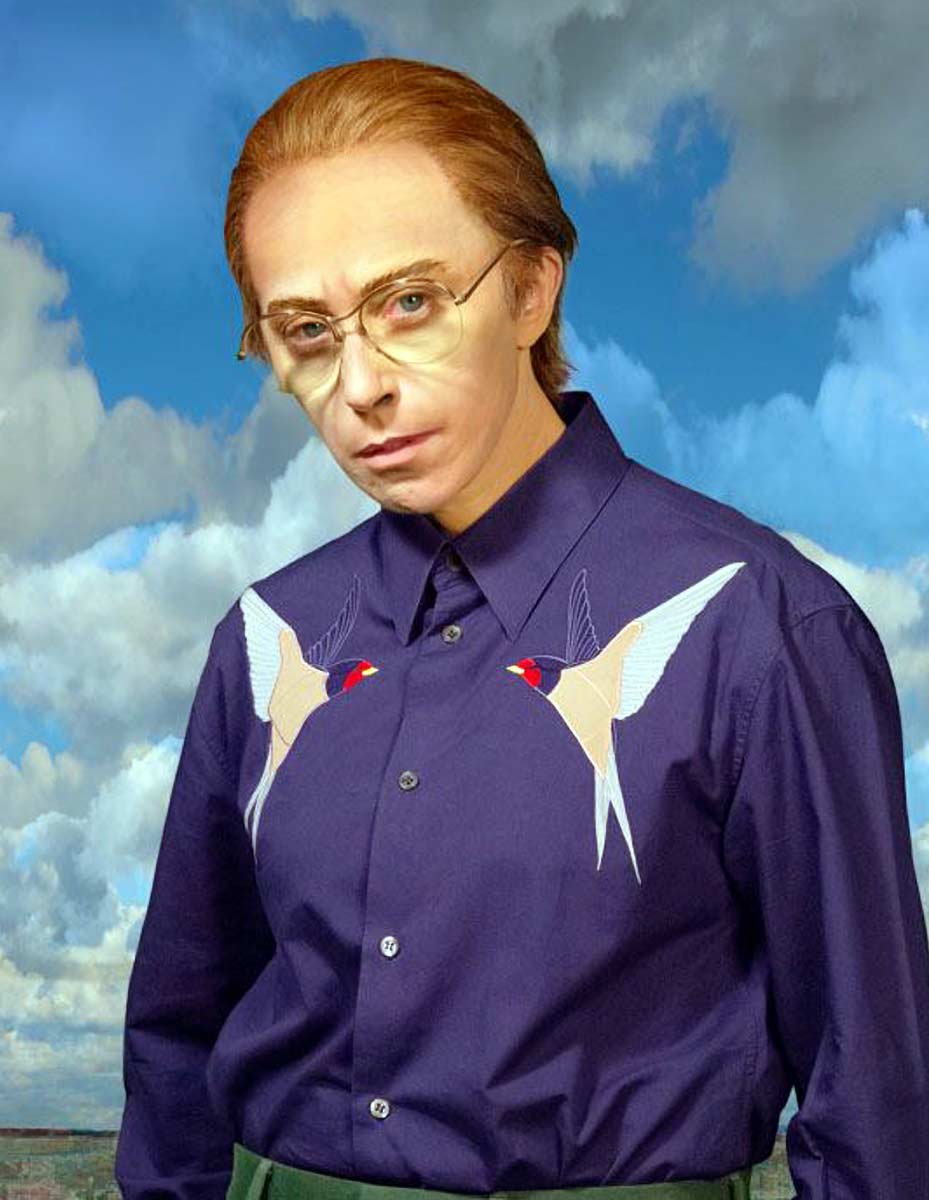
For Cindy Sherman, transformation is the main artistic technique. Using makeup, costume, and special effects, she explores various pop cultural and artistic characters, studying the markers of class, gender, and cultural relevance. One of the most famous early series features Sherman transforming into a collection of cinematic feminine archetypes. Although she was not attached to particular films or stories, these characters were nonetheless easily identifiable.
Later, she began experimenting with masculine and androgynous portraits as well. When Sherman poses or performs as a man, she deconstructs masculinity and gender boundaries instead of affirming them. Instead of viewing gender as a fixed category, she shows how we perform it and how easily it can be replicated. With the right clothes, makeup, and light, as well as a little bit of acting, the illusion of stable gender presentation reveals itself to the public, who recognize their own cherished attributes in it.
6. Andy Warhol
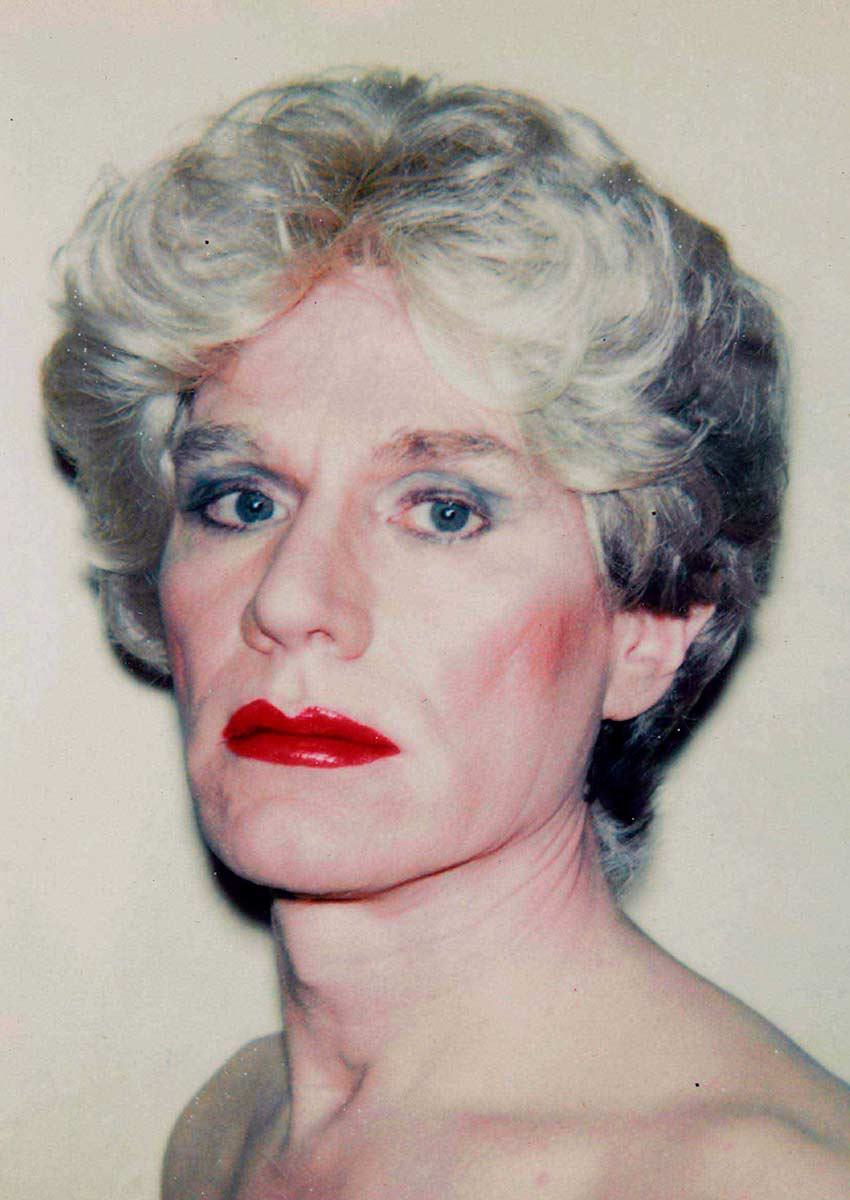
Andy Warhol’s social circle included drag performers who transformed onstage. By watching them, Warhol became interested in the idea of artifice and the construction of one’s external perception. In the 1980s, Warhol posed for a series of images wearing makeup and a wig. Instead of trying to appear conventionally feminine, he simply posed as an outer shell of a generic pop cultural character. Warhol tried on many identities, never actually intending to perform them. Rather, he explored visual attributes and the superficiality of culture.
For Warhol, drag queens represented “the way women used to be, and the way some people still want them to be.” Warhol himself was a gay man who existed somewhere in between traditional expressions of identity. His true identity was carefully and safely concealed under the layers of constructed characters, leaving room for manipulating gender and its attributes.
7. Ana Mendieta’s Version of the Art of Drag
For Cuban-born artist Ana Mendieta, femininity was one of the most important aspects of artistic work. She moved from Havana to Iowa as a child, where she received her artistic training at a rather conservative University of Iowa. There, as a woman coming from a non-Western background, she was often misunderstood and dismissed both due to her ethnicity and gender. In her early works, she explored the issues of sexual violence and oppression. She quickly recognized the gendered boundaries in the art world and, for a time, searched for tools to address them.
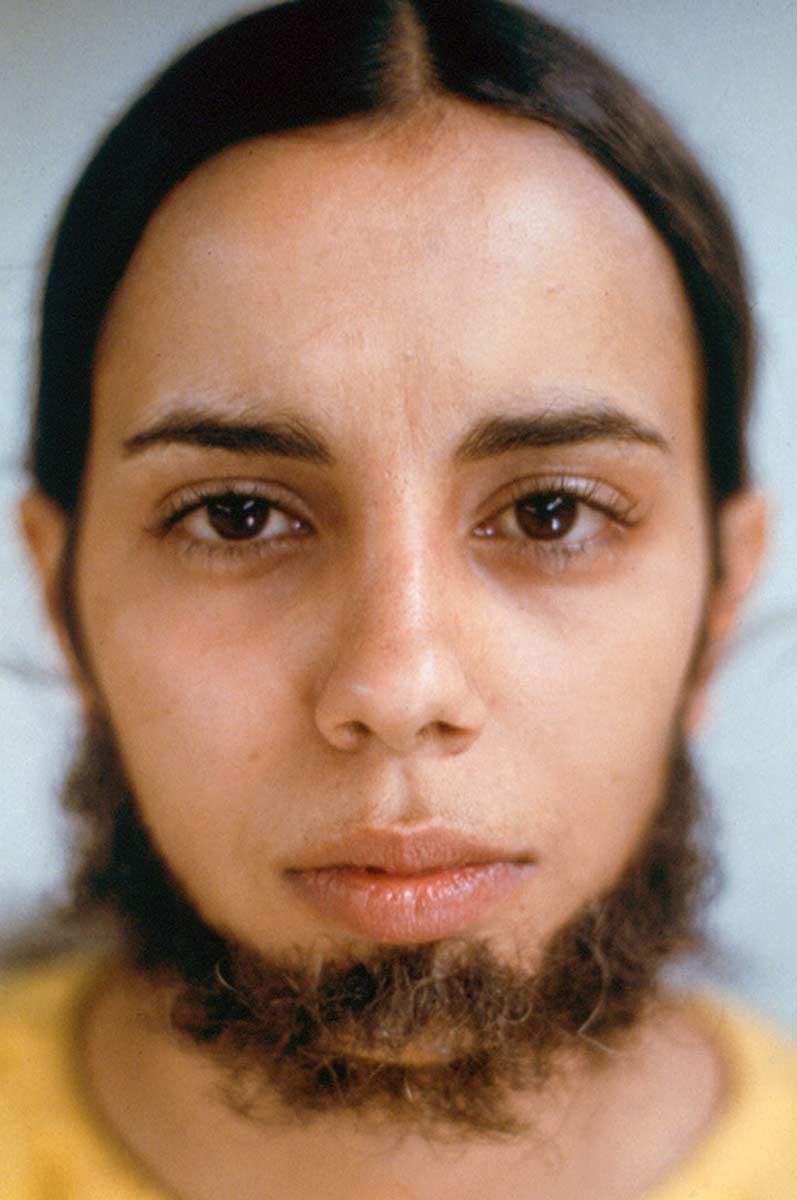
One of Mendieta’s famous early works featured her visual transformation into a male artist. She asked her friend Morty Sklar to shave off his beard and then transferred his hair into her own face, making a “transplant.” In that way, she conceptually transformed herself into a male artist, hinting at the immediate change of aesthetic perception. Mendieta’s strong identification with feminine and feminist values for years acted as a barrier between her and the art world. Her manipulation of gender presentation represents not a desire for transformation but the absurdity of the attributes that form public perception.