
Sigmar Polke’s works were both whimsical and mystical, ironic and politically sharp. He made political statements, provoked conversations, and transgressed the boundaries of contemporary art. For the 1986 Venice Biennale, Sigmar Polke designed a pavilion that changed color in response to weather and human presence. Read on to learn more about 8 important works created by the amazing Sigmar Polke.
1. Sigmar Polke’s Early Works: Chocolate Painting, 1964
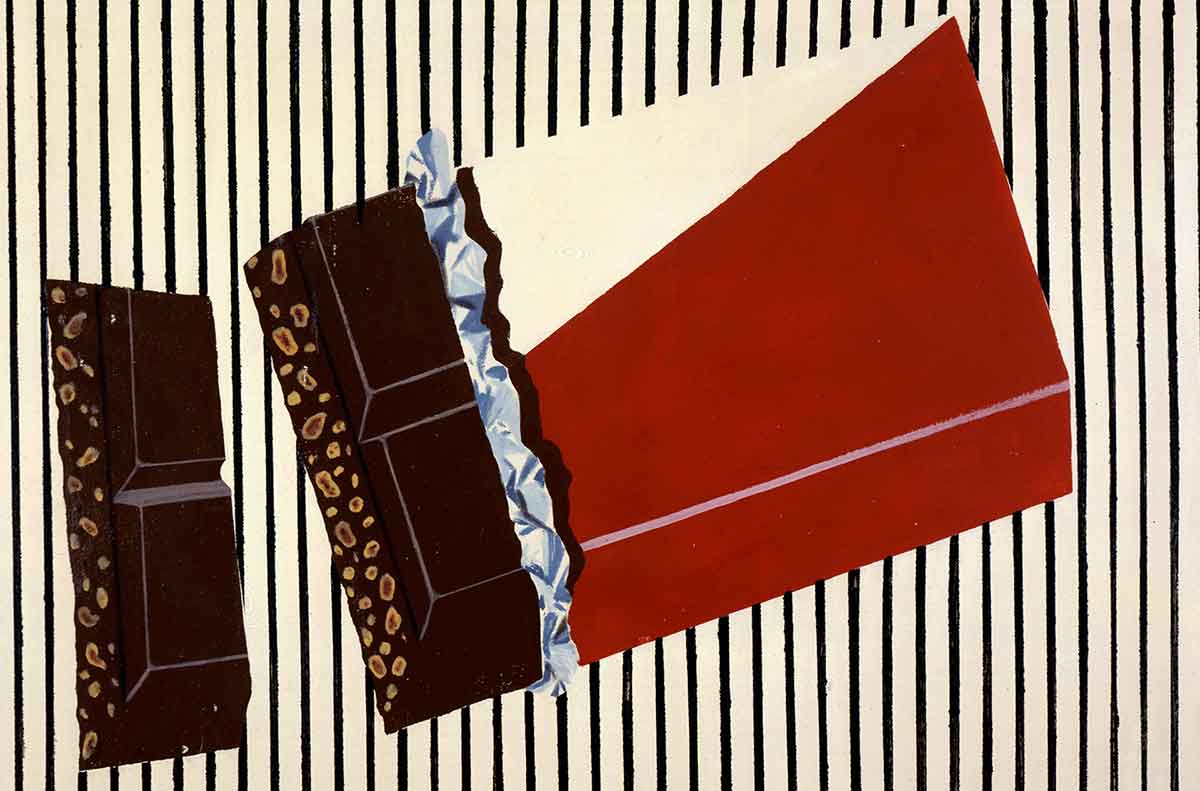
In 1964, while still studying at the Dusseldorf Art Academy, Sigmar Polke started rethinking the cultural and political divide his country faced after the war. As a child, he lived in East Germany before his parents escaped to the West. Disenchanted with both promises of Communism in the East and Capitalism in the West, Polke developed a short-lived art movement he called Capitalist Realism. It relied on contemporary capitalist aesthetics in opposition to Soviet Socialist Realism and was visually similar to Pop Art.
Before Pop Art, food was mostly present in art in the form of raw or homemade products like fruit, meat, or freshly baked bread. As the mode of consumption changed from making the products to simply purchasing them, the imagery of food transformed. Instead of products, customers began to choose between brands and manufacturers. This tendency was reflected in Pop Art paintings that copied popular packages and logos. However, Sigmar Polke’s work, in that sense, was different from others. His food paintings from the 1960s did not feature any particular brands. Rather, the works represented a familiar aesthetic of popular capitalist consumerism that triggered the desire to buy.
2. Bunnies, 1966
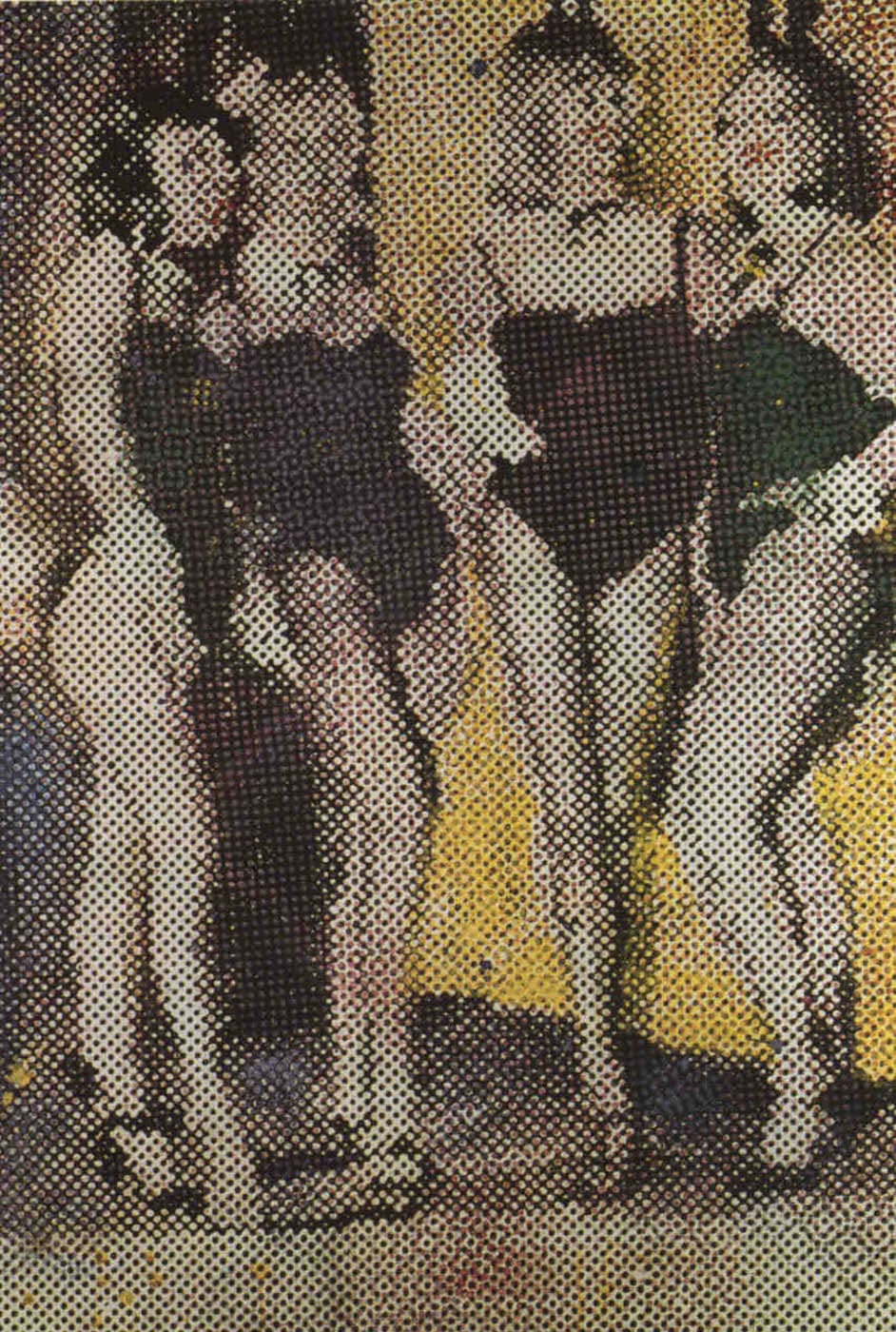
Bunnies was the next step in Polke’s work, where he began to not only explore the popular visual culture but gradually started to transform it into something familiar only to him. He turned a photographic image of models wearing Playboy bunny costumes into an optical illusion composed of many colorful dots. Some of these dots were blurred or overlapped each other, creating an impression of a poorly printed street poster. Polke used tones that corresponded to those used in the commercial printing process yet nonetheless reproduced the image with acrylic paint and brush. His mechanical repetition of dots left the image recognizable but blurry and worn out, as repetitive pop cultural symbols gradually lost their value.
3. Potato House, 1967
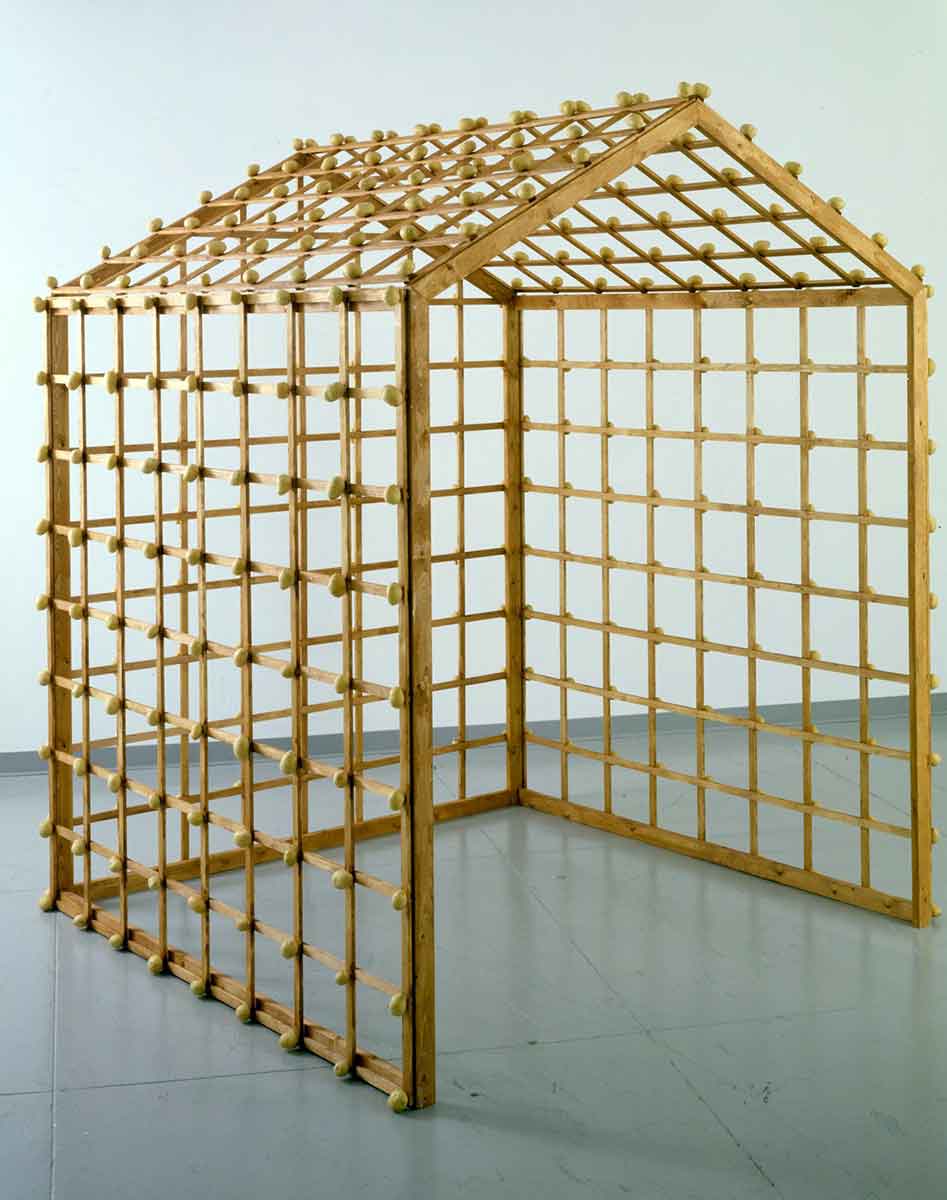
Sigmar Polke rarely worked with sculpture—most of his sculptural works referred to his early experimental periods. In 1967, he created a shelter-like structure from wooden grids. Each block of the grid had a raw potato fixed on it. Some critics saw it as a mockery of the contemporary Minimalist movement, which frequently relied on grids and see-through structures.
Potatoes were the most common food in Germany at the time when post-war scarcity and restrictions were still in place. The existence of Polke’s potato structure had two possible outcomes: either it would sprout and continue its life cycle in a new form, reinforcing and covering the grid structure, or it would succumb to the atmosphere and start rotting. Many art experts compare Potato House to a later work of the Swiss conceptual artist Urs Fischer, who built a small village out of bread. Fischer’s work, however, suggested gradual decay as the only possible option.
4. Telepathic Session II (William Blake – Sigmar Polke), 1968
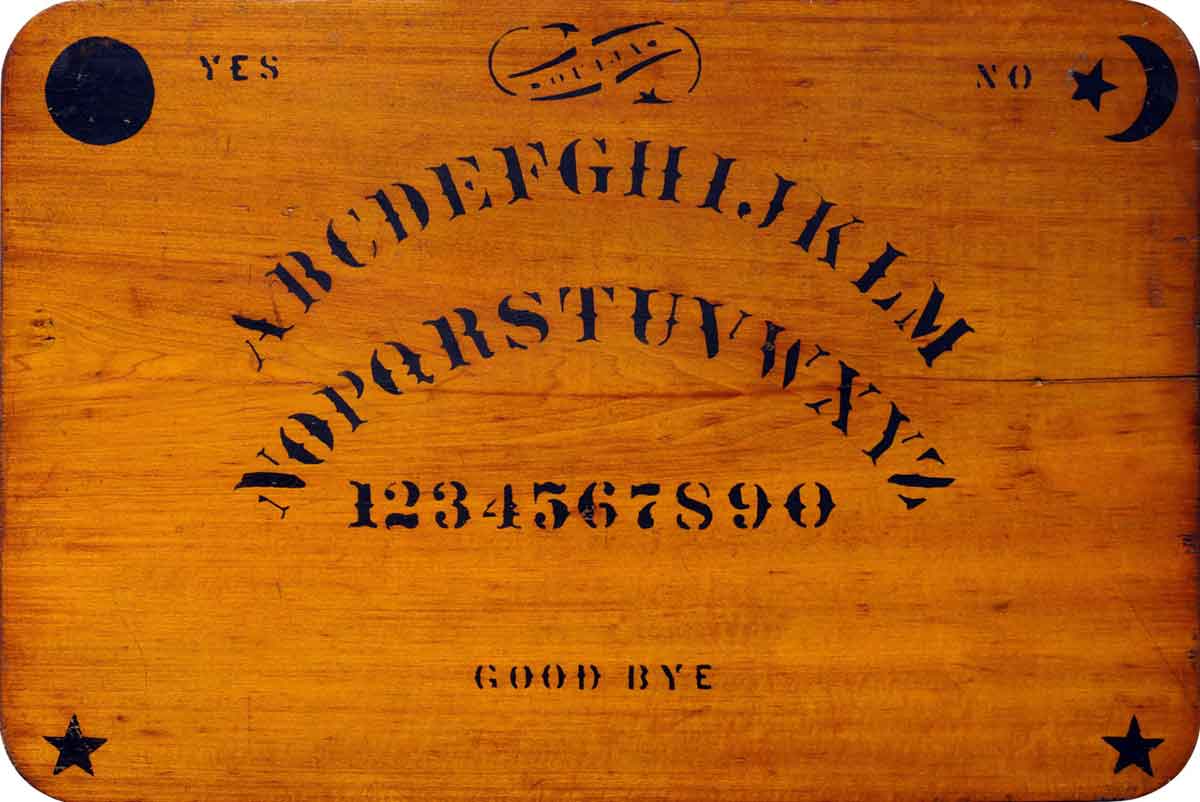
Apart from experimenting with mediums, in the 1960s and 1970s, Polke developed the same approach to substances, taking various drugs and often creating under the influence. Drug-induced states were part of his spiritual and occult explorations. Telepathy was one of the concepts that occupied his mind.
In 1968, Sigmar Polke created a series of works that allegedly represented instruments for telepathic sessions with famous artists of the past. The works consisted of two panels with grids and plugs, which were essentially hybrids of Ouija boards used in spiritual seances and early computers. One such figure Sigmar Polke wanted to connect to was William Blake, legendary English poet, artist, and author of prophetic books. Another similar work supposedly established contact with Max Klinger, a famous Symbolist and Art Nouveau artist. Despite creating cutting-edge contemporary art with materials and techniques unseen before, Polke always highlighted the importance of knowing and remembering one’s roots, both to honor them and to learn from past mistakes.
5. Dr. Bonn, 1978
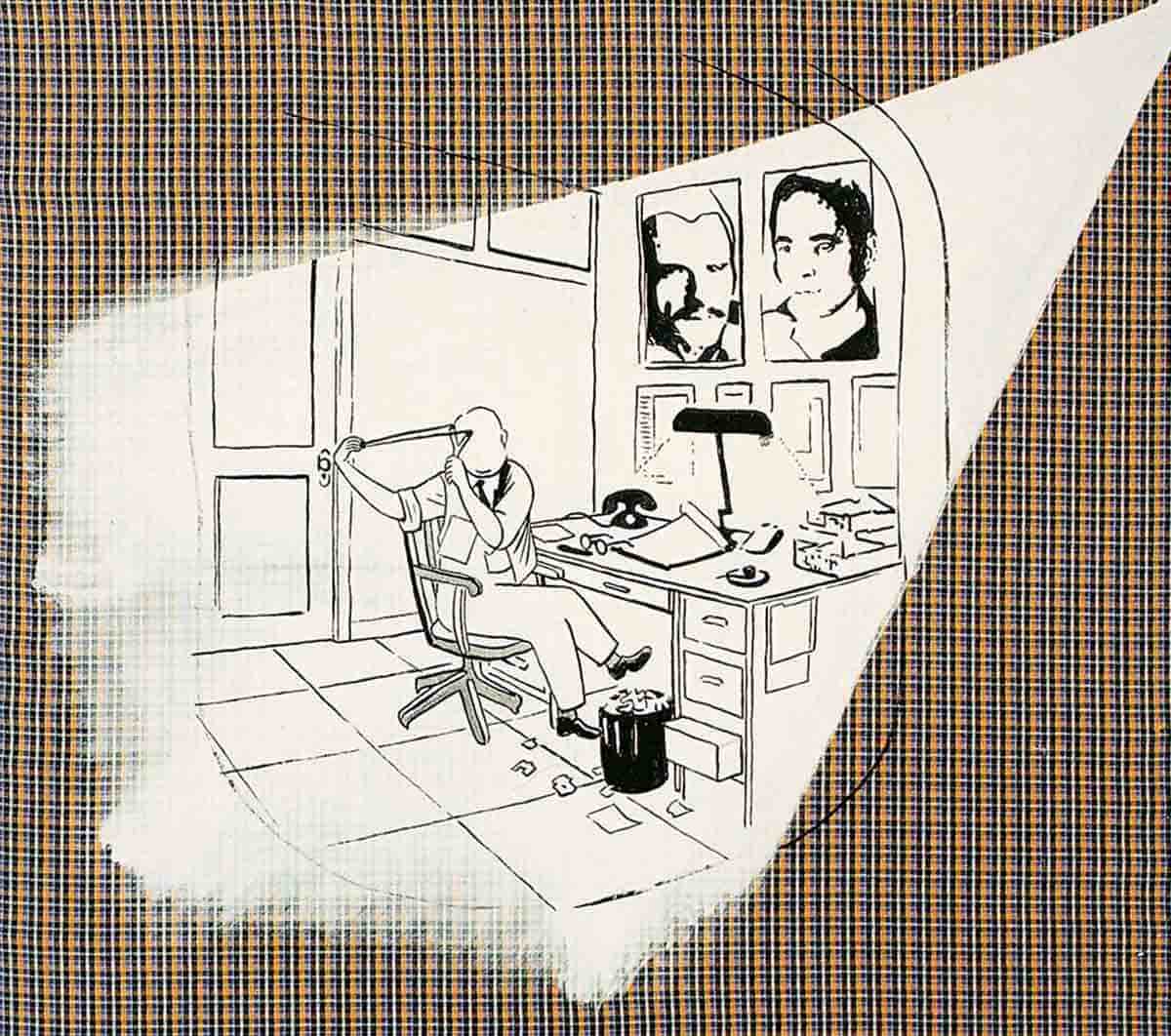
Despite the mystical undertones of his work, Sigmar Polke was never an escapist and always a politically active artist who reacted to the events around him. In 1972, the West German authorities arrested members of the Red Army Faction, a militant left-wing group that organized terrorist attacks on US military bases in Germany. Five years later, the key members of the group, including its leaders Andreas Baader, Jan-Carl Raspe, and Ulrike Meinhof, were found dead in their cells. The officials hastily explained the events as collective suicide, yet many facts did not add up. A few months later, Polke created a painting that resembled a newspaper cartoon. In it, a faceless German bureaucrat named Dr. Bonn (Bonn was established as the capital of West Germany after the war) is trying to shoot himself with a slingshot under the watchful eyes of Baader and Raspe.
6. Watchtower, 1984
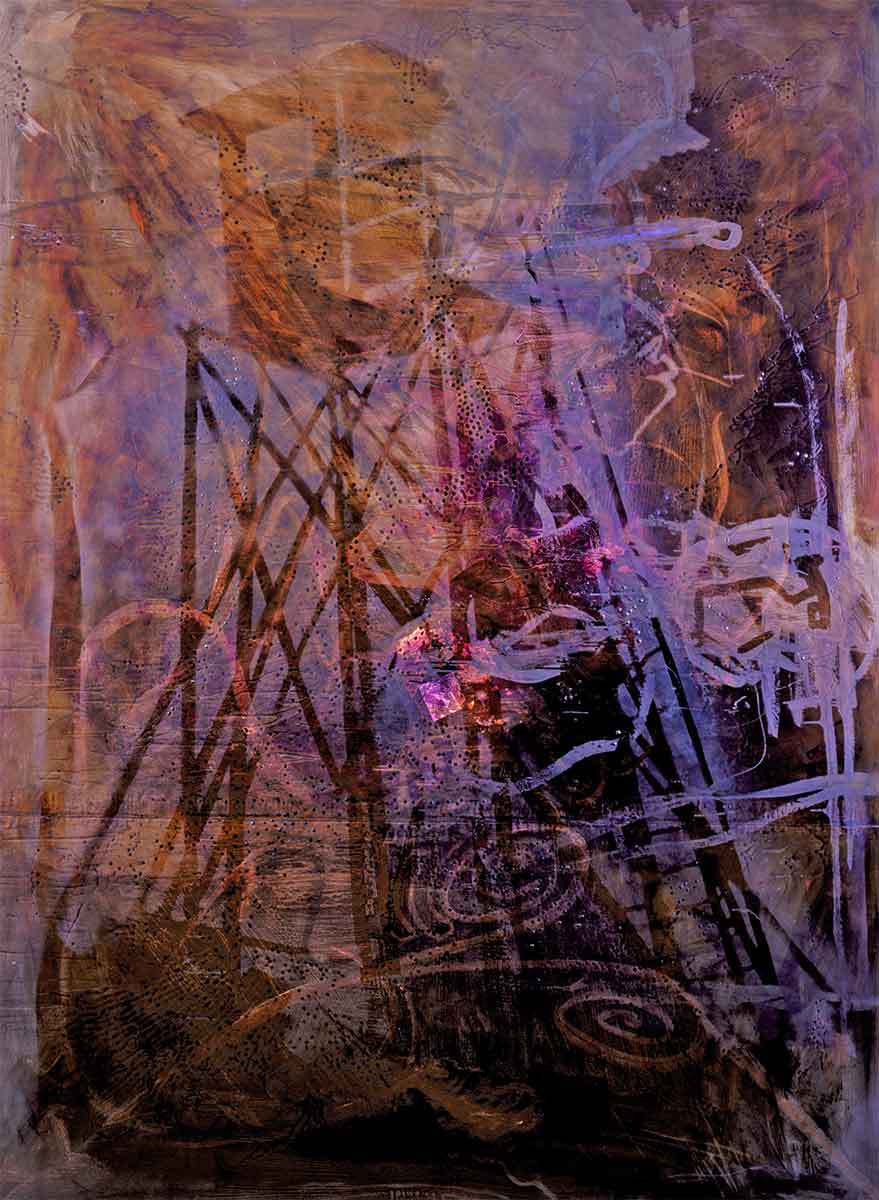
Sigmar Polke had little reservations when discussing the difficult and traumatizing legacy of German history and the responsibility of previous generations for the events of World War II and the Holocaust. If anything, his imagery was sometimes too raw and shocking. He painted swarms of swastikas in bright gouache colors, reconstructed concentration camp gates, and locked his paintings behind them.
His 1984 series Watchtower relied on an identical stenciled image of a structure adjacent to concentration camp walls. Sigmar Polke managed to imitate the haunting effect of a moving light searching for those trying to escape: the tower is only visible from certain vantage points, where paint reflects the gallery room light. He printed the image, adding silver oxide in the ink. The final result was both captivating and deeply unsettling. The flickering tower provoked anxiety and terror, as if the viewers were about to be discovered by whoever was guarding the tower.
7. The Spirits That Lend Strength Are Invisible III (Nickel/Neusilber)
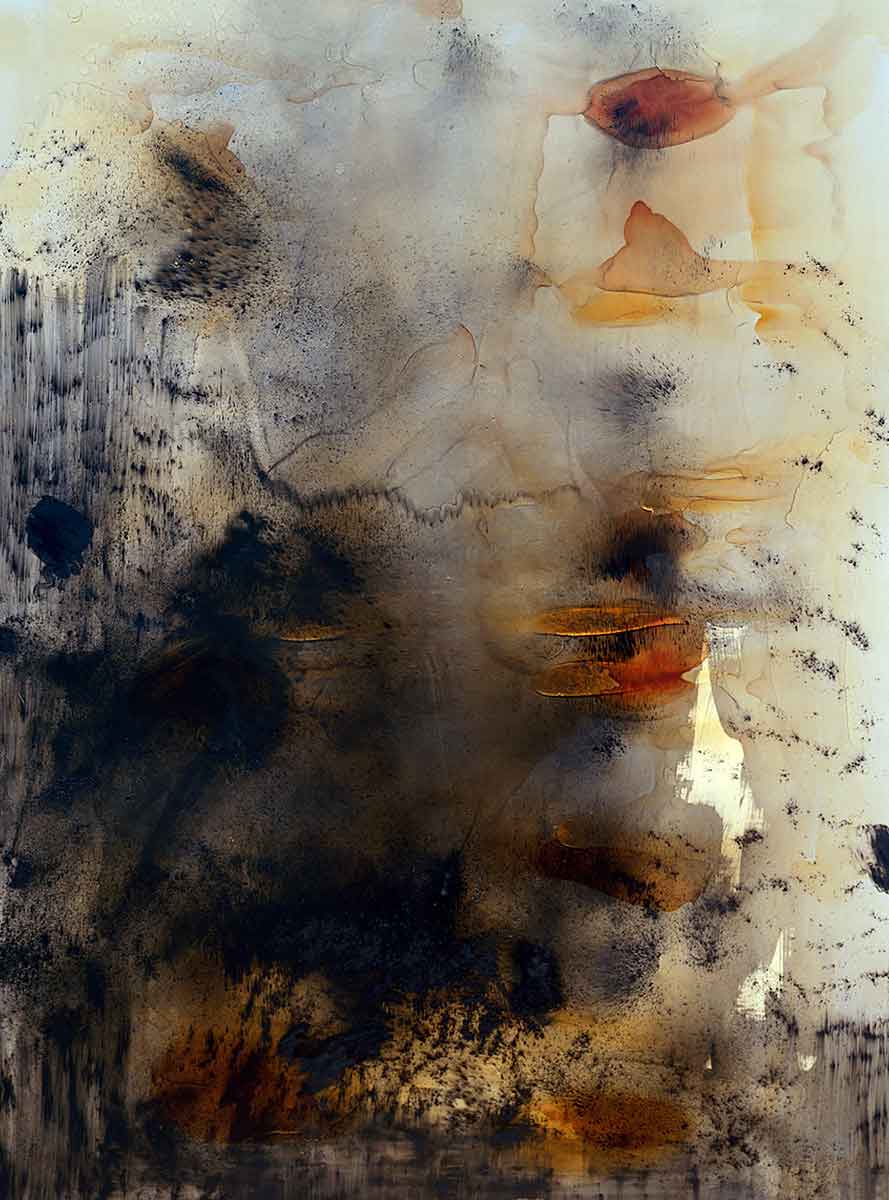
Manipulation with chemical elements occupied Sigmar Polke’s mind for quite a long time. The state of transformation, both mental and physical, immediate and prolonged, was present in many of his works, yet this fully manifested itself in his alchemical experiments. His art was supposed to change with the world around it instead of passively waiting to become obsolete. Polke traveled the world to find pigments and natural materials he could use in his works. He went to Pakistan and Afghanistan and learned the techniques Indigenous Americans used in their art.
The Spirits That Lend Strength Are Invisible was a series of paintings inspired by Polke’s trip to North America. The title came from Native American sources that the artist carefully studied. For his work, he used minerals that were present only in North America and were significant for the Indigenous population, such as meteorite powder. He then used crushed minerals to color clear resin and poured it over the canvas. Into still-wet resin, he incorporated Neolithic-era tools made by the ancestors of Indigenous Americans and bits of silver leaf.
8. Athanor: Sigmar Polke’s Work That Shook the Venice Biennale
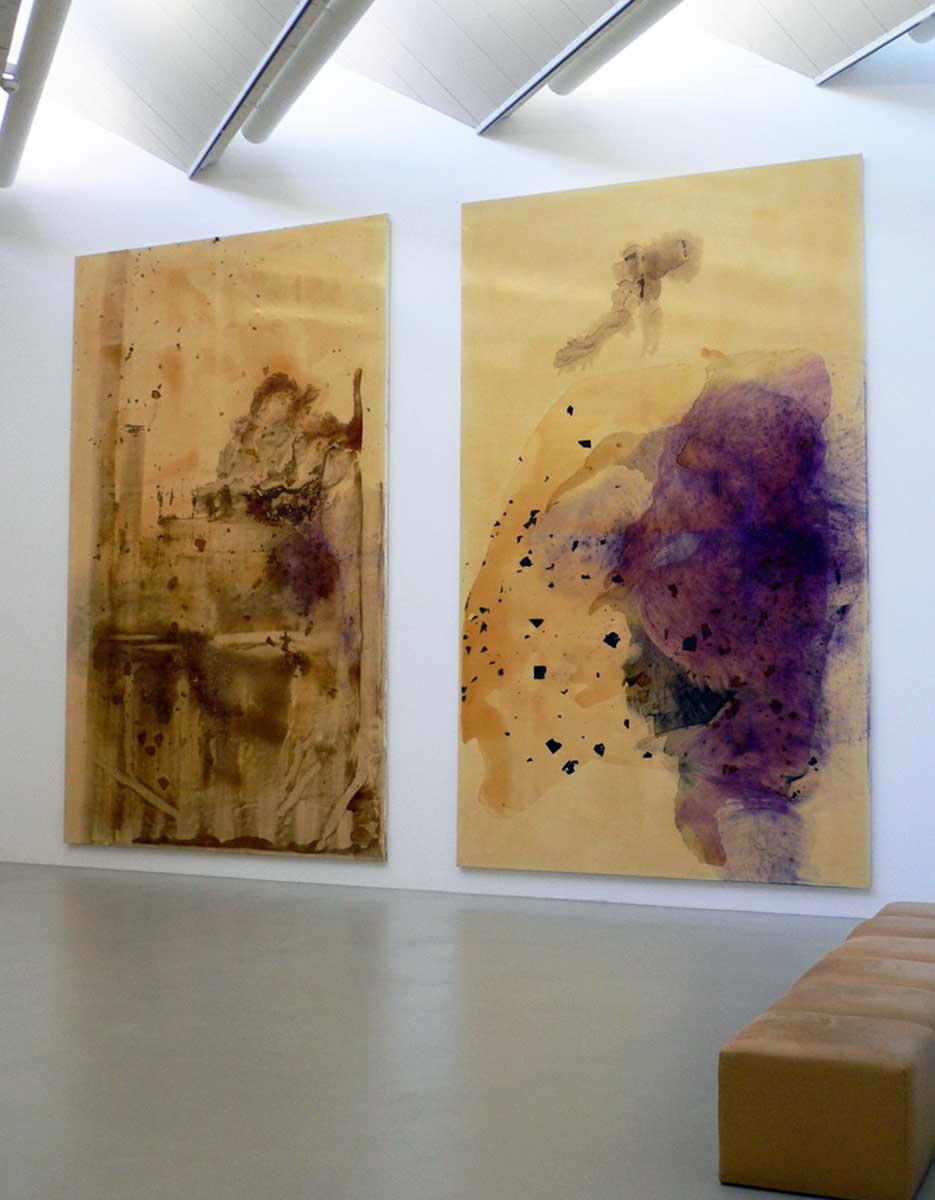
Sigmar Polke’s alchemical approach to art made his works transcend the boundaries of conventional painting and turned them into responsive and active substances. He launched chemical reactions on canvases that transformed his works over time, with their appearance changing radically over the course of days and years. This approach makes Polke’s work incredibly different for museum conservation and restoration departments. It is still debatable whether they should halt these reactions to stop works from deteriorating or leave them as they are and embrace Sigmar Polke’s artistic vision.
The most famous manifestation of his artistic principles happened in 1986 during the Venice Biennale. Polke occupied the entire West German pavilion with the work called Athanor, or the alchemist’s kiln. Inside the pavilion, he placed a real meteorite and rock crystals and painted the walls with abstract images. However, his main point was not in the paintings themselves, but in their compositions. He used pigments such as cobalt chloride, that reacted to the weather, humidity, temperature, and light conditions around them. Amazed visitors watched Polke’s art transforming and reacting to their presence, as more and more human bodies filled the pavilion.