
France’s world-class artistic academies and revolutionary culture created the ideal breeding ground for talented and innovative artists to emerge. Today, some of the world’s most famous visual artists are French painters, who pioneered movements such as Impressionism and Cubism. But how well do you know your French artists? Meet 11 of the most important French artists as defined by their most famous masterpieces.
| Painter | Famous Work | Movement |
| Claude Monet | Water Lily Series (1897-1926) | Impressionism |
| Georges Seurat | A Sunday Afternoon on the Island of La Grande Jatte (1884) | Neo-Impressionism |
| Eugene Delacroix | Liberty Leading the People (1830) | Romantacism |
| Georges Braque | Violin and Candlesticks (1910) | Cubism |
| Henri Matisse | La Danse (1910) | Fauvism |
| Gustave Courbet | Burial at Ornans (1849) | Realism |
| Édouard Manet | Olympia (1863) | Pre-Impressionism |
| Pierre-Auguste Renoir | Ball at the Moulin de la Galette (1876) | Impressionism |
| Paul Gauguin | Day of The God (1894) | Post-Impressionism |
| Paul Cézanne | The Murder (1867) | Post-Impressionism |
| Edgar Degas | Ballet (The Star) (1878) | Impressionism |
1. Claude Monet, Water Lily Series (1897-1926)
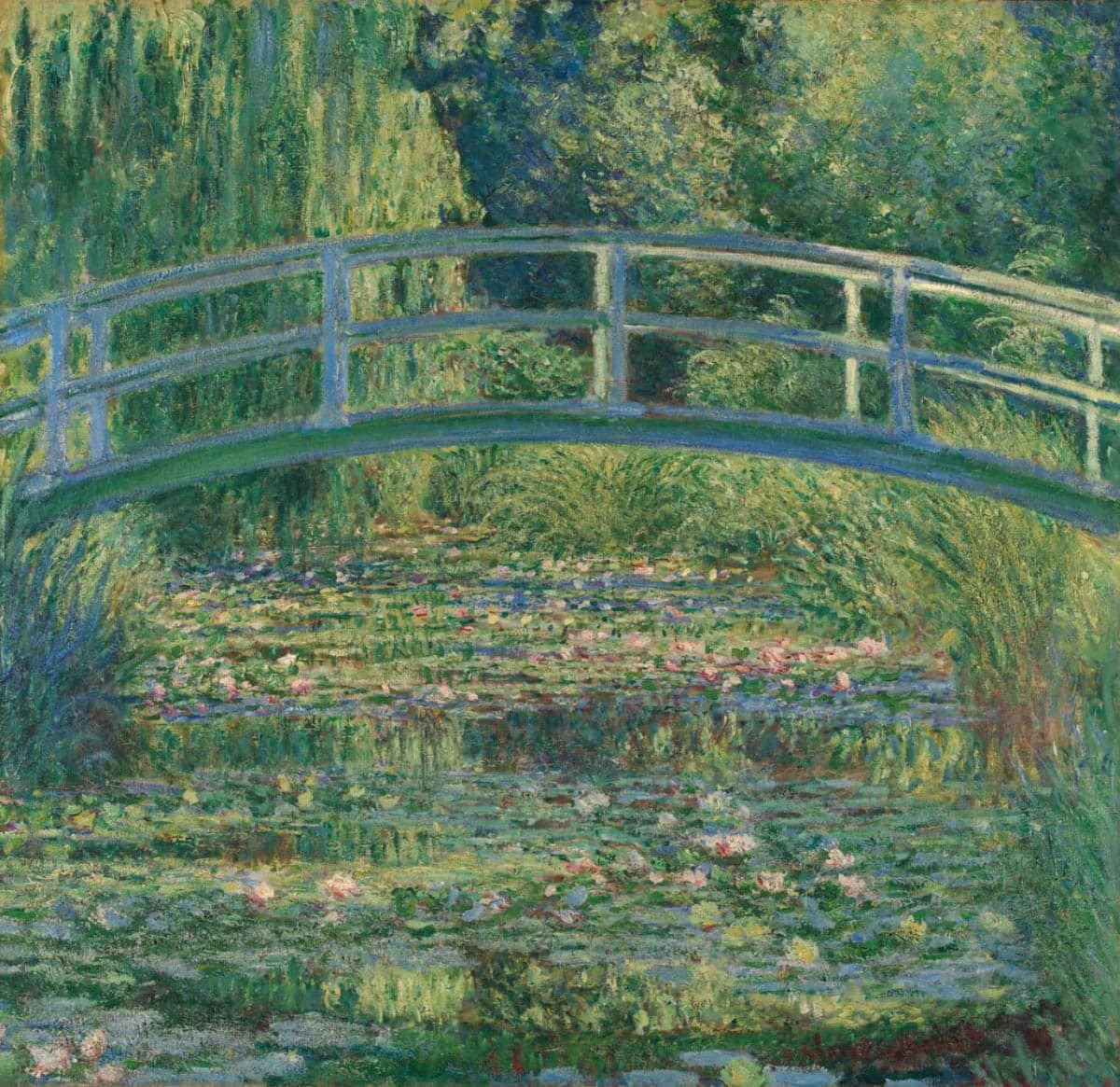
Claude Monet (1840-1926) transitioned from traditional realism to Impressionism, shifting his focus from defined subjects to the transient effect of light and atmosphere. He also popularized the “en plein air” painting techniques, completing full works in situ, rather than retreating to the studio. He also famously rejected the use of black paint for shadow, believing that black did not exist in nature as a flat void. As his career progressed, Monet became obsessed with seriality, painting the same subjects at different times of day to capture the “envelope” of light surrounding them.
Monet’s final years were defined by his massive Water Lilies series, which includes 150 variations of Monet’s lily ponds at his home in Giverny. He focused mainly on the surface of the water and the textures, always capturing the reflections of the land around the ponds. He deliberately removed the horizon line to transform the painting from a “window” into a vision.
2. Georges Seurat, A Sunday Afternoon on the Island of La Grande Jatte (1884)
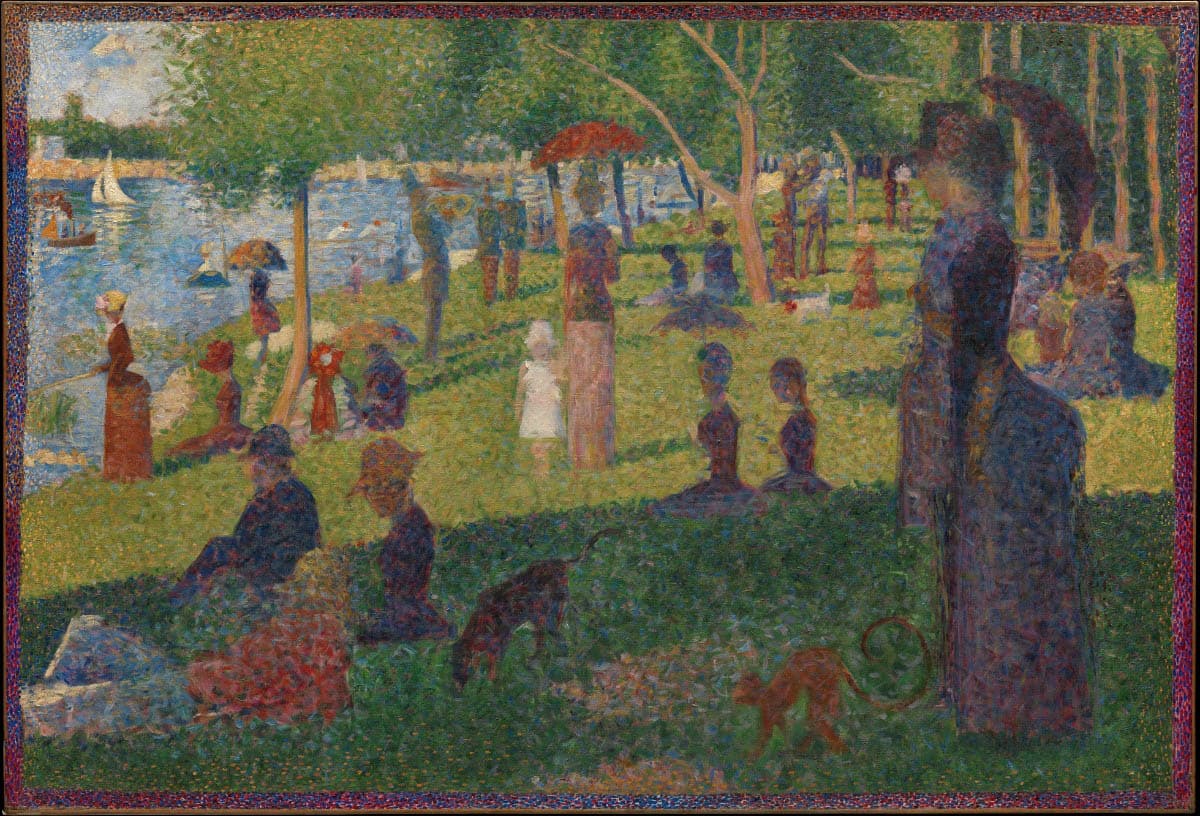
Georges Seurat (1859-1891) integrated ideas from the fields of science and optics into his paintings. He was also a pioneer of Pointillism (or Divisionism), which replaced fluid brushstrokes with countless tiny dots to create a more vibrant effect than blending. In contrast to the spontaneity of the Impressionists, as a Neo-Impressionist, Seurat applied meticulous precision to bring mathematical order to his subjects.
One of Seurat’s best-known artworks is A Sunday Afternoon on the Island of La Grande Jatte. This large painting shows a tranquil scene of suburban leisure, with bathers cooling off in the river. The work is made up of many tiny dots of pure color. Seurat placed these dots strategically, allowing the colors to complement each other and blend to create the overall vivid, neo-impressionistic effect.
3. Eugene Delacroix, Liberty Leading the People (1830)
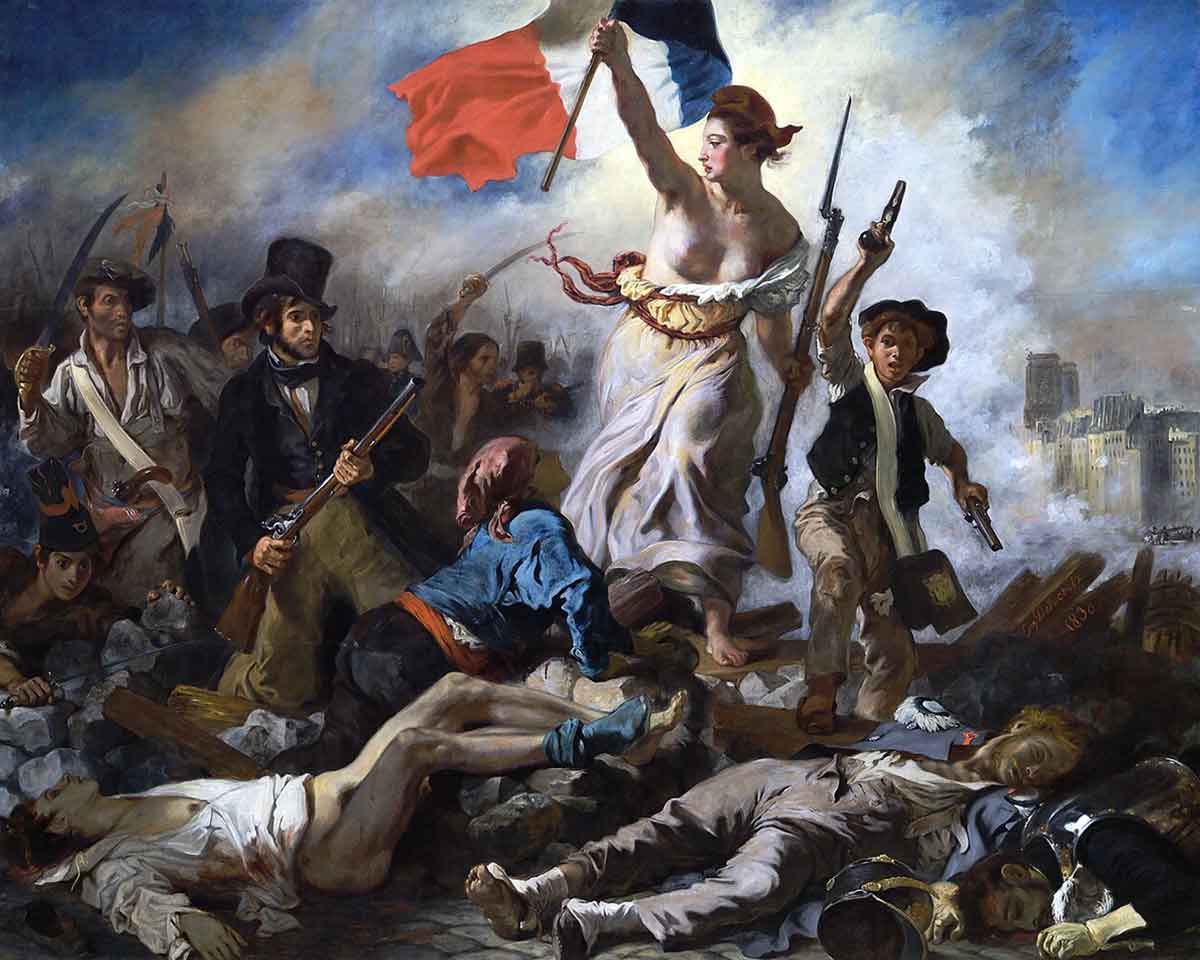
Eugene Delacroix (1798-1863) was a pioneer of French Romanticism. He rejected the polished lines of Neoclassicism and showed interest in the natural world and the expression of emotion. Training with Pierre Guèrin between 1816 and 1823, Delacroix began to develop his own style, prioritizing expressive brushstrokes and bold colors over lines. He favored exotic, violent, or highly emotional subject matter, creating a more visceral experience for the viewer.
Liberty Leading the People is one of Delacroix’s most important works. It is regarded as the symbol of revolution, justifying revolt, and stirring feelings of anger and passion in the viewer. The work was created after the July Revolution of 1830. Delacroix became intensely moved when witnessing the rising of the French national flag at Notre Dame.
4. Georges Braque, Violin and Candlesticks (1910)
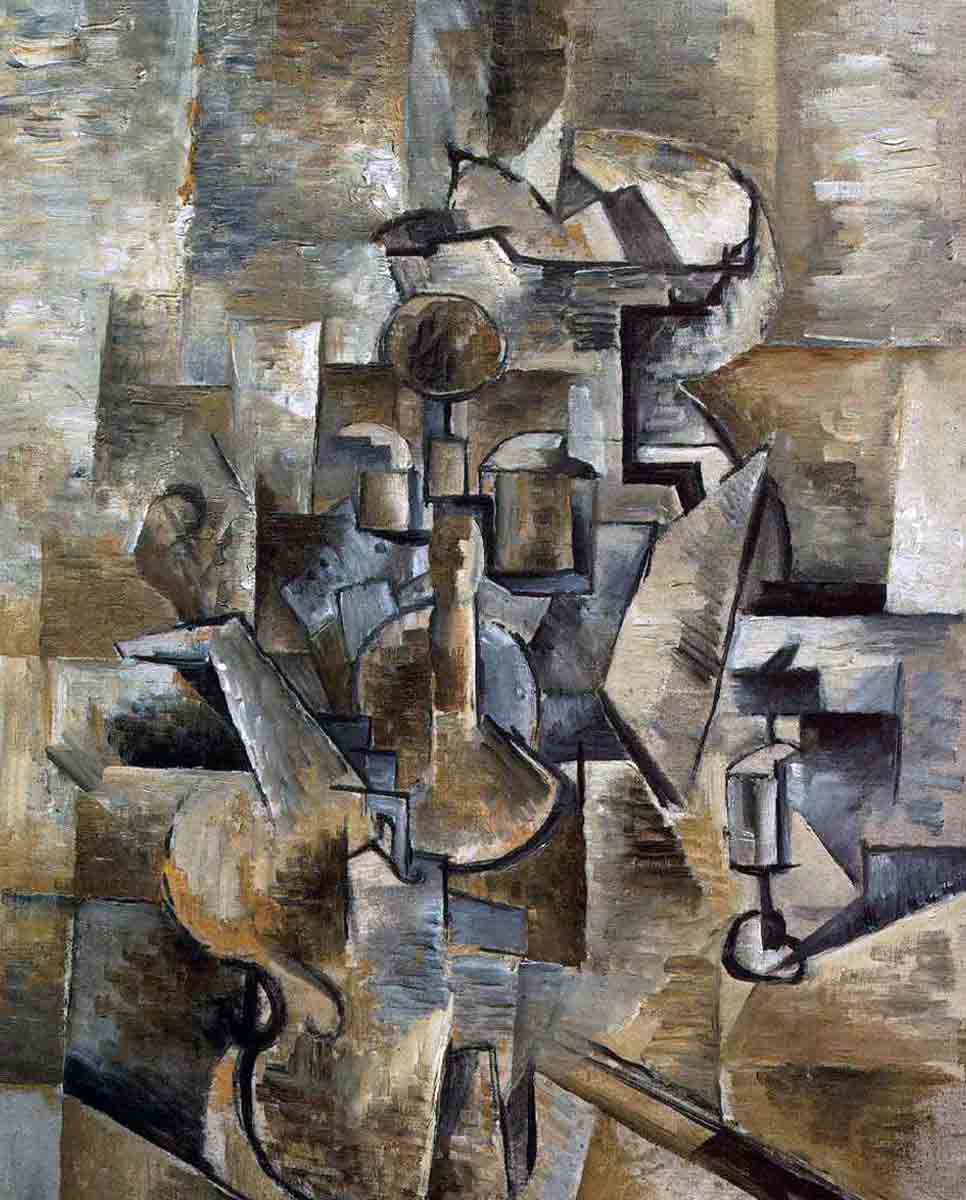
Georges Braque (1882-1963) explored artistic expression through painting, collage, drawing, and sculpture. However, the artist is best-known for his Cubist works, made while working closely alongside Pablo Picasso. The pair worked together between 1908 and 1914, often even dressing the same way. Braque often sought to fragment objects so that they could be shown from multiple viewpoints simultaneously.
Violin and Candlestick is a monochrome painting, with shades used to accentuate the subjects of the work. It marks the cornerstone of the Analytic Cubism of Braque and Picasso. The object is not just distorted but deconstructed into a grid of overlapping planes.
5. Henri Matisse, La Danse (1910)
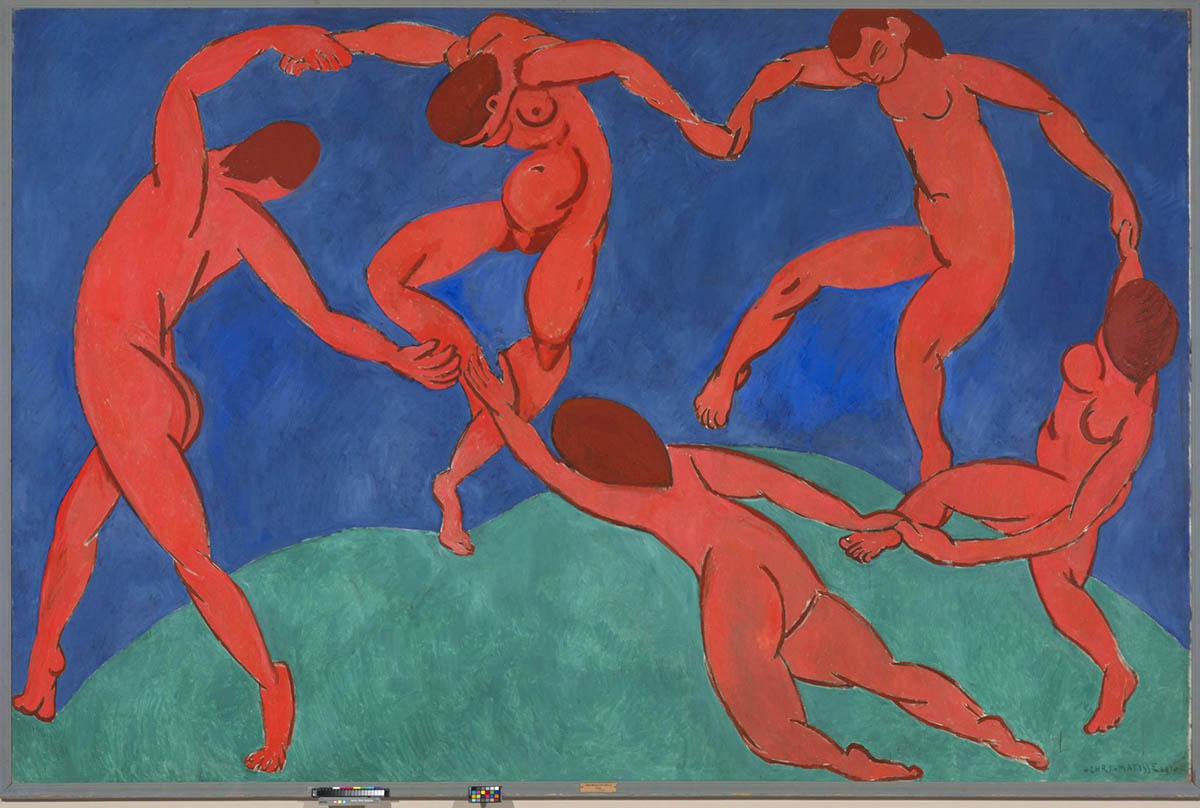
Matisse (1869-1954) was a founding member of the “Fauves” (Wild Beasts), a group of French artists who favored strong, unnatural colors in their work. He explored vivid colors with simplified forms, seeking a sense of rhythmic harmony and balance. He experimented with various methods, including “drawing with scissors,” merging the processes of coloring and carving.
One of his most famous artworks, La Danse (the Dance), was commissioned by a Russian art collector. Dancing figures in bright red colors contrast with the green on the bottom of the painting and the dark blue sky in the background. The use of just three colors moves the piece from a specific scene to a universal allegory. It was partly inspired by the performances of Isadora Duncan, who danced with passion and emotive fury, but also by Matisse’s visit to the Moulin de La Galette cabaret.
6. Gustave Courbet, Burial at Ornans (1849)
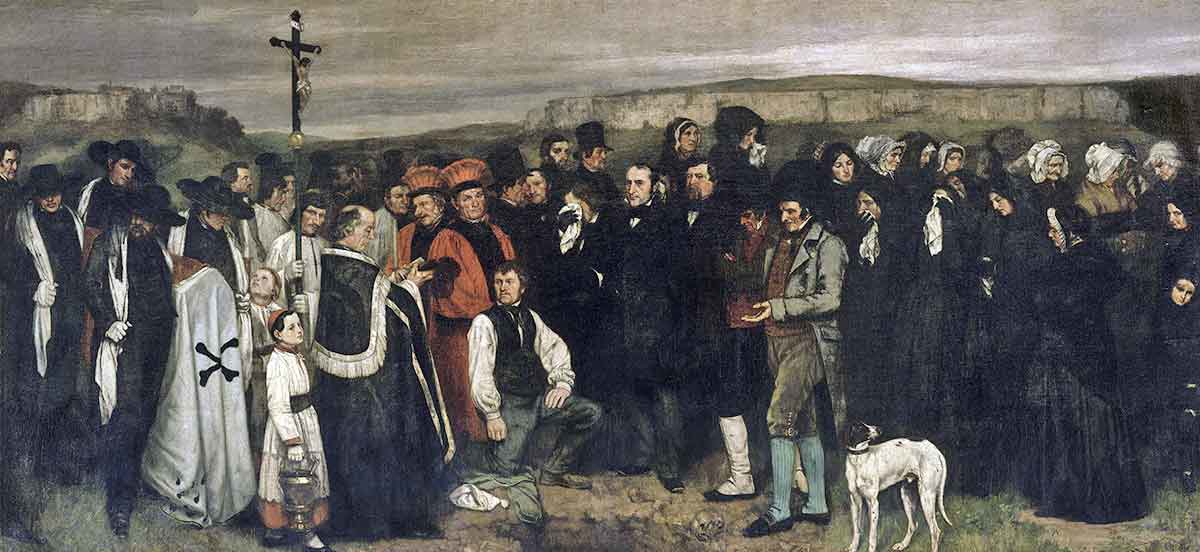
Gustave Courbet (1819-1877) famously made large-scale, ultra-Realistic works of art, rejecting previous idealization. Usually, larger works were made when painting religious or historical subjects. However, Courbet introduced large-scale works depicting everyday scenes. By doing this, he undermined traditional French concepts of Monumental art and gained huge notoriety.
One of his famous paintings is The Burial at Ornans. This 22-foot-long canvas depicts a gathering of people during a burial, centered on a dark, open grave. With this monumental but mundane scene, he forced his elite audience to confront death as a physical end rather than a spiritual transition.
7. Édouard Manet, Olympia (1863)
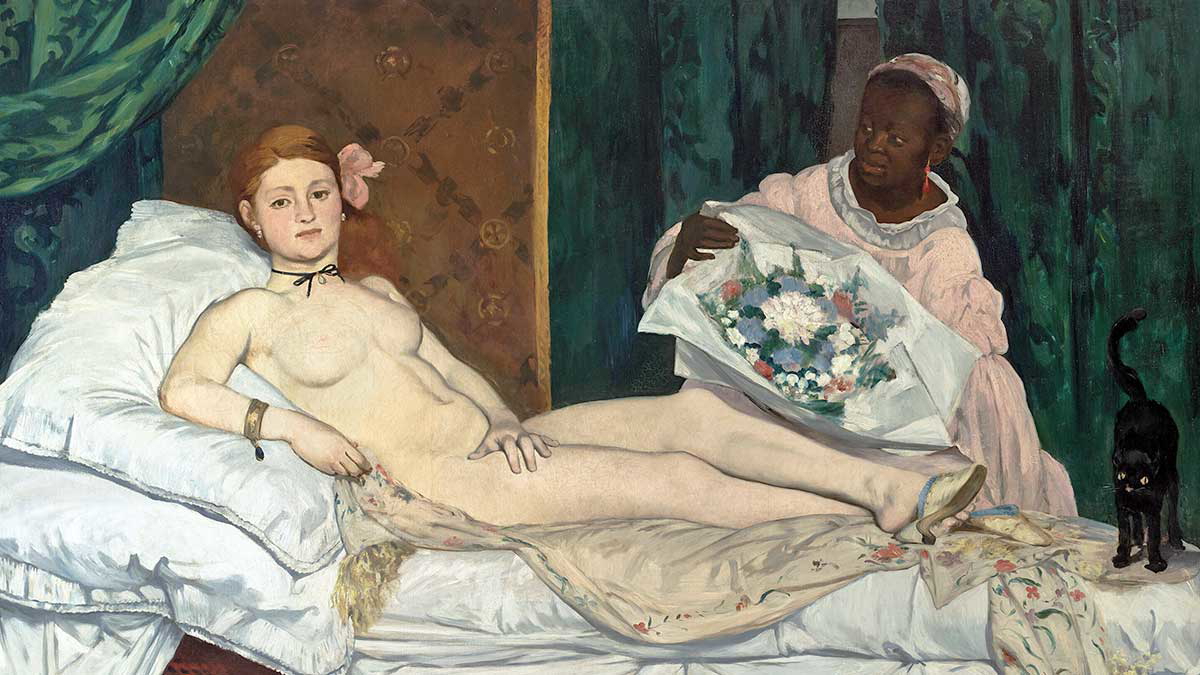
Edouard Manet (1832-1883) was one of the first French painters in the 19th century to paint everyday, modern life. He acted as the essential bridge between the Old Masters and Modernism, effectively dismantling the “window” of traditional perspective to create a new, flat, and confrontational style. While he was deeply educated in the techniques of Titian and Velázquez, he modernized them by stripping away soft transitions and atmospheric depth in favor of harsh lighting, visible brushwork, and “flat” patches of color.
Olympia was one of Manet’s most controversial paintings, depicting a nude woman reclining on a bed in a leisured pose, whilst a servant stands by her bed presenting her with flowers. Manet based this notorious work of art on the famous painting by Titian known as Venus of Urbino (1538). It was revolutionary to place contemporary and provocative Parisian figures in compositions borrowed from classical art.
8. Pierre-Auguste Renoir, Ball at the Moulin de la Galette (1876)
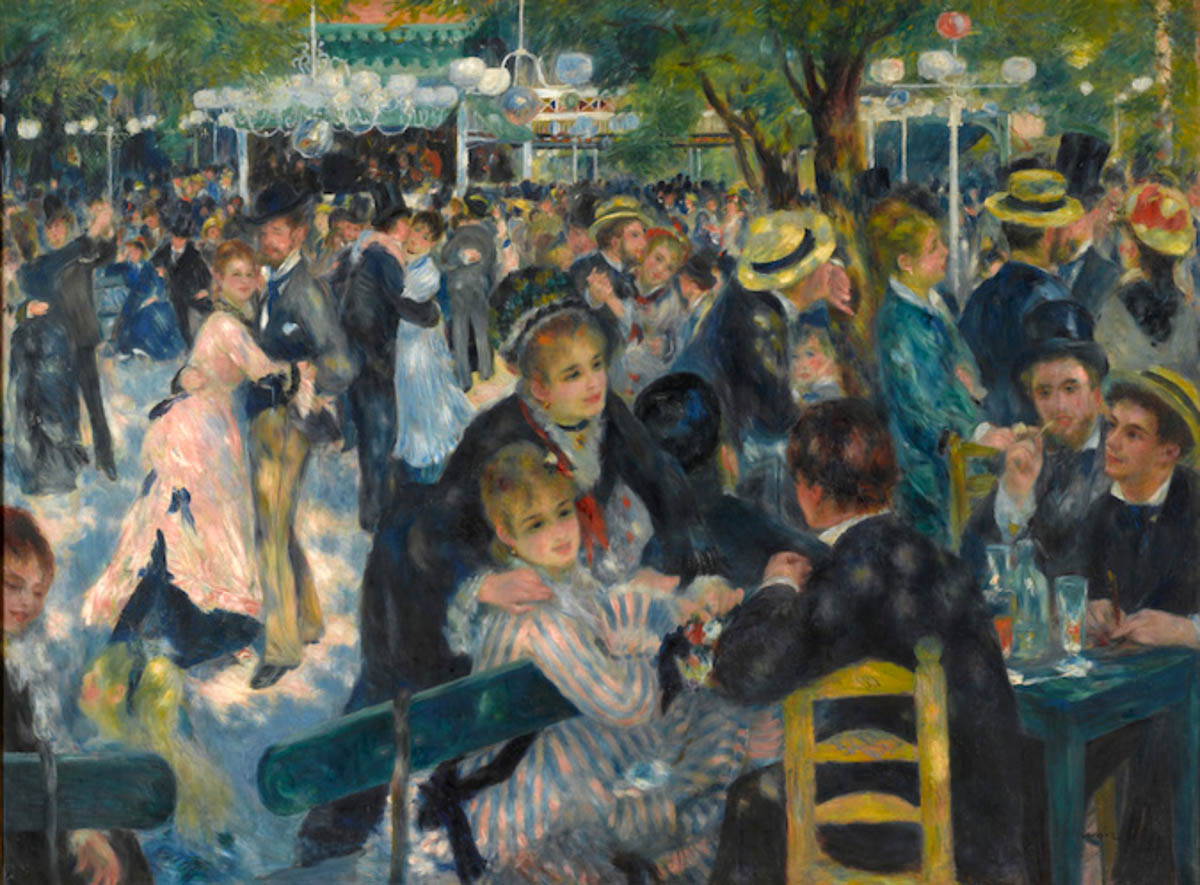
One of the founding members of Impressionism, Renoir (1841-1919) explored the depiction of light, shade, and atmosphere. In contrast with Monet, his paintings were neater and more “perfectionist” in style. Rather than focusing on darker subjects, he embraced the joy of Parisian life and the hedonistic atmosphere of 19th-century Paris.
In Ball at the Moulin de la Galette, Renoir captures the vibrant, sun-drenched leisure of the Parisian middle class on a Sunday afternoon. It was technically challenging to depict dozens of figures in motion while maintaining a sense of spontaneous energy. He achieved this through his signature use of dappled light, where patches of violet and yellow sunlight filter through the trees to break up the solid forms of the dancers’ clothing and the ground.
9. Paul Gauguin, Day of The God (1894)
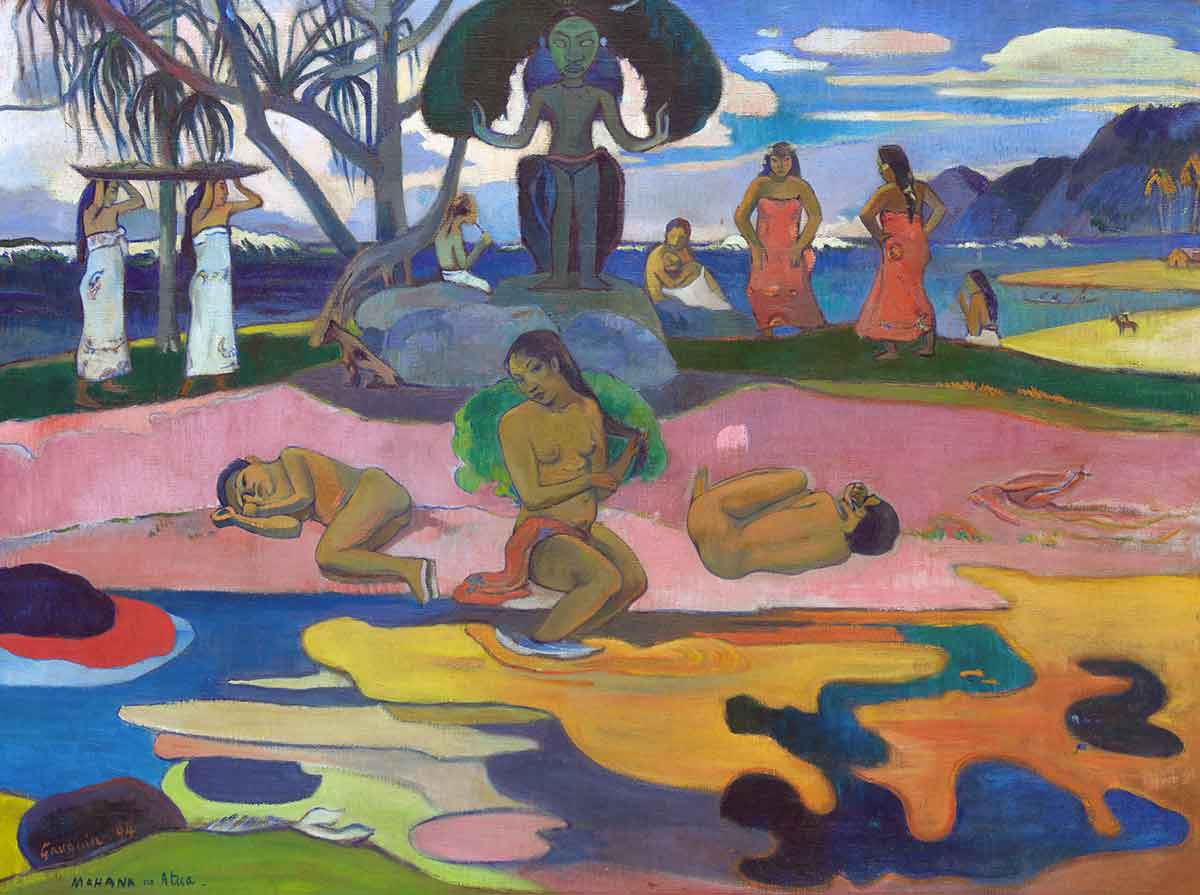
The French painter Paul Gauguin (1848-1903) was famous for traveling the world and his relationship with Vincent van Gogh. Frustrated by what he saw as the artificiality of 19th-century Europe, he abandoned his family and career to live in Tahiti and the Marquesas Islands, seeking a spiritual and “savage” truth untainted by industrialism. From this, he pioneered Synthetism, rejecting realistic depth and naturalistic color in favor of bold, flat areas of saturated hues, heavy black outlines, and enigmatic, symbolic subject matter.
Day of the God is one of many artworks created by Gauguin that show life in Tahiti. The painting is structured in three distinct horizontal tiers, moving from a grounded reality at the top to a purely dreamlike, symbolic realm at the bottom. The three central figures represent the stages of human existence – birth, life, and death – positioned around a towering idol of the goddess Hina.
10. Paul Cézanne, The Murder (1867)
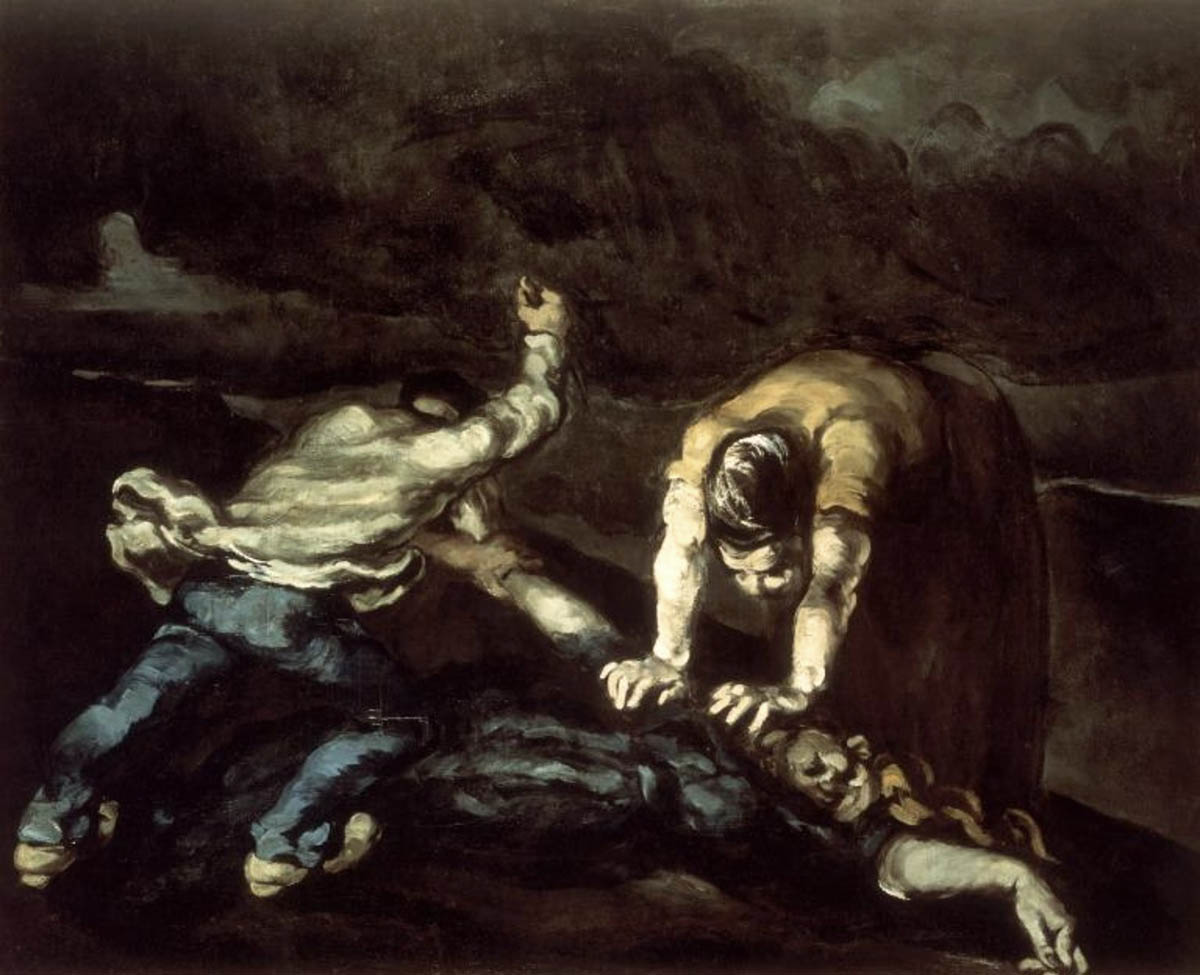
Paul Cézanne’s (1839-1906) works were admired for their tonal contrasts, impasto techniques, and structural elements. His early “dark period” was characterized by a heavy, almost violent manieriste style. He used a palette knife to apply thick layers of black, grey, and Prussian blue in scenes of high drama and eroticism. Later, he focused on the underlying geometry of nature.
The Murder is one of Cézanne’s earlier pieces, painted during his darker phase. It evokes a sinister tone, depicting two figures holding a third against his will. The two murderers are bathed in more light, whilst the victim stays in the shadow, but you can still see the pain on his face.
11. Edgar Degas, Ballet (The Star) (1878)
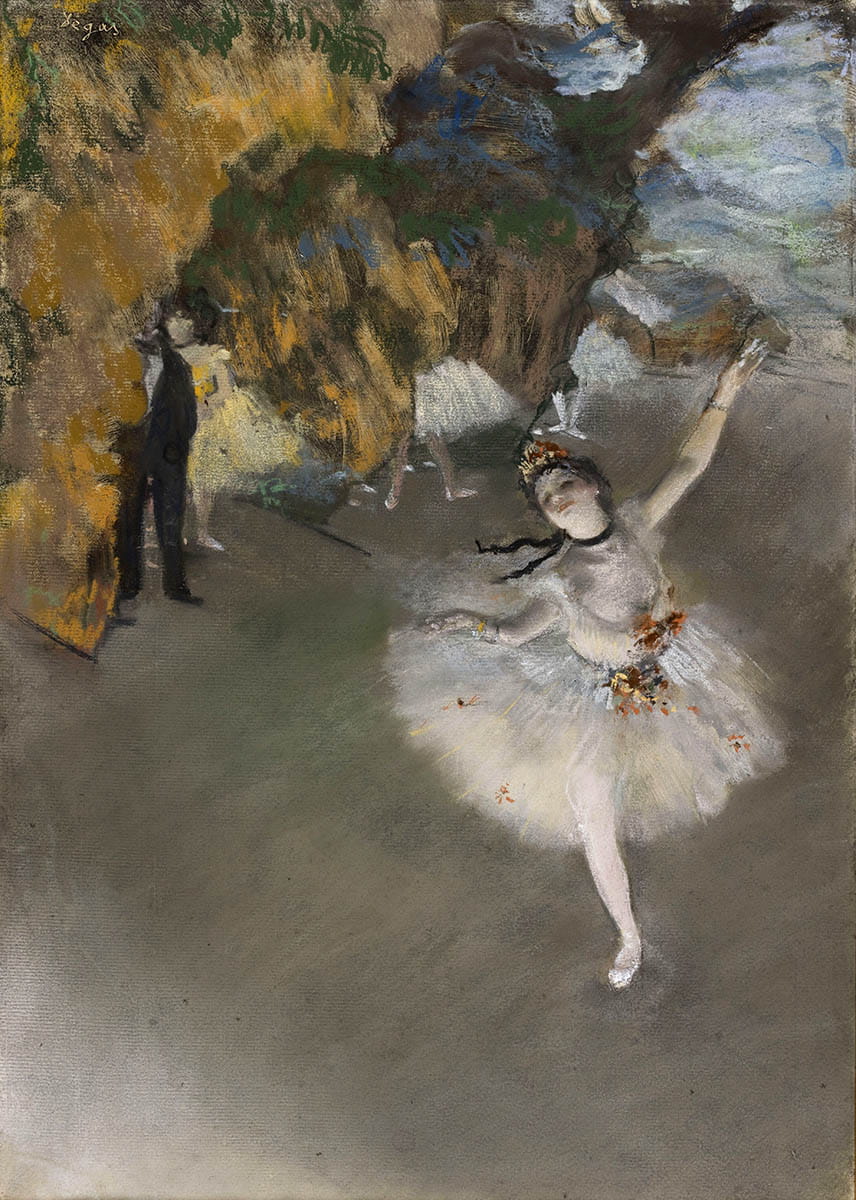
Edgar Degas (1834-1917) was famous for depicting ballet dancers, both on and off stage. Rather than painting en plein air in the French countryside as many other impressionists did, Degas preferred working indoors, capturing the synthetic lighting of cafes, theatres, and interiors. Inspired by the off-center cropping of Japanese prints and the snapshot-like quality of early photography, Degas often placed his subjects in asymmetrical, “accidental” arrangements that created a sense of voyeuristic spontaneity.
One of Degas’ best-known works is Ballet or The Star. It depicts a lone ballerina dancing on stage. Degas captured her graceful movements perfectly. Here we see the famous essence of non-natural electrical light that Degas captured so well. The work is also a social commentary, as the grace of the dancer is juxtaposed with the shadowy figure of the “patron” in the wings.