Eugène Delacroix (1798-1863) is famous as the fiery titan of French Romanticism, who captured the French Revolution on canvas, most notably with Liberty Leading the People. Yet behind his bold brushstrokes and theatrical compositions lay a far more enigmatic figure. Beyond the grand public murals and political iconography, Delacroix concealed personal scandals, intense rivalries, and quiet literary obsessions that reshaped 19th-century art. These five facts reveal the complex genius who turned European painting upside down.
1. Delacroix Revealed His Inner Work Through Personal Diaries
Known as a leading figure in 19th-century French Romantic art, Delacroix kept a journal in which he recorded his life and inspirations, offering insight into the man behind the art.
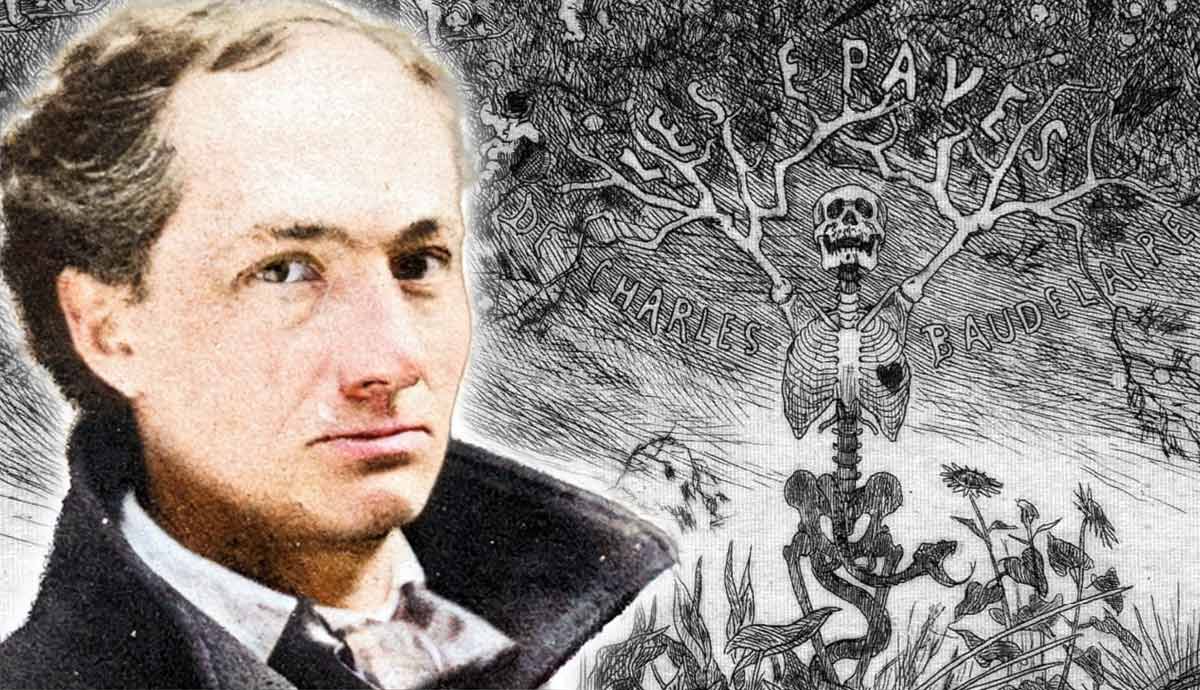
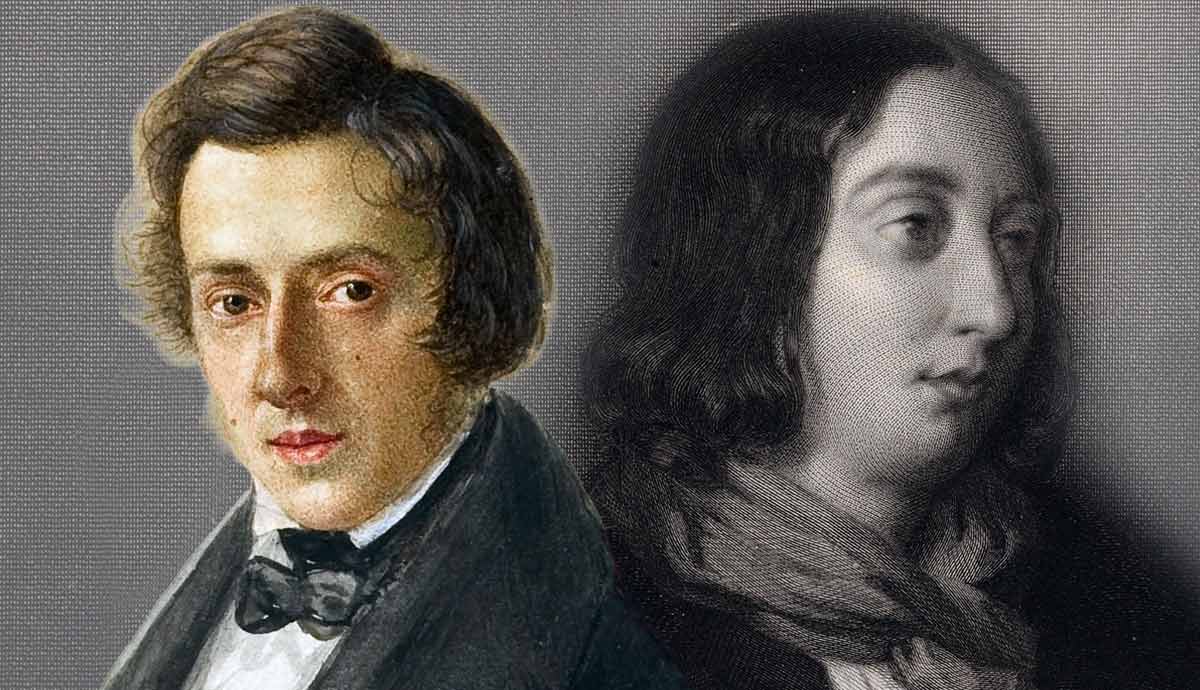
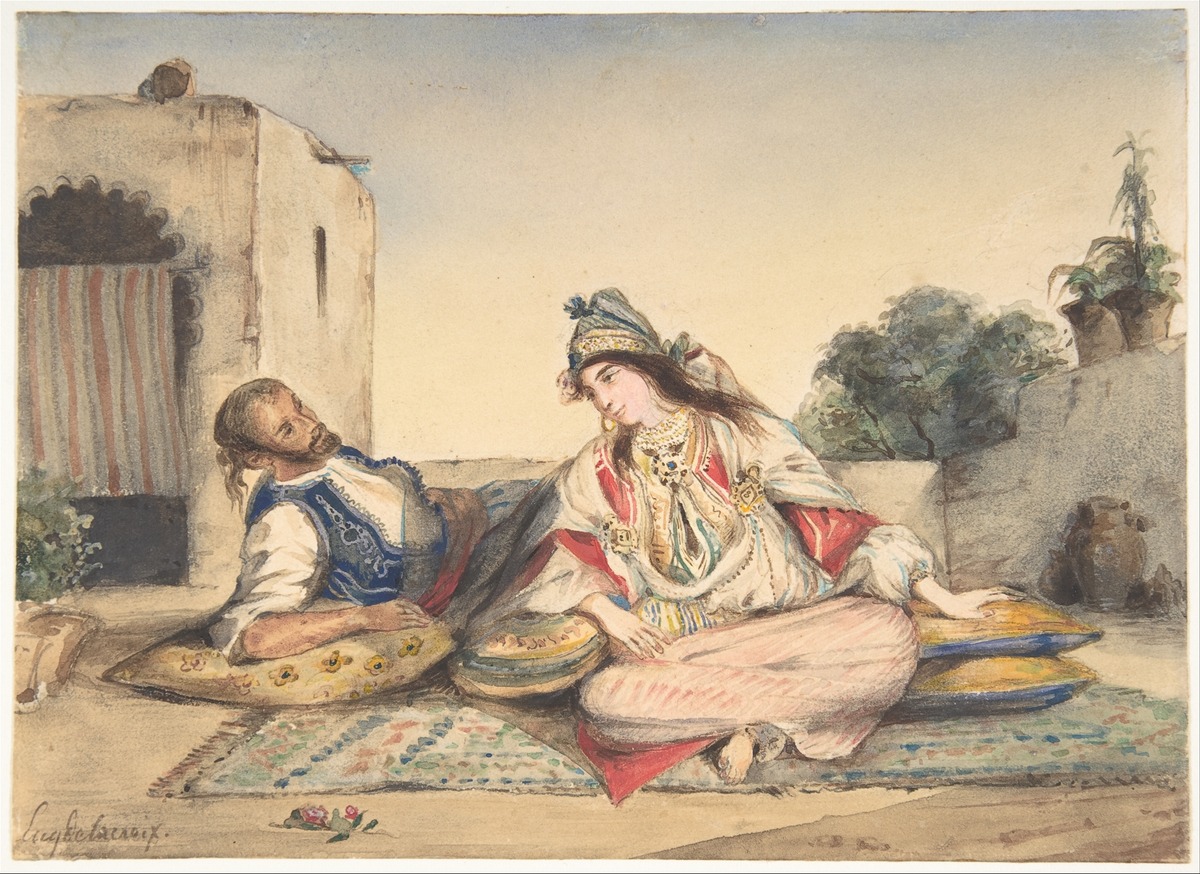
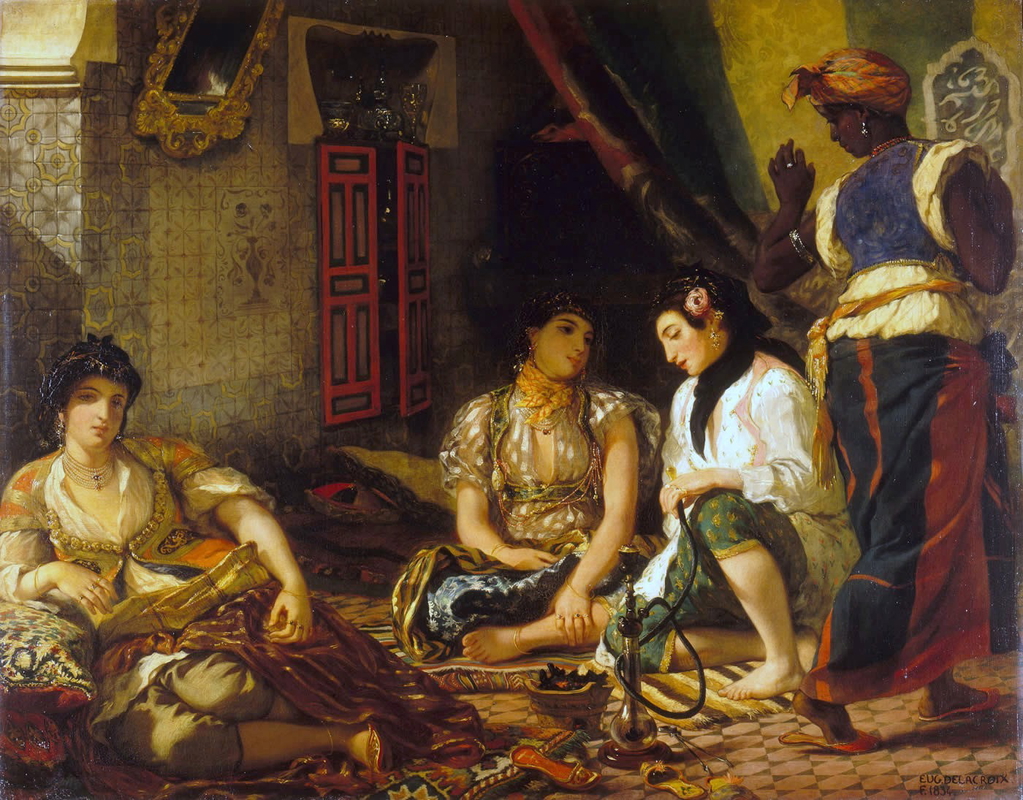
The artist often described his battles with lethargy, melancholy, and boredom, plus his search for opportunities to occupy his mind. This often included interactions with prominent contemporaries such as Charles Baudelaire and George Sand. He also described traveling to Morocco and Algeria in 1832, capturing the “sensory overload” of the experience through watercolors and notes on vivid fabrics, architecture, and cultural customs. These notes inspired much of his later work.
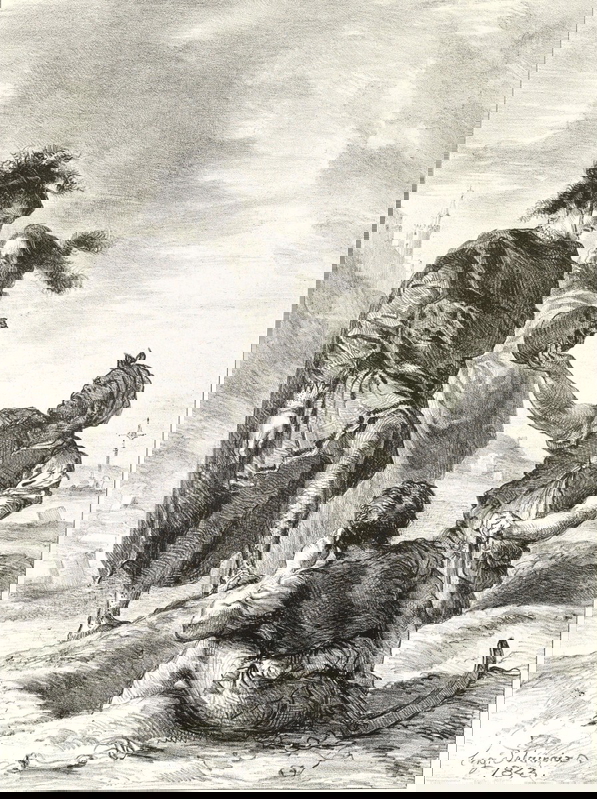
Regarding his art, he often argued that imagination was the primary source of genius, noting that, “Nature is a vast dictionary… Those who have no imagination copy the dictionary.” He also discussed his belief in the importance of color harmony, the dynamic use of tones, and visible brushstrokes, declaring that “gray is the enemy of all painting.” He also frequently reflected on the danger of over-refining a piece, suggesting that trying to exactly replicate a scene with unnecessary details diminished the vitality of a work. Nevertheless, Delacroix also advocated for an orderly mind, writing, “Cultivate a well-ordered mind; it’s your only road to happiness; and to reach it, be orderly in everything, even in the smallest details.”
Delacroix used his journal to analyze the works of Old Masters, like Rubens and Michelangelo, measuring his own aspirations against the art of the past. In 1857, he began compiling entries and definitions for a “Dictionary of Fine Arts” within his journal, though it remained unfinished at his death.
2. Delacroix’s Works Were Polarizing
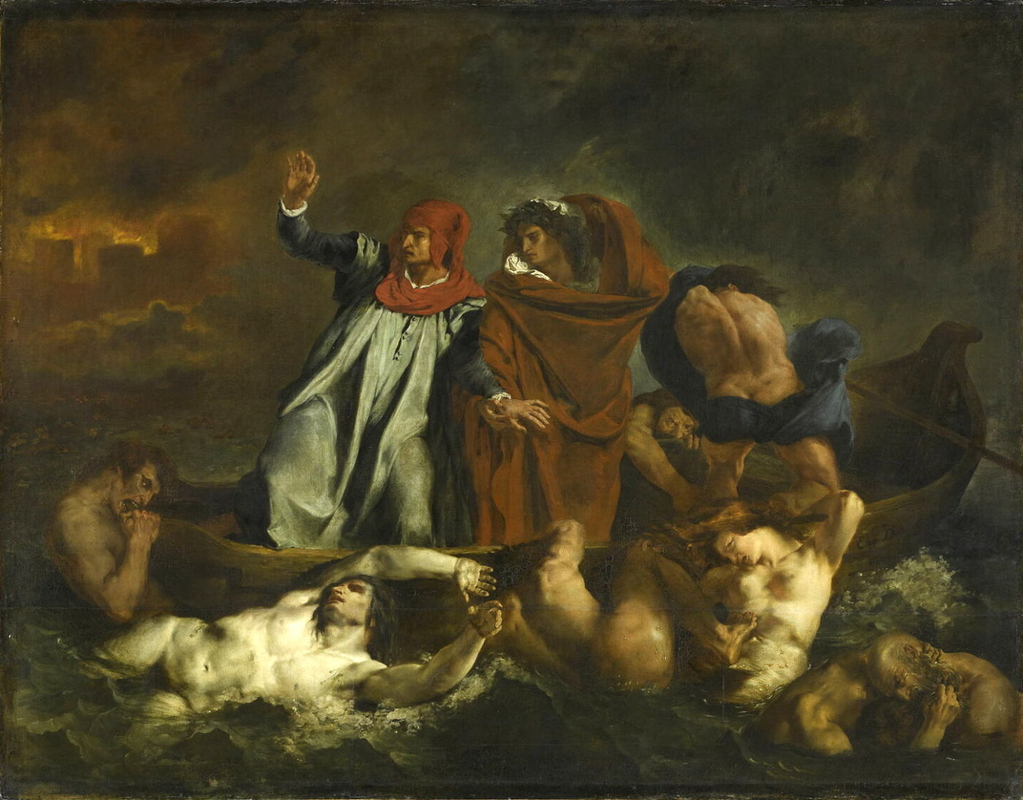
Like many other painters of the French Romanticism movement, Delacroix felt that traditional themes from mythology and biblical scenes were worn out. Delacroix found inspiration in literature, including the works of Dante and Shakespeare, the French wars of the era, and also his religious background. He was drawn towards themes of doom, obsession, passion, and existential violence, creating canvases that explored psychological despair and violent conflict.
His first major painting, when he was just 24, was The Barque of Dante, depicting the dramatic Inferno scene from Dante’s epic poem The Divine Comedy. It caused an intense and polarizing reaction. At the time, the Parisian art world was dominated by Neoclassicism, which valued precision, smooth finishes, and a level of serenity. They claimed that the composition felt chaotic and unrefined. Meanwhile, progressives praised the raw energy of the piece, with the turbulent color palette capturing the emotion of the scene, and the uncanny realism of the water droplets glistening in the writing bodies of the damned.
The French government seemed to agree and bought the painting in 1822 for 2,000 francs, a significant amount at the time.
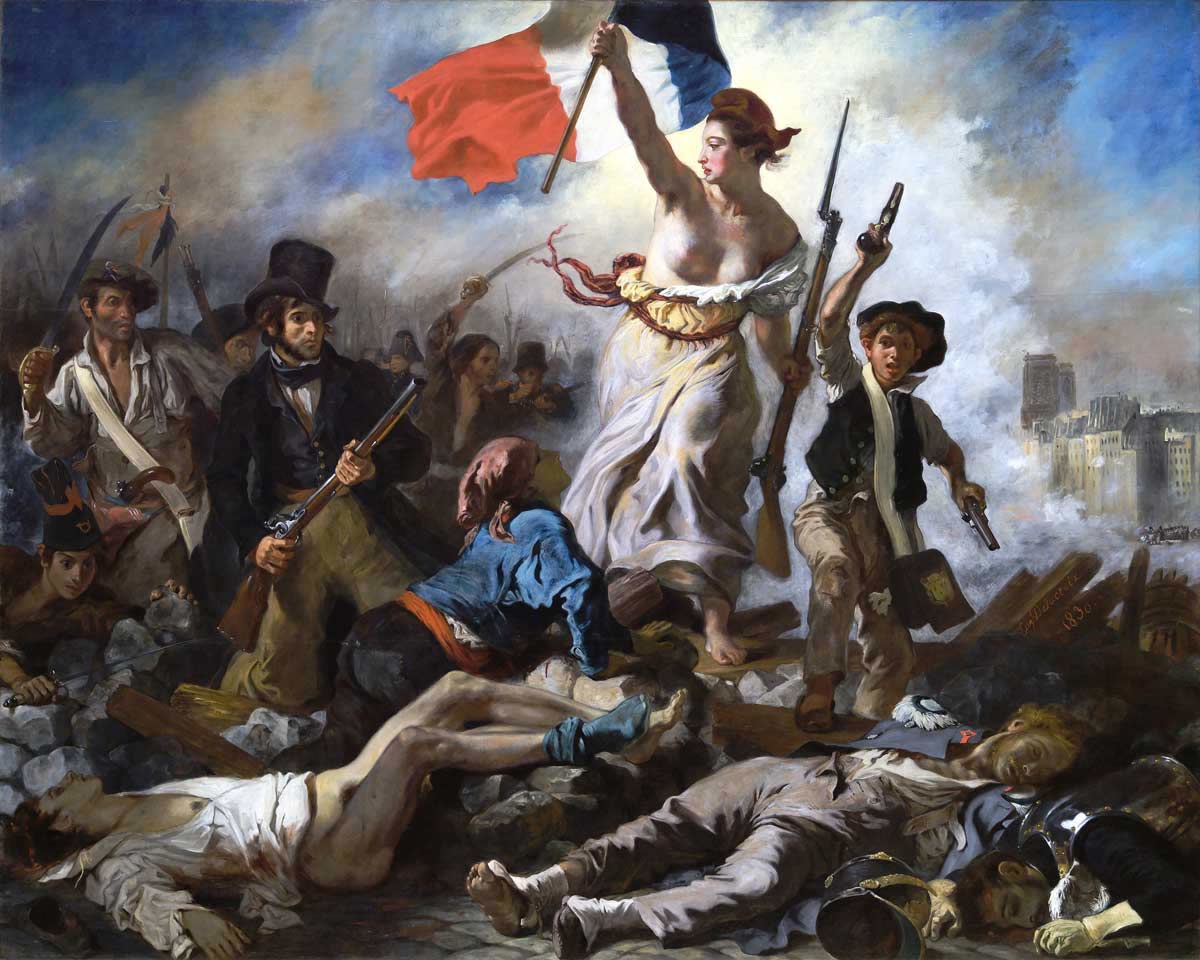
In 824 he painted Scènes des massacres de Scio (Massacre at Chios), and then in 1827 The Death of Sardanapalus, inspired by Lord Byron’s poem. In 1830 he unveiled La Liberté guidant le peuple (Liberty Leading the People) as the French Revolution unfurled. Again, it polarized opinions. Many criticized the fact that Liberty herself was not presented as an idealized allegorical figure, as she looked more like a “fish wife.” Supporters applauded Delacroix for capturing the genuine atmosphere of the July Revolution. Romantic allies praised his expressive, dynamic composition, including the smoky, atmospheric palette punctuated by the brilliant red, white, and blue of the Tricolor flag.
The newly crowned “Citizen King,” Louis-Philippe, purchased the painting for 3,000 francs in 1831 as a gesture of goodwill to the political left, intending to hang it in the Luxembourg Gallery at the Palais du Luxembourg. Delacroix was also awarded the Légion d’Honneur. But almost immediately, the new constitutional monarchy realized the painting could be incendiary and promote further violence. In 1832, it was removed from display, and not shown again until 1848.
3. Delacroix Was Successful Throughout His Career
Unlike many artists who seem to have tumultuous careers of poverty and struggle, Delacroix found buyers for his work as a young man and enjoyed success for the length of his 40-year career.
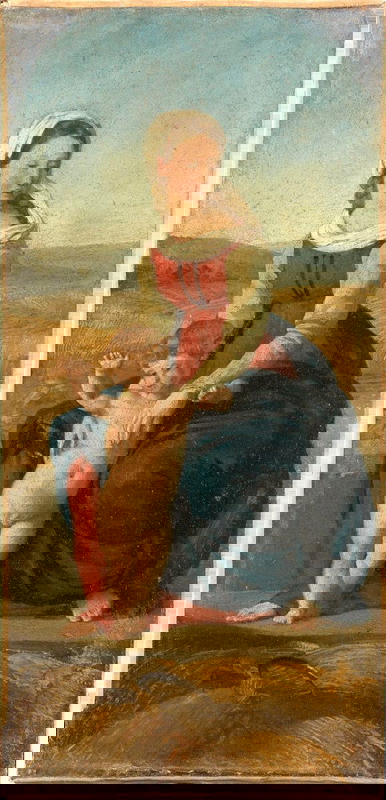
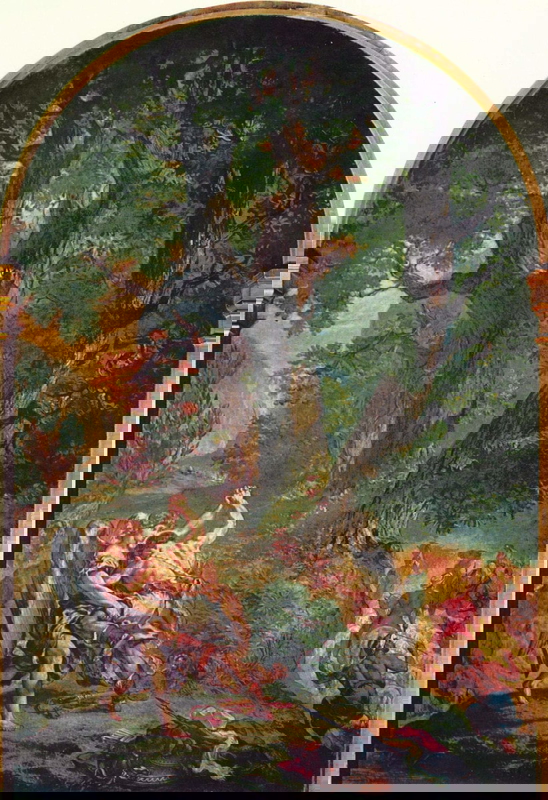
While studying under the Neoclassical master Pierre-Narcisse Guérin at the École des Beaux-Arts, Delacroix secured his first independent commissions painting religious altarpieces. He created the altarpiece The Virgin of the Harvest in 1819 when he was just 21.
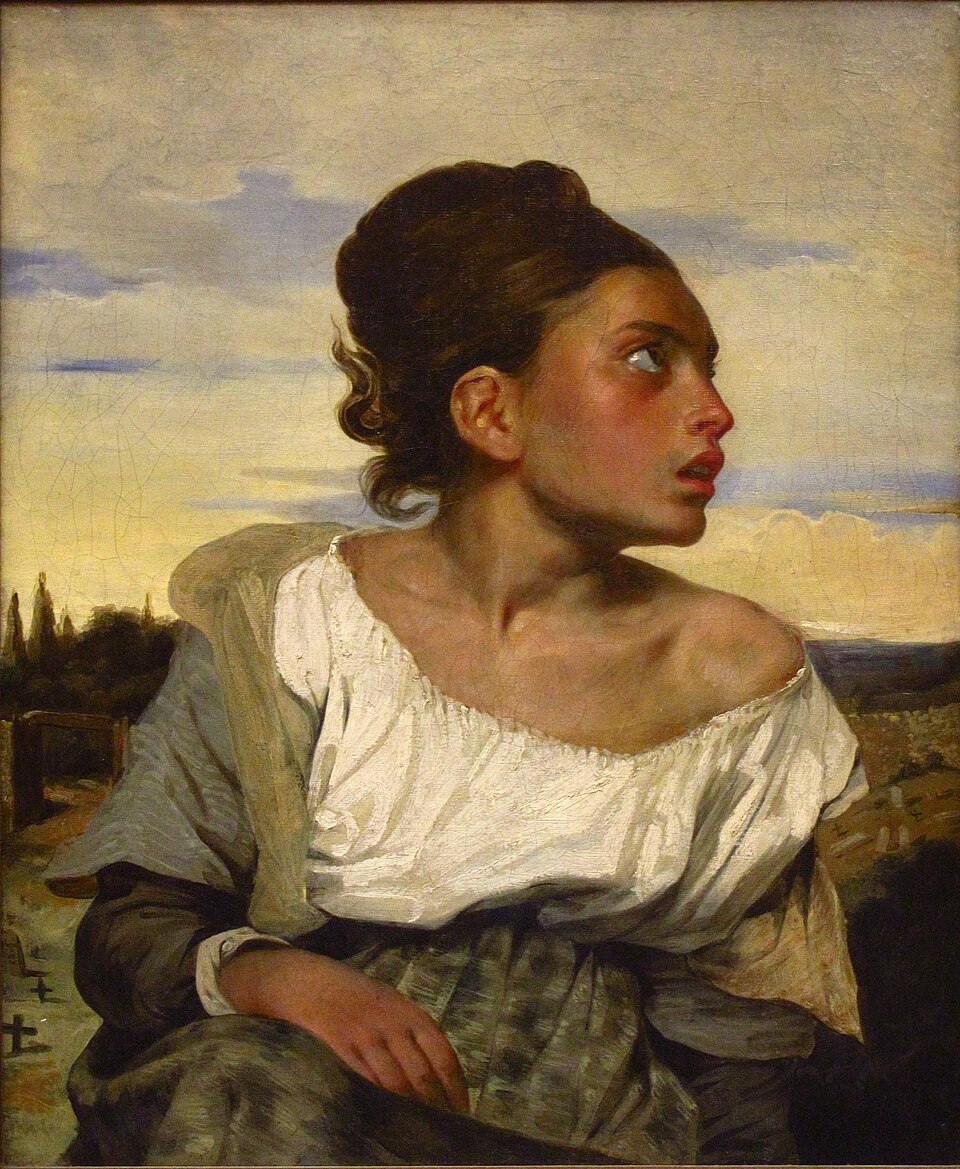
Two years later, he painted the previously mentioned The Barque of Dante, which was accepted at the Salon de Paris. His next Salon piece was Orphan Girl at the Cemetery, a portrait of a tearful young girl looking upward in grief. It is celebrated as one of Delacroix’s most moving early works.
Delacroix stayed busy painting and working throughout his life, pretty much up until the very end. He spent most of his later years in the countryside, producing still-life paintings and wild animals, especially lions, tigers, and horses.
His last major commissioned work included a series of three murals for the Church of St. Sulpice, including Jacob Wrestling with the Angel, Heliodorus Driven from the Temple, and Saint Michael Defeats the Devil. Working with a mixture of oil and wax on plaster, they took 12 years to complete.
While no longer a churchgoer, Delacroix produced several emotional religious works in his final years, including the Crucifixion, Lamentation, and Christ on the Sea of Galilee. Rather than grand theological statements, these late works emphasized human vulnerability, loneliness, and quiet resignation against vast, dark backgrounds.
4. The Revolutionary Was Hired to Paint French Palaces
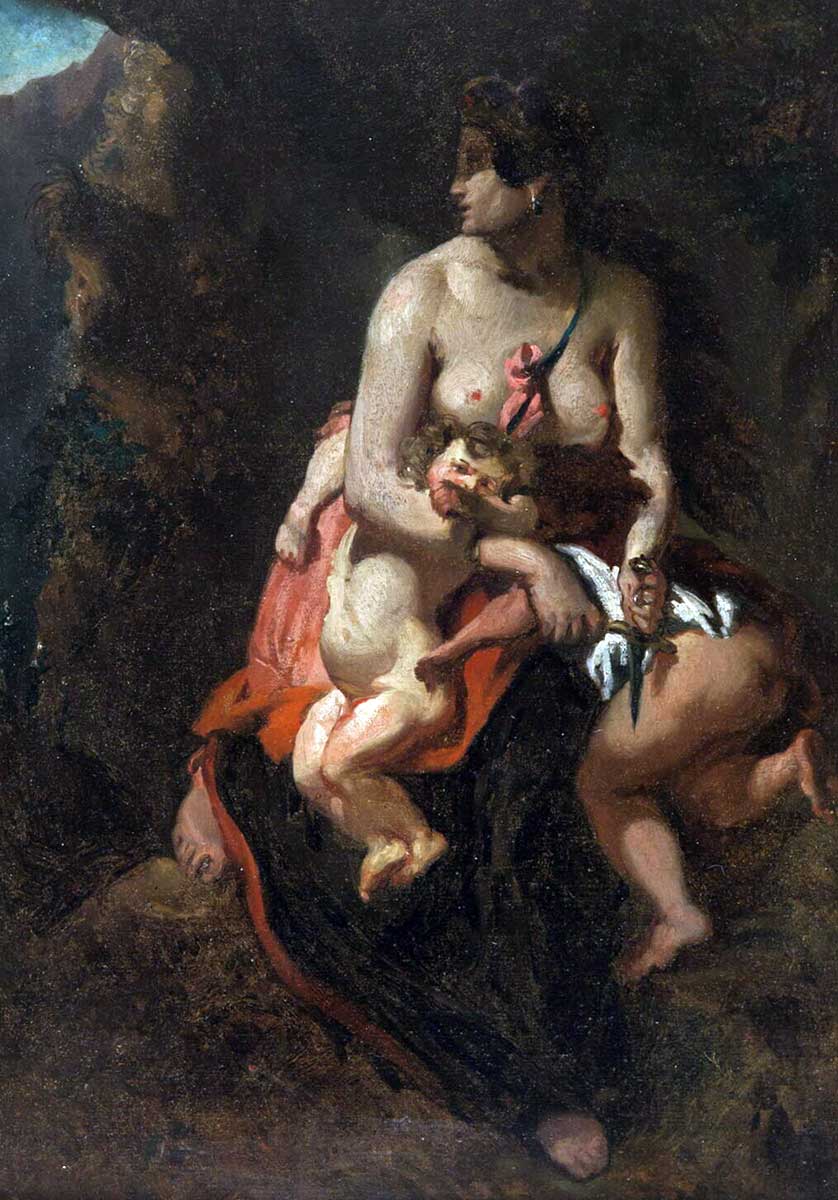
After Liberty Leading the People was purchased by the government, it also purchased Medea about to Kill Her Children in 1833, and commissioned Delacroix to decorate the Salon du Roi in the Chambre des Députés at Palais Bourbon. Over the next decade, Delacroix would earn commissions to paint the Library at the Palais Bourbon, the Library at the Palais de Luxembourg, and the Church of Saint-Denis-du-Saint-Sacrement.
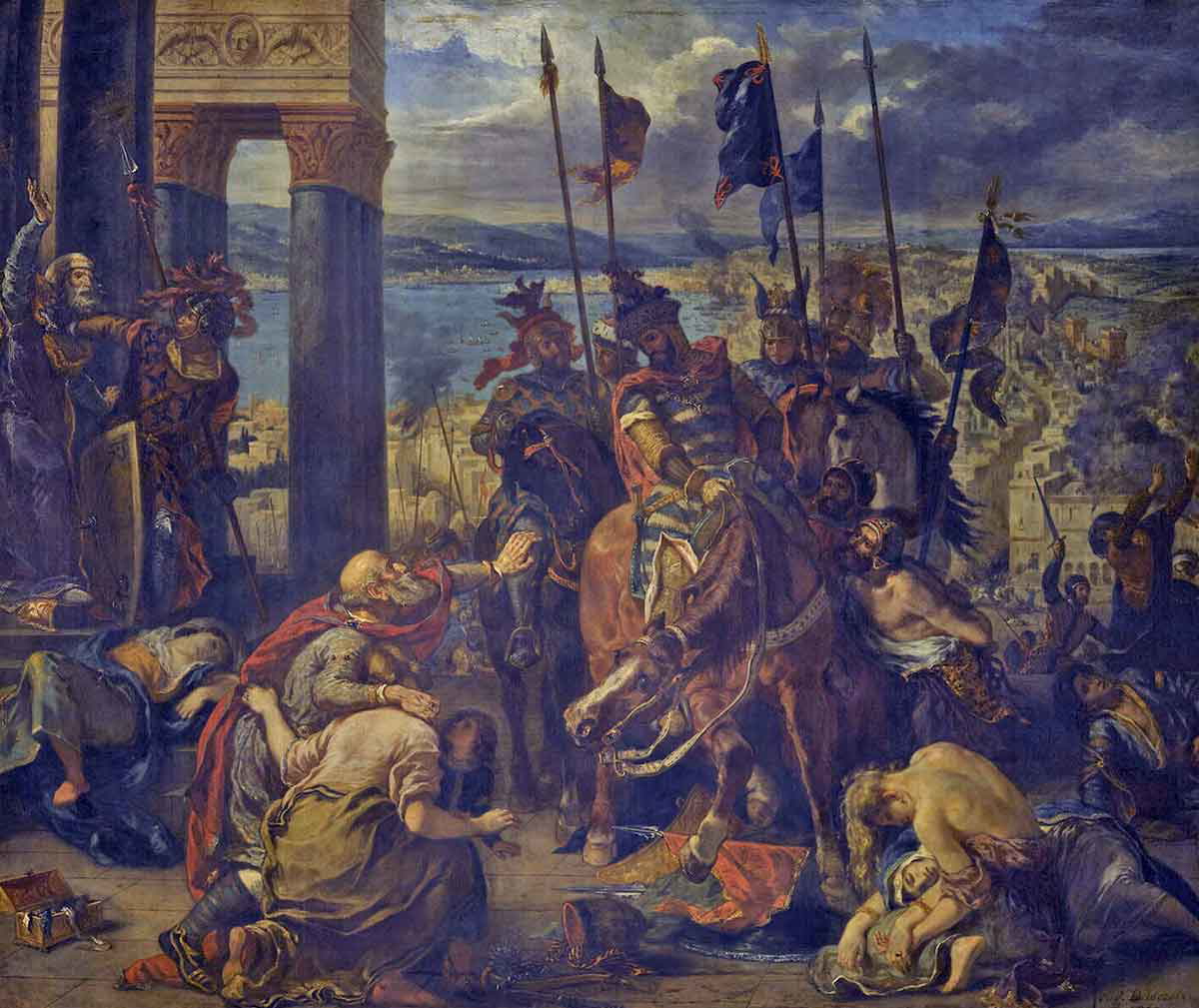
He was hired to paint the Château de Versailles, the former residence of the French kings, between 1837 and 1840. He did not paint murals inside Versailles. Instead, he created two colossal historical canvases specifically to decorate the Musée de l’Histoire de France within the palace: The Battle of Taillebourg (1837), celebrating King Louis IX’s medieval victory over the English, and Entry of the Crusaders into Constantinople (1840), depicting the tragic, chaotic aftermath of the Fourth Crusade.
From 1848 to 1850, Delacroix painted the ceiling of the Galerie d’Apollon of the Louvre, and from 1857 to 1861 he completed the aforementioned murals in the frescoes at the Chapelle des Anges at the Church of St. Sulpice.
5. Delacroix Inspired Many Modern Artists Like Van Gogh and Picasso
Delacroix is seen as the painter who ended the Baroque tradition of artists like Rubens, Titian, and Rembrandt, paving the way for a new generation of art and artists. His work was considered groundbreaking in its application of complementary colors and unmixed, juxtaposed brushstrokes, creating expressive and energetic works. This was a direct inspiration for impressionists such as Claude Monet, Edgar Degas, and Paul Cézanne.
Vincent van Gogh revered Eugène Delacroix, considering him one of the absolute supreme masters and the greatest colorist of all. He marveled at how he used unnatural tones to achieve emotional effects, stating, “He was forced to paint the shadows in Christ’s dead body with Prussian blue, the lights with pure chrome yellow… One has to be Delacroix to dare do that.”
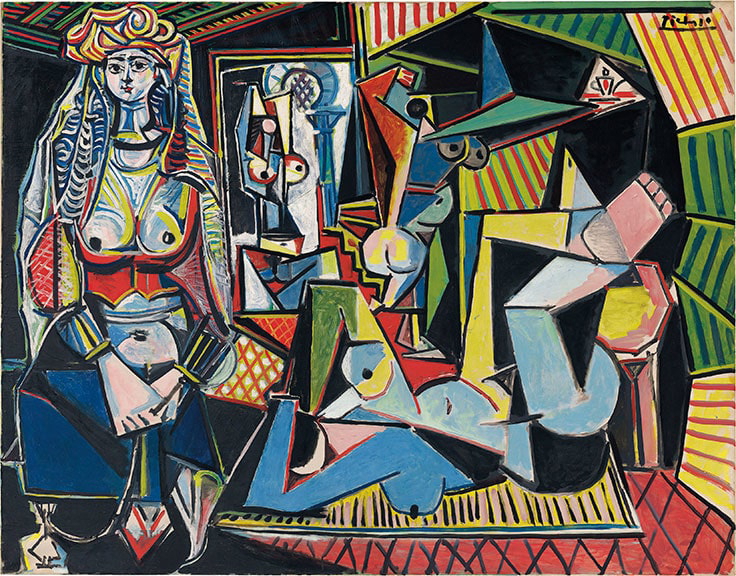
One of the most famous paintings from his Moroccan travels was Women of Algiers in their Apartment. If this name sounds familiar, it is because it inspired countless imitations in the 1900s by painters such as Matisse and Picasso. In fact, one of Picasso’s versions, Les Femmes d’Alger (Version O), is in the top ten most expensive paintings ever sold, for $179.4 million at a Christie’s auction in New York in 2015.
French art and art on a global scale were forever changed by the work of Delacroix. As a community, we’re lucky that he lived so long and worked for all of his life. Giving the world some of the most influential pieces of all time, he defined the Romantic era and so much more.