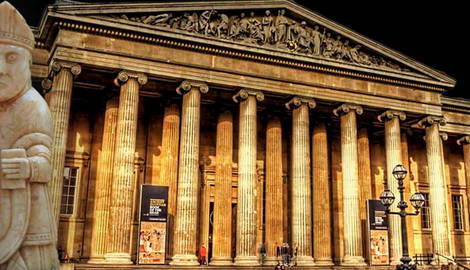

Attempting to “see” the British Museum in two hours is just about impossible. Two full days would not suffice, either. The collection holds over 8 million objects, of which only about 80,000 are on display at any given time. If you were to spend 30 seconds with each one, you’d still need to be there for nearly a month. So, let’s agree that you should not try to see the British Museum. But you can experience it in a couple of hours.
Do These Two Things Before You Go

The mistake most visitors on a tight schedule make is treating the British Museum like a checklist. They walk in, feel gobsmacked by the scale of the Great Court, and then spend an hour shuffling through Egypt because everyone shuffles through Egypt. Technically, they have been to the British Museum, but they probably haven’t really soaked up any of it. Don’t do that.
Here’s how to do it better.
Book your ticket in advance. The permanent collections are free to visit, but entry slots are timed, so you still need to book your spot. Lines for walk-ins can easily swallow a precious 30 minutes of your time. Here’s where to make an account and book your admission ticket.
Download the museum map the night before. Rooms are numbered, but not always in the most sensible way. If you spend a few minutes studying the floor map, you won’t be that person spinning in circles outside Room 33, wondering why Room 34 is apparently in a different wing!
First 10 Minutes: The Great Court
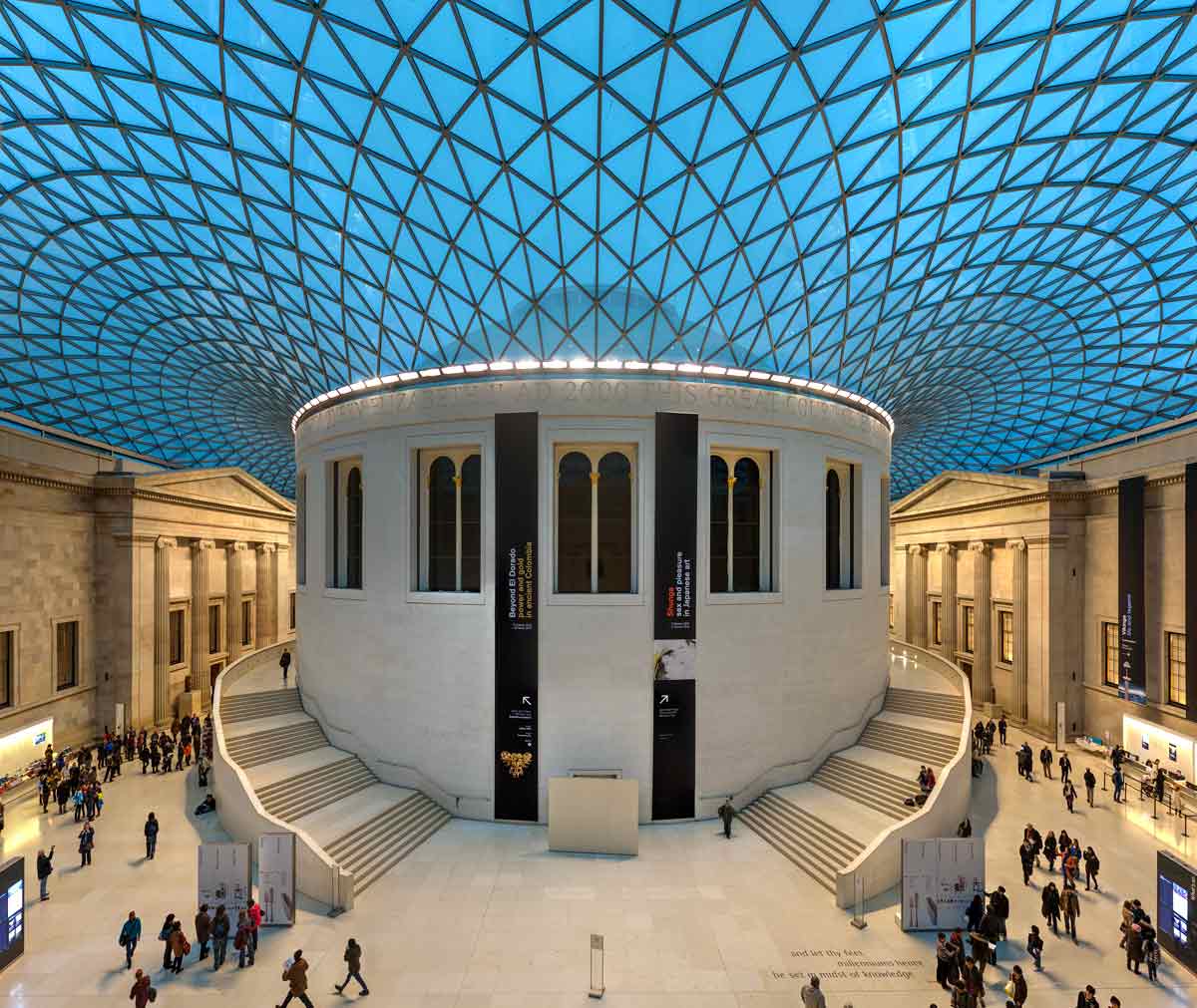
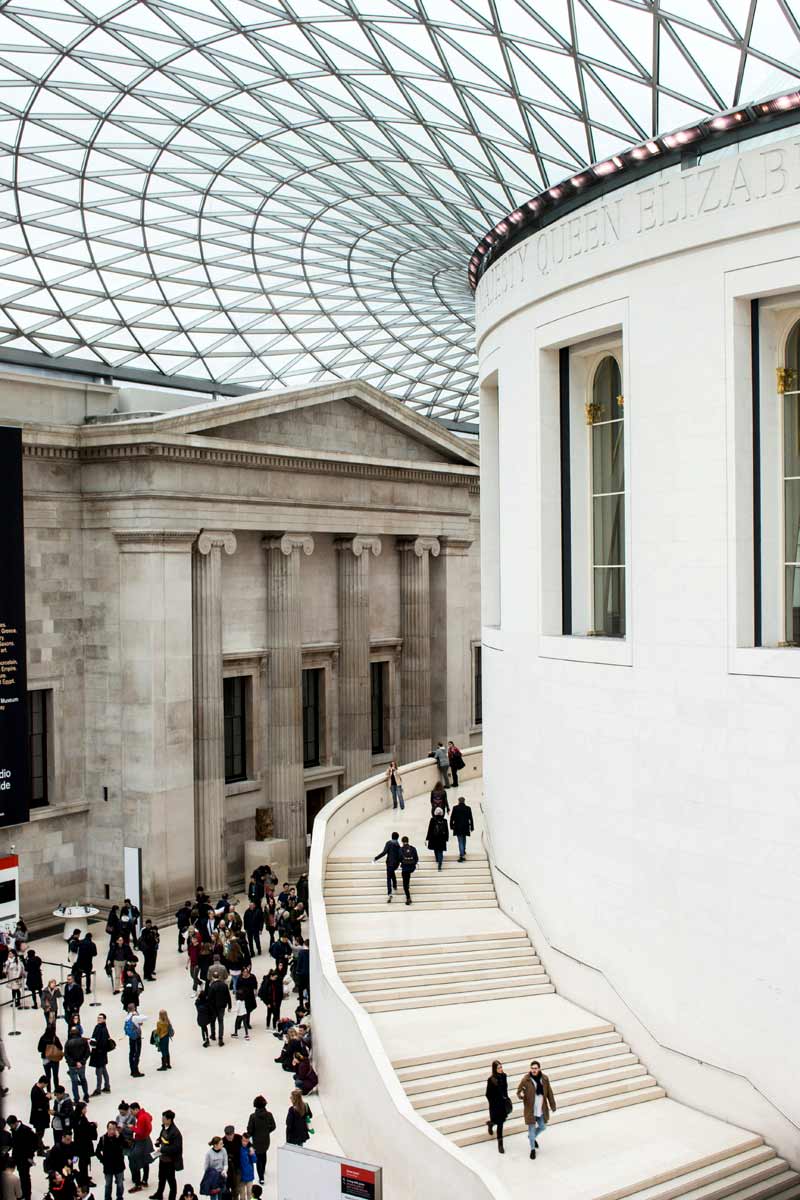
Most people treat the Great Court as just another lobby, but that would be the understatement of the century. In reality, it is one of the most extraordinary interior spaces in London, a two-acre courtyard covered by a tessellating glass roof designed by Foster and Partners, built around the famous circular Reading Room. Stand in the middle of it and look up. Give yourself 60 seconds to just be there and in the moment. The roof of the Great Court is worth a moment of your time. It includes 3,312 individual glass panels, none of them the same shape, held together by four miles of steel.
The Reading Room itself is accessible via free, volunteer-led spotlight tours on select days. While you can’t simply stroll inside at any time, booking a spot on one of these brief tours allows you to marvel at the restored interior with its blue and gold dome.
Next Half Hour: The Rosetta Stone and the Assyrian Galleries (Rooms 4 and 6–10)
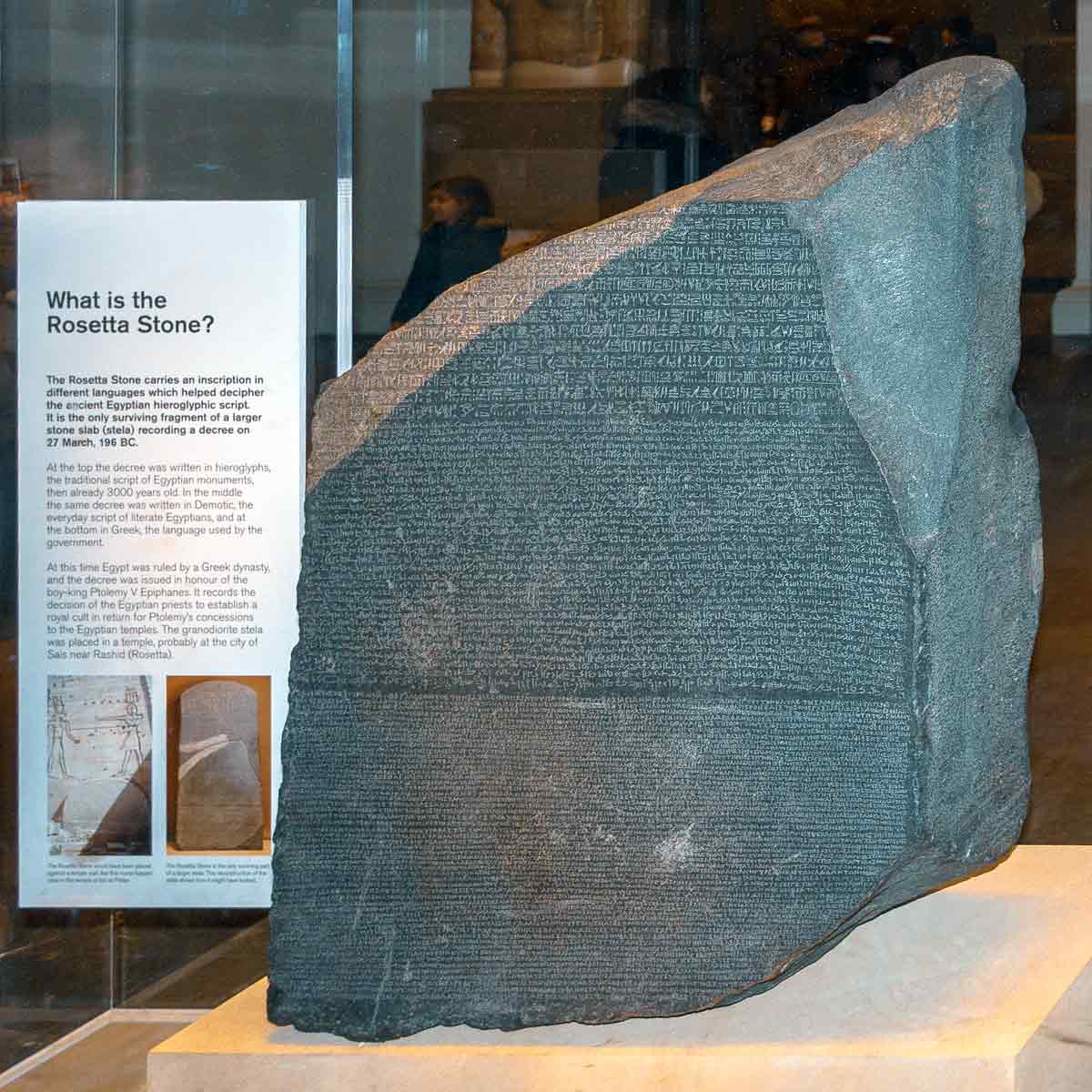
Much like the Great Court is not just another courtyard, the Rosetta Stone is not just another stone slab. Inscribed in 196 BC, in three scripts (ancient Egyptian hieroglyphics, Demotic, and ancient Greek) it acted as a decree issued by a council of priests in honor of the young king Ptolemy V. When French soldiers found it near the town of Rosetta in 1799, scholars immediately understood its incredible potential: the same text written in three writing systems meant that the known Greek version could, in theory, unlock the unknown Egyptian ones, too.
It still took more than two decades of work to see the translation come to life. The decisive breakthroughs came thanks to the French scholar Jean-François Champollion, who cracked the phonetic logic of hieroglyphics in 1822. The Rosetta Stone didn’t just open a door to ancient Egypt, though; it essentially unlocked access to ancient thoughts that had been completely unreadable for centuries.
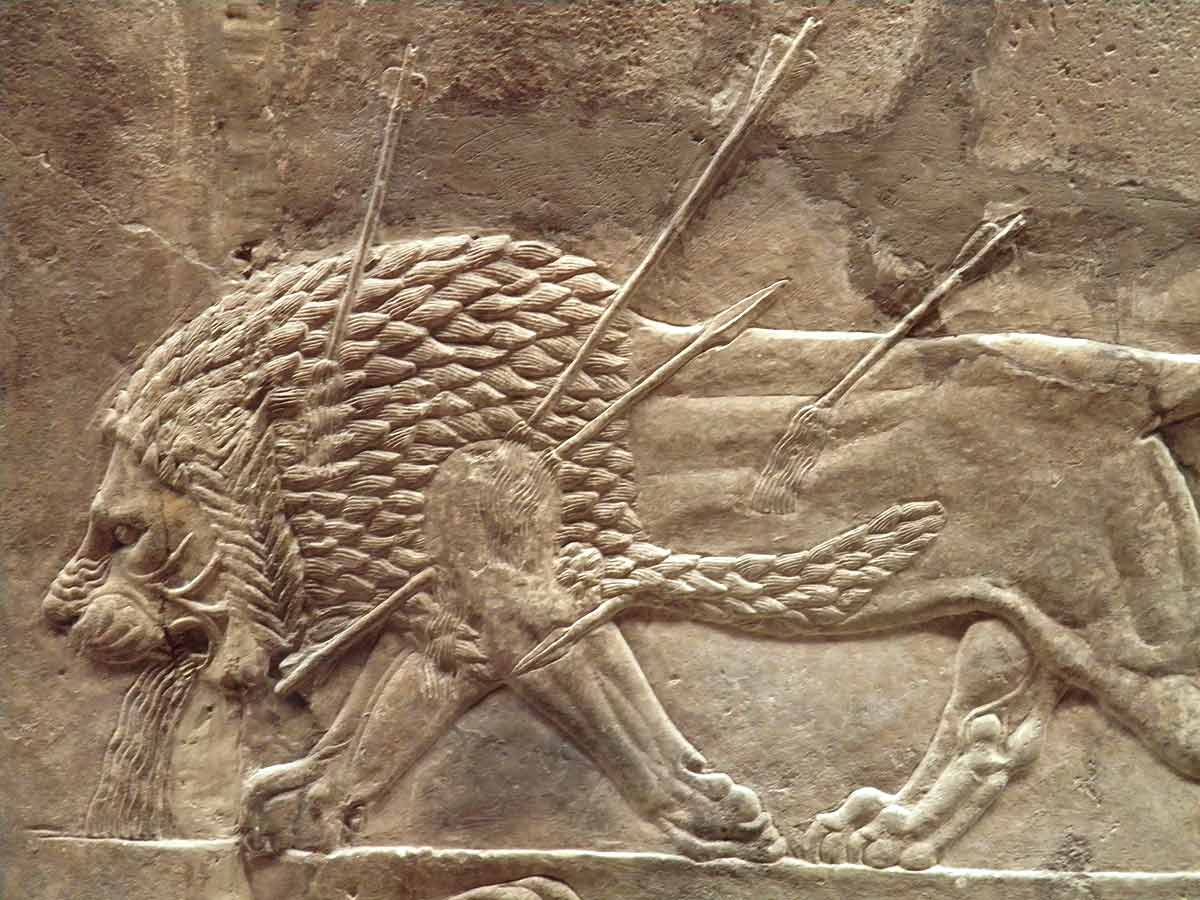
Then, and this is the real insider move, step past the Egyptian galleries and find the Assyrian lion hunt reliefs in Rooms 6 to 10. Almost everyone misses these because they’re already on their way to the mummies. Carved around 645 BC, for the palace of the Assyrian king Ashurbanipal, they show lions being released from cages and hunted while the king watches from his chariot. The detail, particularly the suffering of the dying lions, is remarkable.
Next 30 Minutes: The Parthenon Sculptures (Room 18)
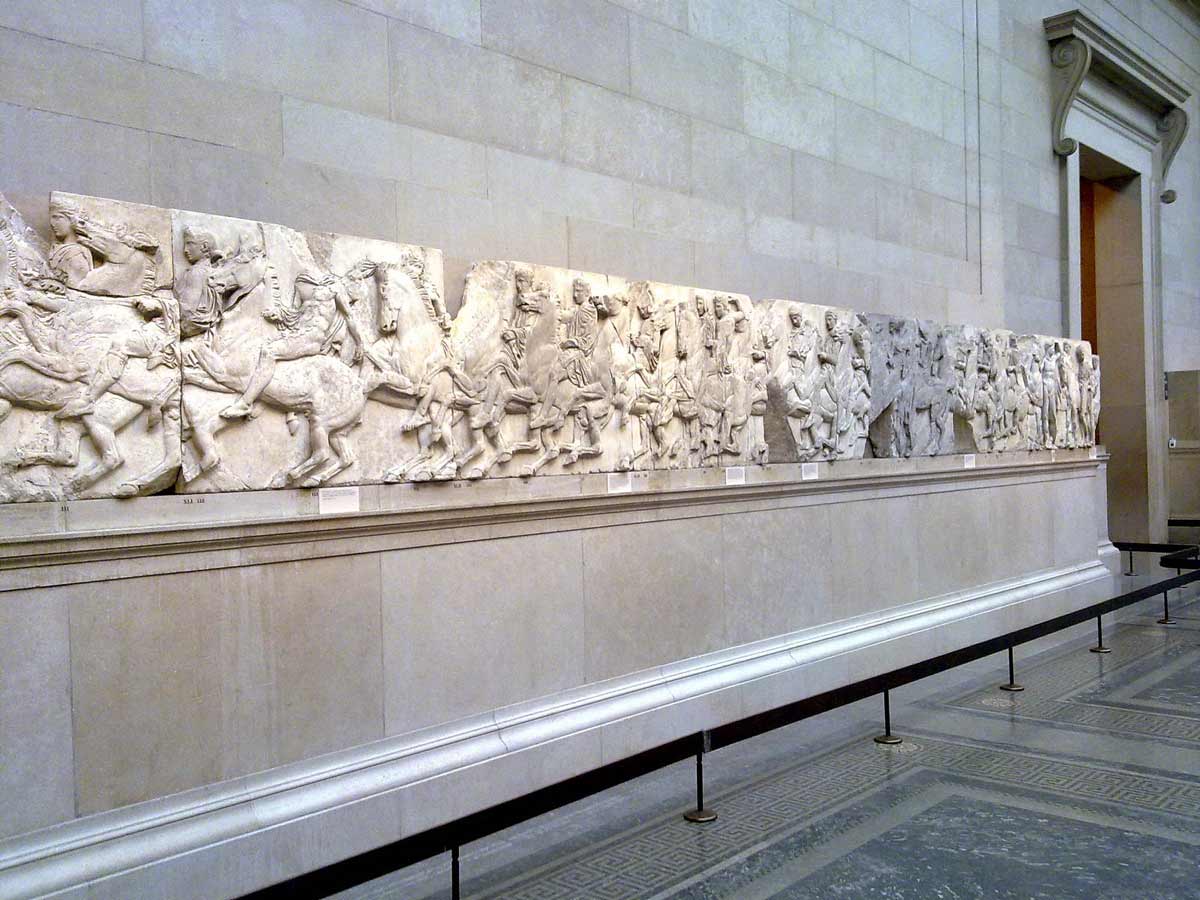
Walk back through the Great Court and over to Room 18 on the first floor to reach the Parthenon Sculptures.
The Greek sculptures have attracted much controversy, most of which you will probably have heard about. While the argument about whether the sculptures belong in Athens is one worth having, feel free to do so, but after you’ve looked at the sculptures themselves.
The elaborate carvings were created roughly between 438 and 432 BC, under the direction of the sculptor Phidias, as decoration for the Parthenon on the Athenian Acropolis. Experts consider them the absolute peak of classical Greek sculpture, but even a complete antiquity novice can’t help but be utterly moved by their incredible detailing.
Insider tip: the room tends to be busiest around the middle, so walk to the far end and look back along the entire frieze from the corner. The perspective from there gives a real sense of how the whole composition would have felt as it encircled the temple.
25 Minutes: The Lewis Chessmen (Room 40)
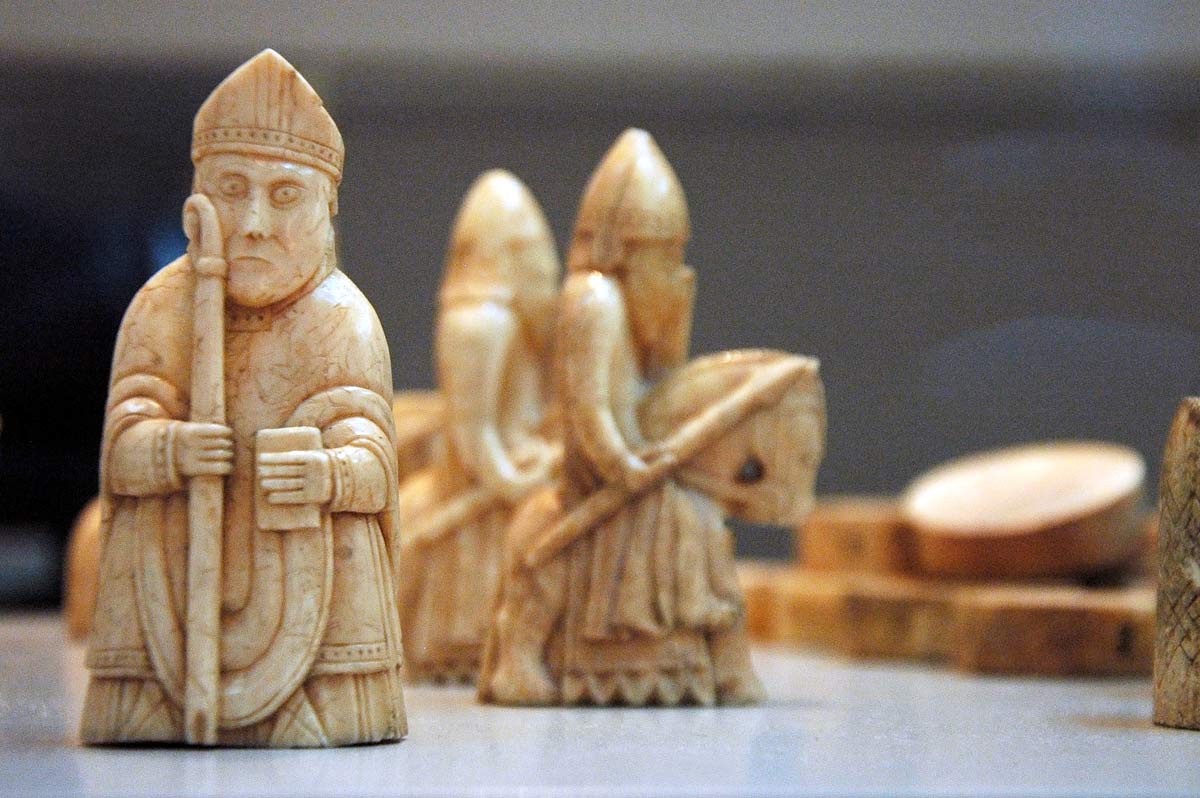
Carved from walrus ivory in the late 12th century, most likely in Norway, and discovered in a sandbank on the Isle of Lewis in the Scottish Outer Hebrides in 1831, these chess pieces are among 93 objects found in just a single hoard. The figures depict kings, queens, bishops, knights, and rooks in the form of warriors biting their shields (a detail that never stops being wonderful), and simple obelisk-shaped pawns. They look like anxious little people; some of them have genuinely worried expressions, and notice the queen’s holding a hand pressed to the cheek in what reads unmistakably as exasperation.
They are funny and strange and beautiful and very old, and they will make you happy. Five minutes minimum.
Next 25 Minutes: Pick One More Thing
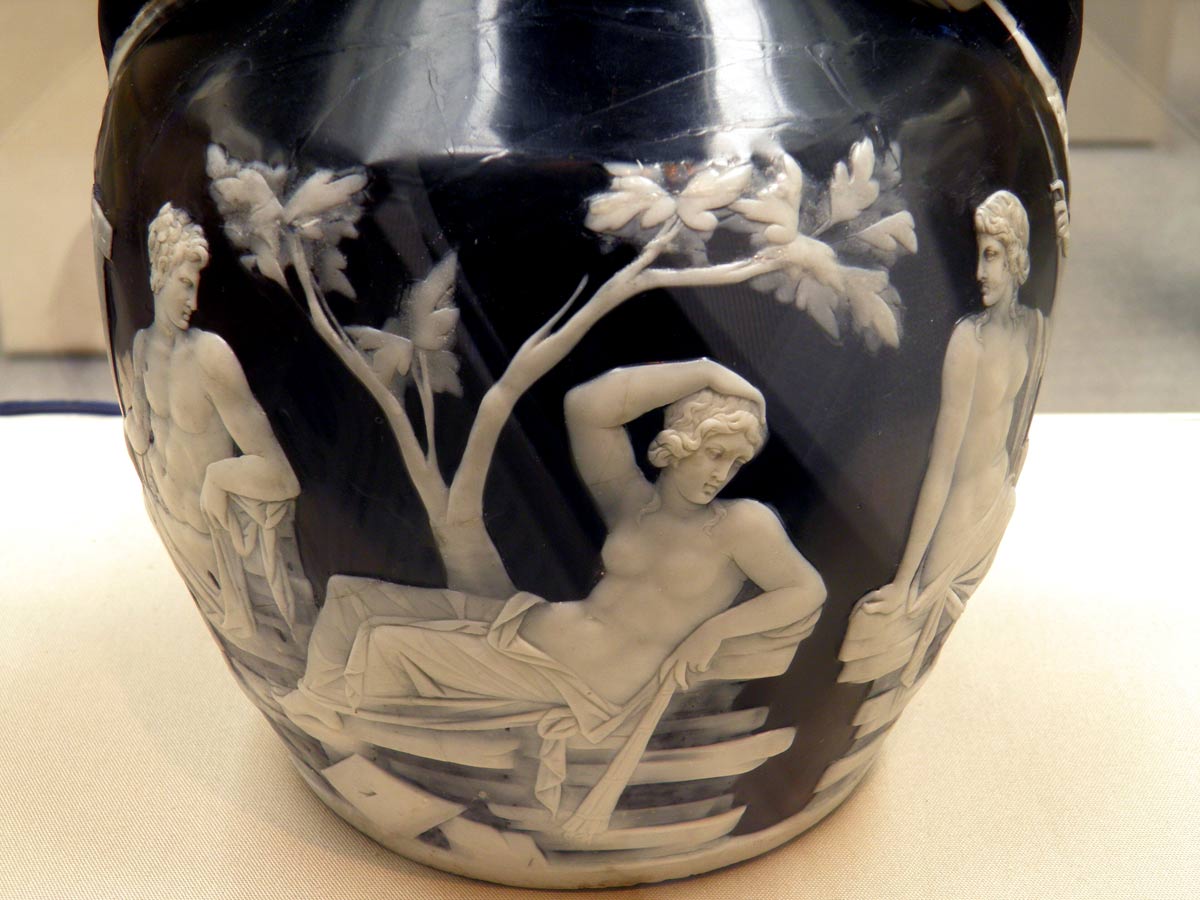
Here’s where you get freedom to respect your time and your interests. You’ll have about 20 minutes left at this point, so go ahead and use them on one thing. Not two or three, though, just choose one. One.
If you’re drawn to ancient Rome, go to Room 70 and find the Portland Vase: a 1st-century cameo glass vessel of such extraordinary technical refinement that it obsessed Josiah Wedgwood for years and still isn’t fully understood by modern glass-makers.
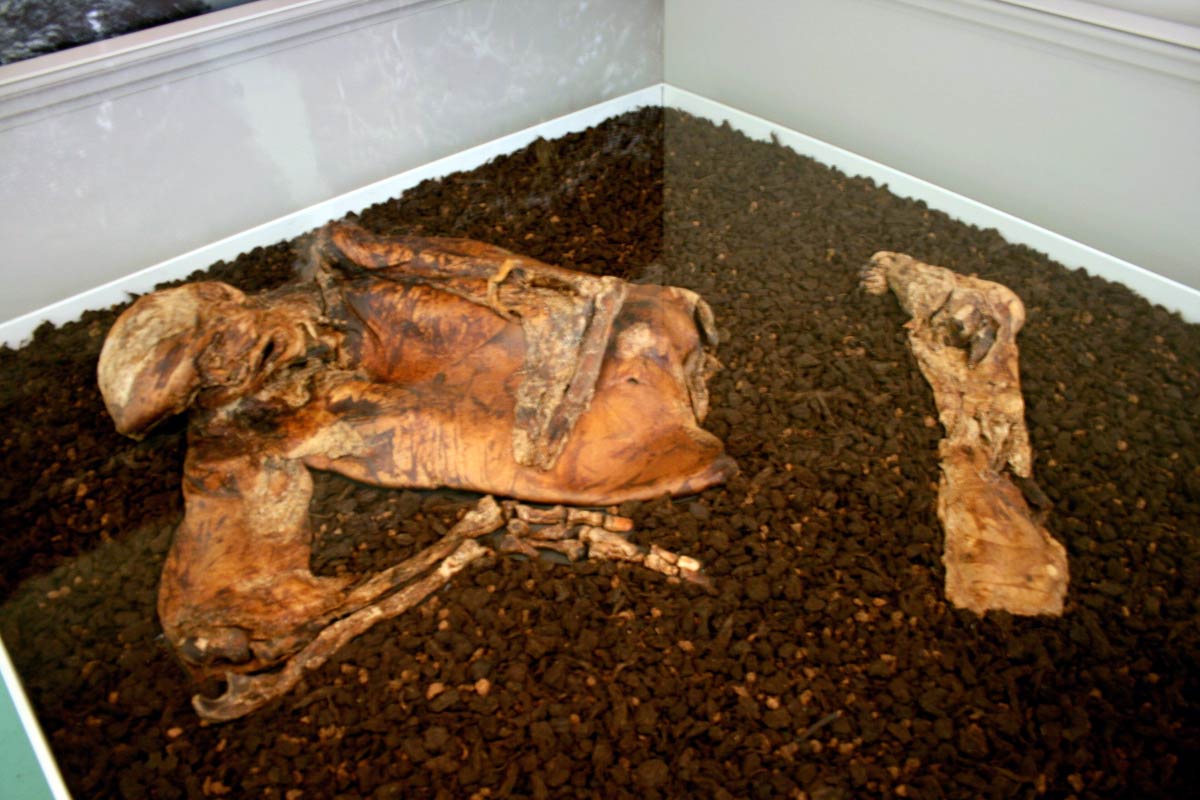
If you’d rather something visceral and strange, go to Room 50 and find Lindow Man, a bog body from Roman-era Britain preserved in peat for nearly 2,000 years. He is exactly as unsettling as he sounds and just as moving.
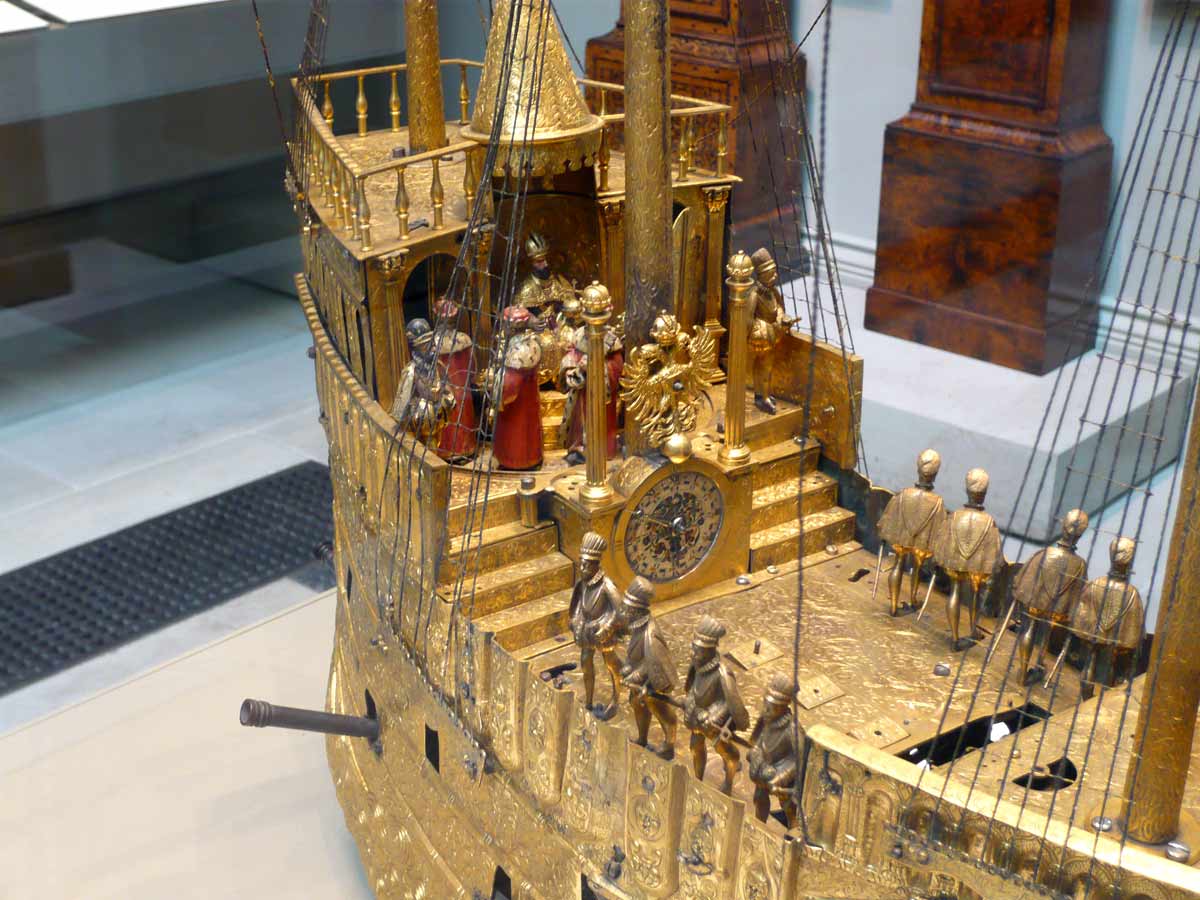
If you’re a lover of curiosities, Rooms 38 and 39 hold one of the finest collections of European clocks and watches anywhere, including a 16th-century mechanical galleon that would sail across a dinner table firing tiny cannons while playing music. It was made for a German princely court around 1585, which tells you everything you need to know about how the other half lived.
The Last 20 Minutes: Well Done, You, Now Take a Seat!
Now’s the time to take a breather and let your brain process what it’s soaked up before you leave. The Great Court cafe is a pretty decent place to do that, and there are also benches near the Reading Room if you want to sniff all those books without taking the guided tour.
The worst way to end a museum visit is to stumble out onto Great Russell Street blinking and slightly numb and immediately check your phone. So sit somewhere quiet and recount all you’ve seen, before getting on with your busy day.
A Few Practical Notes
The museum is busiest on Saturday afternoons and during weekday lunchtimes in the summer. Midweek mornings are the sweet spot, and if you can arrive when the doors open at 10 am, the first 45 minutes feel almost private by the standards of one of the world’s most visited museums.
The cloakrooms near the Great Court entrance are worth using if you have a bag larger than a small backpack. You’ll move faster and feel less encumbered, which matters more than you’d think over two hours of walking on stone floors.
Photography is permitted throughout most of the permanent collection, which is a gift. But put the phone away while you’re actually looking at things. Our best tip? Take your photos when you’re done looking, not instead of.