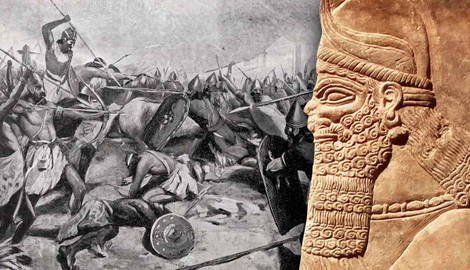

At the Battle of Carchemish, Babylonians decisively defeated the Assyrians and their Egyptian allies. For centuries, the Assyrians had brutally controlled vast areas of Mesopotamia, enabling them to form the largest empire in history up to that time, the Neo-Assyrian Empire. The empire ceased to exist as an organized state when Harran fell in 609 BC, but remnants of the Assyrian army continued to fight for a few more years.
At Carchemish in 605 BC, the last remnants of the Assyrian army were swept away as well.
Historical Context for the Fall of the Assyrian Empire
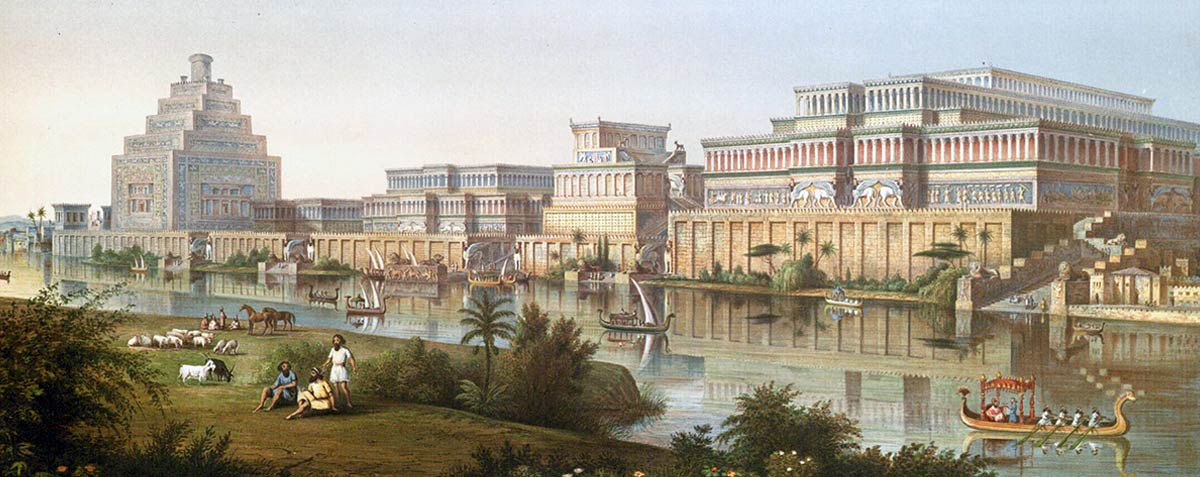
In 401 BC, the Greek general and historian Xenophon and the 10,000 mercenaries were marching home after their client Cyrus the Younger died at the Battle of Cunaxa. As they advanced into northern Mesopotamia, they stopped at the ruins of two enormous cities along the Tigris River.
The first he called Larisa, the second Mespila. These were the ruins of Nimrud and Nineveh, two of the greatest cities in the Assyrian Empire, each having served as its capital at different times. The original names and builders of the cities seem to have been unknown to the local inhabitants of the time. Xenophon could only report that the Medes may have occupied them in the past.
If their names had been forgotten, it was a testament to how quickly and completely the Assyrian Empire collapsed, two centuries before Xenophon and his men gazed upon the ruins.
The Assyrian Empire and the city of Nineveh were certainly known to the Greeks. Herodotus mentions Nineveh several times and describes its fall to the Medes. However, Greek knowledge of Assyria was incomplete and distorted.
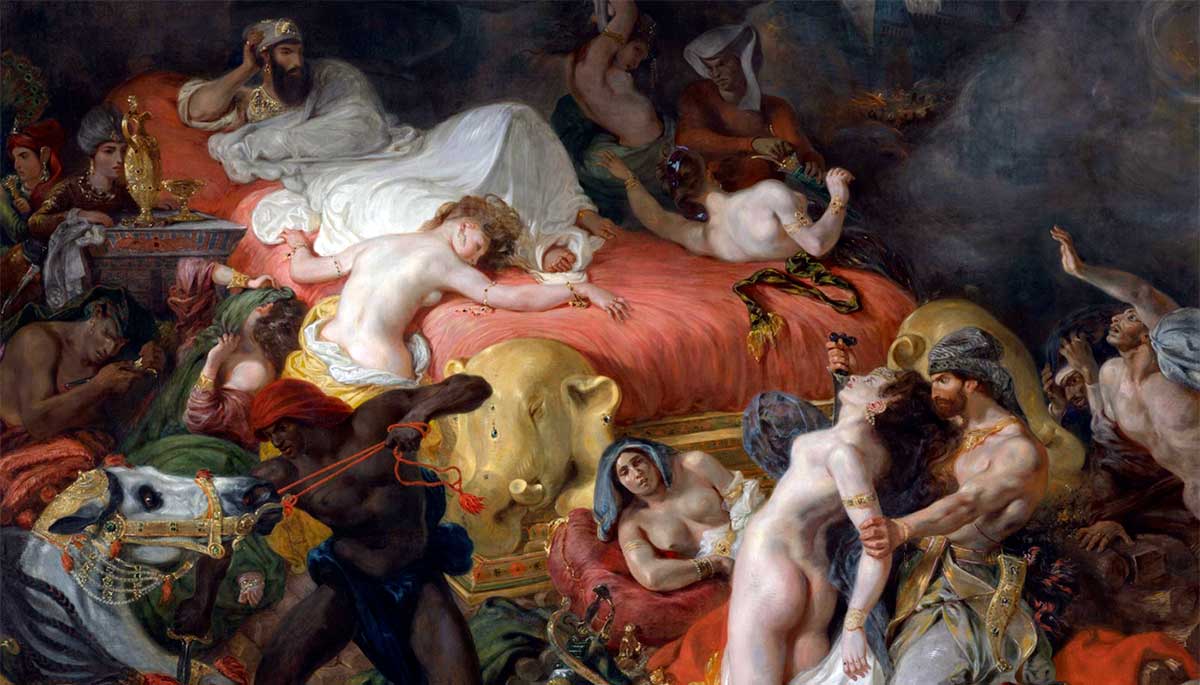
They had, for instance, distorted the name and biography of Ashurbanipal, one of Assyria’s last and greatest kings, into the legendary Sardanapalus. In the Greek telling, Sardanapalus was the last king of Assyria, whose decadence, depravity, and hubris led to the fiery destruction of his empire.
The Bible also ties the fall of the Assyrian Empire to its hubris, along with the cruelty it showed to those it had conquered. In a passage titled Woe to Nineveh, the prophet Nahum wrote, “Nothing can heal your wound; your injury is fatal. Everyone who hears the news about you claps his hands at your fall, for who has not felt your endless cruelty?” (New International Version, Nahum 3:19).
Divine judgment had fallen swiftly and terribly upon Assyria, in the form of retribution at the hands of peoples it had treated so cruelly. On this point the classical sources and the Bible would agree.
Babylon and Nineveh: A Tale of Two Cities
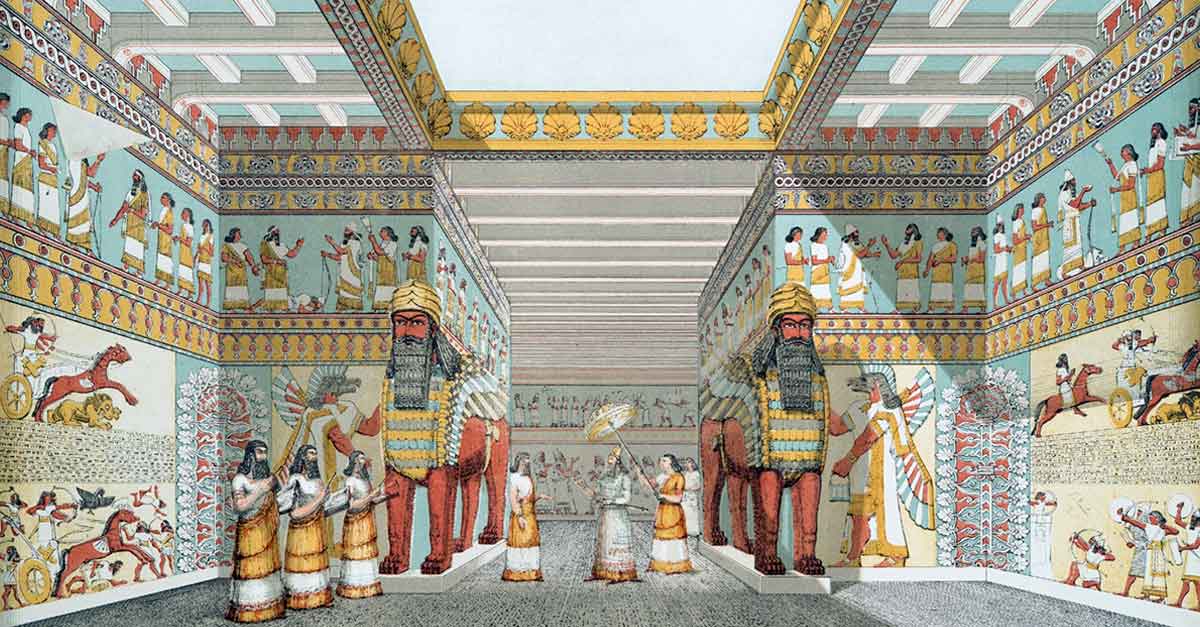
A coalition of Assyria’s former subjects conquered the Assyrian Empire just a few decades after it had reached the height of its power under Ashurbanipal. Various theories attempt to explain how this could have happened.
One theory holds that a prolonged drought in Mesopotamia severely weakened Assyria and depopulated the empire’s heartland. Paleoclimatic data provides some evidence for a severe drought between 675 and 550 BC, but researchers have not yet established a direct link between drought and the empire’s downfall. Cuneiform texts from the period provide little assistance in corroborating this theory.
Another theory holds that the Scythians raided Assyria, ranging throughout the Levant for years and weakening the empire. While some scholars dismiss this theory, the Scythians may have been part of the alliance that eventually brought Assyria down.
Other theories look toward political and structural weaknesses that prevented the empire from managing the challenges it faced in the 7th century BC. Of course, no single cause by itself is usually responsible for something as complex as the fall of a civilization. The explanation for the Assyrian Empire’s rapid collapse in the face of these challenges may lie in some combination of these theories.
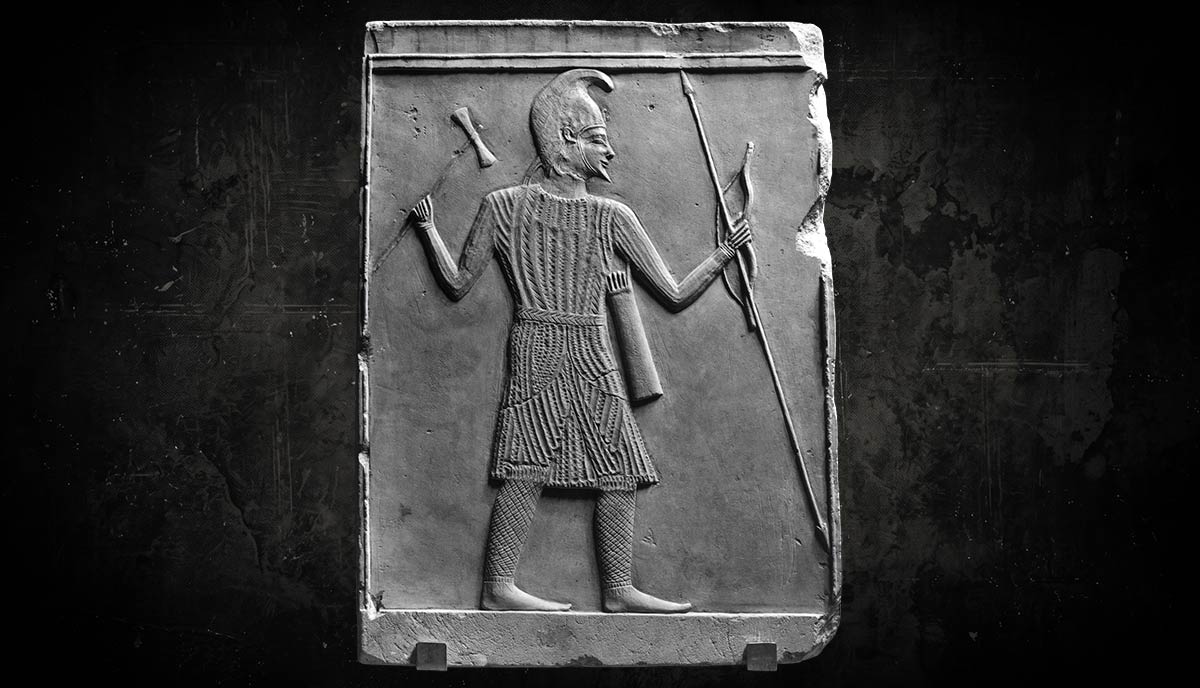
Regardless of the theory held, the long and complex relationship between Babylon and Assyria is key to understanding the final years of the Assyrian Empire. As a proud and ancient city, Babylon had resented Assyrian rule ever since Tiglath-Pileser III conquered the city in 729 BC.
Babylon had proven difficult to control, with periodic uprisings followed by Assyrian reconquests. Sennacherib had even destroyed the city in 689 BC, with his son Esarhaddon rebuilding it in 680 BC. Almost 50 years later, a period of instability and a succession of short-lived rulers followed the death of Esarhaddon’s son Ashurbanipal.
Taking advantage of this chaos, a Babylonian official named Nabopolassar seized the throne in Babylon, intending to avenge more than a century of humiliation by the Assyrians.
A Threat From the East
After ascending to the throne of Babylon in 626 BC, Nabopolassar fought many battles to expel Assyrian forces from Babylonia. For six years the fortune of war wavered back and forth. The Assyrian army was still a formidable force even in the empire’s waning years.
Eventually the Babylonians succeeded in driving the Assyrians out of southern Mesopotamia. In 615 BC, Nabopolassar marched to Assur, birthplace of Assyrian civilization some 1,400 years earlier and still its religious center, but he was unable to take the city. Sin-shar-ishkun, who ascended to the Assyrian throne the same year that Nabopolassar had in Babylon, pushed the Babylonians south but then had to quickly retreat to the Assyrian heartland.
A new problem emerged for the Assyrians later that same year. The Medes unexpectedly attacked from the east, led by their king Cyaxares. The Assyrians had never conquered the Medes, a confederation of Iranian tribes centered around the city of Ecbatana.
However, the Assyrians had made attempts to do so and had exerted control over trade in the region. Herodotus also wrote that the Assyrians killed Cyaxares’ father in an earlier conflict. The Assyrians were not expecting this invasion, but the Medes had more than enough justification in their own eyes to launch the attack.
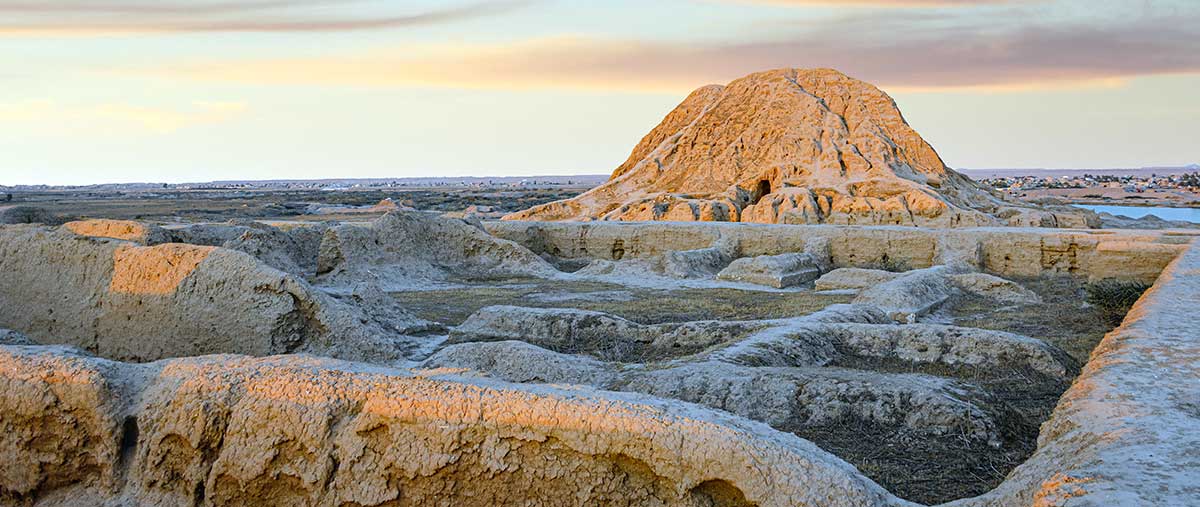
The Median invasion force reached Assur in the summer of 614 BC. The Medes accomplished what the Babylonians had not been able to in the previous year and plundered the city. Nabopolassar rushed north, intending to join the Medes in the attack. He arrived too late. The city had already fallen, but he met with Cyaxares among the ruins and formalized an alliance.
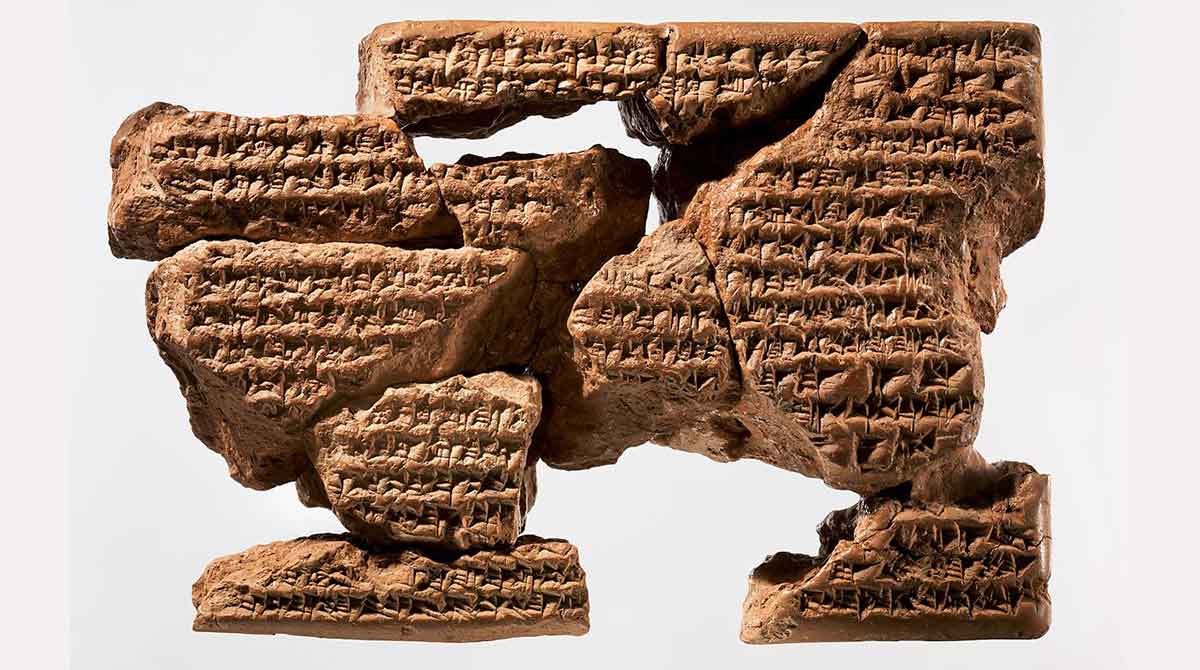
The fall of Assur and the formation of this alliance must have been ominous portents for the Assyrians. A remarkable cuneiform letter from Sin-shar-ishkun to Nabopolassar demonstrates the fear the Assyrian king felt at this time. Sin-shar-ishkun refers to Nabopolassar as “the king my lord” in the letter and pleads with Nabopolassar to allow him to remain on the throne of Assyria as a vassal.
The Fall of Nineveh
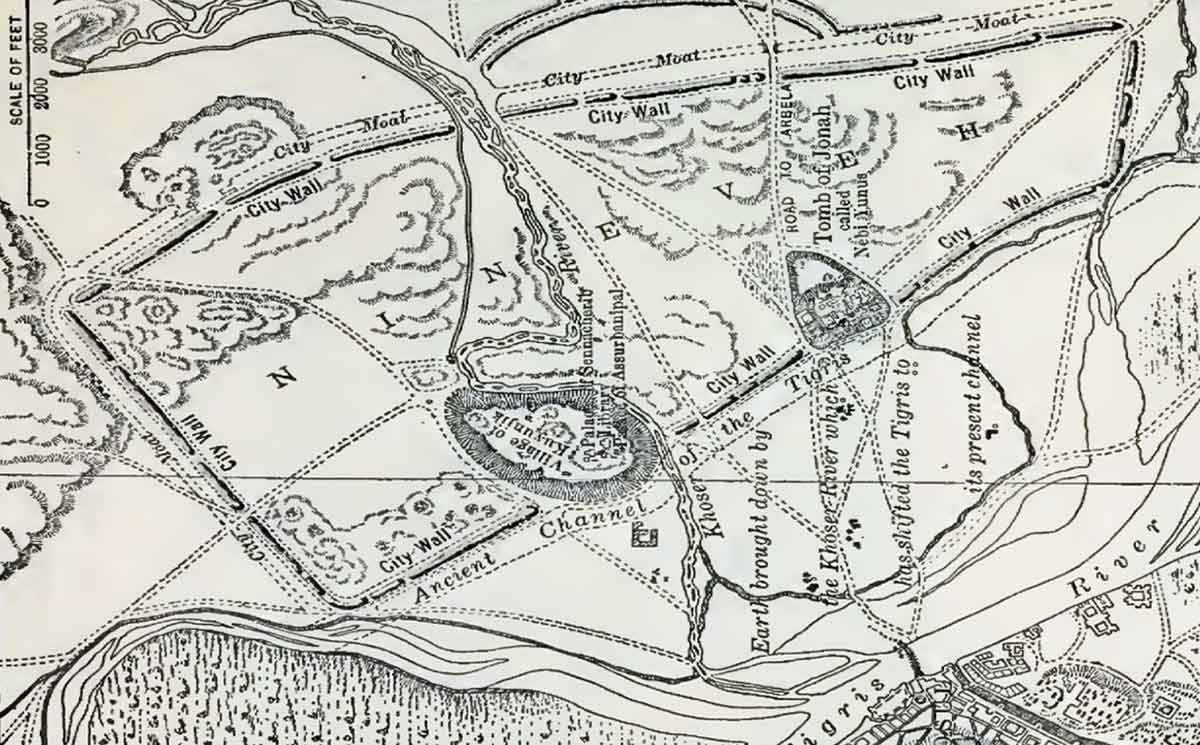
Sin-shar-iskhun’s pleas for mercy had no effect. After a hard-fought campaign north along the Tigris River, the combined forces of Nabopolassar and Cyaxares finally reached the walls of Nineveh in 612 BC. Nineveh, capital of the Assyrian Empire, was likely the largest and wealthiest city in the world at this time. Despite its size and its high walls, the city fell after a three-month siege. Recent archaeological investigations point to the ferocity of the fighting and the desperate defense. Excavations at the southeastern Halzi gate revealed the skeletons of numerous defenders, lying where they fell.
The Babylonian Chronicles, a collection of cuneiform tablets written by Babylonian astronomers, give a contemporary account of the battle. The account contains gaps (lacunae) where the text is broken, but it is likely that Sin-shar-ishkun perished in the battle:
“[Nabopolassar and Cyaxares] subjected the city to a heavy siege. On the [lacuna] day of the month Âbu they inflicted a major defeat upon a great people. At that time Sin-shar-ishkun, king of Assyria, [lacuna, probably died]. They carried off the vast booty of the city and the temple and turned the city into a ruined heap” (Fall of Nineveh Chronicle).
Nimrud, another great city of Assyria and a former capital, was also destroyed at this time. Nimrud fell between 614 and 612 BC, but a lack of written sources makes it impossible to pinpoint exactly when the city fell.
The Fall of Harran
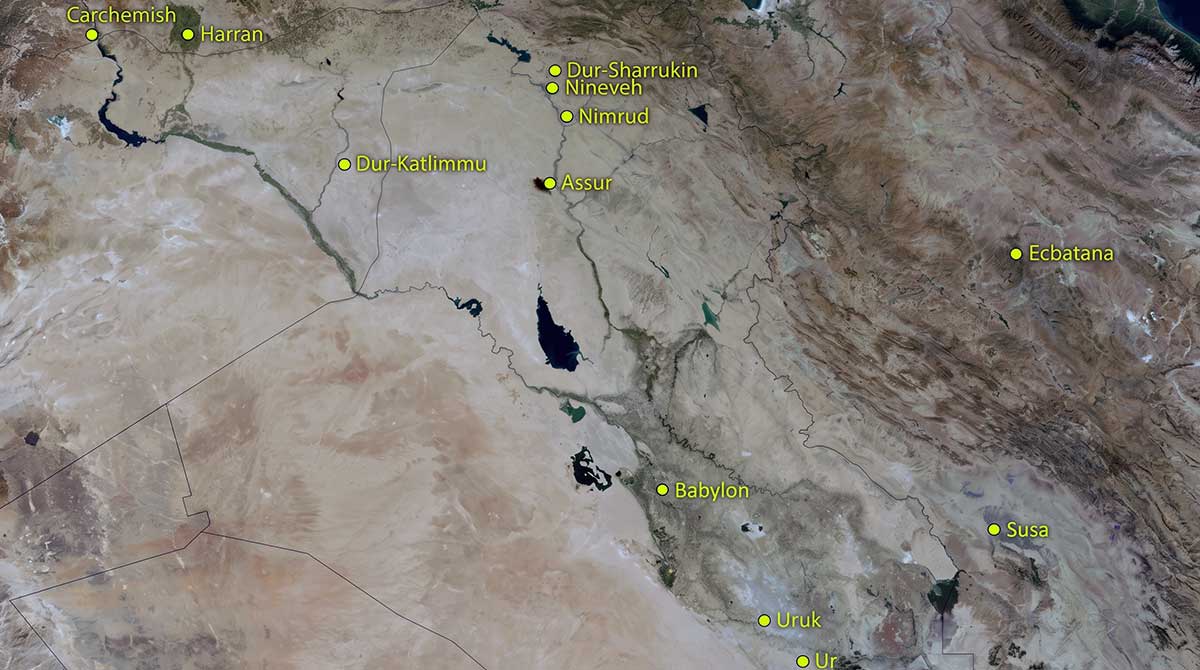
The Babylonians and Medes had destroyed all the major cities of the Assyrian heartland along the Tigris River. King Sin-shar-ishkun had fallen. He would be the last king of Assyria. His successor was a prince named Ashur-uballit II, possibly Sin-shar-ishkun’s son. He could only assume the title of crown prince, as kings of Assyria could only be crowned in the city of Assur, which had fallen two years earlier.
In desperation, Ashur-uballit II moved the capital far to the west to the city of Harran. Harran had so far avoided attack by Nabopolassar and Cyaxares. Ashur-uballit must have known it was only a matter of time before they arrived.
The Babylonians and Medes reached Harran in 610 BC, and the city would fall the following year. Egypt, which Esarhaddon had conquered decades earlier, was still an ally of Assyria at this time. The Egyptians sent an army to reinforce Ashur-uballit II at Harran. As the Babylonians and Medes approached Harran, however, the Egyptian and Assyrian armies abandoned the city, apparently believing they could not hold it. Nabopolassar easily captured the city.
Intent on recapturing the city, Ashur-uballit II returned the next year along with his Egyptian allies under a new pharaoh, Necho II. Although the Assyrians and Egyptians appear to have achieved some initial victories around Harran, they were unable to capture the city. Ashur-uballit II disappears from the historical record shortly thereafter. The fall of Harran is generally considered the end of the Assyrian Empire and Assyrian civilization.
The Battle of Carchemish
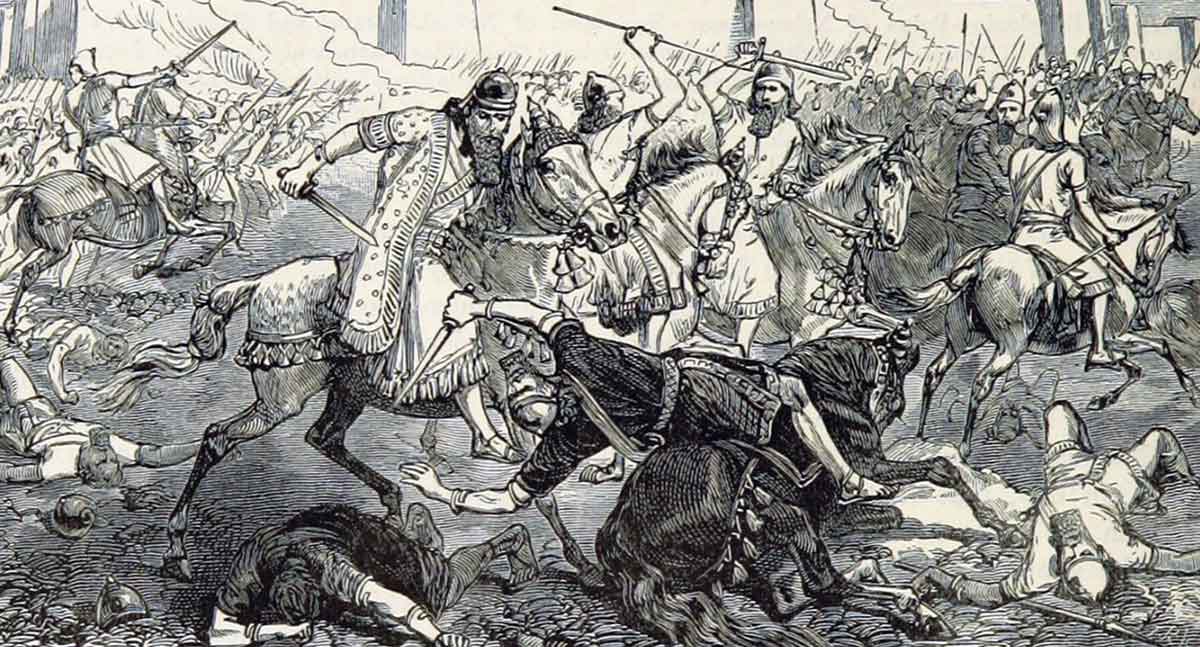
Marking the end of Assyrian civilization with the fall of Harran is not as straightforward as it may seem, however. Although the fall of the city ended the empire as an organized state, the remainder of the Assyrian army fought on for several more years.
Establishing a stronghold even further west in the city of Carchemish, the combined forces of the Egyptians and Assyrians awaited the inevitable Babylonian-Median advance. They arrived in 605 BC, under the command of Nabopolassar’s son, crown prince Nebuchadnezzar. Nabopolassar stayed in Babylon, apparently due to age or health issues. Indeed, Nabopolassar died shortly after the Battle of Carchemish and Nebuchadnezzar became king of Babylon at that time.
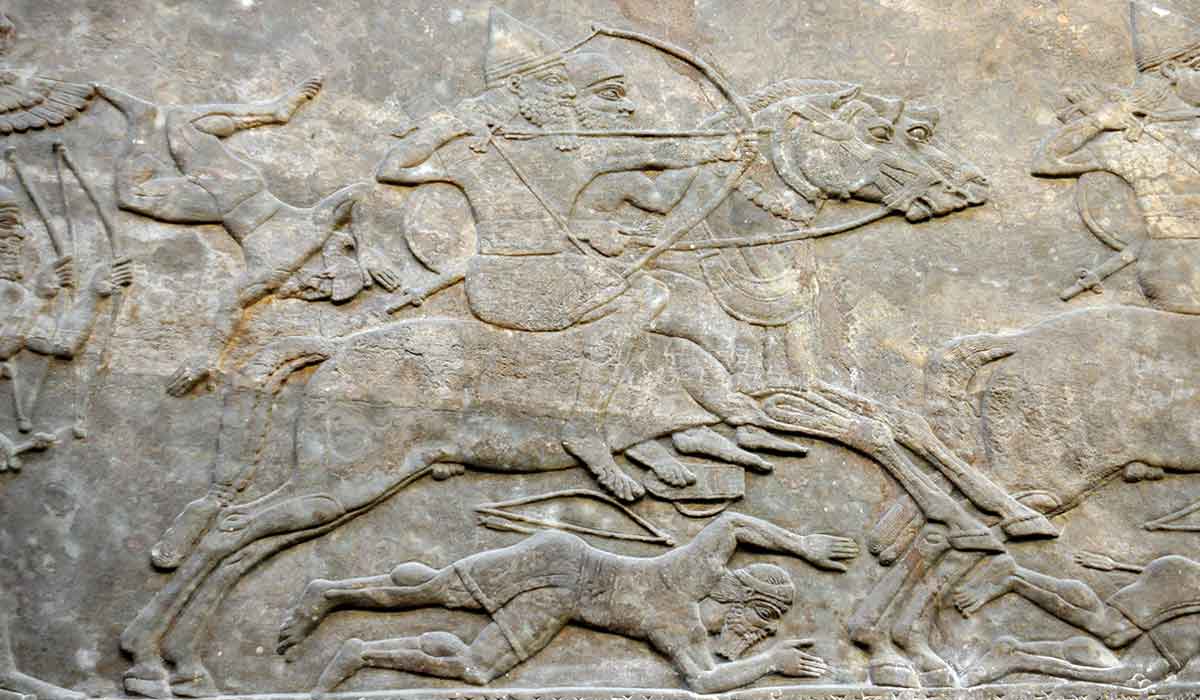
Little is known about the battle itself, other than it was fiercely contested and ended in a decisive defeat for the Egyptians and the remnants of the Assyrian army. The Babylonian Chronicle gives a brief account of the battle, alleging that not a single man of the Egyptian army escaped to his own country (Jerusalem Chronicle). Centuries later, the historian Josephus wrote that the pharaoh lost tens of thousands of men. It is not known for certain if Necho II was present at the battle, but he did reign as pharaoh for another ten years after Carchemish.
The Bible provides the most vivid account of the battle. The prophet Jeremiah wrote:
“What do I see? They are terrified, they are retreating, their warriors are defeated. They flee in haste without looking back, and there is terror on every side,” declares the Lord. “The swift cannot flee nor the strong escape. In the north by the River Euphrates they stumble and fall” (New International Version, Jeremiah 46:5,6).
The Bible also bluntly states that Assyria’s reliance on pharaoh and pharaoh’s own designs on the region were fruitless. “Pharaoh king of Egypt is only a loud noise; he has missed his opportunity” (New International Version, Jeremiah 46:17).
Assyrian Civilization After the Battle of Carchemish

English explorer Austen Henry Layard visited Mosul, in the Ottoman Empire (modern-day Iraq) in 1840. Fascinated by historical mysteries and tales of the ancient Near East since childhood, he had long suspected that a massive mound (tell) near Mosul was the location of the legendary city of Nineveh. His suspicions were based on local tales, the presence of religious sites associated with the prophet Jonah, and earlier explorers and scholars who also suspected that Mosul marked the site of Nineveh.
Over the next decade, Layard oversaw excavations at two different tells, discovering sculptures, bas-reliefs, and other artifacts that conclusively identified the two sites as Nineveh and Nimrud. Layard had pulled the two greatest cities of the Assyrian Empire out of an almost legendary past and into historical reality.
Even after the Battle of Carchemish, Assyrian civilization and culture endured for a time in localized areas. Assyrian cities along the Khabur River west of the Assyrian heartland had escaped destruction.
Recent excavations by the archaeologist Hartmut Kuhne at Dur-Katlimmu on the Khabur River have revealed the presence of Assyrian culture for at least twelve years after the fall of Nineveh. Inscriptions from a site in Dur-Katlimmu known as Red House prove that Assyrian language, culture, and local administration survived until at least 600 BC. Vestiges of Assyrian civilization may have persisted even later, but evidence for this has not yet been found.
The fall of Harran marked the end of the Assyrian Empire, and the Battle of Carchemish marked the end of the Assyrian military. Yet, history and archaeology show that aspects of Assyrian civilization survived for a time after these cataclysmic events. Indeed, the Assyrian people survive to this day, in small numbers in their homeland and in diaspora communities.
Beginning with Layard in the 19th century and continuing to the present, archaeologists have uncovered the great cities of Mesopotamia and have helped illuminate the Assyrian Empire’s final days. These discoveries, along with the decipherment of cuneiform in the 19th century, have led to a much greater understanding of the fall of the Assyrian Empire.