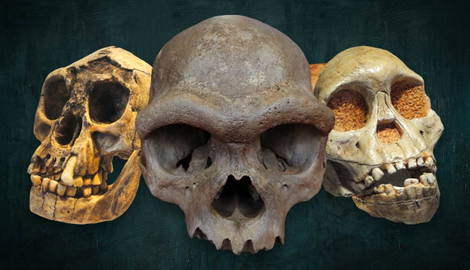

In the early 20th century, the fossil record was limited, and anthropologists viewed human evolution as a linear progression. Researchers were largely focused on finding a “missing link” between apes and humans. Today, we understand human evolution is much more complex than a simple family tree. It is a “bushy tree” of species spanning different continents and millennia. To date, these are the seven most important fossil finds that have shaped our understanding of paleoanthropology and human evolution.
| Fossil | Time and Location | Importance |
| The Taung Child (Australopithecus africanus) | Taung, South Africa – species lived in South Africa around 3.3 to 2.1 million years ago | It provided evidence to support Charles Darwin’s claim that humans evolved in Africa. The discovery challenged the scientific consensus of the 1920s that humans evolved in Asia and disproved the belief that our ancestors developed large brains before they started walking upright. |
| The Nutcracker Man (Paranthropus boisei) | Olduvai Gorge, Tanzania – species lived from around 2.3 to 1.2 million years ago in Eastern Africa | Despite having heavy-duty features originally thought to be adapted for a diet of nuts and hard fruit, tooth enamel analysis revealed an unlikely diet predominantly made up of sedges and grasses. This indicated they consumed more grasses and sedges than any other hominin we know. |
| Lucy (Australopithecus afarensis) | Hadar, Ethiopia – species lived from 3.8 to 2.9 million years ago in Eastern Africa | At 3.18 million years old, she was the oldest and most complete (about 40%) human ancestor to be discovered at the time. Her skeleton proved she was adapted to bipedal walking despite having a small brain, further disproving the theory that large brains evolved before walking upright. |
| Turkana Boy (Homo erectus) | Nariokotome River near Lake Turkana, Kenya – species lived from around 2 million years ago until 110,000 years ago | As the most complete skeleton of Homo erectus, it showed the species was an important transitional link between early ancestors and Homo sapiens. It demonstrated that they had taller frames built for endurance, and larger brains capable of making more sophisticated tools, such as the first Acheulean handaxes. |
| Ardi (Ardipithecus ramidus) | Aramis in the Middle Awash region, Ethiopia – species is dated to around 4.4 to 4.2 million years ago | As one of the oldest and most complete early hominin skeletons, her pelvis showed adaptations for bipedalism even though she inhabited a forest environment. This majorly challenged the “savannah hypothesis,” which had suggested bipedalism evolved because our ancestors transitioned from woodlands to open savannahs. |
| Flores Man (Homo floresiensis) | Liang Bua cave, Flores, Indonesia – species remains are dated between 100,000 and 60,000 years ago | The discovery challenged previous assumptions of human evolution because of the species’ small stature and chimpanzee-sized brain despite living relatively recently. It prompted new evolutionary hypotheses, including insular dwarfism stemming from Homo erectus or an early migration of small-bodied hominins out of Africa. |
| Dragon Man (Denisovan) | Long Jiang (Dragon River) in Harbin City, Heilongjiang province, China – species lived alongside Homo sapiens and Neanderthals for thousands of years | It is one of the best-preserved archaic hominin fossils. By confirming the skull belonged to a Denisovan, it offered researchers their very first insight into the physical appearance of this mysterious sister lineage. |
1. The Taung Child
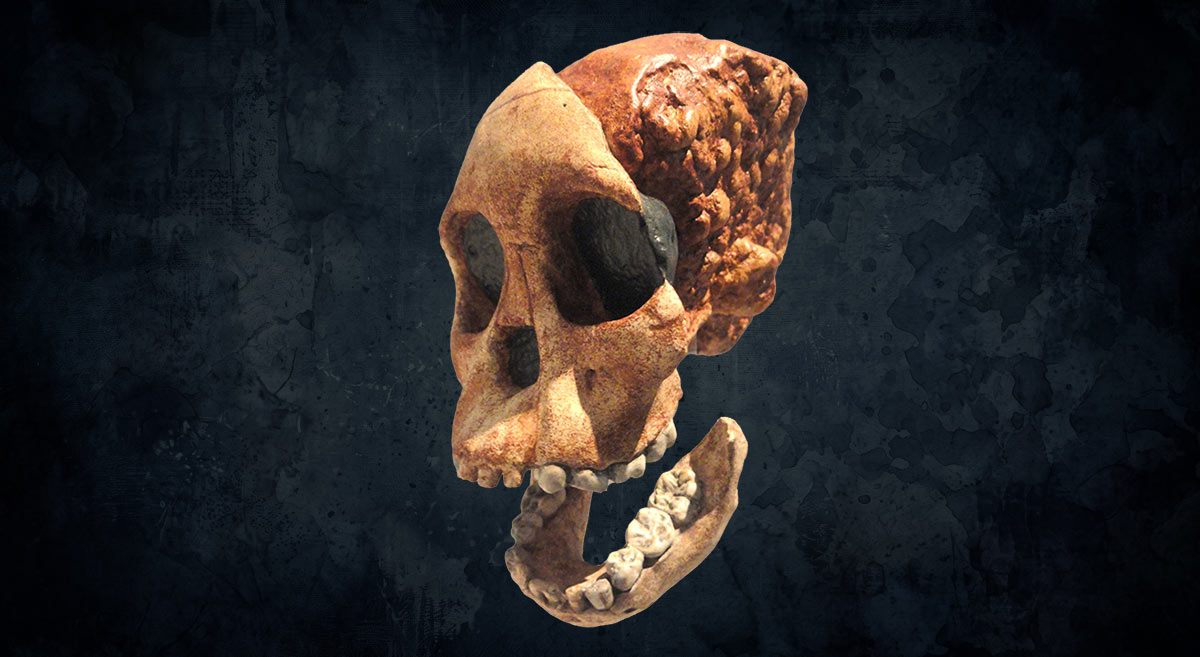
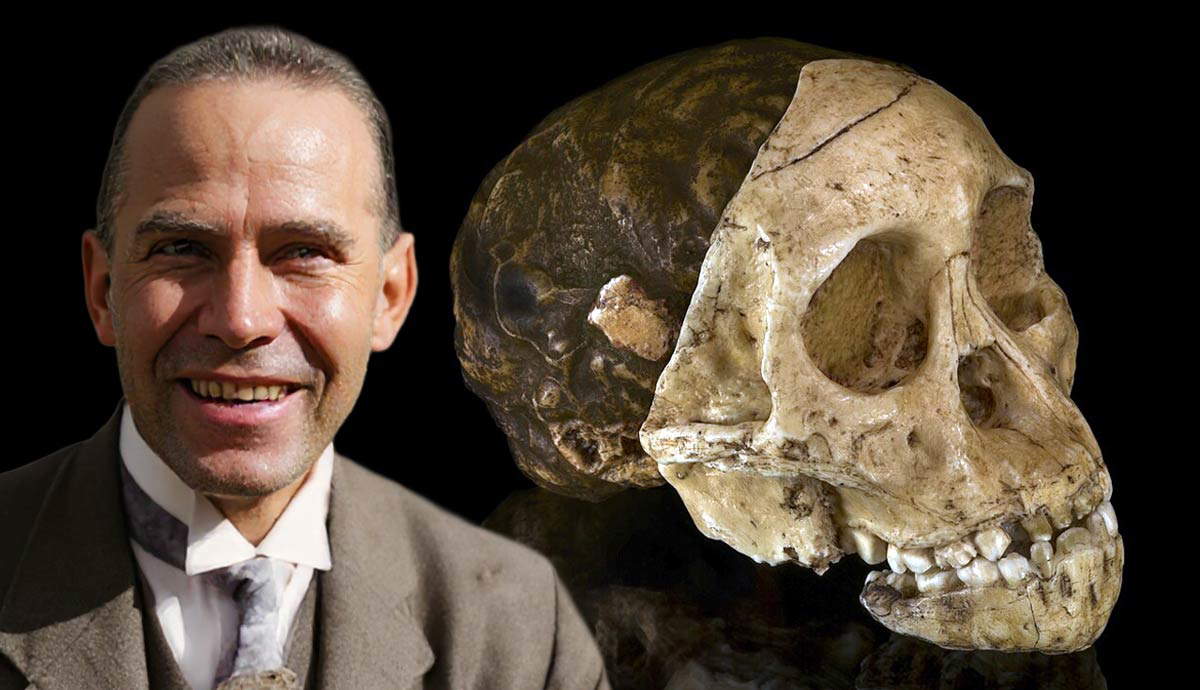
In 1925, anatomist and anthropologist Raymond Dart described a new extinct early hominin, Australopithecus africanus, from a fossil skull known as the Taung Child. The fossil was discovered a year before by quarrymen in Taung, South Africa, who often came across fossils in the limestone quarry.
Dart studied the fossils from the quarry, including an endocast fossil of a primate’s skull. That is a three-dimensional impression or cast of the inside of a hollow cavity of an organism, most commonly the cranial cavity where the brain sat. It had an impression of a complex brain, which he matched to a fossil skull of a young primate. The anatomist published a paper in Nature, suggesting that the skull belonged to a human-like ape, providing evidence to support Charles Darwin’s claim that humans evolved in Africa.
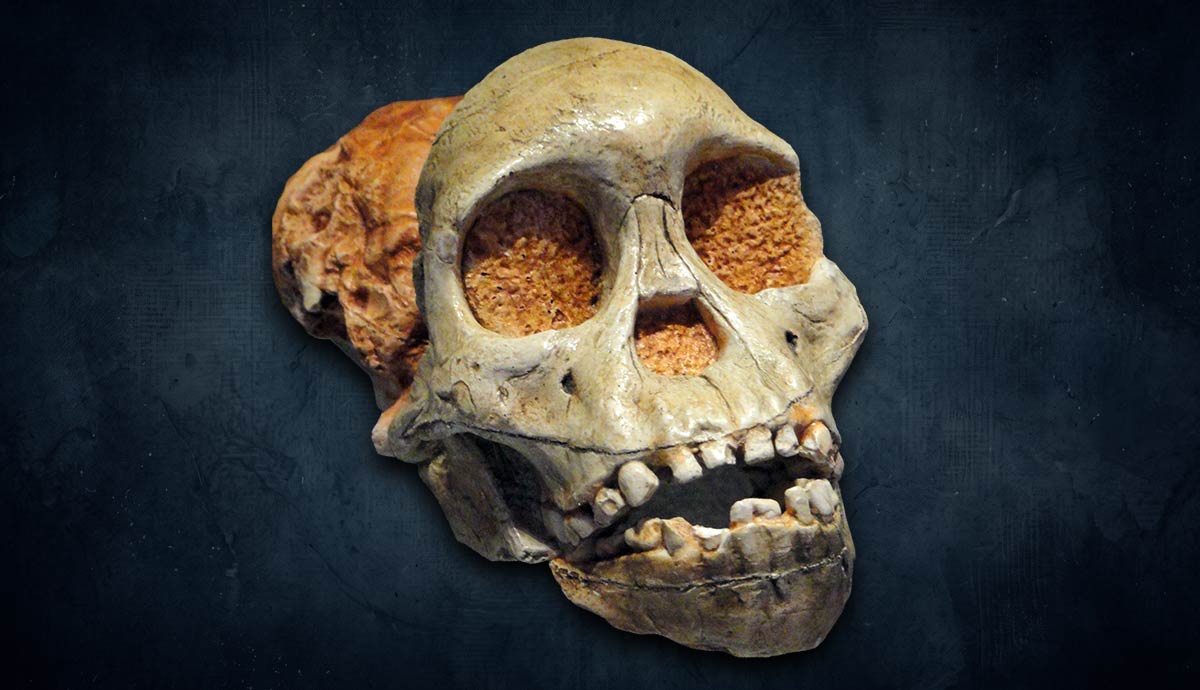
Dart’s proposal was met with skepticism from other scholars in the 1920s. The general scientific consensus at the time was that humans evolved in Asia, rather than Africa. Researchers also believed that our ancestors developed large brains before they became bipedal and started walking on two legs. The Taung Child had a small brain, human-like teeth, and an upright posture.
Many scholars had previously been fooled by the fraudulent Piltdown Man found in Sussex, England, which had teeth like an ape and a large brain. It was not until the 1950s that new chemical analysis techniques revealed the Piltdown specimen was an altered orangutan jaw and teeth planted with a modern human cranium. The Taung Child discovery gradually gained scholarly support as further researchers analyzed the fossil and more Australopithecus africanus specimens were excavated in South Africa.
The species lived in South Africa around 3.3 to 2.1 million years ago. Researchers estimate that the Taung Child was approximately 3 years old and propose that the child was killed by a large predatory bird, like an eagle. Puncture wounds on the eye sockets match similar marks found on modern primate skulls.
2. The Nutcracker Man
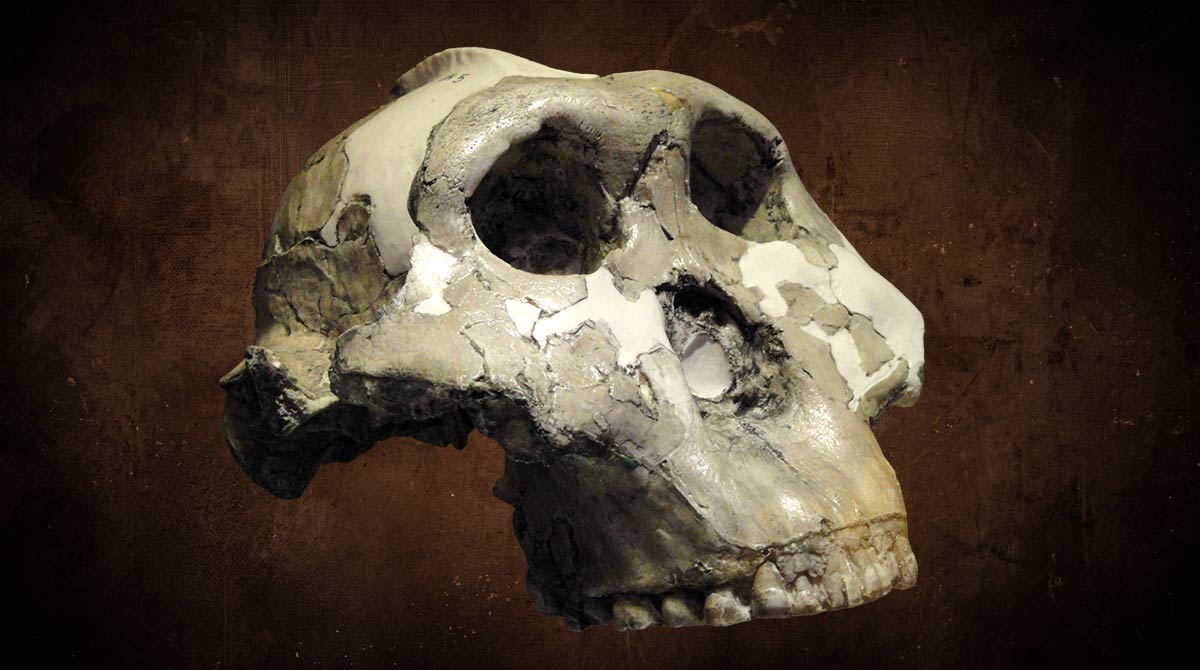
Paleoanthropologists Mary and Louis Leakey conducted decades of groundbreaking fieldwork at Oldupai Gorge in northern Tanzania. In 1959, Mary uncovered a particularly unique skull at the site. The specimen was nicknamed the Nutcracker Man as it had an impressive jaw, large molar teeth, flaring cheekbones, and ridges on the braincase indicating strong muscles for chewing.
Louis eagerly classified the specimen as belonging to a new genus and named the species Zinjanthropus boisei. Many researchers argued that the discovery did not warrant a separate genus and recognized anatomical similarities with robust australopithecines in the genus Paranthropus. The discovery was later reclassified as the first fossil of the species Paranthropus boisei.
The skull was dated to 1.8 million years ago, and the species itself lived from around 2.3 to 1.2 million years ago in Eastern Africa. Much like other species of the genus, Paranthropus boisei had a smaller body, a robust skull, a relatively small brain, powerful molar teeth, and a pelvis adapted to bipedal locomotion. As the name suggests, scientists believed that the Nutcracker Man had a diet of nuts, hard fruit, and seeds, indicated by the heavy-duty features. However, an analysis of tooth enamel revealed that the species had an unlikely diet predominantly made up of sedges and grasses, more than any other hominin we know.
3. Lucy
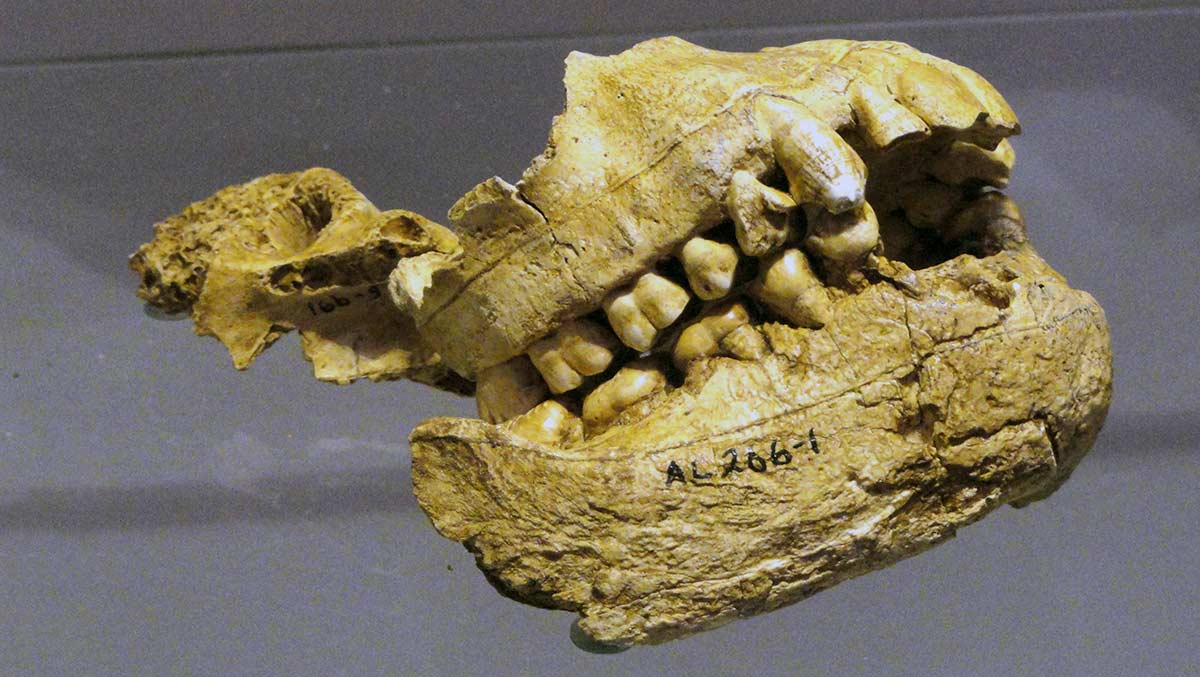
In 1974, paleoanthropologist Donald Johanson and graduate student Tom Gray were surveying and looking for fossils at a site called Hadar in Ethiopia. While returning to their vehicle, they took a different route through a gully, where they quickly came across a piece of an arm bone protruding from the dirt. Realizing the bone belonged to a hominin, Johanson and Gray continued to collect further fragments, including remnants of a skull, femur, pelvis, rib, and lower jaw.
After three weeks of excavation, the team had found several hundred fragments from one individual, which they used to piece together 47 bones, making the skeleton about 40% complete. When celebrating their find, the team repeatedly played the song “Lucy in the Sky with Diamonds” by The Beatles, from which the name “Lucy” was born. In Ethiopia, the specimen is named “Dinkinesh,” meaning “you are marvelous.”
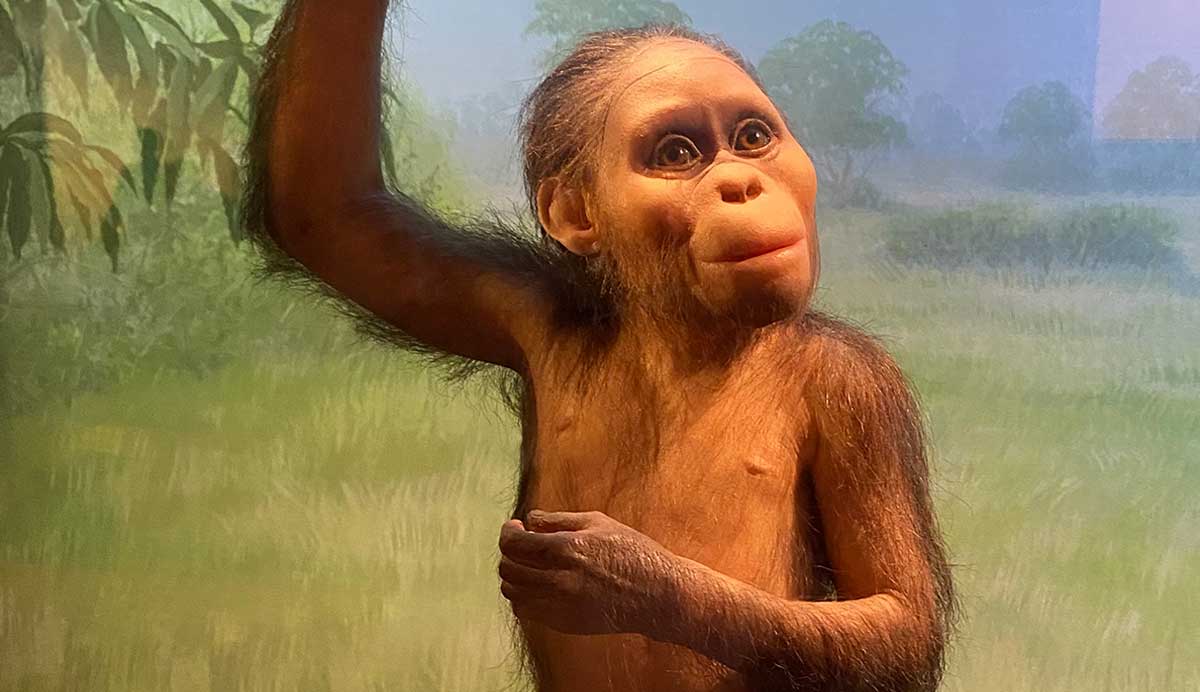
Lucy would have stood at just 3 feet 5 inches tall and weighed between 60 and 65 pounds. From the fusion of the bones and the erupted wisdom tooth, scientists confirmed that the skeleton belonged to a young female adult. After further fossil discoveries at Hadar, as well as Laetoli in Tanzania, a new species, Australopithecus afarensis, was formally recognized in 1978. The species lived from 3.8 to 2.9 million years ago in Eastern Africa. At 3.18 million years old, Lucy was the oldest human ancestor to be discovered at the time, as well as the most complete.
Lucy contributed to the way scientists understood hominins, a group of primates including modern and extinct humans and their closest extinct relatives. Although she had a small brain, Lucy was adapted to bipedal walking, indicated by the angle of her femur towards the knee. Her discovery further disproved the theory that our large brains evolved before we walked upright.
4. Turkana Boy
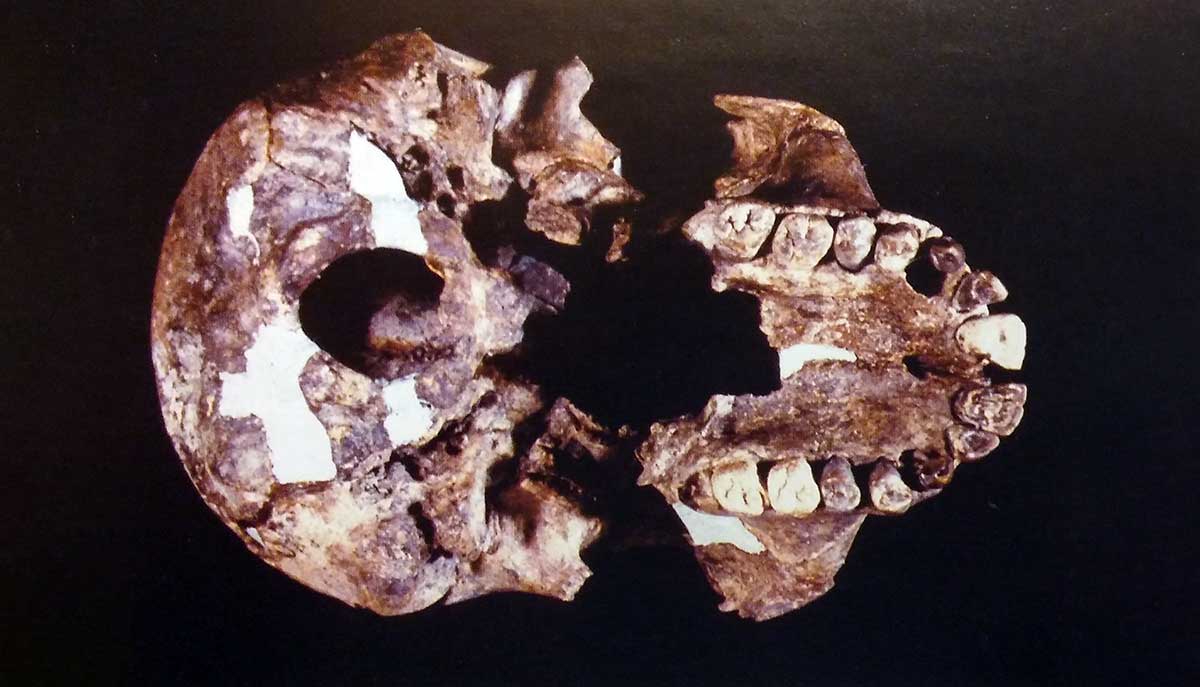
Paleoanthropologist Kamoya Kimeu discovered a skull fragment on the bank of the Nariokotome River near Lake Turkana in Kenya in 1984. The Turkana Boy, or the Nariokotome Boy, is the most complete skeleton of Homo erectus, helping scientists to study the anatomy of the species.
By analyzing his molars, scientists estimate the boy to have been between 8 and 12 years old when he died, seemingly of blood poisoning from an abscessed tooth. He was about 5 feet 3 inches and weighed around 106 pounds, with a cranial capacity of 880 cubic centimeters. In adulthood, his brain size could have reached 910 cubic centimeters, which is much larger than other early human ancestors like Homo habilis, but almost half the size of our own.
The species lived from around 2 million years ago until 110,000 years ago, making Homo erectus the longest-living hominin. There is scientific consensus that Homo erectus was the first hominin to have migrated out of Africa and into Asia and parts of Europe. Being widespread and long-lived, it is unsurprising that the species was highly varied in body size and shape.
The discovery of the Turkana Boy showed that Homo erectus was an important transitional link between our ancestors and Homo sapiens. They possessed longer legs, shorter arms, and a taller frame than previous hominins, built for endurance and upright movement. With larger brains, Homo erectus was capable of making more sophisticated tools to adapt to their environment, including the first Acheulean handaxes.
5. Ardi
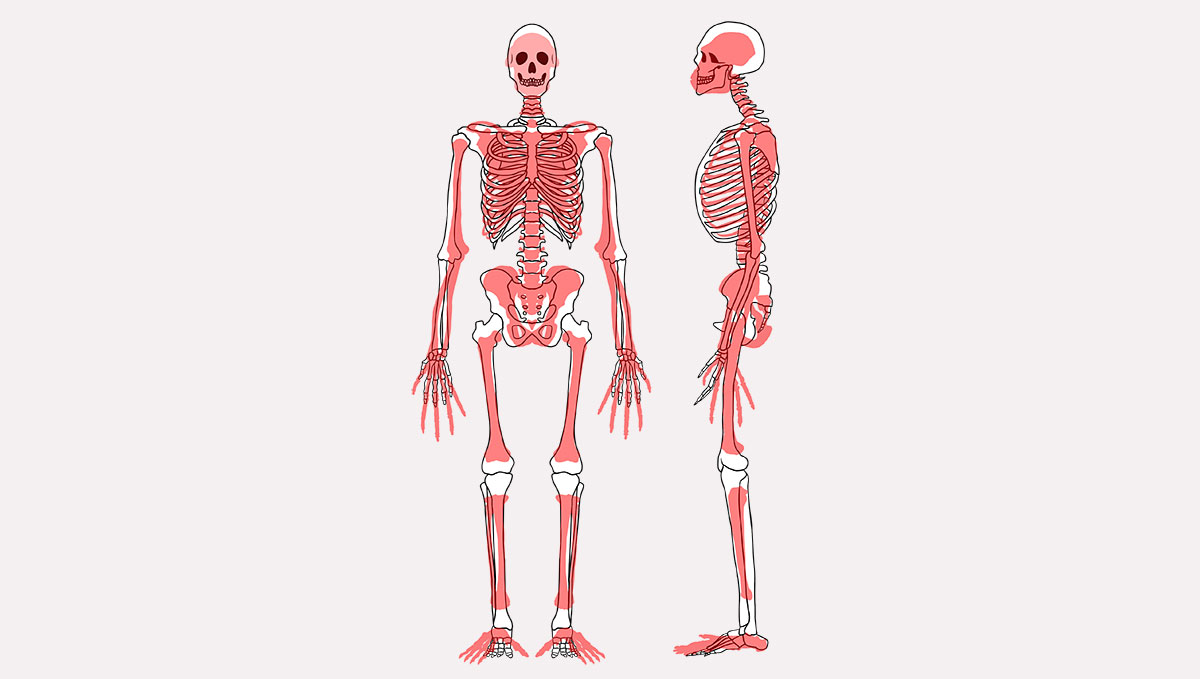
Just 46 miles south of where Lucy was uncovered, a team of paleoanthropologists made the discovery of a much older hominin in the Middle Awash region of Ethiopia at a site called Aramis. In 1992, Gen Suwa came across the first specimen belonging to the species, Ardipithecus ramidus, when he noticed a molar while surveying the site.
Two years later, Yohannes Haile-Selassie found a piece of a hand bone. This led to the excavation of specimens representing around 35 individuals of the species, including the almost half-complete skeleton of an adult female “Ardi.” The team quickly recognized the significance of their discovery. However, due to the poor condition of the remains, it took them 15 years to excavate, analyze, and publish their work.
The newly discovered species was older than Australopithecus, dated to around 4.4 to 4.2 million years ago, making Ardi one of the oldest, most complete early hominin skeletons. Ardi had a small brain, similar to a modern chimpanzee or bonobo, and was just below 4 feet tall. Her big grasping toe is indicative of strong climbing abilities. However, Ardi’s pelvis shows adaptations for bipedalism, such as having a short, broad ilium to improve balance.
Researchers speculate that the species was a facultative biped, meaning Ardi would move bipedally on the ground and quadrupedally to climb trees. As Ardi inhabited a forest environment, this discovery challenged the savannah hypothesis, which suggested that bipedalism evolved as a consequence of our ancestors transitioning from woodlands to open savannahs.
6. Flores Man
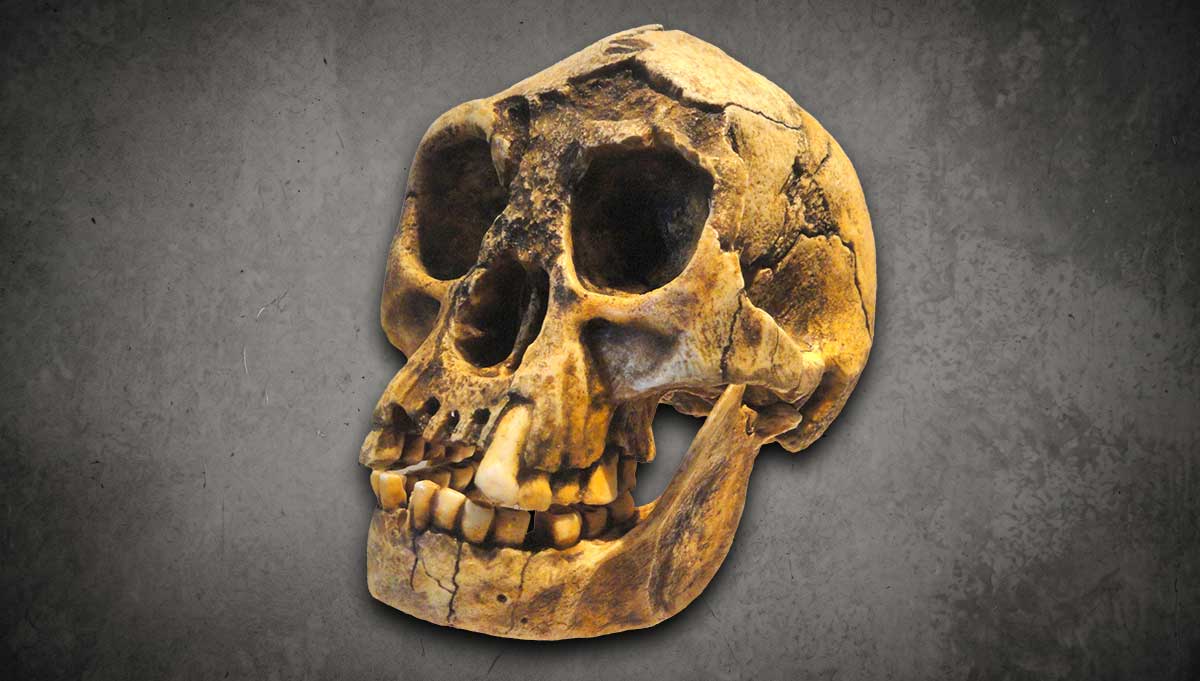
While searching for evidence of the arrival of modern humans on the Indonesian Island of Flores, archeologists came across a new hominin species that challenged previous assumptions of human evolution.
In 2003, a team led by Mike Morwood and Thomas Sutikna discovered the remains of a small-statured individual, LB1, in Liang Bua cave. Upon first inspection, the archeologists believed the skeleton belonged to a young child, given the size of the skull. However, a closer look at the defined brow ridges and fully developed wisdom teeth revealed that LB1 was an adult female. The specimen was around 30 years old when she died and stood at 3 feet 6 inches tall, with a brain size comparable to a chimpanzee.
Researchers recovered a further seven individuals from Liang Bua. In 2004, they described the species Homo floresiensis, nicknamed Flores Man or “the Hobbit.” Remains of Homo floresiensis have only been discovered on the island and have been dated between 100,000 and 60,000 years ago, disappearing not long before the arrival of modern humans.
At first, the discovery was met with skepticism, and it was debated whether the skeletal remains represented a distinct species or a modern human with a pathological condition.

One hypothesis for their small stature is that the species evolved from Homo erectus through an evolutionary process known as insular dwarfism. This phenomenon occurs when a species is isolated on an island with limited food resources and a lack of predators, causing their body size to reduce over generations. Other researchers propose that Homo floresiensis evolved from a migration of small-bodied hominins such as Homo habilis or an australopithecine. However, no current fossil evidence shows either to have migrated out of Africa.
7. Dragon Man
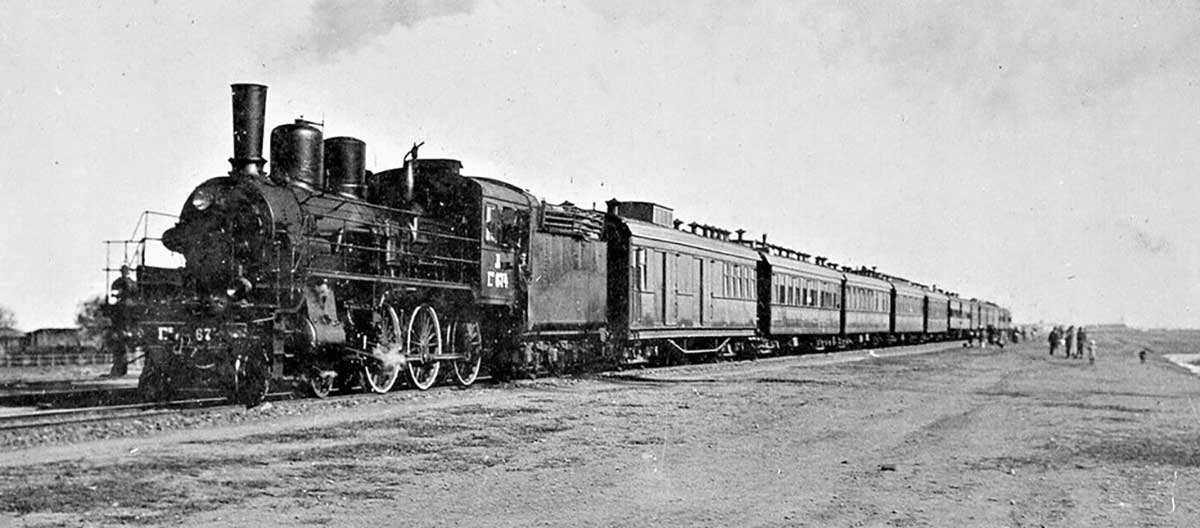
In 1933, a laborer working on the construction of the Dongjiang Bridge for the Manchukuo National Railway in Harbin City discovered a hominin skull on the riverbank. As the region of China was under Japanese occupation, the worker decided to hide the specimen until it was recovered and analyzed decades later. Scientists described the “Dragon Man” skull as belonging to a new species named Homo longi after the Long Jiang, or Dragon River, in the Heilongjiang province.
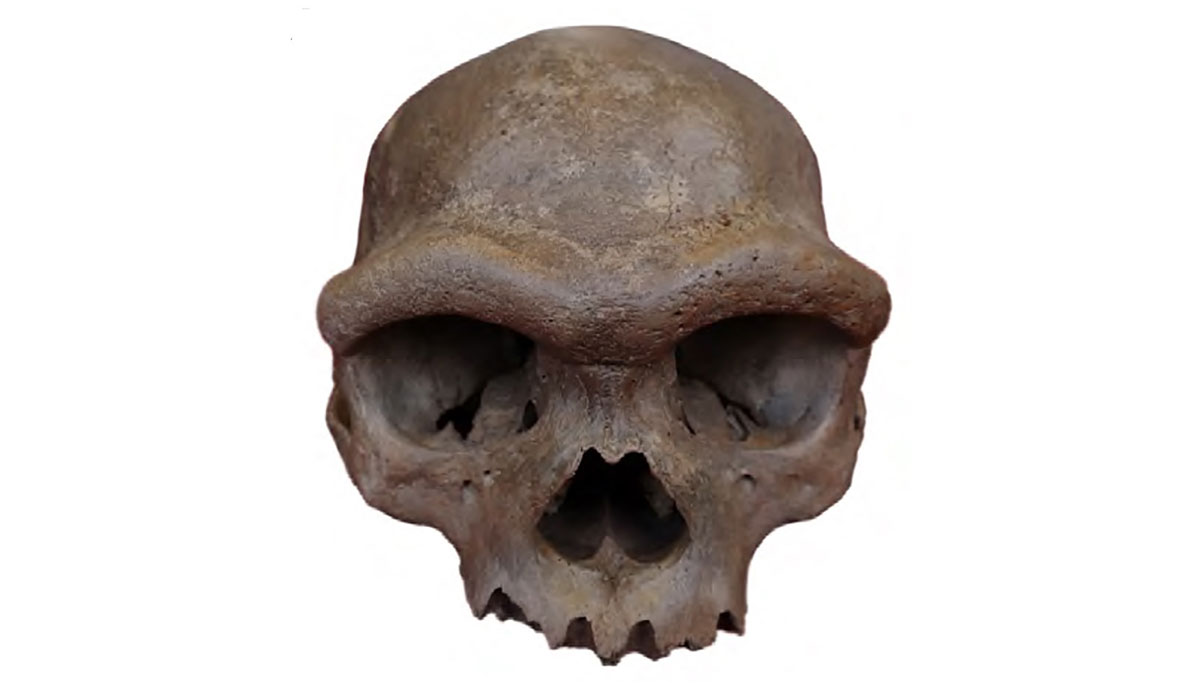
Denisovans, a hominin that lived alongside Homo sapiens and Neanderthals for thousands of years, had previously only been known from a few fossils. After the first discovery from Denisova Cave in Siberia, scientists began to recognize other fossils found in Asia that may belong to the same species, including the Harbin cranium. While not yet confirmed by DNA analysis, many paleoanthropologists strongly theorize that the Harbin cranium provides our first physical glimpse into the appearance of a Denisovan.
The cranium displays a robust jaw, thick brow ridges, and a long, low braincase, with a slightly larger brain size than that of modern humans. This discovery is one of the best-preserved archaic hominin fossils and represents a new step in our understanding of our mysterious sister lineage.