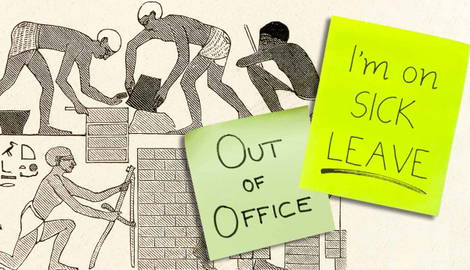

More than 3,200 years ago, a scribe in ancient Egypt wrote down every day that the royal tomb builders missed work, along with the reason, and many of those excuses sound remarkably familiar.
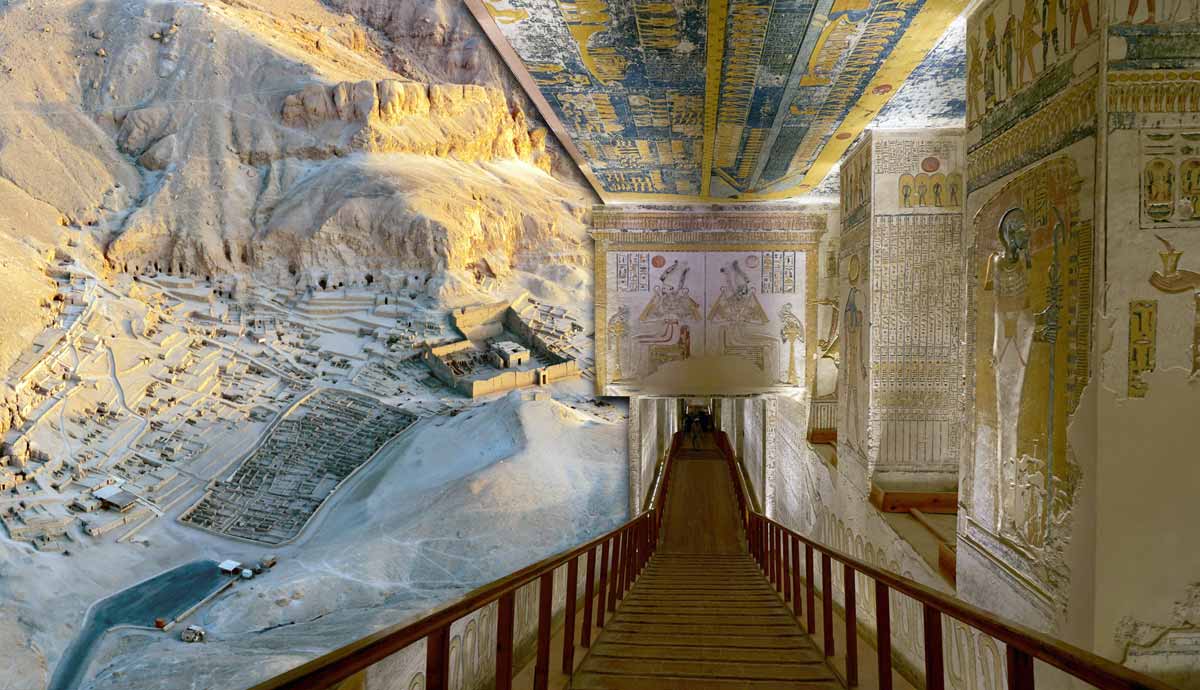
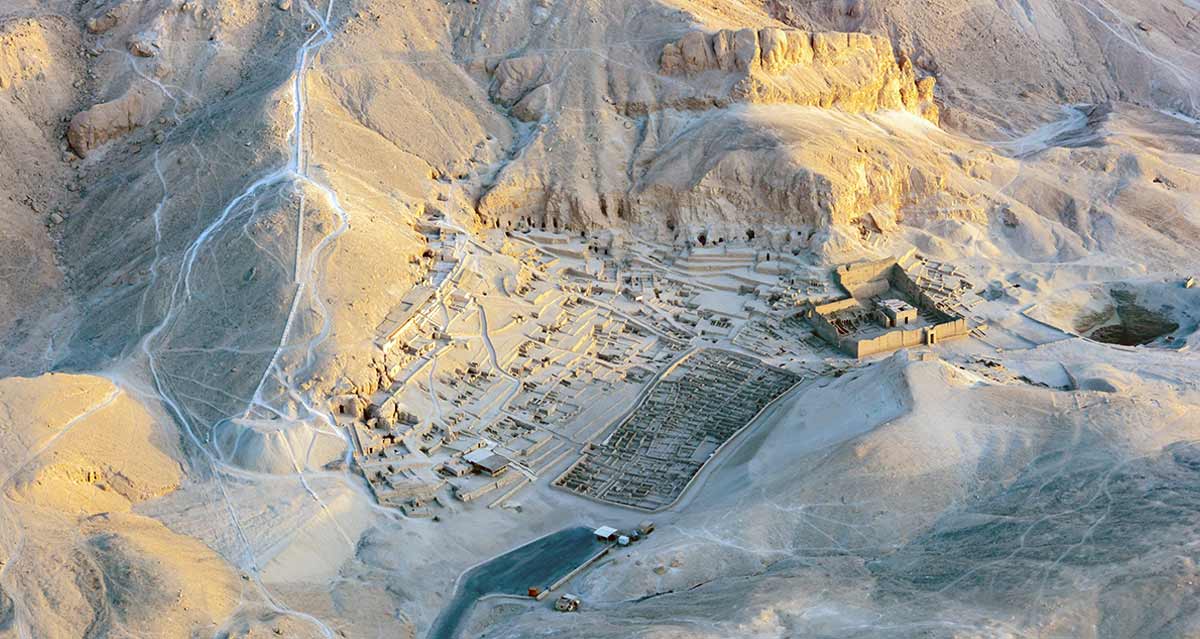
The record comes from Deir el-Medina, the village that housed the workmen who cut and decorated the royal tombs in the Valley of the Kings. The laborers here were not slaves. They were skilled craftsmen paid in grain rations, and they had rights.
Sometimes they had good reasons to miss work, and sometimes their reasons look a lot like a modern sick day.
The Ostraca of Deir el-Medina and the Work Attendance Record
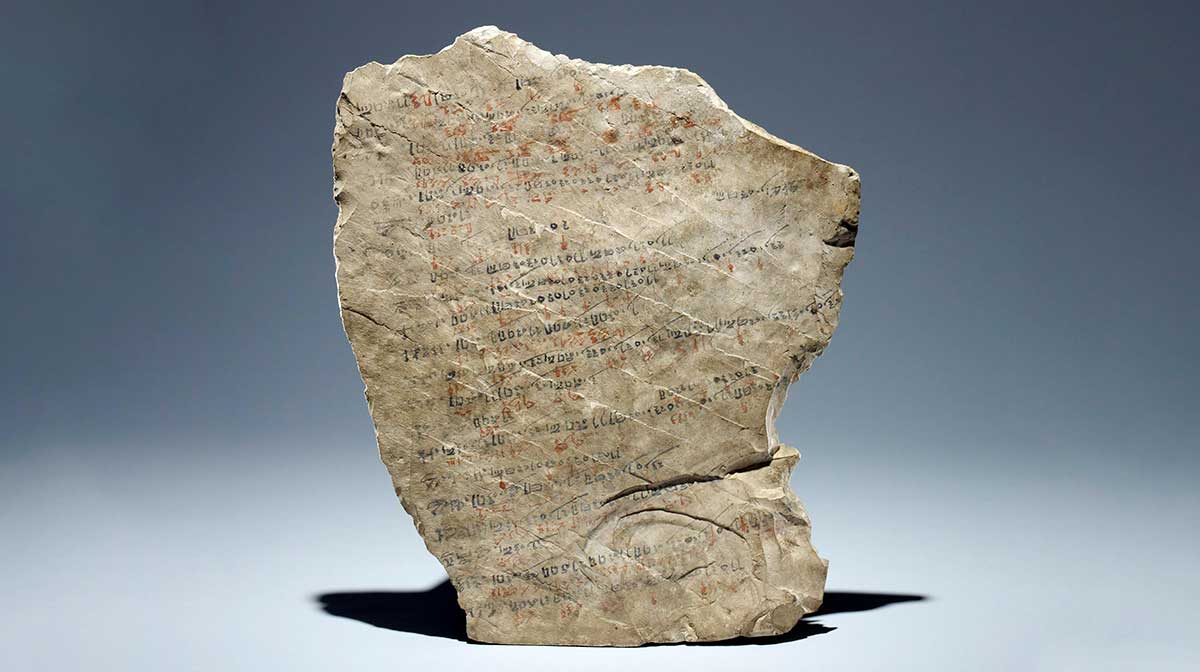
Deir el-Medina was a planned town. It was purpose-built to house the artisans who worked on the royal tombs nearby. Because the royal tomb was a state project, scribes kept careful records of the workforce. Many of the records were written on ostraca, flakes of limestone and shards of pottery that were cheap and abundant writing surfaces. Letters, notes, prescriptions, receipts, shopping lists, poetry, and even love songs were written on these shards.
Among the thousands of ostraca that have been found is the British Museum’s EA 5634, an attendance register written in ink on a flake of limestone. Measuring about 15 by 13 inches (38.5 by 33 centimeters), it lists 40 workmen over 280 days labeled “Year 40” of the reign of Ramesses II, around 1250 BC, although the entries probably cover the previous year. Written in hieratic, a cursive form of Egyptian script, the names run down the right edge of each side, followed by the dates of each man’s absences in black ink, with the reason written above each date in red. Only about 70 of those 280 days seem to have been full working days.
Scorpion Stings and Sore Eyes on the Job Site

The second most common excuse, recorded nearly 60 times, is “with his boss,” which means the worker was probably doing private work for a superior. This was an accepted excuse, as long as it was not abused. On some occasions, there is a bit more detail, such as “with the scribe” or “fetching stone for the scribe.”
The most common excuse of all is simply “ill,” which appears around a hundred times. As to the exact ailments, one can only guess. Some, however, are more specific. Nakhtamun and Huynefer seem to have had problems with their eyes, as in each case their absence is put down to “suffering with his eye,” while Seba was off because “the scorpion stung him,” a real danger in the Egyptian desert. One workman, Paherypedjet, seems to have been the village healer, and he was often away preparing remedies or caring for sick colleagues.
Brewing Beer for the Gods as a Legitimate Absence

“Brewing beer” appears 16 times as an excuse for not being at work. And this wasn’t just for getting drunk and having fun. Beer played a major role in religious practices in ancient Egypt. And religion, especially at the site of the royal tombs, was taken extremely seriously.
Several entries also relate to death and the traditions that surround it. Just as it is today (for the most part), workers were allowed time off to grieve. Merwaset was noted as “mourning his son,” while Bakenmut was given time off for “wrapping the corpse of his son.” “Embalming,” similarly, was a justifiable reason to miss work, while prayers and rituals for the dead were also acceptable. “Libating” appears several times on the ostracon, once “for his father.” Offerings to the dead in Egypt go back to the Predynastic period of the 4th millennium BC, and libations, usually of water but also of wine, milk, or beer, became a core funerary rite. Libation rituals are detailed in texts such as the Book of the Dead.
Beer, however, was also a justifiable way to celebrate. The very first entry on the ostracon notes that Penduauu was “drinking with Khonsu.” Khonsu, a fellow workman, is recorded as absent on the same day for “his feast,” a private festival, so Penduauu was simply celebrating with a colleague.
Menstrual Leave and Domestic Duties in Ancient Egypt
Ten workmen were excused because “his wife was bleeding” or “his daughter was bleeding,” literally “in purification.” Some scholars think the men had to take over household duties while the women were unwell. However, it is also possible that women practiced menstrual seclusion. Deir el-Medina was a deeply religious site, and working on the tombs required utmost purity. If a worker was in contact with a menstruating woman and came to work, it was believed his labor would contaminate the purity of the religious site. Such purity rules sit awkwardly with the relatively high status of women in ancient Egypt, who could own property and take cases to court.
The ancient Egyptians, at least at Deir el-Medina, had a very flexible working system. They were not slaves driven by the whip, but respected artisans with rights and a significant amount of power. And when their needs were not met, they exercised that power. About a century later, in year 29 of Ramesses III, around 1157 BC, the Deir el-Medina workmen staged the first recorded labor strike in history when their grain rations failed to arrive, and the authorities eventually paid up.