
Thousands of years before the first crossword puzzle was printed, our ancestors were busy trying to outwit one another with wordplay. In the ancient world, a riddle wasn’t just a joke. Rather, it was a demonstration of mêtis, the Greek term for “cunning intelligence.” Whether it was a queen testing a king’s worthiness or a traveler trying to avoid being eaten by a Sphinx, these puzzles were the ultimate intellectual currency. Do you have what it takes to think like a Sumerian scribe or an Anglo-Saxon poet and solve these riddles from the ancient and medieval worlds?
1. The Riddle of the Sphinx (Ancient Greece)
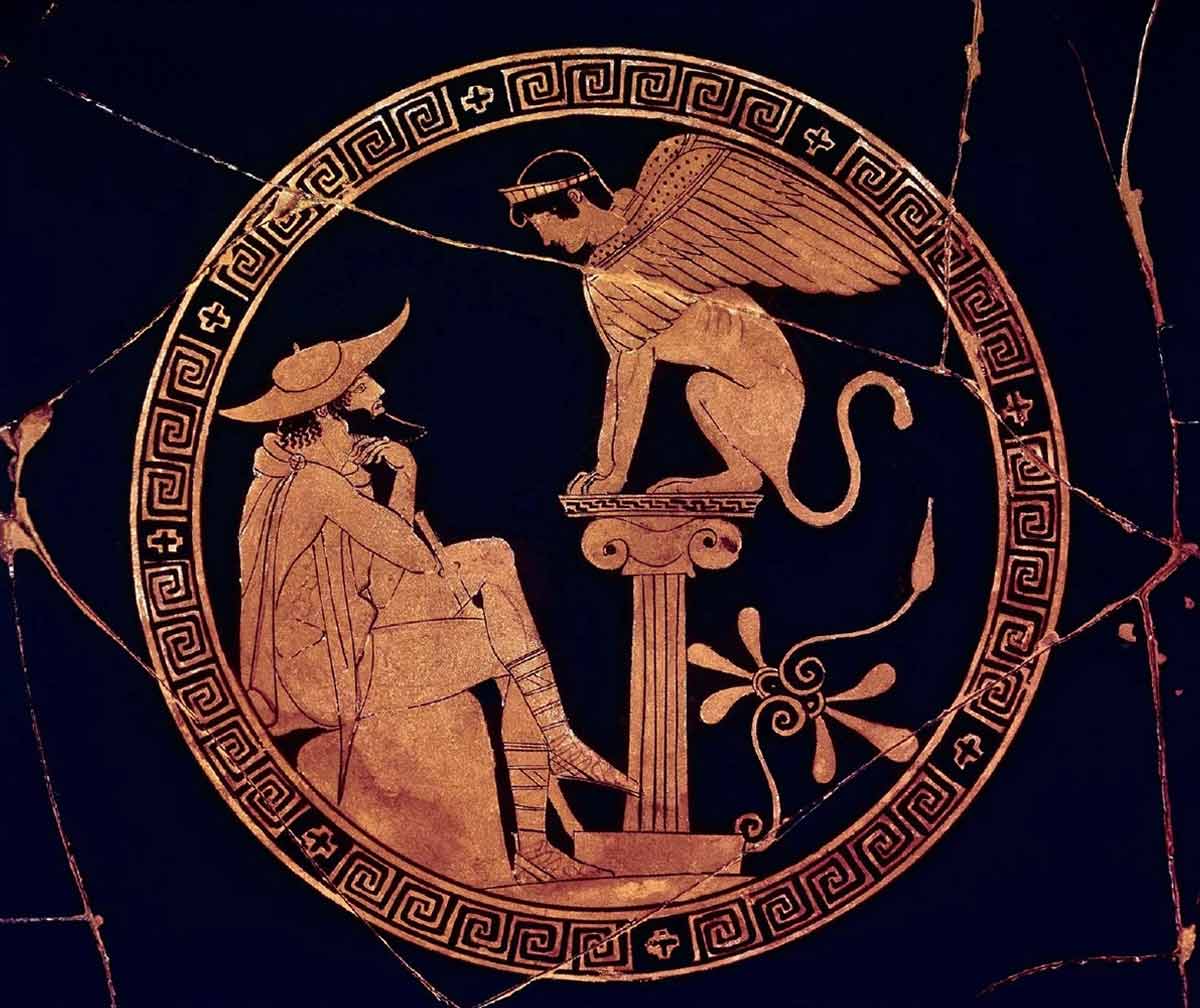
“What walks on four legs in the morning, two legs at noon, and three legs in the evening?”
That is the popular modern wording. The oldest surviving versions, recorded by writers such as Apollodorus and Athenaeus, ask instead what creature has one voice yet becomes four-footed, two-footed, and three-footed.
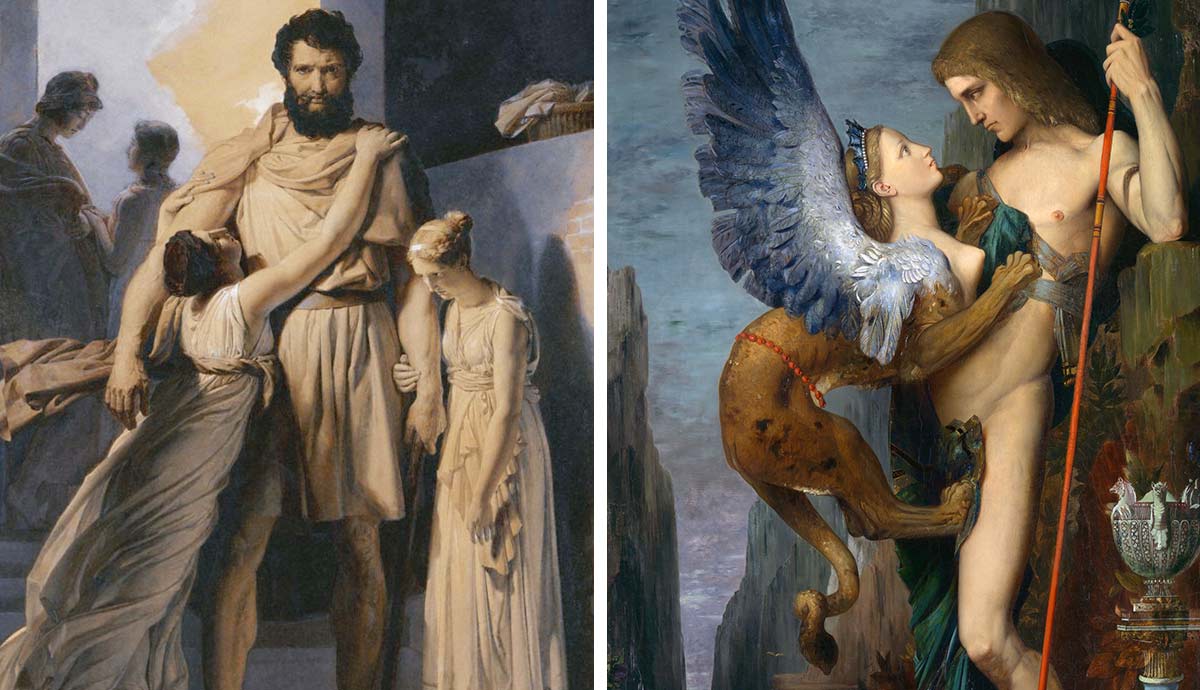
This riddle was posed to Oedipus, a young man raised in Corinth who was unknowingly heir to the royal line of the ancient Greek city of Thebes, when he arrived at the city. A Sphinx, a monster with a woman’s head, a lion’s body, and a bird’s wings, was terrorizing the city from a nearby hill. Anyone who failed to answer her riddle was devoured. When Oedipus answered correctly, the Sphinx threw herself to her death, and the grateful Thebans made him their king.
The answer to the riddle is: Man. In the figurative “morning” of a human’s life, a baby crawls around, as if on four legs. Then during the prime of life, or “noon,” a person walks on two legs. Finally, in the “evening” of a person’s life, they would normally use a cane, as if a third leg to help them walk.
This riddle relies on an observation about the changing stages of life and the fragility of the human body.
2. Samson’s Honey Riddle (The Bible)
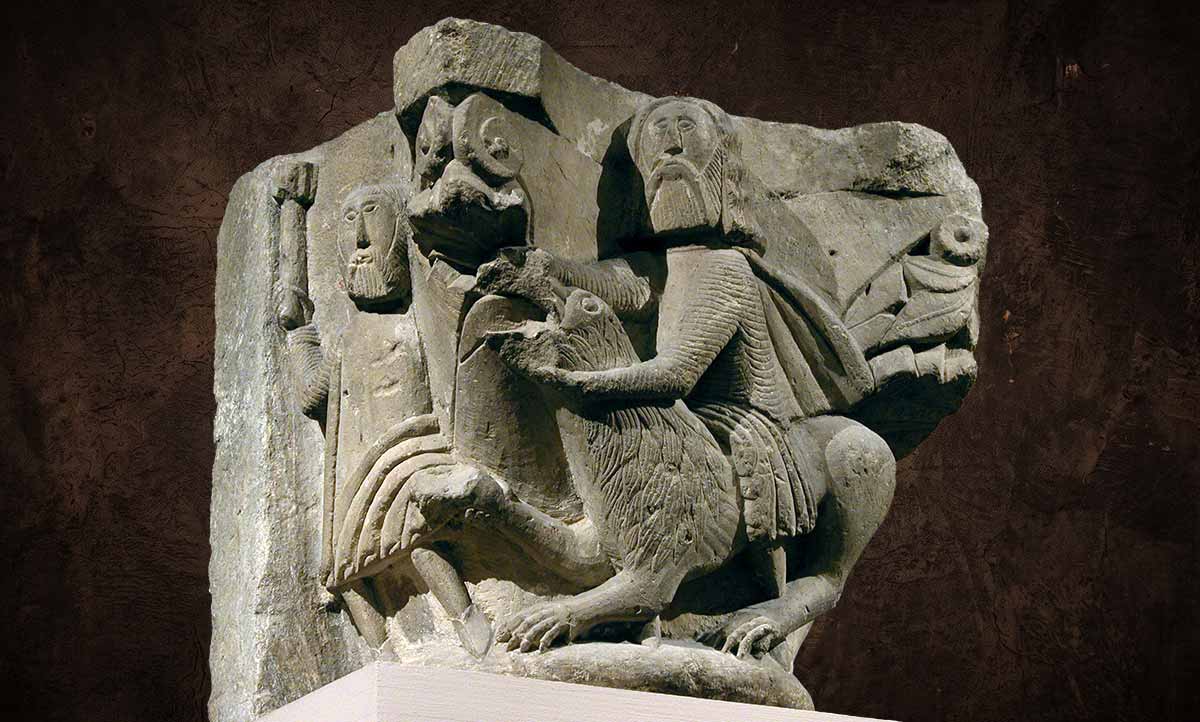
“Out of the eater came something to eat, and out of the strong came something sweet.”
This famous ancient riddle is found in the Bible. It was posed by Samson, the judge of Israel with superhuman strength, to a group of thirty Philistine men at his wedding feast. Samson gave the men the seven days of the feast to solve it. If they managed to do so, Samson would give them thirty linen garments and thirty sets of festal clothing. If they were unable to solve it, they would have to give the same to him. The men discovered the answer only by threatening to burn Samson’s bride and her father’s household, which drove her to coax the solution out of him.
The answer is: Bees had settled inside the carcass of a lion (a strong carnivore) and were making honey (something sweet and edible) there. Samson had killed the lion with his bare hands on an earlier trip to Timnah, and he found the bees in its carcass on his way back to marry.
Many commentators consider this riddle unfair by the rules of ancient riddling, since the answer depended on an unusual sight that only Samson had seen.
3. The Sumerian “House of Tablets” (Ancient Mesopotamia)
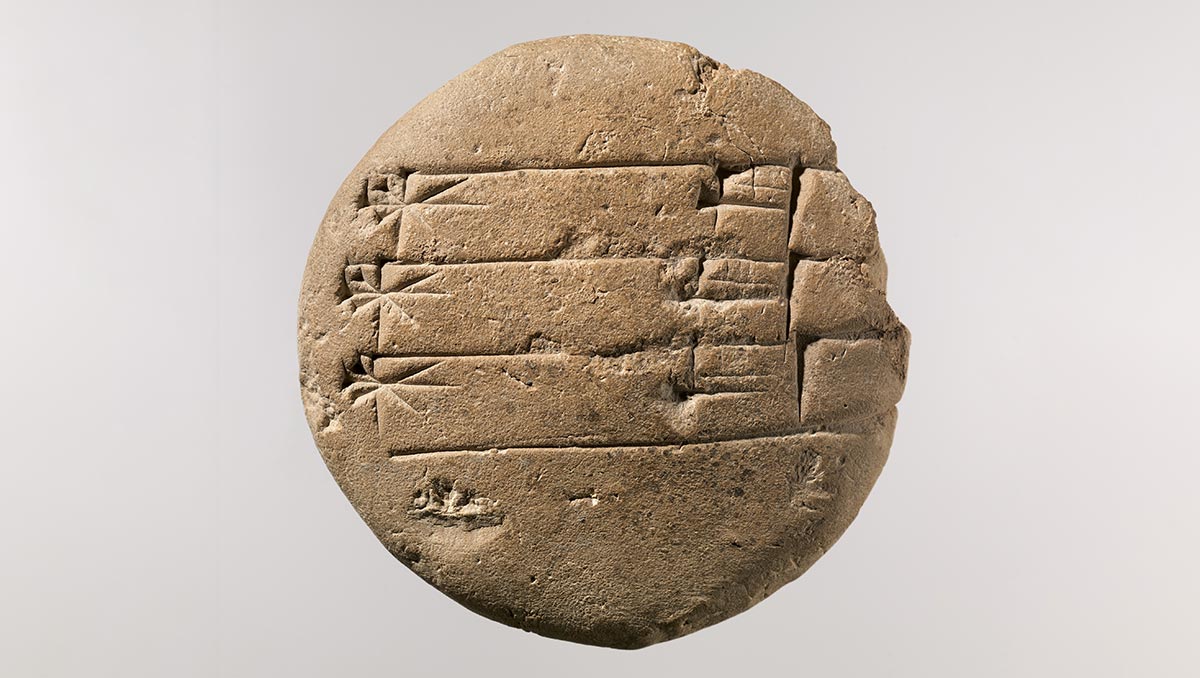
“There is a house. A man enters it blind and comes out of it seeing. What is it?”
Riddles from ancient Sumer are the oldest known to survive, and this is one of the best known. It belongs to a small group of Sumerian riddles copied by students on school tablets in the Old Babylonian period, roughly 1900 to 1600 BC.
The answer is: A school, the eduba or “tablet house” where Sumerian scribes learned cuneiform writing. This is a type of house that one can enter. The expressions “blind” and “seeing” in the riddle are used in a metaphorical sense rather than a literal sense. They refer to ignorance and insight. Before a man enters the school, he is ignorant, but he comes out of it with new knowledge.
This riddle, and its apparent popularity, highlights the great value that the ancient Sumerians assigned to learning. For them, those who were not educated were, in a sense, blind. Thus, centers of learning were highly esteemed in that region.
4. Odin’s Cow Riddle (Medieval Iceland)
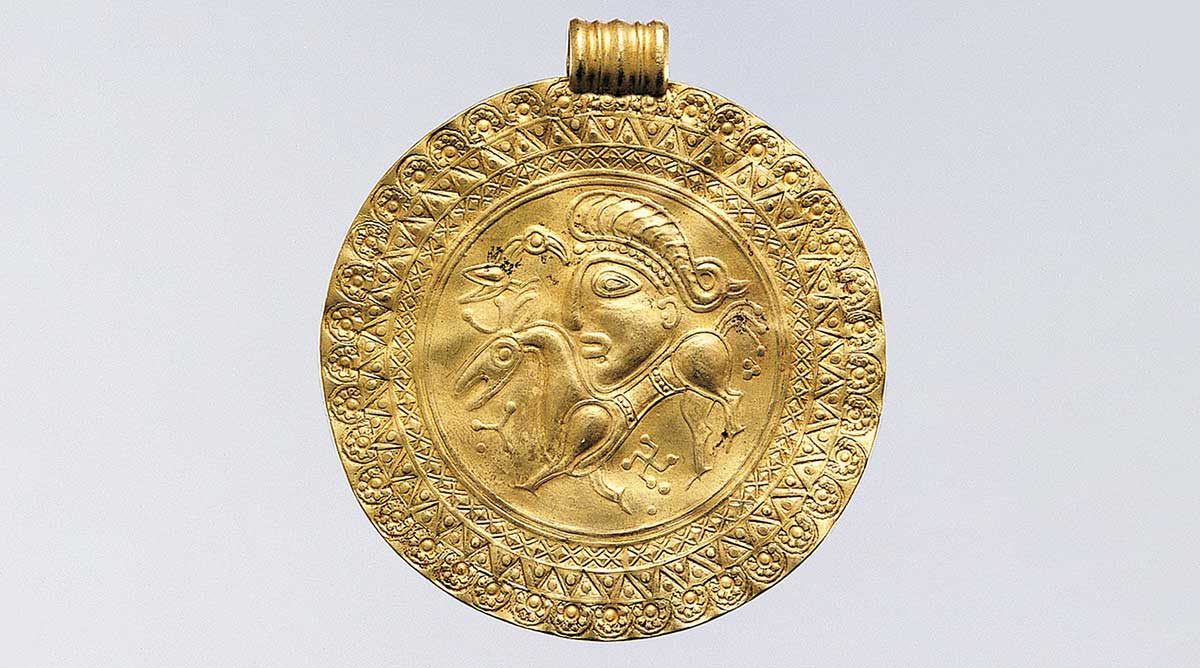
“Four walking, four hanging, two pointing the way, two warding off the dogs, one, generally dirty, dangling behind.”
This riddle has many attested variants but ultimately stems back to a Norse mythological story. This version of the riddle comes from the Riddles of Gestumblindi, which are contained in the Saga of Hervör and Heidrek, a Norse legendary saga from the 13th century. It is part of a riddle contest between King Heidrek and the god Odin, who takes the place of a man named Gestumblindi and arrives in his guise. The number of riddles varies between the saga’s manuscripts, from about 30 to 37, and this one is among the best known, with close parallels in later folk riddles across Northern Europe.
The answer is: A cow. Each part of the riddle refers to a different part of the cow’s anatomy. As Heidrek himself explains in the story, a cow “has four feet and four udders, two horns and two eyes, and the tail dangles behind.” Heidrek solves every riddle until Odin asks what he himself whispered into the ear of his dead son Baldr before the funeral pyre, a question only the god could answer.
This riddle illustrates how important farm life was to the society that produced this legendary saga. It reflects a very different outlook on life than that seen in ancient Sumer.
5. The Exeter Book’s “Wonder” (Anglo-Saxon England)
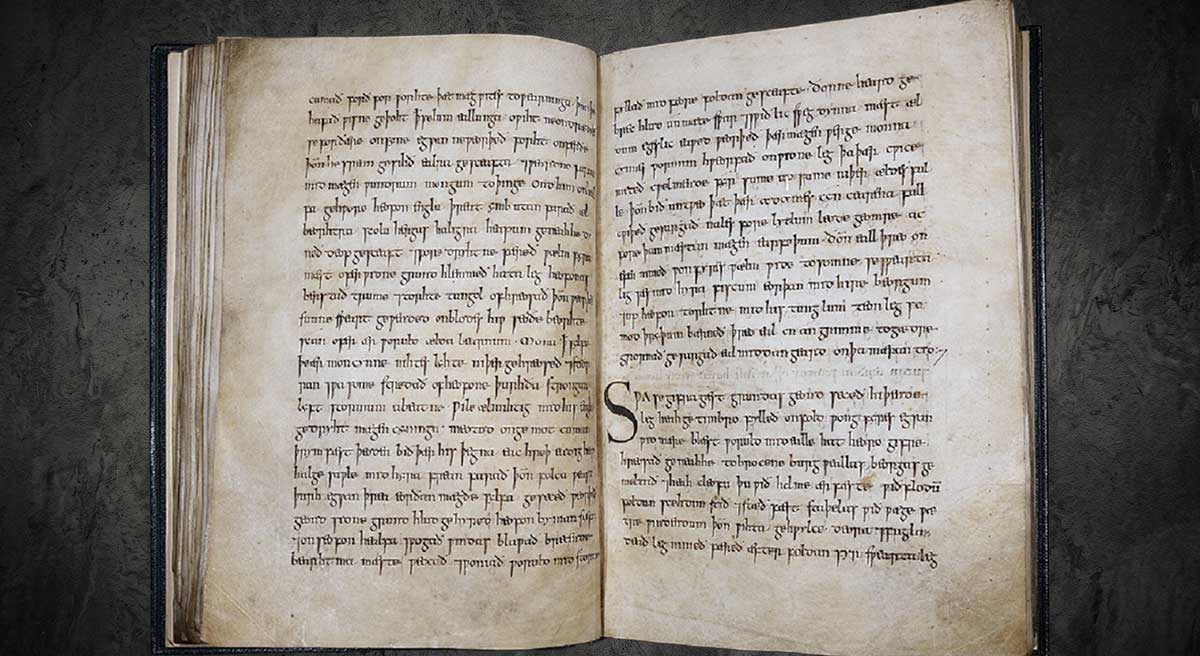
“A moth ate words. I thought that a marvelous occurrence, when I learned of this wonder, that the worm devoured the sayings of one man, a thief in the dark, his glorious speech and its strong foundation. The thievish guest was not a whit wiser for having devoured those words.”
This riddle comes from the Exeter Book, an Old English manuscript copied in the late 10th century and kept at Exeter Cathedral since Bishop Leofric bequeathed it in 1072. It is usually numbered Riddle 47. The implied question raised by this riddle is: Who or what is the “thief” that devoured words? The solution usually given is: A bookworm. This is indicated by the reference to the culprit as both a “moth” and a “worm.” Given that it is said to “eat words” and “devour sayings,” this would fit a bookworm, which literally eats the words on the pages that it consumes.
However, there is considerable controversy surrounding this riddle. The key reason is that the answer seems too obvious. After all, the opening words state clearly that the culprit is a moth. Identifying it as a bookworm hardly seems like a challenge. Some commentators have described this as simply a bad riddle, with the answer essentially given away at the beginning.
On the other hand, other commentators have argued that the real solution is not “bookworm.” In fact, they identify a bookworm as part of the riddle’s setup, through which the real answer is supposed to be discovered. The real answer, according to this theory, is a student who fails to progress no matter how much he hears the words of his teacher. This fits the final part of the riddle, in which “the thievish guest was not a whit wiser for having devoured those words.”
6. The Two-Ended Writing Tool (Late Roman Empire)
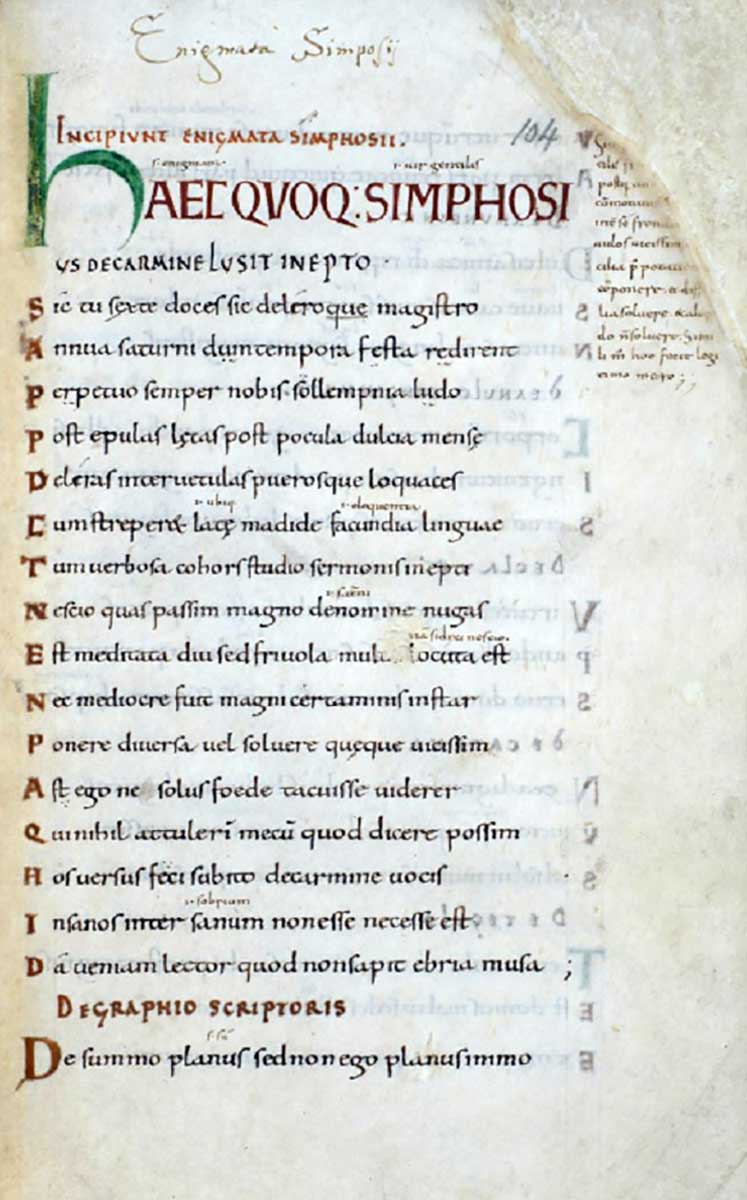
“Flat on top but not flat below, I am turned either way by the hand; different duties I perform: the one part revokes what the other has done.”
This is the first of the 100 riddles in the Aenigmata, a Latin collection by the poet Symphosius, probably written in the late fourth or fifth century AD. To a modern audience, the first answer that comes to mind might be a pencil. After all, it is flat on the top (where the eraser is), while the other end is pointy. It is turned by the hand, and each end has a different function. “One part revokes what the other has done” in that one end can mark the page while the other end can remove that mark. The only problem with this, of course, is that pencils did not exist in Late Antiquity. What, then, is the real solution?
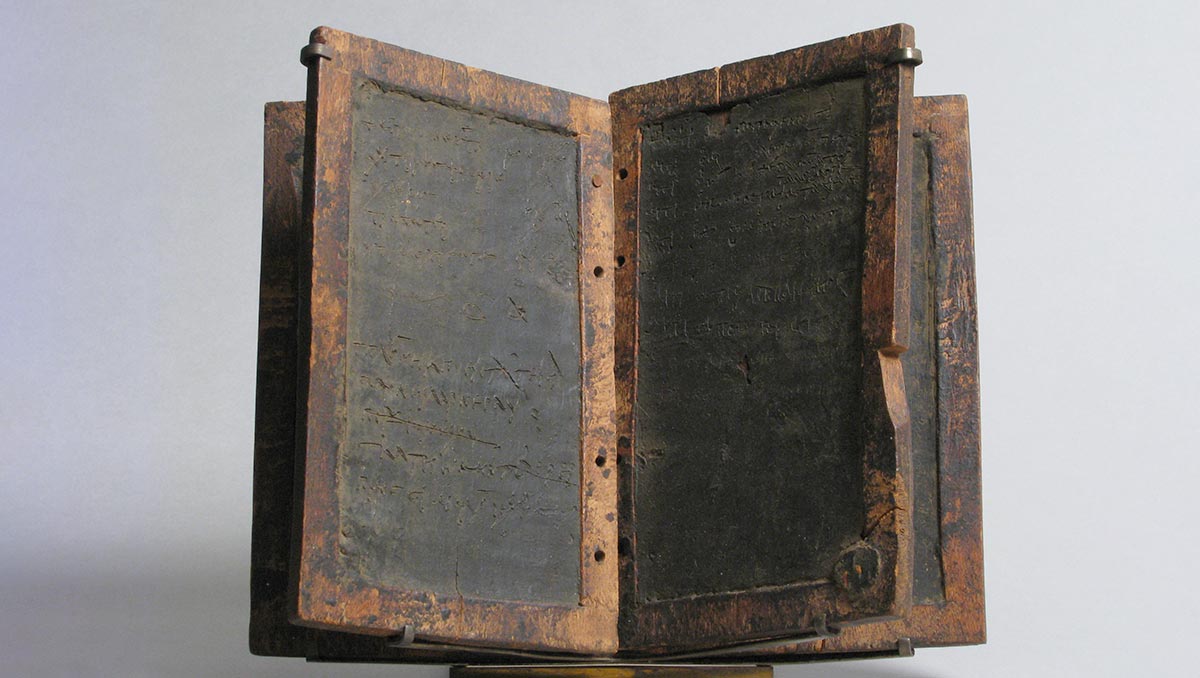
The real answer is: A stylus. This was used for writing by the ancient Romans. While it did not have the same type of eraser that we have today, it did have something that was used for erasing. Its top end was flat like a small spatula. The Romans frequently wrote on a wax tablet. The pointy end of the stylus would carve the letters into the soft wax, while the flat end of the stylus could make the wax surface smooth again, hence “revoking” what the other end had done.
7. The Popcorn Puzzle (Aztec)
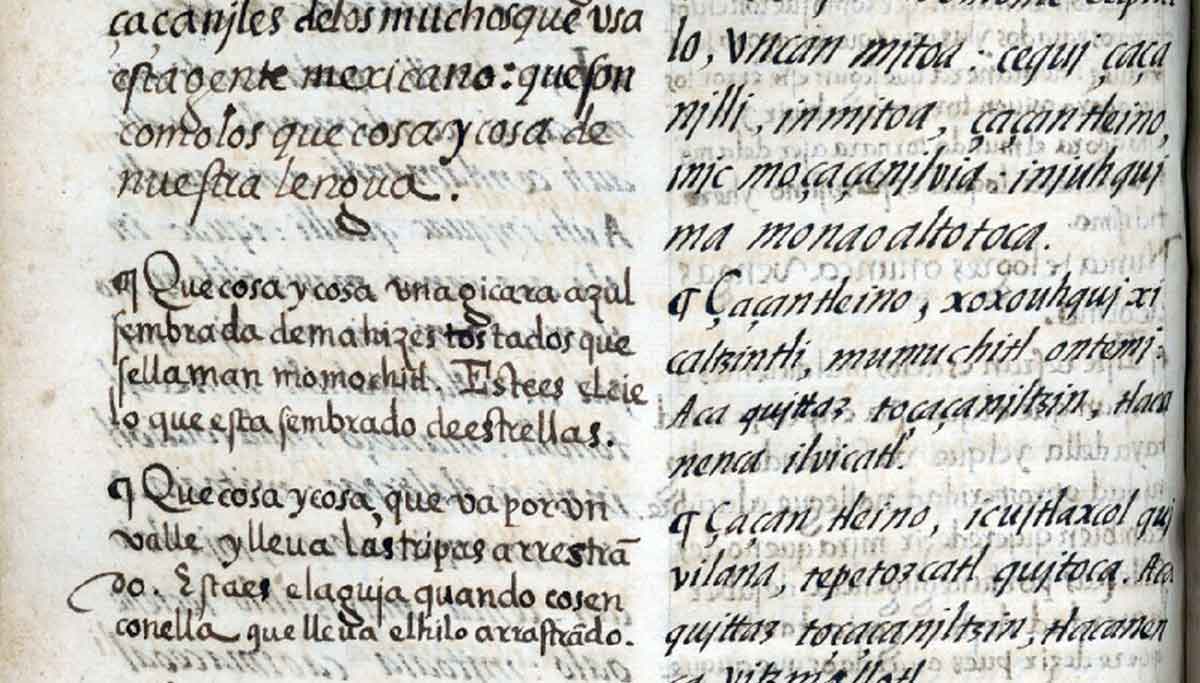
“What is it? A blue bowl filled with popcorn.”
This short Aztec riddle is found in the Florentine Codex. It’s the first of many Aztec riddles recorded in that book in the 16th century. This encyclopedic study of Aztec life was compiled in Nahuatl and Spanish under the Franciscan friar Bernardino de Sahagún, and it was completed around 1577. Much of its text and nearly all of its illustrations were produced by Nahua scholars, artists, and elders, which makes it one of the most valuable sources on Aztec culture. It shows that they were fascinated by riddles. What is the answer to this puzzle about a blue bowl filled with popcorn?
The answer is: The night sky. The bowl itself represents the apparent dome of the sky, while the popcorn represents the stars that fill it.
This riddle, with its vivid metaphor, is typical of Aztec riddles, which the Nahuatl text introduces with the formula zazan tleino, “what is it?” Another example involves the fingernails being represented by ten flat “stones” that each person carries.
The Ancient Value of Riddles
As we can see from this consideration of some of the most famous ancient riddles, the human brain’s love for lateral thinking was just as present in antiquity as it is today. Many of these riddles would not feel out of place in a modern puzzle book.
What has shifted is the relevance that these riddles have in modern human society. Today, riddles are mostly found in puzzle books and used for personal entertainment. In contrast, riddles in antiquity were taken much more seriously. As we saw in the case of Samson’s riddle, the Philistine men were so determined to discover the solution that they threatened to burn Samson’s bride and her family. We see similar stakes involved in the riddle of the Sphinx. An ancient legend even claimed that Homer died of frustration after failing to solve a riddle posed by some fisher boys: “What we caught, we left behind, and what we did not catch, we carry with us.” The answer was lice.
Even the other riddles, with less deadly stakes, still mostly reveal a profound appreciation for knowledge and wisdom. It does not seem like a stretch to suggest that riddles were actually more valued thousands of years ago than they are today.