
Accounts of the Trojan War tell us that the Greeks assembled their great fleet and sailed to Troy because Paris of Troy fell in love with Helen, the queen of Sparta, and took her back to Troy with him. The most beautiful woman in the world and the queen of one of Greece’s most important cities, the Greek world united to get her back. Thus Christopher Marlowe, writing in the late 16th century, could write of Helen, “Was this the face that launched a thousand ships, and burned the topless towers of Ilium?” But the ten-year siege of Troy was not a rescue mission. Rather than being seen as a victim, Helen was often blamed for starting the Trojan War. But is this a fair assessment of Helen’s role in the great conflict, and is it even what the ancient Greeks themselves believed?
The Mythological Catalyst of the Judgment of Paris

Homer never narrates the story of Paris, the young prince of Troy, abducting Helen, the queen of Sparta, from her husband, Menelaus, and taking her back to Troy. However, characters mention it frequently and imply it was the catalyst for the Greek war on Troy. But within the greater mythological tradition surrounding the Trojan War, this event was the “trigger” or “excuse” for the war, but not the root cause.
According to the epic tradition surrounding the Trojan War, most notably recorded in the fragmentary Cypria, Zeus deliberately orchestrated the war to cull the human population, which was overwhelming Gaia, mother earth, and to bring the Heroic Age to an end.
In an elaborate scheme, Zeus orchestrated the marriage of the sea nymph Thetis to the mortal king Peleus. Zeus had previously desired Thetis but received a prophecy that her son would become greater than his father. Therefore, he thought it best to marry her off to a mortal. She would later give birth to the hero Achilles. Zeus then hosted a grand wedding feast, inviting all the gods, with the deliberate exception of Eris, the goddess of discord. Enraged by this slight, Eris snuck into the wedding and placed a golden “Apple of Discord” in the banquet hall with a note that it was “for the fairest.”

When the fruit was discovered, three goddesses immediately claimed the prize: Zeus’ wife Hera, Athena, the goddess of wisdom, and Aphrodite, the goddess of love and beauty. They brought the dispute to Zeus, asking him to declare a winner. Zeus deflected by passing off the decision to a mortal prince, who was living as a humble shepherd due to a prophecy at his birth that he would ruin his city, Paris of Troy, also known as Alexandros.
The goddesses were brought to Paris on Mount Ida to judge, and each goddess tried to bribe him. Hera offered power in the form of absolute dominion over Europe and Asia. Athena offered him martial invincibility and wisdom. Meanwhile, Aphrodite offered him the most beautiful woman in the world, who happened to be Helen, a daughter of Zeus and wife of Menelaus, king of Sparta. The youth chose the girl.
Should Paris and Helen be blamed for what happened next, or is it Aphrodite for being willing to break up a marriage to win, or Zeus, for orchestrating the situation in the first place?
Did Helen Elope or Suffer Physical Abduction?

With Aphrodite’s help, Paris then sailed to Sparta on the pretext that he was on a diplomatic mission, sailing in ships built by Phereclus. He was welcomed by King Menelaus in accordance with xenia, the Greek concept of guest-friendship. This was the requirement that Greeks welcome strangers into their homes, and that strangers respect the homes they visited, protected by Zeus.
Nine days into the visit, Menelaus was called away to Crete to attend the funeral of his grandfather Catreus. He left Helen behind to oversee the palace and entertain their guest. With Menelaus out of the picture, Paris acted. In some versions of the story, he showered Helen with gifts and won her affection. The two then ran away together, boarding Paris’ ship under the cover of night and taking a significant portion of Sparta’s royal treasure with them.
Other versions of the story suggest that Helen was taken against her will, potentially forcibly. Meanwhile, Homer has Helen overcome with guilt for abandoning her home and causing this war. But just because Helen blamed herself does not mean that she was not forcibly taken.

Homer also indicates divine coercion. In Book Three of the Iliad, Helen tries to reject Paris after he flees the battlefield. But Aphrodite corners her and threatens Helen with divine wrath if she does not return to Paris’ bed.
Many Greek authors wrote about Helen, and some cast her as a willing participant and others as a victim. The female poet Sappho, writing around 600 BC, gave Helen romantic agency, suggesting she followed her heart and did not allow herself to be constrained by social duty. Euripides cannot decide in his Trojan Women, written around 415 BC. He puts Helen on trial before Menelaus. She claims that Aphrodite gave her an irresistible passion. Meanwhile, Hecuba, the fallen queen of Troy, accuses Helen of being won over by Paris’ eastern gold and lavish lifestyle.
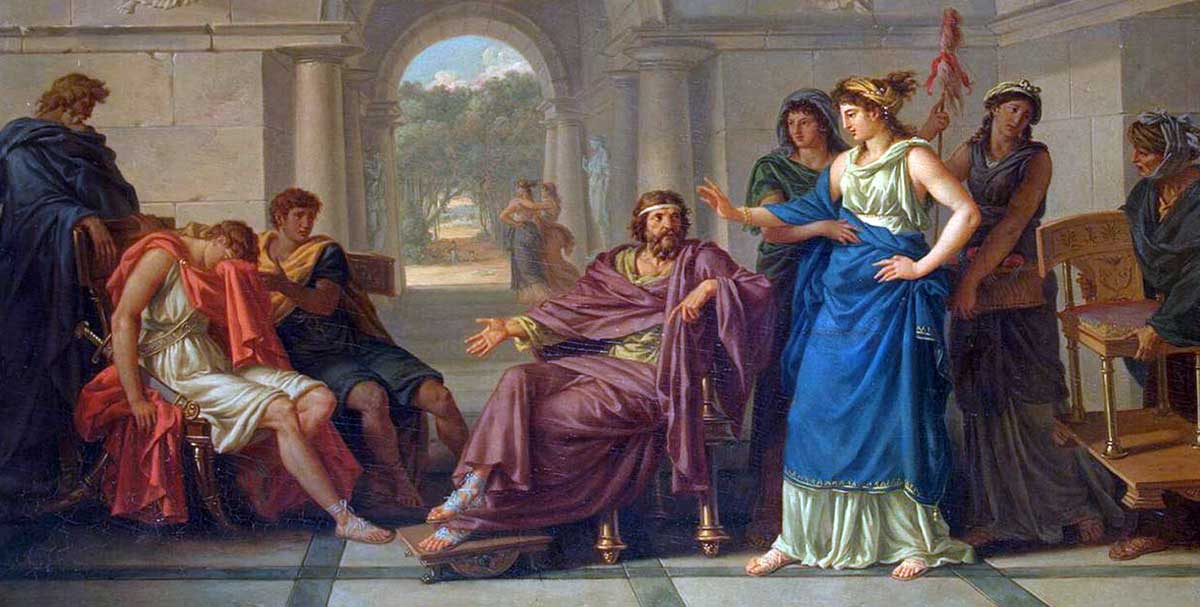
In the Odyssey, Homer has Helen, who is back in Sparta with Menelaus as queen after the war, recount some of her experiences to Odysseus’ son, Telemachus. She said that her departure was due to a god-sent madness, inflicted by Aphrodite. But to prove that her heart remained with Sparta, she claims that she was the only person in Troy clever enough to identify Odysseus when he entered Troy disguised as a beggar. She then claims that she helped him in his daring escape back to the Greek camp, and that she was rooting for a Greek victory throughout the war.
But before Helen recounts this story, Homer has her slip a drug called nepenthe, or “anti-sorrow,” into the drinks of both Telemachus and Menelaus. This magical drug from Egypt stops their tears, so that she can tell her story. Is this an act of compassion for their sorrow, or an act of manipulation as she rewrites her role in the conflict?
But whether Helen was complicit or not makes little difference to the overall story. Paris took things from Sparta while he was a guest. This was a breach of xenia, which was a crime not just against Menelaus and Sparta, but also the gods.
How Euripides Reframed Helen as the Geopolitical Scapegoat
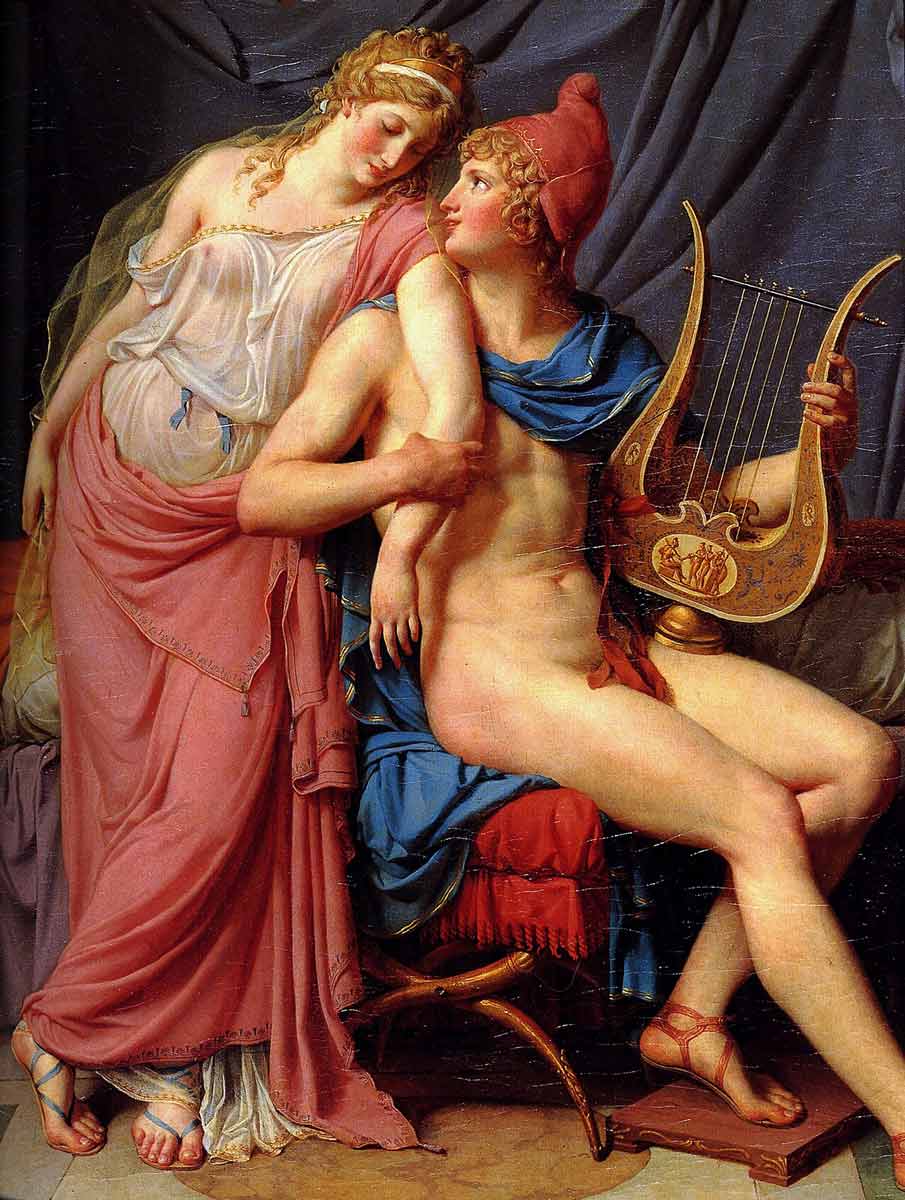
But does Helen’s reason for leaving Sparta even matter? She is just a pawn in a bigger game of male ambition.
Euripides’ Trojan Women, in which he condemns Helen, was written at the height of the Peloponnesian War, around 415 BC, and uses Helen as a scapegoat for the tragic Trojan War, which may have felt closer than ever to Athens in the midst of its current conflict. He presented a similar image of Helen in his play Orestes, written around 408 BC.
But in an audacious act of inconsistency, in his play Helen, written in 412 BC, he not only declares Helen innocent, but suggests that she never even went to Troy. Instead, a furious Hera, looking to undermine Paris, created a copy of Helen from the clouds, an eidolon or phantom double. This is the Helen that Paris took back to Troy. Meanwhile, Hermes took the real Helen to Egypt and placed her in the care of the chaste and virtuous King Proteus until Menelaus could reclaim her.
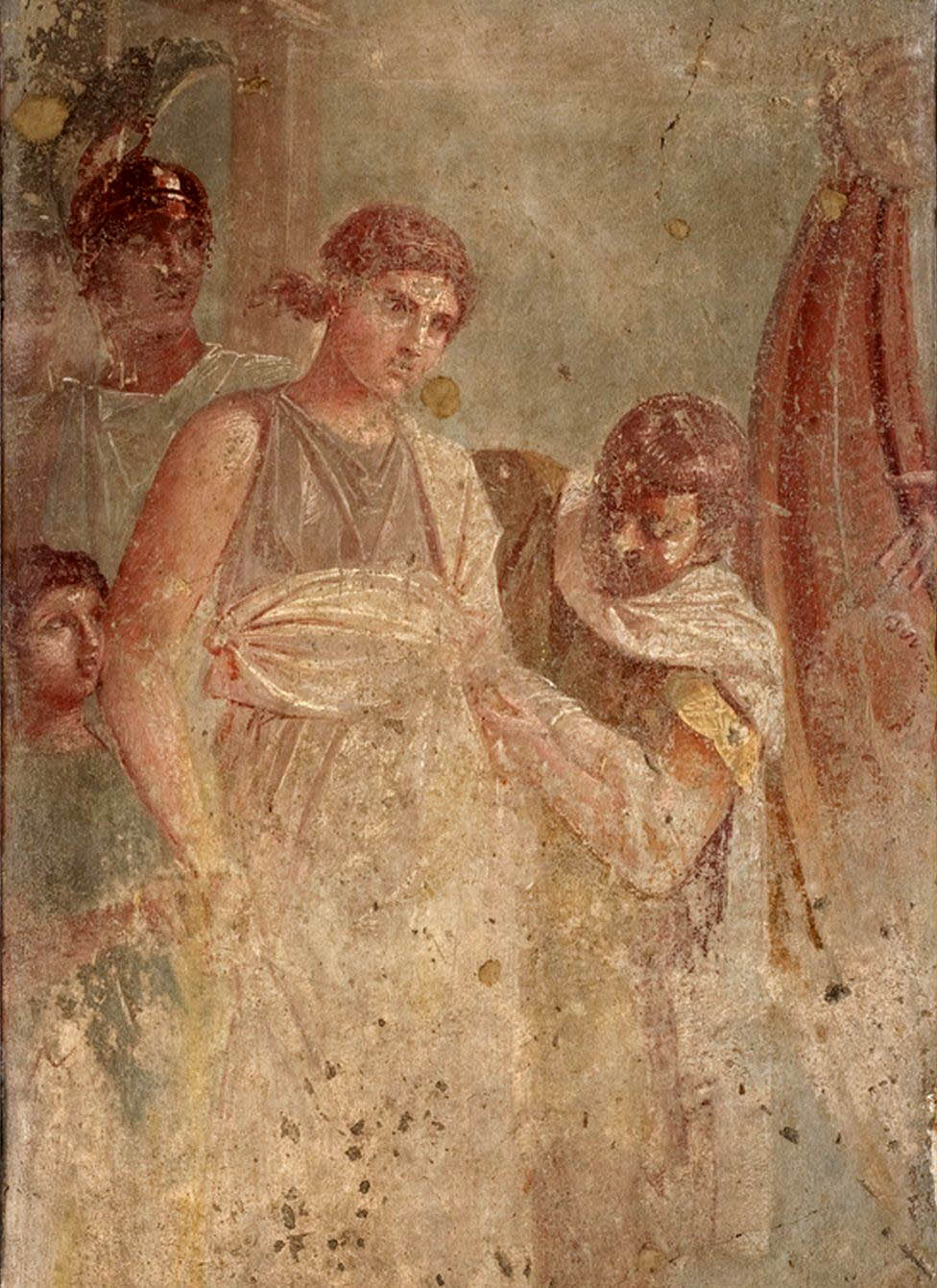
This Helen waited patiently in Egypt for 17 years, grieving as she heard about the horror of the war across the sea. But before Menelaus could collect her, King Proteus died, and his ruthless son, Theoclymenus, tried to force Helen to marry him. She took sanctuary in Proteus’ tomb. That is when Menelaus arrives, shipwrecked in Egypt on his way home from Troy, discovers Helen, and learns the truth of what happened.
So, in this version of events, Helen is a paragon of virtue who goes into hiding to respect and preserve her marriage to Menelaus. She rejoices when they are reunited and willingly returns to Sparta.
Gorgias and the Sophist Defense of Helen
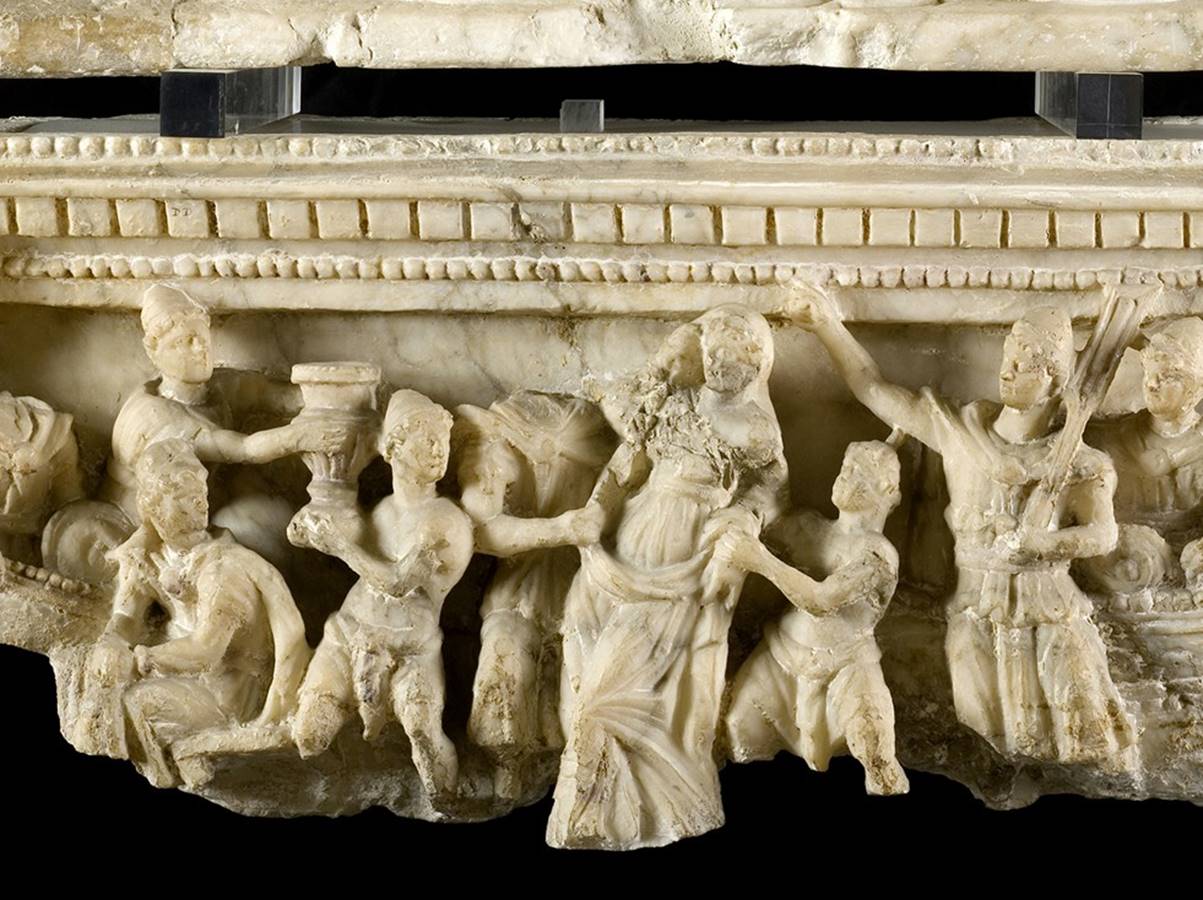
The Sophist Gorgias of Leontini, writing in the late 5th century BC, wrote a defense of Helen in his Encomium of Helen, in which he uses Helen as the case study to show the irresistible power of persuasive speech. This was the type of speech for which sophists were famous. They often debated publicly, taking on both sides to show that a sufficiently skilled orator can make the weaker side seem like the stronger one.
When coming to Helen’s defense, he argues that Helen could only have left Sparta for one of four mutually exclusive reasons. He then demonstrates that in each scenario, Helen could not be held responsible.
The first scenario is divine fate. The gods had already decided that Helen must sail to Troy to start their war. Helen could hardly be blamed for an act of the divine.
The second scenario is that Paris took her by force, in which case Helen was a victim of violence and trauma. She also suffered more than others as she was stripped of her homeland and family. For this, she would deserve sympathy, not condemnation.
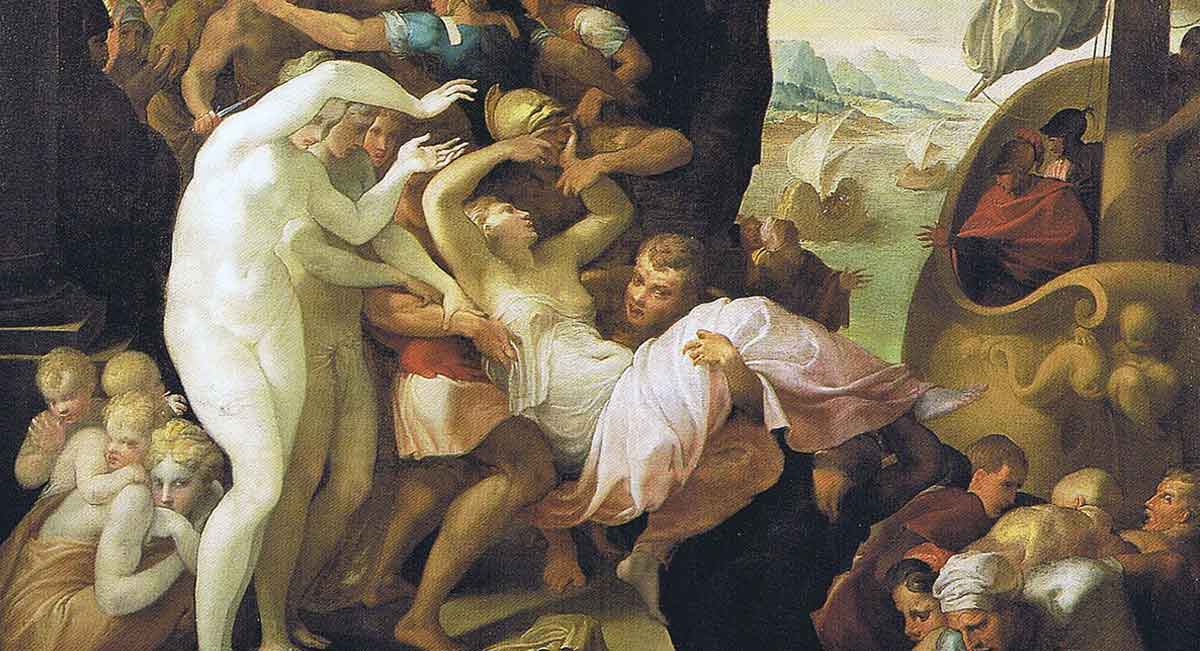
The third scenario is that Paris convinced Helen to run away with him, using the same type of persuasive language as a sophist. He argues that persuasion can compel the mind just as much as violence can compel the body. Thus, Helen was innocent, overpowered by Paris’ words.
The final scenario is that she was overwhelmed by love for Paris and went with him willingly. But this again would be an act of the divine, as Eros is a divine passion that no human can overcome. Therefore, following her heart was an involuntary condition of the soul rather than an ethical failure.
Gorgias’ arguments would have been convincing to an ancient Greek audience who believed that the gods interfered in the lives of men. But the orator himself reveals that the defense was a self-referential trap. His key argument is the third: that persuasion can be a powerful tool, as he has just demonstrated by persuading his audience to accept Helen’s innocence.
Bronze Age Politics and Male Ambition

While Helen remains a dramatic plot point in the story of the Trojan War, it is clear that she is just a casus belli, a formal justification for war. This was a war that the Greeks wanted, or more accurately, the Mycenaeans of Bronze Age Greece. If this was not the excuse for the war, another would be found.
Troy was strategically located at the mouth of a narrow strait that connected the Aegean Sea to the Sea of Marmara and the Black Sea. Winds and currents meant that ships could not sail directly up the strait but had to wait at Troy for a favorable wind. This let the Trojans charge heavy taxes and tariffs, making the city extremely wealthy. This was unacceptable to the growing Mycenaean kingdoms, which needed grain, gold, timber, and tin from Central Asia. This was a problem for Agamemnon, Menelaus’ brother and the most powerful Greek king, to deal with.

Agamemnon used the Oath of Tyndareus to force all of Greece to join him in an assault on Troy. When King Tyndareus was seeking a husband for his foster daughter, Helen, princess of Sparta, universally considered the most beautiful mortal woman, every city in Greece sent a suitor. Odysseus devised a plan to have all the suitors not only accept the decision but swear to defend the resulting marriage against anyone who threatened it. Therefore, when Paris took Helen, the Greek world was honor-bound to answer the call to war.
Agamemnon had reasons beyond avenging his brother to lead the war. He is often portrayed as seeking territory, imperial dominance, and wealth. In later accounts, it was so important that he was willing to make a human sacrifice of his own daughter, Iphigenia, to the goddess Artemis to secure the winds needed to sail to Troy.
Helen Cannot Be Held Responsible for the Trojan War
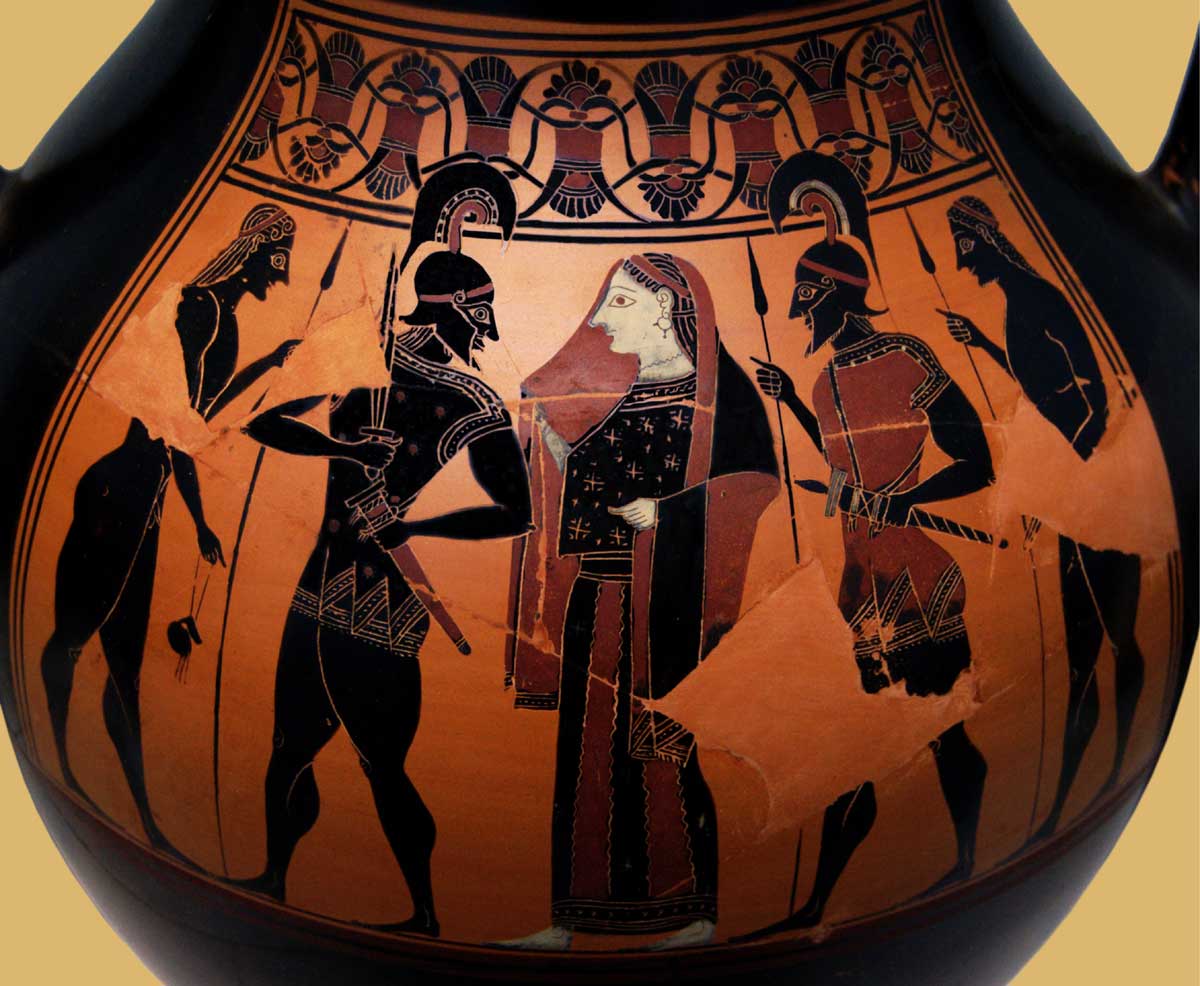
While Gorgias’ argument may have been a demonstration of rhetoric, it holds true that Helen cannot be blamed for the Trojan War, regardless of whether she went with Paris willingly.
According to the Greek understanding of the legendary war, it was orchestrated by the gods specifically to diminish the world’s population and end the Age of Heroes, making way for the Iron Age in which the people of Classical Greece believed themselves to live. Even if we are skeptical about divine intervention in human actions, the story makes it clear that the Greek kingdoms had significant motivations to attack Troy and were likely looking for a pretext. Helen’s story gave them one.
But Helen gave Greek writers an important plot point in their telling of the Trojan War, allowing them to be sympathetic to Troy, which they considered a great kingdom, while still justifying a Greek attack, as they were defending a slight against sacred xenia. As a plot point, Helen, if she was even a real person, is completely lost. We will never know why she went to Troy or what she thought about the great war that followed her.