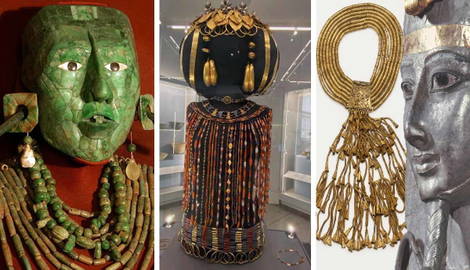

Ancient royalty often went to elaborate lengths to celebrate their monumental lives and seal their place in the afterlife. But despite the cost and care involved in their burials, many of their tombs were soon lost and forgotten. Modern archaeologists have discovered some of these tombs, revealing the magnificent wealth of many ancient kings and the lengths they would take to secure immortality. From Howard Carter unsealing Tutankhamun’s tomb to identifying Richard III’s desecrated remains beneath a Leicester parking lot, these are eight lost royal tombs that archaeologists have rediscovered.
1. Howard Carter Unseals the Intact Splendor of Tutankhamun
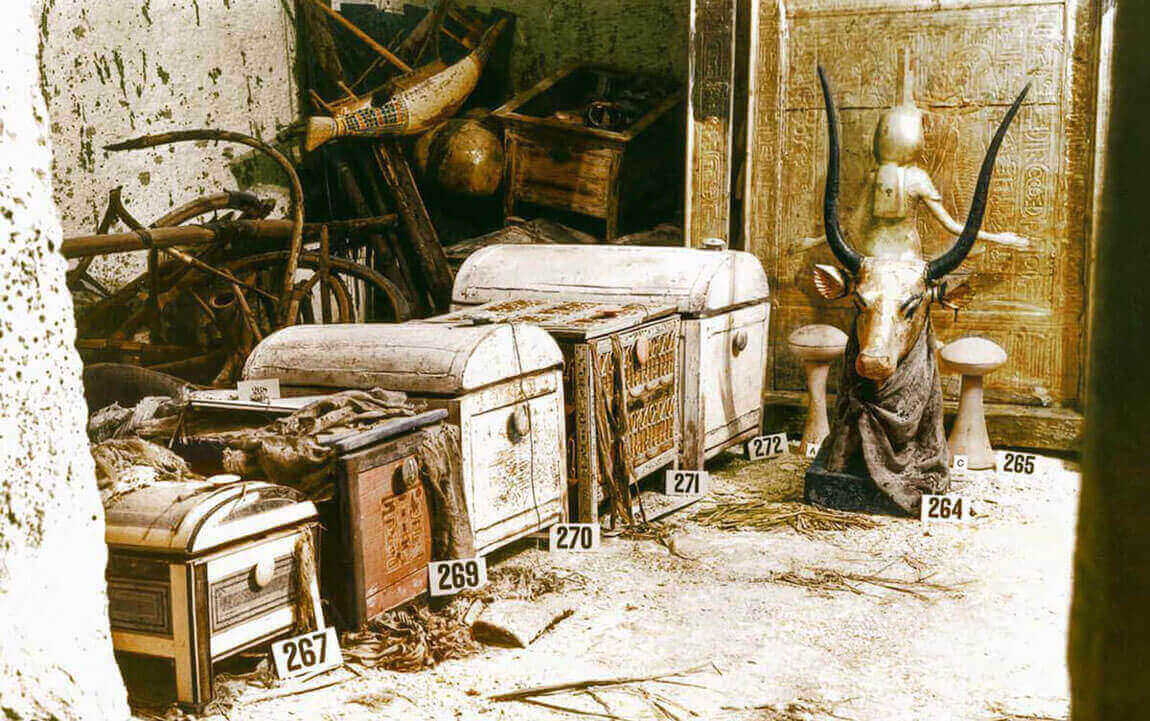
Pharaoh Tutankhamun died unexpectedly in 1323 BC at the age of 19. This gave royal administrators just 70 days, the traditional period of mummification, to prepare his final resting place. His royal tomb was nowhere near complete, so instead, they prepared a modest, non-royal tomb cut into the floor of the Valley of the Kings (KV62). It was likely originally intended for his high-ranking courtier and successor, Ay.
We know the burial was a “rush job” as mold in the burial chamber indicates that the plaster and paint were still wet. Several of his funerary items show signs that the cartouches have been changed, suggesting that they originally belonged to someone else and were repurposed. Finally, his funerary objects were densely packed into the relatively small tomb, rather than carefully placed.
Tomb raiders broke into the tomb on several occasions in antiquity, taking small, easily transportable pieces. But the tomb was saved from more significant grave robbing when, about 180 years later, the tomb of Ramses VI (KV9) was built on the hillside directly above the tomb. Tons of rubble and debris were dumped on the slope, covering Tutankhamun’s tomb. Over time, the rubble cemented into a barrier that concealed the tomb for three millennia.
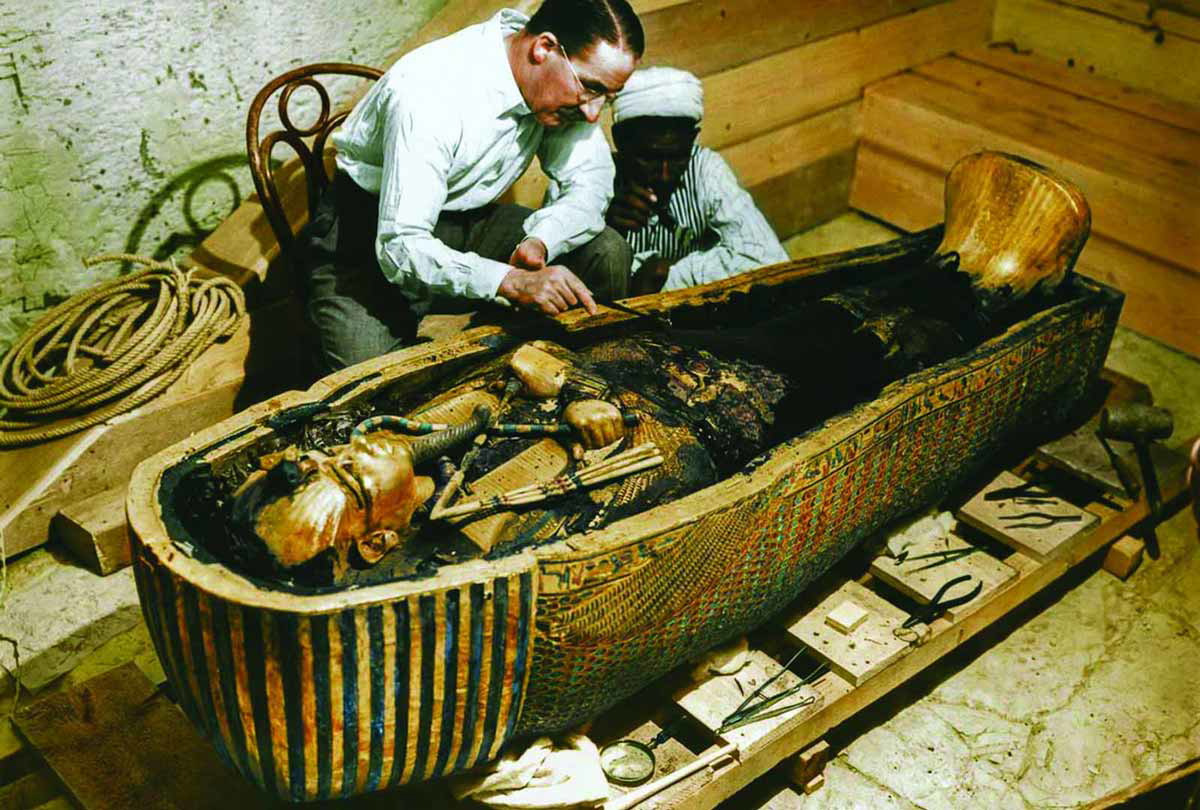
By the early 20th century, most Egyptologists believed that the Valley of the Kings had already yielded all its secrets. But British archaeologist Howard Carter, funded by his wealthy patron Lord Carnarvon, believed otherwise. In 1907, previous archaeologists had found a deposit with mummification debris bearing the name of Tutankhamun, a pharaoh whose tomb had not been found. Carter spent years between 1914 and 1922 methodically searching the area. In 1922, Lord Carnarvon’s patience had run out, and he said that it was the final season he would fund. But luck was on Carter’s side and, in November 1922, he found the tomb.
The rest is history, and Carter’s discovery is still arguably the most famous in Egyptology. While the tomb was not untouched, it is the only mostly intact tomb of a reigning pharaoh from the wealthy New Kingdom ever found. Plus, rather than simply taking the pieces away as spoils, Carter meticulously excavated and documented the tomb over the course of a decade. Plus, there is the story that the tomb was cursed and that those involved in the discovery soon died, though this is more modern folktale than fact.
2. Manolis Andronikos Uncovers Philip II of Macedon at Vergina

In 336 BC, King Philip II of Macedon, in the wake of bringing Greece under his sway, was assassinated in the theater at Aegae, modern Vergina. While his bodyguard Pausanias of Orestis wielded the knife, there were many suspects, including his son Alexander, later known as “the Great.” Alexander, looking to legitimize his succession, held an elaborate state funeral for his father.
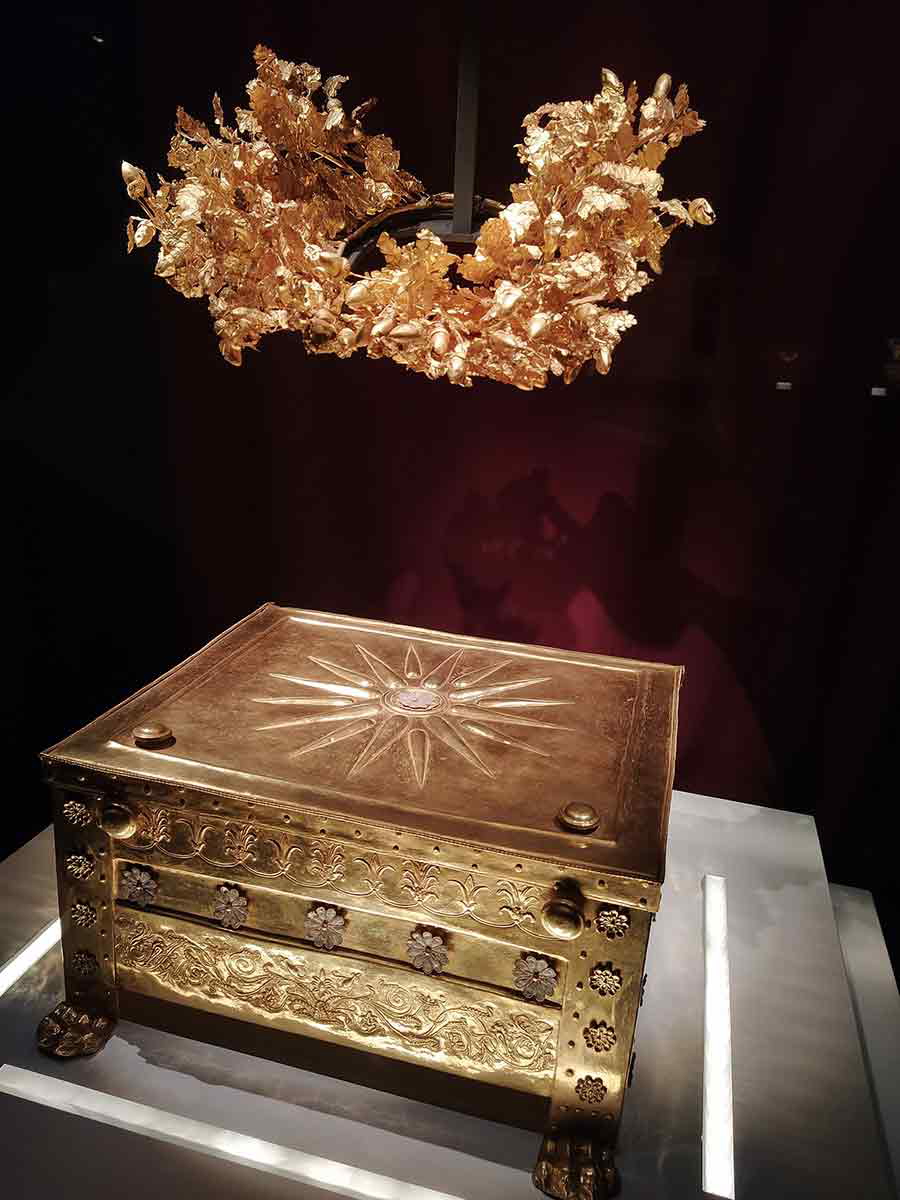
Philip’s body was cremated alongside sacrificial horses and weapons. The bones were then collected and washed in red wine before being wrapped in an embroidered purple and gold cloth. The remains were then placed in a gold chest weighing 11 kilograms, with its lid engraved with 16 starbursts known as the Vergina Sun. On top of the bones was placed a solid-gold oak wreath. This was then placed in a massive underground, barrel-vaulted tomb decorated with elaborate friezes. He was also buried with treasures including a gilded helmet and an ivory and gold shield.
When King Pyrrhus of Epirus invaded Macedon in 274 BC, his Galatian mercenaries looted the royal cemetery. But in 270 BC, King Antigonus II Gonatas retook Macedon and took steps to protect and restore the tombs. He built a colossal earthen mound, 110 meters in diameter and 12 meters tall, that covered many of the tombs, including Philip’s. Then, with the Roman conquest of Macedon a century later, Aegae fell into obscurity, and the tombs were forgotten.
Greek archaeologists began excavating Vergina in the 1930s, with limited expectations. But in the 1960s, British historian Nicholas Hammond suggested that the ruins near Vergina were not just a minor provincial town, but the lost Aegae. This led Greek archaeologist Manolis Andronikos to focus his efforts on the Great Tumulus, discovering the tombs in 1977.
While the team found several tombs, it was quickly clear that Tomb II was special. Unlike the other tombs, the heavy stone double doors were sealed and intact. They soon stood inside an untouched 4th-century BC tomb. While Andronikos immediately claimed that the tomb belonged to Philip II, there was academic debate. But examination of the remains showed severe damage to the right eye socket, consistent with the injury Philip suffered during the Siege of Methone in 354 BC. This, combined with the richness of the tomb, leaves little doubt that it belonged to Philip II. Sadly, the tomb of his son Alexander is still lost.
3. The Farmers Who Stumbled Upon the Terracotta Army of Qin Shi Huang
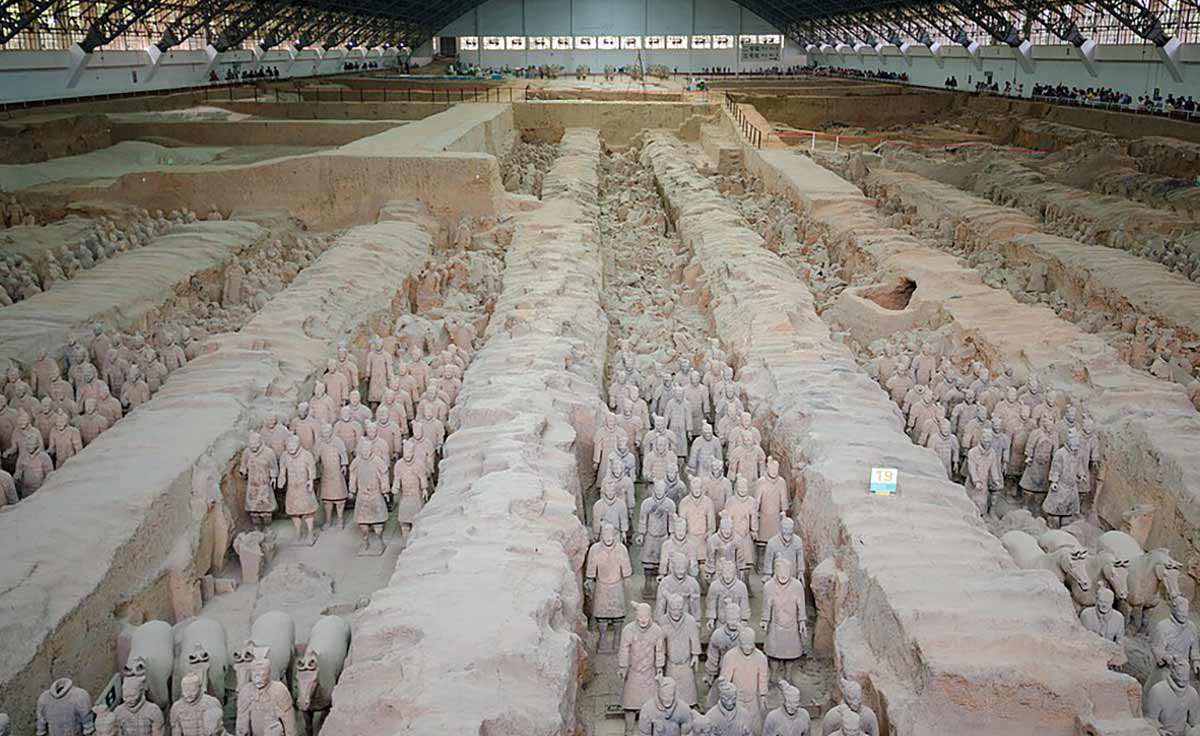
In 221 BC, Zheng of Qin conquered the last independent Chinese states, unifying China for the first time and declaring himself the first emperor of Qin, Qin Shi Huang. Eager to maintain his immense power in the afterlife, he commissioned an elaborate mausoleum. He was buried in a central earthen pyramid, which has been a known landmark since, but he also built a vast subterranean garrison to guard his grave, now known as the Terracotta Army, which was lost to history.
Located roughly 1.5 kilometers from the emperor’s tomb, the mausoleum was an exact subterranean replica of the Qin capital, Xianyang, designed for the emperor to rule in the afterlife. The army was carved with individual features and painted in bright colors. They were also equipped with functional bronze weapons and placed in battle formation.
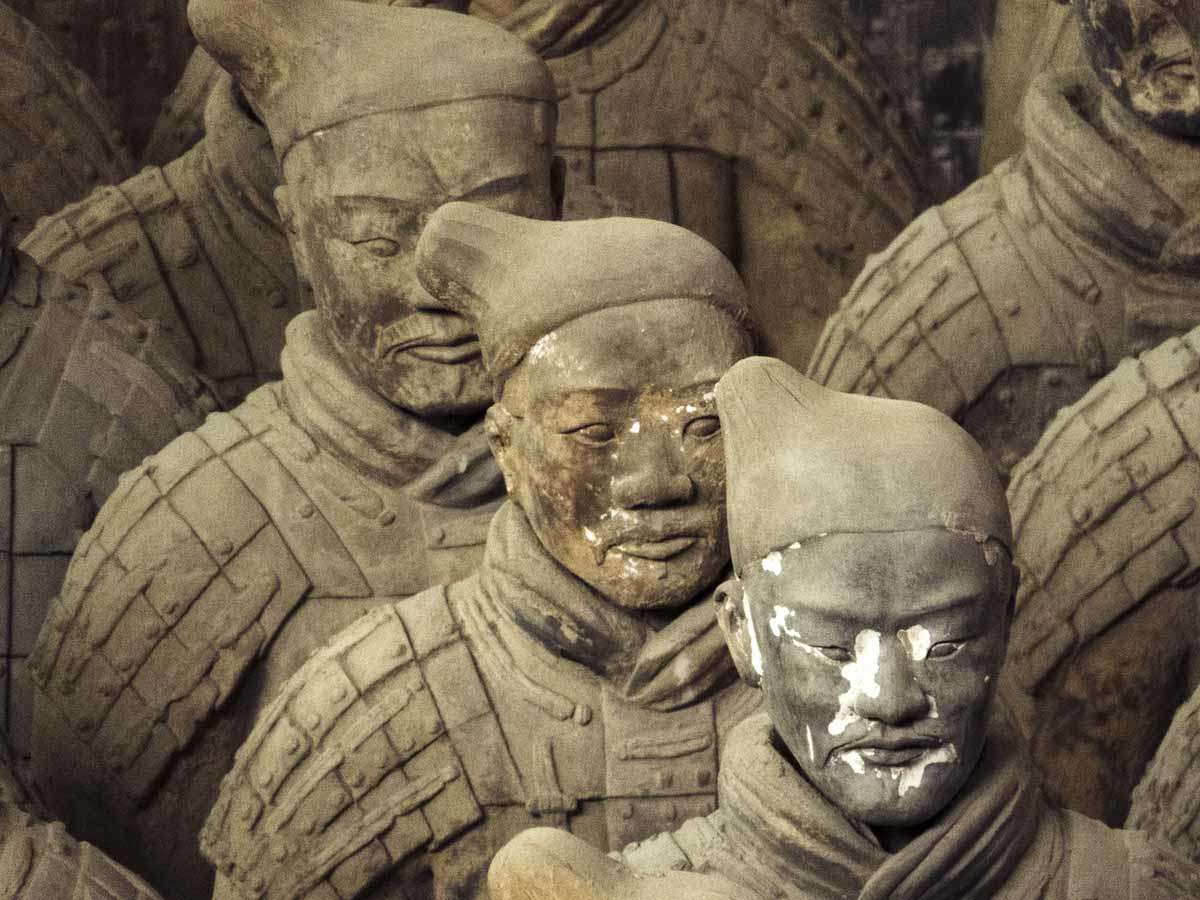
Qin Shi Huang died in 210 BC, reportedly while seeking an elixir of immortality. The Qin dynasty collapsed almost immediately. In 206 BC, rebel forces led by warlord Xiang Yu took the Qin capital. His men broke into the mausoleum to steal the bronze weapons and then set fire to the wooden support structures holding up the ceiling. The ceiling collapsed, and the Terracotta Army was buried beneath tons of earth. The legendary mausoleum was quickly forgotten.
In 1974, while the region was suffering a severe drought, a group of farmers was digging a well. About 15 meters down, they struck something hard and started pulling up fragments of terracotta, a bronze crossbow trigger, and then a life-sized clay head. A local archaeologist, Zhao Kangmin, soon arrived and started excavating and reconstructing the figures in secret. This was the height of China’s Cultural Revolution, during which antiquities were often destroyed. News soon got out, but, fortunately, authorities recognized the cultural value of this incredible find, and scientific excavations have continued. The emperor’s burial mound still remains completely unexcavated.
4. Alberto Ruz Lhuillier Descends Into the Crypt of Pakal the Great

Pakal the Great ascended as king of the Maya city-state of Lakamha’ in AD 615 and did much to architecturally glorify the capital. Among his construction projects was the Temple of the Inscriptions, a great pyramid designed to be his own tomb and eternal monument.
Construction began around AD 675, with Pakal’s mortuary crypt built directly into the bedrock. The 25-meter-tall limestone pyramid was then built on top of it. Pakal’s sarcophagus in the underground crypt was carved from a single block of dense limestone and covered with a 5-ton lid. It is decorated with images of the moment of Pakal’s death, falling along the axis of the World Tree into the maw of the Earth Monster, serving as the entrance to the underworld realm of Xibalba, from which he would be reborn as the Maize god. Pakal’s body was coated in red cinnabar and adorned with thousands of pieces of jade, including an elaborate jade mask. The crypt was then decorated with life-sized plaster sculptures depicting the nine lords of the underworld. Pakal died in AD 683, and the completion and interment were overseen by his son.
To protect the tomb from looting and keep the sacred space intact, the Maya permanently concealed the path to the crypt. Five or six human sacrifices were placed at the burial chamber threshold, and then the passage was sealed with a massive triangular limestone slab. Workmen then systematically retreated up the 66-step vaulted staircase, packing it with rubble. At the top entrance, flagstones were set into the temple floor to make the surface look unbroken. The city itself was then abandoned in the 8th century, and the surrounding rainforest claimed the pyramid itself.
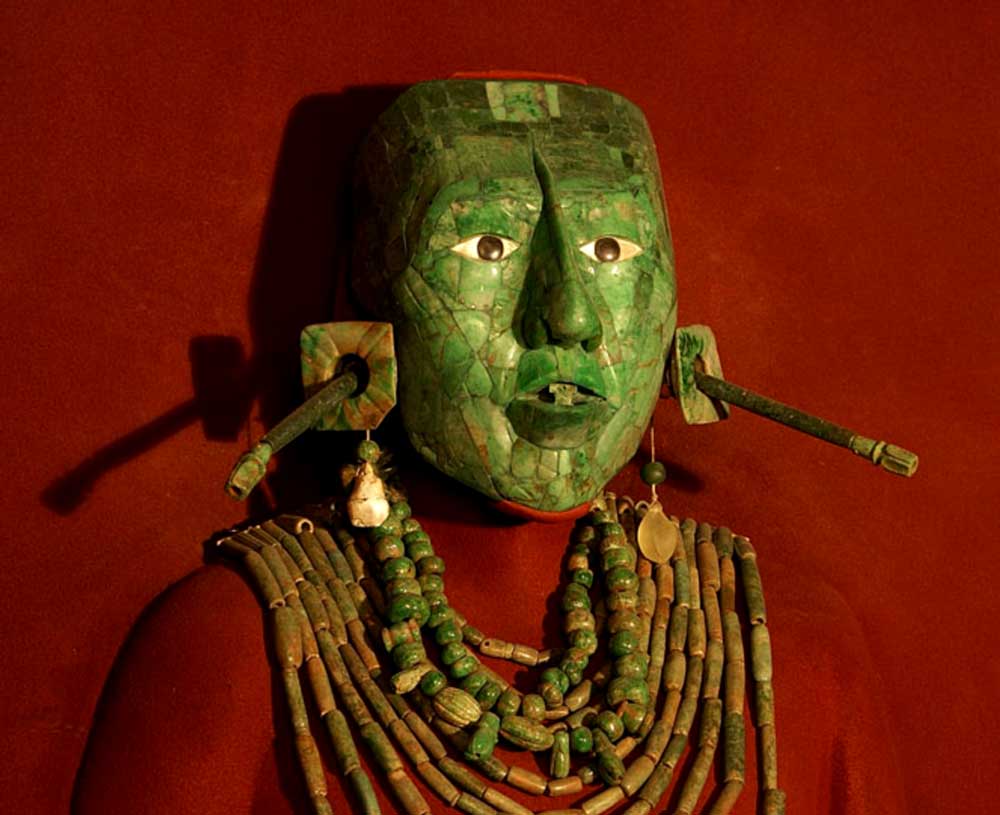
In 1949, Mexican archaeologist Alberto Ruz Lhuillier began investigating the jungle pyramid. He noticed that the walls of the temple did not terminate at the flagstone floor, and that one large limestone slab had two rows of drill holes fitted with removable plugs, all indicating that there was something underneath. Lifting up the slab, his team then spent three years from 1949 to 1952 removing the debris from the stairway. Eventually, 22 meters down, they found the entrance to the crypt.
The discovery of Pakal’s crypt became a defining event in American archaeology and changed our understanding of Maya pyramids, as not just elevated pedestals, but as monuments that aided in the deification of dead kings, much like the Egyptian pyramids.
5. The Greyfriars Parking Lot and the Recovery of King Richard III
On August 22, 1485, King Richard III was killed at the Battle of Bosworth Field, ending the Plantagenet dynasty and ushering in the Tudor era. During the final charge of the battle, Richard attempted to strike down Henry Tudor. Instead, he was cut off from the rest of his army, hunted down, and bludgeoned to death. His body was then desecrated. It was stripped naked, bound, and thrown over the back of a horse and brought to Leicester. His body was on display for two days.
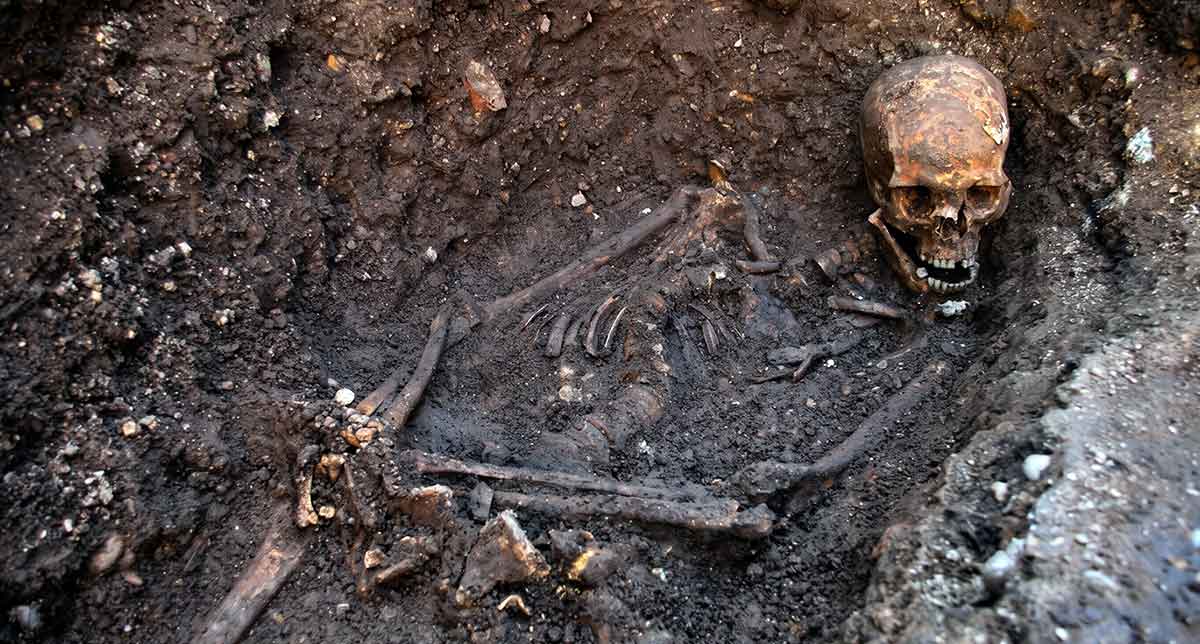
Eventually, Richard’s body was given to the Franciscan friars of Greyfriars for a quiet burial. He was placed in a roughly dug grave that was too small, which meant that the body had to be awkwardly propped up against the earth with its neck bent forward. There was no coffin. He had no fine vestments, and the positioning of his hands suggests that they were still bound when he was buried. About a decade later, Henry VII erected a modest tomb monument over the grave to give the veneer of Christian propriety. But the precise location of Richard III’s remains was forgotten when Greyfriars was dissolved in the Dissolution of the Monasteries in 1538. The area was soon paved over by the modern city of Leicester.
From the early 17th century, the myth circulated that during the dissolution, a mob broke into Greyfriars, took Richard III’s body, and dragged it through the streets, and hurled it off the Bow Bridge into the River Soar. But in the 21st century, independent researcher Philippa Langley became convinced that this was not true. In 2012, she crowdfunded a project to excavate part of the city lying over the old monastery. Within just a few days, a skeleton was discovered.
In early 2013, the University of Leicester confirmed that the body very likely belonged to Richard III based on examination of the remains. The spine exhibited pronounced scoliosis, which would have caused the right shoulder to stand noticeably higher than the left, a famous feature of the king. The skeleton also had evidence of 11 battle-related injuries incurred just before death, matching the story of Richard’s demise. There were also smaller cut marks, consistent with “humiliation wounds” received posthumously. Radiocarbon dating also confirms that the body belongs to the period of 1455 to 1540, and isotope analysis suggests a diet consistent with the top-tier English nobility at the time.
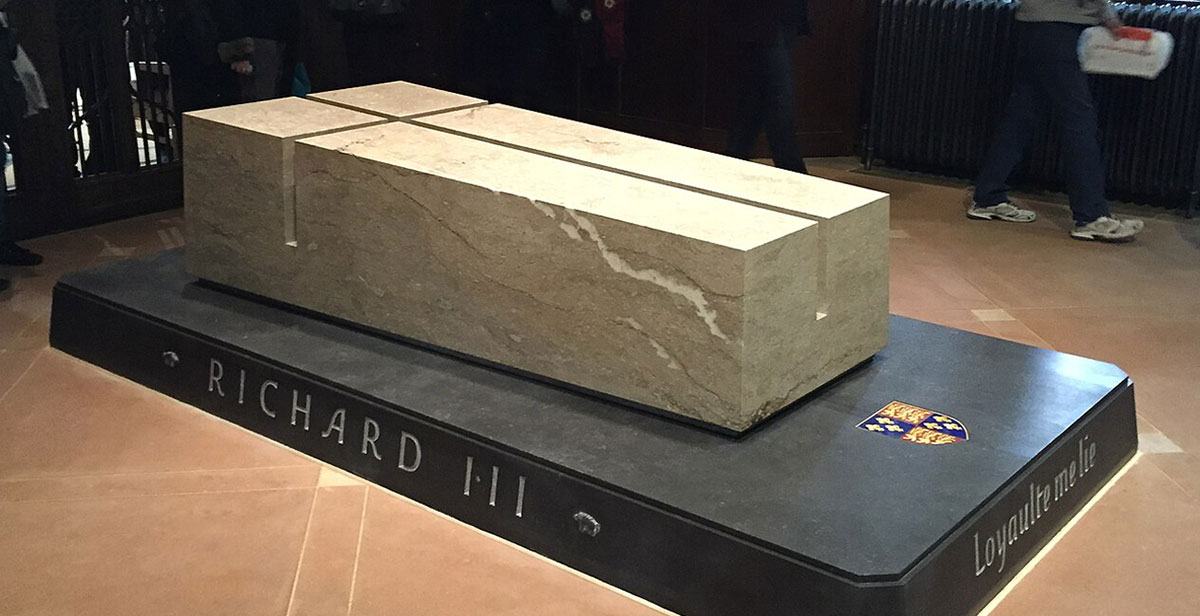
These findings were then confirmed by mitochondrial DNA comparison with two living descendants of Richard’s sister, Anne of York. It was a 99.999% match. On March 26, 2015, Richard III was reinterred in a purpose-built tomb inside Leicester Cathedral with a full royal state funeral.
6. Pierre Montet Finds the Untouched Silver Pharaoh Psusennes I

In 1001 BC, Pharaoh Psusennes I died after ruling for more than 40 years during Egypt’s turbulent Third Intermediate Period. He was buried in a fortified temple precinct within his capital city, Tanis. The compact, subterranean tomb was placed beneath the floor of the temple of Amun, which also housed other important members of the dynasty.
Psusennes recycled elements of earlier New Kingdom monuments to furnish his tomb. This included a sarcophagus that belonged to Merenptah, one of the sons of Ramses II. Unusually, he had a solid silver, rather than gold, coffin, which was rare, as silver had to be imported from Asia. The Egyptians believed that their gods were made of gold, but their bones were made of silver. Still, his head was covered by an exquisite gold death mask and extensive gold jewelry.

But as Tanis fell from prominence and its region of the Nile Delta silted up and became difficult to navigate, it was abandoned by Roman times. Because it was a wet region, the mud-brick temples melted into mounds of sediment and organic material disintegrated.
Since 1929, French Egyptologist Pierre Montet had been excavating in the area, believing he had found the Biblical city of Zoan or the Egyptian Hyksos capital of Avaris. In 1939, they had reached the necropolis under the temple. When they reached the underground tomb, they saw signs of looting in the outer rooms, but still discovered the intact silver hawk-headed coffin of Pharaoh Shoshenq II. They then found that the limestone walls were concealing another chamber. Behind it, they found the completely untouched tomb of Psusennes I.

The discovery was just as incredible as that of Tutankhamun but was overshadowed by the political crisis of 1940. The mission was shut down and the treasure sent to the Egyptian Museum in Cairo.
7. Leonard Woolley Reveals Queen Puabi in the Royal Cemetery of Ur
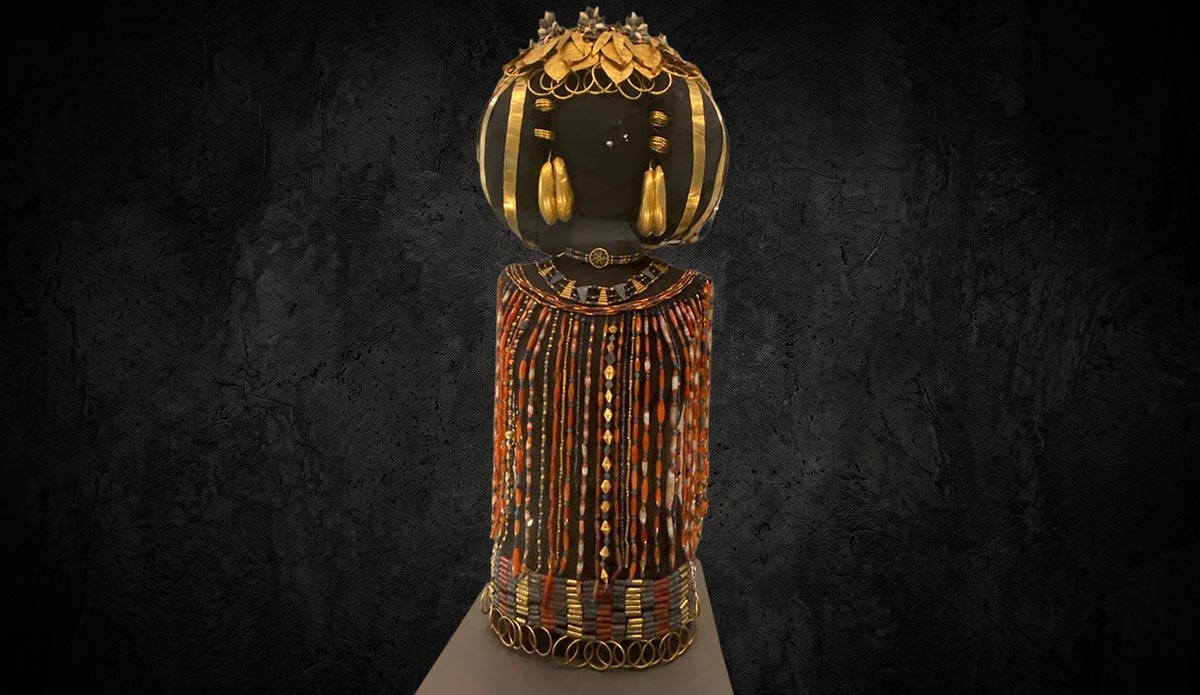
Around 2600 BC, a wealthy woman named Puabi died in the Mesopotamian city of Ur. She is identified on a lapis lazuli cylinder seal as Nin, a title indicating that she was a queen or high priestess. This earned her an elaborate funeral that included a mass human sacrifice and rich burial goods.
Her mortuary complex had a ceremonial courtyard, known as a “death pit,” and an underground stone burial chamber where she herself was placed. The death pit saw the sacrifice of dozens of courtiers, including five armed guards, two grooms, and several female courtiers. At least one of the women was a musician, buried with a wooden harp decorated with red limestone, lapis lazuli, and shell inlay, sculpted with a gold bull’s head. Examinations of their skulls suggest that the courtiers were ritually killed by a bronze spike to the back of the head.
In the burial chamber, Puabi was laid on a wooden bier and surrounded by five more courtiers. She wore a beaded cape made from hundreds of beads and a six-kilogram wig made of 40 meters of beaten gold ribbon. Her tomb chamber lay directly over an earlier royal tomb, perhaps belonging to her husband or predecessor.
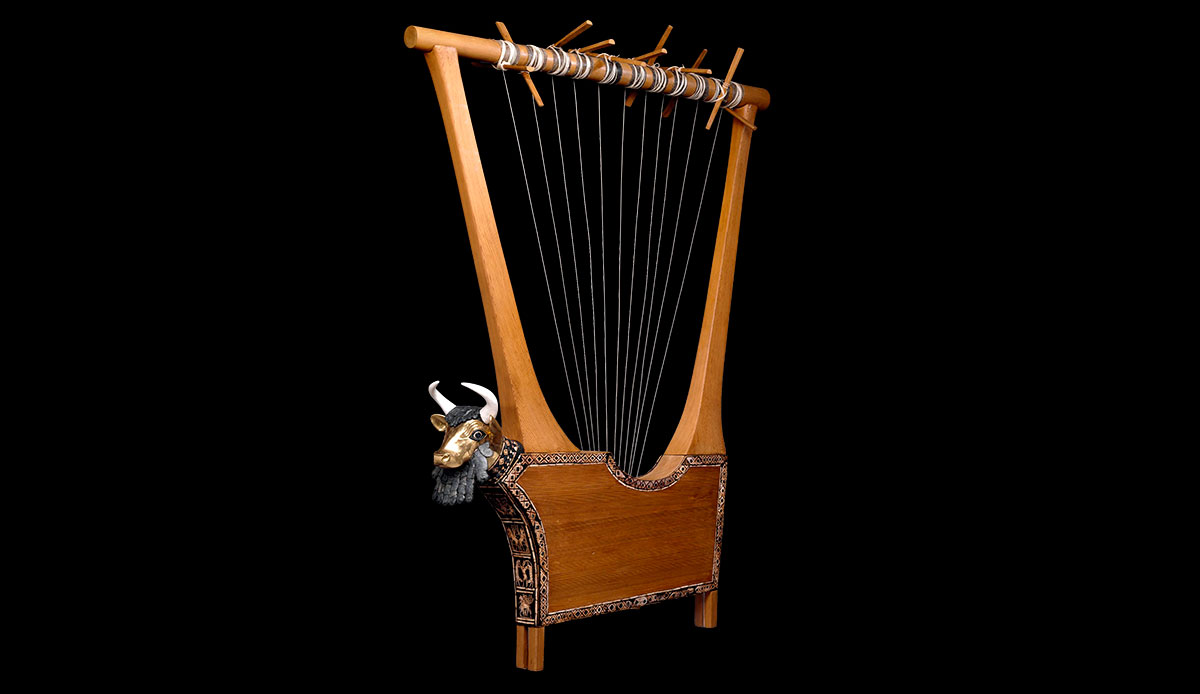
Unlike many other elite burials known from the Near East, Puabi’s tomb was never robbed. While robbers successfully tunneled into the lower tomb, they passed directly past Puabi’s tomb. They seem to have thought they got everything and left the area. As Ur expanded, it built over the tomb, obscuring it. Then, the city was abandoned around 450 BC when the Euphrates River shifted and left the site without fresh water.
In 1922, British archaeologist Sir Leonard Woolley joined the Ur excavation. He immediately found the cemetery but waited four years to train his local workers before beginning the excavations. Having found the lower tomb first, the death pit and Puabi’s tomb were a welcome surprise, especially since the burial was completely intact. While the organic material of the tomb had all disintegrated, the magnificent jewelry was preserved.
8. Why the Well-Preserved Tomb of Lady Dai Shook Modern Science
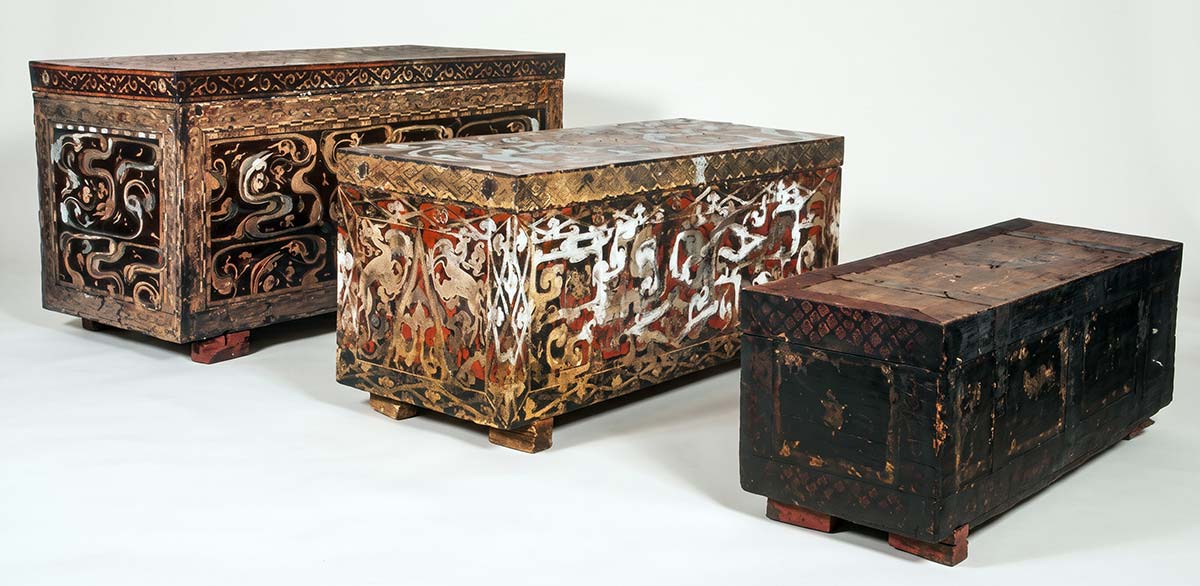
In Han China in 168 BC, a noble woman called Xin Zhui, but more commonly known as Lady Dai, died in Changsha. While her husband, the first Marquis of Dai, and son were buried nearby, Lady Dai was placed in a tomb designed to preserve her for eternity. Her tomb pit was dug 16 meters into a hillside. Workers lowered a monumental wooden funerary chamber into the pit. The pit was then surrounded by a one-meter-thick layer of charcoal and a one-meter-thick layer of white kaolin clay, which hermetically sealed the tomb.
Lady Dai was placed in the center of the structure in four nested coffins, each with cosmological iconography. The outer coffin of black lacquer had white, red, and yellow spirit clouds and protective underworld beasts. Her second black lacquer coffin had swirling clouds, dragons, tigers, and a bird-man deity symbolizing the transformation of the soul. Her third coffin of vermilion lacquer had two pairs of entwined dragons. The innermost coffin was draped in embroidered silk and bordered with feathers, representing ascension. This final coffin was draped with a silk funeral banner featuring a cosmological map of the underworld realm, terrestrial realm, and heavenly realm.
Lady Dai’s tomb also contained over 1,400 objects: all things she might need in the afterlife. There were boxes holding cooked meals, elaborate garments, and 162 carved and painted wooden figures designed to serve her. Her body was “mummified” in silk, with 20 layers of silk ribbon, robes, and brocades, and silk veils for her face. She was then submerged inside the innermost coffin in about 80 liters of an acidic liquid with high concentrations of magnesium and mercuric sulfide.
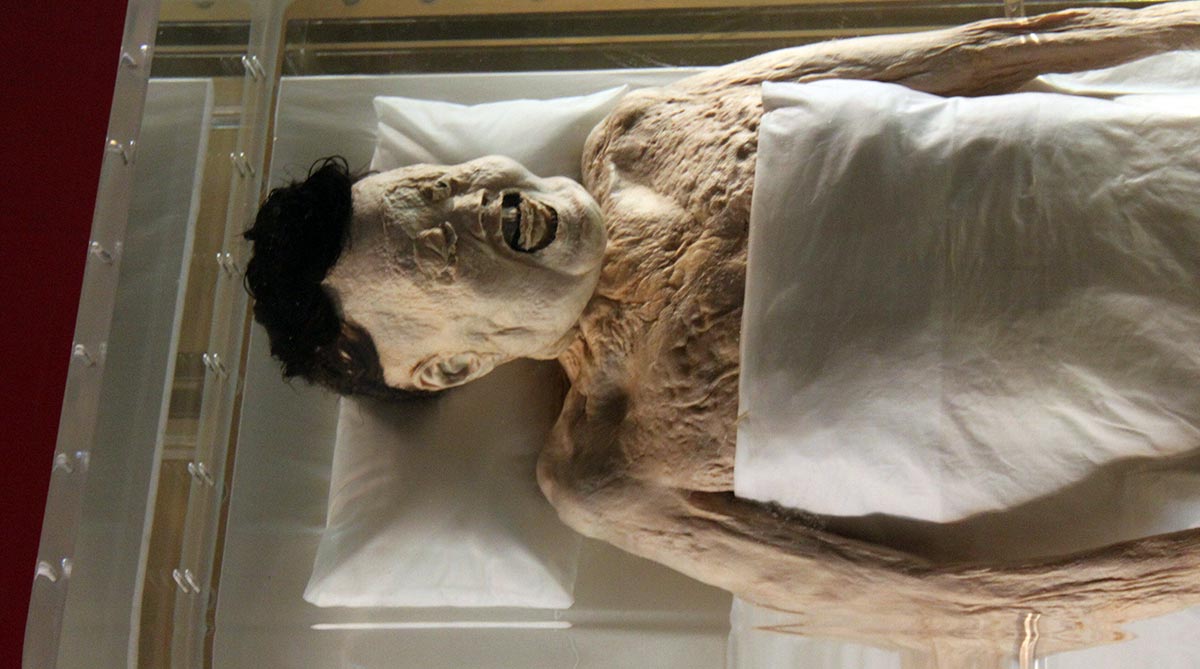
Despite the care with which this woman was buried, once the burial shaft was filled in, she was quickly forgotten. Her tomb lay untouched until 1971, when the People’s Liberation Army ordered the construction of an underground air raid shelter for a hospital located near the burial mound. Iron rods were driven into the hillside to test the strata. One rod broke into the tomb, and when it was pulled out, a pressurized, foul-smelling gas escaped. When the workers lit a match to examine the hole, a jet of blue flame flared upward. The following year, archaeologists excavated and uncovered the tomb.
When researchers finally unwrapped the body, they were stunned to find that Lady Dai had soft, moist skin that retained its elasticity, that her joints were bendable, that her hair was intact, but her brain had shrunk to about one-third of its original volume. Her remains were so well preserved that pathologists were able to determine that the 50-year-old moderately obese woman, with type A blood, suffered from high cholesterol, gallstones, and a herniated disc, and died of a heart attack a few hours after eating a muskmelon. She had 138 intact seeds in her stomach and intestines.