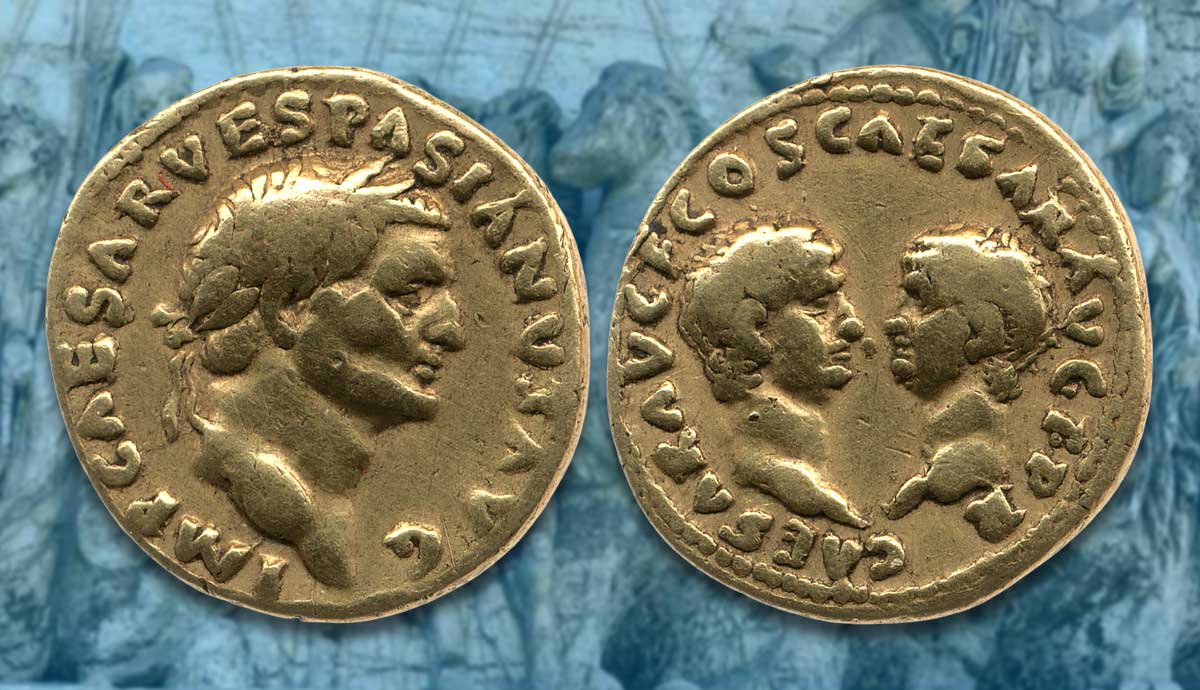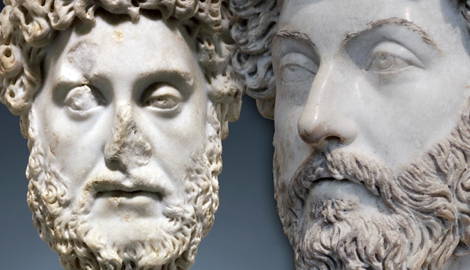

Direct dynastic succession was a rare thing in the Roman Empire. Biology, bad fortune, and court intrigue ensured that control of the Empire rarely passed to a hereditary heir, but rather to the best available option. Augustus tried and failed to find a Julian heir, but was left with his Claudian stepson Tiberius. In AD 79, Vespasian was the first Roman emperor to be succeeded by his biological son, Titus; a feat that would not be repeated for a century. In the 2nd century AD, the Antonine emperors used adoption to nominate their successors. This functioned for decades, and power passed peacefully from one emperor to the next in what became known as the Roman Empire’s “Golden Age.” Unfortunately, in AD 180, Rome’s Golden Age came to an abrupt end when Marcus Aurelius chose to be succeeded by his biological son, Commodus.
Ancient Rome’s Golden Age: The Adoptive Antonines
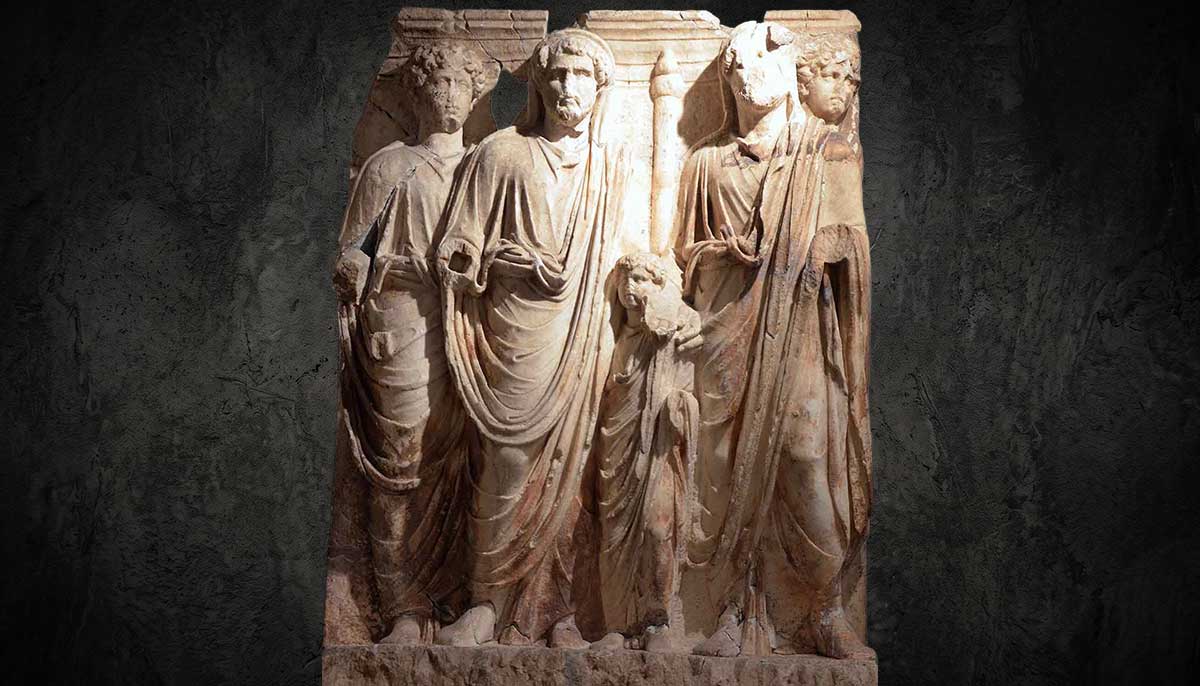
In AD 96, the new emperor, Nerva, had a problem. Chosen by the Senate as an interim solution, he had recently replaced Domitian, the last of the Flavian emperors. While the assassinated autocrat had been unpopular with the Senate, he was beloved by the people and the army. Consequently, the Praetorians, the premier military force of Rome, were threatening revolt. To settle this unrest, the elderly Nerva invited a young general, Trajan, to be his heir and adopted him as his legal son. It proved to be a political masterstroke.
Trajan, who had been commanding legions in Germania, succeeded in AD 98. He was recognized in antiquity as the optimus princeps, the “best of emperors.” It was a reputation built on several factors. There were his stunning military victories, notably the conquest of Dacia. There were the incredible building projects in Rome: his eponymous Forum, public thermae (baths), and a grand market complex. There was also his continuation of Nerva’s succession policy.
Trajan’s decision to adopt an heir was not the ideal approach. In true Roman fashion, he would have preferred to have a son of his own to groom for succession. Biology dictated otherwise, and he adopted his cousin Hadrian as his successor. However, some sources critical of Hadrian suggest Trajan’s wife orchestrated the adoption after the emperor’s death.

The desire for a dynasty was never lost in this approach to imperial succession, as each was legally adopted as the son of their predecessor, even if they maintained some loyalty to their existing gens. Hadrian was succeeded by Antoninus Pius, who was in turn succeeded by Marcus Aurelius and Lucius Verus, the latter of whom died before his partner and therefore is often overlooked.
Collectively, the Antonine emperors oversaw the period of Roman history which is often characterized as a “Golden Age,” a period of peace and stability also sometimes called the Pax Romana.
Warning Signs: War in the Age of Marcus Aurelius
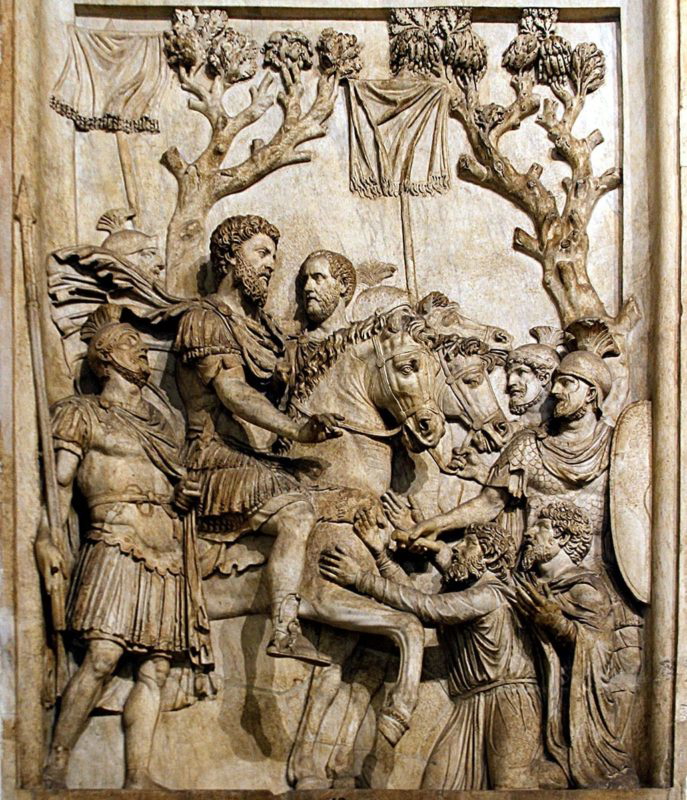
The notion of the Pax Romana has proven to be particularly enduring. This is partly thanks to the characterization of this period as the happiest in history, an assessment made by Edward Gibbon in the 18th century, in his “Decline and Fall of the Roman Empire.” The extent of “peace” in the Pax Romana is, however, up for debate. For the Dacians conquered by Trajan, for instance, it was unlikely to have been a particularly happy period. Fundamentally, the characterization of this period as one of peace refers to the internal conditions of the Empire, namely the peaceful transition of power from one adopted emperor to the next, not freedom from external threat.
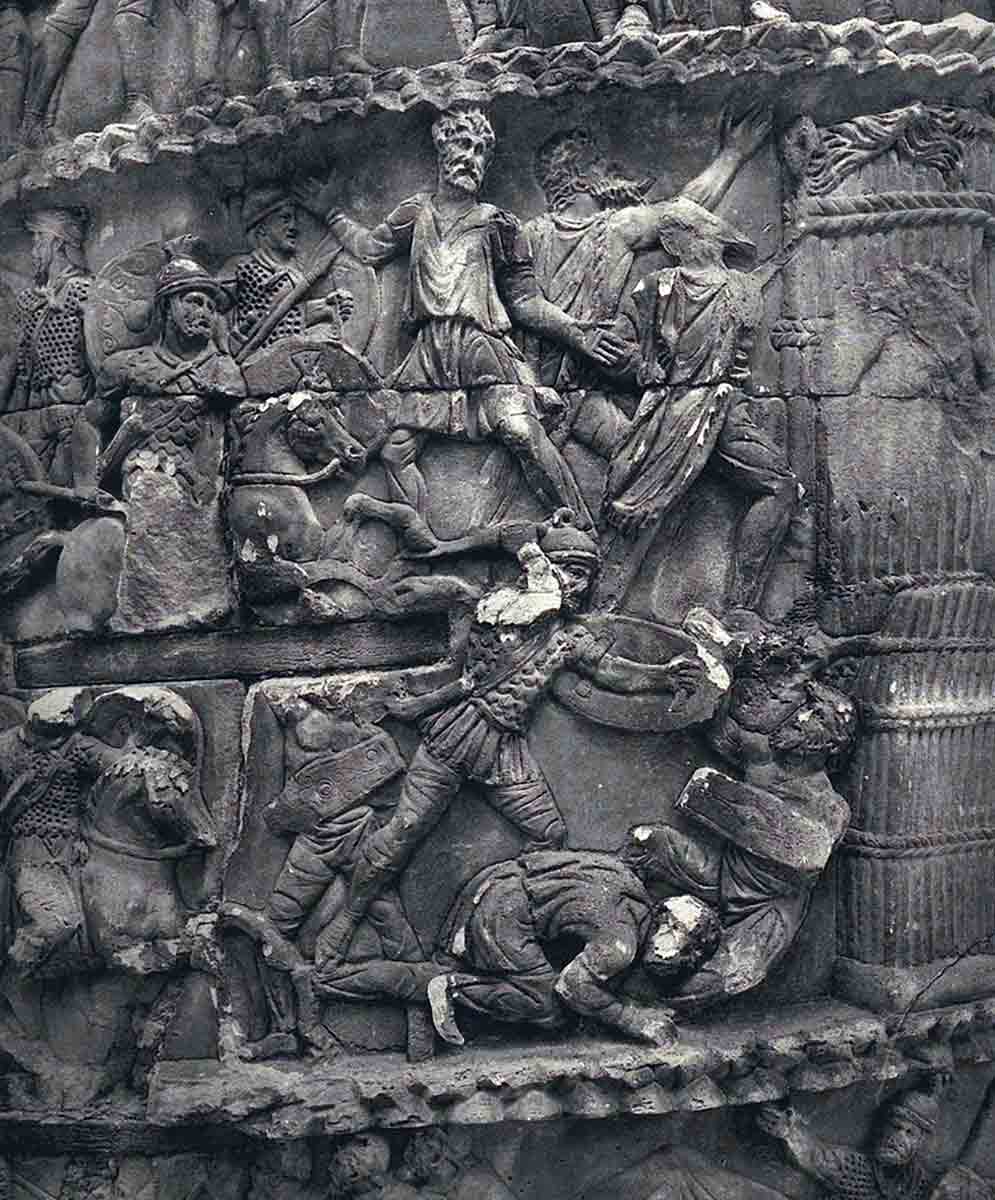
While the empire’s internal politics maintained a high degree of peace, over the course of the 2nd century the empire found itself embroiled in wars. Trajan’s reign was marked by the conquests of Dacia and an unfinished war in Parthia. Although Hadrian retreated to the Empire’s former boundaries, his reign endured the brutal Bar Kokhbah revolt in Judea. Antoninus Pius’ reign was marked by a degree of stasis, and the emperor famously never even left Italy!
Conflict returned in the reign of Marcus Aurelius. First, there was the protracted Parthian War in the AD 160s. Although the Romans were ultimately successful, the Empire paid a heavy price. A decade of war naturally cost many lives, including that of the co-emperor, Lucius Verus. However, Verus did not die in battle. Instead, he probably perished as a result of the so-called “Antonine Plague.” This pestilence, probably smallpox, devastated the Empire.
To compound the strife, the Empire was soon at war with the Germanic tribes on the Northern frontiers. These Marcomannic Wars were fought by Marcus Aurelius, more commonly viewed as a philosopher than a warrior. The emperor’s victories in Germania were commemorated on the eponymous Column of Marcus Aurelius, a monument erected in central Rome by his son, and successor, Commodus.
A Philosopher’s Failing: Commodus’ Accession

Marcus Aurelius was not alone on the German frontier. He was accompanied by his young son, Commodus. Unlike his predecessors, Marcus was an extraordinarily fecund emperor. With his wife Faustina, he sired numerous children. Unfortunately, a great number of the imperial couple’s offspring died in infancy. The only male child who survived was Commodus.
From a very early age, Marcus took steps to ensure that his plan for dynastic succession was crystal clear. Commodus was presented to the soldiers and elevated to the status of Caesar (the junior partner to Augustus at the age of just five in AD 166). Around the Empire, his likeness was presented to the imperial populace. Commodus, who was on the frontlines with his father, was hailed imperator at the age of 15 in AD 175, and then became consul in January of AD 176, the youngest ever. Later that year he received the title Augustus, making him his father’s (junior) co-emperor.
From an early age, however, it seems that Commodus was perhaps not cut from the same cloth as his father. An extraordinary claim in the Historia Augusta relates that the 12-year-old Commodus ordered a slave to be thrown into the furnace as punishment for the crime of running his bath too cold. The slave was saved when a colleague chucked an old sheepskin onto the fire instead; the pungent smell was enough to convince Commodus that his orders had been followed. The whole story is only recorded in the Historia Augusta, which probably means it is an invention, but it was the type of behavior attributed to the young prince.
Emperor in the Arena: Commodus’ Reign
Commodus took sole power in AD 180, when his father died at Vindobona (Vienna) on the Germanic frontier. A speech in Herodian’s History, which is almost certainly an invention by the historian, makes clear that the people of the Empire recognized that Commodus was something wholly novel at this time: an heir born and raised to be emperor, meaning that he was porphyrogennetos, or “purple born.”
Unfortunately, the new emperor seemingly inherited few of his father’s virtues. Almost immediately, Commodus paid off the Germanic tribes to bring an end to the war. Returning to Rome, he rid himself of the advisors who had been picked by his father and instead fell under the influence of courtiers and sycophants. Tensions with the Senate escalated, and Commodus soon found himself threatened by several coups, including one orchestrated by his sister Lucilla.
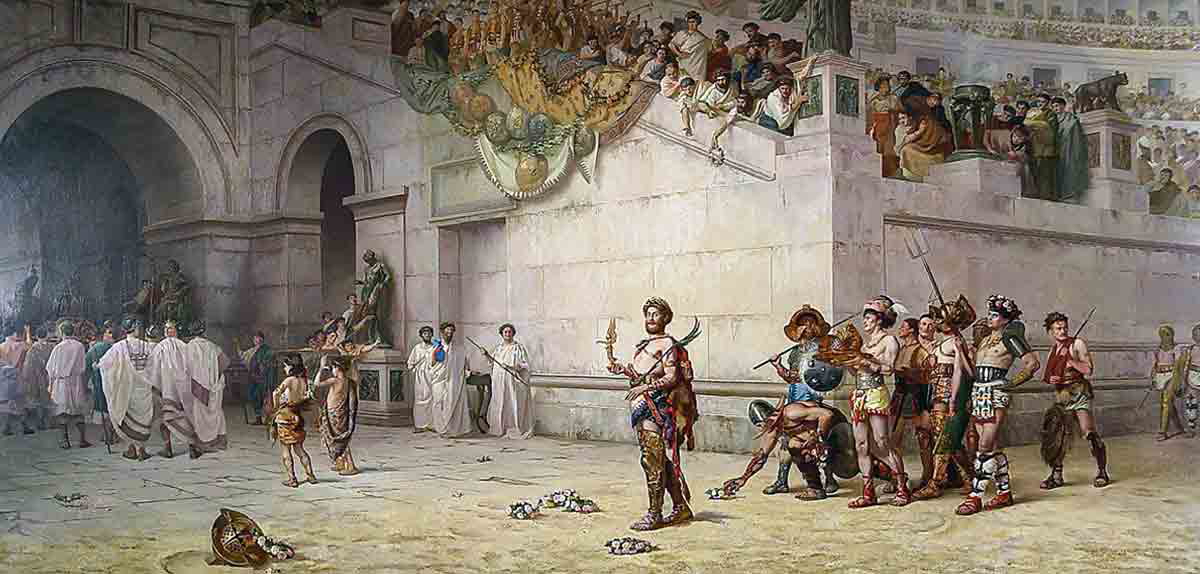
Commodus survived, but the consequences were violent as paranoia set in. Leading senators were hunted down. On the imperial borders, dissatisfaction escalated, and the troops began to rebel, including in Britain. Seemingly oblivious to it all, Commodus instead began to masquerade in the arena as a gladiator, giving himself over to spectacle and entertainment, rather than rulership.
Commodus’ Assassination

Scholars have argued that Commodus’ portrayal as a gladiator was, in a way, a response to a problem that arose from his dynastic status. Because the emperor had been groomed to rule, he had never had an established career through which he could develop a sense of status. In other words, he was not a soldier of repute or a career politician. In other words, the gladiator display was a novel articulation of status by the new emperor; an innovative paradigm of representation.
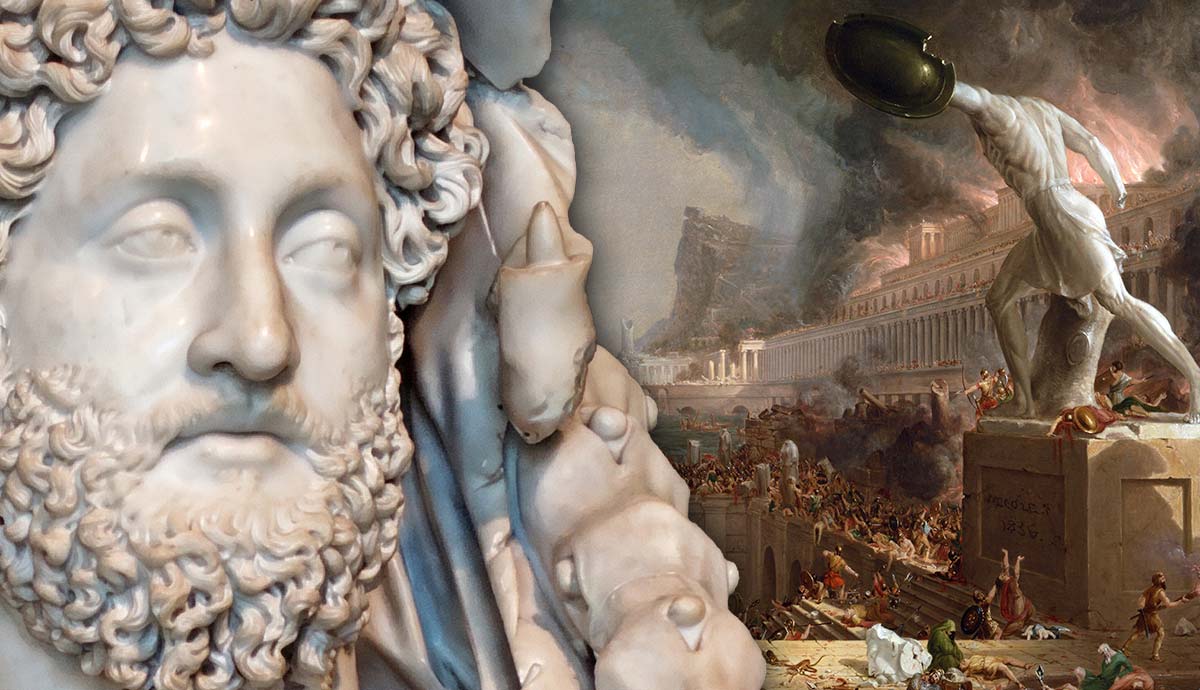
The same could be said for Commodus’ other infamous act: his self-presentation as Hercules. The famous portrait of the emperor, covered by the skin of the Nemean lion and brandishing the demi-god’s iconic club, is one of the most striking portraits to have survived from antiquity.
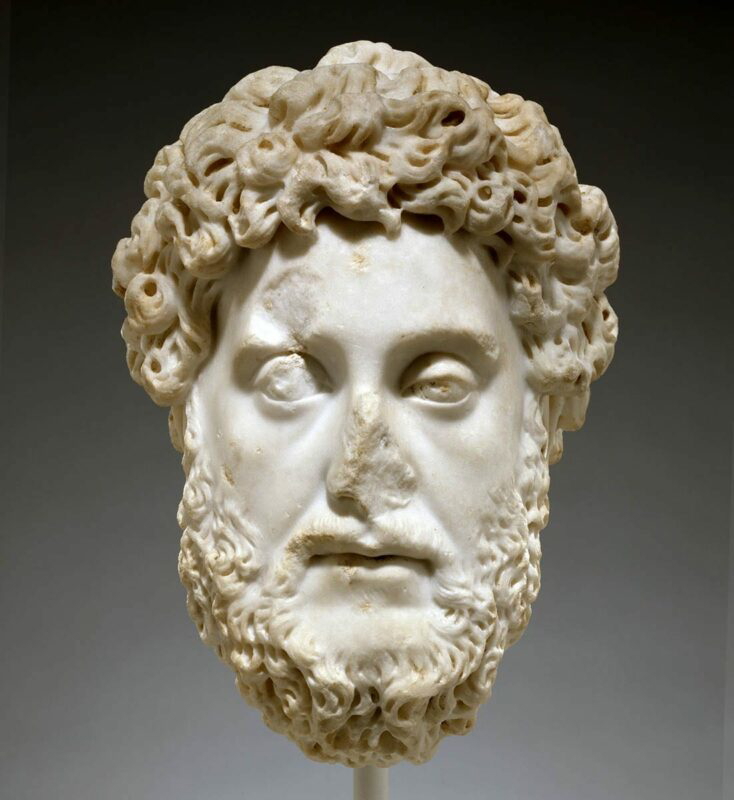
While there may well have been an ideological motivation for Commodus’ masquerading as a gladiator and a demi-god, it is also apparent from the literary sources that the emperor alienated his subjects to a staggering degree. Aside from his megalomania, he was charged with being cruel, indolent, excessive, and ineffective, most notably by Cassius Dio. The historian, a contemporary of Commodus and a senator, barely hides his dislike in his narrative.
The inevitable end for Commodus came on New Year’s Eve, AD 192. Already drunk, having gorged himself, the emperor retired to his private bath. Unbeknownst to him, a conspiracy against his life was unfolding. Orchestrated by senators, poison was slipped into his wine. Unfortunately, the inebriated emperor had already imbibed too much; Commodus vomited up the poisoned wine. He was desperately weakened by now, however, and easy prey for the conspirators who had collaborators within the palace. Narcissus, a wrestler and Commodus’ trainer, was dispatched into the bath chamber, and there he strangled the emperor.
With Commodus’ death, the Antonine dynasty came to an end. There was, the sources record, jubilation in the streets of Rome, as the death of the tyrannical Commodus was widely celebrated. His statues were pulled down, and his name scratched out of inscriptions in episodes of memory sanctions enacted across the Empire as the news spread. He was the first emperor to be murdered since Domitian, almost a century earlier. The Empire’s Golden Age was definitively over.
The Age of Iron and Rust: The Year of the Five Emperors
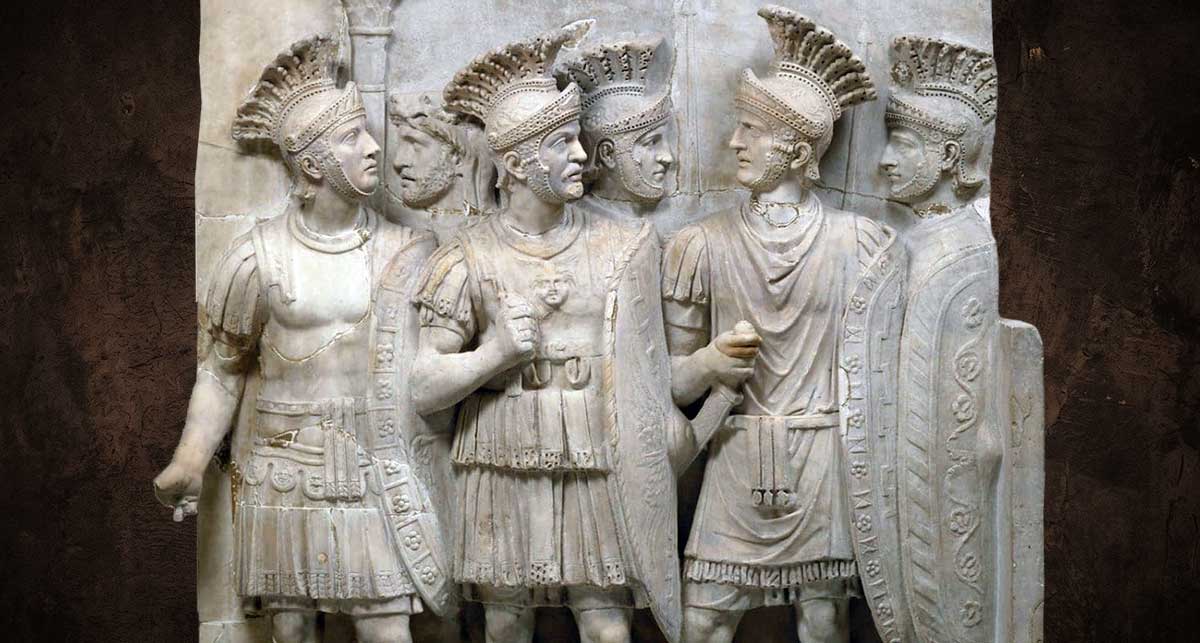
For a counterweight to Gibbon’s characterization of a period of greatest happiness, we can turn to Cassius Dio. Although his history is “universal,” detailing the history of Rome from its foundation, its primary merit is for the passages of contemporary history: Dio’s personal experience of the emperors from Marcus Aurelius onward. The senatorial historian is under no illusions that Rome’s Golden Age came to an end with Commodus. Famously, he described the accession of Commodus after Marcus Aurelius’ death as the moment the Empire transformed from a kingdom of gold to one of iron and rust.
Removing Commodus did little to restore order. When the Empire awoke on New Year’s Day AD 193, imperial subjects found themselves under the command of a new princeps: the elderly statesman, Pertinax. With an esteemed political and military career, it was hoped that Pertinax, who must surely have been involved in the conspiracy against Commodus, could restore some of the Empire’s golden sheen. His attempts were futile. Trying to curb the influence of the Praetorians cost Pertinax his life: the guards murdered him in March, bringing an end to a reign that lasted barely 90 days.
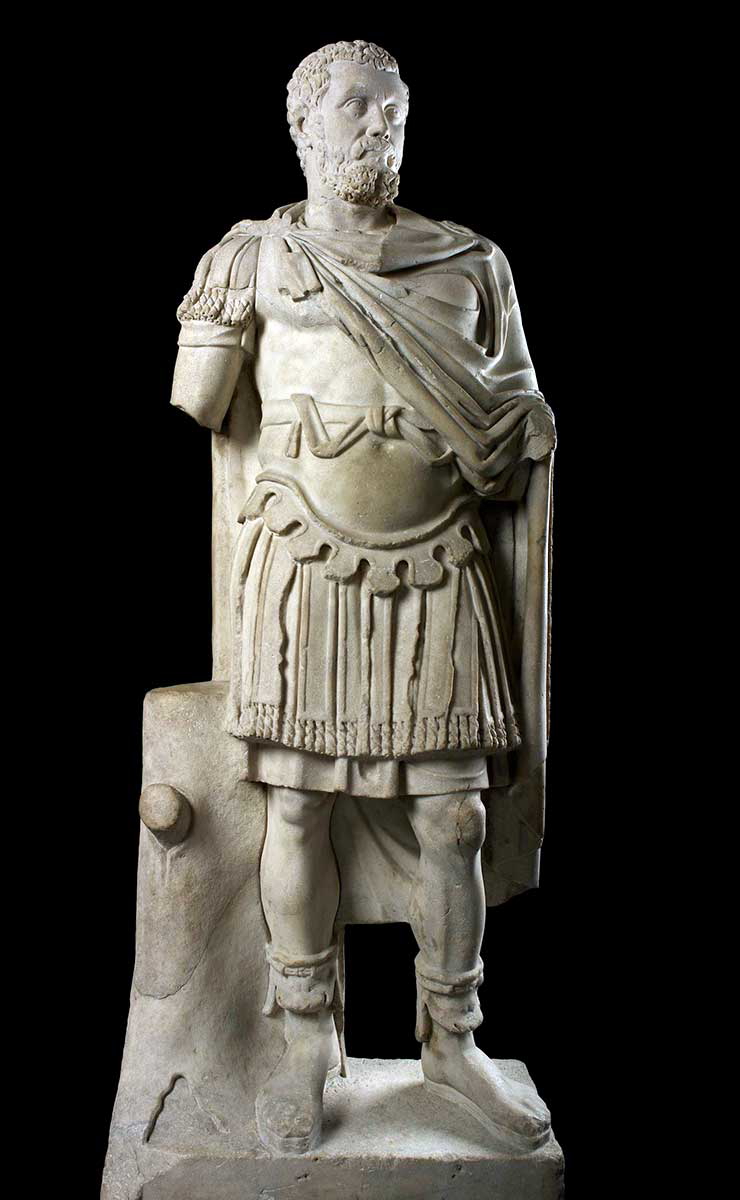
What followed was a period of unrivaled political chaos. The year AD 193 would be remembered as the “Year of Five Emperors” as, along with Pertinax, five rivals around the Empire were acclaimed imperator. There was even the degrading sight of two men bidding against each other for the acclaim of the Praetorians, as the Empire became a lot in an auction. The ultimate victor in this desperate struggle for supremacy was Septimius Severus, a general from Lepcis Magna (modern Libya).
Ironically, his reign was marked by his attempts to present his dynasty as the continuation of Rome’s lost Golden Age. To the chagrin and mirth of the senators, he claimed to have been adopted by Marcus Aurelius and had the damnation of his “brother,” Commodus, reversed. He also renamed his seven-year-old son Lucius Septimius Bassianus, later nicknamed Caracalla, as Marcus Aurelius Antoninus. But Septimius Severus’ reign was one characterized by conflict that no amount of Antonine pretending could mask. The luster of Rome’s Golden Age could not be restored.