
In 1457, a French court sentenced a pig to death for murder. But how can an animal be guilty of a crime? In the ancient and medieval world, putting animals and inanimate objects on formal trial was more common than you might imagine. This bizarre practice reflected contemporary ideas about justice, religion, and responsibility. Here are ten of the most bizarre ancient trials that put animals and objects on the stand.
1. The Murderous Pig of Savigny
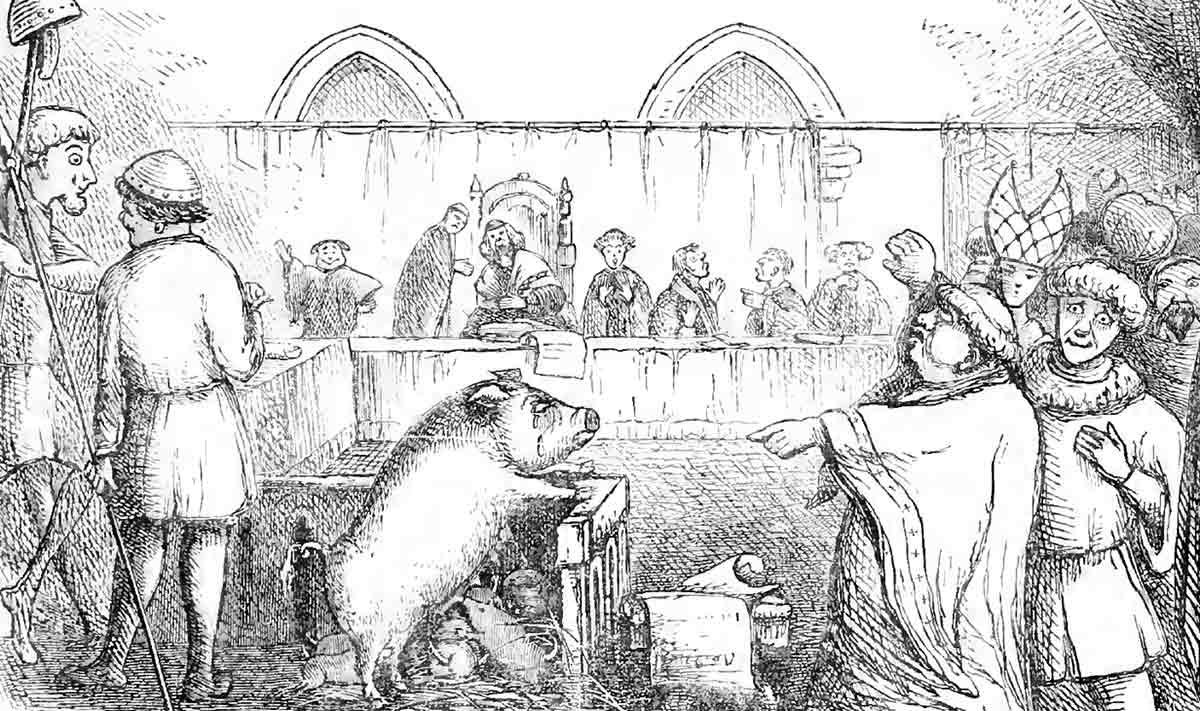
One of the most documented animal trials in medieval Europe was held in Burgundy, France, on January 10, 1457. A local sow owned by Jehan Bailly Valota was accused of murdering five-year-old Jehan Martin. The owner was also accused of neglect. Nine witnesses were involved in the prosecution process. According to the customs of Burgundy, the sow was condemned to death. The plan was to hang her by her legs on a tree.
The sow’s six piglets were also tried, but were eventually acquitted due to lack of evidence that they had eaten the child’s flesh. However, they were taken from their owners and placed under the guardianship of Catherine de Barnault, Lady of Savigny, who represented the grieving party.
2. The Trial of the Falling Statue of Theagenes
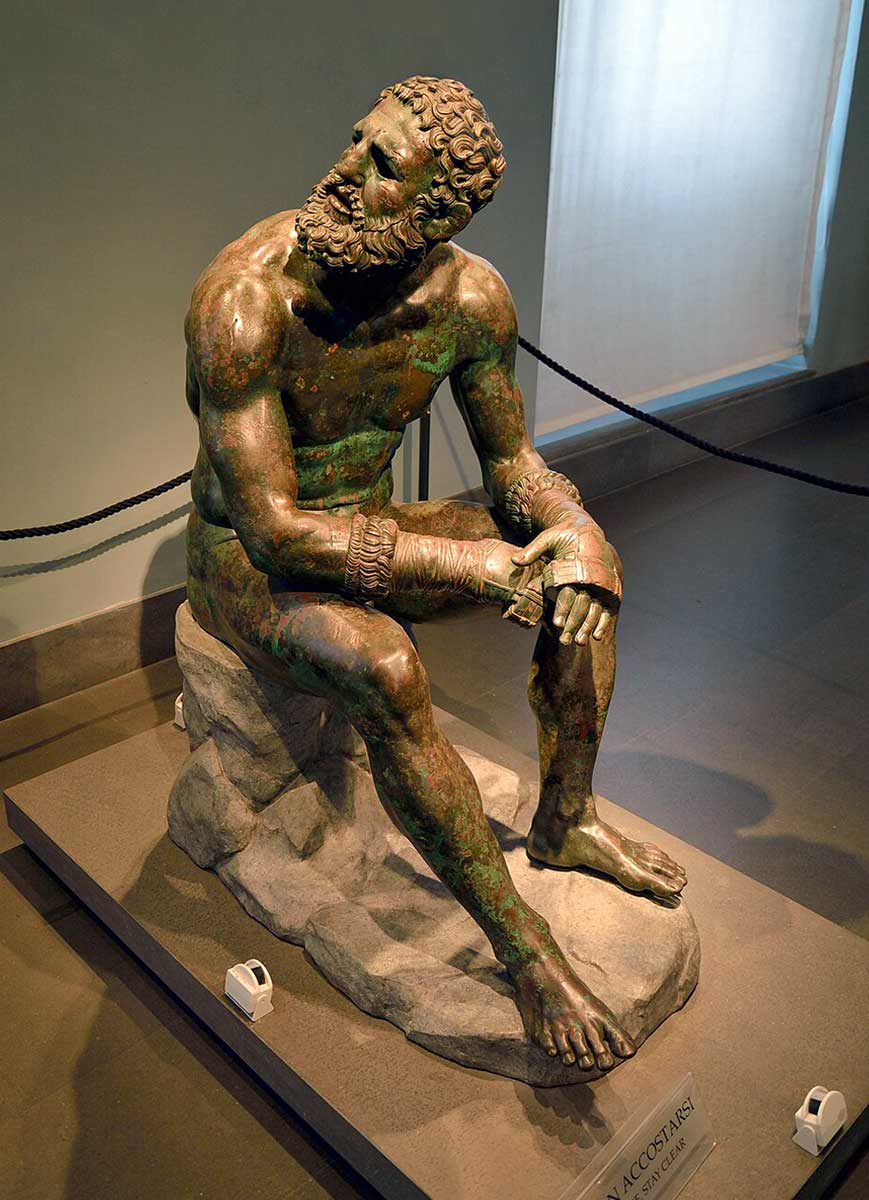
The 2nd century AD Greek chronicler Pausanias records a much older story about the trial of a statue of Theagenes. Theagenes was one of the most famous Greek athletes. After his death, the people of his hometown of Thasos erected a statue in his honor. According to Pausanias, one of Theagenes’ former enemies went to the statue every night and whipped it, imagining that it was Theagenes himself. Eventually, the whipping caused the statue to become unstable and fall on top of the man, killing him on the spot.
The dead man’s sons filed a lawsuit against the statue. Pausanias writes that the inhabitants of Thasos condemned the statue and threw it into the sea. This was an important ritual in Greek society, as it was important to remove something that had become contaminated by a crime from the community. The stain of guilt, miasma, could be contagious.
However, that was not the end of the Theagenes saga. After the statue was thrown into the sea, Thasos suffered a crop failure. People turned to the Oracle of Delphi, which advised them to recall their exiles. They did, but the crop failure continued. When they turned to the Oracle once again, they were told that they had forgotten Theagenes. Fishermen eventually pulled the statue out of the sea with nets and returned it to its original place.
3. Cyrus the Great and the Punishment of the River Gyndes
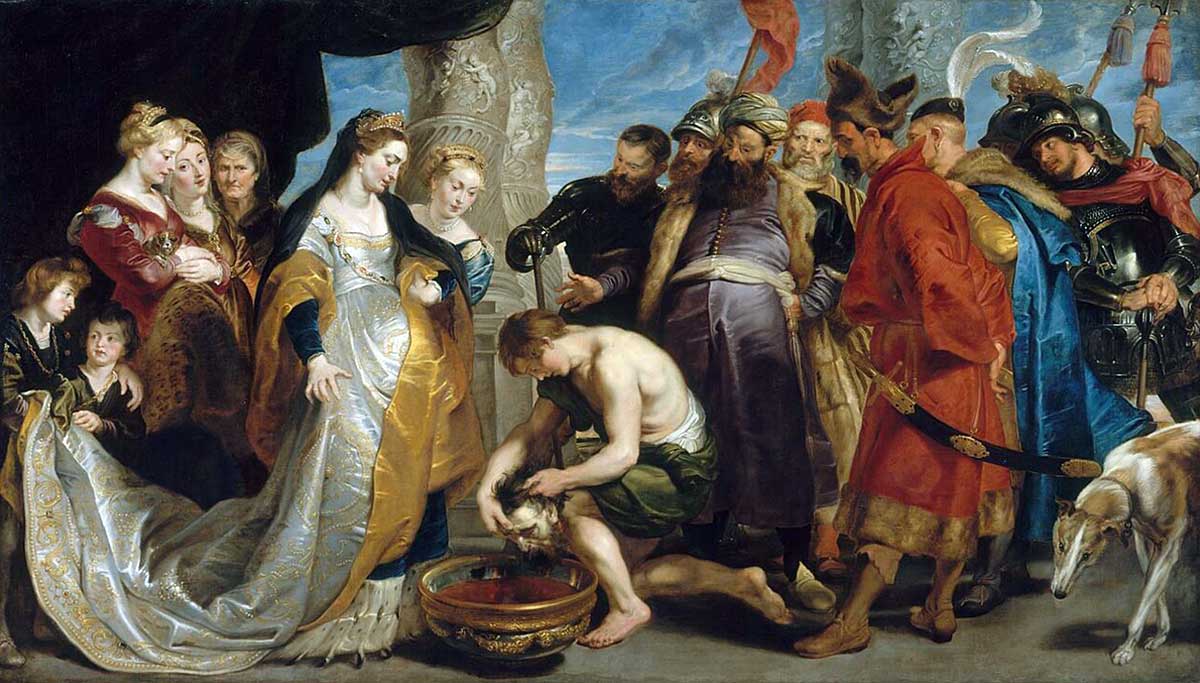
The story of Cyrus the Great judging a river for the death of his horses is recorded in Herodotus’ Histories. According to the Greek traveler and historian, in 539 BC, as Cyrus advanced toward Babylon, he came to the River Gyndes, which could not be crossed on foot. However, one of Cyrus’ sacred white horses decided to enter the river, which carried him away.
Cyrus decided to halt his campaign against Babylon to punish the river for the death of the horse. As punishment, he divided his army into two groups and ordered each to dig 180 canals. The digging lasted all summer. The aim was to diminish the force, strength, and therefore majesty of the river. While Herodotus describes this as an act of hubris, historians believe that changing the flow of the river could have been part of his attack plan for Babylon, or done to irrigate surrounding fields.
Since the horse was described as sacred, it is possible that there was a religious dimension to the episode. This makes more sense when we understand the special significance of rivers for the Persians. As Zoroastrians, both fire and water were considered sacred. It was specifically forbidden to pollute rivers with waste or corpses. So was the river accused of polluting itself?
4. The Rats of Autun and Their Clever Defense Lawyer

In 1522, the people of Autun in Burgundy had a rat problem. The problem was so bad that it came before the ecclesiastical court. The rats were required to appear in court, and they were even assigned a lawyer, Barthélemy de Chasseneuz. This man would later become one of the most prominent lawyers of his time.
His biggest problem was that his clients did not appear in court. Barthélemy de Chasseneuz complained that the rats had not been adequately informed of the trial, which the court accepted. Because the rats were spread around the countryside, priests were ordered to call the summons across the diocese. Chasseneuz also knew that the trial could not continue if the defendants could not safely appear in court. His next objection was that the path to the court was unsafe for the rats because there were so many cats. The strategy was successful, as the trial went into permanent adjournment.
5. The Ritual Trial of the Murderous Axe in Athens
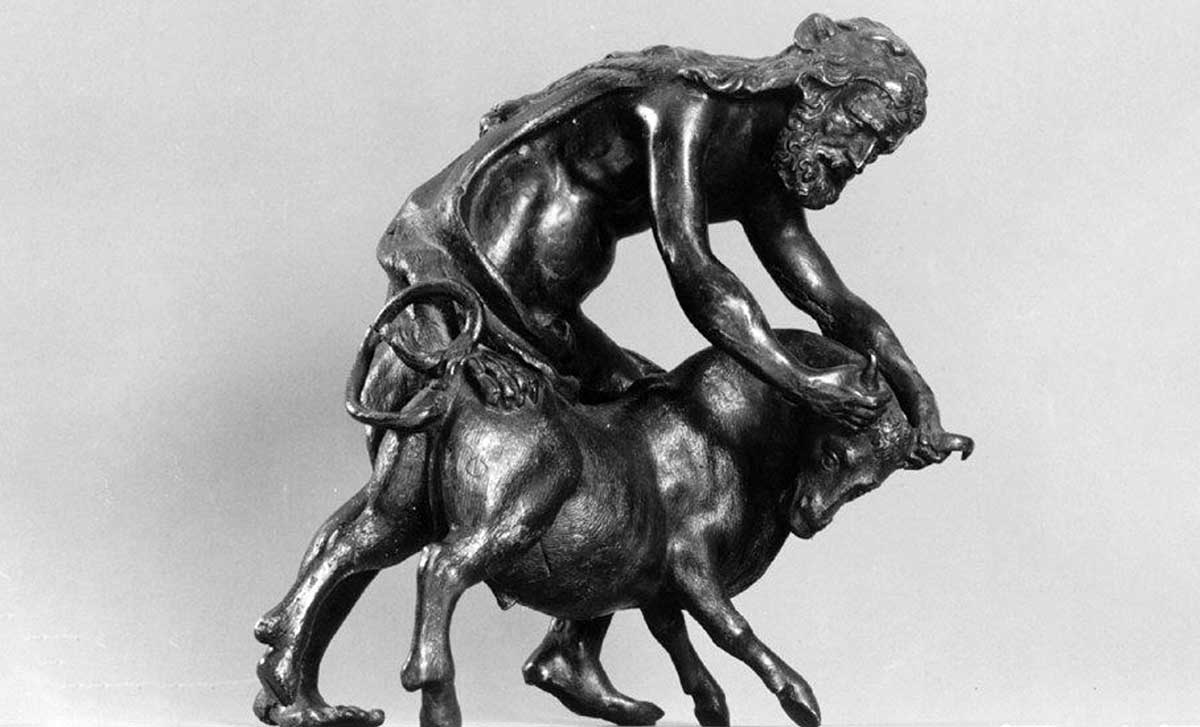
Every year, the city of Athens held the ritual of Buphonia, or “bull-killing,” during the Dipolieia festival dedicated to Zeus. The ritual was held at the Acropolis. One year during the ritual, one of the bulls ate grain that it was not allowed to eat, after which one of the participants struck it with an axe and killed it. Knowing that he was not allowed to do this, the man fled and denied any responsibility for the killing. People believed him, and the axe was charged with the murder.
The axe was brought before a formal court where it was found guilty. As punishment, the axe was thrown into the sea. Again, by banishing the physical tools that committed the deed, Athens ritually cleansed itself of blood guilt, allowing the citizens to enjoy the sacrificial feast without divine retribution.
6. The Legal Defense of the St Julien Weevils

In 1587, the owners of a vineyard in the French region of Savoy came into conflict with insects. Namely, the weevils attacked the livelihood of local farmers and destroyed their vines. Instead of trying to eradicate the insects, the farmers took the case to court. The weevils were formally invited to appear before the court and give a statement for the damage they caused.
The dispute ended before the ecclesiastical court, and the weevils had their own lawyer. The lawyer insisted that weevils were created by God and that they have a natural need to feed. Therefore, their consumption of vines should not be treated as a criminal offense. The argument quickly turned into a serious theological debate.
The trial lasted for months. Farmers even offered the insects a separate piece of land away from the vineyards so they could feed. The defense refused, arguing that the land was barren and unsuitable. The surviving court record ends before the case is resolved, so we don’t know the official result of the case.
7. The Rooster That Burned at the Stake in Basel

In the Swiss city of Basel in 1474, a very strange accusation took place. Namely, a rooster was accused of having laid an egg. Although it sounds ridiculous and impossible today, for the people of that time this seemed very dangerous. Namely, they believed that such an egg could hatch one of the most terrifying monsters of European folklore: a basilisk. A basilisk was a monstrous creature that combined the characteristics of a rooster and a snake. It possessed deadly supernatural powers and could kill with a glance.
The story was recorded by Johann Gross in his Kurze Basler Chronik, a chronicle of Basel published in the 17th century. The rooster’s lawyer argued that the animal had not knowingly entered into a pact with the Devil and that no humans had actually been hurt. Nevertheless, the rooster was eventually convicted of “unnatural crime” and sorcery. It was burned on the Kohlenberg together with the egg it had supposedly laid. This execution attracted a large number of spectators.
8. The Prosecution and Exile of the Uglich Bell

In May 1591, a real mystery arose in the Russian city of Uglich when the youngest son of Ivan the Terrible, Dmitry Ivanovich, was murdered. An official investigation later concluded that he had accidentally stabbed himself during an epileptic seizure.
News of the death spread quickly throughout the city. The local alarm bell rang from the church tower. The people gathered, and the gathering soon turned chaotic and violent. Several officials and servants suspected of involvement in Dmitry’s death were killed by angry citizens.
The authorities suppressed the rebellion and began to punish people, but not just people; also the bell that had summoned them. It was ordered that the bell be removed from the belfry, its pendulum pulled out, and then flogged. The bell was then exiled to Siberia. The bell was transported to Tobolsk in 1593, where it became known as the first inanimate exile to Siberia.
9. The Safe Passage Granted to the Moles of Stelvio

In 1519, residents of the small village of Stelvio in southern Italy were faced with the problem of moles causing agricultural nuisance. The inhabitants felt that this required legal intervention, so they sued the mole colony. Again, the moles were treated as defendants, and they were even assigned a lawyer. The prosecution called witnesses who testified to the damage the moles had caused. The court accepted their testimony and decided to punish the moles.
The court ordered the moles to leave the area. The defense requested that the moles be given safe passage as they left the Stelvio, so that they would not fall prey to predators along the way. The court agreed, and a protective order for safe passage was granted. The moles were given 14 days to pack up and leave, and pregnant and infant moles were given additional time and offered protection against threats such as dogs.
10. The Excommunication of the Leeches of Lausanne
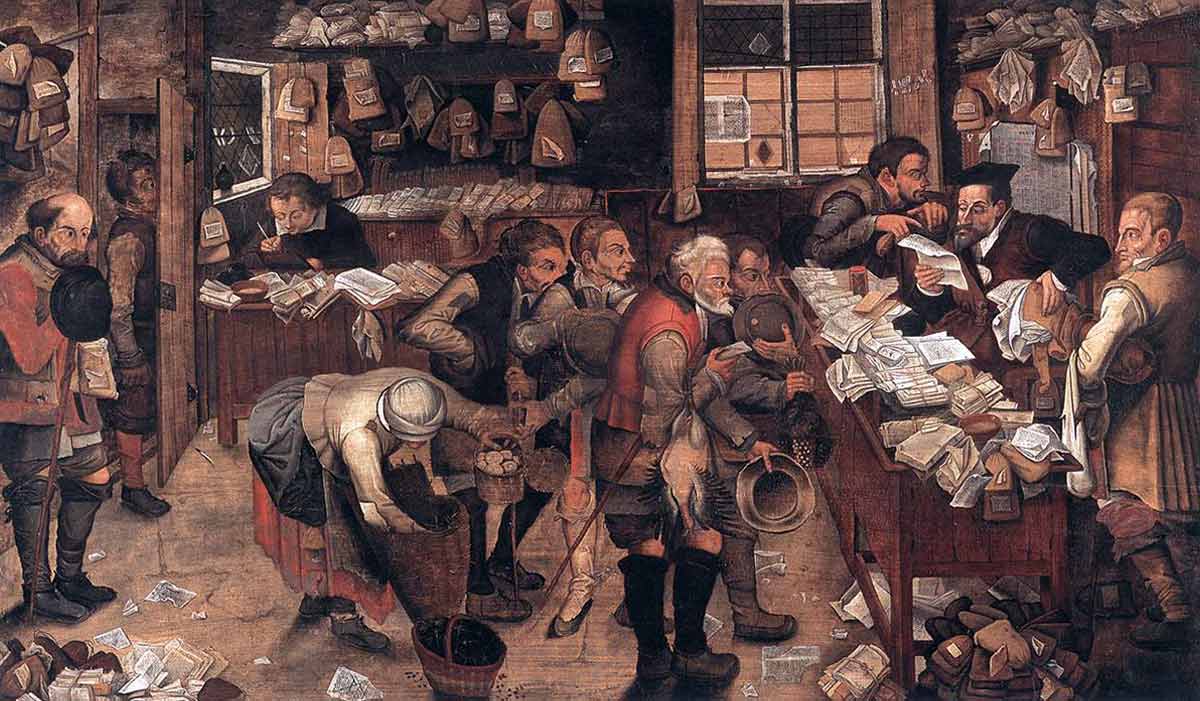
Alpine regions seem to have been a magnet for bizarre litigation. Another lawsuit against animals took place in 1451 near Lake Geneva, when residents initiated a court case against leeches for killing their fish, especially salmon, which was one of their most important foods.
According to a report by the Swiss theologian Felix Hemmerlin, the bishop of Lausanne was called upon to manage the legal proceedings, with a batch of leeches brought to the court and defended by a lawyer. As in many cases, the lawyer argued that the leeches were God’s creatures and only acting in accordance with their God-given nature. Nevertheless, the leeches were convicted and given three days to leave the area under threat of excommunication. Miraculously, the leeches did obey, leaving not long after the trial, probably due to changes in water temperature.