
Flourishing in present-day Peru centuries before the Inca, the Moche, sometimes called the Mochica, remain somewhat mysterious compared with more recent pre-conquest cultures. What is known about them comes primarily from crumbling temples and long-ago ransacked graves, which have revealed skilled artisans and architects with a rich spiritual tradition. Twenty-first century discoveries of intact tombs and remains have provided more clues to their long-extinct culture, including some surprising discoveries about their political and social hierarchy.
Who Were the Moche?
Though the Inca civilization is the pre-conquest culture most commonly associated with Peru, the region was once home to a number of significant civilizations that either died out before or were ultimately conquered by the Inca, dating back thousands of years.
The Moche occupied what is today the northern coast of Peru for a period of approximately 700 years, from 100 to 800 AD. While scholars disagree whether the Moche were a cohesive empire or multiple distinct groups, they were unified by a shared culture and were arguably one of the first complex societies of the region. The Moche were skilled artisans and innovative farmers who developed a hierarchical political organization as well as a system of religious beliefs and ritual practices.
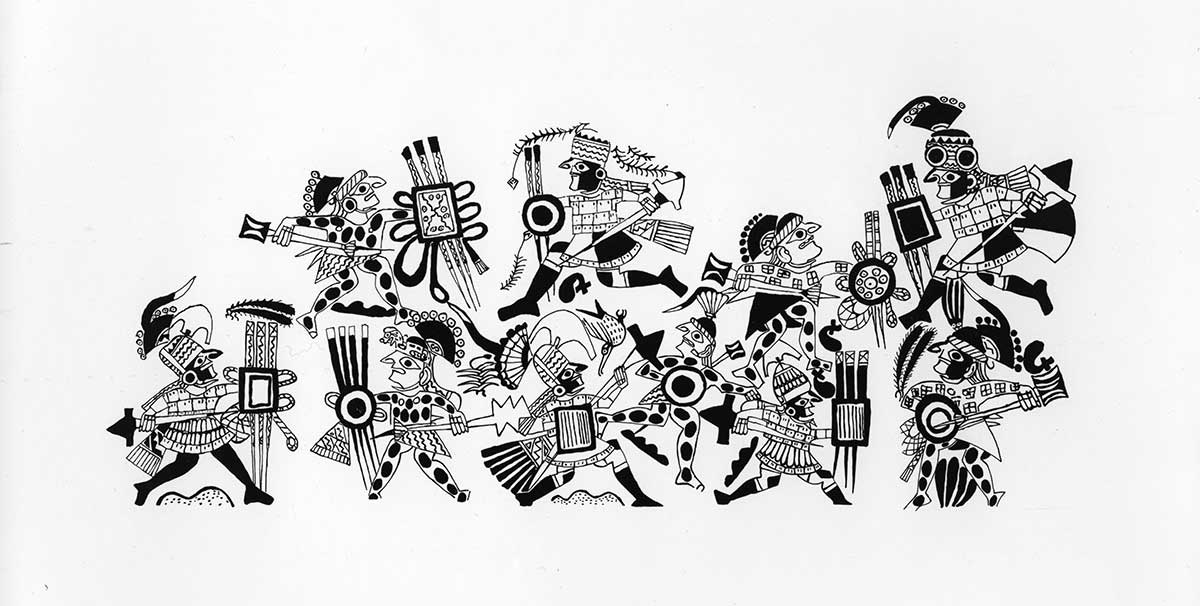
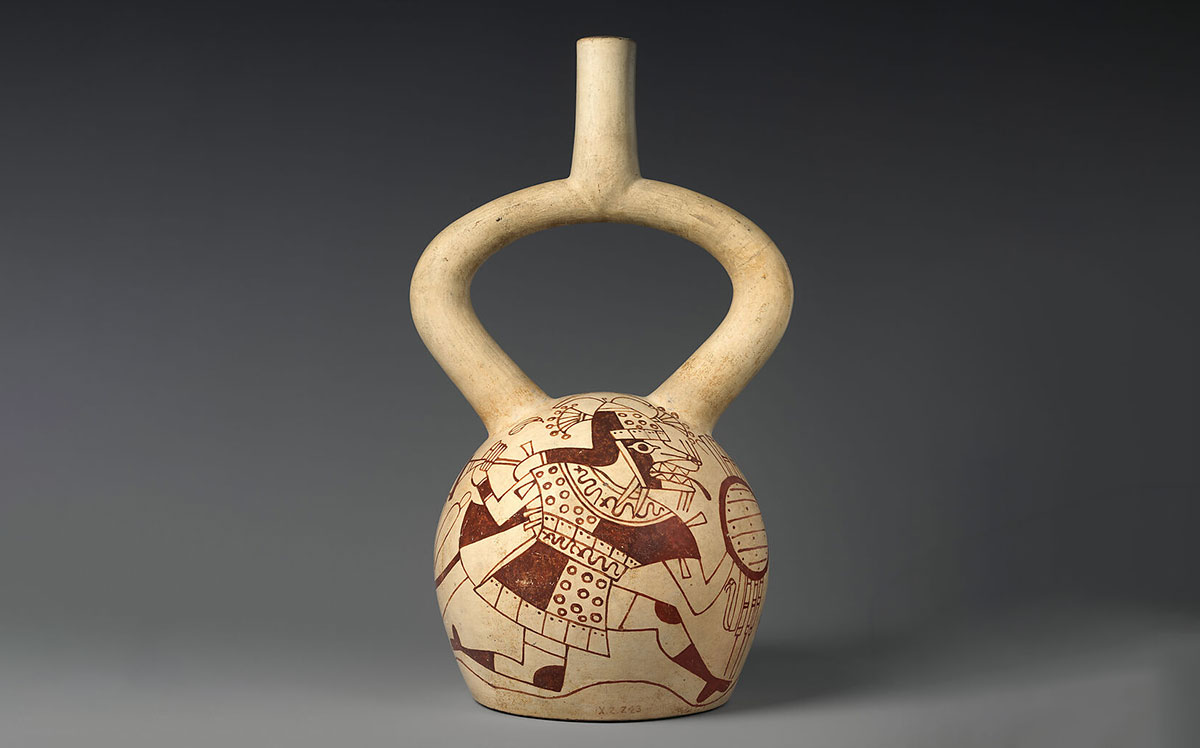
What is known about the Moche comes primarily from the murals, ceramics, graves and buildings they left behind. Their ceramics, in particular, feature a realistic style of artwork that, in the absence of a writing system, reveals a great deal about everyday life in Moche society. Ancient temples and huacas provide insight into their long-forgotten gods and goddesses while burial practices reveal not only further spiritual insights but the culture’s social hierarchy as well—as in so many pre-modern cultures, the more goods, and even servants, you were buried with, the more important you were.
Still, what is known for certain about the Moche is somewhat limited. It is believed they spoke two languages and had multiple important rulers in different regions rather than one central king or queen. They were polytheistic, but few gods beyond Ai Paec, the creator god, and Si, the moon goddess, are known. Evidence exists for human sacrifice and other offerings made to these gods. Artifacts from distinct regions of South America, for example, bird feathers from the Amazon, suggest the Moche traded with other cultures.
The collapse of the Moche is thought to have been precipitated by climate change and the expansion of rival cultures, including the Wari and Chimu, which rose to power in the region as the Moche culture declined. Ultimately, the Moche turned to infighting over scarcer resources, were conquered by other cultures and died out.
Uncovering the Moche
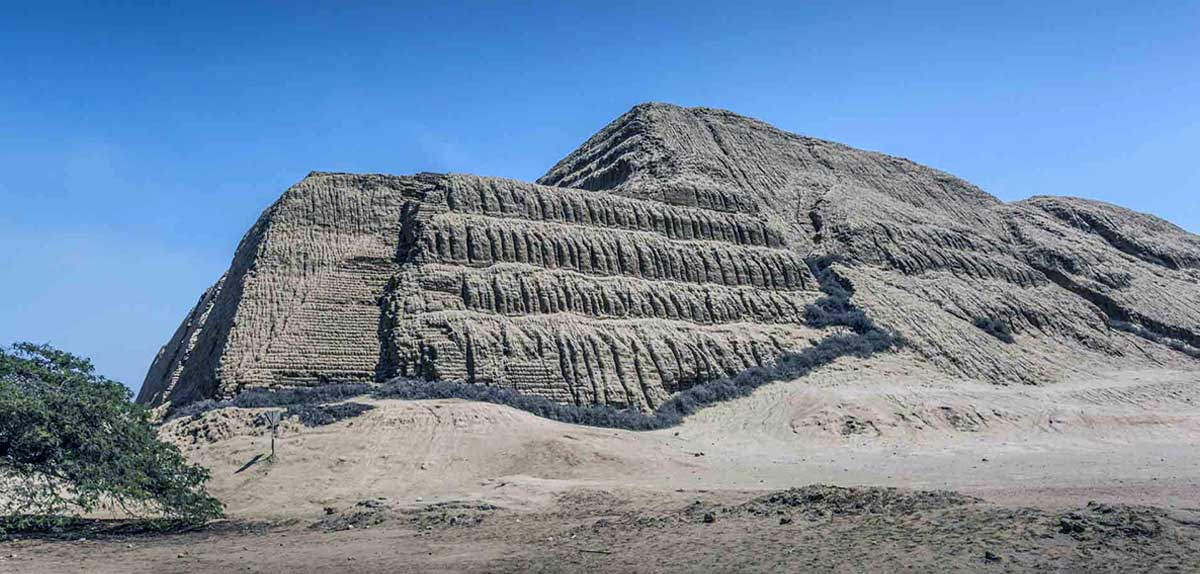
Evidence of the Moche culture first began to be excavated and documented by researchers in the late 19th century, with the first theories about the culture’s origins, practices and beliefs developing in the mid-20th century. Early discoveries were primarily temples, stepped pyramidal structures that likely also served as burial sites for prominent elites—and were largely looted long before the structures were excavated.
The discovery of intact graves at a number of sites in the 1980s marked a turning point, at which both the human remains and the goods buried with them allowed scholars to develop a more comprehensive picture of the Moche and their rituals. The first of these was discovered in 1987 at Huaca Rajada, near the village of Sipán in the Lambayeque region, and unearthed a set of remains known today as the Lord of Sipán.
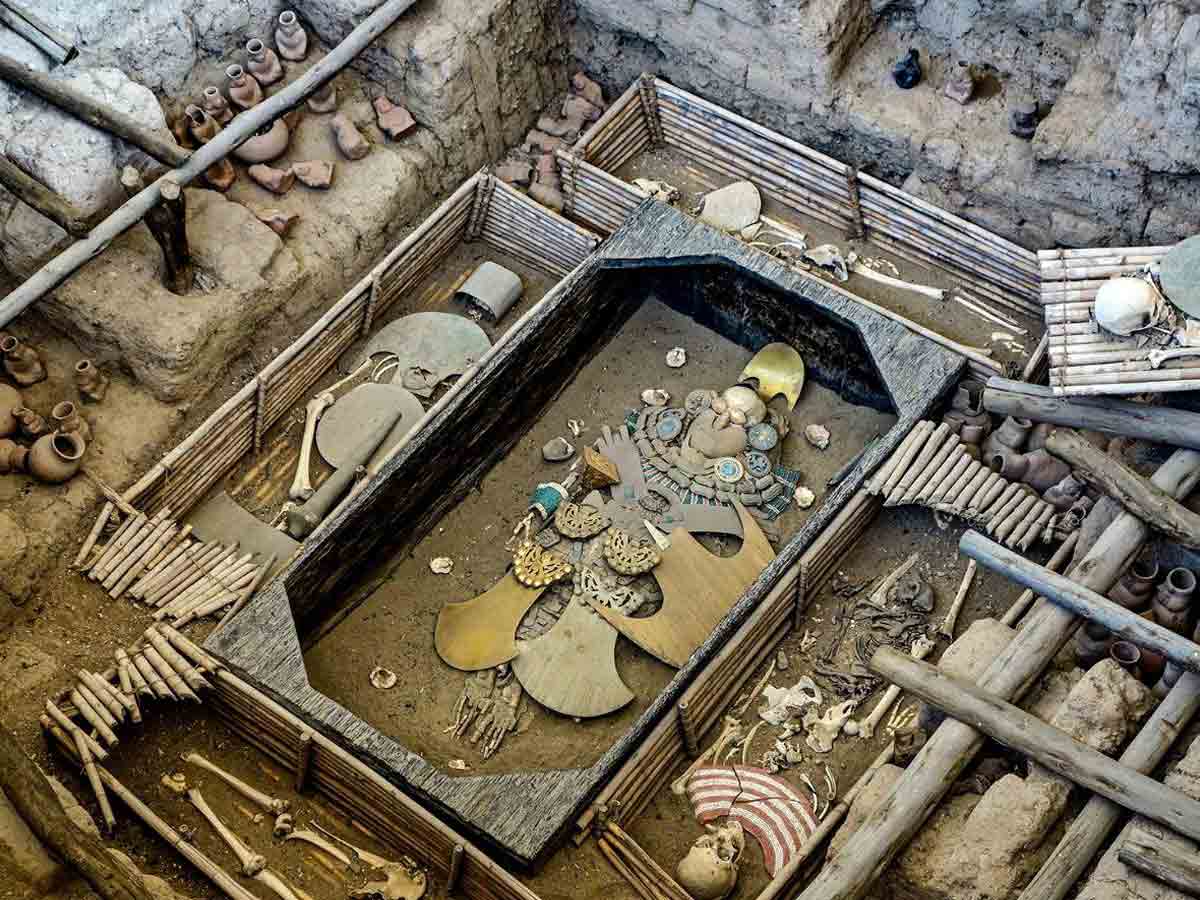
Buried in approximately 250 AD, the Lord of Sipán’s untouched grave provided a wealth of information about how the Moche treated their royal dead—beginning with the skeleton watching guard over the grave, revealing that important Moche were likely buried with guardians or servants who were sacrificed in order to continue serving in the afterlife.
The Lord of Sipán had been buried with a wealth of goods for the afterlife and was dressed in fine regalia including a gold mask, headdress, necklaces, ear spools and additional ostentatious ornamentation. “Based on a comparison of his regalia with iconographic depictions found in his tomb, this man is understood to have been a high-ranking Moche warrior-priest or a lord. Half god, half man, he was very likely the pre-eminent ruler of the Lambayeque valley.” He was also buried with what were likely his wives and several animal sacrifices.
Further excavation at the site has revealed multiple tombs, demonstrating the various goods and sacrifices that might accompany Moche of varying social ranks, echoed in discoveries at other sites, including Huaca del Sol (Temple of the Sun), Huaca de la Luna (Temple of the Moon), and El Brujo. All of these 20th century finds were male leaders, warriors or priests; women found in the graves with them were comparatively unadorned and assumed to be wives or servants. As a result, researchers concluded that men were the dominant rulers in Moche culture.
Discovery of the Dama de Cao
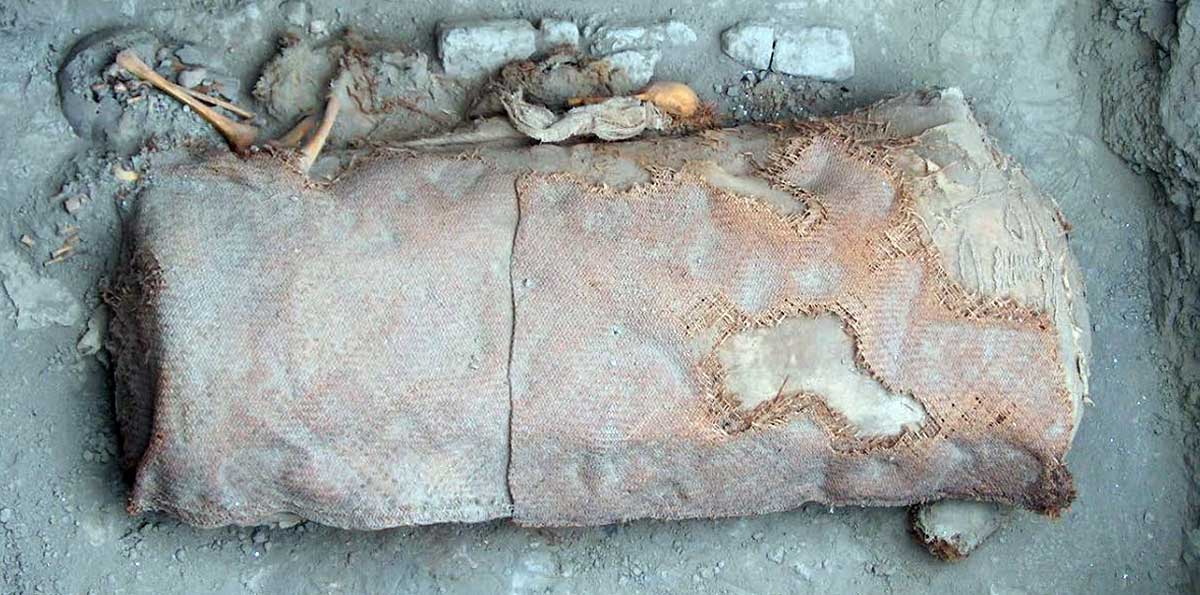
It was at El Brujo that archaeologists would make the discovery that first challenged and ultimately upended this conclusion. In 2005, five intact tombs were identified at Huaca Cao Viejo, one of the temples at the ancient El Brujo Moche site. One in particular, tomb 3, stood out due to its decoration and the grave goods within. Archaeologists found two sets of human remains in the tomb, one wrapped in a funerary bundle: a servant and someone of high rank, the owner of the tomb, so to speak. Imagine their surprise when initial studies of the bundle revealed the remains of a woman.
The funerary bundle was dated to approximately 500 AD and exceptionally well-preserved for its age. Scientists took great pains to protect it as they began to unwrap and study its astonishing contents. Within they discovered layer after layer of mantles, golden ornaments, ceremonial weaponry, crowns, earspools and ultimately the well-preserved and tattooed body of a diminutive woman who, in direct contrast to conventional understandings of the Moche, must have wielded power and influence to have merited such a burial.
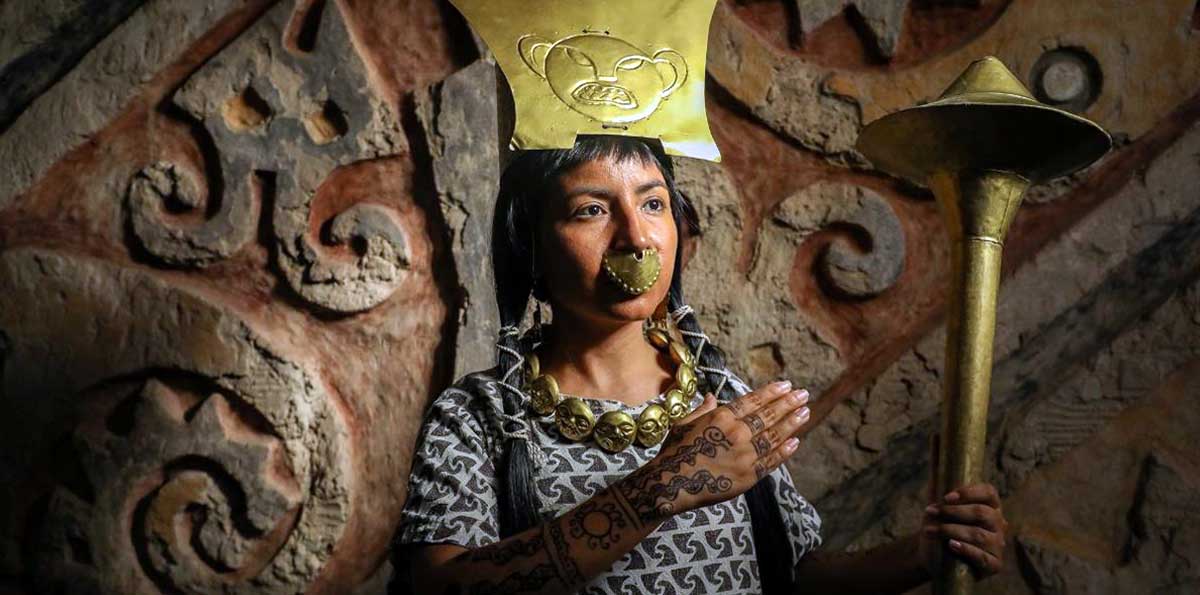
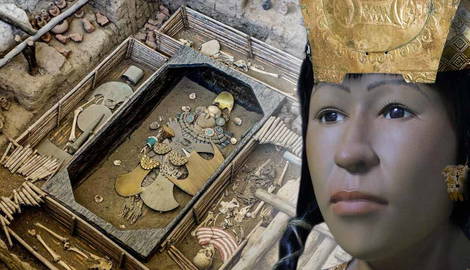
The Dama de—or “Lady of”—Cao, as she was ultimately named, stood approximately 4’ 11” tall and was 25 to 30 years old at the time of her death. Her mummified body bore visible tattoos of animals also featured prominently in Moche spiritual iconography, including snakes and spiders, suggesting her connection with religious activities. She was buried with 44 nose ornaments, metallurgical works of art reserved for Moche elites. The two large war clubs and multiple spear throwers found with her would also seem to indicate she was a warrior. Later studies of her remains indicate that she likely died from eclampsia, seizures that develop in pregnancy or shortly after childbirth. More recently, in 2017 a digital reconstruction of her face was produced, bringing the ancient warrior-priestess to life for the modern audience.
Dr. Régulo G. Franco Jordan, one of the Peruvian archaeologists who found her, stated “There was no doubt about it, before us was a woman who had wielded immense power in her lifetime… She appeared to be an authoritative figure—likely a curandera, or priestess—deeply connected to the heavens and skilled in astronomy. We are discussing a semi-divine individual of incredibly high rank, wielding both spiritual and political influence.”
What the Dama de Cao Reveals About the Moche
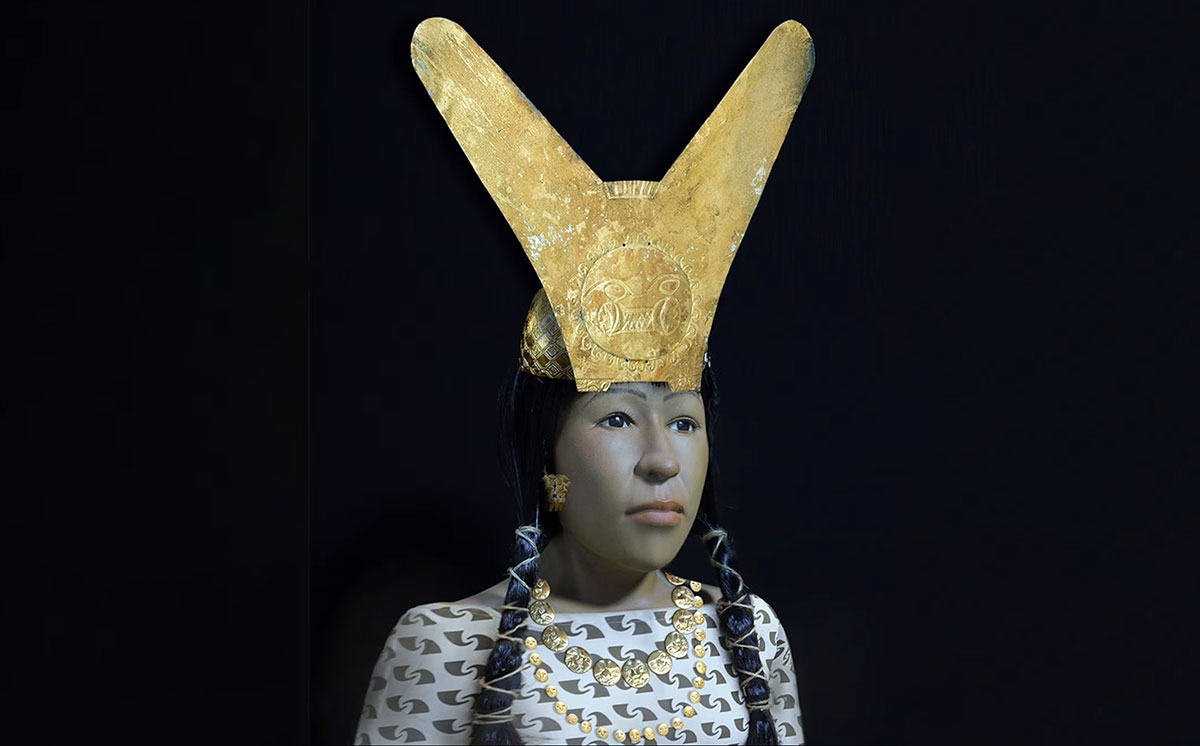
Beyond the suggestion that at least one Moche woman held political and religious power in her day, the excellent preservation of the Dama de Cao and her funerary bundle revealed a great deal about Moche burial practices, artistry, social hierarchy and ritual life. Her nose ornaments, for example, confirm that Moche society included specialized craftsmen dedicated to producing luxury items for its elite. The presence of cinnabar in her grave revealed its use for funerary and ritual purposes.
As it turns out, the Dama de Cao was the first prominent Moche noblewoman discovered, but not the last. In 2013, for example, a similarly adorned female mummy was discovered at San Jose de Moro. Dating to approximately 750 AD, this likely priestess was buried with human sacrifices and an anthropomorphized coffin “wearing” a copper mask and sandals. She was the eighth Moche noblewoman found at the site, which, according to its project director has only yielded female elites.
Far from an anomaly, the Dama de Cao appears to have been one of many powerful female figures in Moche history. Though researchers cannot determine the exact roles they played in Moche society—whether rulers, priestesses, warriors, or all three—their specific positions are less important than the confirmation that Moche society was not strictly patriarchal. Women could and did wield the power and influence that shaped this enigmatic society, earning the respect and ritual admiration of their people, even in death.