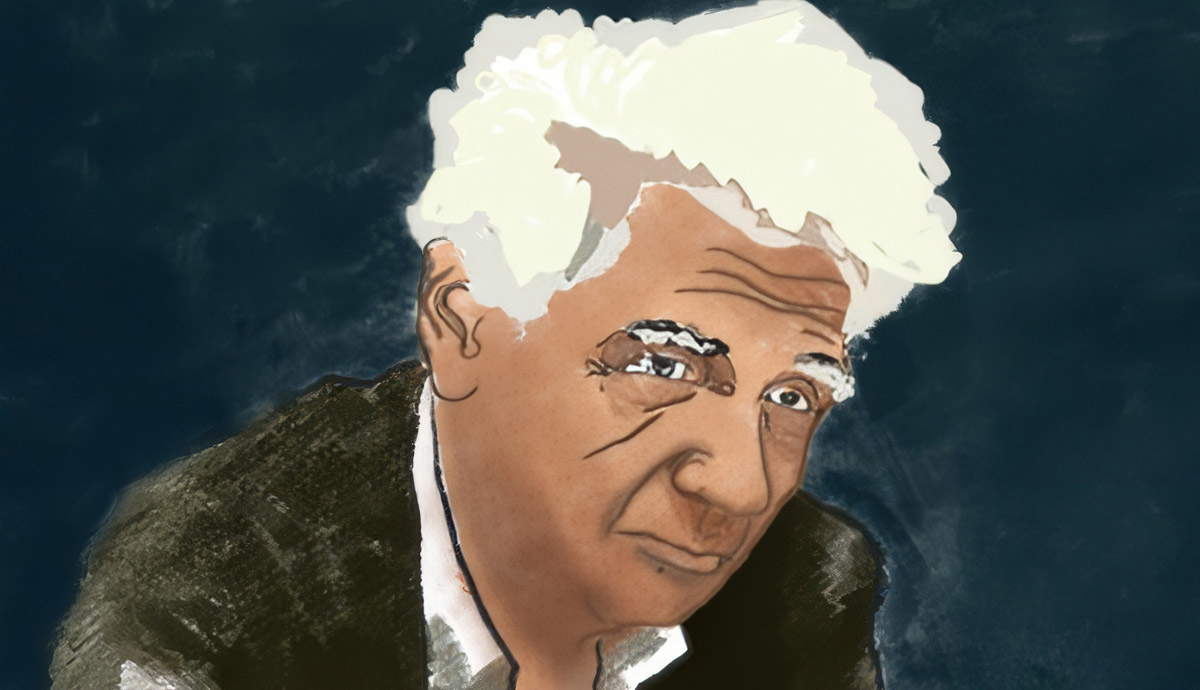

Deconstruction, the brainchild of Jacques Derrida, is one of the most controversial and misunderstood ideas in philosophy and literary criticism. At first glance, it seems to reject traditional meanings—but in reality, it’s a subtle method for uncovering hidden layers of meaning and contradiction in texts.
Deconstruction & the Umbrella of Logocentrism

Deconstruction, as fathered by Jacques Derrida, is a method of interpreting texts that aims to show language is absolutely indeterminate, without limits, an infinite playground of meaning.
In one of his most popular works, Structure, Sign, and Play, Derrida characterizes the history of Western metaphysics as “logocentric.” What he meant by this term is that, throughout history, metaphysics has presupposed a “logos” (meaning “reason” or “word”) that serves as the center of all existing things.
Various theories proposed what the center was, but all posited a “presence” of some sort. In some theories, only one uniting “presence” is found in all things, as in Berkeleyan idealism. Other times, each individual thing was said to have its own “presence,” similar to Aristotle’s metaphysics.
When applied to theories of meaning in language, logocentrism refers to any theory that claims that the relationship between a word and the thing it refers to has a central presence that gives that relationship a definitive meaning.
To illustrate further, logocentric theories would say that some grounding presence makes the word “umbrella” and an actual physical umbrella true. For Plato, this might be the Form of Umbrellahood. For contemporary analytic philosophers, this might be analogous to a function in mathematics that takes inputs and generates outputs such as “true,” “false,” or “null.” And, for some theories, it was still said to all center on God!
Structuralism: The Antithesis to Deconstruction
Structuralism is one such theory of meaning guilty of logocentrism, a theory Derrida wrote about extensively. Here is his explanation of structuralism:
“Structure—or rather the structurality of structure—although it has always been at work, has always been neutralized or reduced, and this by a process of giving it a center or of referring it to a point of presence, a fixed origin” (278).
In structuralist theories of language, the “fixed origin”—what Derrida sometimes calls the “transcendental signified”—was thought to be the source of determinate meaning. The word “umbrella” has a fixed, determined meaning: it refers to an actual umbrella. According to structuralism, there is a structure among the word, the object, and the truth that confers meaning in language. Hence, the name!
However, at some point in history, it was realized that this center, or “fixed origin,” was in a continuous chain, with one center replacing another. When one center was shown to be incorrect, another would be introduced. When that new center was no longer shiny and exciting, the cracks would begin to show, and another center would become trendy.
This cycle prompted the beginning of “thinking there was no center, that the center could not be thought in the form of a present-being” (280). In other words, those who had taken notice of the cycle began thinking that instead of a central presence, there was only an absence.
Deconstruction as Play
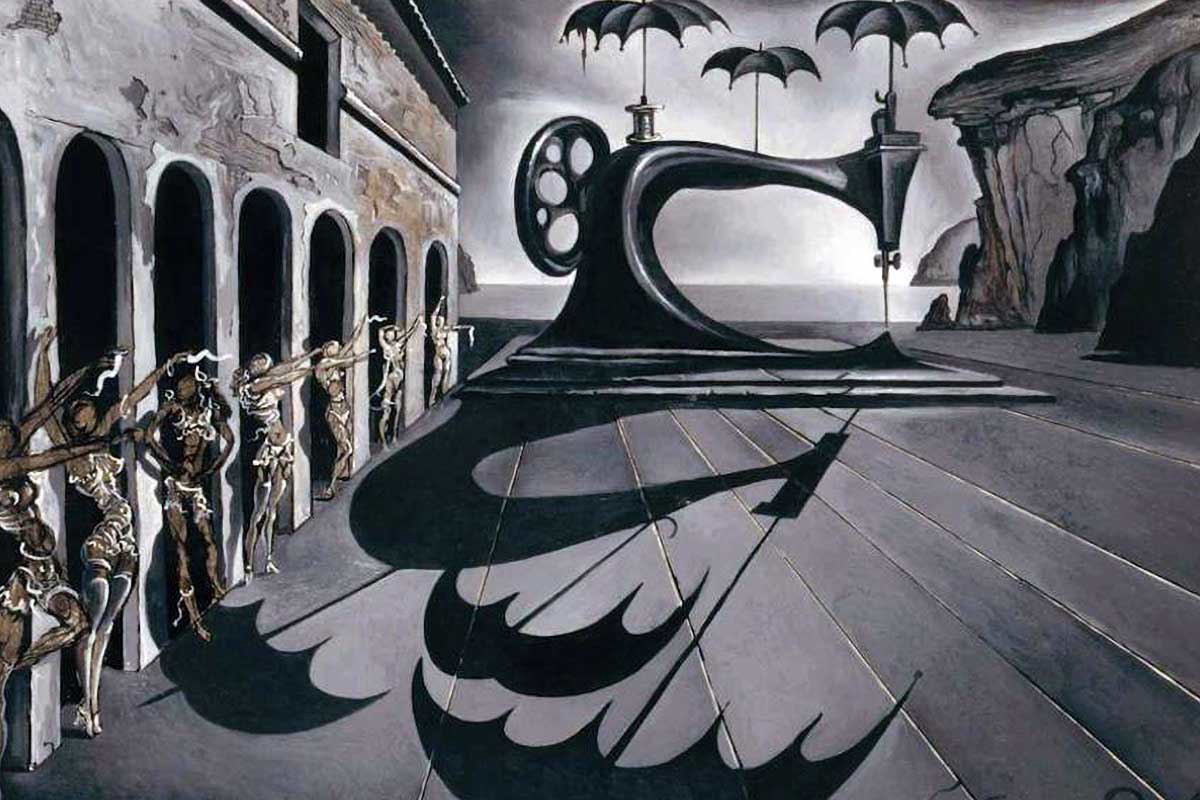
Deconstruction is the whole-hearted embracing of this absence and infinite meaning, what Derrida described as the “joyous affirmation of the play of the world… the affirmation of a world of signs without fault, without truth, and without origin.” In other words, to deconstruct is a form of “play”!
When applied to texts, deconstruction makes this indeterminacy of meaning explicit through this “play.” A text traditionally interpreted as expressing “this” can be interpreted as saying “not this” simultaneously. This is more than just rejecting one interpretation in favor of another. It is finding both the meaning of the words and the contradiction of those words in one container!
Différance and the Deferral of Meaning
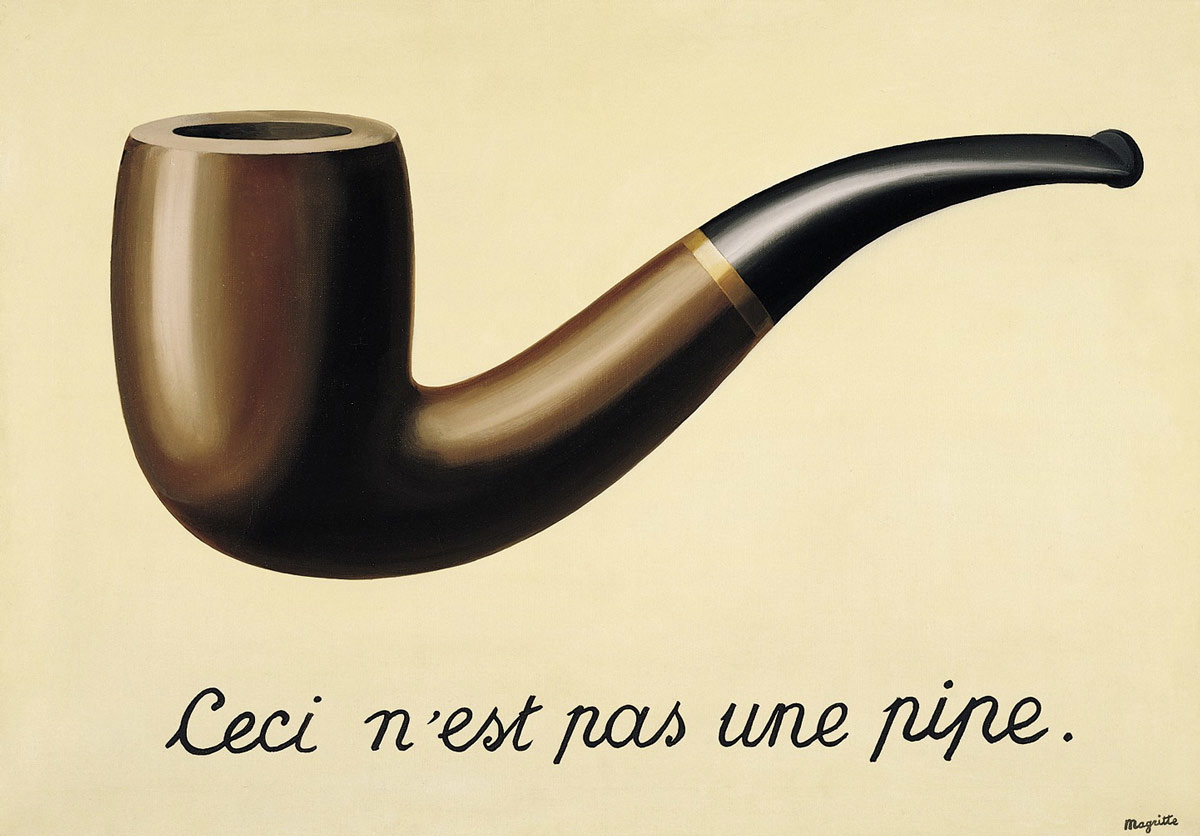
To explain how this “play” of meaning occurs, Jacques Derrida introduced one of his most famous ideas: différance. According to Derrida, a word does not contain its meaning as philosophers once believed. Rather, meaning is constantly deferred through a network of differences between words. In other words, a word’s meaning is constituted by what Derrida called its différance—the way its significance emerges only through what makes it different from other words.
For example, the word “umbrella” is constituted by an infinite chain of its differences from words like “sprinkler” or “microwave.” To go even further, the concept of “not a duck” or “bipedal” could be found in the word “umbrella” if one were to follow the right threads. We never actually get to the meaning of “umbrella,” but we would have an exhaustive list of everything it is not. This is the “deferral” of meaning that Derrida was interested in.
So, according to Derrida, the meaning of a word is in an infinite chain of deferral to its differences. The excitement starts when this chain eventually redoubles back onto its antonym. Thus, deconstructive interpretation is a method of showing that all texts contain contradictory meanings within themselves through the “play” of différance. For example, the word “full” contains both the concept of “at capacity” and “empty” once deconstructed — antonyms and a contradiction.
This process of pulling apart the pieces, following the links of the chain to the inherent contradiction within, is what it means to use deconstruction. The process is a form of play; instead of mourning the loss of meaning, we can rejoice in finally being liberated from the confines of certainty and rigidity!
An Example of Deconstructing a Literary Text
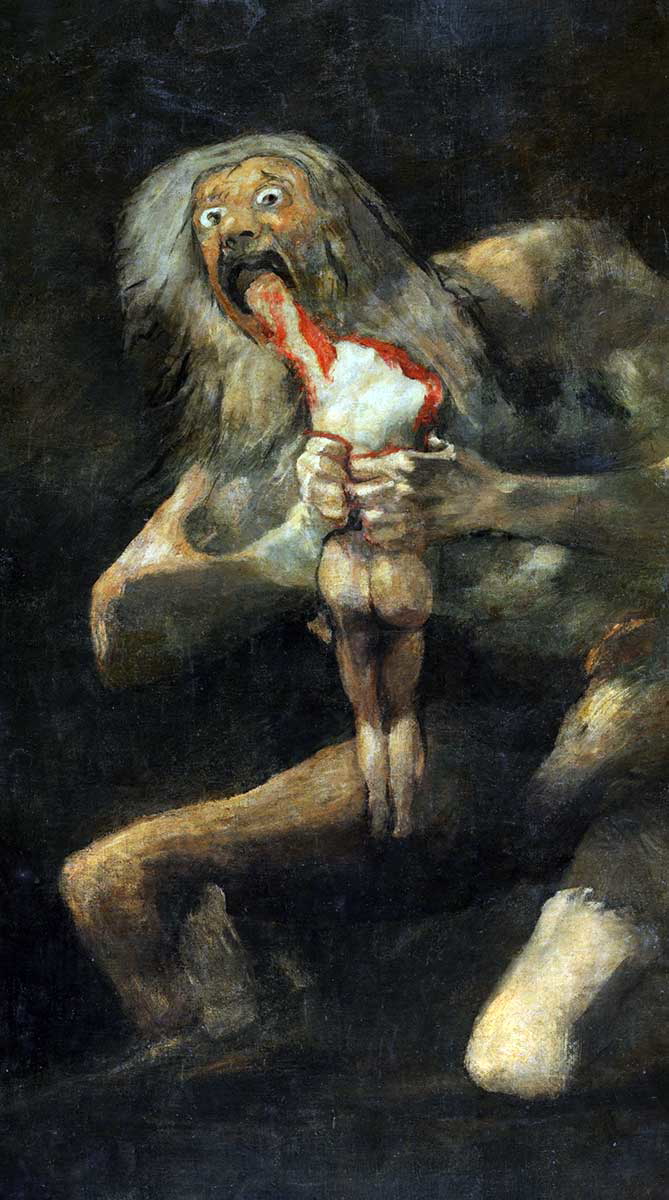
To understand deconstruction more fully, seeing an example of its application in action can be helpful. For brevity, I have chosen a short poem—Design by Robert Frost—and will attempt to show how to apply deconstruction as a method.
The widely accepted interpretation of this poem is a twist on the teleological argument for the existence of a designer God. So, a deconstructed interpretation will show that the poem also contains an opposite conclusion.
The First Stanza: Spider, Moth, and Heal-All

The poem consists of two stanzas. In the first, the narrator describes a strange scene he has come across:
I found a dimpled spider, fat and white,
On a white heal-all, holding up a moth
Like a white piece of rigid satin cloth—
Assorted characters of death and blight
Mixed ready to begin the morning right,
Like the ingredients of a witches’ broth—
A snow-drop spider, a flower like a froth,
And dead wings carried like a paper kite.
The scene starts innocuously enough. I have also encountered well-fed, white spiders and was not shaken by the experience. The black ones with red markings on the rear are the ones to be concerned about, right?
Wrong! This particular spider is perched on a white heal-all, clutching a white moth corpse. The heal-all is a flower, one that is supposed to be blue. However, this heal-all is menacingly white. This is why our narrator is feeling disturbed by the scene – three all-white ingredients have come together so improbably yet perfectly so that the spider could ensnare and feast on the moth.
Frost calls these three things “ingredients of a witches’ broth” because it seems they have been chosen intentionally for an evil final product of witchcraft.
The Second Stanza and Traditional Interpretation
This leads us to the second stanza of the poem. Our narrator, disturbed by this scene he has witnessed, starts rattling off a series of questions that it caused him to have:
What had that flower to do with being white,
The wayside blue and innocent heal-all?
What brought the kindred spider to that height,
Then steered the white moth thither in the night?
What but design of darkness to appall?–
If design govern in a thing so small.
What caused this naturally blue flower to be unnaturally white? Further, what caused this white spider and white flower to come together so perfectly? Finally, what—or who—is to blame for guiding the poor, white moth towards the other two and, effectively, its death?
Frost gives us an answer to these questions in the final two lines of this stanza. If this small yet horrific scene was ordered by design, this implies a designer. Or, if these three white things are indeed like ingredients to a “witches’ broth,” there must be a master chef who has orchestrated the recipe. The horrifying twist is that if there is a designer—or master chef—in this dark scene, then it could only be malevolent.
In other words, this sonnet is a teleological argument for the existence of an evil sort of God. Only a malevolent God would have designed such a configuration between the white spider and the mutant flower and then intentionally steered the unlucky moth straight to them. In any case, the universe is not a friendly place. We are at the mercy of the malevolent master chef.
The Word “Blight” and the White/Not-White Contradiction
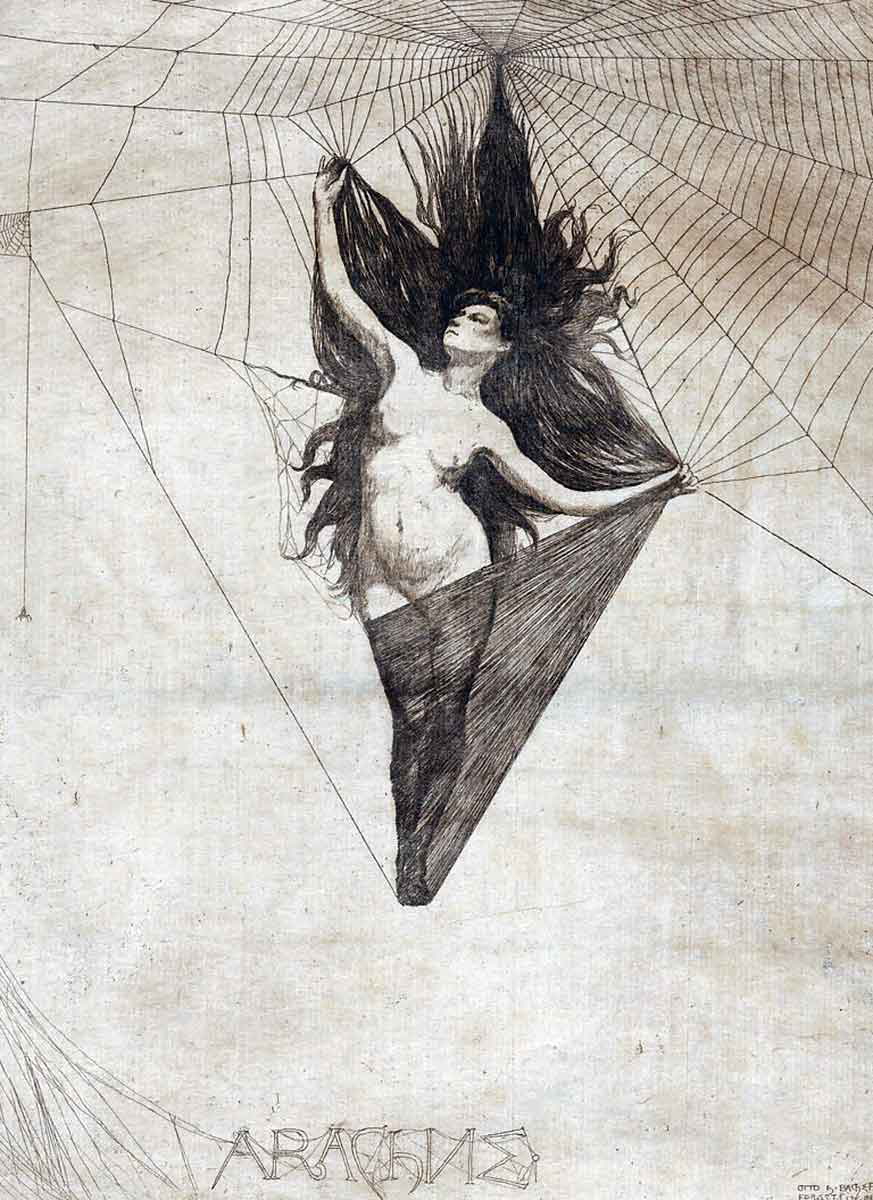
If there is only a single thing that we can glean as a definite interpretation of this sonnet, it is that all three of these characters of death are white. Frost tells us that the spider, moth, and heal-all are white, both individually and collectively.
However, we are also told that the spider, moth, and heal-all are “assorted characters of death and blight.”
Let’s hone in on the word “blight” a little more. Specifically, the word refers to a type of plant disease caused by a fungus or mildew. Plants can find themselves with blight. Another usage of blight is for areas of cities that have become rundown and neglected. Cities can find themselves with blight. In both cases, it is a destructive condition that ceases the healthy growth of a thing.
Here is where we can discuss why the word “blight” is so interesting in this text. Its etymology traces it to the Old Norse word blikna, meaning “to pale.”
Our white ingredients are infected with “blight,” a word that retains a trace of this Old Norse meaning, so our white characters are paling or becoming white.
But wait, if the spider, moth, and heal-all are in the process of becoming white, then we can infer that they are not completely white. Rather, they have color and are in the process of losing it.
Collapsing the Teleological Argument
Even though we are told five separate times about the whiteness of our ingredients, we are also told they are not white at all! The spider, moth, and heal-all are both white and not white, as shown by the words “white” and “blight.” The inference from a design to a designer rested on the near-impossible configuration of the white spider, moth, and flower. Without those three things, there is no inference to be made for a designed universe nor a designer God.
Revisiting the scenario with our newly deconstructed “blight” in mind, the teleological argument for a God is no longer plausibly generated. In conclusion, deconstruction posits that the poem simultaneously offers a teleological argument for God and does not offer one.