Gladiators are some of Rome’s most fascinating figures, but in Rome’s hyper-masculine society, the presence, role, and significance of Rome’s female gladiators are often overlooked. While they seem to have been rare and considered scandalous by members of high society, the fact that laws had to be passed to stop noble women from fighting as gladiators speaks volumes. What do we know about the female gladiators of the Roman world, and what light do they throw on the often hidden history of Roman women?
Rise of the Gladiatorial Games
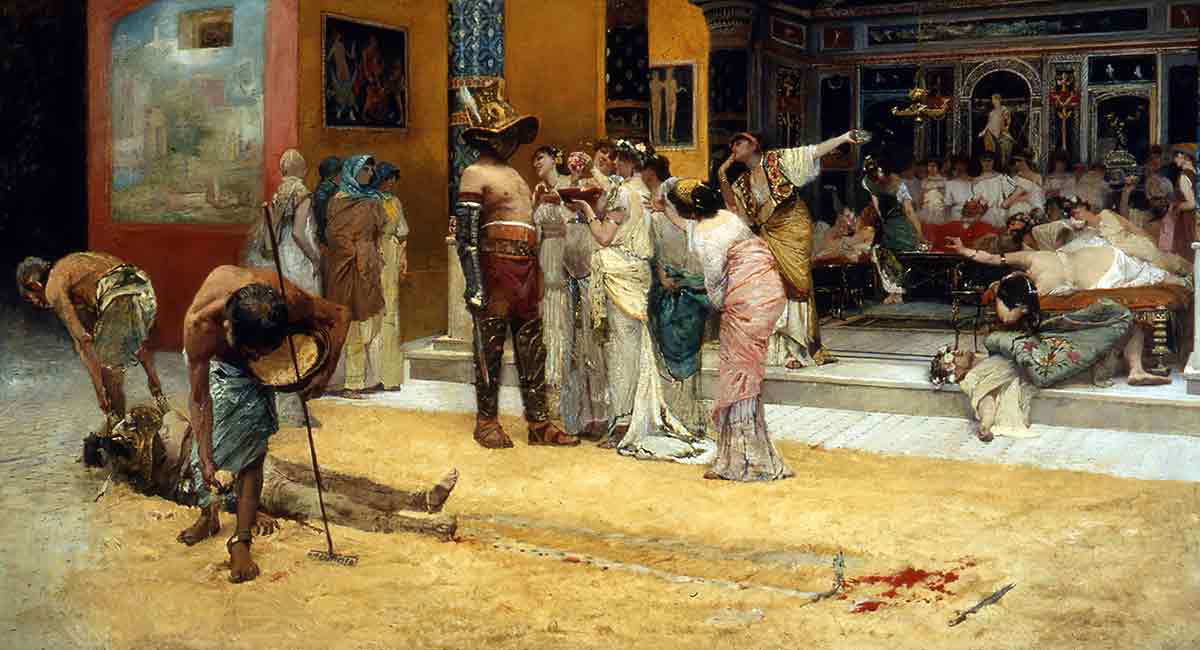
Originally, gladiator shows derived from Etruscan funeral rites, where combat between enslaved individuals was held to honor the deceased. This practice was adopted by the Romans around 264 BCE, who initially mimicked these private funerary displays. They evolved into state-sponsored entertainment by 105 BCE.
As they developed, gladiatorial games occupied a paradoxical position in Roman society. Though performers were predominantly slaves or criminals, the lowest social strata, their performances embodied virtues that Romans most admired, such as courage, discipline, and contempt for death.
The munera (games) also functioned as complex social institutions where emperors and politicians demonstrated wealth and power through increasingly elaborate public spectacles. For the populace, these events provided both entertainment and a symbolic reinforcement of Roman identity and imperial generosity.
The Life of a Gladiator
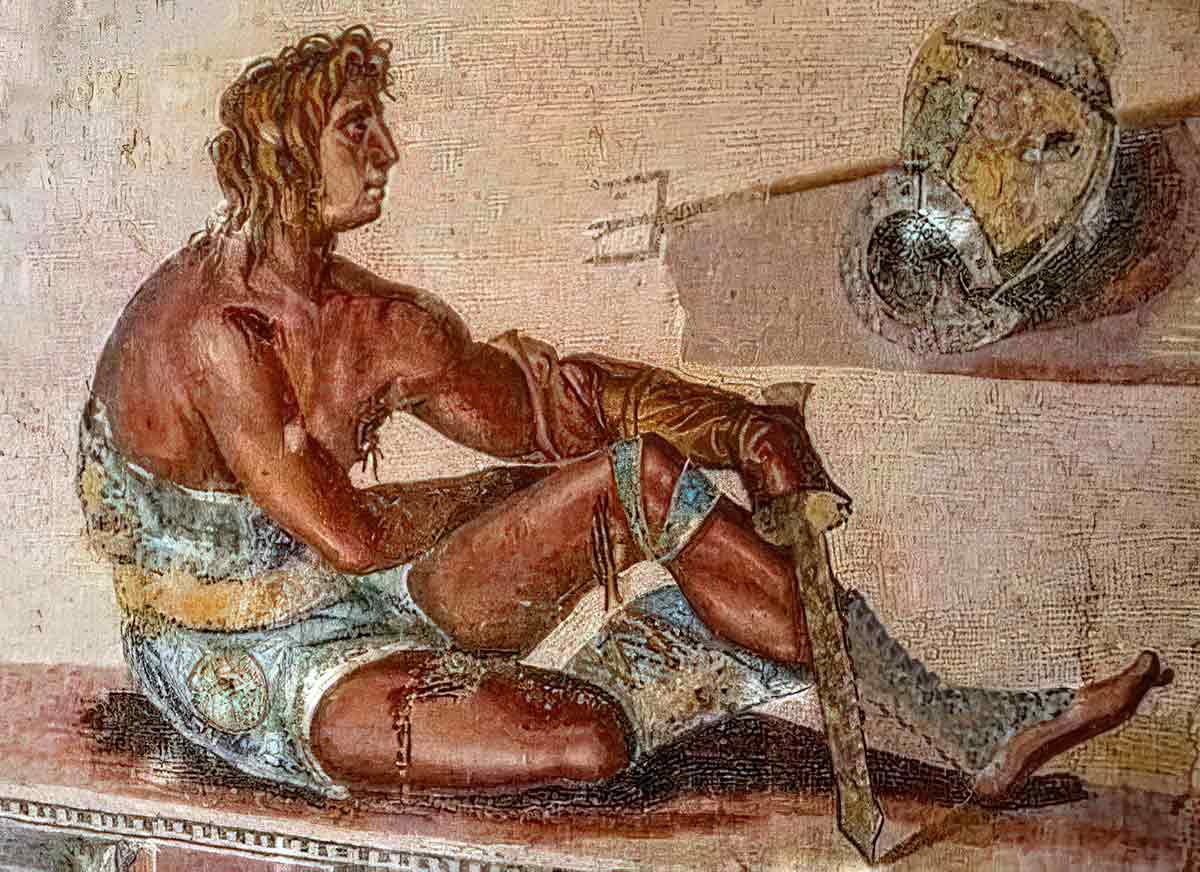
The average gladiator lived within a training school (named a ludus) under strict supervision. Despite their marginal social status, they received surprisingly good care, including nutritious diets, regular medical attention, and professional training.
With their daily existence balanced between celebrity and servitude, they were simultaneously famous and infamous. Most gladiators died young, with survival rates estimated at ten fights or fewer. But successful fighters could accumulate wealth, fame, and occasionally freedom.
The ludus housed a diverse community of fighters from across the empire, creating a distinctive subculture with its own customs, superstitions, and hierarchies, representing a microcosm of Rome’s expanding empire.
Evidence for Female Gladiators in Rome

Whilst the presence of female gladiators is nowhere near as extensively recorded as that of their male counterparts, their existence is attested in certain literary accounts and via some surviving archaeological artifacts.
There is some debate about their earliest presence in the arena, but scholars believe their appearance coincided with the increasing popularity of gladiatorial sports in ancient Rome more generally in the 2nd and 1st centuries BCE. Whilst not exactly anomalous, it seems that they were considered, and remained, a novelty in the sport when compared with their male counterparts.
The earliest references to them we know of are from legal statutes from 22 BCE and 19 CE, which were put in place by Augustus and Tiberius, both banning high-born women from competing as female Gladiators.
These “senatus consulta” suggest that, by this time, female gladiators were common enough to attract imperial attention and were a source of social anxiety for certain observers. Indeed, this particular theme repeats itself in later writers, such as Martial, Tacitus, Suetonius, and Juvenal, who provide the main accounts of female gladiators.
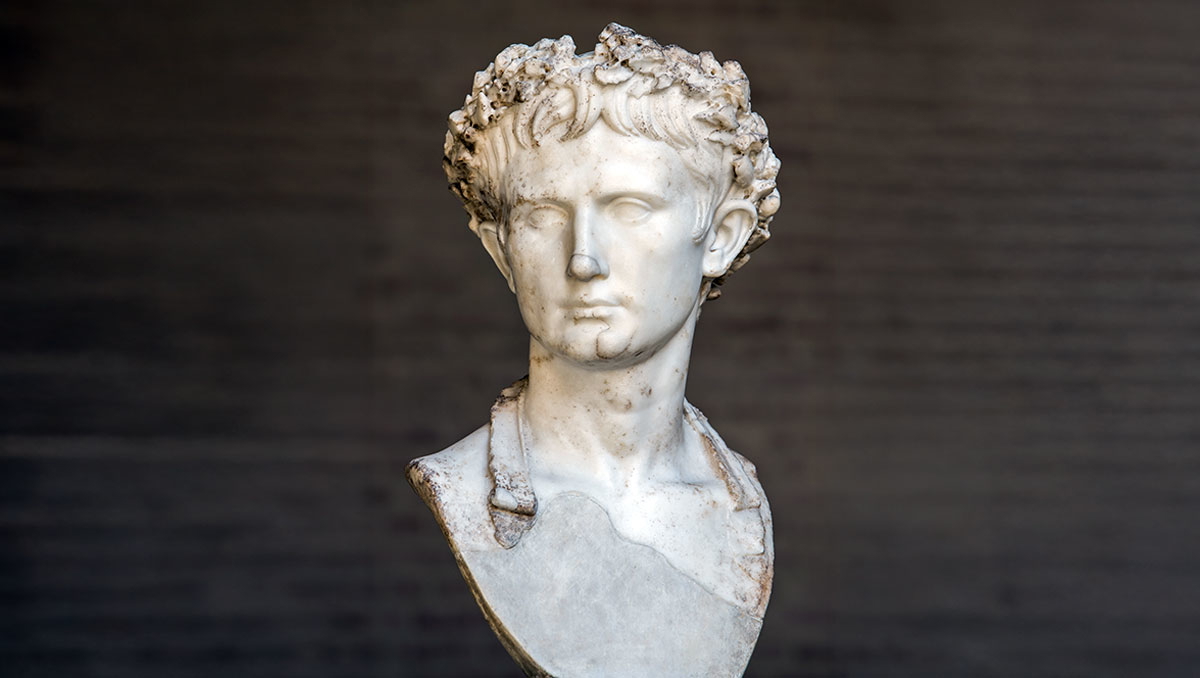
Whilst Martial mentions them in passing as being particularly fond of the god Hermes, and Statius refers to them in his Silvae without much comment, Tacitus and Suetonius both discuss female gladiators as a symptom of moral decay, driven by tyrannical emperors such as Nero and Domitian.
In Tacitus’s Annals, the historian laments how, under Nero, “Many women of rank…and senators, disgraced themselves by appearing in the amphitheatre.” Suetonius then critiques the profligate spending of Domitian on elaborate games, wherein there were, amongst other things, “not only combats between men but between women as well.”
Female Gladiators in the Archaeological Record

In archaeology, again, the more exceptional nature of female gladiators defines them. For example, at Ostia, the harbor city at the mouth of the River Tiber, there is a 2nd-century CE inscription from a magistrate named Hostilianus, who notes proudly that he was “the first since the city was founded…to set women fighting.”
Interestingly, there is an almost identical inscription from Pompeii that boasts about the same thing. While this again reiterates the more exceptional nature of female gladiators, it also demonstrates that they were certainly not confined to Rome and did likely fight throughout the empire.
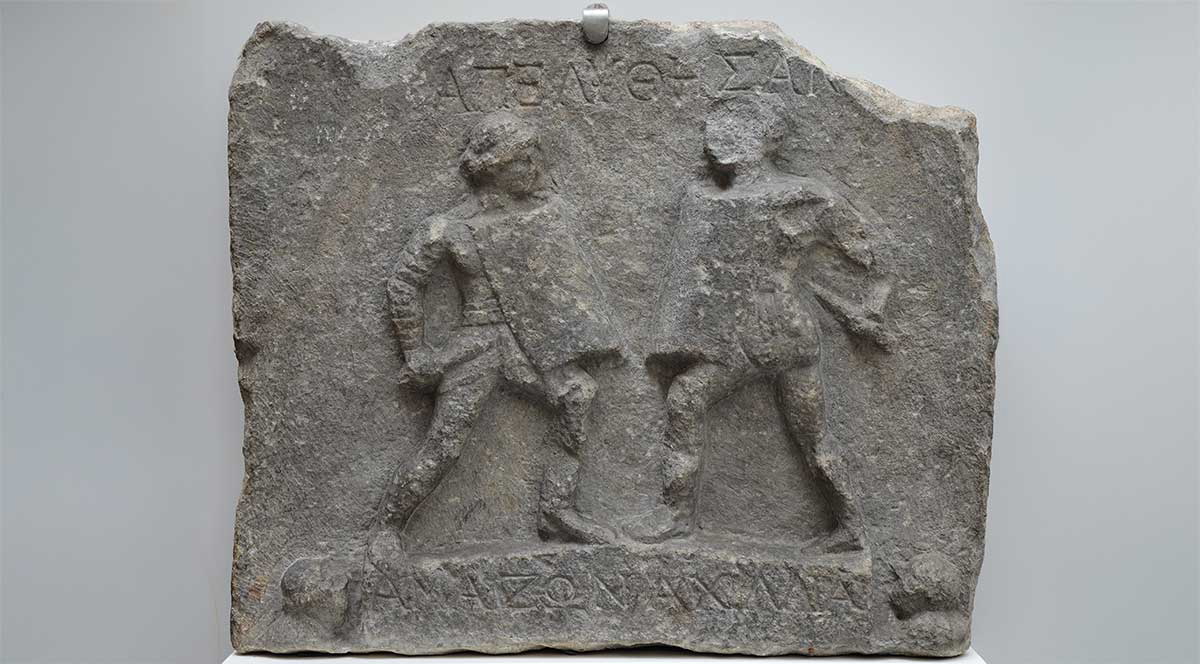
Indeed, this conclusion is supported by the “female gladiator relief” from Halicarnassus, which depicts two “gladiatrices” with armor, shields, and weapons, facing one another and about to fight.
Additionally, in Britain, there is a cremation burial of a woman, who some argue was a female gladiator (or “gladiatrix”). Although the Museum of London was initially very confident of this theory, based upon the gladiatorial paraphernalia deposited in the burial, subsequent studies have challenged this belief. As such, the search for more definitive proof of “gladiatrices” throughout the empire continues.
In modern attempts to distinguish female gladiators, they have been called “gladiatrices”; however, this is a modern invention and does not derive from an ancient name. Instead, in ancient literature, the term ludia is the term given (by Juvenal and Martial) to a woman who is attached to a gladiator school. Elsewhere, when referring to a female gladiator specifically, the word “female” (femina) is just attached to something like “gladiator” or “fighter.”
Life of a Female Gladiator

Due to the paucity of the historical record, it is difficult to know much about the way female gladiators lived or fought, but a few glimpses survive.
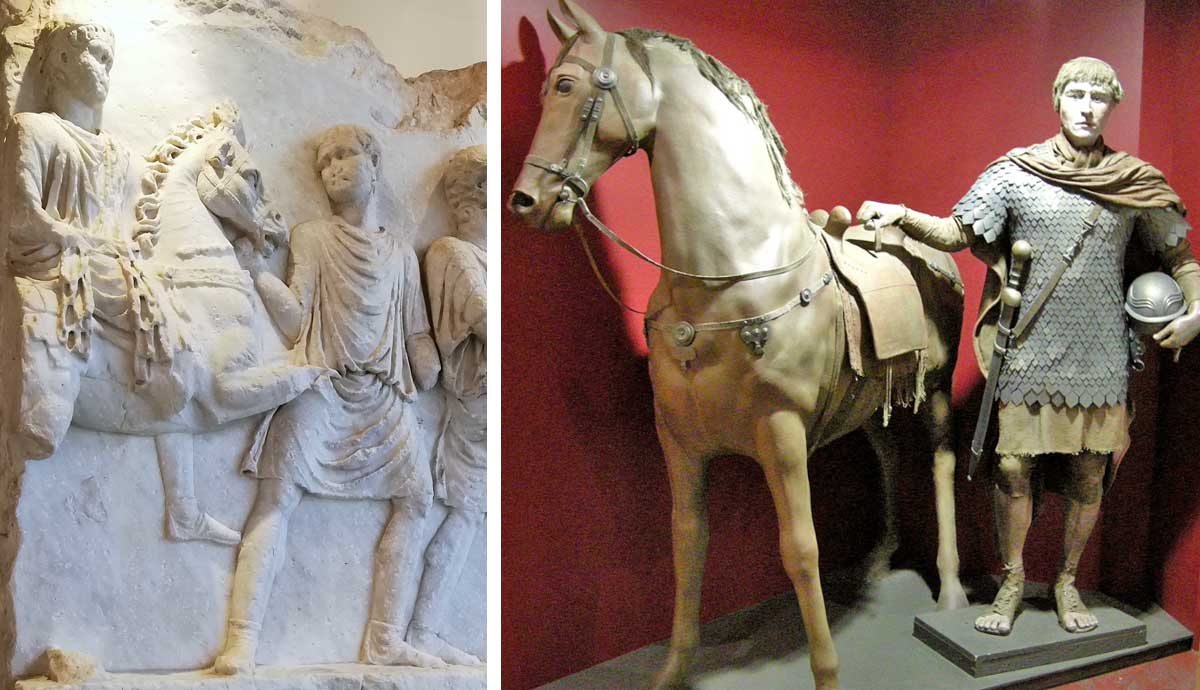
In Petronius’s Satyricon, the freedman Echion expresses excitement about an impending spectacle, sponsored by a local magistrate, that will include “a woman fighting from a chariot.” Thus, we know that they would appear as both mounted and unmounted fighters, recalling the female chariot gladiator that appears in the film Gladiator (2000).
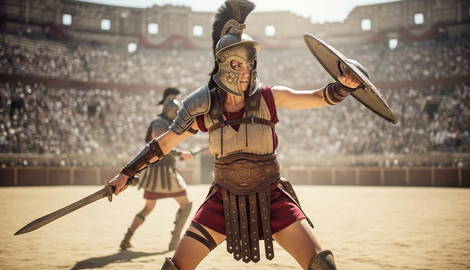
Returning again to the Halicarnassus relief, we can also get a glimpse of how they might have been equipped. Both gladiatrices on the relief are dressed in the manner of the “secutor” class of gladiators, with greaves covering both legs, the right arm protected by armor, and an oblong shield on the other arm. Both are also bare-breasted, as the male gladiators would be bare-chested, but they don’t seem to wear helmets, as the men did.
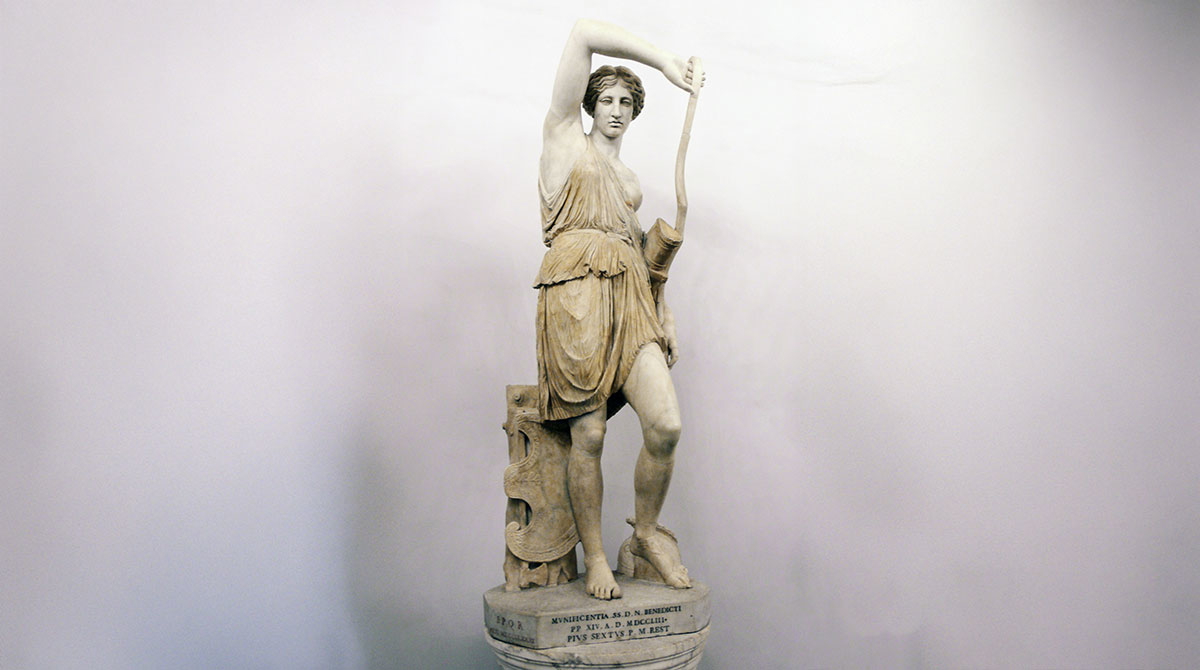
Given the prominence of Amazonian women in the Roman imagination, they may also have appeared in that kind of guise, lightly armored, with swords, shields, and spears. Besides these potential distinctions, there is no reason to think that they wouldn’t have fought and appeared very similarly to the much more common male gladiators.
Given that the aforementioned laws passed by emperors banned upper-class women from competing, it is reasonable to assume they were drawn from the lower classes, as were most of the men. These women might have been drawn to the life of gladiatorial combat as slaves, but could also have joined a ludus as a freewoman, in the hopes of gaining fame, wealth, or greater independence. Women were completely under the control of their father, husband, or oldest male family member, so joining a gladiatorial school could represent greater freedom.
As with the male gladiators, they would have been trained in the ludus, with a private teacher, using wooden swords. Besides this, we must assume their lives and training were similar to their male counterparts, disciplined and often deadly.
The Cultural Reception and Impact of Female Gladiators

While some clearly enjoyed the female fights, female gladiators were a source of anxiety to some ancient Roman observers. Indeed, these are the two salient characteristics that recur in all ancient accounts of them, often for overlapping reasons.
Augustan and Tiberian laws banning upper-class women gladiators were derived from an overarching attitude that saw this kind of occupation as beneath upper-class citizens, particularly upper-class women. They were also part of a broader range of moral laws and reforms. The social identity of aristocratic women centered around fulfilling domestic duties and upholding traditional virtues as devoted wives and mothers. The violent and raucous environment of the arena was totally incongruous with societal expectations placed upon them.
For lower-class women, these expectations would no doubt have been less strict, but Roman writers still seem to exude a certain uneasiness about seeing any women in this kind of occupation.
However, female gladiators were also, as historians have noted, clearly seen as a sign of, often problematic, luxury as well. Since they were a relative novelty in the arena, it can safely be assumed that they were more expensive to procure and put on show.

This conclusion is reinforced by the way in which they usually appear in writers such as Tacitus and Cassius Dio. When they note the presence of female gladiators during Nero’s reign, they mention them as part of a broader condemnation of the elaborate and expensive nature of the games organized by that particular emperor. The same is evident from Suetonius’s description of Domitian’s games, reflecting a long-standing anxiety about luxury that permeated Roman historiography since its inception.
This is because the earliest Romans were looked back upon as stoic, austere farmers who had ostensibly shunned superfluous luxuries and focused on serving the state. As the Roman world expanded, especially into the “decadent” east, anxieties grew that Romans would become more like the apparently effeminate Greeks. All kinds of luxury and exuberance were therefore seen as antithetical to traditional Roman culture and mores.
As a result, female gladiators represented a dual concern, as they transgressed the traditional roles assigned to women in society and were a symptom of decadent expense as well.
Legacy and Modern Representation

The phenomenon of female gladiators came to an official end during the reign of Emperor Septimius Severus, who issued a comprehensive ban on women participating in gladiatorial combat around 200 CE.
This prohibition likely stemmed from the same conservative anxieties just discussed, reflecting the persistent tension between Roman spectacle and traditional gender norms. These gladiatrices occupied a liminal space where the rigid boundaries of gender could be temporarily transgressed, albeit often as objects of novelty and sensation rather than as equals to their male counterparts.

The existence of female gladiators illuminates the complex interplay between entertainment, gender, and social status in ancient Rome, whilst also giving us an insight into concerns with “luxury.” As exceptional figures who defied conventional gender boundaries, they represent both the flexibility and the limitations of Roman society, a civilization that could simultaneously celebrate martial prowess while restricting the public roles available to women.
In studying these remarkable individuals, we gain insight not only into the spectacles of ancient Rome but also into the tensions and contradictions that characterized its social order.